
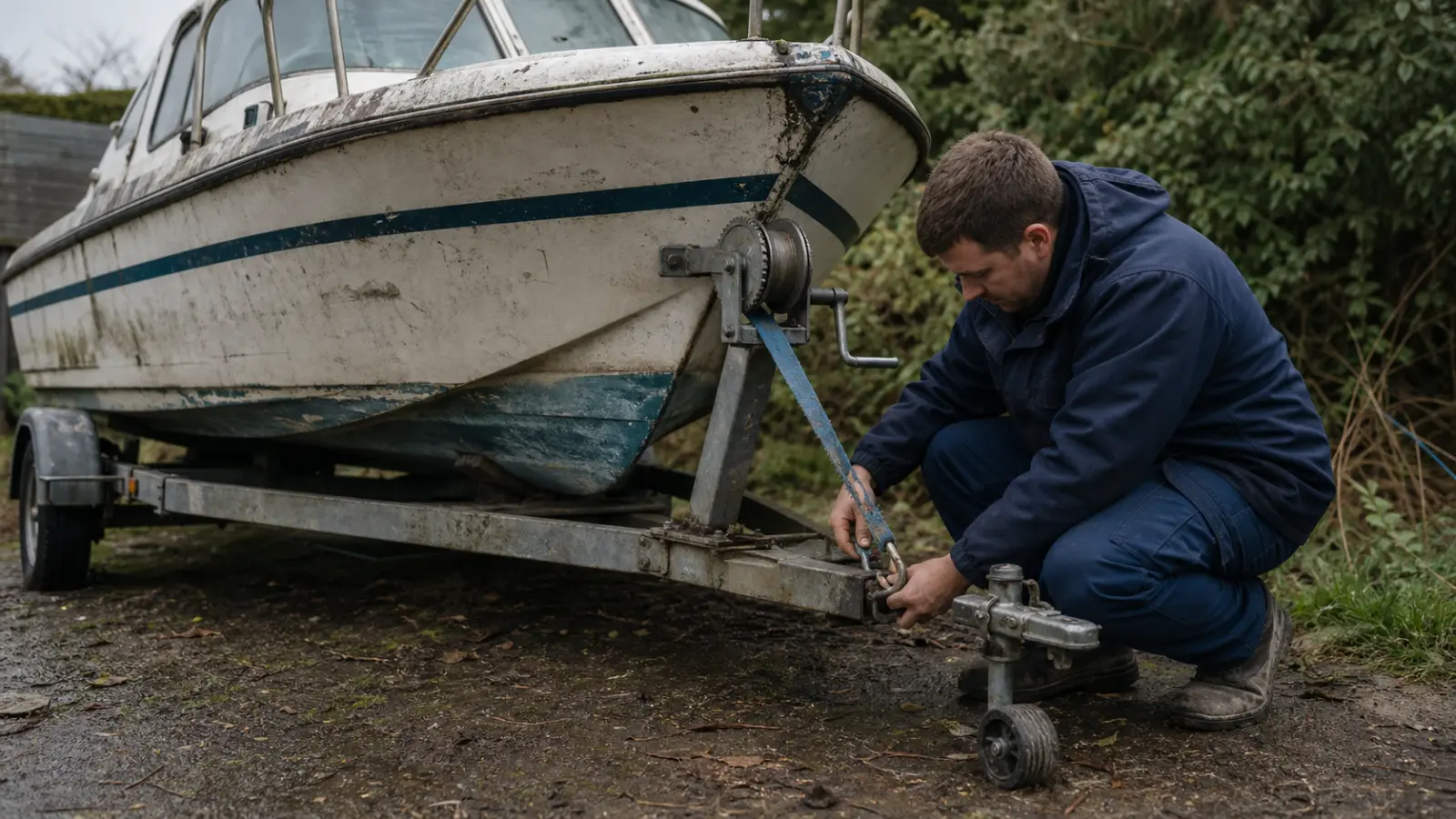
Professional Boat Removal Services in Algonquin, IL

An old boat resting on a trailer behind a garage often turns into a permanent fixture once the tires sink directly into the soil and dry rot cracks the sidewalls. In other situations, a marina issues a stern notice regarding an overdue slip fee, or a buyer takes ownership of a property only to find a heavy cabin cruiser remaining on the lot. When an outboard engine seizes up and the total cost of a mechanical rebuild far exceeds the actual market value of the vessel, the project quickly shifts from a weekend restoration dream to an urgent cleanup task. Dealing with a junk boat requires an organized plan that addresses both the physical weight of the hull and the legal obligations attached to vessel ownership.

Is there boat removal near me in Algonquin, IL? Yes, Boat Removal Experts manages complete extraction, hauling, and clearance services for owners throughout the municipality and surrounding locations like Lake in the Hills and Carpentersville.

Before any vessel leaves the property, addressing legal documentation remains essential. Our official position is straightforward: we do not always transfer the title into our name, but we always issue a formal release of liability to the owner. Some haulers take an old boat away without signing any paperwork, which leaves the original owner legally responsible if the vessel is later abandoned on a public road or shoreline. Verifying that a complete release of liability is provided protects you from future claims, making it a critical detail to clarify before hiring any crew.

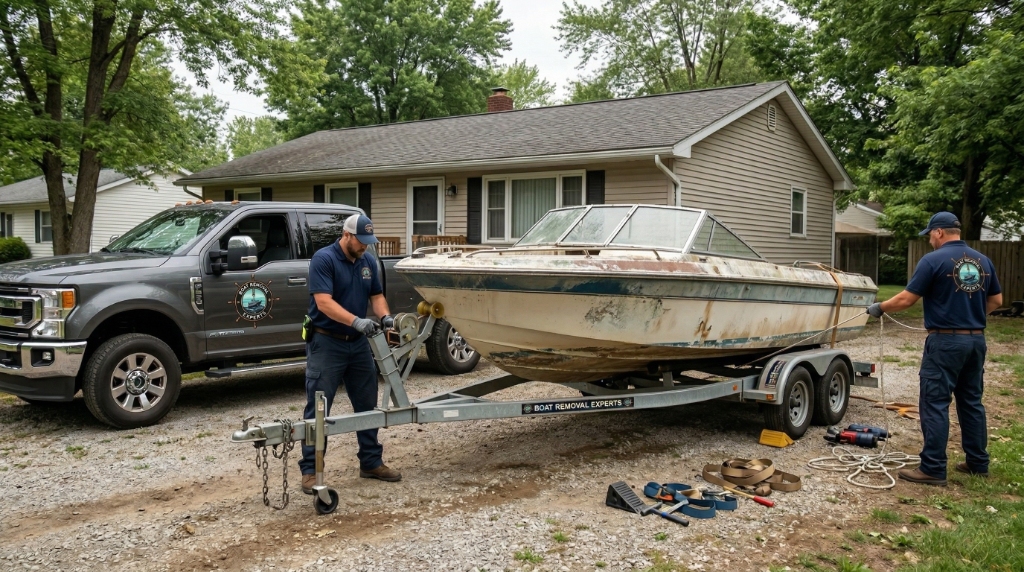
Moving a vessel is inherently more difficult than moving a standard vehicle. A rotted trailer frame can snap during winching, while an immobile keel or custom wooden cradle requires heavy rigging to shift. If the beam of the vessel is wider than a side gate, or if the entire assembly sits deep on a soft lawn that a heavy transport truck cannot safely cross, specialized gear is necessary to extract the hull without tearing up the surrounding yard.

Call 847-961-2354 to start.

Send photos through the contact form.

What Is Boat Removal and When You Need It

Professional boat disposal involves far more than simply hooking a winch cable to a hitch and towing a vessel away down the highway. Complete extraction requires evaluating structural integrity, securing loose cabin equipment, and organizing safe transport for vessels that can no longer float or roll on their own wheels. When an abandoned boat sits on private land or remains inside a commercial slip that is no longer being paid for, clearing the space requires a systematic physical approach tailored to the specific state of the vessel.
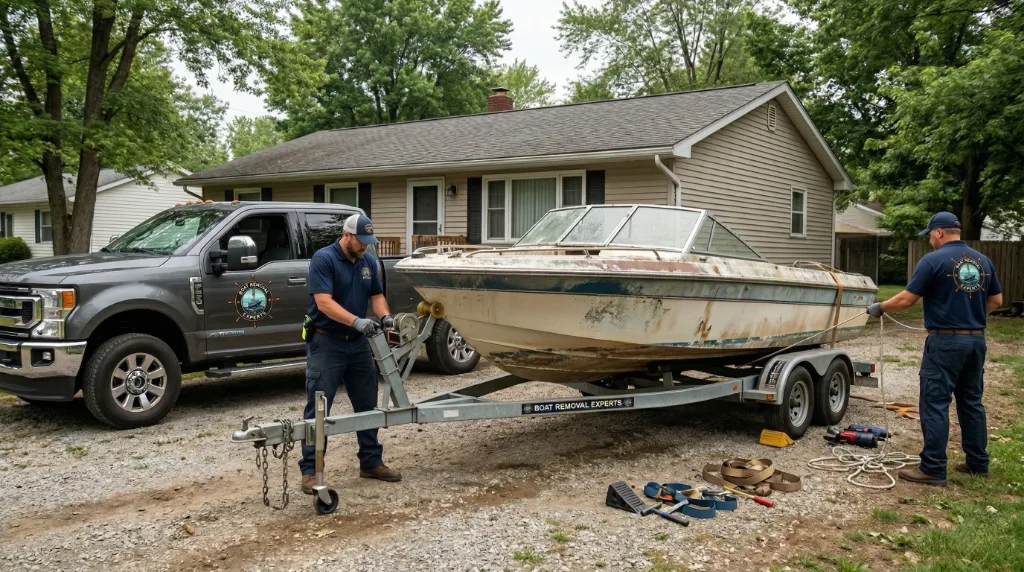
The status of the paperwork directly affects how the job moves forward. Having a clear title and a valid HIN in hand allows for a quick verification process. However, when an owner is dealing with a derelict boat left behind after a real estate closing, or when original registration papers have been lost over decades of neglect, alternative documentation paths are established. Clearing an abandoned boat without standard titles involves verifying ownership records, securing signed releases, or following local abandoned vessel protocols to ensure all liability is formally terminated.

The physical condition of the craft dictates the precise machinery required for handling. A vessel that has structural rot in the back panel or a cracked fiberglass hull cannot endure standard towing stresses. Whether the craft sits in West Dundee, Gilberts, or Trout Valley, the overall dimension, weight distribution, and location of the vessel determine if it can be hauled intact or if it must be dismantled on site before transportation.
When Algonquin Residents Call Us

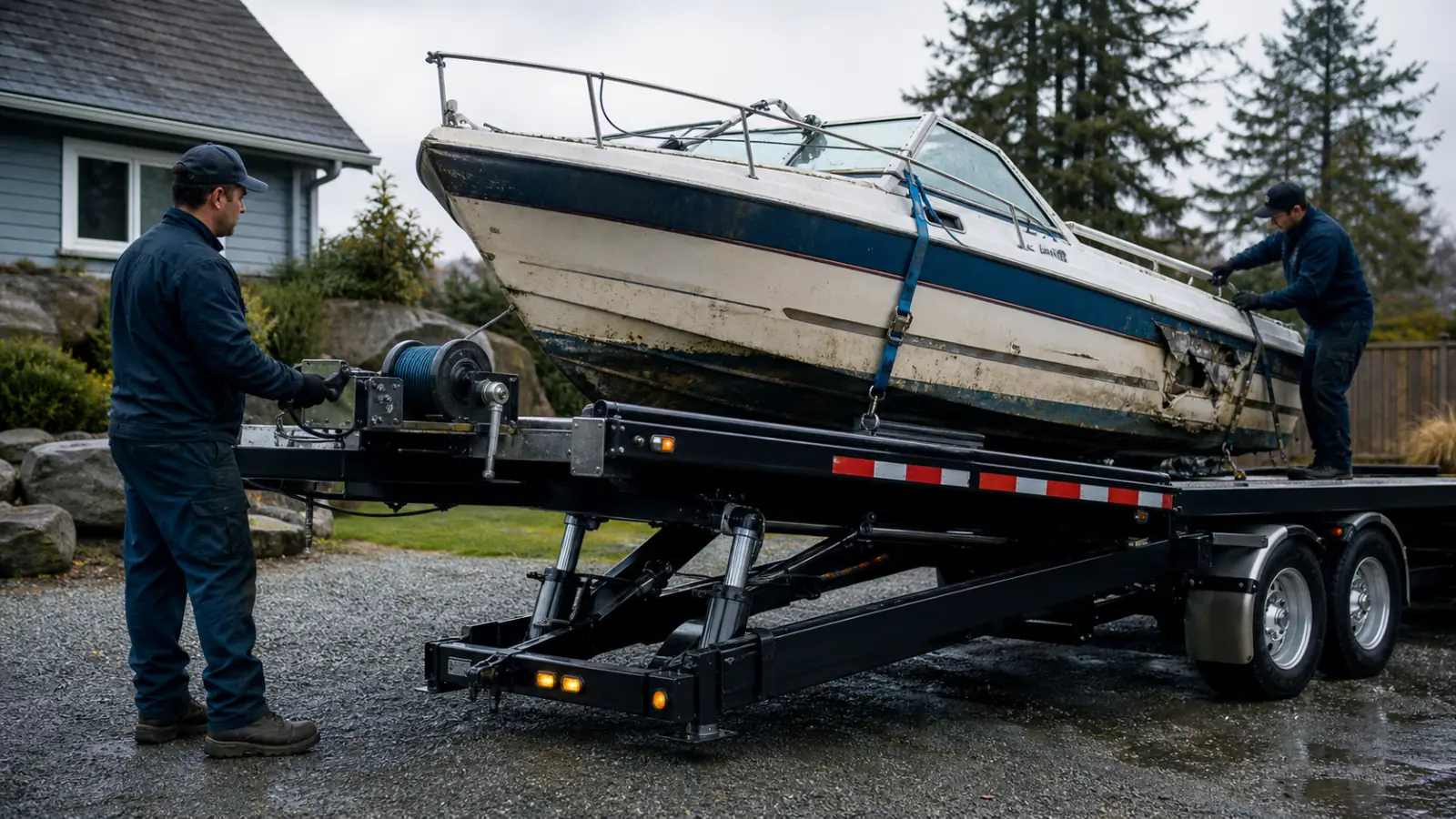
Vessels left exposed to the changing weather in Algonquin, IL undergo severe physical deterioration over successive seasons. Extended moisture exposure allows water to collect inside open hulls, where freezing temperatures expand and cause massive fiberglass delamination. Gelcoat finishes spiderweb and chalk, internal wood framing absorbs rain until structural floor frames rot through, and synthetic upholstery degrades into damp mold. Once a hull fills with standing water, the interior weight multiplies significantly, complicating extraction efforts and demanding specialized pump equipment before the unit can be lifted safely.
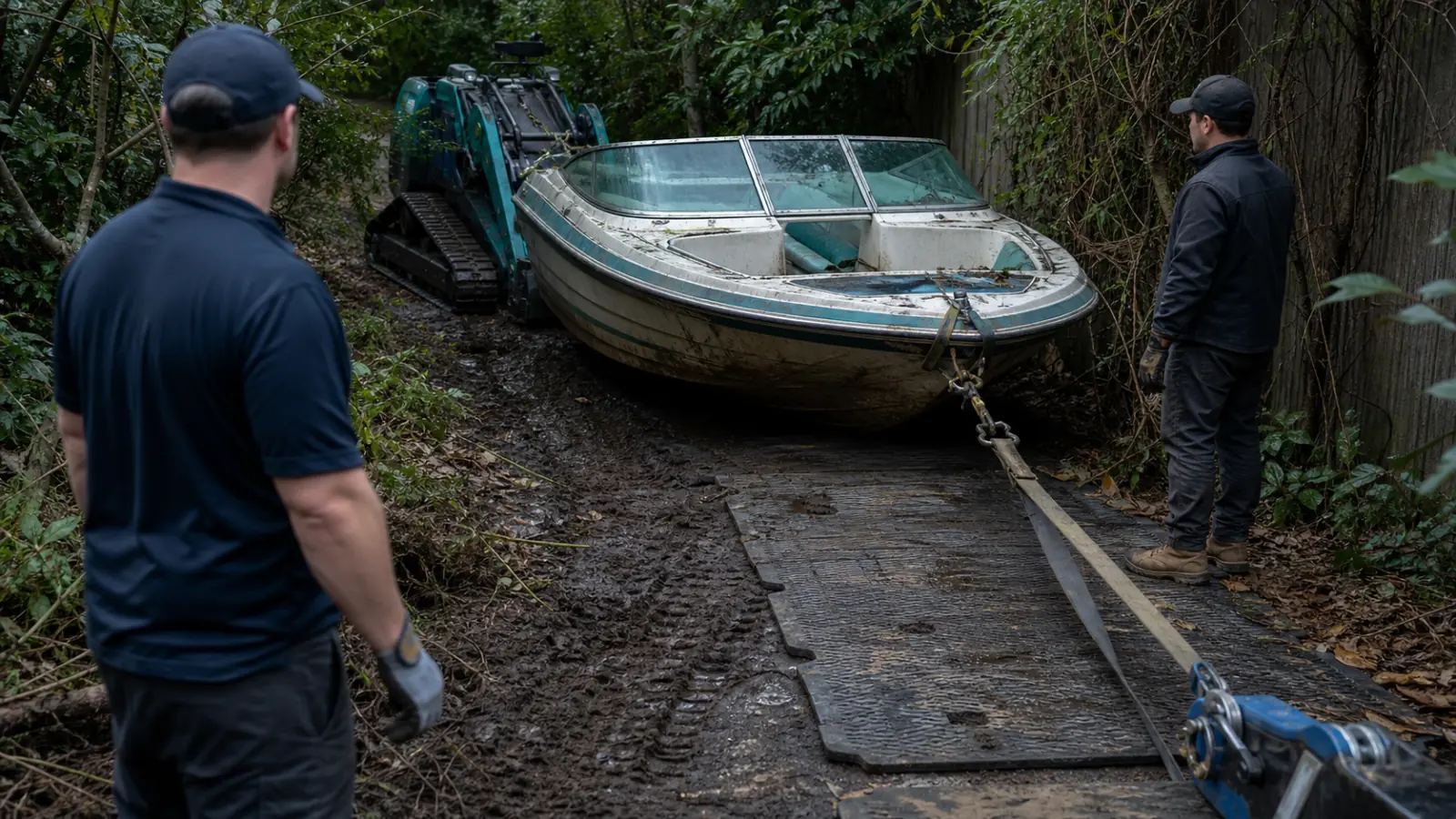
Site access heavily influences the strategy chosen by the transport crew. A lightweight fishing boat resting on a functioning trailer demands a very different approach than a wide pontoon stuck on a rotted frame or a deep-draft sailboat supported by wooden blocks. Narrow driveways, low-hanging tree branches, overhead utility lines, and tight property fences all restrict how close a heavy haul truck can get to the stern.

Surface conditions under the vessel also alter the recovery plan. If a craft sits on soft soil, gravel, or marshy ground along the water, standard transport rigs risk sinking into the mud. In these instances, ground mats, high-capacity winches, or mobile crane equipment are utilized to move the vessel safely onto paved ground without causing property damage.
Every Type of Boat We Handle

Situations We Handle

Need Help? We’re Ready.

Contact boat removers directly or request free quotes. We dispatch crews fast.

Our Step-by-Step Process

Assessment

We evaluate the boat’s size, current location, condition, and any environmental or access challenges before we schedule boat removal.

Planning

A detailed plan is built around your vessel — equipment, logistics, timeline, and safety. Services include drainage of oil and fuel before transport.

Execution

Our experienced crew mobilizes to your current location and we tow, haul, or dismantle the vessel using professional marine equipment.

Completion

The vessel is recovered, recycled, or routed to certified boat junkyards for environmentally responsible disposal. The site is left clean.

Equipment & Capabilities

When a vessel cannot roll on its own tires, specialized load equipment is brought to the site. Hydraulic landoll trailers, heavy-duty tilt beds, and high-capacity winches are utilized to haul problematic frames off the turf. If a vessel is structurally compromized, jammed between permanent obstacles, or simply too large to pass through a gate, the crew will dismantle the superstructure directly on site. Using heavy reciprocating saws, plasma cutters, and rigging tools, technicians break down fiberglass, aluminum, and timber into manageable sections that fit safely onto flatbed transports.

Before any cutting or transport takes place, fluid management is mandatory. Crews systematically drain fuel tanks, siphon crankcase oil, remove hydraulic fluids, and extract heavy marine batteries. Any aboard electronics, mercury switches, and air conditioning refrigerants are isolated for careful handling. Removing these hazardous materials prevents environmental contamination on the property and ensures full compliance with environmental disposal services regulations.

Once the vessel is processed and loaded, the materials are sorted based on composition. Intact aluminum or steel components are directed toward metal recycling streams, while sound mechanical parts may be salvaged. Broken fiberglass, contaminated wood, and ruined upholstery are processed for transfer to an authorized landfill. The crew evaluates each vessel upon arrival to determine whether on-site cutting, direct towing, or complete structural breakdown provides the safest, most efficient path for clearance.

Our boat removal experience covers everything from start to finish  assessment, planning, execution, dismantling, and final cleanup. Marina operators and property owners across Kane County trust us to get rid of your junk boat without damage to surrounding property.

FAQ

Boat Removal Questions - Frequently Asked

Common questions from property owners about our junk removal service, dismantling, and marine recovery.

We handle every type of vessel — sailboat, pontoon, fishing boats, jon boats, yachts, and commercial craft. Whether your boat or sailboat floats (or used to), we’ll remove it from any current location.

Yes. Sunken and partially submerged vessel recovery is a core part of our salvage work in Kane County. We use lift bags, salvage pumps, and marine cranes to safely raise vessels from underwater.

We respond to inquiries quickly — usually within hours, with same-day service available. For emergency situations, we mobilize as fast as possible. Call us directly for time-sensitive jobs.

No. Every job is handled in-house by our own team and equipment. No middlemen, no handoffs, no surprises.

Cost depends on the boat’s size, current location, condition, and complexity of the job. We provide free assessments and free quotes for every case — contact us and we’ll give you an honest estimate.

Yes. Our boat removal and disposal services include hazardous materials handling, oil and fuel drainage, hull dismantling, and recycling at certified yards — all in compliance with environmental regulations and environmentally responsible standards.

Absolutely. We regularly work in tight marinas, shallow waterways, private docks, backyards, and remote areas. We bring the right gear to reach any current location.

Yes. We frequently work with insurance adjusters on salvage and recovery claims and provide the documentation needed for your claim.

Browse Our Services - Ready to Get Started?

We handle everything from start to finish. Call us now or request a free quote – we’ll dispatch crews and haul your vessel away fast.