
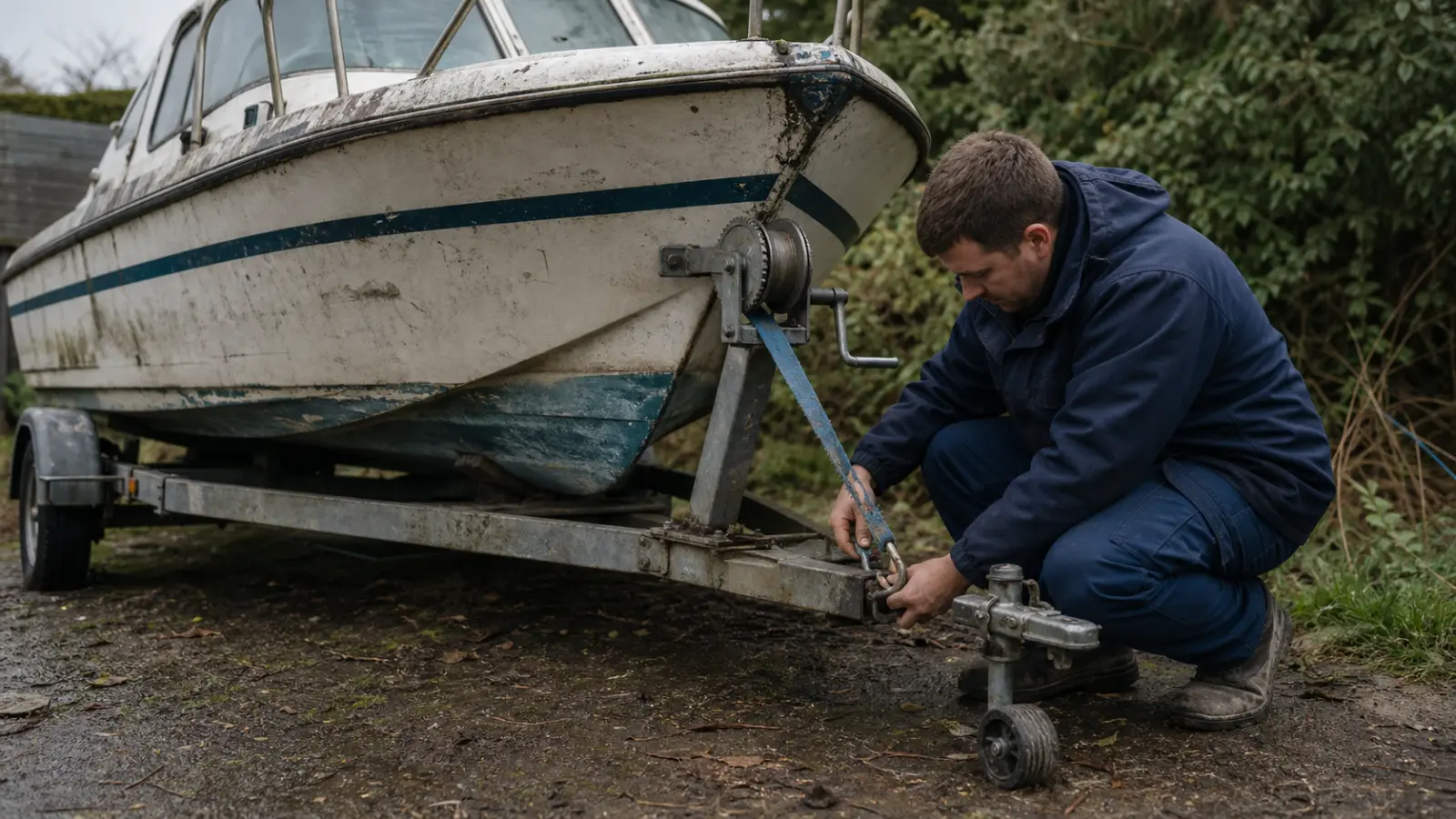
Professional Boat Removal Services in Bainbridge Island, WA

A fiberglass hull sits behind the garage on a trailer whose tires flattened into the gravel three seasons ago, slowly filling with needle litter and trapped rainwater. Down at the water, a notice from a slip manager sits unread, warning that an unpaid berth must be cleared before fees double. A residential lot purchased last autumn came with an old boat resting on rotted timber cradles, its history entirely unrecorded. An outboard motor seized mid-season, and the local marine shop quoted a rebuild price that far exceeds the value of the vessel. When an old boat shifts from a source of recreation to a heavy physical liability, the owner is left facing a complicated extraction problem on property that was never designed for heavy haulers.

Is there boat removal near me in Bainbridge Island, WA?

Yes, Boat Removal Experts handles complete vessel extractions, winching unusable hulls off residential lots and out of tight berths. Our process includes issuing a formal release of liability to protect the owner once the vessel leaves the property. Some informal haulers tow a vessel away without paperwork, leaving the original registered owner fully responsible if that hull is later dumped on public land. It is vital to verify how liability is handled before letting anyone haul a craft away.

Getting a craft off a property involves more than hooking up a hitch. A trailer with locked bearings or dry-rotted tires will not roll onto a flatbed without specialized skids. Hulls sitting directly on grass present major challenges, as a heavy haul truck can sink into damp ground. Wide beams often exceed narrow access gates, and deep keels demand custom blocking before any movement begins.

Call 206-401-8502 to start.

Send photos through the contact form.

What Is Boat Removal and When You Need It

Professional boat disposal goes far beyond simply hooking a winch to a rusted tongue and pulling a trailer down the driveway. When a craft sits abandoned or forgotten, the work requires evaluating structural integrity, clearance limits, and legal ownership before any transport occurs. An abandoned boat left in an unpaid marina slip or tucked behind a commercial property presents distinct challenges compared to a private vessel sitting on a paved driveway. Every situation requires a clear strategy for safely moving the craft without causing property damage or leaving environmental hazards behind.
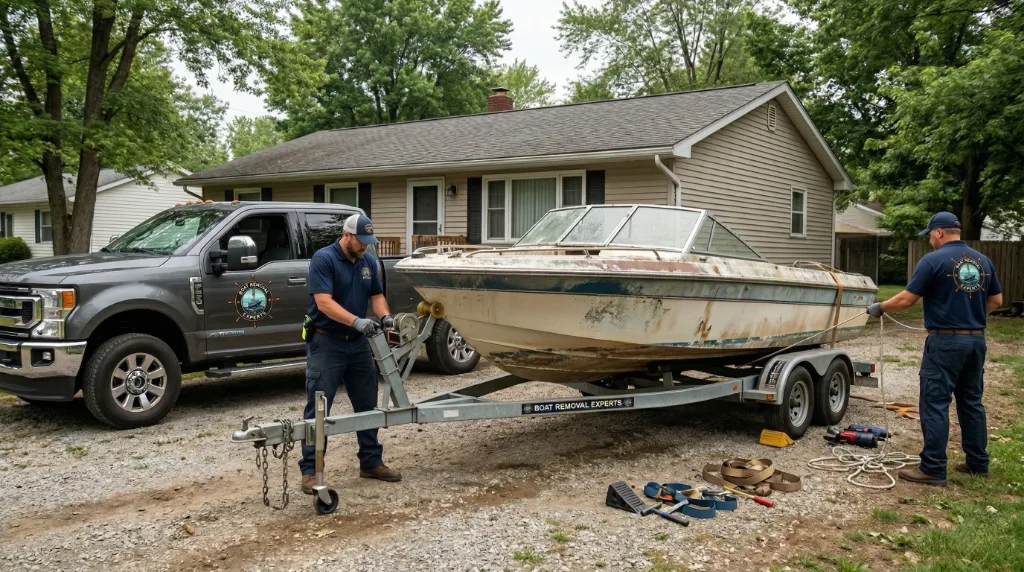
Having a clear title in hand simplifies boat removal, allowing the transfer or processing of paperwork to move quickly. However, owners often deal with lost documentation, missing titles on old vessels, or craft that were inherited when purchasing real estate in Bainbridge Island, WA. A derelict hull left on private land without documentation requires specific steps to establish legal clearance before it can be legally transported off the site. The presence of a registered HIN or legible registration decals dictates how the paperwork must be handled prior to hauling.

When a vessel remains in a neglected state for years, its physical condition dictates how the crew approaches the task. Hulls with missing drainage plugs can collect hundreds of gallons of trapped water, drastically increasing total weight and threatening structural stability during extraction. Whether dealing with a lightweight aluminum shell or a heavy fiberglass cruiser, the path out depends entirely on hull strength, site access, and complete legal release.
When Bainbridge Island Residents Call Us

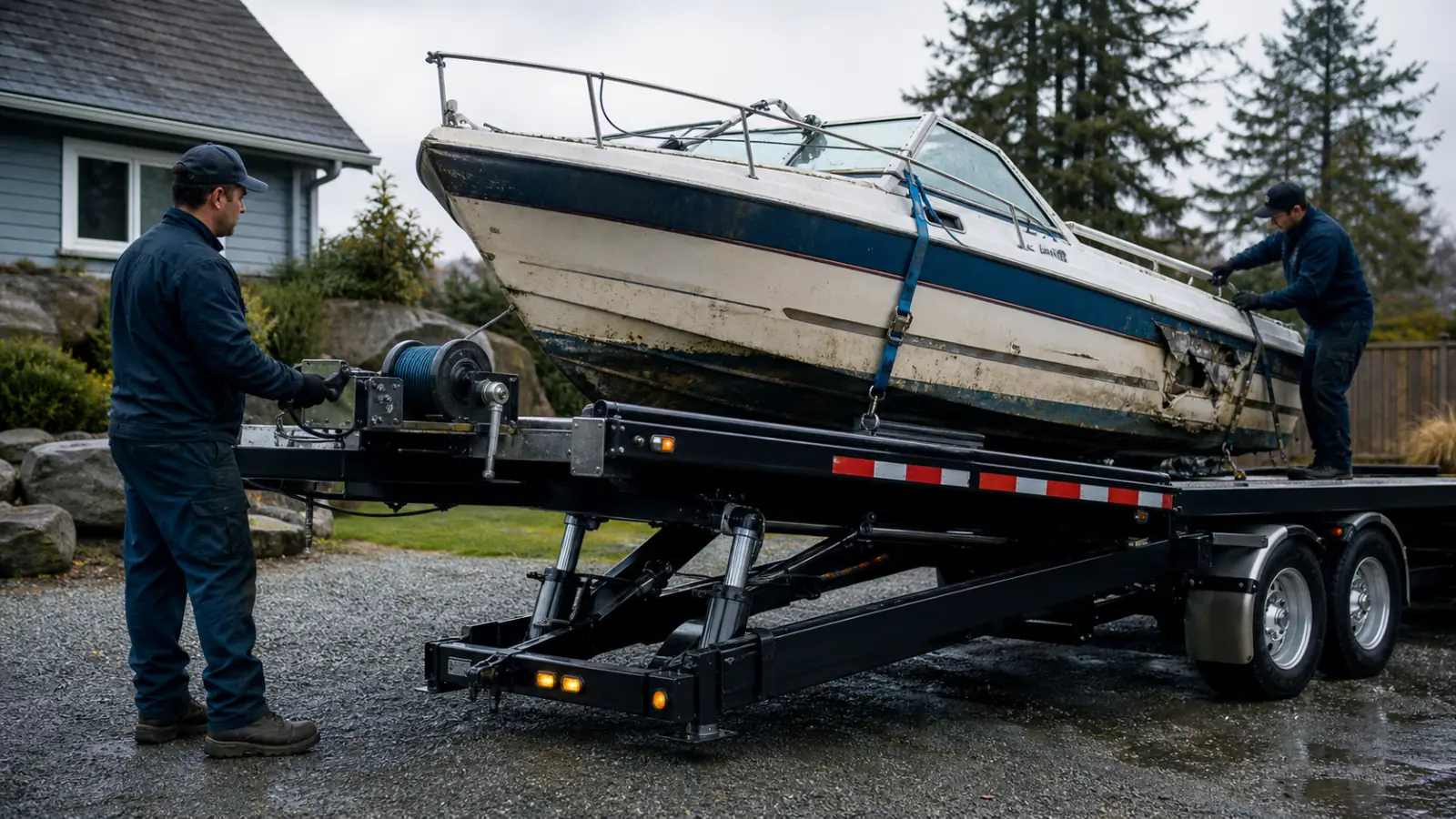
Unused vessels in Bainbridge Island, WA face harsh damp weather that causes steady decay over time. Rainwater pools in cockpits and engine compartments, causing fiberglass gelcoat to craze, underlying wood decking to rot, and internal upholstery to grow heavy mold. A neglected hull holding hundreds of pounds of water becomes structurally compromized, making standard towing dangerous. When wood transoms decay, outboards and stern drives lose their mounting support, requiring careful bracing before any transport begins. Moisture also seeps into electrical systems and structural floor frames, softening the craft and complicating how it must be supported during winching.
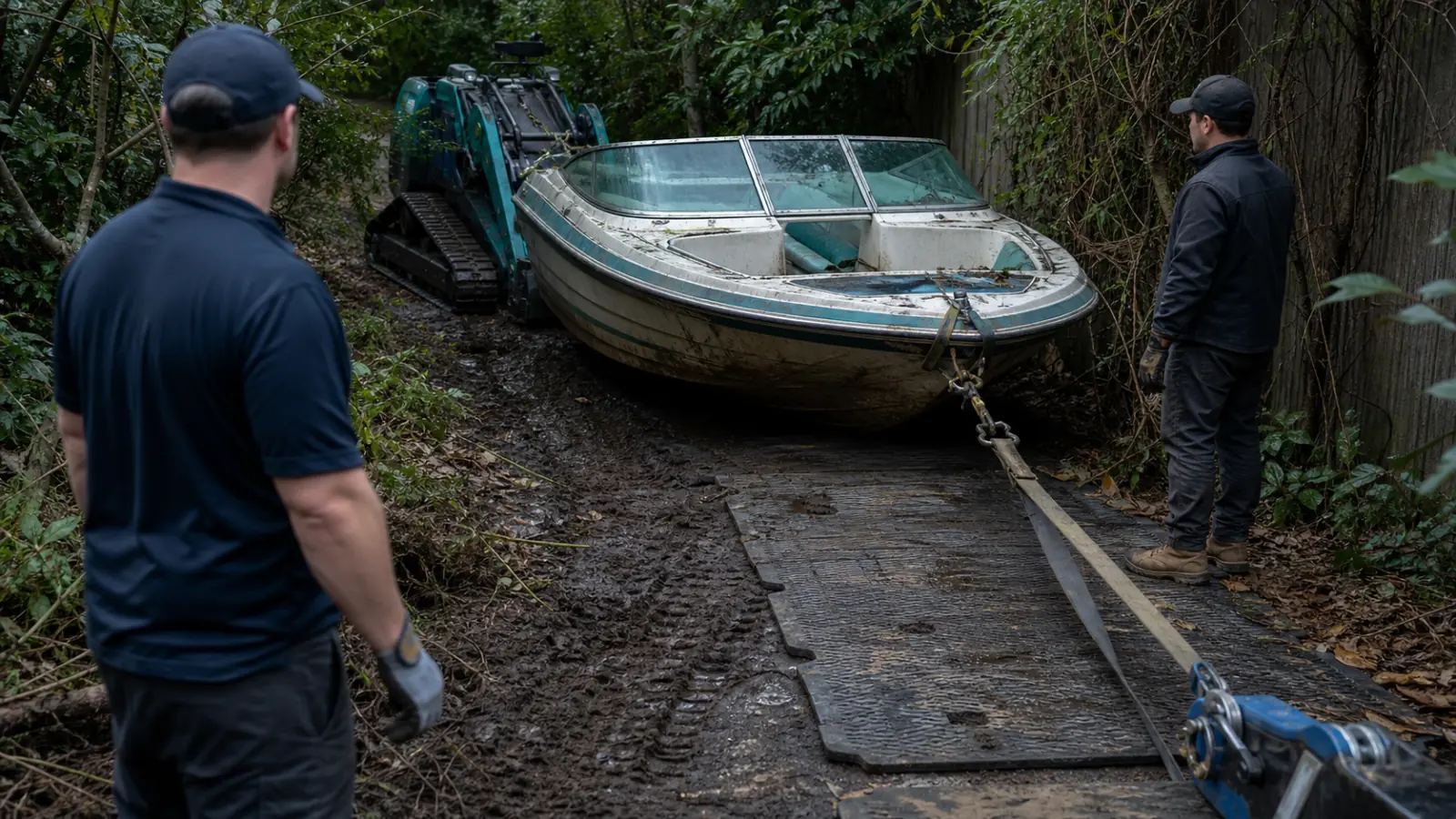
Site conditions in Kitsap County heavily dictate how a vessel is retrieved. Narrow asphalt driveways, low-hanging tree branches, and tight residential gates create significant obstacles for large hauling rigs. Crews often must navigate soft lawns, muddy soil, or sloped ground where heavy equipment risks sinking. Whether an old sailboat sits on wooden blocks on a backyard lawn, a pontoon rests on an unroadworthy trailer beside a shed, or a cabin cruiser remains tied to a dock down a steep approach, specialized gear is needed to safely maneuver the vessel without damaging surrounding structures.

Owners in nearby communities such as Suquamish, Keyport, Tracyton, Manchester, and Enetai frequently call when a decaying fishing boat or runabout becomes too damaged to keep. The crew evaluates the physical state of the vessel along with the terrain to determine the safest method for clearing the space.
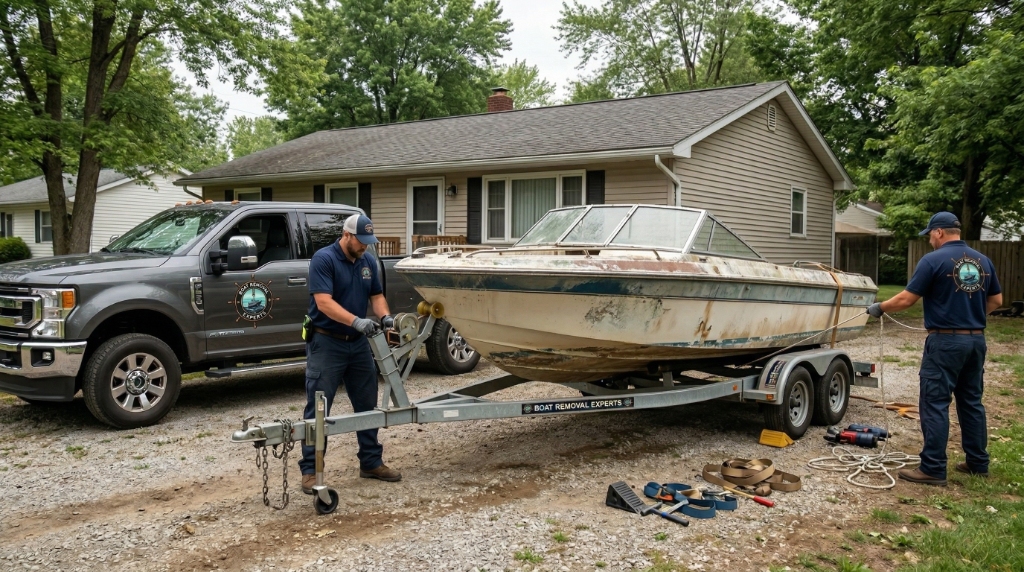
Every Type of Boat We Handle

Situations We Handle

Need Help? We’re Ready.

Contact boat removers directly or request free quotes. We dispatch crews fast.

Our Step-by-Step Process

Assessment

We evaluate the boat’s size, current location, condition, and any environmental or access challenges before we schedule boat removal.

Planning

A detailed plan is built around your vessel — equipment, logistics, timeline, and safety. Services include drainage of oil and fuel before transport.

Execution

Our experienced crew mobilizes to your current location and we tow, haul, or dismantle the vessel using professional marine equipment.

Completion

The vessel is recovered, recycled, or routed to certified boat junkyards for environmentally responsible disposal. The site is left clean.

Equipment & Capabilities

When a craft cannot be pulled on its own wheels, the crew relies on heavy-duty winches, hydraulic skids, slide axles, and temporary transport dollies to load the vessel. If a trailer tongue breaks or axles snap from severe rust, the crew lifts and stabilizes the hull directly off the ground. In cases where a vessel is too wide for residential gates or severely broken to be hauled in one piece, workers safely dismantle the superstructure on site before loading the debris.

Before any transport or dismantle work begins, all hazardous materials must be managed carefully. Fuel tanks are drained, motor oil and hydraulic fluids are pumped out, and lead-acid marine batteries are removed. Integrated electronics, oily bilge water, and pyrotechnic flares are separated to meet strict environmental handling guidelines. Removing these fluids and hazardous items prevents toxic spills on the driveway or road during transport.

Once the vessel is safely loaded and cleared from the property, the materials are sorted for proper processing. Metal fittings, aluminum hulls, lead ballast, and stainless steel hardware are routed toward metal recycling facilities. The remaining fiberglass fragments and non-recyclable structural materials are taken to approved regional waste facilities for final disposal. The crew assesses the vessel on site to determine the safest, most efficient path for removal and disposal.

Our boat removal experience covers everything from start to finish  assessment, planning, execution, dismantling, and final cleanup. Marina operators and property owners across Kitsap County trust us to get rid of your junk boat without damage to surrounding property.

FAQ

Boat Removal Questions - Frequently Asked

Common questions from property owners about our junk removal service, dismantling, and marine recovery.

We handle every type of vessel — sailboat, pontoon, fishing boats, jon boats, yachts, and commercial craft. Whether your boat or sailboat floats (or used to), we’ll remove it from any current location.

Yes. Sunken and partially submerged vessel recovery is a core part of our salvage work in Kitsap County. We use lift bags, salvage pumps, and marine cranes to safely raise vessels from underwater.

We respond to inquiries quickly — usually within hours, with same-day service available. For emergency situations, we mobilize as fast as possible. Call us directly for time-sensitive jobs.

No. Every job is handled in-house by our own team and equipment. No middlemen, no handoffs, no surprises.

Cost depends on the boat’s size, current location, condition, and complexity of the job. We provide free assessments and free quotes for every case — contact us and we’ll give you an honest estimate.

Yes. Our boat removal and disposal services include hazardous materials handling, oil and fuel drainage, hull dismantling, and recycling at certified yards — all in compliance with environmental regulations and environmentally responsible standards.

Absolutely. We regularly work in tight marinas, shallow waterways, private docks, backyards, and remote areas. We bring the right gear to reach any current location.

Yes. We frequently work with insurance adjusters on salvage and recovery claims and provide the documentation needed for your claim.

Browse Our Services - Ready to Get Started?

We handle everything from start to finish. Call us now or request a free quote – we’ll dispatch crews and haul your vessel away fast.