

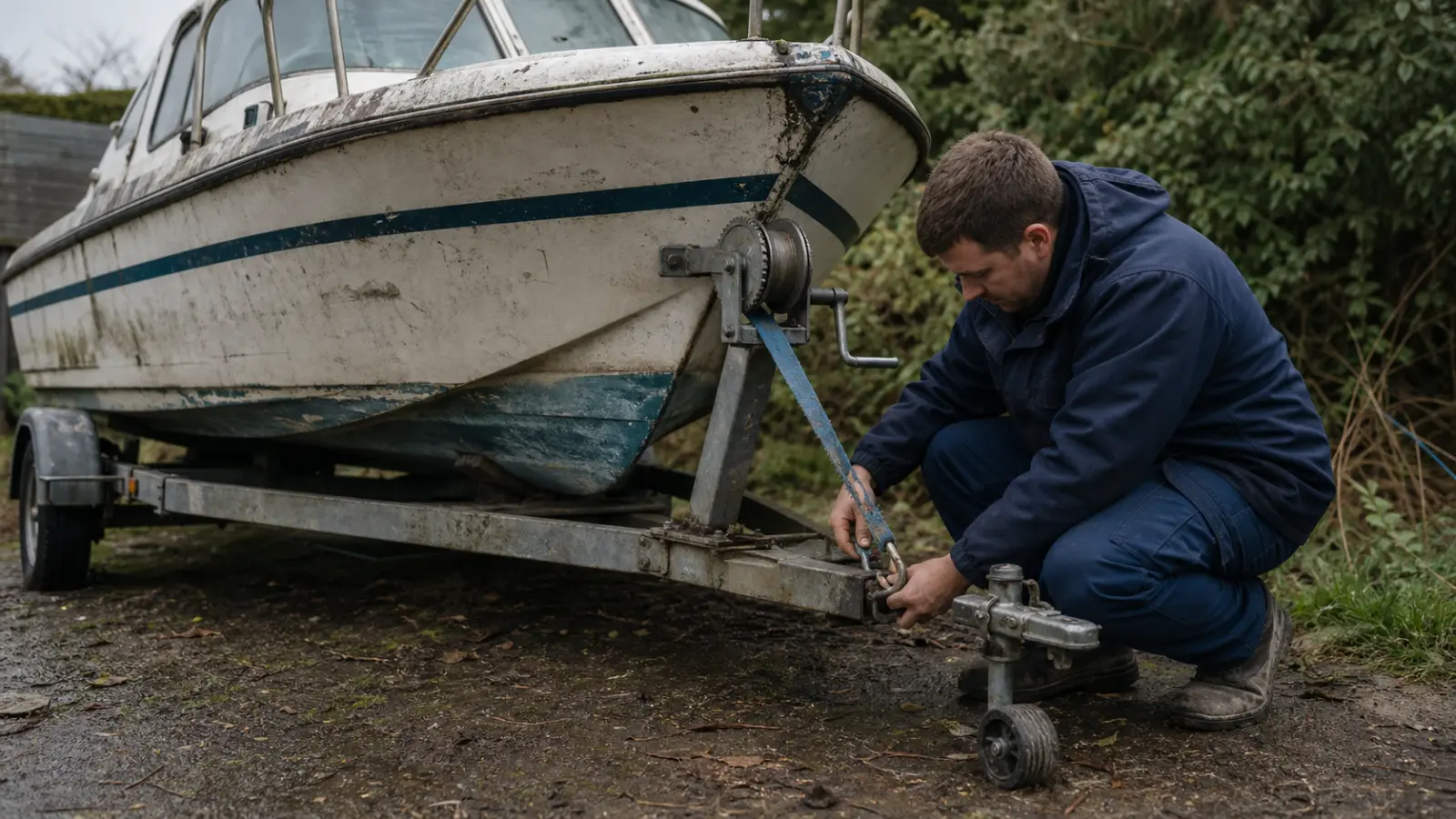
Before any vessel leaves the site, establishing proper legal paperwork is critical. Our company position is clear: we do not always transfer the vessel title, but we always issue a formal release of liability to the owner. Some unregulated outfits simply haul a vessel away with no paper trail, leaving the original owner fully responsible for future municipal abandonments or environmental fines. Requesting written documentation protects you long after the haul is finished.
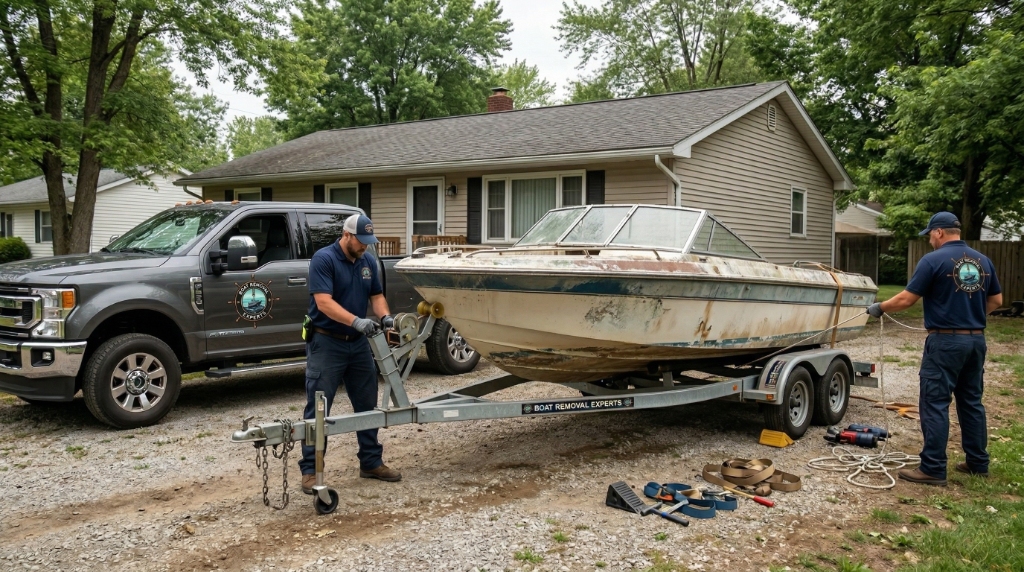
Moving a junk boat is rarely simple. Flat trailer tires, frozen wheel bearings, or a rusted axle can prevent a vessel from rolling onto a flatbed. A heavy keel or custom storage cradle adds awkward weight, while a wide beam might not clear tight side gates. If the hull rests on soft lawn soil, standard transport trucks cannot cross without risking deep mud ruts or stuck equipment, requiring specialized winches and rigging strategies.
Call (855) 765-7931 to start.
Send photos through the contact form.
Professional boat removal covers far more than hooking a trailer to a hitch and driving away. When a vessel is no longer seaworthy, the process involves assessing structural integrity, securing loose components, managing weight distribution, and coordinating final boat disposal. Whether dealing with a neglected runabout on land or an abandoned boat sitting in a paid slip, every project requires distinct handling techniques based on location and physical condition.
Paperwork dictates how a vessel is processed. When an owner possesses a clean title and matching HIN, the clearance moves forward rapidly. However, when paperwork is missing, lost over time, or tied to a newly purchased real estate property, alternative documentation must be established. An abandoned boat left on private land or within a commercial facility without proper registration requires formal verification steps before heavy machinery can move it. Unpaid slip fees, structural damage, and unknown ownership history all influence the timeline and legal requirements needed to clear the site properly.
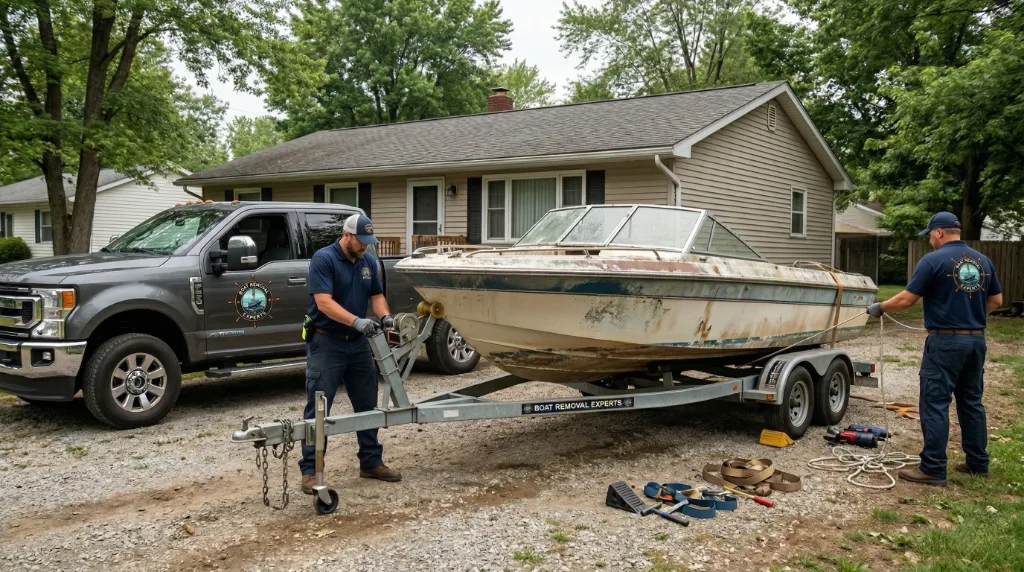
Vessels that have degraded into derelict status present extra environmental and handling challenges. A hull holding hundreds of gallons of trapped rainwater becomes immensely heavy, stressing structural floor frames and complicating the lift. Removing a derelict hull safely depends on whether the fiberglass can withstand winching pressures without cracking, how deep the trailer frame has sunken into the earth, and whether clear access exists for recovery vehicles to load the vessel safely.
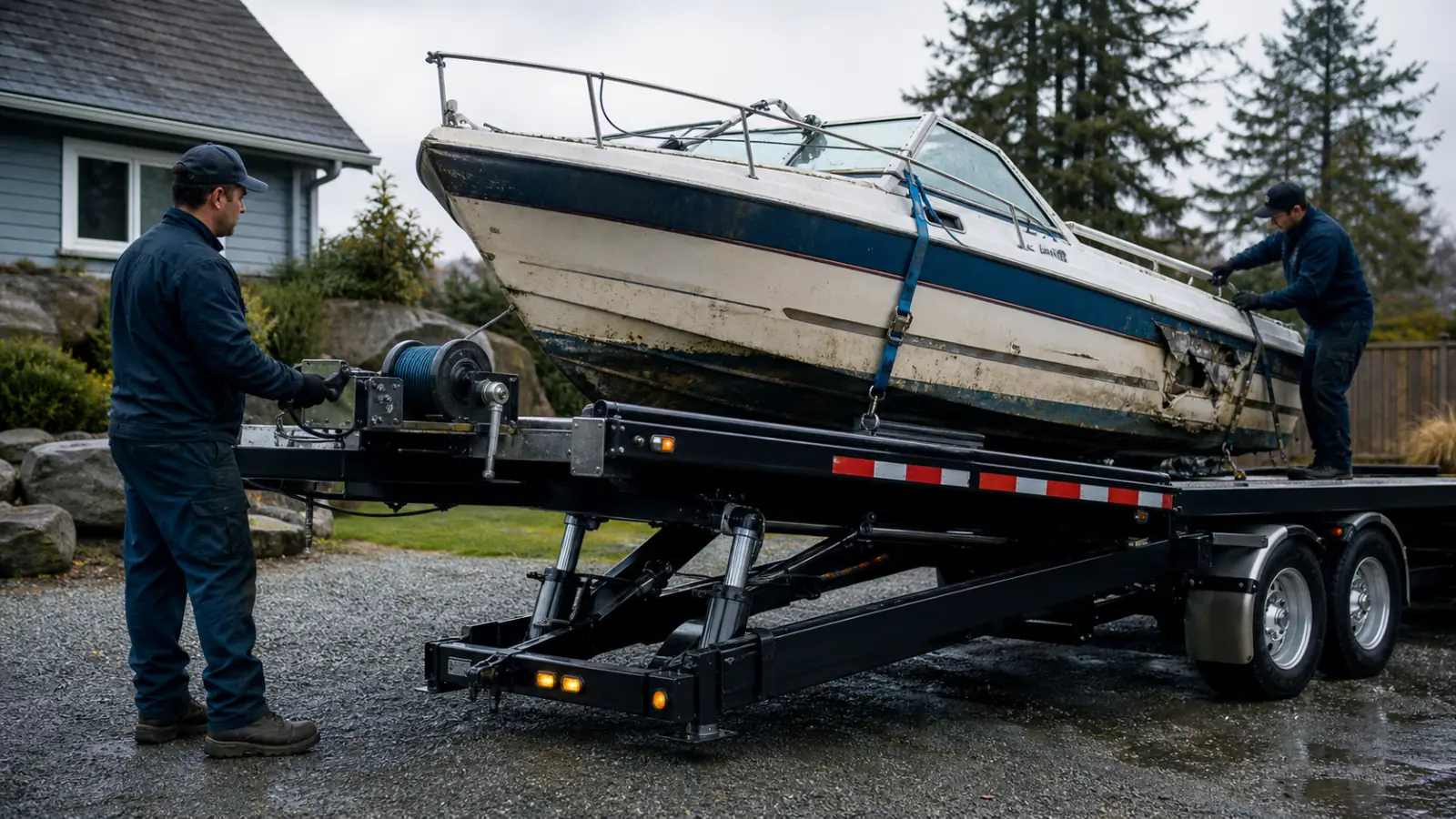
Property owners call for help across Baltimore because sitting vessels deteriorate rapidly under local weather conditions. The changing seasons bring freezing temperatures, heavy rainfall, and intense summer sun that steadily ruin neglected fiberglass. Rainwater pools inside an open cockpit, freezing and expanding during winter months to crack gelcoat layers and rot internal wooden floor frames. Waterlogged upholstery molders, while trapped moisture causes floorboards to collapse. A sitting sailboat, heavy pontoon, or small fiberglass fishing boat quickly becomes a severe structural liability when rain saturates the interior framing and adds thousands of pounds of unexpected weight.
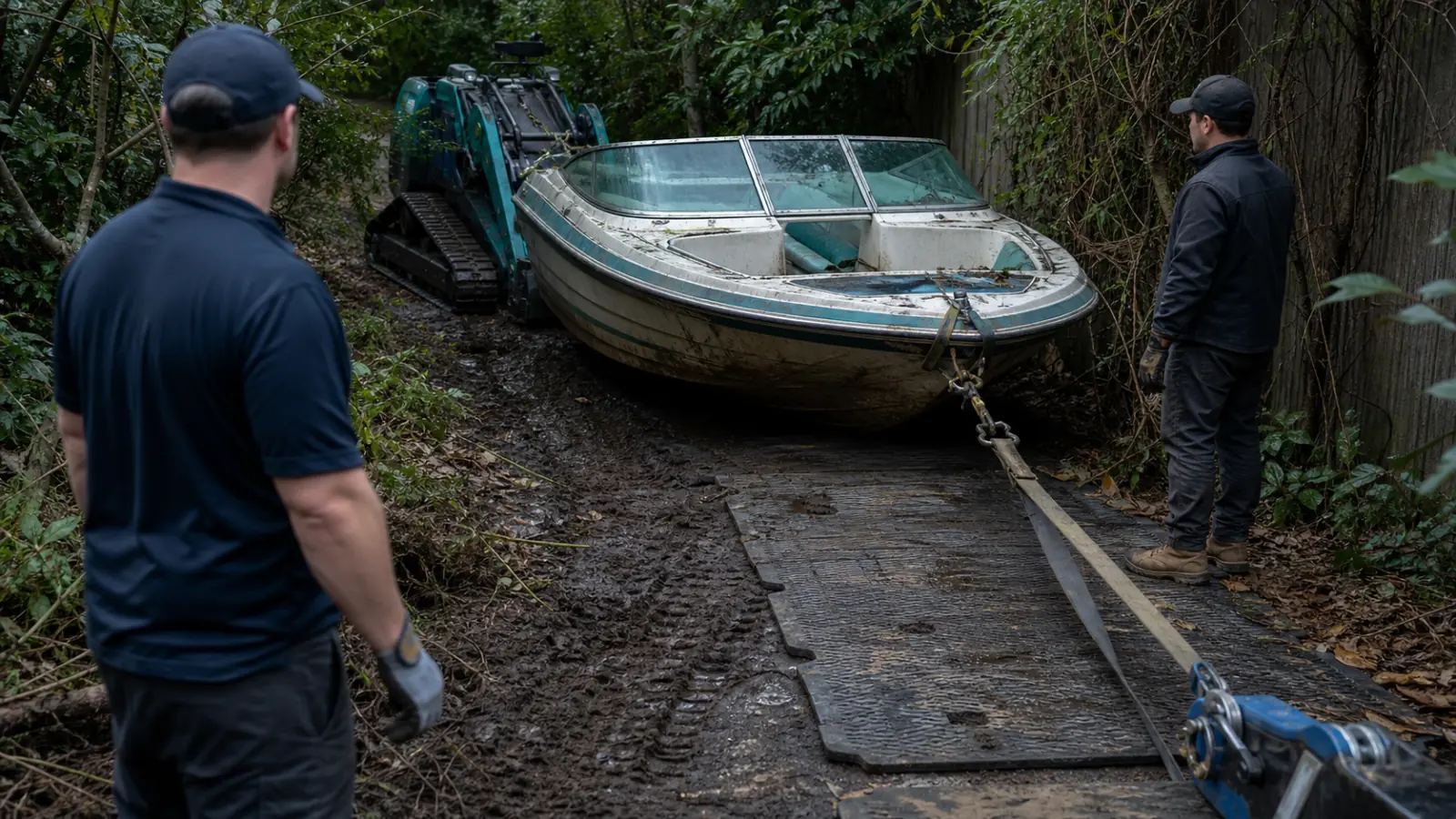
Site conditions in neighborhoods like Baltimore Highlands, Lansdowne, and Brooklyn Park heavily influence how a project is executed. Tight alleyways, narrow driveways, soft grass yards, and low-hanging tree branches or overhead utility lines affect how recovery trucks reach the craft. A vessel stored in Rosedale or Arbutus on rotted wooden blocks requires entirely different rigging than one sitting on a functional tandem-axle trailer. Whether the vessel rests on a high cradle, sits flat on damp dirt, or remains tied in the water, the surrounding terrain dictates the exact approach, winching angles, and clearance strategy needed for a safe pickup.

Assessment
We evaluate the boat’s size, current location, condition, and any environmental or access challenges before we schedule boat removal.

Planning
A detailed plan is built around your vessel — equipment, logistics, timeline, and safety. Services include drainage of oil and fuel before transport.

Execution
Our experienced crew mobilizes to your current location and we tow, haul, or dismantle the vessel using professional marine equipment.

Completion
The vessel is recovered, recycled, or routed to certified boat junkyards for environmentally responsible disposal. The site is left clean.