
Professional Boat Removal Services in Biloxi, MS

An old boat resting on a flat-tired trailer behind a garage often turns into a permanent fixture that slowly rots while taking up valuable yard space. In other cases, a property sale closes with an abandoned cabin cruiser left on the back lot, or an old outboard motor seizes up and a full mechanical rebuild costs significantly more than the vessel is worth. Property owners also routinely find themselves dealing with sudden notices from marina managers regarding unpaid slip fees for a hull that no longer floats. When a vessel reaches the end of its useful life, turning to a dedicated service for professional boat removal becomes the most practical way to clear the land.

Is there boat removal near me in Biloxi, MS? Boat Removal Experts handles the entire hauling process for local property owners who need a discarded junk boat cleared from a residential lot or commercial property.

Transferring an official title is not always required to clear a vessel, but our company always issues a formal release of liability to the owner upon pickup. Some unverified operators will haul a vessel away without completing any formal paperwork, leaving the legal owner fully responsible if that hull is later abandoned on public land or along a roadway. Asking for proper written liability documentation before any work begins protects you from future legal trouble.

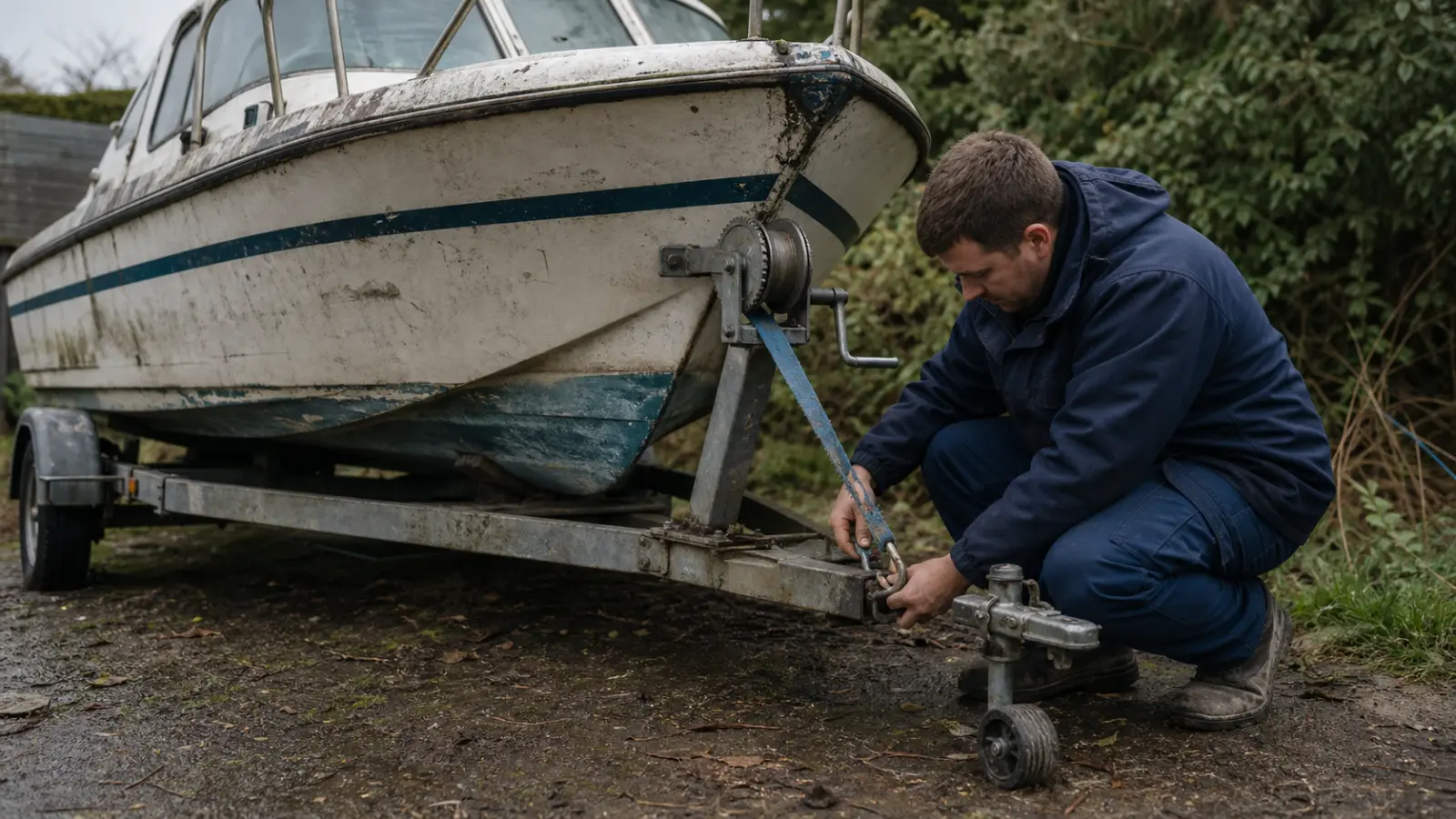
Moving a decaying hull is rarely as simple as hooking a truck to a bumper. A trailer that has sat in place for years usually has seized wheel bearings, dry-rotted tires, and a rusted frame that cannot safely roll. Keels sinking into soft turf, vessel beams wider than modern fence gates, and heavy glass hulls resting on soft soil that cannot support heavy towing equipment all create complex physical challenges that require specialized extraction tools.

Call 228-452-1438 to start.

Send photos through the contact form.

What Is Boat Removal and When You Need It

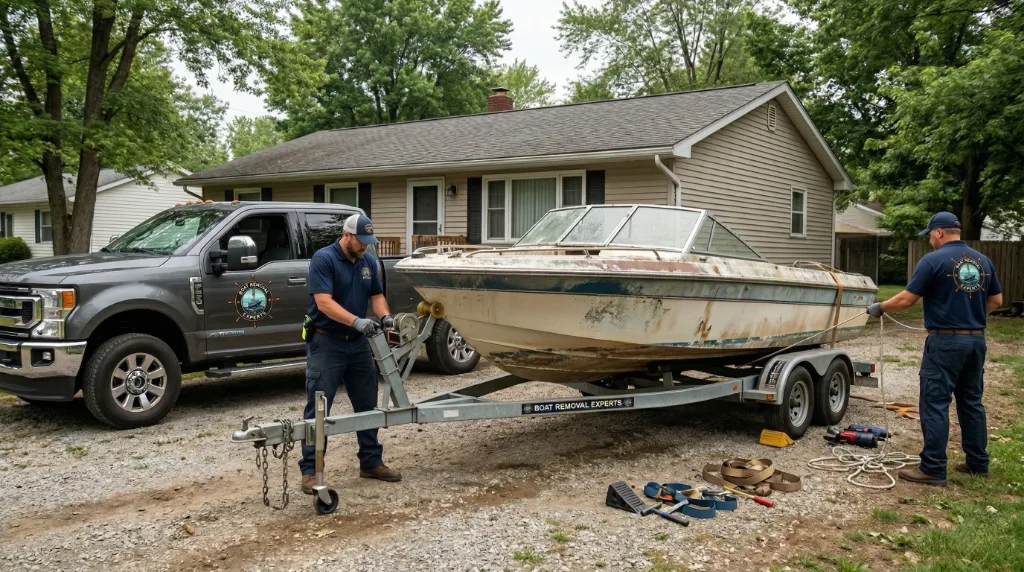
Professional boat disposal goes far beyond simply hooking up a tow vehicle and driving away. Complete vessel extraction involves evaluating the structural integrity of the hull, securing loose wreckage, and safely moving the craft without causing damage to surrounding structures or landscape. Whether a project involves an abandoned boat sitting on private land or a derelict craft sitting in a rented slip, proper handling requires specialized rigging equipment and experienced crew members who understand heavy transport mechanics.
The status of the vessel paperwork heavily influences how the extraction process moves forward. When an owner possesses a clear title or matching registration, the logistical path is straightforward. When paperwork is missing, lost over decades, or completely absent because a vessel was left behind after a real estate purchase, alternative documentation processes must be established. The condition of the vessel, the location of the serial numbers or HIN, and the status of property ownership all play a role in defining how a craft is legally cleared from a site.

Vessels left on private property or inside commercial slips without payment present unique legal and physical challenges. Landowners facing a derelict vessel left on their acreage need prompt relief to avoid code enforcement fines. Marina operators dealing with unpaid slip space must clear the water to open room for paying clients. In these situations, clearing the craft relies on verified site authorization, ensuring the removal crew can legally enter the parcel, secure the vessel, and transport it away without legal friction.
When Biloxi Residents Call Us

In Biloxi, Mississippi, intense sunlight, high humidity, and salt-laden ambient air act aggressively on inactive vessels. When a vessel sits unused, standing rainwater trapped inside the cockpit rots plywood decking, delaminates fiberglass layers, and saturates foam flotation core material, effectively doubling the overall weight of the craft. Gelcoat cracks under thermal expansion, while upholstery turns to moldy debris that holds moisture against metal fastenings. Whether dealing with a neglected fiberglass sailboat, a waterlogged pontoon, or a heavy aluminum fishing boat, weather degradation severely compromises structural integrity, making standard towing dangerous and requiring reinforced lift gear during boat salvage operations.
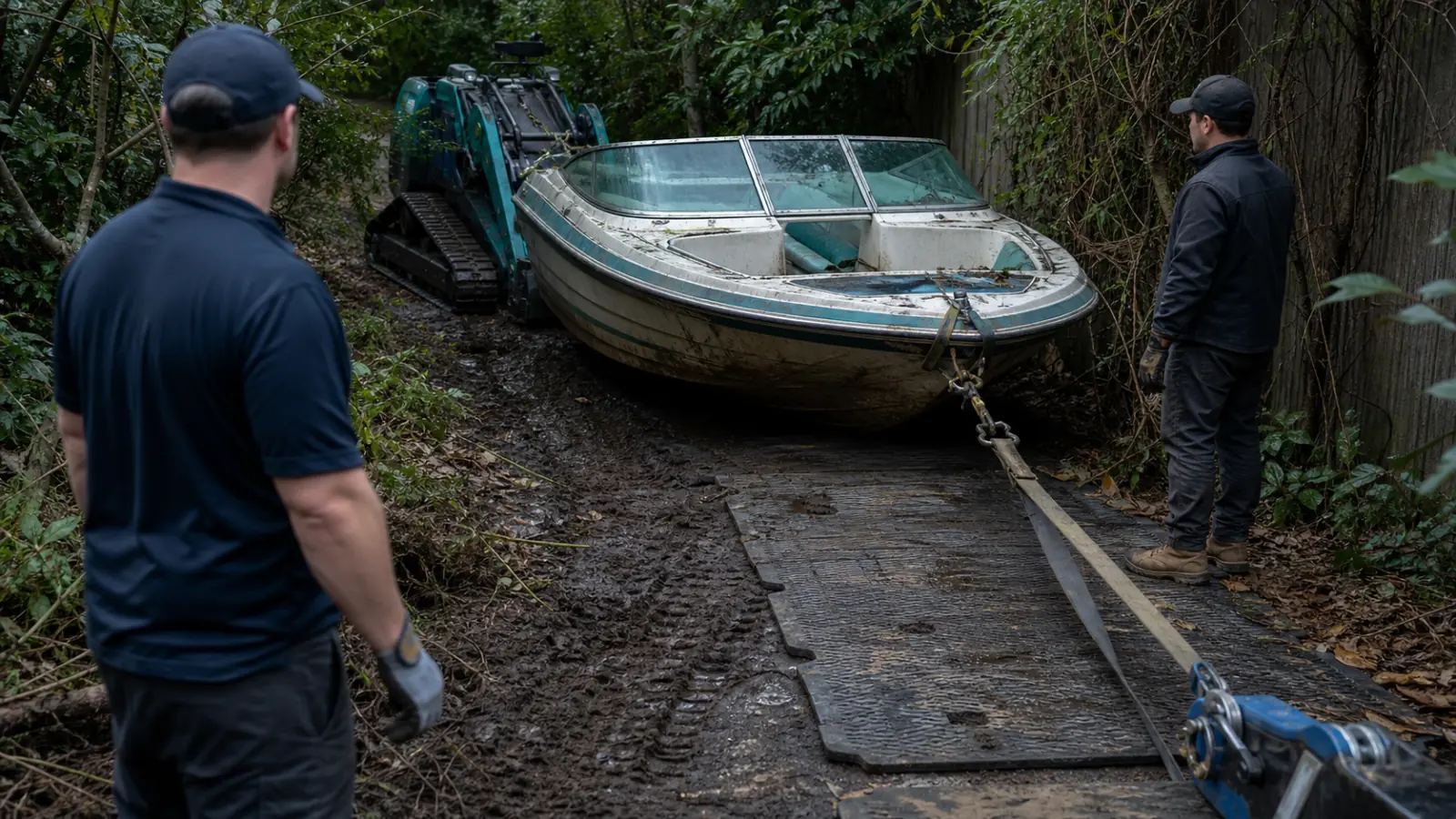
Local site access heavily influences how a crew approaches every job. Accessing a vessel located in nearby communities like D'Iberville, St. Martin, or Gulfport often involves navigating tight residential streets, narrow alleyways, or low-hanging overhead lines. The surface beneath the craft dictates the extraction method; a hull sitting on a paved driveway presents very different challenges than a vessel resting on soft coastal mud, blocks, or anchored out in open water. Cresting hills or maneuvering past narrow gates in areas like Latimer or Gulf Hills requires evaluating truck turning radiuses and surface load limits before rolling heavy equipment onto a client's lawn.
Every Type of Boat We Handle

Situations We Handle

Need Help? We’re Ready.

Contact boat removers directly or request free quotes. We dispatch crews fast.

Our Step-by-Step Process

Assessment

We evaluate the boat’s size, current location, condition, and any environmental or access challenges before we schedule boat removal.

Planning

A detailed plan is built around your vessel — equipment, logistics, timeline, and safety. Services include drainage of oil and fuel before transport.

Execution

Our experienced crew mobilizes to your current location and we tow, haul, or dismantle the vessel using professional marine equipment.

Completion

The vessel is recovered, recycled, or routed to certified boat junkyards for environmentally responsible disposal. The site is left clean.

Equipment & Capabilities

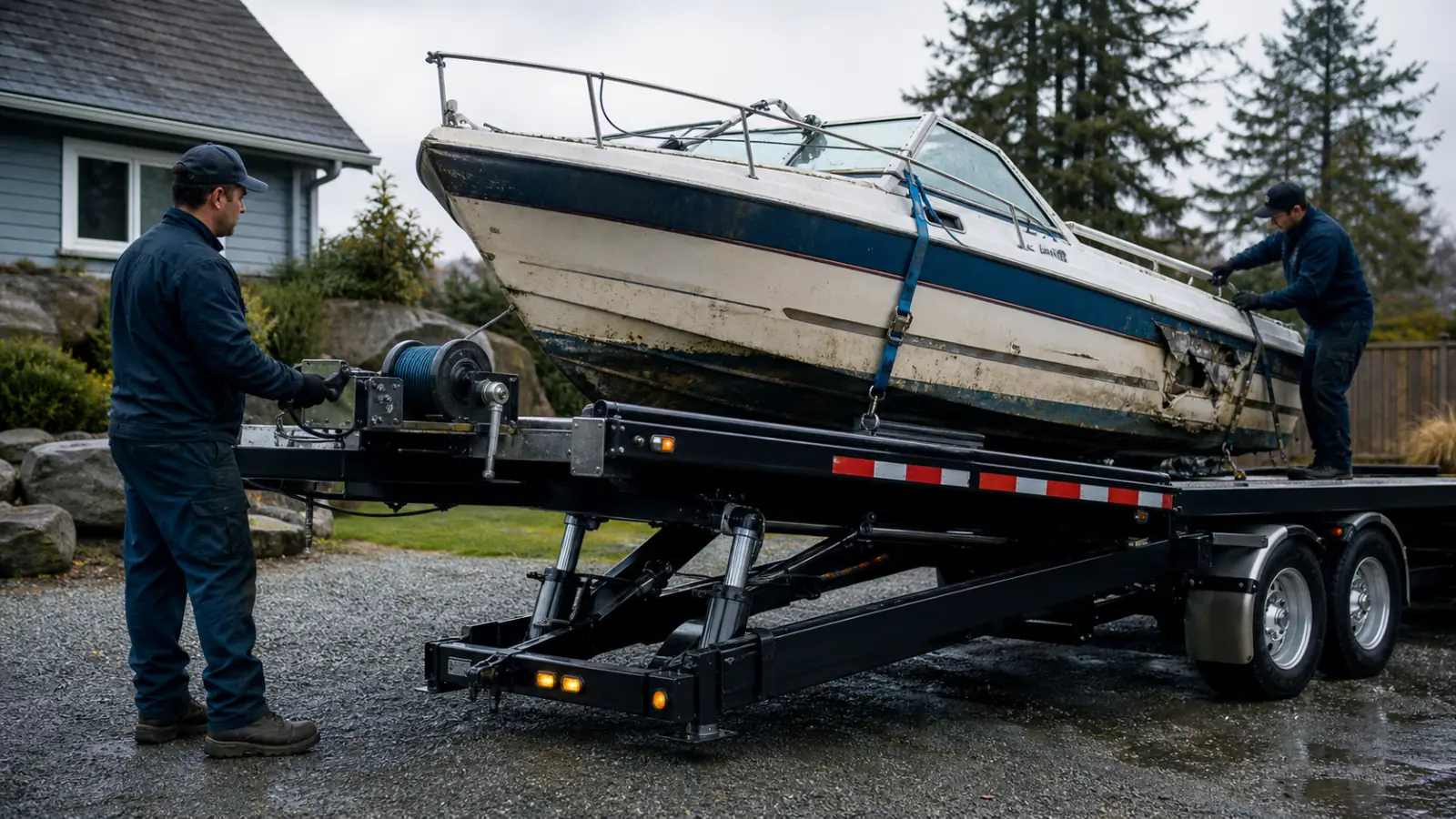
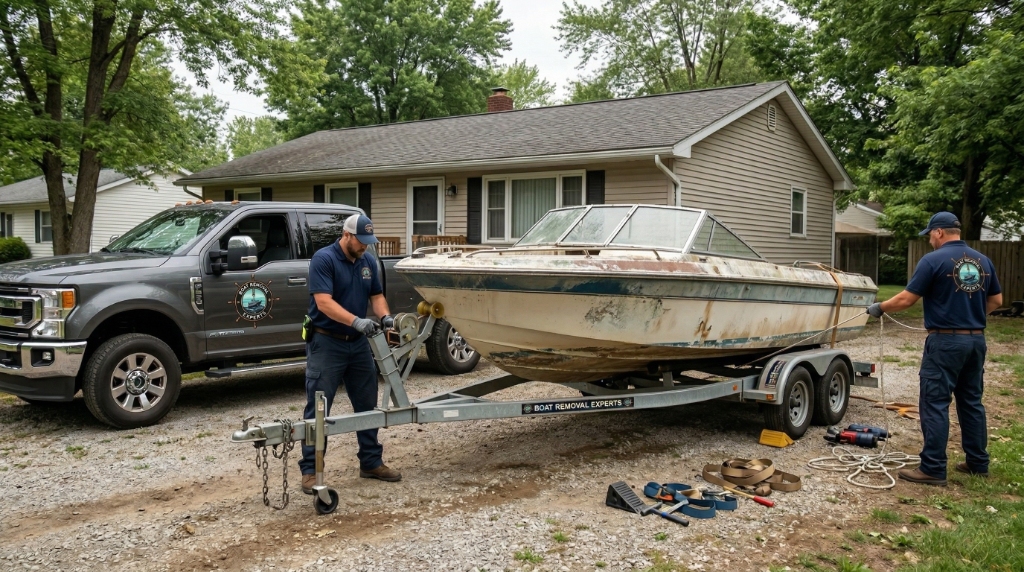
When a vessel sits on a trailer with frozen axles or completely collapsed tires, specialized field equipment is deployed to load the load safely. The recovery crew utilizes heavy winch systems, hydraulic ground jacks, and heavy-duty skids to elevate and drag an immobile vessel onto a flatbed transporter without relying on the damaged trailer beneath it. If a craft is structurally compromized, jammed between tight structures, or far too large to haul as a single piece, specialized cutting tools are used to dismantle the superstructure directly on site into manageable sections.

Before any physical hauling takes place, the crew focuses on handling hazardous materials trapped within the hull. Fluids must be drained, collected, and prepped for environmental compliance. Fuel tanks containing stale gasoline or diesel, crankcase motor oil, lead-acid marine batteries, and old electronics are carefully detached and separated from the main frame. Removing these hazardous components prevents chemical spills on private driveways and public highways during transit.

Once the vessel is safely loaded and cleared from the site, the destination of the materials depends entirely on what the crew finds upon arrival. Mixed fiberglass components, rotted wood, and saturated foam typically head to an approved regional landfill for proper earth containment. Conversely, clean aluminum hulls, steel trailers, stainless steel deck hardware, and reusable copper wiring are sorted for material recycling. The physical condition, material purity, and structural soundess of the hull dictate exactly where each portion of the craft is hauled.

Our boat removal experience covers everything from start to finish  assessment, planning, execution, dismantling, and final cleanup. Marina operators and property owners across Harrison County trust us to get rid of your junk boat without damage to surrounding property.

FAQ

Boat Removal Questions - Frequently Asked

Common questions from property owners about our junk removal service, dismantling, and marine recovery.

We handle every type of vessel — sailboat, pontoon, fishing boats, jon boats, yachts, and commercial craft. Whether your boat or sailboat floats (or used to), we’ll remove it from any current location.

Yes. Sunken and partially submerged vessel recovery is a core part of our salvage work in Harrison County. We use lift bags, salvage pumps, and marine cranes to safely raise vessels from underwater.

We respond to inquiries quickly — usually within hours, with same-day service available. For emergency situations, we mobilize as fast as possible. Call us directly for time-sensitive jobs.

No. Every job is handled in-house by our own team and equipment. No middlemen, no handoffs, no surprises.

Cost depends on the boat’s size, current location, condition, and complexity of the job. We provide free assessments and free quotes for every case — contact us and we’ll give you an honest estimate.

Yes. Our boat removal and disposal services include hazardous materials handling, oil and fuel drainage, hull dismantling, and recycling at certified yards — all in compliance with environmental regulations and environmentally responsible standards.

Absolutely. We regularly work in tight marinas, shallow waterways, private docks, backyards, and remote areas. We bring the right gear to reach any current location.

Yes. We frequently work with insurance adjusters on salvage and recovery claims and provide the documentation needed for your claim.

Browse Our Services - Ready to Get Started?

We handle everything from start to finish. Call us now or request a free quote – we’ll dispatch crews and haul your vessel away fast.