
Professional Boat Removal Services in Bristol, TN

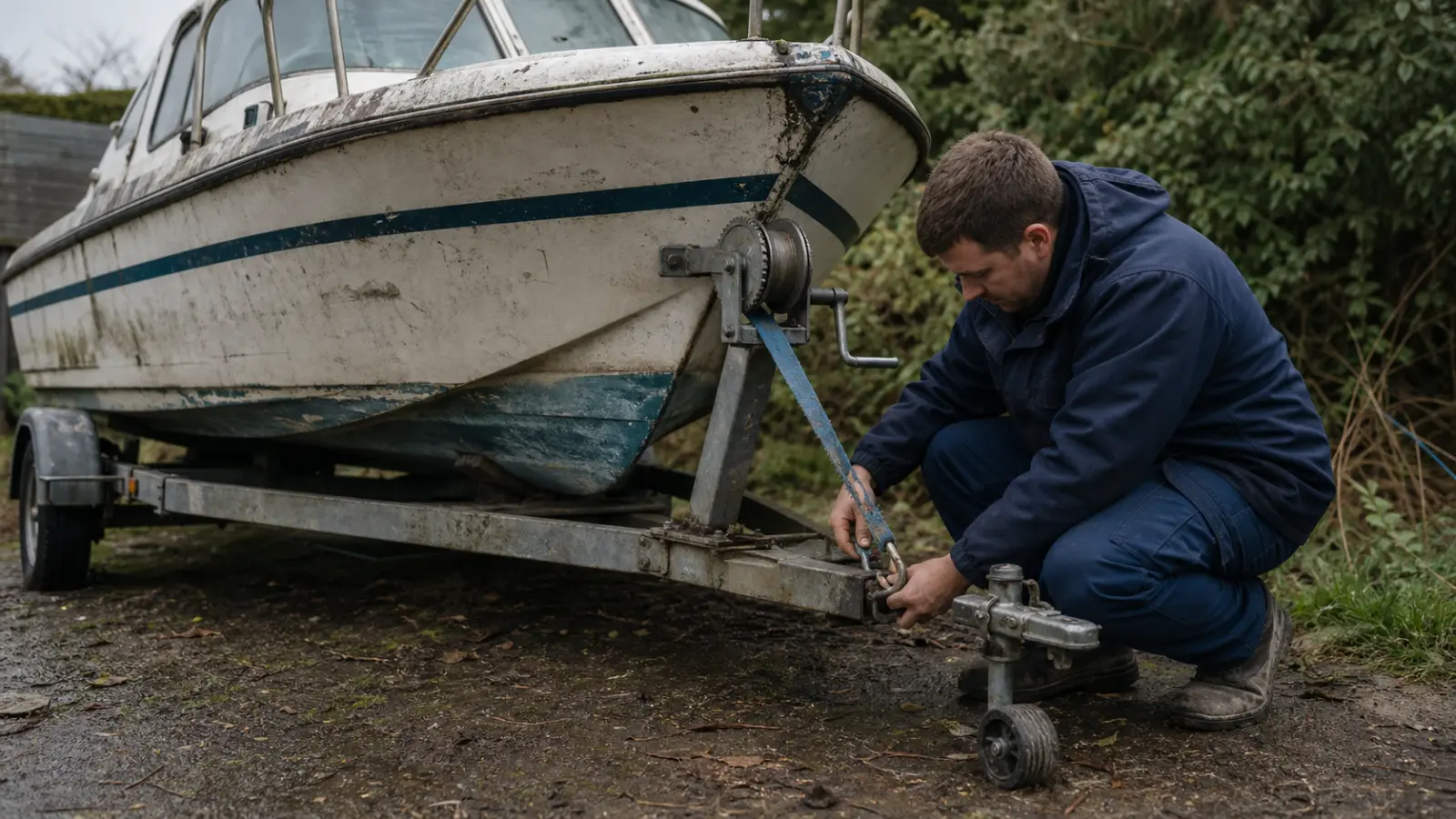
An old boat resting on a trailer behind a garage often turns into a permanent fixture after six seasons of disuse, especially when the tires have flattened straight into the soil. In other cases, a property sale in Bristol, TN comes to a standstill because a neglected cabin cruiser remains parked on the lot, or an outboard motor seizes up completely when a full engine rebuild costs far more than the total market value of the vessel. Marinas also issue strict notices when a slip goes unpaid, leaving owners scrambling to clear a hull they no longer want or use. When these situations arise, getting a heavy junk boat off the land requires specialized handling.

Is there boat removal near me in Bristol, TN? Yes, specialized service teams handle the loading, transport, and final clearing of unwanted vessels directly from private residential properties, commercial lots, or local storage locations.

Proper legal releases matter just as much as physical transport. While our team does not always take over the title, we consistently provide an official release of liability for every job. Certain unqualified haulers take a hull off a site without executing formal paperwork, which leaves the original owner legally responsible if the structure is later dumped illegally. Requesting proper documentation protects you from long-term liability.

Moving a vessel is far more complex than towing a standard vehicle. A rotted trailer may have seized axles that will not roll, or a deep keel might sit inside a heavy custom cradle that prevents simple loading. Narrow access gates, low branches, and soft lawn soil that sinks under heavy truck tires make extraction difficult without proper machinery.

Call 423-540-4170 to start.

Send photos through the contact form.

What Is Boat Removal and When You Need It

Professional boat disposal involves much more than hooking up a trailer and driving away. Complete boat removal requires assessing structural stability, clearing spatial obstacles, and hauling the physical vessel off the property safely. An abandoned boat left on private land or sitting inside a commercial slip where fees have lapsed presents urgent logistical challenges. What happens to the vessel depends heavily on its physical condition, location, and legal standing.
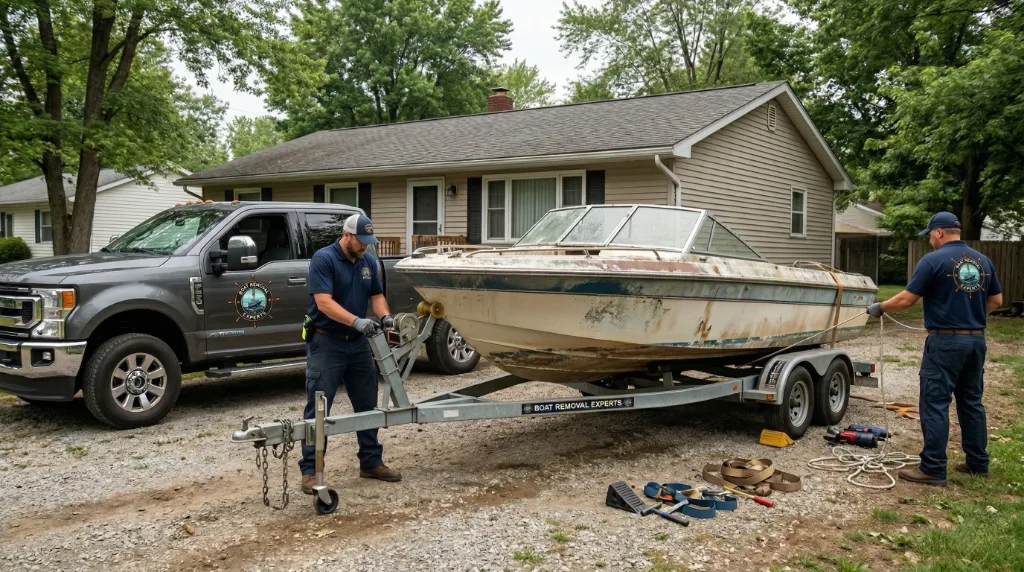
Paperwork dictates how an abandoned boat removal moves forward. When an owner possesses a clean title, the clearing process begins immediately without administrative delay. However, when paperwork is misplaced, missing, or attached to a real estate purchase, alternative documentation standards must be satisfied. Vessels left derelict on commercial property or unmaintained lots often require specific municipal filings or possessory notifications before extraction crew members can legally dismantle or haul the structure.

Physical factors also dictate the outcome of a derelict vessel. A hull that has absorbed water over several seasons becomes significantly heavier than its original dry manufacturing weight. Structural rot in the back panel or floor frames changes how a load must be supported during transport, determining whether the structure can travel as a single unit or must be broken down before transport.
When Bristol Residents Call Us

Harsh outdoor weather in Bristol, TN affects sitting vessels severely over time. Sun exposure breaks down gelcoat finishes, causing glass fibers to crack and absorb humidity. Trapped rainwater rots wooden decking, ruins interior upholstery, and accumulates inside the bilge, dramatically increasing overall hull weight. When a vessel sits idle in nearby places like Walnut Hill or Blountville, moisture damage weakens structural points, altering how the structure must be supported during extraction.
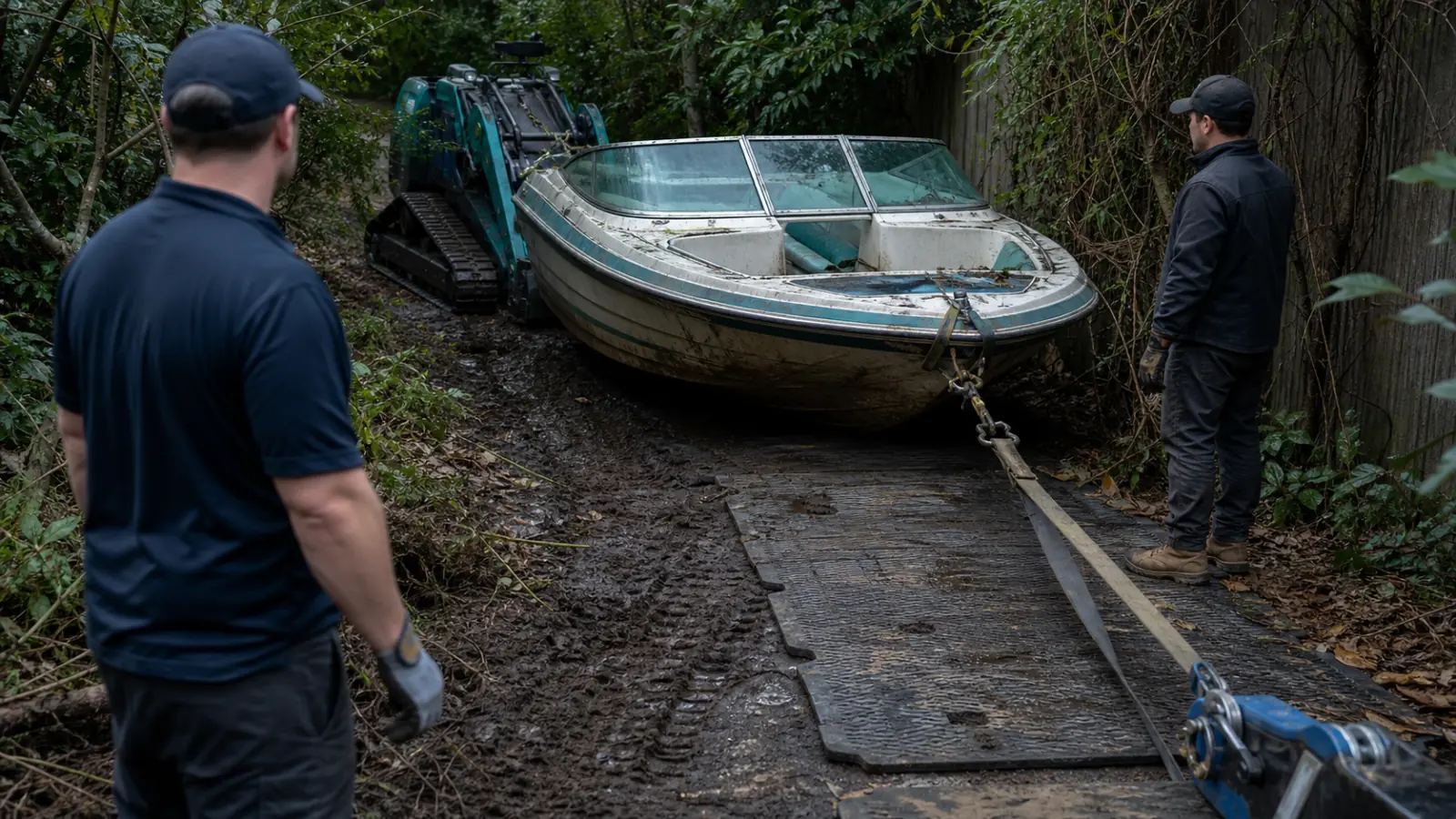
Site conditions heavily influence how a sailboat, pontoon, or fishing boat is removed. Crew members must evaluate the approach path, checking for narrow driveways, overhead power lines, and tight property boundaries. A pontoon resting on soft ground in Bluff City or Hunter presents different access challenges than a heavy fishing boat resting on wooden blocks in Biltmore or Sullivan County. Dragging a vessel across soft dirt requires ground protection plates so transport trucks do not sink into the turf.

Whether a sailboat sits on an operational trailer, rests on rotting jack stands, or floats in the water completely dictates the extraction plan. A hull stuck in deep mud requires specialized rigging equipment, while a vessel stranded at a local shoreline launch requires waterborne towing setups before load securing can begin.
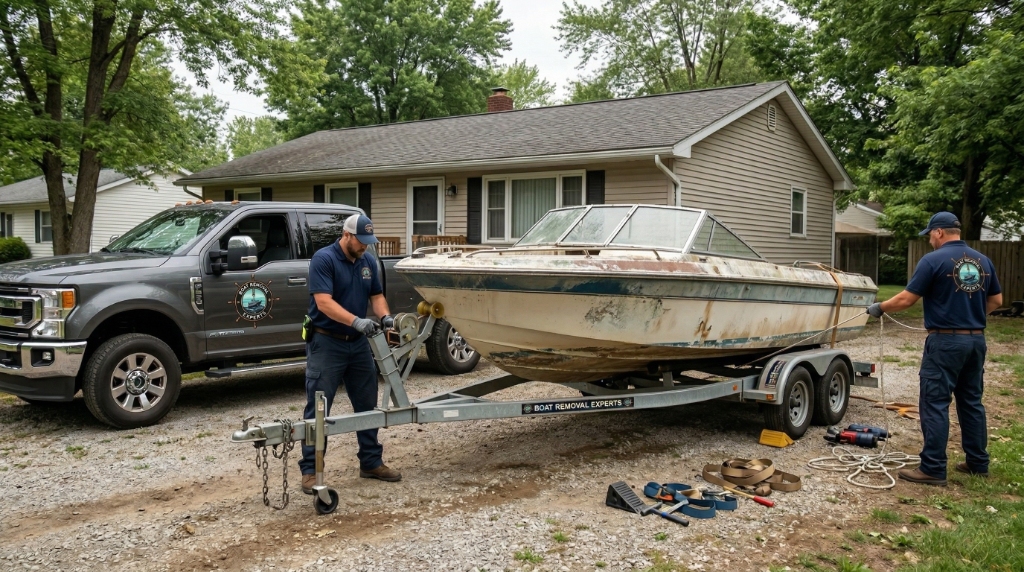
Every Type of Boat We Handle

Situations We Handle

Need Help? We’re Ready.

Contact boat removers directly or request free quotes. We dispatch crews fast.

Our Step-by-Step Process

Assessment

We evaluate the boat’s size, current location, condition, and any environmental or access challenges before we schedule boat removal.

Planning

A detailed plan is built around your vessel — equipment, logistics, timeline, and safety. Services include drainage of oil and fuel before transport.

Execution

Our experienced crew mobilizes to your current location and we tow, haul, or dismantle the vessel using professional marine equipment.

Completion

The vessel is recovered, recycled, or routed to certified boat junkyards for environmentally responsible disposal. The site is left clean.

Equipment & Capabilities

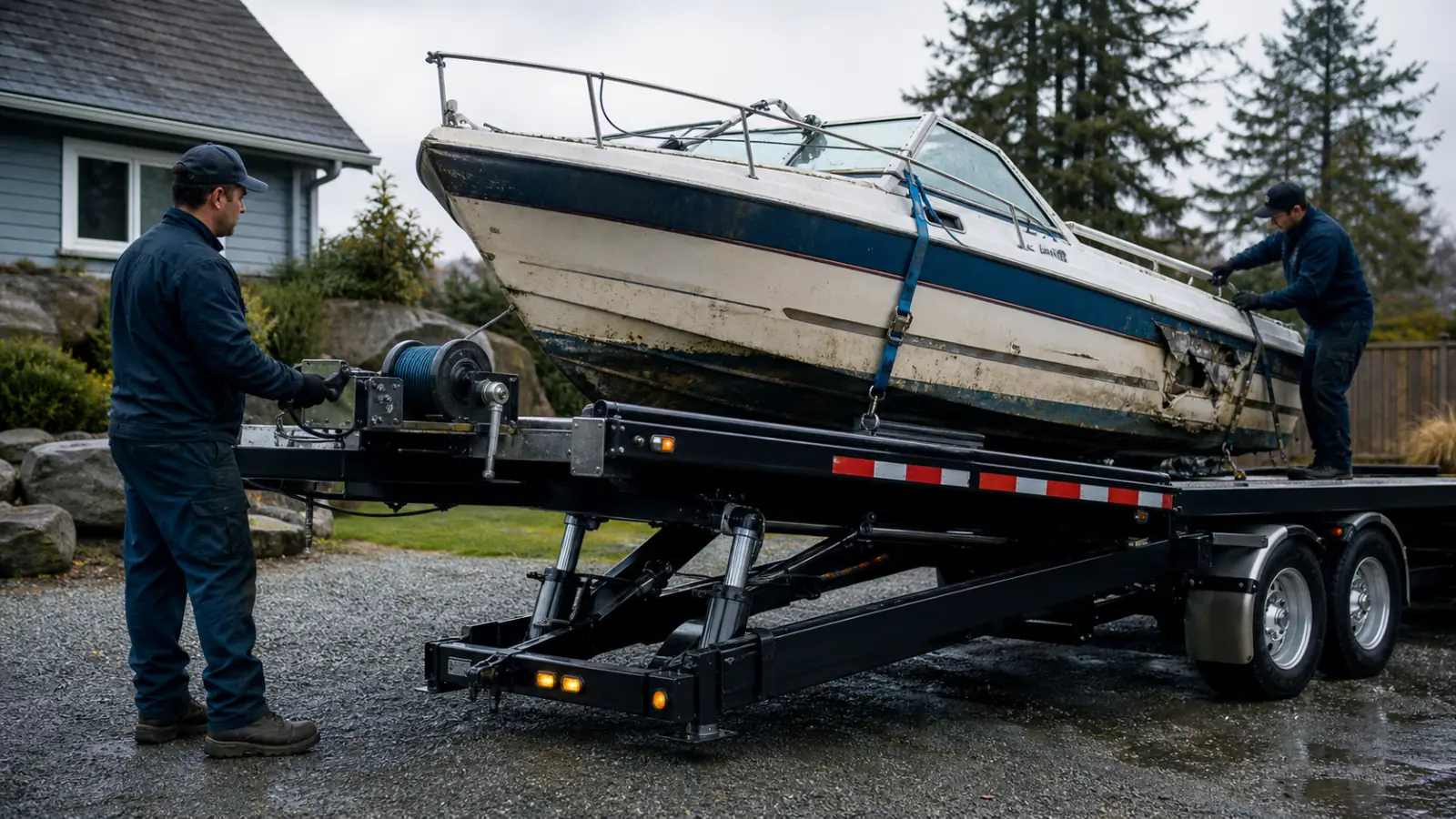
Transporting an unwanted hull requires adaptive equipment designed for heavy structural handling. When a trailer has flat tires, rusted hubs, or a rotted frame that cannot support weight, crew members utilize specialized hydraulic tilt beds, heavy winches, and temporary transport dollies to load the structure safely. If a vessel sits inside a tight space or has structural damage that prevents transport as a single piece, workers dismantle the hull on site using heavy cutting tools.

Before any boat disposal work begins, crews clear all hazardous materials from the vessel. Fuel tanks must be drained, engine oil pumped out, lead-acid batteries removed, and electronic components disconnected to prevent environmental contamination. These fluids and components are separated for regulated processing according to environmental standards.

Once hazardous materials are cleared, crews evaluate the remaining raw materials for proper sorting. Scrap metals, stainless steel hardware, aluminum frames, and lead keels are separated for metal recycling facilities. The remaining fiberglass, composite materials, and rotted timber are chopped down and hauled off to regional waste handling locations. The exact destination for each piece depends entirely on material composition, overall hull integrity, and local processing guidelines.

Our boat removal experience covers everything from start to finish  assessment, planning, execution, dismantling, and final cleanup. Marina operators and property owners across Sullivan County trust us to get rid of your junk boat without damage to surrounding property.

FAQ

Boat Removal Questions - Frequently Asked

Common questions from property owners about our junk removal service, dismantling, and marine recovery.

We handle every type of vessel — sailboat, pontoon, fishing boats, jon boats, yachts, and commercial craft. Whether your boat or sailboat floats (or used to), we’ll remove it from any current location.

Yes. Sunken and partially submerged vessel recovery is a core part of our salvage work in Sullivan County. We use lift bags, salvage pumps, and marine cranes to safely raise vessels from underwater.

We respond to inquiries quickly — usually within hours, with same-day service available. For emergency situations, we mobilize as fast as possible. Call us directly for time-sensitive jobs.

No. Every job is handled in-house by our own team and equipment. No middlemen, no handoffs, no surprises.

Cost depends on the boat’s size, current location, condition, and complexity of the job. We provide free assessments and free quotes for every case — contact us and we’ll give you an honest estimate.

Yes. Our boat removal and disposal services include hazardous materials handling, oil and fuel drainage, hull dismantling, and recycling at certified yards — all in compliance with environmental regulations and environmentally responsible standards.

Absolutely. We regularly work in tight marinas, shallow waterways, private docks, backyards, and remote areas. We bring the right gear to reach any current location.

Yes. We frequently work with insurance adjusters on salvage and recovery claims and provide the documentation needed for your claim.

Browse Our Services - Ready to Get Started?

We handle everything from start to finish. Call us now or request a free quote – we’ll dispatch crews and haul your vessel away fast.