
Professional Boat Removal Services in Cedar Hill, TX

An old boat rarely stays a simple piece of property once it stops going into the water. The hull may sit on a trailer behind the garage for six seasons until the tires flatten into the dirt and weeds grow through the frame. A marina sends a notice about an unpaid slip fee, or a cabin cruiser remains sitting on the lot after a property sale completes. In other cases, an outboard motor seizes up completely and a total rebuild costs far more than the vessel is worth. Leaving a junk boat in these conditions usually leads to rotting transoms, ruined upholstery, and mounting municipal warnings.

Is there professional boat removal near me in Cedar Hill, TX? Boat Removal Experts provides complete hauling and extraction services directly to your property or dock to clear away unwanted hulls safely.

Proper documentation matters just as much as physical hauling when you decide to get rid of a vessel. We do not always transfer the title into our own name, but we always issue a formal release of liability to the owner upon completion. Some outfits simply haul a vessel away with no paperwork whatsoever, leaving the original liability attached to your name if the hull is abandoned down the road. It is always worth asking how documentation is handled before work begins.

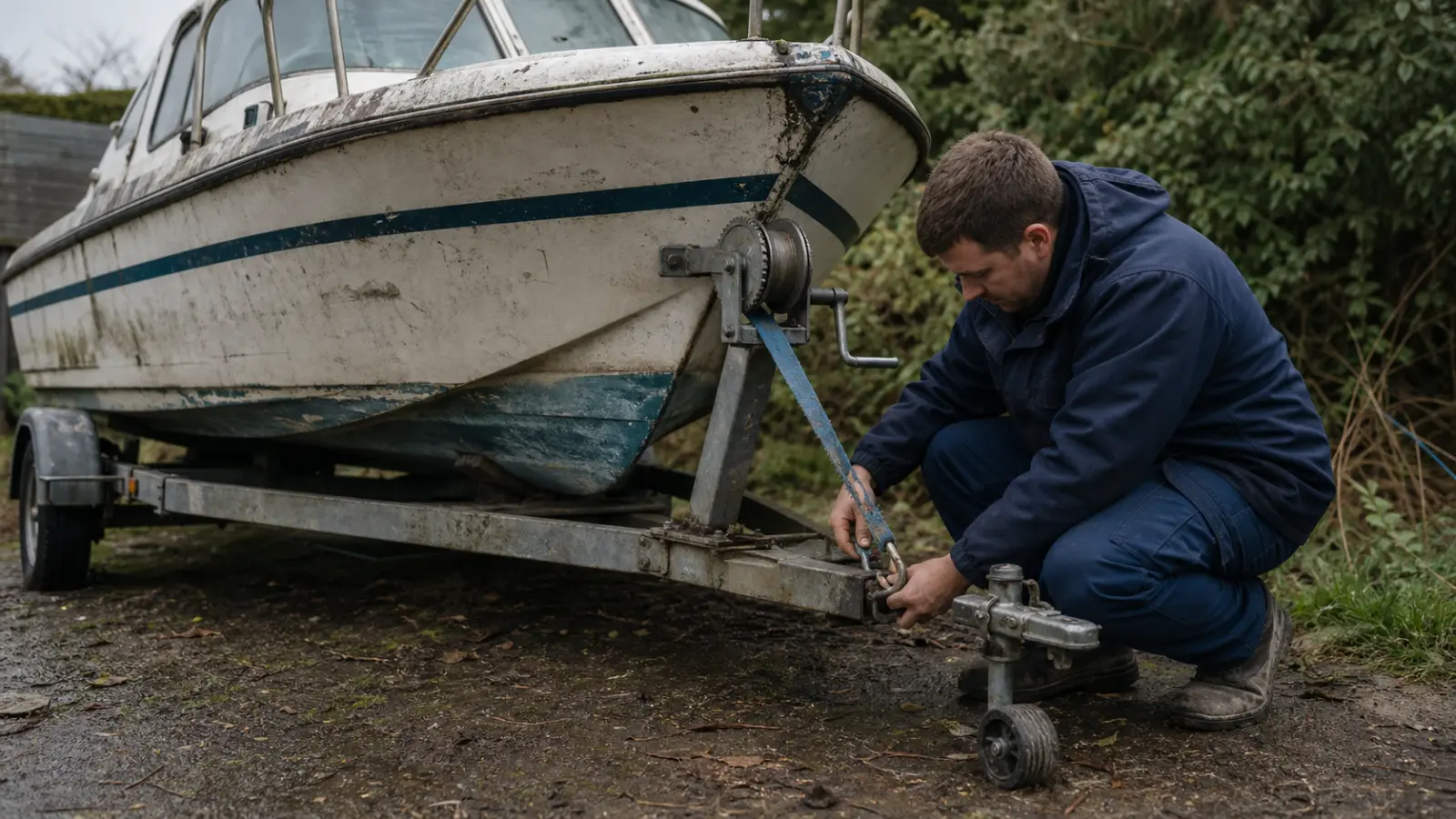
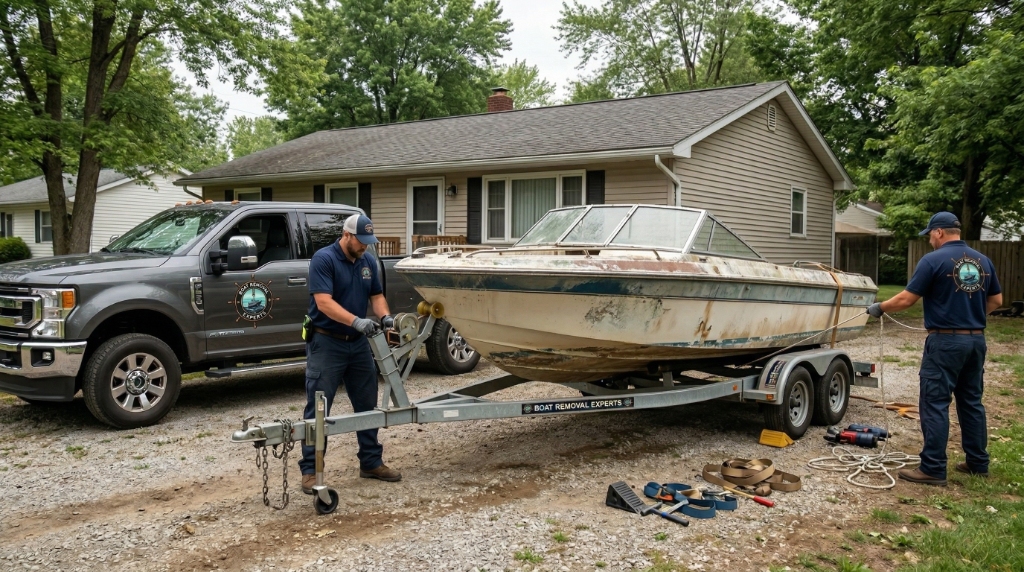
Moving a vessel is far harder than pulling a standard vehicle. A rotted trailer may refuse to roll, or the craft might rest on a rigid keel or wooden cradle instead of tires. Narrow residential gates can restrict the beam width, and soft lawn soil can prevent standard heavy tow trucks from reaching the resting site without sinking.

Call (855) 765-7931 to start.

Send photos through the contact form.

What Is Boat Removal and When You Need It

Professional boat removal covers significantly more work than simply hook-and-tow transportation. When an abandoned boat sits on private property or within a storage yard, getting rid of it requires evaluating structural integrity, ground clearing, loading access, and proper transport legalities. Every situation presents distinct logistics based on vessel size, overall weight, and the exact state of the support structure supporting the hull.
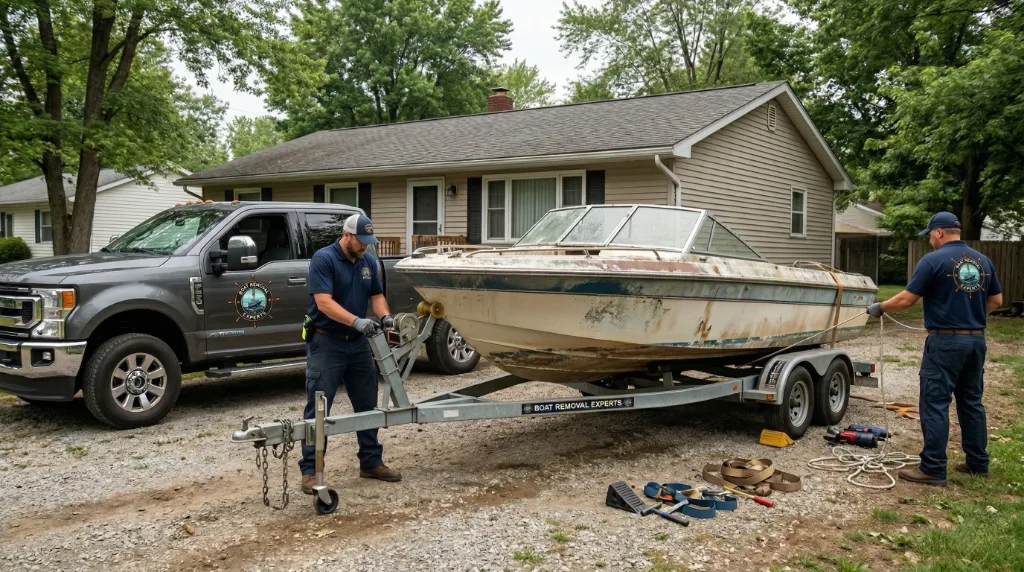
What changes during a project depends largely on title status. When an owner holds a clean title, release paperwork moves quickly. If paperwork is lost, missing, or the vessel came with a recently acquired property, alternative ownership verification or state paperwork filings become necessary before any physical haul takes place. A derelict craft sitting on someone else's land or inside a long-unpaid marina slip requires coordinated access permission from the landowner or harbor management prior to dispatching crew members.

Site conditions, structural rot, hull composition, and access clearances ultimately dictate the final outcome. A sound hull sitting on a towable trailer allows for straight hauling, while a crumbling fiberglass shell tucked behind structural obstacles requires heavy loading equipment or systematically breaking down the structure for controlled transport and ultimate boat disposal.
When Cedar Hill Residents Call Us

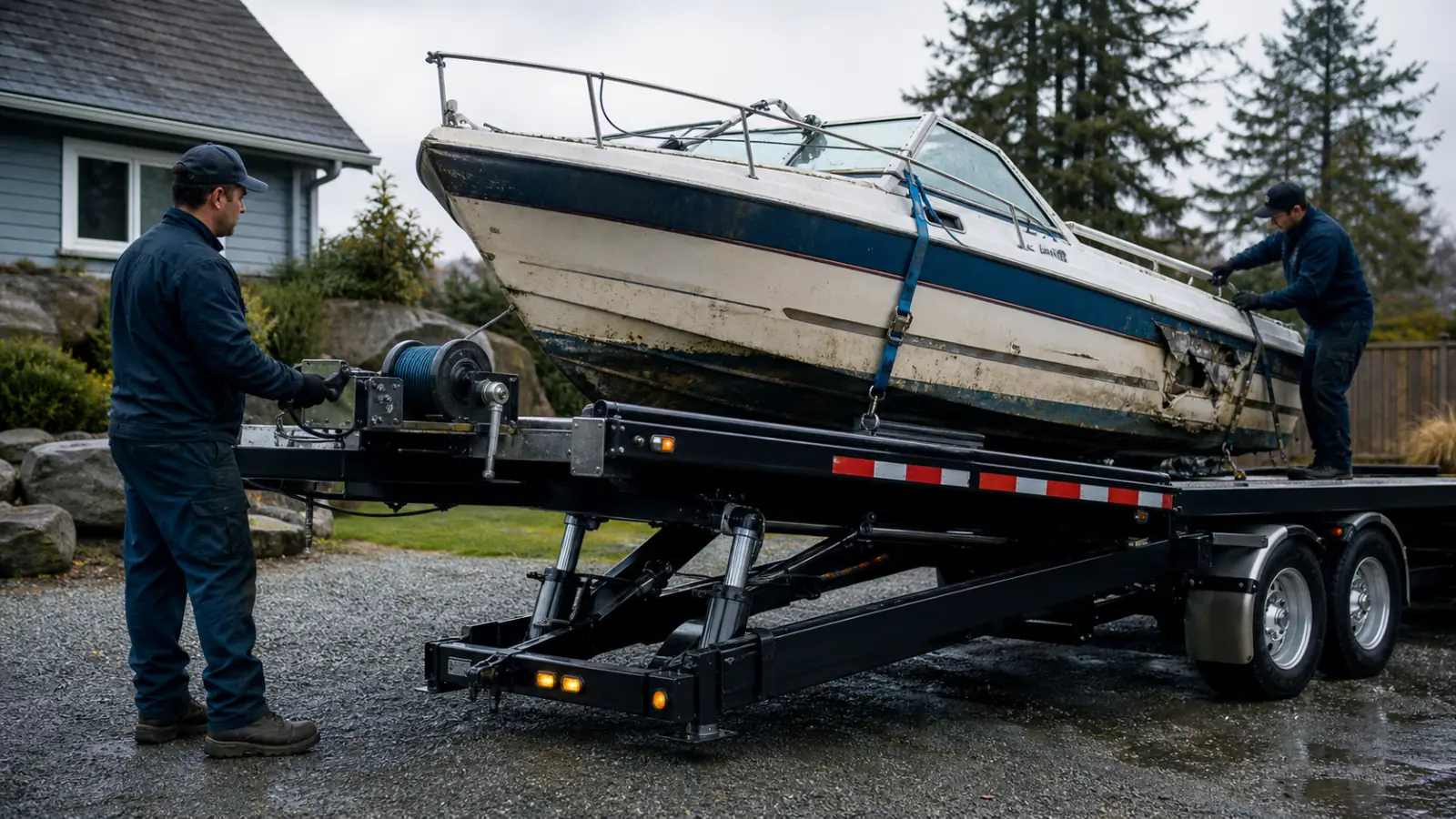
Property owners in Cedar Hill, TX frequently request help when weather exposure turns an unused vessel into an eyesore and a safety hazard. Intense heat breaks down gelcoat finishes, causes floor frames to rot, and ruins vinyl upholstery. When rainwater accumulates inside an unhatched hull, the structural weight doubles while wood supports beneath the floorboards decay into soft compost. These combined factors turn a simple haul into a fragile extraction project requiring specialized rigging.
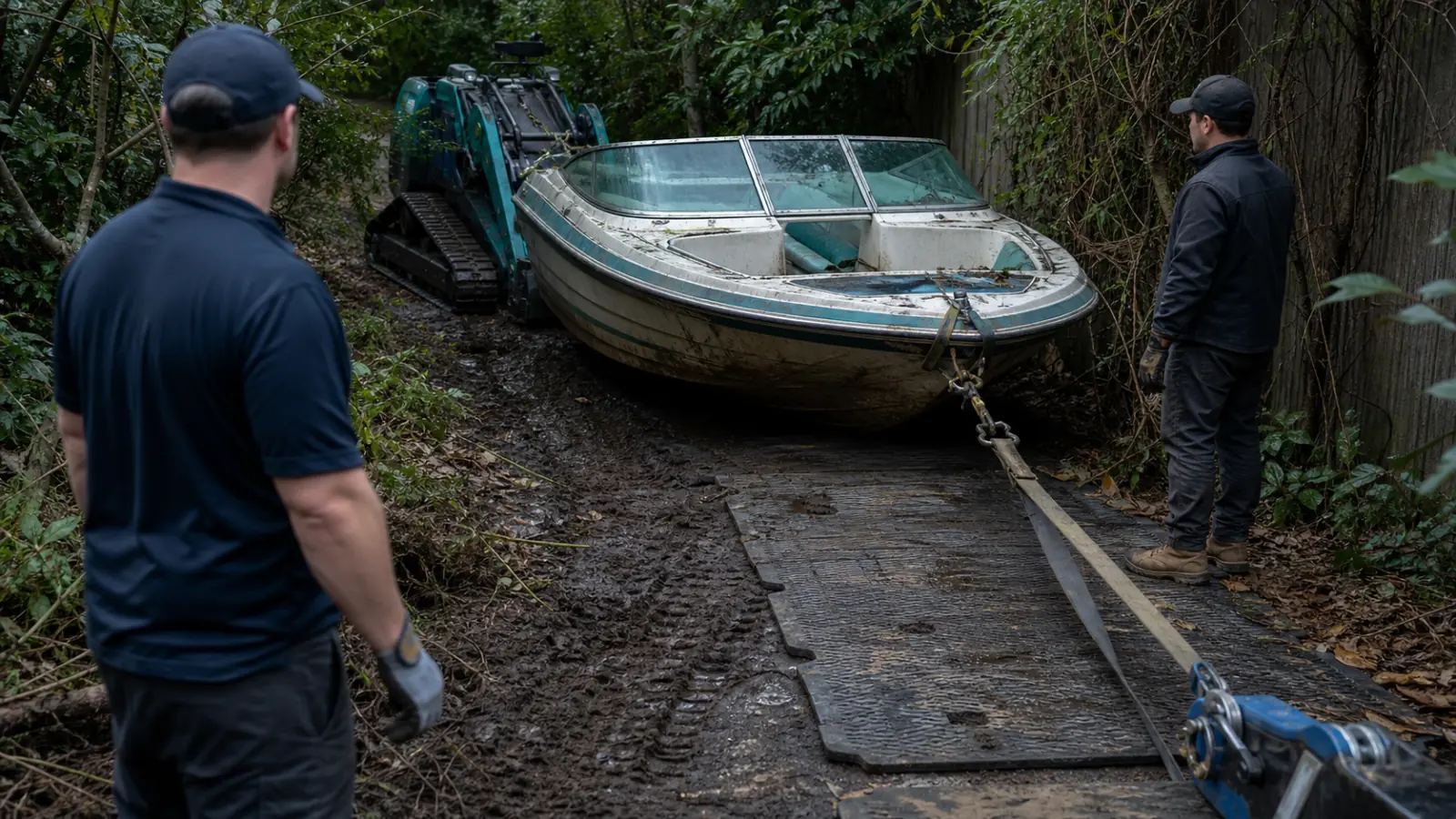
Local property layouts also dictate how crews extract a craft. A neglected fishing boat, broad pontoon, or deep-draft sailboat each demands a distinct approach. Soft yard soil following heavy rain makes driving heavy haulers onto lawns impossible without track mats. Narrow driveways, low overhead utility lines, and tight side-yard gates present physical boundaries. Crews must evaluate whether the vessel rests on a sturdy road trailer, sits flat on concrete blocks, or floats in a slip across nearby communities like Duncanville, Ovilla, DeSoto, Glenn Heights, or Oak Leaf before selecting extraction gear.
Every Type of Boat We Handle

Situations We Handle

Need Help? We’re Ready.

Contact boat removers directly or request free quotes. We dispatch crews fast.

Our Step-by-Step Process

Assessment

We evaluate the boat’s size, current location, condition, and any environmental or access challenges before we schedule boat removal.

Planning

A detailed plan is built around your vessel — equipment, logistics, timeline, and safety. Services include drainage of oil and fuel before transport.

Execution

Our experienced crew mobilizes to your current location and we tow, haul, or dismantle the vessel using professional marine equipment.

Completion

The vessel is recovered, recycled, or routed to certified boat junkyards for environmentally responsible disposal. The site is left clean.

Equipment & Capabilities

Moving a heavy vessel with structural damage or frozen trailer axles requires specialized equipment and practical field engineering. If a trailer will not roll, crews use heavy winch systems, hydraulic jacks, tow dollies, or cranes to lift the assembly onto a flatbed trailer safely. When a wide craft cannot pass through physical property barriers or is too weak to survive loading intact, crews dismantle the structure on site using commercial cutting equipment.

Before any hull moves or undergoes cutting, technicians strip all hazardous materials from the vessel. Fuel tanks get drained, engine oils are pumped out, marine batteries are removed, and electronic components are cleared to meet safety regulations. What happens to the material afterwards depends entirely on the crew's evaluation of the hull. Metal hardware, aluminum components, and lead keels are sorted for potential recycling, while degraded fiberglass or rotted wood panels undergo proper processing through approved industrial facilities.

Our boat removal experience covers everything from start to finish  assessment, planning, execution, dismantling, and final cleanup. Marina operators and property owners across Dallas County trust us to get rid of your junk boat without damage to surrounding property.

FAQ

Boat Removal Questions - Frequently Asked

Common questions from property owners about our junk removal service, dismantling, and marine recovery.

We handle every type of vessel — sailboat, pontoon, fishing boats, jon boats, yachts, and commercial craft. Whether your boat or sailboat floats (or used to), we’ll remove it from any current location.

Yes. Sunken and partially submerged vessel recovery is a core part of our salvage work in Dallas County. We use lift bags, salvage pumps, and marine cranes to safely raise vessels from underwater.

We respond to inquiries quickly — usually within hours, with same-day service available. For emergency situations, we mobilize as fast as possible. Call us directly for time-sensitive jobs.

No. Every job is handled in-house by our own team and equipment. No middlemen, no handoffs, no surprises.

Cost depends on the boat’s size, current location, condition, and complexity of the job. We provide free assessments and free quotes for every case — contact us and we’ll give you an honest estimate.

Yes. Our boat removal and disposal services include hazardous materials handling, oil and fuel drainage, hull dismantling, and recycling at certified yards — all in compliance with environmental regulations and environmentally responsible standards.

Absolutely. We regularly work in tight marinas, shallow waterways, private docks, backyards, and remote areas. We bring the right gear to reach any current location.

Yes. We frequently work with insurance adjusters on salvage and recovery claims and provide the documentation needed for your claim.

Browse Our Services - Ready to Get Started?

We handle everything from start to finish. Call us now or request a free quote – we’ll dispatch crews and haul your vessel away fast.