
Professional Boat Removal Services in Cedar Rapids, IA
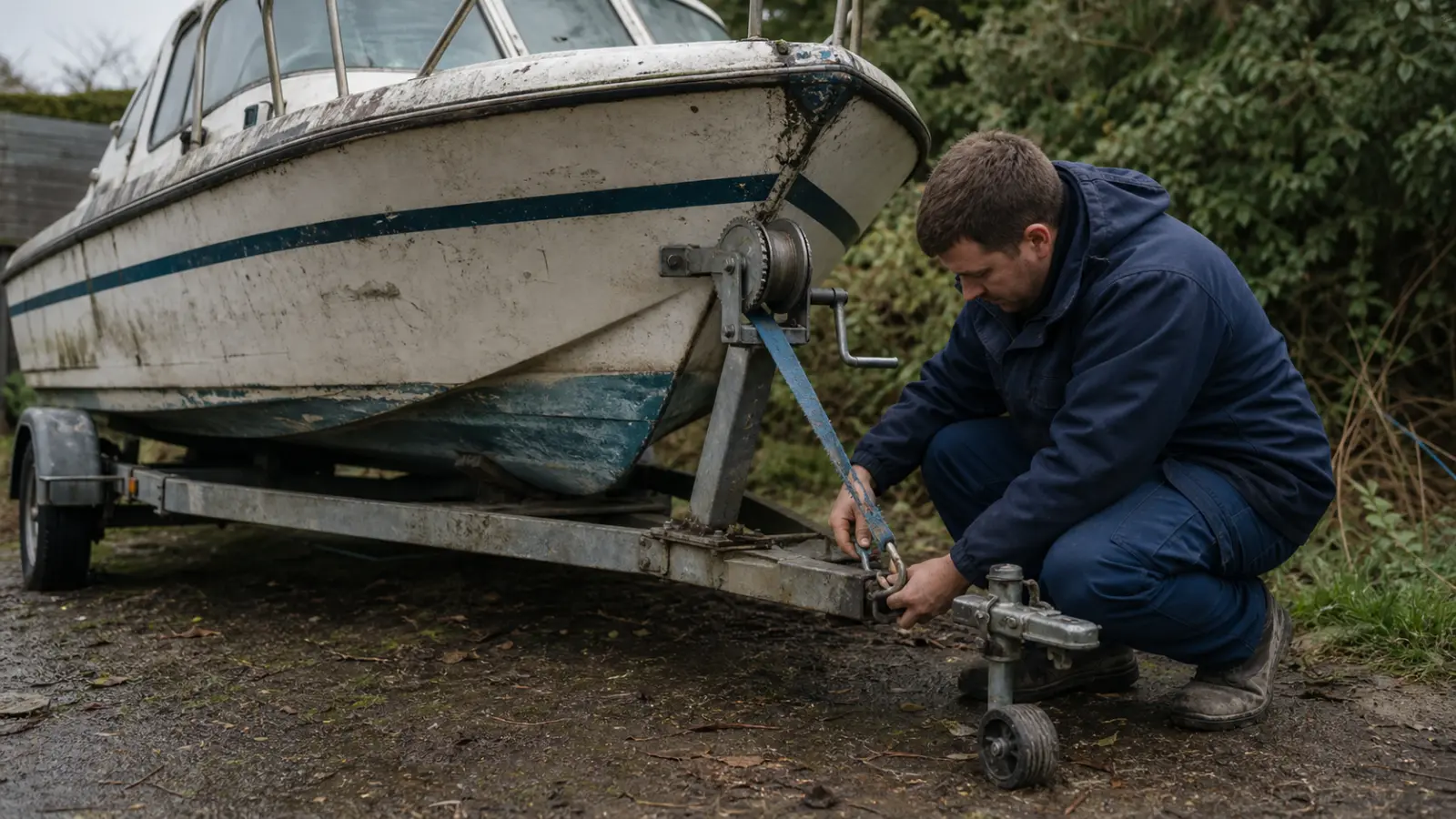
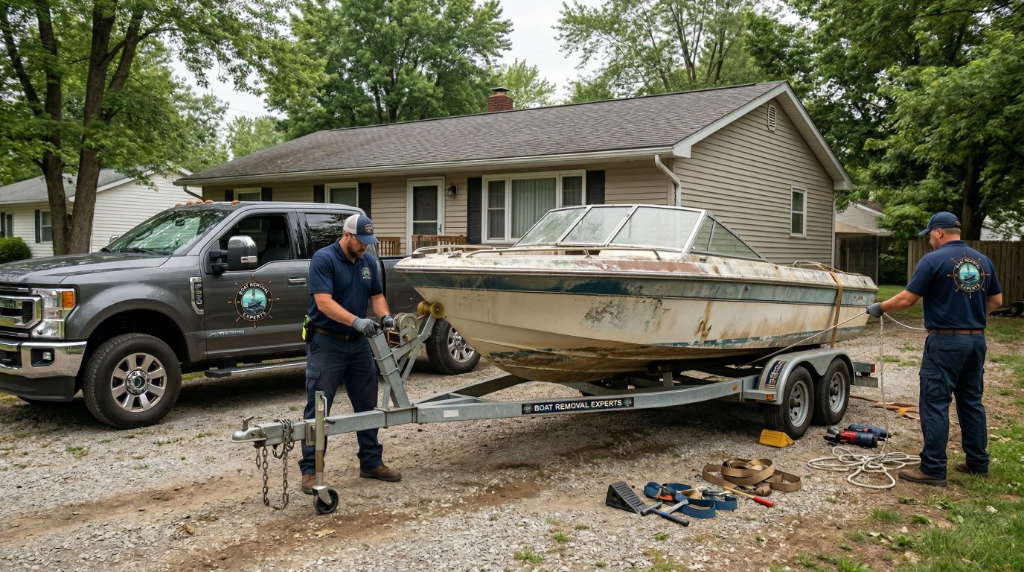
An old boat hull has been sitting on a rusty trailer behind your garage in Cedar Rapids, IA for six seasons, and the tires have flattened completely into the damp dirt. Maybe a marina manager just sent a final notice regarding an unpaid slip, or a property you recently acquired came with a neglected cabin cruiser resting on the back lot. In other cases, the outboard motor seized up, and rebuilding the engine costs far more than the vessel itself is worth. When an unwanted craft becomes a permanent fixture on your yard, finding a practical path to clear the space becomes an urgent priority.
Is there boat removal near me in Cedar Rapids, IA? Boat Removal Experts provides complete hauling, clearance, and disposal solutions for property owners, buyers, and site managers throughout the city and surrounding areas like Hiawatha and Marion.

When you dispose of a vessel, paper documentation protects you from future liability. We do not always transfer the title, but we always issue an official release of liability upon completion. Some unverified outfits simply haul a vessel away with no paper trail, leaving the registered owner legally vulnerable if the hull is dumped illegally on public land, so verifying the release paperwork is essential before handing over any keys.
Moving a vessel is far more complex than towing a standard vehicle. A rotted trailer frame can snap during winching, a deep keel requires specialized support cradles, and the beam width might barely clear narrow residential gates. Furthermore, heavy fiberglass sitting on soft ground risks getting a haul truck stuck instantly.
Call 319-319-8780 to start.
Send photos through the contact form.
What Is Boat Removal and When You Need It
Professional boat disposal covers far more than hooking a standard hitch to a pickup truck and pulling a vessel down the road. When a boat removal job begins, the crew must evaluate structural integrity, hull stability, and site logistics to safely extract the craft from its position. An abandoned boat left in Linn County backyards, private lots, or commercial slips requires methodical planning to ensure nearby structures and lawns suffer no damage during the extraction process.
Paperwork dictates the administrative steps required before work starts. Having a clear title in hand streamlines the process, but owners who have lost their documentation or who inherited a derelict craft along with a real estate purchase still have options. When a vessel has been left on private land or inside an unpaid storage facility, local notification procedures help establish proper clearance authority. Missing documentation alters the legal verification steps, but it does not prevent a successful haul.
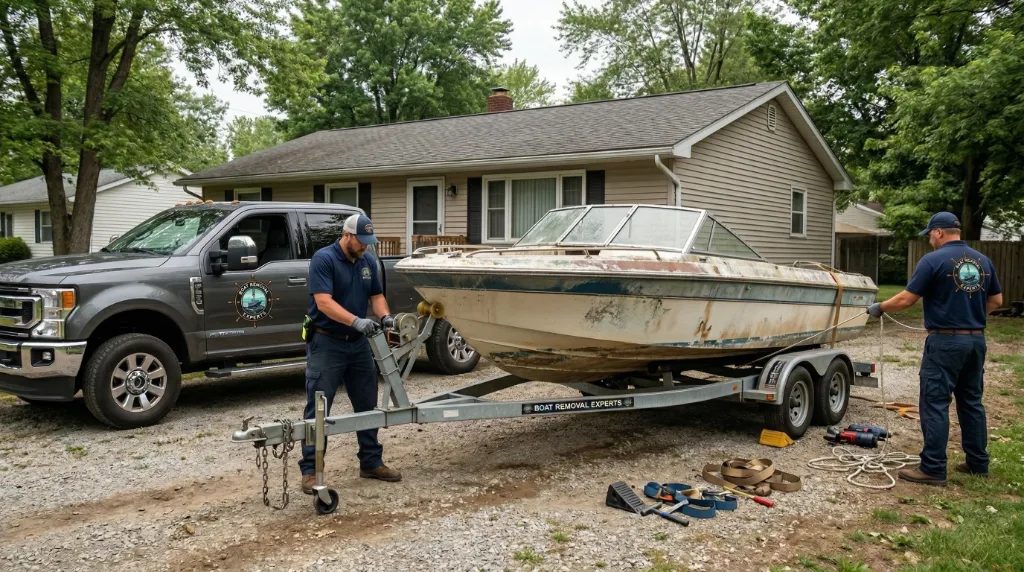
Several physical factors dictate how a project is executed. The physical condition of the hull, structural rot in the floorboards, fluid containment issues, and current trailer roadworthiness all dictate whether a vessel can be towed intact or must be processed on site. A grounded derelict sitting directly on soil requires different winching rigs than a vessel stored on functional tires. Every site variable influences the safety gear, rigging equipment, and transport machinery needed to clear the lot efficiently.
When Cedar Rapids Residents Call Us
Property owners across Cedar Rapids contact us when severe weather and seasonal neglect turn an old vessel into an expensive liability. A fiberglass sailboat, a heavy pontoon, or an aluminum fishing boat sitting out in the open faces severe degradation over time. Sun exposure cracks gelcoat surfaces, while freezing water trapped inside the hull causes delamination, rotted transoms, and soaked, heavy upholstery. Rainwater accumulating inside an uncovered vessel adds thousands of pounds of hidden weight, making a compromized hull far heavier and more dangerous to shift than its original dry specs suggest.
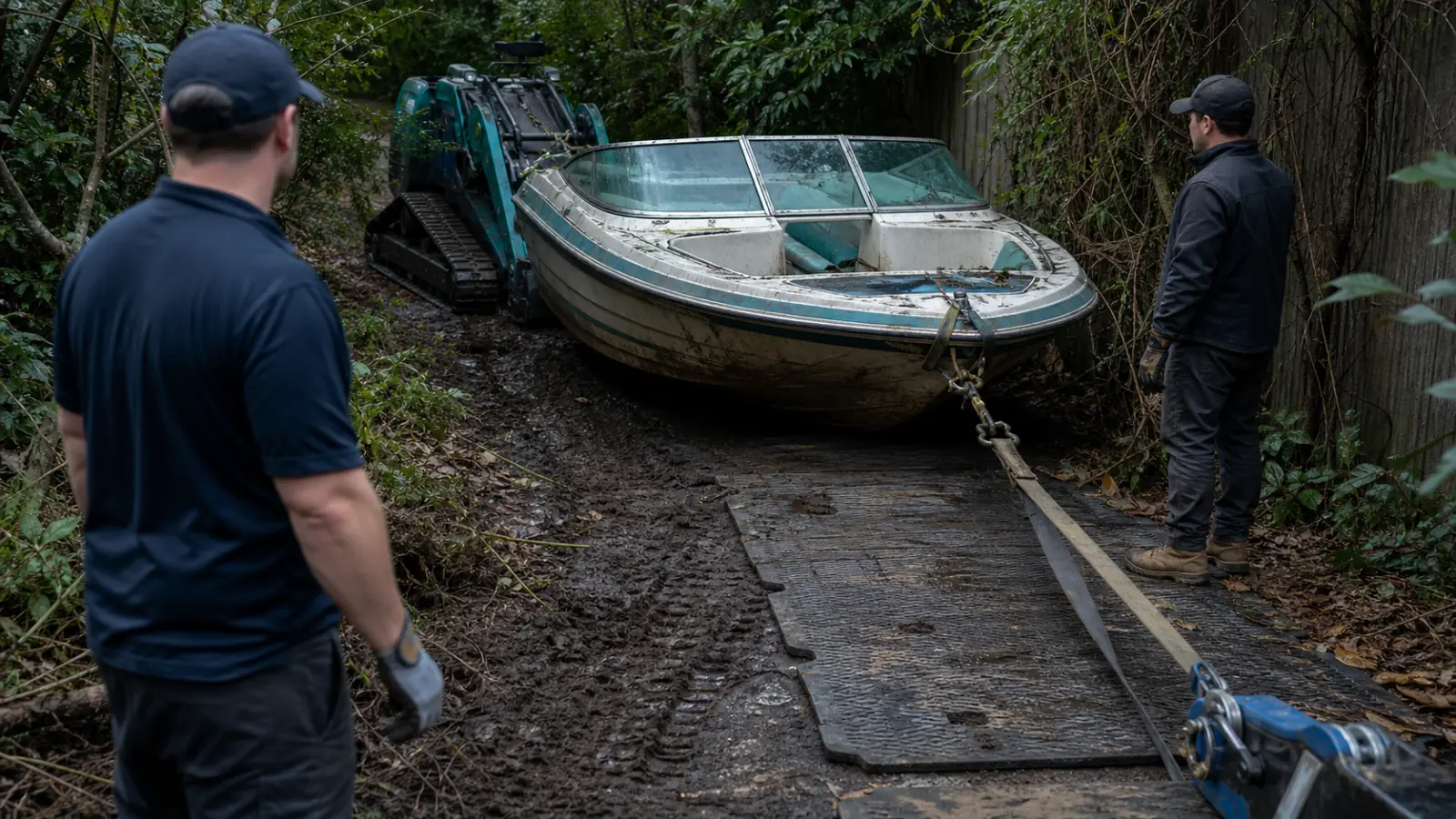
Local ground conditions directly shape how our crew approaches each project. Weather patterns in nearby Ely, Fairfax, and Bertram can turn low-lying yard soil into soft mud, making heavy truck maneuvers challenging without proper ground mats or extended cable lines. Overhanging tree branches, low electrical wires, tight alleyways, and narrow side yard gates limit access to the site.
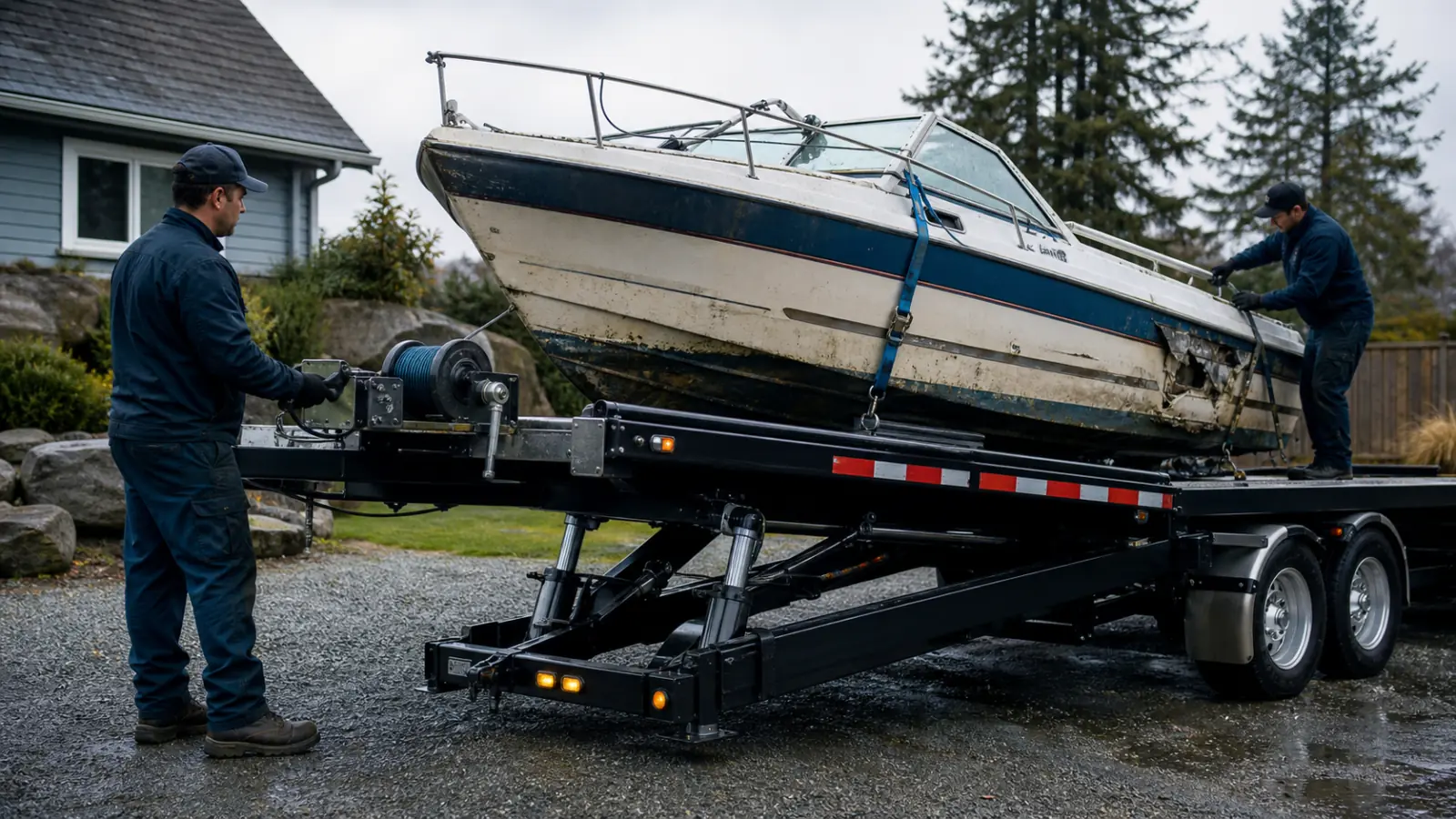
Positioning also determines the initial setup. A vessel sitting on a rusted, immobile trailer requires specialized skids, while a craft resting directly on cinder blocks or cradles needs hydraulic lifting before transport. Whether the vessel sits on high ground or rests near the shoreline, our team adapts the extraction strategy to match the physical terrain and current hull condition.
Every Type of Boat We Handle
- Sailboat & catamaran
- Motorboat, powerboat & cabin cruisers
- Fishing boats & bass boats
- Pontoon boats
- Jon boats & aluminum skiffs
- Large yachts
- Personal watercraft (jet skis)
- Houseboats
Situations We Handle
- Abandoned boat at marinas, docks, or boat lifts
- Unwanted boats on private property or in boat storage
- Vessels in backyards, fields, or vacant lots
- Derelict vessels blocking dock access or navigation
- Storm-damaged vessels requiring boat hauling
- Vessels without trailers or with flat tires
- Tight access locations (narrow driveways, wooded areas)
- Government or insurance-ordered cases
Need Help? We’re Ready.
Contact boat removers directly or request free quotes. We dispatch crews fast.
Our Step-by-Step Process

Assessment
We evaluate the boat’s size, current location, condition, and any environmental or access challenges before we schedule boat removal.

Planning
A detailed plan is built around your vessel — equipment, logistics, timeline, and safety. Services include drainage of oil and fuel before transport.

Execution
Our experienced crew mobilizes to your current location and we tow, haul, or dismantle the vessel using professional marine equipment.

Completion
The vessel is recovered, recycled, or routed to certified boat junkyards for environmentally responsible disposal. The site is left clean.
Equipment & Capabilities
Extracting a heavy craft from a tight space requires specialized equipment suited for compromized structures. When a trailer has flat tires, seized wheel bearings, or a rotted frame that cannot support road travel, our crew uses heavy-duty winches, pneumatic jacks, haul decks, and ground rollers to move the vessel safely. If a large fiberglass hull is too wide to clear narrow access gates or too structurally weak to survive a highway haul, the crew can dismantle the superstructure right on site using heavy cutting tools.
Before any transport or dismantling occurs, fluid containment is the absolute priority. Hazardous materials including residual fuel, engine oil, crankcase fluids, hydraulic line liquids, and heavy marine batteries must be drained, sealed, and isolated. Leaving hazardous waste inside an old engine risks leaks that contaminate soil or violate waste transport rules. Electronics, lead ballast, and metallic fittings are also separated carefully during the prep phase.
Once the vessel is prepped and secured, material routing depends on the hull's composition. Aluminum hulls, steel hardware, and clean metal fabrications are separated for metal recycling, while degraded fiberglass, rotted wood, and contaminated composites head to approved landfill or disposal services. The team determines the best processing path based on material condition, site access, and transport regulations.
Our boat removal experience covers everything from start to finish assessment, planning, execution, dismantling, and final cleanup. Marina operators and property owners across Linn County trust us to get rid of your junk boat without damage to surrounding property.
FAQ
Boat Removal Questions - Frequently Asked
Common questions from property owners about our junk removal service, dismantling, and marine recovery.
What type of boat do you remove?
We handle every type of vessel — sailboat, pontoon, fishing boats, jon boats, yachts, and commercial craft. Whether your boat or sailboat floats (or used to), we’ll remove it from any current location.
Do you handle sunken or partially submerged vessels?
Yes. Sunken and partially submerged vessel recovery is a core part of our salvage work in Linn County. We use lift bags, salvage pumps, and marine cranes to safely raise vessels from underwater.
How quickly can you respond?
We respond to inquiries quickly — usually within hours, with same-day service available. For emergency situations, we mobilize as fast as possible. Call us directly for time-sensitive jobs.
Do you use subcontractors?
No. Every job is handled in-house by our own team and equipment. No middlemen, no handoffs, no surprises.
How much does cheap boat removal cost?
Cost depends on the boat’s size, current location, condition, and complexity of the job. We provide free assessments and free quotes for every case — contact us and we’ll give you an honest estimate.
Do you handle boat disposal and recycling?
Yes. Our boat removal and disposal services include hazardous materials handling, oil and fuel drainage, hull dismantling, and recycling at certified yards — all in compliance with environmental regulations and environmentally responsible standards.
Can you reach a hard-to-access location?
Absolutely. We regularly work in tight marinas, shallow waterways, private docks, backyards, and remote areas. We bring the right gear to reach any current location.
Do you work with insurance companies?
Yes. We frequently work with insurance adjusters on salvage and recovery claims and provide the documentation needed for your claim.
Other Boat Removal Locations
Browse Our Services - Ready to Get Started?
We handle everything from start to finish. Call us now or request a free quote – we’ll dispatch crews and haul your vessel away fast.