
Professional Boat Removal Services in Central Falls, RI

The hull has sat on a trailer behind the garage for six seasons, and the tires have flattened completely into the dirt. In other cases, a marina sends a formal notice about an unpaid slip, or a commercial property changes hands with an old cabin cruiser still resting on the lot. Sometimes an outboard motor seizes up, and a mechanic confirms that a complete rebuild costs significantly more than the vessel is worth. Whatever the situation, keeping a junk boat on your land creates an ongoing eyesore and takes up valuable space that could be used for vehicle parking or property improvements. Calling for professional boat removal clears the footprint and resolves the problem permanently.

Is there boat removal near me in Central Falls, RI? Boat Removal Experts operates right here to help property owners clear unwanted vessels from yards, driveways, and storage lots across the community.

Before any hauling takes place, property owners must understand how release of liability works. Our company position is clear: we do not always transfer the title into our name, but we always issue a written release of liability to the owner. Some outfits simply haul a vessel away with no paper trail, leaving the registered owner legally exposed if the boat is dumped or abandoned later. It is always worth asking any service provider how documentation is handled before allowing a crew onto your land.

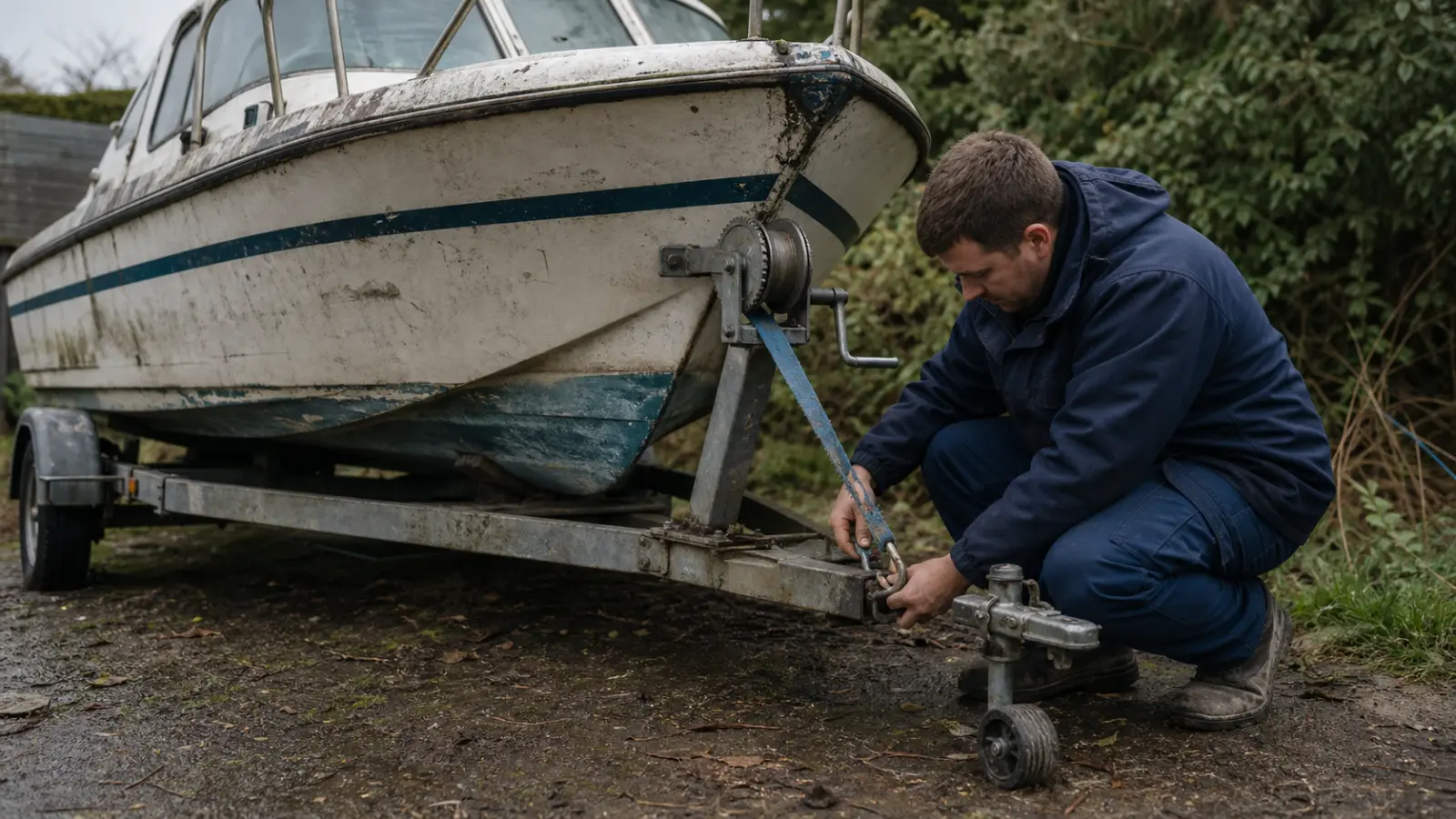
Extracting an old boat is rarely a simple towing job. A rusted trailer can lock up on the frame, or a vessel may sit on wooden blocks without wheels. Narrow residential side yards, tight gates, low tree branches, and soft ground make maneuvering heavy equipment difficult. Professional crews evaluate these physical obstacles to safely extract the vessel without damaging adjacent fences, structures, or delicate turf.

Call 401-445-0754 to start.

Send photos through the contact form.

What Is Boat Removal and When You Need It

Professional boat disposal covers much more than hooking up a trailer and towing a vessel down the road. When an abandoned boat sits on private property or inside a commercial lot, the extraction process must address structural integrity, haulage safety, and environmental protection. An owner with a clean title in hand can clear the vessel quickly, but when paperwork is missing or a hull is inherited alongside a recent real estate purchase, alternative verification routes are necessary. When a derelict vessel is left on someone else's land or inside a slip with delinquent fees, the property owner must follow proper legal notifications before crew members step in to remove the structure.
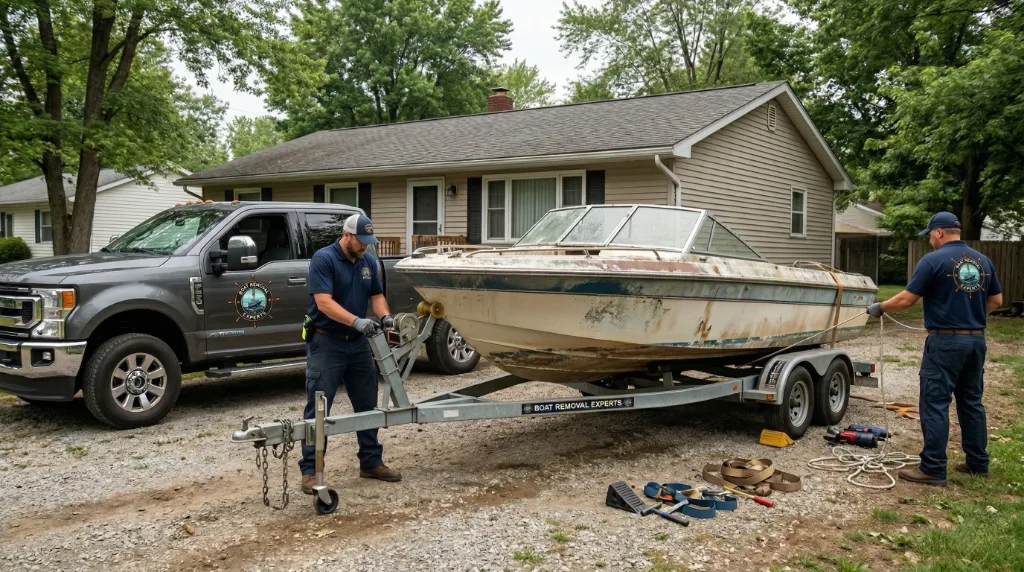
Several factors affect how a vessel is retrieved and processed. A hull that has absorbed water over several seasons becomes drastically heavier than its original dry weight, which changes the type of winches, flatbeds, or hydraulic trailers required for transport. The physical state of the back panel, floorboards, and floor frames also dictates whether a vessel can withstand being pulled onto a ramp or if it must be secured on site. In places like Central Falls, RI, narrow driveways and tight turning radiuses dictate whether haulers use specialized small-footprint machinery or perform partial disassembly prior to transit. Nearby municipal guidelines in Providence County also influence how un-titled craft are processed prior to final haulage.
When Central Falls Residents Call Us

Vessels left exposed to the changing New England climate suffer severe structural degradation over time. Sun exposure breaks down the protective gelcoat, causing fiberglass to crack, craze, and absorb ambient moisture. Winter freeze-and-thaw cycles expand trapped water inside double-bottom hulls, splitting seams and rotting internal wooden floor frames. Rainwater pooling inside an open cockpit destroys upholstery, rots floorboards, and corrodes electrical components. When water sits inside a bilge for years, the added weight and compromized integrity mean a simple tow hook could pull the stern apart, changing how the entire recovery must be handled.
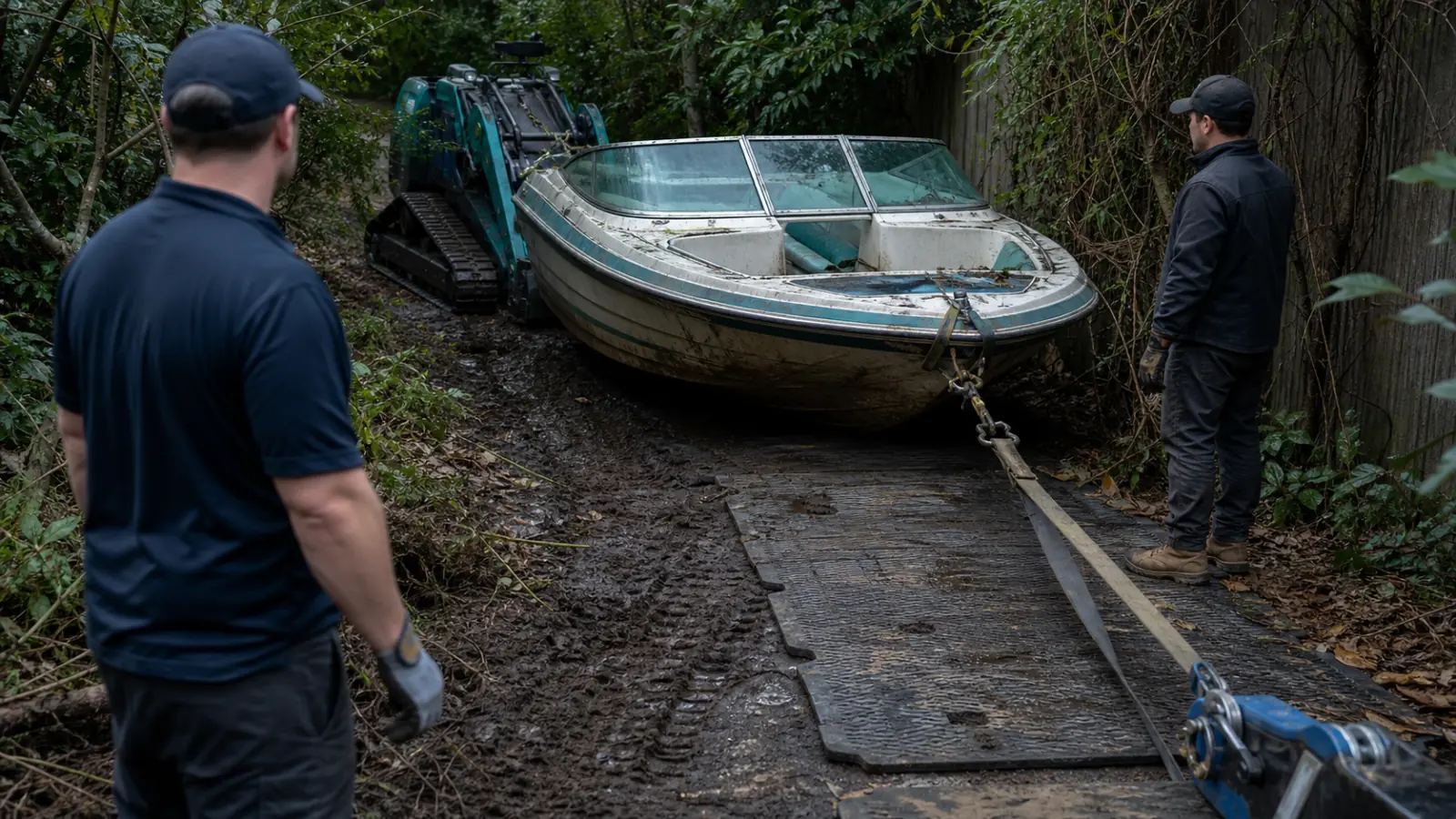
Site access heavily dictates the equipment chosen for a job. A lightweight fishing boat, a broad pontoon, or a heavy deep-draft sailboat each present distinct physical demands during loading. Crews operating in Central Falls, RI evaluate the approach path, checking for overhead power lines, low overhangs, and narrow alleyways that block standard transport rigs. Soil conditions play a huge role; a heavy trailer sitting on soft, wet earth can sink to its axles, requiring spreading boards or heavy-duty winches anchored to support trucks parked on solid pavement in nearby spots like Pawtucket or Valley Falls. Whether a hull sits on a trailer, on custom wooden cribbing, or rests directly on the dirt alters the rigging setup entirely.
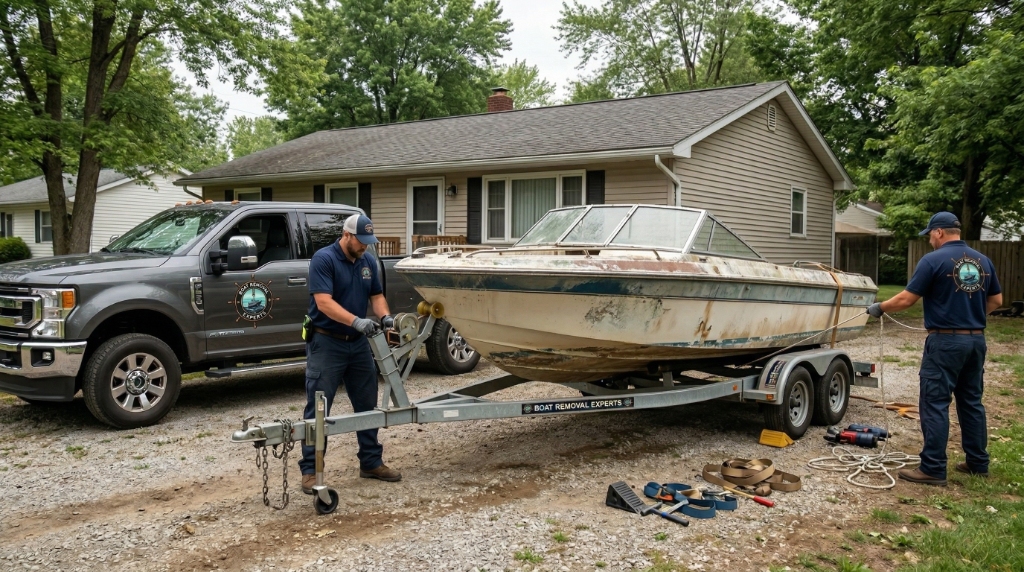
Every Type of Boat We Handle

Situations We Handle

Need Help? We’re Ready.

Contact boat removers directly or request free quotes. We dispatch crews fast.

Our Step-by-Step Process

Assessment

We evaluate the boat’s size, current location, condition, and any environmental or access challenges before we schedule boat removal.

Planning

A detailed plan is built around your vessel — equipment, logistics, timeline, and safety. Services include drainage of oil and fuel before transport.

Execution

Our experienced crew mobilizes to your current location and we tow, haul, or dismantle the vessel using professional marine equipment.

Completion

The vessel is recovered, recycled, or routed to certified boat junkyards for environmentally responsible disposal. The site is left clean.

Equipment & Capabilities

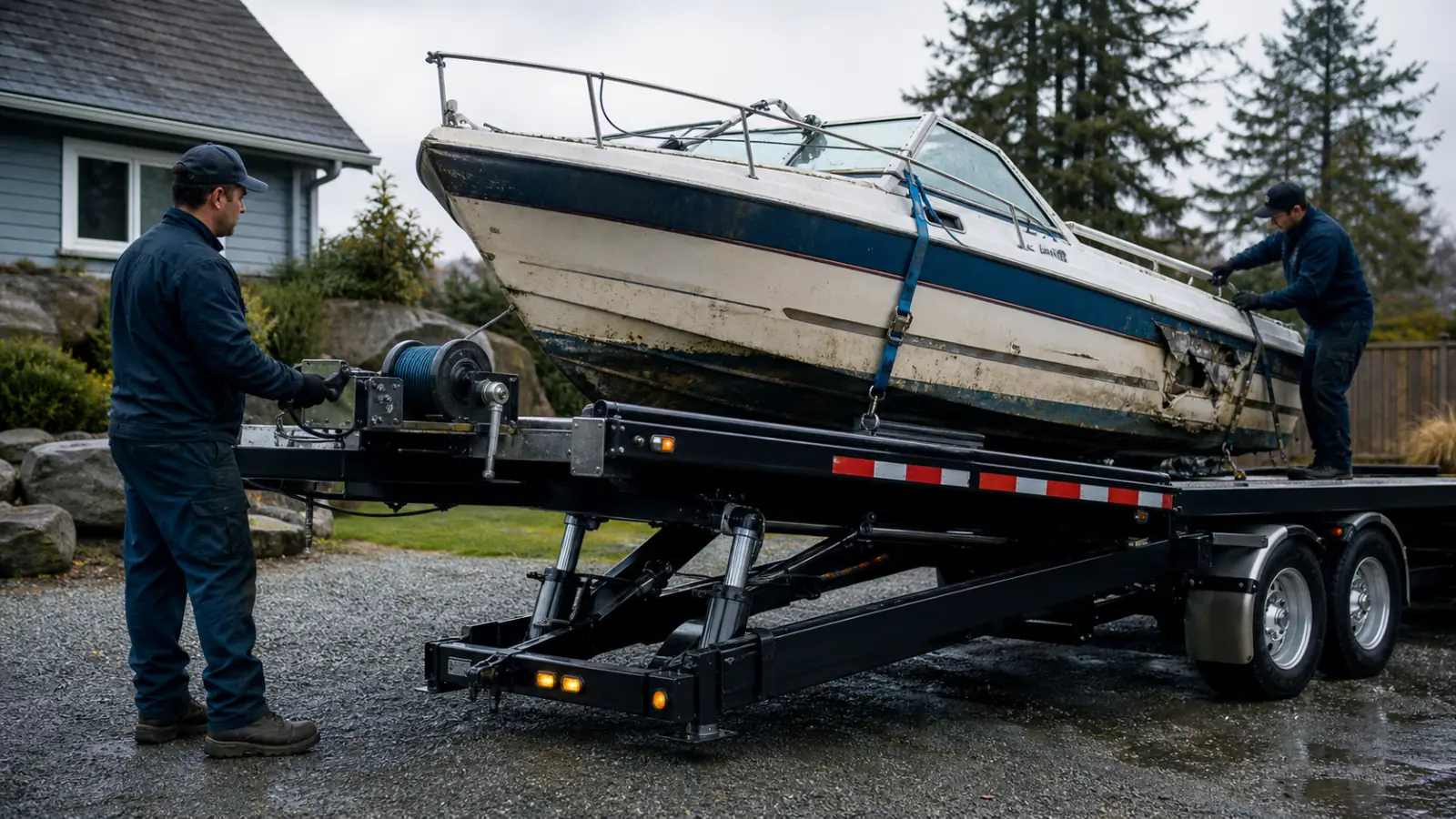
When a vessel's original trailer is crushed, rusted through, or completely missing, the crew relies on specialized heavy recovery gear. Winches, hydraulic jacks, crane arms, and heavy-duty slide axles allow operators to lift or pull a dead hull directly onto a flatbed trailer. If a vessel is too wide to clear property gates, or if the structure is too weak to be loaded whole, workers dismantle the hull right on site using heavy cutting tools. Crews work methodically to saw fiberglass, aluminum, or wood hulls into manageable sections that fit inside standard transport containers.

Environmental safety comes first during any recovery operation. Before a hull is loaded or cut, all hazardous materials must be isolated and drained. Technicians safely evacuate remaining fuel, motor oil, hydraulic fluids, anti-freeze, lead-acid batteries, and onboard electronics containing heavy metals. Once the boat is stripped of dangerous substances, the crew evaluates the leftover materials to determine where everything goes. Clean aluminum or steel hulls are separated for metal recycling, while sound fiberglass components may be processed differently than rotted wood or delaminated foam panels. Once the crew assesses the vessel's physical state and location, they choose the exact combination of dismantling, hauling, and processing methods needed to clear the lot safely.

Our boat removal experience covers everything from start to finish  assessment, planning, execution, dismantling, and final cleanup. Marina operators and property owners across Providence County trust us to get rid of your junk boat without damage to surrounding property.

FAQ

Boat Removal Questions - Frequently Asked

Common questions from property owners about our junk removal service, dismantling, and marine recovery.

We handle every type of vessel — sailboat, pontoon, fishing boats, jon boats, yachts, and commercial craft. Whether your boat or sailboat floats (or used to), we’ll remove it from any current location.

Yes. Sunken and partially submerged vessel recovery is a core part of our salvage work in Providence County. We use lift bags, salvage pumps, and marine cranes to safely raise vessels from underwater.

We respond to inquiries quickly — usually within hours, with same-day service available. For emergency situations, we mobilize as fast as possible. Call us directly for time-sensitive jobs.

No. Every job is handled in-house by our own team and equipment. No middlemen, no handoffs, no surprises.

Cost depends on the boat’s size, current location, condition, and complexity of the job. We provide free assessments and free quotes for every case — contact us and we’ll give you an honest estimate.

Yes. Our boat removal and disposal services include hazardous materials handling, oil and fuel drainage, hull dismantling, and recycling at certified yards — all in compliance with environmental regulations and environmentally responsible standards.

Absolutely. We regularly work in tight marinas, shallow waterways, private docks, backyards, and remote areas. We bring the right gear to reach any current location.

Yes. We frequently work with insurance adjusters on salvage and recovery claims and provide the documentation needed for your claim.

Browse Our Services - Ready to Get Started?

We handle everything from start to finish. Call us now or request a free quote – we’ll dispatch crews and haul your vessel away fast.