
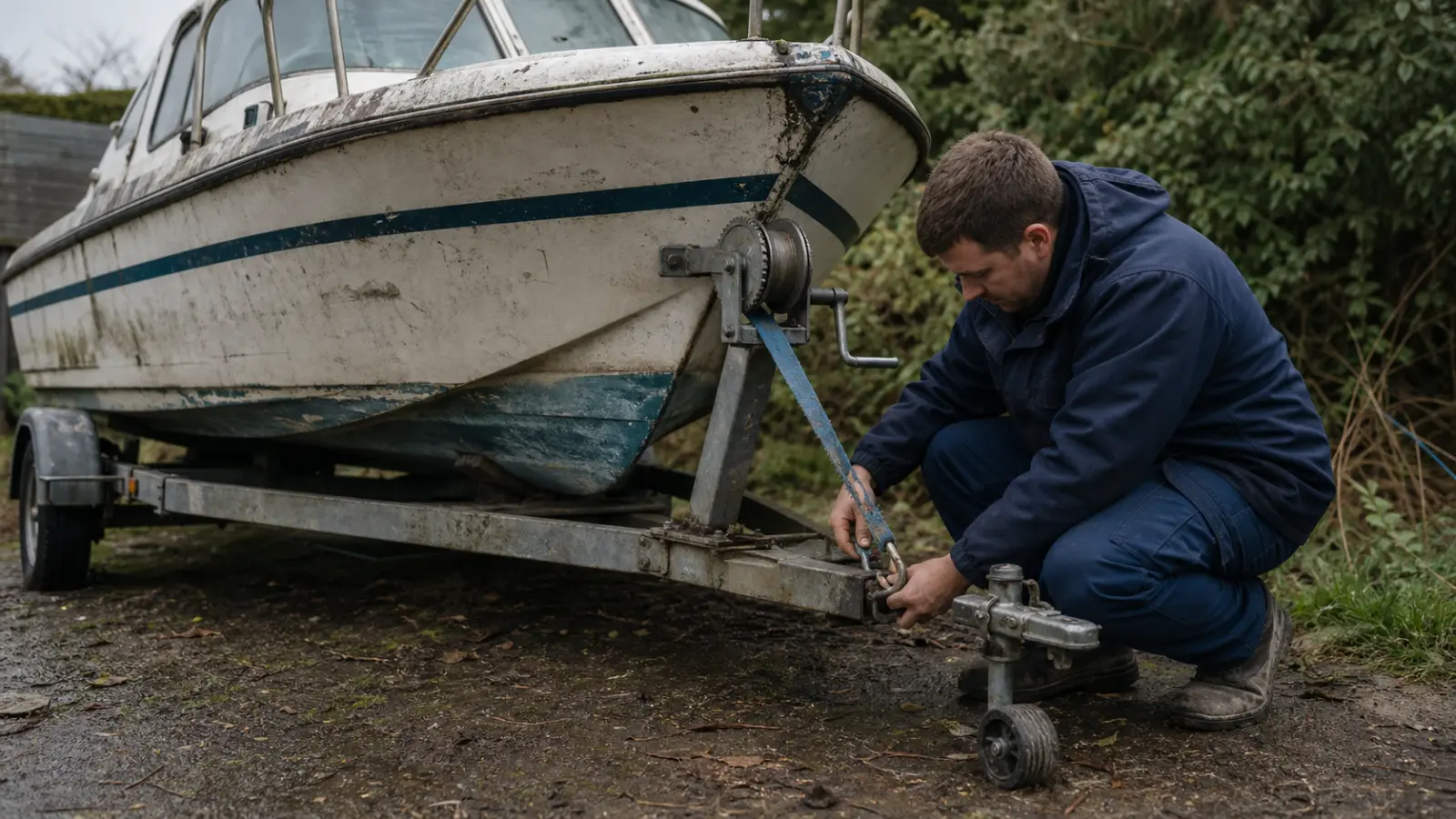
Professional Boat Removal Services in Centreville, VA

A fiberglass hull sits behind your garage on a trailer with tires that flattened into the dirt six seasons ago. A marina sends a formal notice regarding an unpaid slip, or a property purchase leaves you holding the deed to a lot with a heavy cabin cruiser half-hidden in the weeds. Sometimes an outboard seizes, and the cost to rebuild the engine far exceeds what the craft is worth. When an old boat becomes a permanent fixture on your property, moving it yourself quickly becomes an overwhelming task. An unwanted boat sitting on your land attracts pests, collects stagnant water, and leads to code enforcement fines.

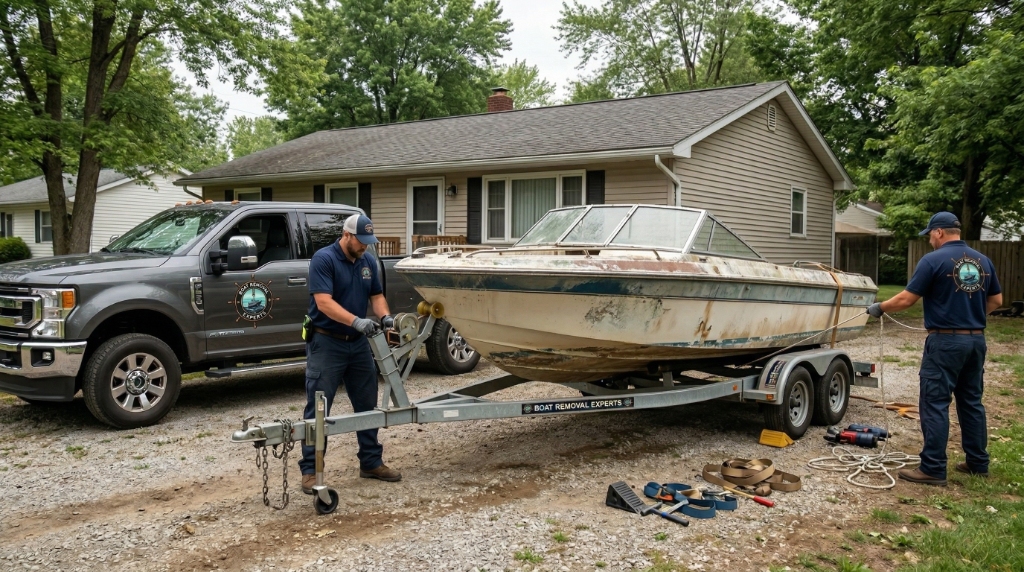
Is there boat removal near me in Centreville, VA? Boat Removal Experts manages complete junk boat extraction for residential properties, storage yards, and slips throughout Centreville, VA. Our crew handles the logistics, transport equipment, and heavy lifting required to clear the craft from your sight.

Our company position on ownership transfer is straightforward and protective of your interests: we do not always transfer the title, but we always issue a written release of liability. Some unvetted outfits simply haul a vessel away with zero signed paperwork, leaving the legal liability attached to the original owner indefinitely if the vessel is later abandoned on public land. It is always worth asking how documentation is handled before allowing anyone to tow a vessel off your property.

Extracting a vessel is rarely as simple as hooking up a hitch. A trailer axle might be rusted solid, or the hull may sit on wooden blocks embedded in thick mud. A wide beam might not fit through a narrow backyard gate, or the sheer weight of the craft sits on soft ground that a standard tow truck cannot cross without sinking.

Call (855) 765-7931 to start.

Send photos through the contact form.

What Is Boat Removal and When You Need It

Professional boat disposal involves far more than merely towing a hull down the road. When you need to get rid of a boat, the process starts with assessing the structural stability of the craft, determining whether it can roll on its own tires, and planning safe containment for transport. An abandoned boat left on private property poses immediate liabilities, especially if it begins leaking internal fluids into the surrounding soil. Complete removal covers structural securement, winch loading, transit, and managing the final dismantling process so you are no longer responsible for the vessel.
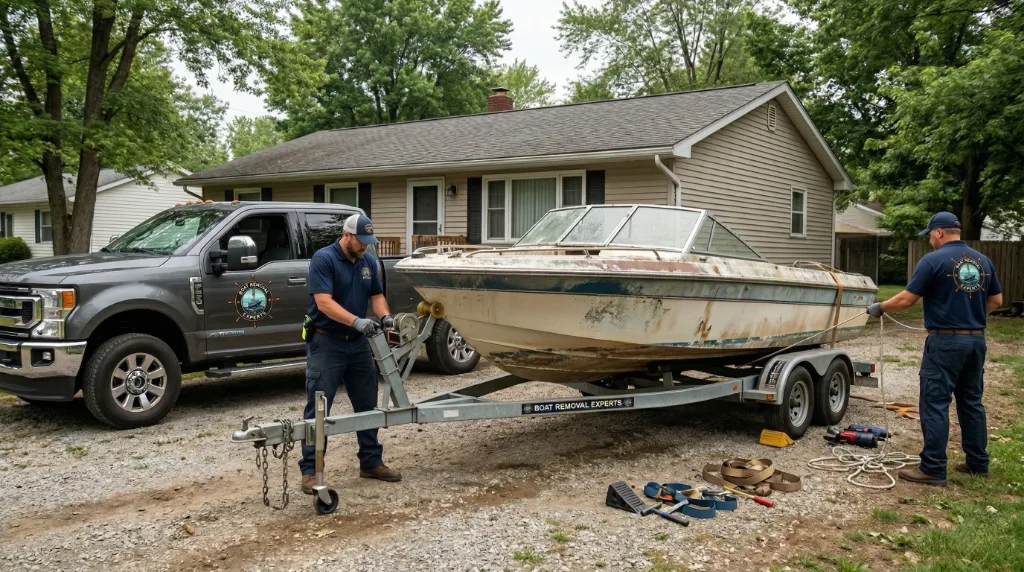
The path to clear a derelict craft depends heavily on its paperwork status. When an owner possesses a clear title, the handoff proceeds smoothly. However, when paperwork is long lost, or when an abandoned boat removal involves a vessel left behind by a previous tenant or inherited with a real estate purchase, alternative legal channels must be navigated. Property owners dealing with a vessel left in a neglected storage space or an unpaid slip must ensure proper notices are documented before physical transport begins.

Site conditions drastically alter the complexity of the job. A vessel sitting in Bull Run or Chantilly on an intact, highway-ready trailer requires a standard rig setup. Conversely, a vessel sunk in deep mud, resting on failing cradles in Yorkshire, or tucked behind structures in Fair Lakes requires specialized winches, articulated cranes, and custom rigging to safely clear the perimeter without damaging nearby structures.
When Centreville Residents Call Us

Property owners across the region frequently reach out when long-term weather exposure turns an unused craft into a severe property hazard. The humid summers and freezing winter cycles degrade fiberglass hulls quickly. Rainwater collects inside an uncovered fishing boat or pontoon, causing internal wood floor frames and floorboards to rot beneath the carpet. As moisture sits, gelcoat cracks, upholstery milders, and structural foam inside the floor absorbs hundreds of pounds of water weight. This added weight can cause a weakened hull to buckle during an improper lift, transforming a routine extraction into a complex salvage operation.
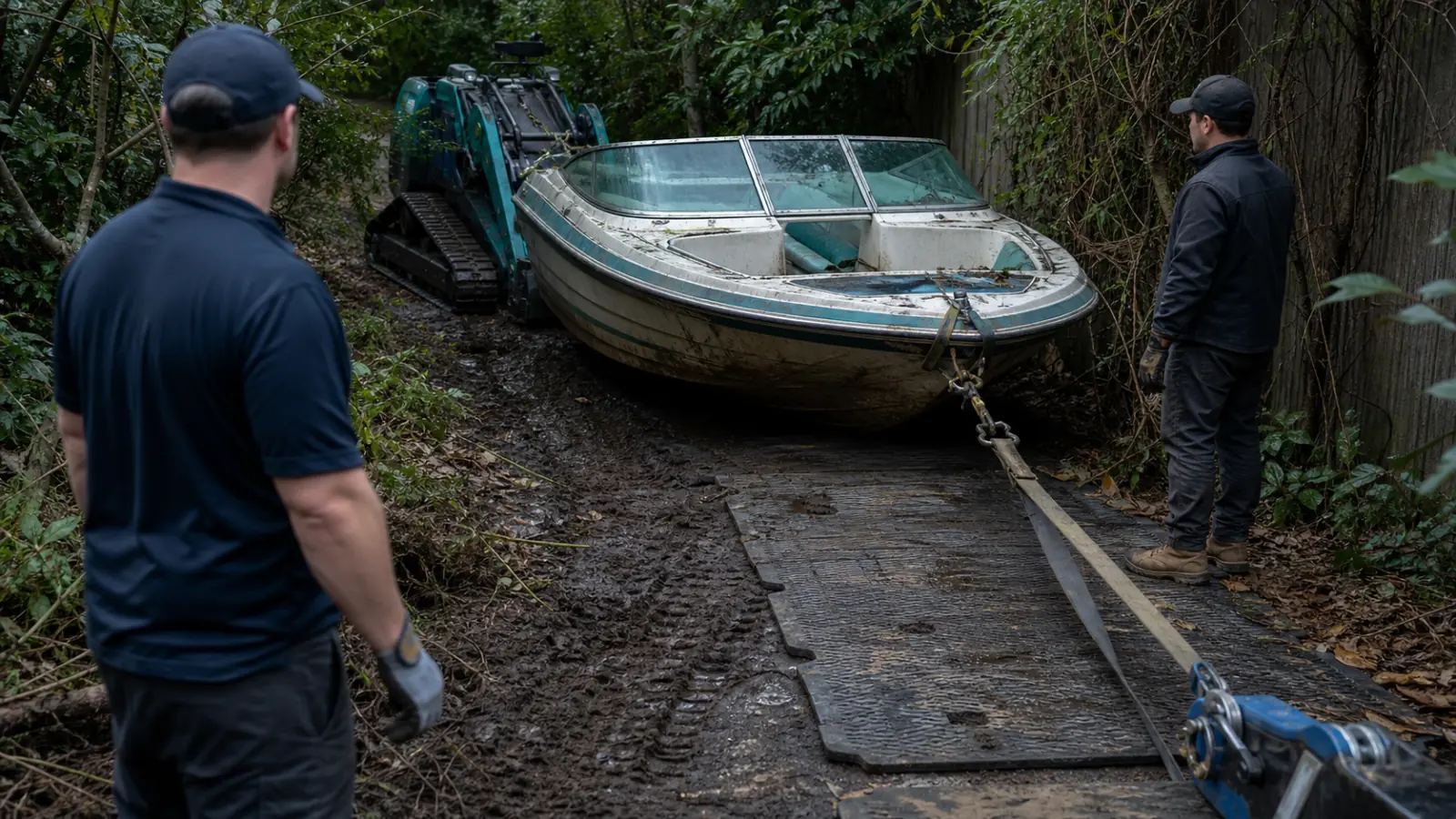
Local terrain and site access dictate the specific approach our team uses for every haul. A heavy sailboat tucked away in Greenbriar might sit on a rotted wooden cradle on a soft lawn, making standard transport impossible. Our crew evaluates the physical surface a truck must cross, measuring clearances around overhanging tree branches, low power lines, narrow driveways, and tight gate openings. Whether a craft rests on an unroadworthy trailer, sits flat on cinder blocks, or floats in a quiet marina slip, the surrounding physical obstacles determine the exact pulling angles and heavy machinery required for the extraction.
Every Type of Boat We Handle

Situations We Handle

Need Help? We’re Ready.

Contact boat removers directly or request free quotes. We dispatch crews fast.

Our Step-by-Step Process

Assessment

We evaluate the boat’s size, current location, condition, and any environmental or access challenges before we schedule boat removal.

Planning

A detailed plan is built around your vessel — equipment, logistics, timeline, and safety. Services include drainage of oil and fuel before transport.

Execution

Our experienced crew mobilizes to your current location and we tow, haul, or dismantle the vessel using professional marine equipment.

Completion

The vessel is recovered, recycled, or routed to certified boat junkyards for environmentally responsible disposal. The site is left clean.

Equipment & Capabilities

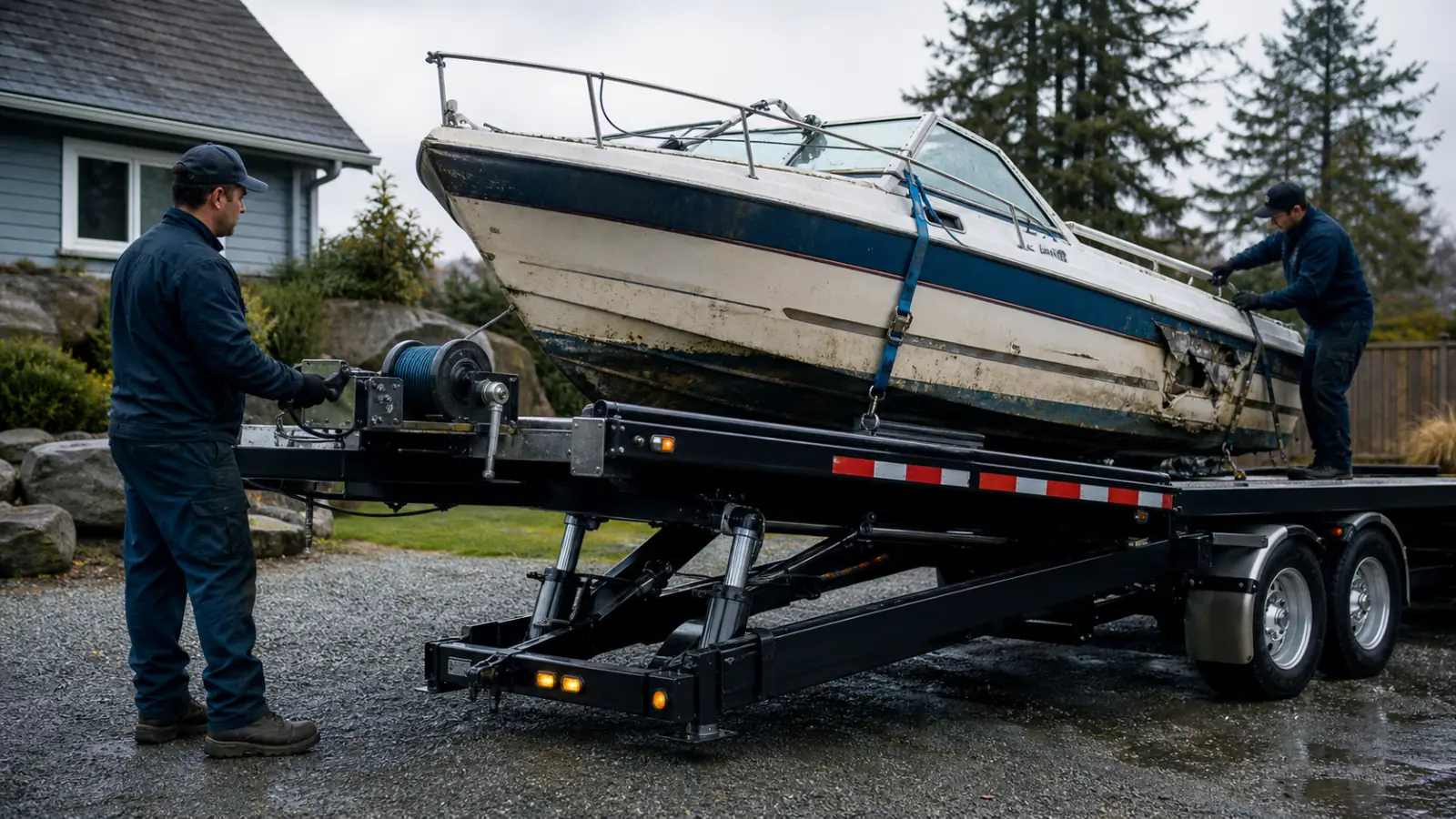
When a vessel cannot be rolled onto a standard trailer because the tires have rotted or the axle has snapped, specialized equipment takes over. Hydraulic flatbed trailers, heavy-duty winches, spreaders, and heavy cranes allow crews to hoist static hulls out of tight quarters safely. When a wide beam prevents a hull from passing through gates, or when the fiberglass has structural damage that prevents a safe highway haul, crews dismantle the hull directly on site. Cutting a hull into manageable sections requires heavy-duty saws and strict containment protocols to keep fiberglass dust off your lawn.

Before any hull leaves the property or undergoes breaking, all hazardous materials must be stripped from the vessel. Crews drain remaining fuel, motor oil, hydraulic fluids, and anti-freeze into sealed containment tanks. Marine batteries, onboard electronics, and lead ballast are removed to ensure environmental compliance. Fuel tanks are vented and scrubbed before the structural material is prepped for transport.

Where the materials end up depends entirely on what the crew finds during the initial physical inspection. Clean metal fittings, aluminum hulls, lead keels, and stainless steel hardware are sorted for scrap processing and recycling. Fiberglass sections, rotted wood, and degraded foam that cannot be reprocessed are hauled to licensed municipal disposal facilities equipped for bulk waste handling.

Our boat removal experience covers everything from start to finish  assessment, planning, execution, dismantling, and final cleanup. Marina operators and property owners across Fairfax County trust us to get rid of your junk boat without damage to surrounding property.

FAQ

Boat Removal Questions - Frequently Asked

Common questions from property owners about our junk removal service, dismantling, and marine recovery.

We handle every type of vessel — sailboat, pontoon, fishing boats, jon boats, yachts, and commercial craft. Whether your boat or sailboat floats (or used to), we’ll remove it from any current location.

Yes. Sunken and partially submerged vessel recovery is a core part of our salvage work in Fairfax County. We use lift bags, salvage pumps, and marine cranes to safely raise vessels from underwater.

We respond to inquiries quickly — usually within hours, with same-day service available. For emergency situations, we mobilize as fast as possible. Call us directly for time-sensitive jobs.

No. Every job is handled in-house by our own team and equipment. No middlemen, no handoffs, no surprises.

Cost depends on the boat’s size, current location, condition, and complexity of the job. We provide free assessments and free quotes for every case — contact us and we’ll give you an honest estimate.

Yes. Our boat removal and disposal services include hazardous materials handling, oil and fuel drainage, hull dismantling, and recycling at certified yards — all in compliance with environmental regulations and environmentally responsible standards.

Absolutely. We regularly work in tight marinas, shallow waterways, private docks, backyards, and remote areas. We bring the right gear to reach any current location.

Yes. We frequently work with insurance adjusters on salvage and recovery claims and provide the documentation needed for your claim.

Browse Our Services - Ready to Get Started?

We handle everything from start to finish. Call us now or request a free quote – we’ll dispatch crews and haul your vessel away fast.