
Professional Boat Removal Services in Cherry Hill, NJ

A fiberglass hull sits behind a detached garage where it has collected leaves for six seasons, its tires pressed flat into soft soil and the trailer frame rusting beneath the axles. Across town, a property transaction stalls because a heavy cabin cruiser remains parked on a residential lot, or a marina office sends notice regarding an abandoned craft sitting in a slip with unpaid storage fees. In other cases, an outboard motor seizes completely, leaving the owner facing repair bills that far exceed the actual market value of the vessel itself. These situations leave property owners stuck with heavy, deteriorating assets that cannot simply be towed away using a standard personal vehicle.

Is there boat removal near me in Cherry Hill, NJ? Boat Removal Experts provides complete extraction services throughout the township, taking handled vessels directly off private yards, commercial sites, and storage facilities.

Before any hauling begins, paperwork must be handled correctly to protect the owner. Boat Removal Experts does not always transfer the vessel title, but our team always issues a formal release of liability. Many casual haulers load a junk boat onto a flatbed without providing documentation, leaving the original owner legal responsibility if the vessel is dumped illegally later. Demanding written liability documentation protects you from future claims, making it an essential step when evaluating any removal service.

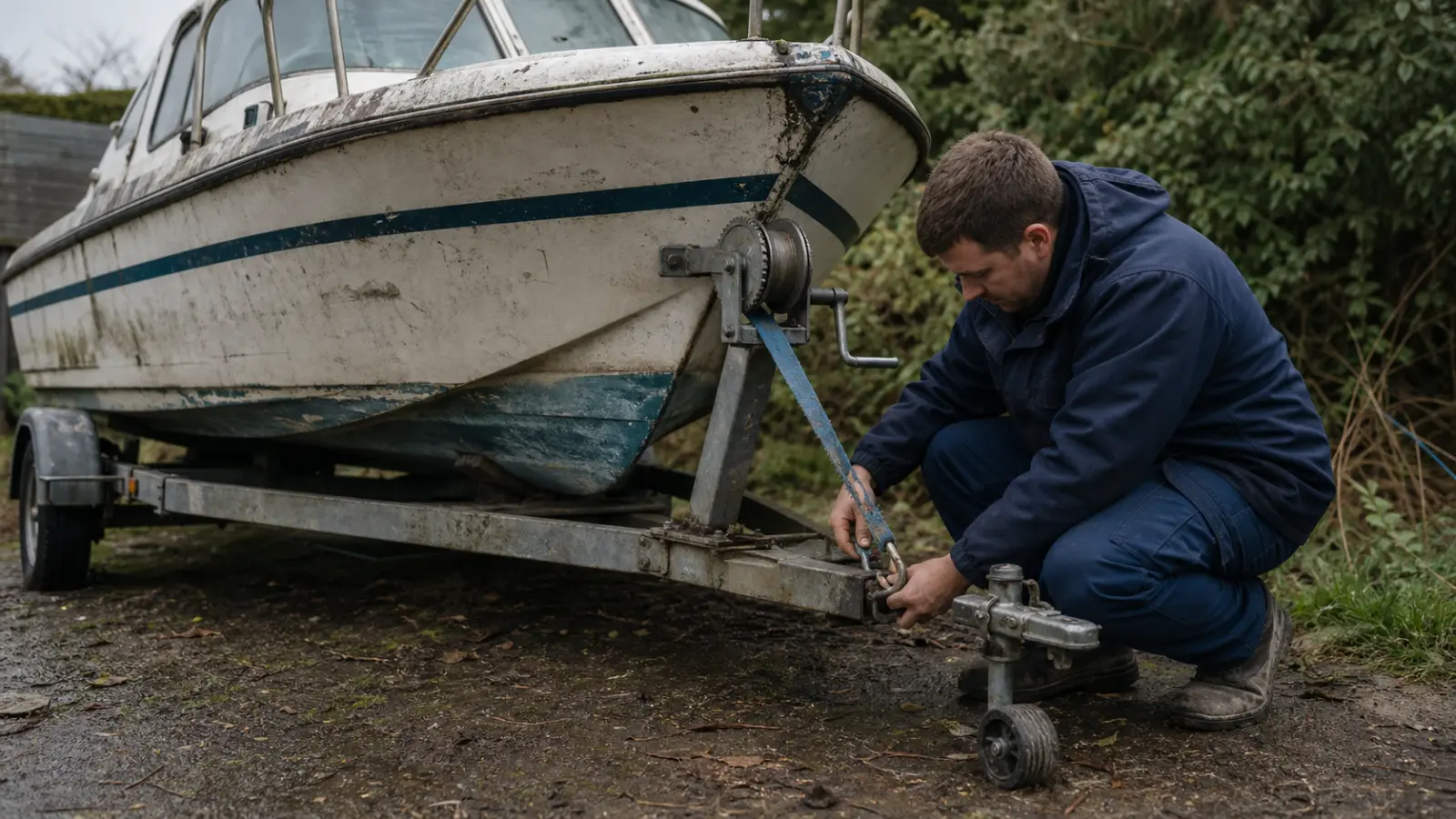
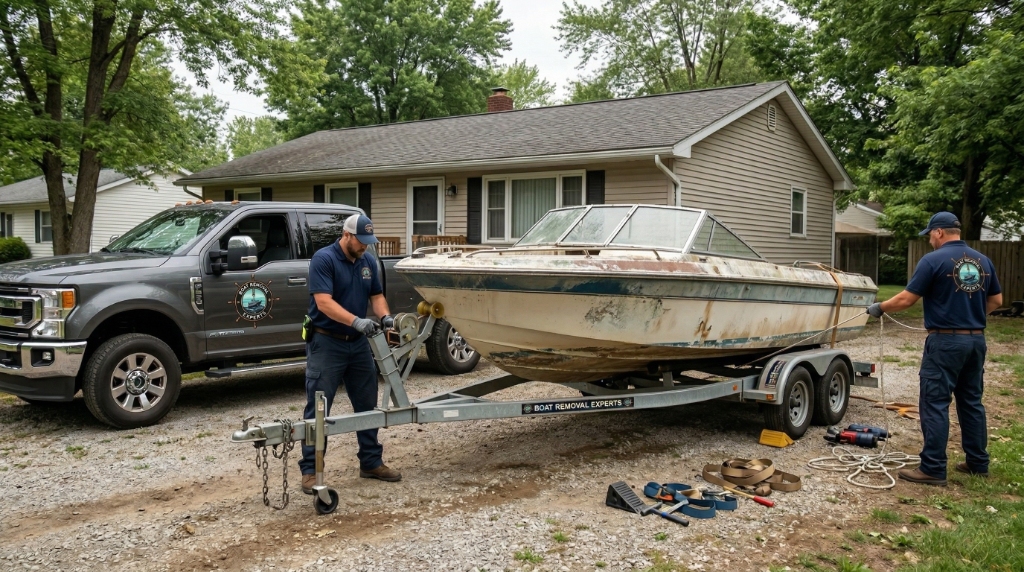
Moving an old boat involves serious logistical hurdles beyond simple weight. A trailer sitting untouched for years often suffers from frozen brakes, dry-rotted tires, or snapped axles that prevent rolling. Keels and custom storage cradles require specialized loading gear, while narrow residential gates and overhead branches restrict how a heavy truck approaches the site. When a vessel rests on soft ground, standard vehicles risk sinking immediately, requiring custom rigging to winched the hull safely onto stable pavement.

Call 856-618-0394 to start.

Send photos through the contact form.

What Is Boat Removal and When You Need It

Professional boat removal goes far beyond hitching a trailer to a pickup truck and driving off down the road. Complete boat disposal involves managing structural rigging, clearing site access barriers, taking care of environmental hazards, and securing legal releases. When an owner possesses a clean title, clearing the asset moves forward quickly. However, when property owners inherit a vessel during a real estate purchase or lose old paperwork over time, alternate documentation pathways must be established to confirm authority to haul the structure away.
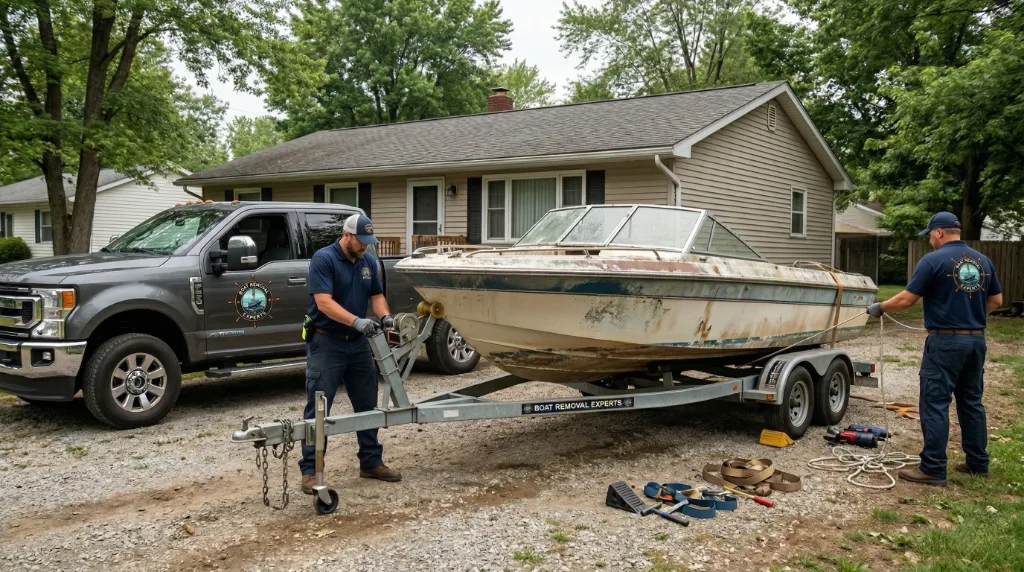
Different rules govern an abandoned boat found on commercial real estate or left in an unpaid storage berth. A derelict craft sitting on private property creates code enforcement issues and safety risks for land owners who never bought the vessel themselves. In these circumstances, specific legal notifications or property releases must occur before the physical extraction takes place. Whether dealing with a rotting runabout on wooden blocks or a larger vessel stuck in a backyard corner of Cherry Hill, NJ, physical access dictates the equipment used.

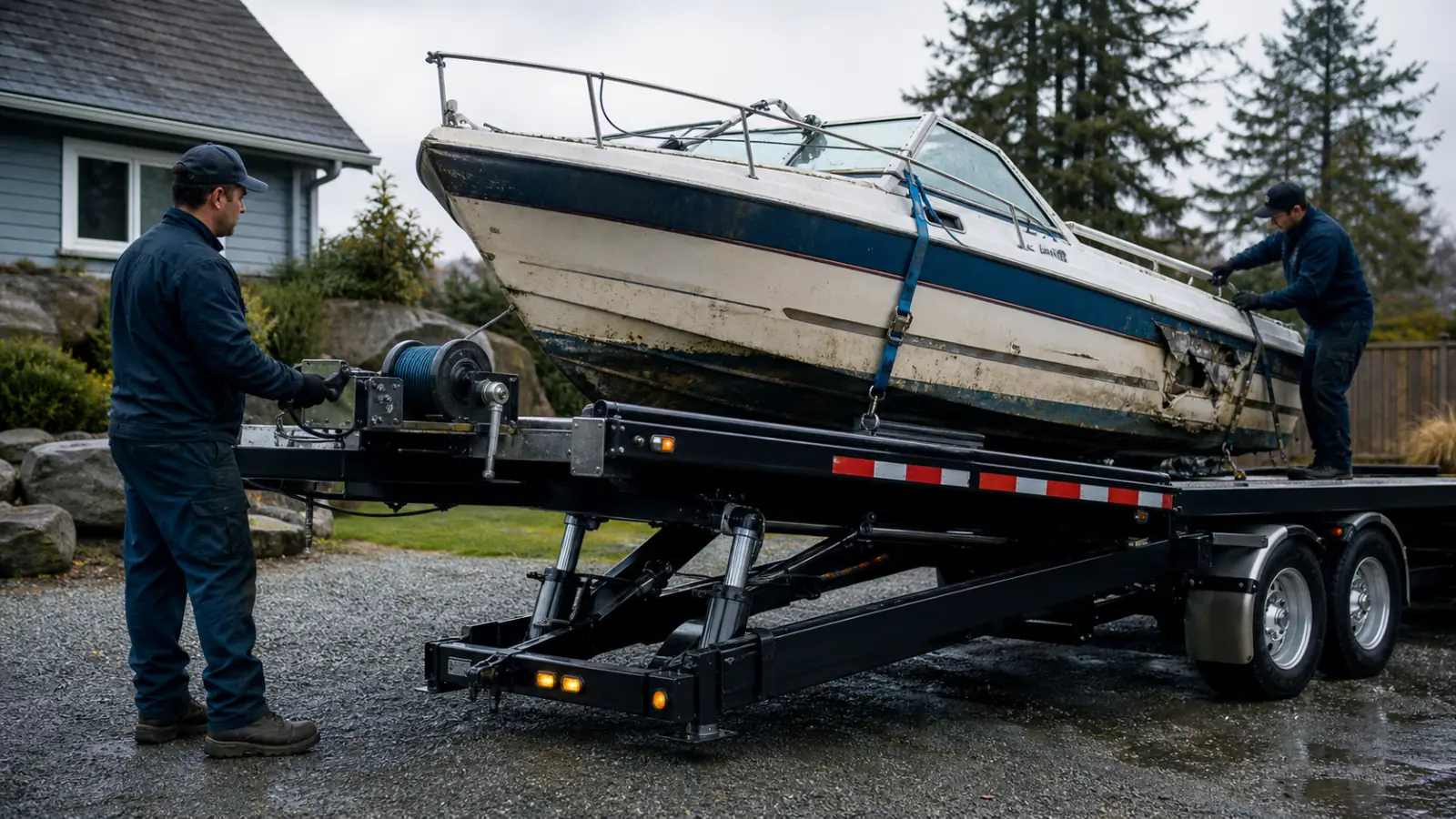
What happens to a vessel depends entirely on its structural integrity, hull material, and overall condition. An abandoned boat left open to the elements slowly fills with water, rotting internal floors and weakening structural floor frames. When a hull becomes too soft to winch onto a tilt-bed intact, crews adapt by utilizing specialized lifting straps or performing on-site separation to extract the vessel safely without causing damage to surrounding structures.
When Cherry Hill Residents Call Us

Vessels stored outdoors across Cherry Hill, NJ face harsh seasonal weather that rapidly degrades raw materials. Sun exposure breaks down gelcoat surfaces, causing hairline cracks that allow moisture to enter the underlying fiberglass matting. Freezing winter temperatures then expand trapped water, separating hull layers and rotting internal wooden transoms. Upholstery holds rainwater like a sponge, creating heavy mold growth and causing floors to collapse, which completely changes how an old boat must be rigged for transport.
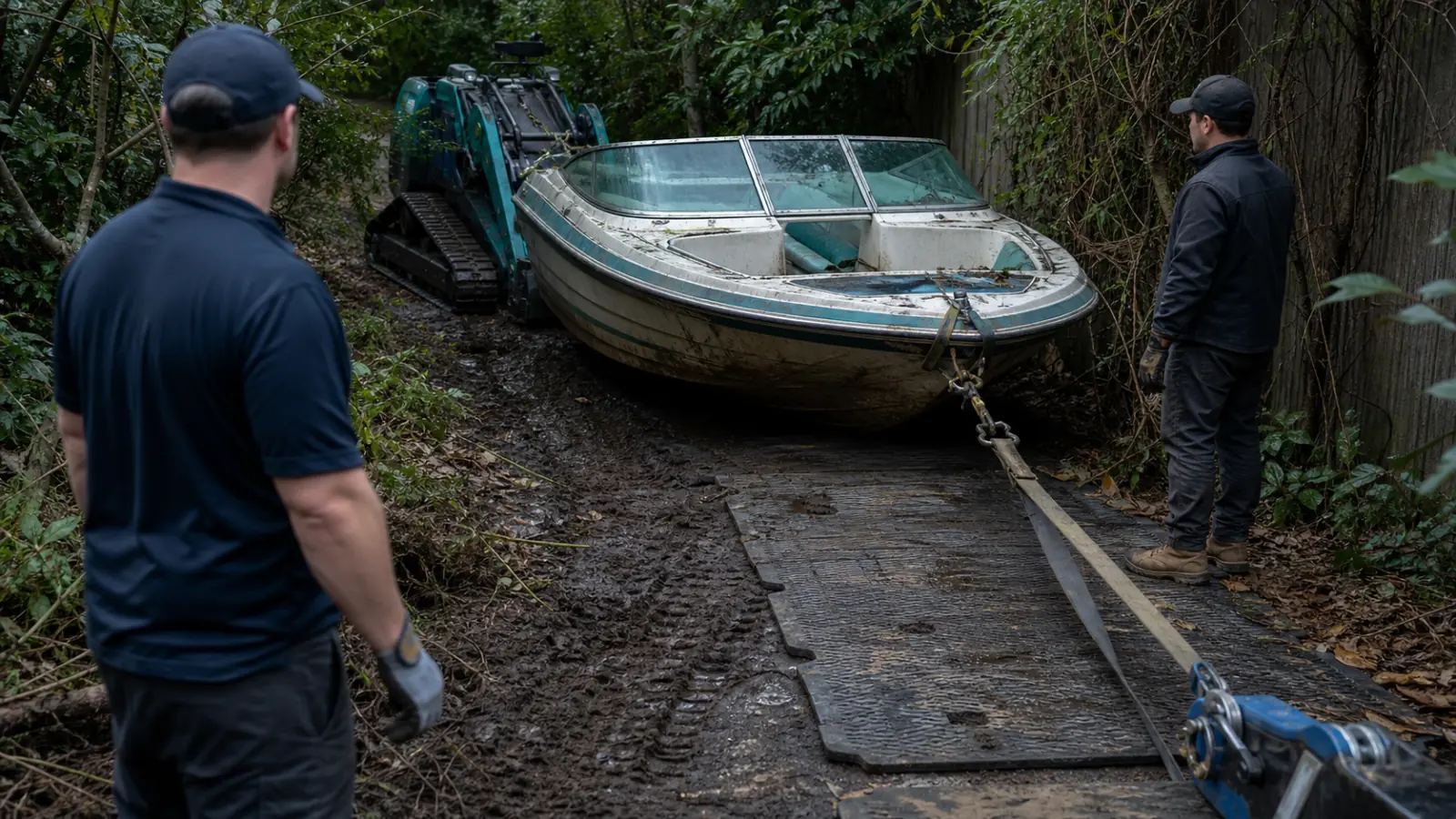
A small aluminum fishing boat, a broad pontoon, or a deep-draft sailboat each present distinct clearance challenges. A pontoon boat features a wide beam that barely clears suburban side yard fencing, while a sailboat requires extra vertical clearance for overhead wires due to its fixed keel or unstepped mast. When owners in nearby communities like Ellisburg, Golden Triangle, or Kingston Estates need assistance, site access determines whether our truck can back directly up to the vessel or if remote winch cables are necessary.

The ground condition underneath the hull dictates the extraction approach. A vessel sitting on a rotting wooden cradle in soft lawn dirt cannot be pulled the same way as a craft sitting on a functional, wheeled trailer parked on asphalt. Ground slope, tight turns around residential driveways, and low-hanging tree canopy all influence how crews handle boat salvage operations on private land or commercial lots.
Every Type of Boat We Handle

Situations We Handle

Need Help? We’re Ready.

Contact boat removers directly or request free quotes. We dispatch crews fast.

Our Step-by-Step Process

Assessment

We evaluate the boat’s size, current location, condition, and any environmental or access challenges before we schedule boat removal.

Planning

A detailed plan is built around your vessel — equipment, logistics, timeline, and safety. Services include drainage of oil and fuel before transport.

Execution

Our experienced crew mobilizes to your current location and we tow, haul, or dismantle the vessel using professional marine equipment.

Completion

The vessel is recovered, recycled, or routed to certified boat junkyards for environmentally responsible disposal. The site is left clean.

Equipment & Capabilities

When a vessel cannot roll out on its own trailer, specialized heavy equipment takes over the extraction process. Crews utilize heavy-duty hydraulic winches, articulated cranes, low-profile trailer beds, and heavy wheel dollies to lift or drag a stubborn hull onto transport vehicles. If a craft sits in tight quarters where large trucks cannot maneuver, or if the hull is structurally compromized, workers dismantle the vessel on site using specialized cut-off tools and reciprocating saws.

Before any hull cutting or highway transport occurs, all hazardous materials must be stripped from the vessel. Crews drain remaining fuel tanks, extract engine crankcase oil, remove heavy marine batteries, and disconnect legacy electronic displays or refrigeration units containing toxic chemicals. Sorting these materials keeps hazardous liquids out of standard waste streams and prepares the remaining structure for processing.

Once fluids are contained, the crew evaluates the stripped components to determine where materials flow next. Sound metal hardware, aluminum hulls, and stainless steel fittings are separated for metal recycling, while crushed fiberglass or severely rotted wood structural sections move toward appropriate processing facilities. Operating across Camden County, including places like Merchantville and Barclay, our team assesses every hull individually to choose the safest, most efficient path for physical clearance and material disposal.

Our boat removal experience covers everything from start to finish  assessment, planning, execution, dismantling, and final cleanup. Marina operators and property owners across Camden County trust us to get rid of your junk boat without damage to surrounding property.

FAQ

Boat Removal Questions - Frequently Asked

Common questions from property owners about our junk removal service, dismantling, and marine recovery.

We handle every type of vessel — sailboat, pontoon, fishing boats, jon boats, yachts, and commercial craft. Whether your boat or sailboat floats (or used to), we’ll remove it from any current location.

Yes. Sunken and partially submerged vessel recovery is a core part of our salvage work in Camden County. We use lift bags, salvage pumps, and marine cranes to safely raise vessels from underwater.

We respond to inquiries quickly — usually within hours, with same-day service available. For emergency situations, we mobilize as fast as possible. Call us directly for time-sensitive jobs.

No. Every job is handled in-house by our own team and equipment. No middlemen, no handoffs, no surprises.

Cost depends on the boat’s size, current location, condition, and complexity of the job. We provide free assessments and free quotes for every case — contact us and we’ll give you an honest estimate.

Yes. Our boat removal and disposal services include hazardous materials handling, oil and fuel drainage, hull dismantling, and recycling at certified yards — all in compliance with environmental regulations and environmentally responsible standards.

Absolutely. We regularly work in tight marinas, shallow waterways, private docks, backyards, and remote areas. We bring the right gear to reach any current location.

Yes. We frequently work with insurance adjusters on salvage and recovery claims and provide the documentation needed for your claim.

Browse Our Services - Ready to Get Started?

We handle everything from start to finish. Call us now or request a free quote – we’ll dispatch crews and haul your vessel away fast.