
Professional Boat Removal Services in Columbia, SC
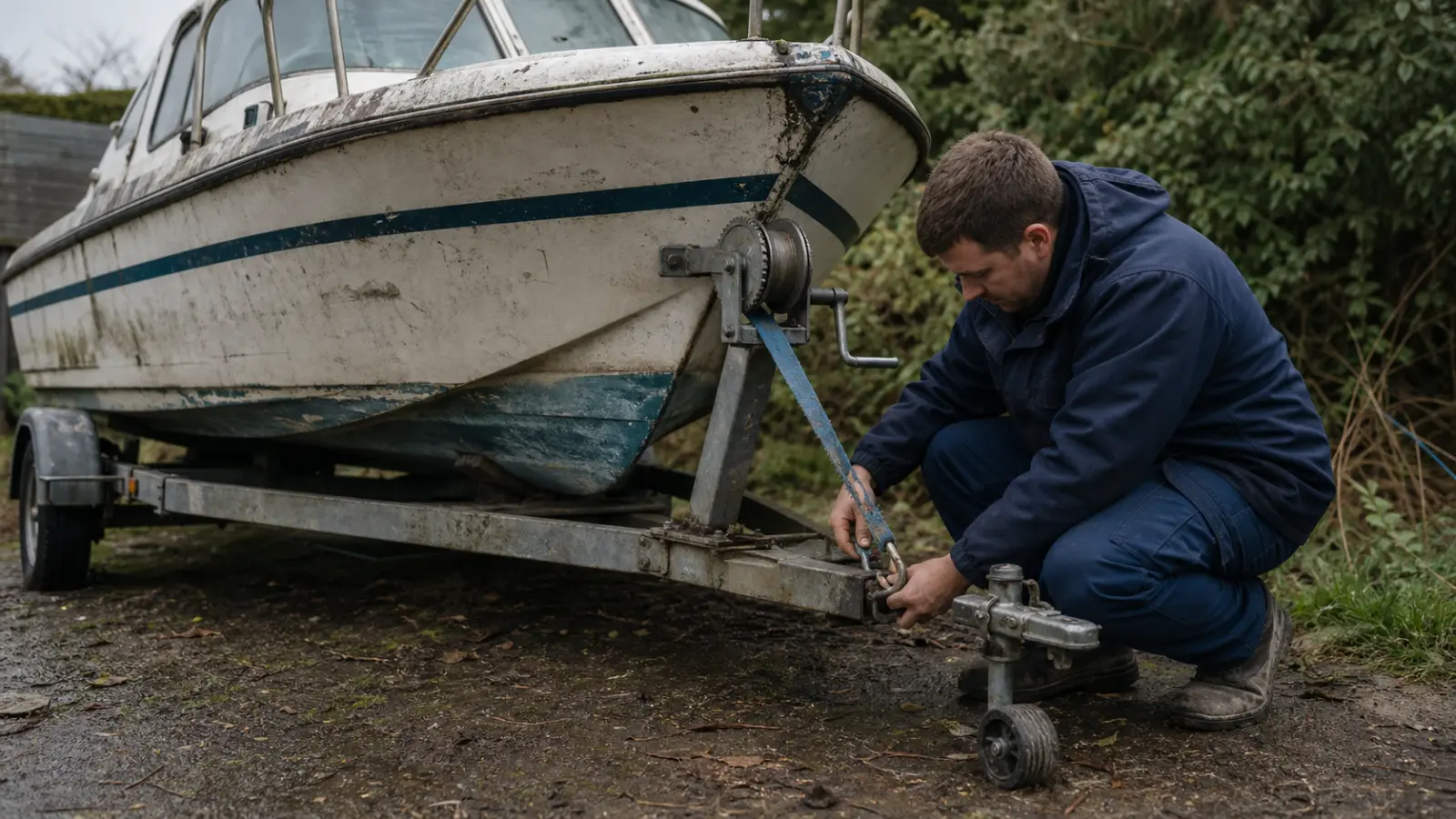
An old boat sits on a flat-tired trailer behind the garage, where it has remained untouched for six seasons while the weather slowly rots the back panel. In other cases, a marina sends a formal notice regarding unpaid slip fees, a commercial property is purchased with a fiberglass hull left on the lot, or an outboard engine seizes and a rebuild quote far exceeds the actual market value of the vessel. When a watercraft becomes a financial and physical burden, keeping it on the property is no longer practical.
Is there boat removal near me in Columbia, SC? Yes, Boat Removal Experts provides complete vessel recovery, transport, and site cleanup services throughout the city, managing neglected hulls, unseaworthy craft, and abandoned watercraft regardless of their current location or structural condition.

Our position on documentation is straightforward: we do not always transfer the title into our name, but we always issue a formal release of liability to the property owner. Some haulers take a vessel away without providing any signed paperwork, which leaves the original owner legally responsible if the hull is later dumped on public property. Securing a written release protects you from future municipal fines or legal claims.
Moving a vessel is rarely as simple as hooking up a hitch. Trailers left in the dirt suffer from frozen wheel bearings, rusted axles, and rotted frame rails that cannot support weight. When a craft rests on wooden cradles or blocks, sits wider than the driveway gate, or rests on soft ground that sinks under heavy equipment, specialized extraction tools are required.
Call 803-680-2511 to start.
What Is Boat Removal and When You Need It
Professional boat disposal involves far more than hooking a trailer to a pickup truck and driving away. When a derelict vessel sits in a backyard, a commercial lot, or a storage facility, complete removal requires assessing structural stability, securing loose cabin components, clearing surrounding brush, and loading the craft safely onto transport equipment. Whether the job involves an abandoned boat sitting on blocking or a damaged hull stranded in a residential driveway, the process addresses all physical debris left at the site.
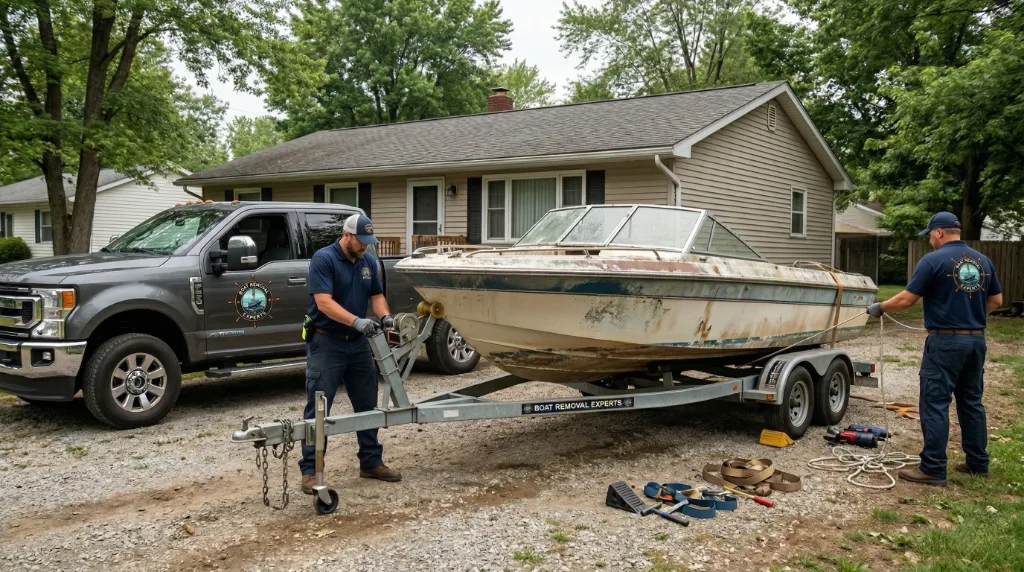
The paperwork status of a vessel directly impacts how the extraction is executed. When an owner possesses a clear title, the transport and documentation process proceeds without delay. If the title is lost, destroyed, or was never provided during a real estate purchase, alternative documentation must be established to confirm that the property owner has the legal right to clear the land. An abandoned boat left on private property or inside a storage facility without active billing requires specific legal steps before heavy machinery moves the hull.
Physical condition determines whether a craft can be moved in one piece or must be processed before transport. A severe structural crack, a delaminated hull, or a rotted wooden frame changes the rigging method required to lift the vessel. The goal is removing the burden from the land cleanly while ensuring all legal liabilities are settled for the property owner.
When Columbia Residents Call Us
Property owners in Columbia, SC frequently request help when prolonged exposure to humid weather renders a vessel entirely unserviceable. High humidity, intense sun, and trapped rainwater cause rapid oxidation on fiberglass gelcoat, rot marine plywood decks, and breed heavy mold throughout cabin upholstery. As rain collects inside an uncovered hull, the added water weight weakens structural floor frames and rots the back panel from the inside out, making the vessel dangerous to move without professional rigging.
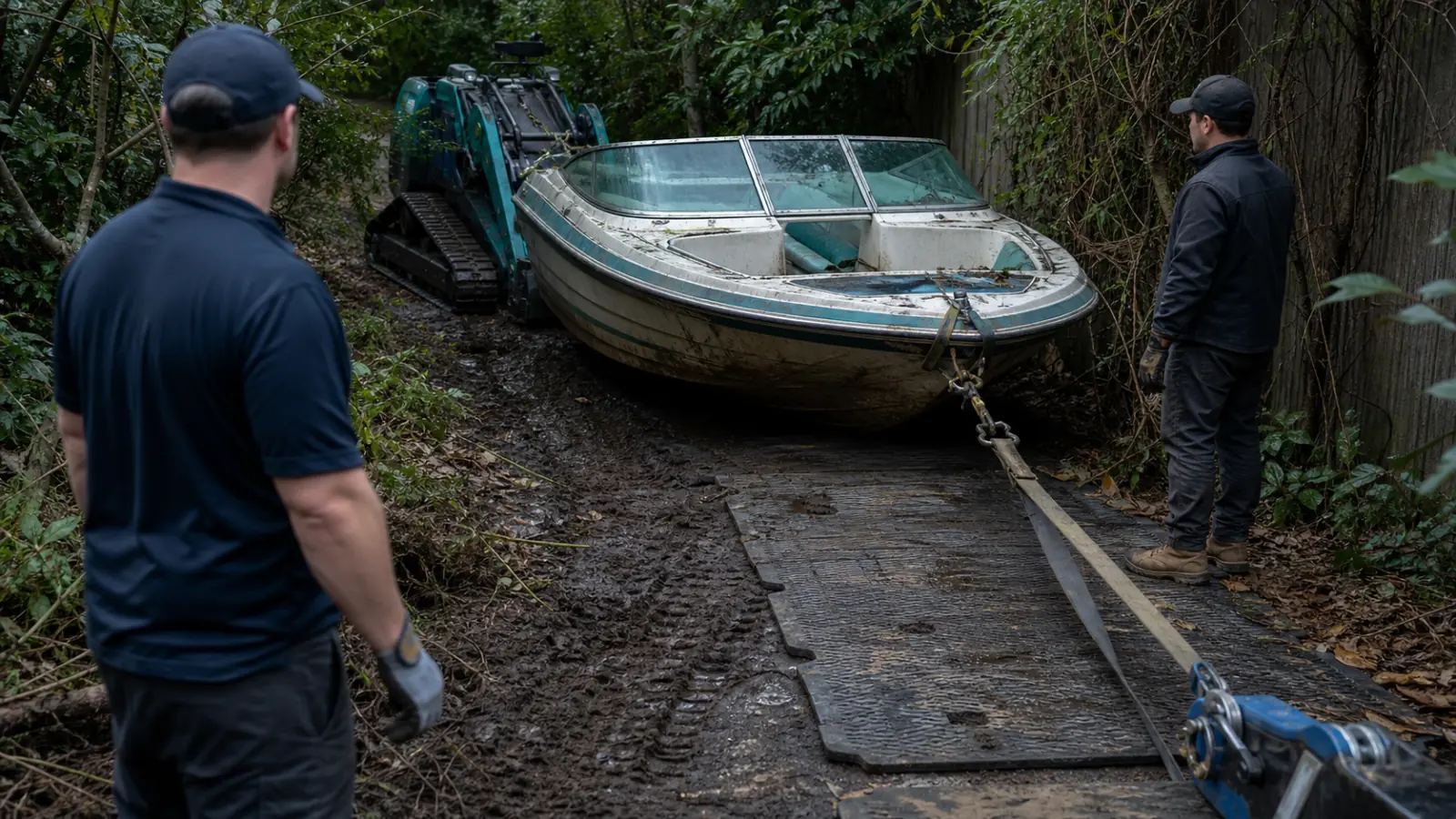
Local site conditions dictate the strategy required for safe extraction. Crews regularly navigate tight residential driveways in Forest Acres, navigate narrow access lanes in Arcadia Lakes, and extract vessels from soft dirt yards near Woodfield and Dentsville. Ground conditions near Capitol View often force transport rigs to operate over soft soil where heavy tires can sink, requiring soft-ground mats or winch lines to pull the load clear.
Access around the vessel dictates what machinery enters the property. Overhanging tree limbs, low utility lines, narrow fence gates, and nearby structures limit overhead clearance and side access. Whether a pontoon sits flat on a soft lawn, a heavy sailboat rests on tilted jack stands, or a small fishing boat is wedged behind an outbuilding, the crew adjusts the rigging method to clear the property without damaging adjacent structures.
Every Type of Boat We Handle
- Sailboat & catamaran
- Motorboat, powerboat & cabin cruisers
- Fishing boats & bass boats
- Pontoon boats
- Jon boats & aluminum skiffs
- Large yachts
- Personal watercraft (jet skis)
- Houseboats
Situations We Handle
- Abandoned boat at marinas, docks, or boat lifts
- Unwanted boats on private property or in boat storage
- Vessels in backyards, fields, or vacant lots
- Derelict vessels blocking dock access or navigation
- Storm-damaged vessels requiring boat hauling
- Vessels without trailers or with flat tires
- Tight access locations (narrow driveways, wooded areas)
- Government or insurance-ordered cases
Need Help? We’re Ready.
Contact boat removers directly or request free quotes. We dispatch crews fast.
Our Step-by-Step Process

Assessment
We evaluate the boat’s size, current location, condition, and any environmental or access challenges before we schedule boat removal.

Planning
A detailed plan is built around your vessel — equipment, logistics, timeline, and safety. Services include drainage of oil and fuel before transport.

Execution
Our experienced crew mobilizes to your current location and we tow, haul, or dismantle the vessel using professional marine equipment.

Completion
The vessel is recovered, recycled, or routed to certified boat junkyards for environmentally responsible disposal. The site is left clean.
Equipment & Capabilities
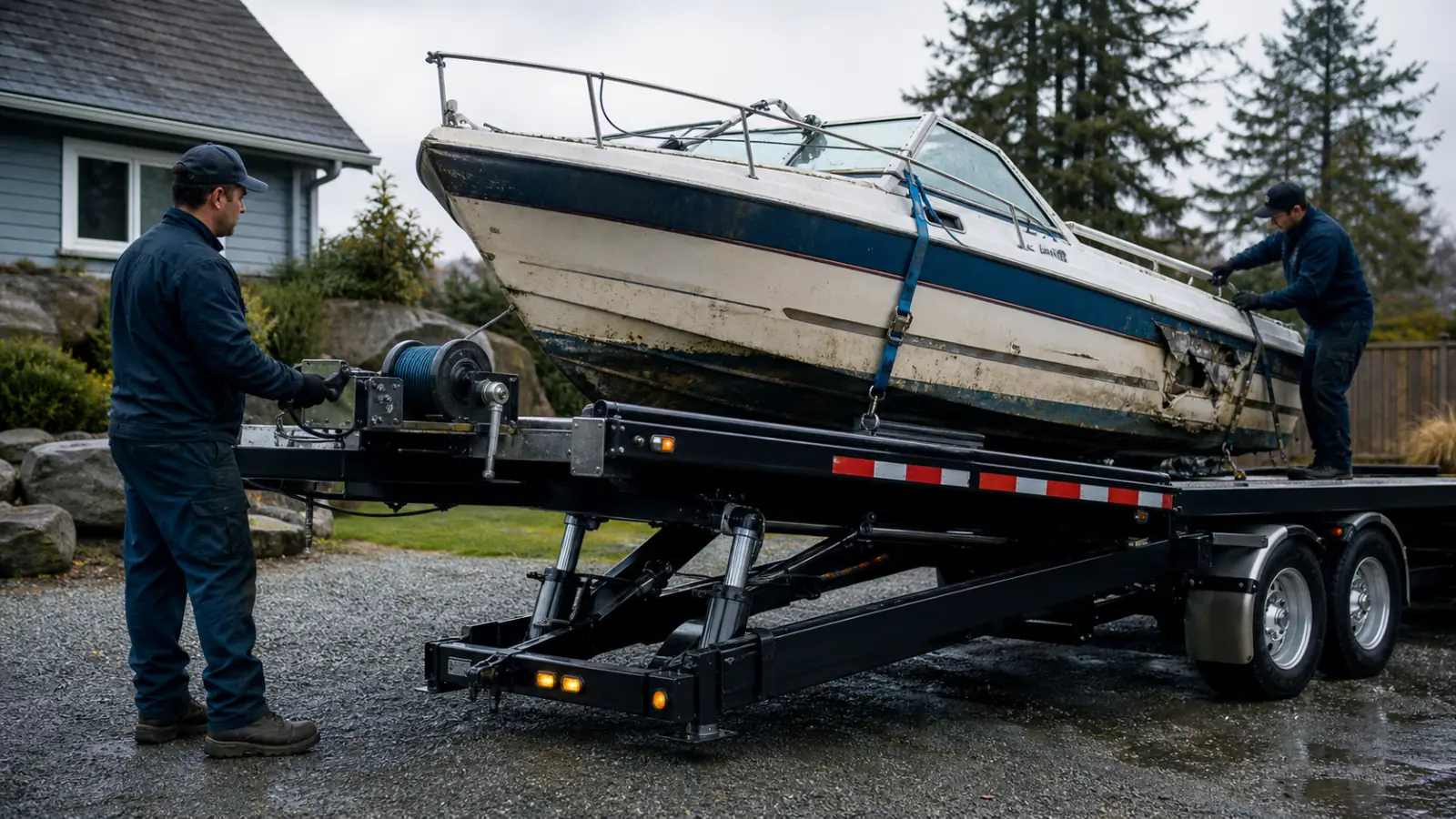
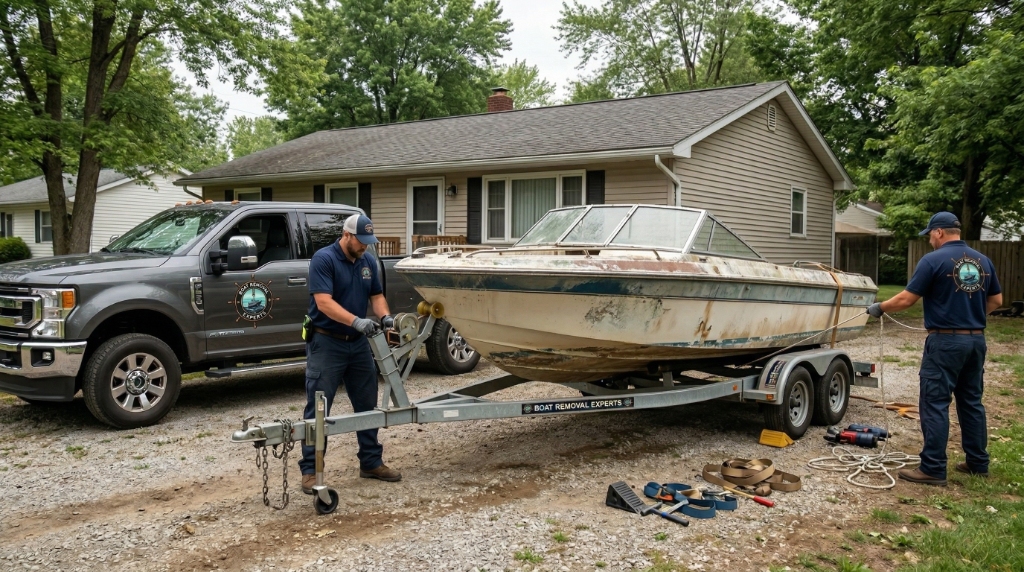
When a vessel cannot roll on its own tires, the crew relies on specialized loading equipment to complete the extraction. Flatbed trailers equipped with high-capacity hydraulic winches, heavy-duty snatch blocks, and temporary transport dollies allow the team to load immobilized hulls safely. If a craft rests on soft earth or crumbling wooden blocks, soft-rigging straps are placed beneath the structural strong points of the hull to lift it cleanly without causing a collapse on site.
In situations where narrow gates, thick timber, or structural collapse prevent hauling the vessel whole, the crew will dismantle the hull on location. Heavy cutting equipment breaks down fiberglass, aluminum, and wooden deck structures into manageable sections that fit inside enclosed transport containers. Before any cutting or loading begins, all hazardous materials are systematically drained and isolated. Fuel tanks are pumped out, crankcase oil is captured, marine batteries are removed, and electronic components are safely removed to prevent ground contamination.
Once the vessel is loaded and secured, the crew clears the site of broken glass, rotted wood, and metal hardware. The materials are then transported to designated facilities where metal components go toward scrap recycling while remaining composite materials proceed to regulated regional landfill facilities based on their material composition.
Our boat removal experience covers everything from start to finish assessment, planning, execution, dismantling, and final cleanup. Marina operators and property owners across Lexington County trust us to get rid of your junk boat without damage to surrounding property.
FAQ
Boat Removal Questions - Frequently Asked
Common questions from property owners about our junk removal service, dismantling, and marine recovery.
What type of boat do you remove?
We handle every type of vessel — sailboat, pontoon, fishing boats, jon boats, yachts, and commercial craft. Whether your boat or sailboat floats (or used to), we’ll remove it from any current location.
Do you handle sunken or partially submerged vessels?
Yes. Sunken and partially submerged vessel recovery is a core part of our salvage work in Lexington County. We use lift bags, salvage pumps, and marine cranes to safely raise vessels from underwater.
How quickly can you respond?
We respond to inquiries quickly — usually within hours, with same-day service available. For emergency situations, we mobilize as fast as possible. Call us directly for time-sensitive jobs.
Do you use subcontractors?
No. Every job is handled in-house by our own team and equipment. No middlemen, no handoffs, no surprises.
How much does cheap boat removal cost?
Cost depends on the boat’s size, current location, condition, and complexity of the job. We provide free assessments and free quotes for every case — contact us and we’ll give you an honest estimate.
Do you handle boat disposal and recycling?
Yes. Our boat removal and disposal services include hazardous materials handling, oil and fuel drainage, hull dismantling, and recycling at certified yards — all in compliance with environmental regulations and environmentally responsible standards.
Can you reach a hard-to-access location?
Absolutely. We regularly work in tight marinas, shallow waterways, private docks, backyards, and remote areas. We bring the right gear to reach any current location.
Do you work with insurance companies?
Yes. We frequently work with insurance adjusters on salvage and recovery claims and provide the documentation needed for your claim.
Other Boat Removal Locations
Browse Our Services - Ready to Get Started?
We handle everything from start to finish. Call us now or request a free quote – we’ll dispatch crews and haul your vessel away fast.