
Professional Boat Removal Services in Country Club, FL

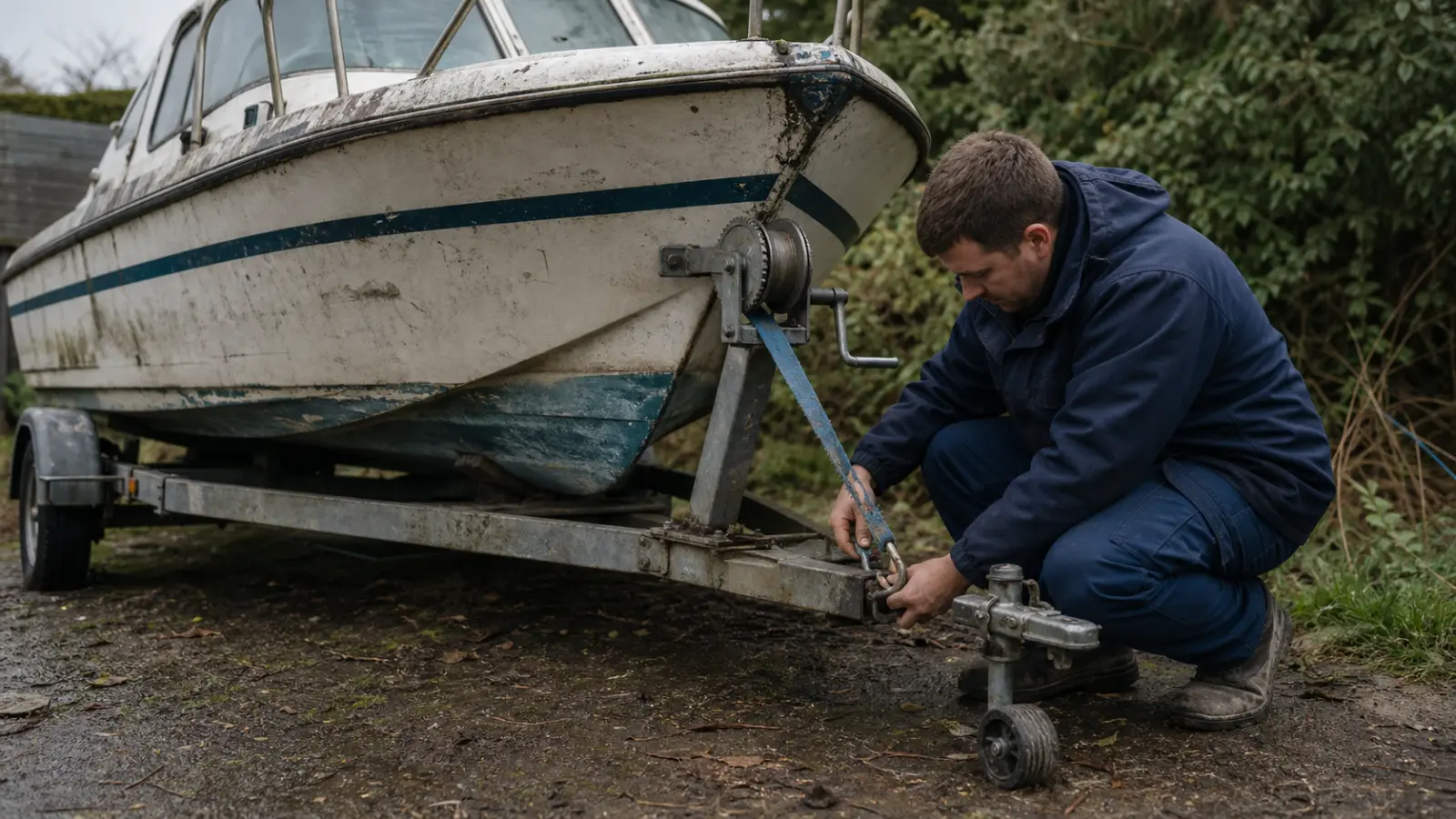
A fiberglass hull sits behind a garage on flat trailer tires that have sunk into the damp grass over six hot seasons. Outboards seize up after standing idle, and taking the powerhead apart costs far more than the hull will ever bring back on the market. In other cases, a property changes hands with a forgotten cabin cruiser sitting in the backyard, or a slip manager issues a formal deadline over unpaid fees for a vessel that no longer runs. Leaving a decaying boat where it sits only allows rainwater to fill the bilge and degrade the back panel until moving it becomes a major haulage problem.

Is there boat removal near me in Country Club, FL? Boat Removal Experts provides complete hauling, extraction, and vessel disposal for property owners, buyers, and site managers across the community.

When a team hauls away a junk boat, legal responsibility must be settled correctly. We do not always transfer the title, but we always issue a release of liability to the owner. Some haulers tow an old boat down the road without signing any formal documentation, leaving the registered owner exposed if the vessel is later abandoned along a roadway or left at a ramp. Requesting a signed release of liability protects you from future claims, toll notices, or municipal environmental citations.

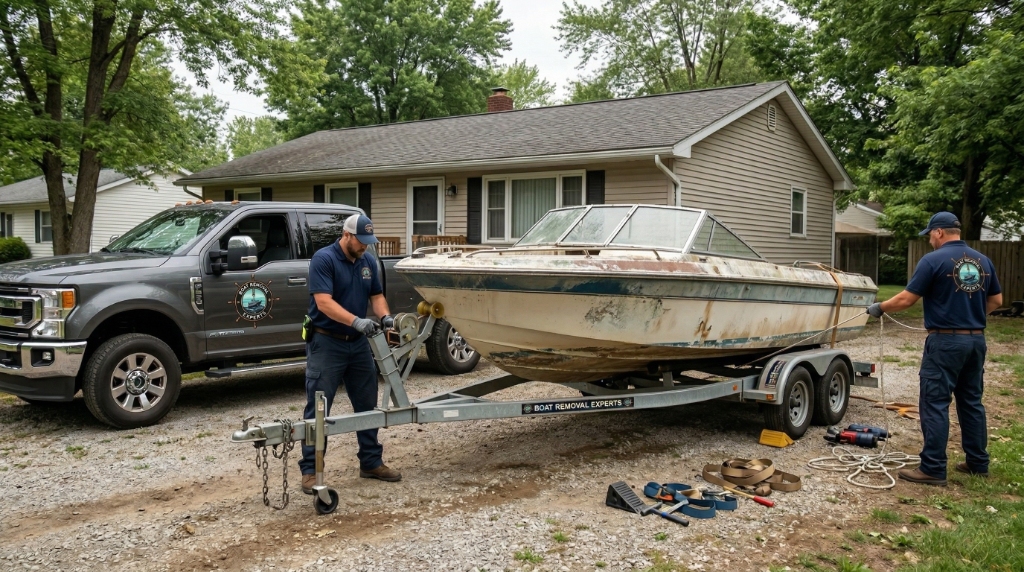
Extracting a vessel is rarely as simple as hooking up a winch. A rotted wooden cradle can collapse under tension, or a wide beam might clear a yard fence by only an inch. When a boat sits on soft dirt without a functional trailer, heavy haulers must negotiate tight access paths, low branches, and unstable ground without causing structural damage to your land.

Word count check: 285 words

Call (855) 765-7931 to start.

Send photos through the contact form.

What Is Boat Removal and When You Need It

Professional boat disposal covers much more than hooking up a trailer and driving down the road. When an abandoned boat sits on private land, inside a storage yard, or at a commercial slip without active registration, the removal process must account for the physical state of the hull and the legal status of the vessel. Outboards, internal tanks, rotted decking, and broken hardware all change how a crew manages the job. Whether a vessel is fully intact, stripped for parts, or partially filled with debris, complete boat removal ensures the entire structure is extracted without leaving glass strands, oil stains, or heavy metal remnants behind on the lot.
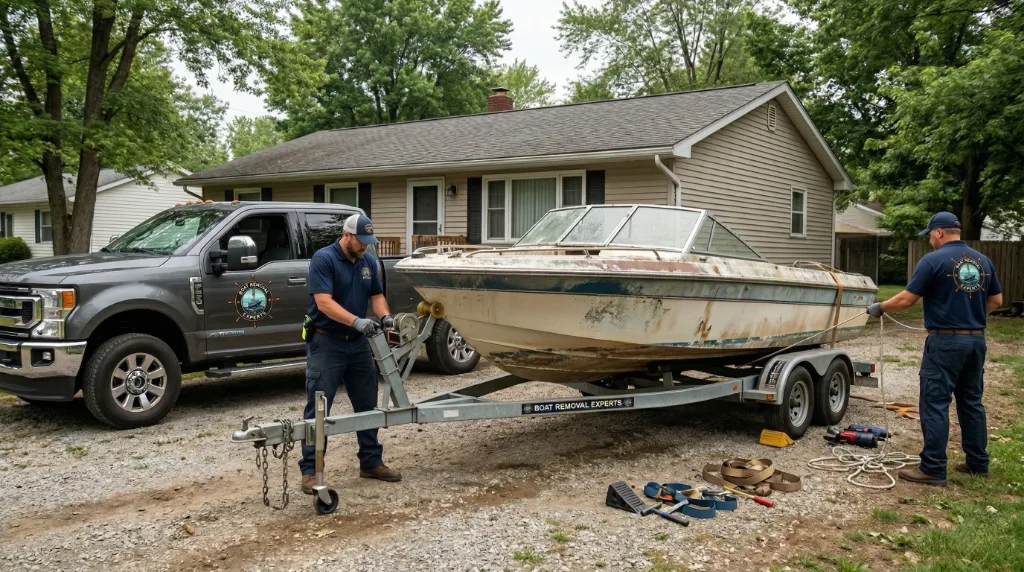
Paperwork dictates how an abandoned boat removal moves forward. Having a clear title in hand speeds up the process, but owners who have lost their documentation, acquired a vessel through a real estate purchase, or inherited an old vessel can still clear their land. When a derelict boat is left on commercial property or inside a residential site in Miami-Dade County, the landowner must clear ownership hurdles before hauling begins. Moving a boat off property requires identifying the HIN, evaluating any existing liens, and completing state paperwork to ensure the original owner or current property holder is fully cleared of legal obligations once the hull leaves the premises.

Word count check: 224 words
When Country Club Residents Call Us

Intensity of sun, heavy seasonal rain, and high humidity in Country Club, FL take a severe toll on idle vessels. Sunlight bakes the exterior resin until gelcoat chalks, spiderweb cracks split the back panel, and floor frames absorb standing water. Rotted plywood decks soften under heavy downpours, while upholstery traps moisture, creating deep mold spores throughout the cabin. A neglected fishing boat, pontoon, or sailboat sitting exposed to these conditions quickly turns into a structural risk. Rainwater filling an unpitched hull adds thousands of pounds of static load, making a rotted floor collapse under its own weight when winched.
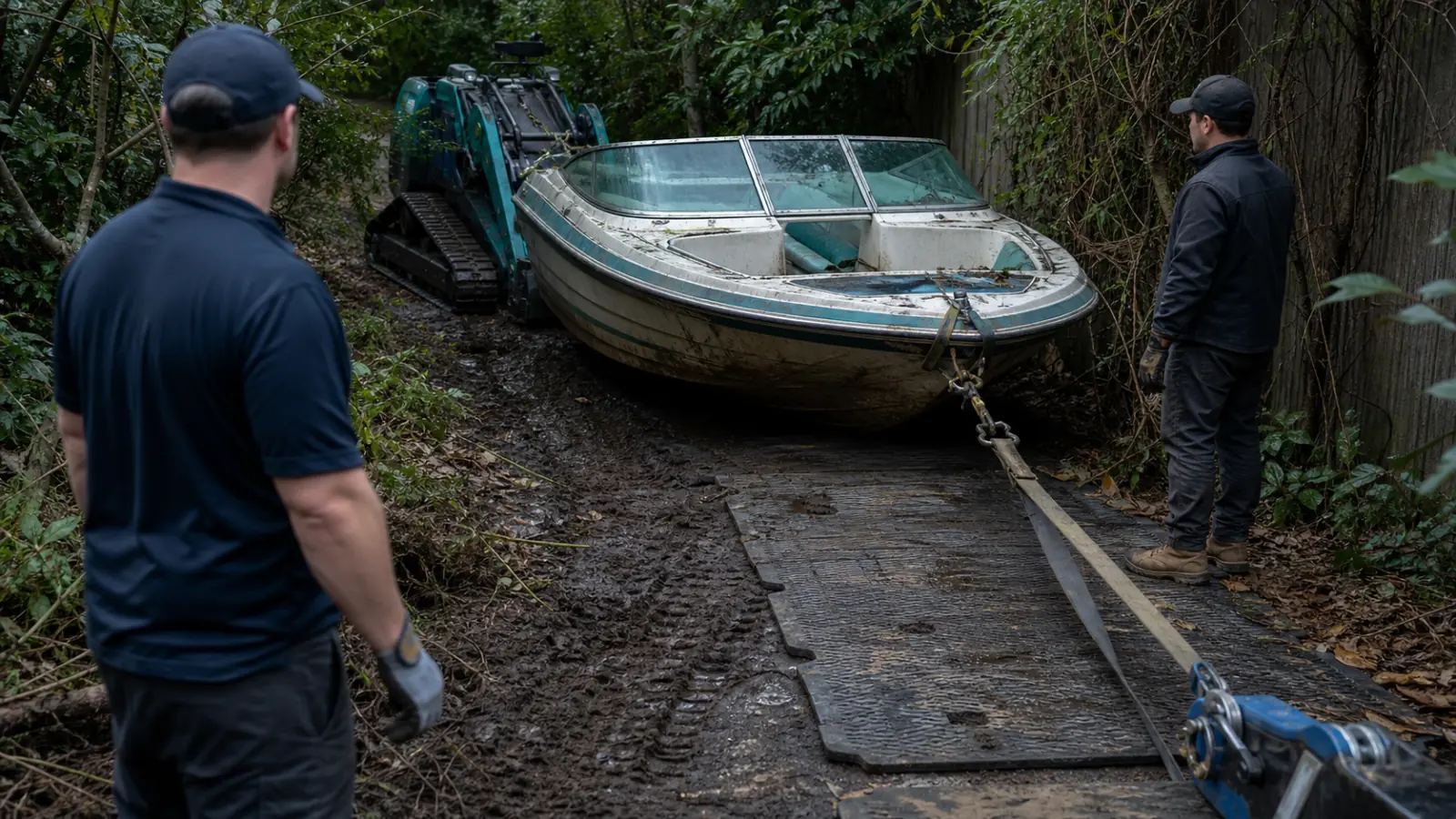
Site conditions dictate how the extraction crew operates around nearby areas like Palm Springs North and Miami Lakes. A boat resting on a flat, rotted trailer next to a garage presents very different challenges than a hull sitting on wooden blocks over soft earth, or a vessel tied up along a narrow canal dock. Overhead power lines, narrow residential gates, low tree canopy, and tight driveways force operators to choose specific winch lines and load paths. Crossing soft lawns with heavy transport equipment can rut the soil, so crews must evaluate ground density before backing a trailer into a backyard work area.

Word count check: 221 words
Every Type of Boat We Handle

Situations We Handle

Need Help? We’re Ready.

Contact boat removers directly or request free quotes. We dispatch crews fast.

Our Step-by-Step Process

Assessment

We evaluate the boat’s size, current location, condition, and any environmental or access challenges before we schedule boat removal.

Planning

A detailed plan is built around your vessel — equipment, logistics, timeline, and safety. Services include drainage of oil and fuel before transport.

Execution

Our experienced crew mobilizes to your current location and we tow, haul, or dismantle the vessel using professional marine equipment.

Completion

The vessel is recovered, recycled, or routed to certified boat junkyards for environmentally responsible disposal. The site is left clean.

Equipment & Capabilities

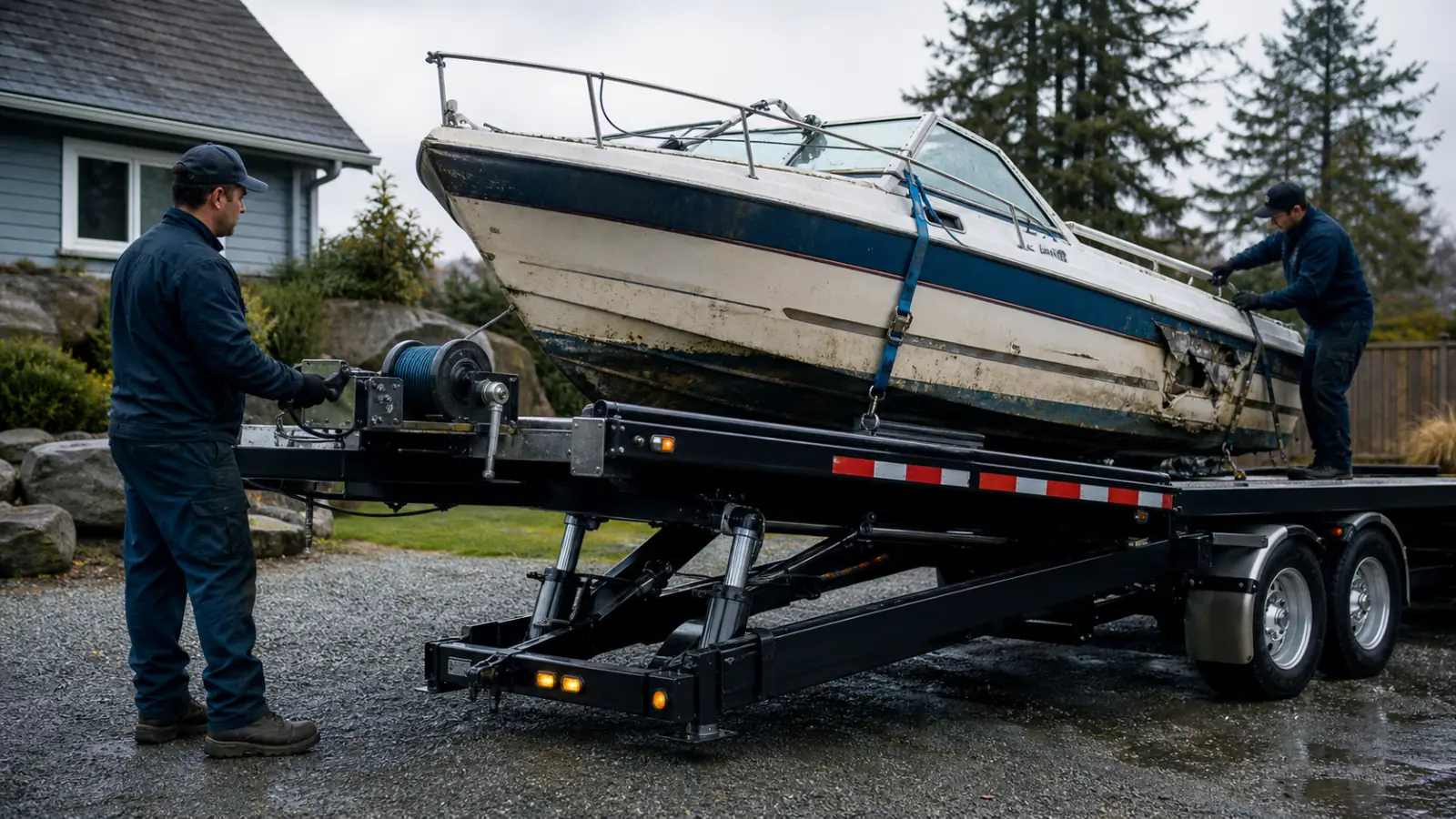
When a trailer has frozen bearings, flat tires, or a rusted axle that will not turn, the extraction team relies on specialized heavy gear. Hydraulic jacks, load-rated rigging straps, wooden cribbing, and heavy winches allow operators to lift a dead hull directly onto a flatbed trailer without relying on the vessel's running gear. If a wide pontoon or oversized cabin cruiser cannot clear tight fence lines or residential structures, crews dismantle the upper superstructure, arch, or T-top on site so the main hull can pass through restricted access points.

Before any hull moves down the road, crew members systematically clear out all hazardous materials. Technicians drain fuel tanks, extract dirty crankcase oil, remove heavy lead-acid marine batteries, and disconnect legacy electronics containing heavy metals. These fluids and components are separated for proper handling before transport. Where the remaining materials end up depends entirely on what the team discovers upon inspection. Metal fittings, aluminum T-tops, stainless steel cleats, and intact trailers are diverted toward metal recycling processing, while crushed fiberglass hulls and unsalvageable composite debris are transported to licensed disposal services for final processing. Each stage of dismantling and transfer is determined by the vessel's structural integrity, weight, and material composition.

Word count check: 231 words

Our boat removal experience covers everything from start to finish  assessment, planning, execution, dismantling, and final cleanup. Marina operators and property owners across Miami-Dade County trust us to get rid of your junk boat without damage to surrounding property.

FAQ

Boat Removal Questions - Frequently Asked

Common questions from property owners about our junk removal service, dismantling, and marine recovery.

We handle every type of vessel — sailboat, pontoon, fishing boats, jon boats, yachts, and commercial craft. Whether your boat or sailboat floats (or used to), we’ll remove it from any current location.

Yes. Sunken and partially submerged vessel recovery is a core part of our salvage work in Miami-Dade County. We use lift bags, salvage pumps, and marine cranes to safely raise vessels from underwater.

We respond to inquiries quickly — usually within hours, with same-day service available. For emergency situations, we mobilize as fast as possible. Call us directly for time-sensitive jobs.

No. Every job is handled in-house by our own team and equipment. No middlemen, no handoffs, no surprises.

Cost depends on the boat’s size, current location, condition, and complexity of the job. We provide free assessments and free quotes for every case — contact us and we’ll give you an honest estimate.

Yes. Our boat removal and disposal services include hazardous materials handling, oil and fuel drainage, hull dismantling, and recycling at certified yards — all in compliance with environmental regulations and environmentally responsible standards.

Absolutely. We regularly work in tight marinas, shallow waterways, private docks, backyards, and remote areas. We bring the right gear to reach any current location.

Yes. We frequently work with insurance adjusters on salvage and recovery claims and provide the documentation needed for your claim.

Browse Our Services - Ready to Get Started?

We handle everything from start to finish. Call us now or request a free quote – we’ll dispatch crews and haul your vessel away fast.