
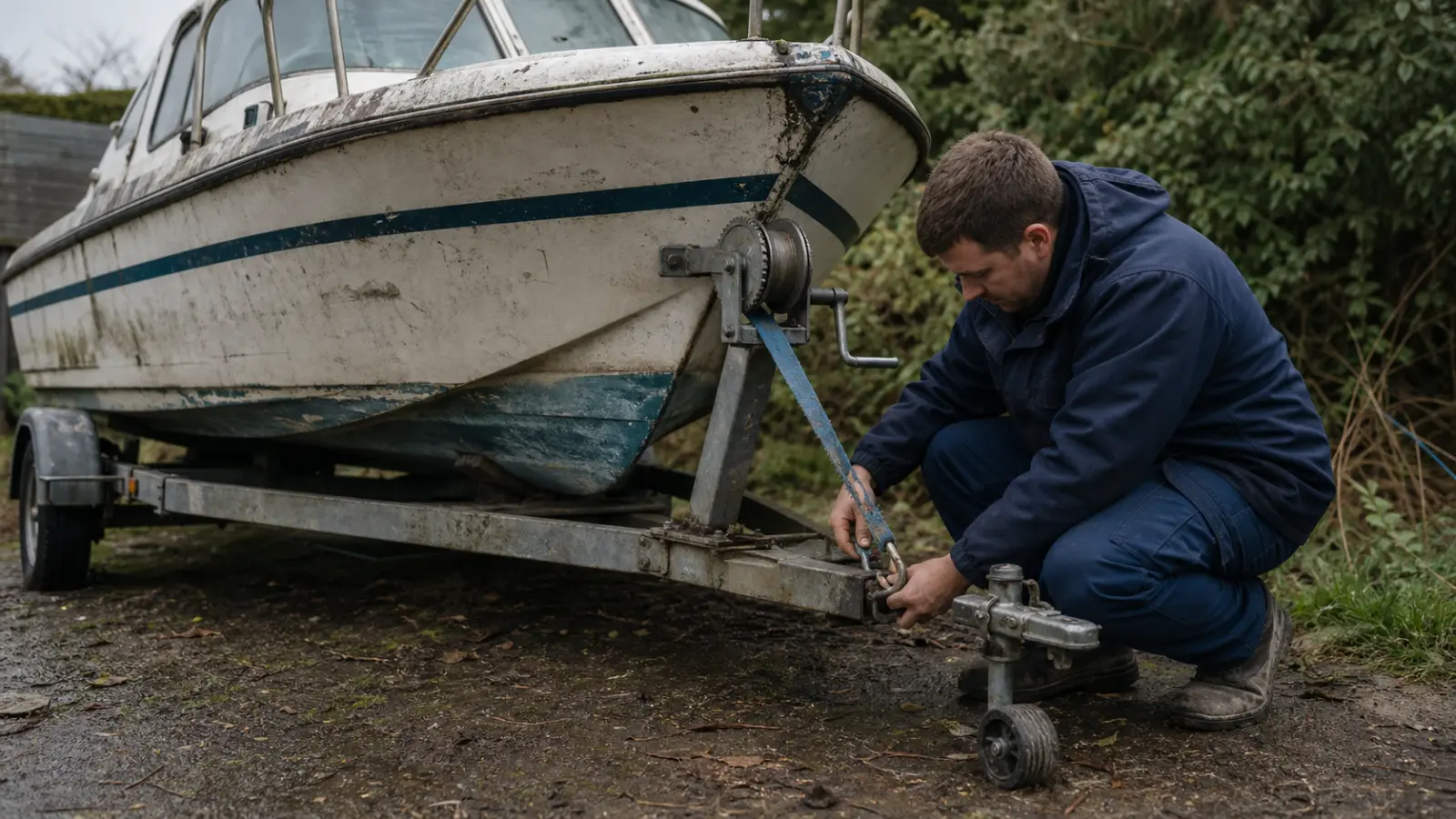
Professional Boat Removal Services in East Lake, FL

An old boat sitting behind a garage in East Lake, Florida often turns into an unexpected burden when the tires on its trailer flatten into the sand and the leaf springs collapse under rusting iron. The fiberglass hull sits filled with stale rainwater, the outboard engine has been seized for years, and a complete mechanical rebuild costs significantly more than the vessel could ever be worth on the open market. In other situations, a property changes hands with a fiberglass cabin cruiser still parked on the lot, or a local marina sends a formal notice regarding unpaid slip fees for a craft that no longer runs. Boat removal becomes necessary when a vessel ceases to be a recreational asset and turns into an immovable physical liability sitting on private property or taking up valuable space in a storage yard.

Where can I find reliable boat removal near me in East Lake, FL? Boat Removal Experts manages complete hauling, loading, and clearance services for non-running watercraft directly from residential yards, commercial lots, and local storage facilities.

Handling legal ownership paperwork correctly is a crucial step when disposing of any watercraft in Pinellas County. Our position is clear and straightforward: we do not always transfer the vessel title to our name, but we always issue a formal release of liability to the property owner. Some operations simply hook up a trailer and haul a vessel away without executing any legal paperwork, which leaves the registered owner fully responsible if that hull is later abandoned along a public road or in a waterways channel. Requesting written liability documentation protects you from future fines or legal disputes long after the craft leaves your driveway.

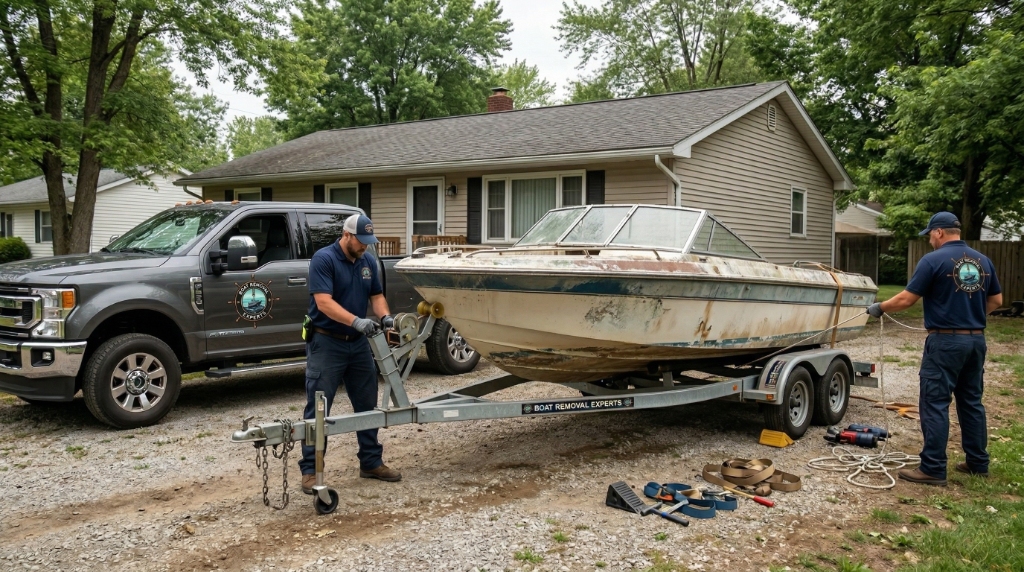
Extracting a vessel from a backyard or side yard is rarely as simple as hooking a truck to a hitch. A trailer that has been stationary for seasons usually has locked brakes, rotten dry-folded tires, or a rotted tongue that snaps under tension. Furthermore, the overall beam of the hull is frequently wider than standard fence gates, or the hull may rest on custom wooden cradles on soft turf where a standard tow truck instantly sinks.

Call 727-761-1009 to start.

Send photos through the contact form.

What Is Boat Removal and When You Need It

Professional boat disposal involves much more than hooking a winch line to a vessel and driving down the road. Complete service requires evaluating structural integrity, clearing physical access paths, managing heavy lifting machinery, and handling the final processing of raw materials. When an owner possesses a clear title or registration matching the HIN, the logistics move forward smoothly. However, many projects involve an abandoned boat left behind by a former tenant, a craft acquired during a real estate purchase without original documentation, or a vessel stranded in a slip where past fees remain unpaid. When paperwork is missing, specific legal notifications or property lien processes must be completed before a derelict craft can be legally moved and broken down.
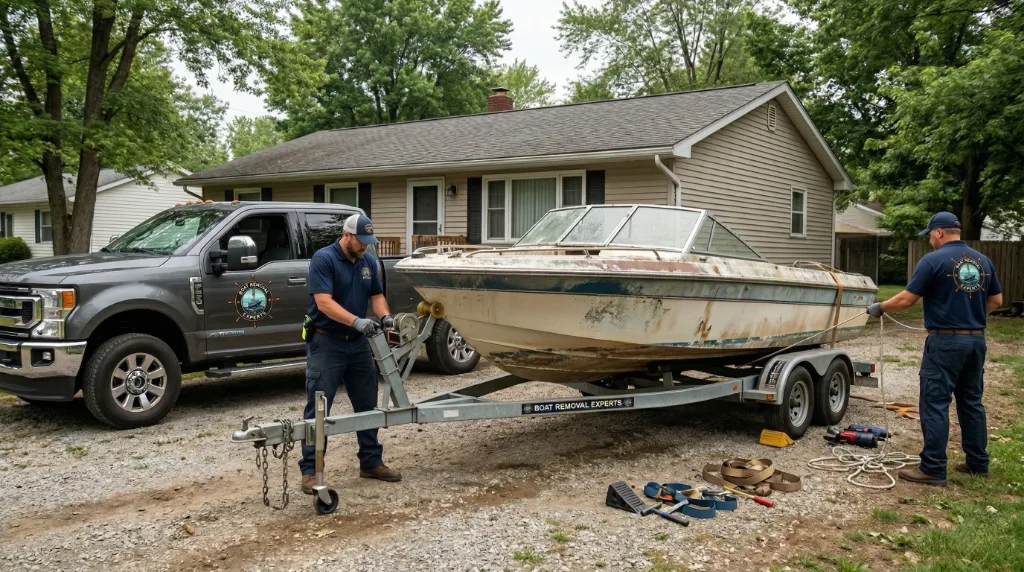
Several critical factors dictate how a derelict vessel is removed and processed. The physical condition of the hull determines whether it can withstand being pulled onto a flatbed trailer or if it must be dismantled on site. Vessels left on residential lots in East Lake often settle deep into soft dirt, requiring crane rigging, spreader bars, or heavy air bags to lift the keel without crushing the structure. Similarly, a craft sitting in a neglected slip might be taking on water, demanding heavy-duty submersible pumps to restore buoyancy before towing. Whether dealing with an abandoned boat on commercial land or an unwanted cruiser behind a home, site geometry and legal status guide the final approach.
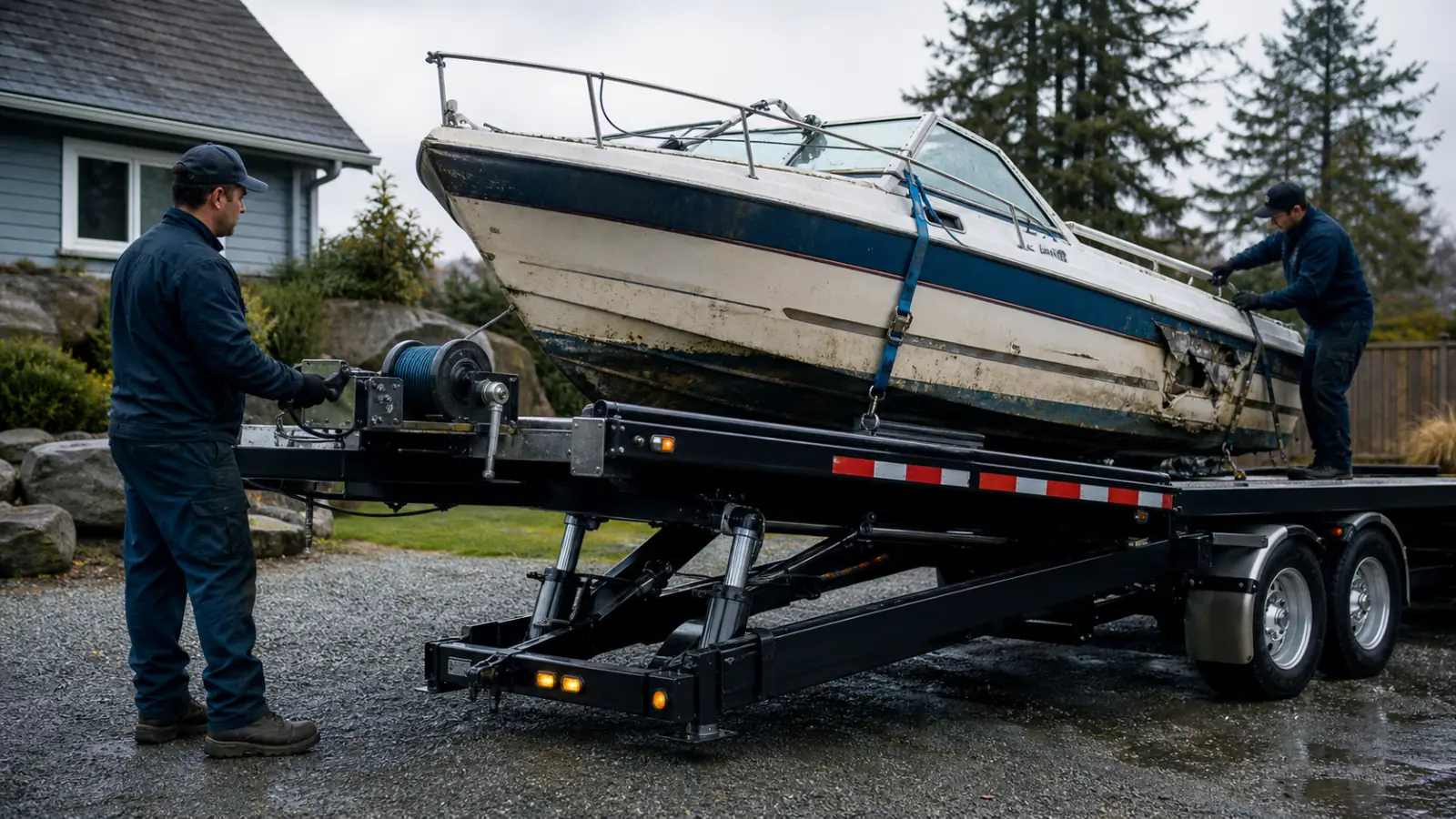
When East Lake Residents Call Us

The intense sun, heavy rainfall, and humid atmosphere in East Lake take a rapid toll on any vessel left outdoors without constant maintenance. Sunlight breaks down gelcoat finishes, causing severe chalking and structural cracking through upper fiberglass layers. Rainwater accumulates rapidly inside open cockpits, rotting plywood floors, saturating foam flotation chambers, and ruining interior upholstery. This trapped moisture drastically increases the total weight of a sailboat, pontoon, or fishing boat, making the hull far heavier than its original factory specifications. When a vessel retains hundreds of gallons of water, the added weight can cause compromized decks to cave in or fiberglass hulls to fracture during lifting attempts.
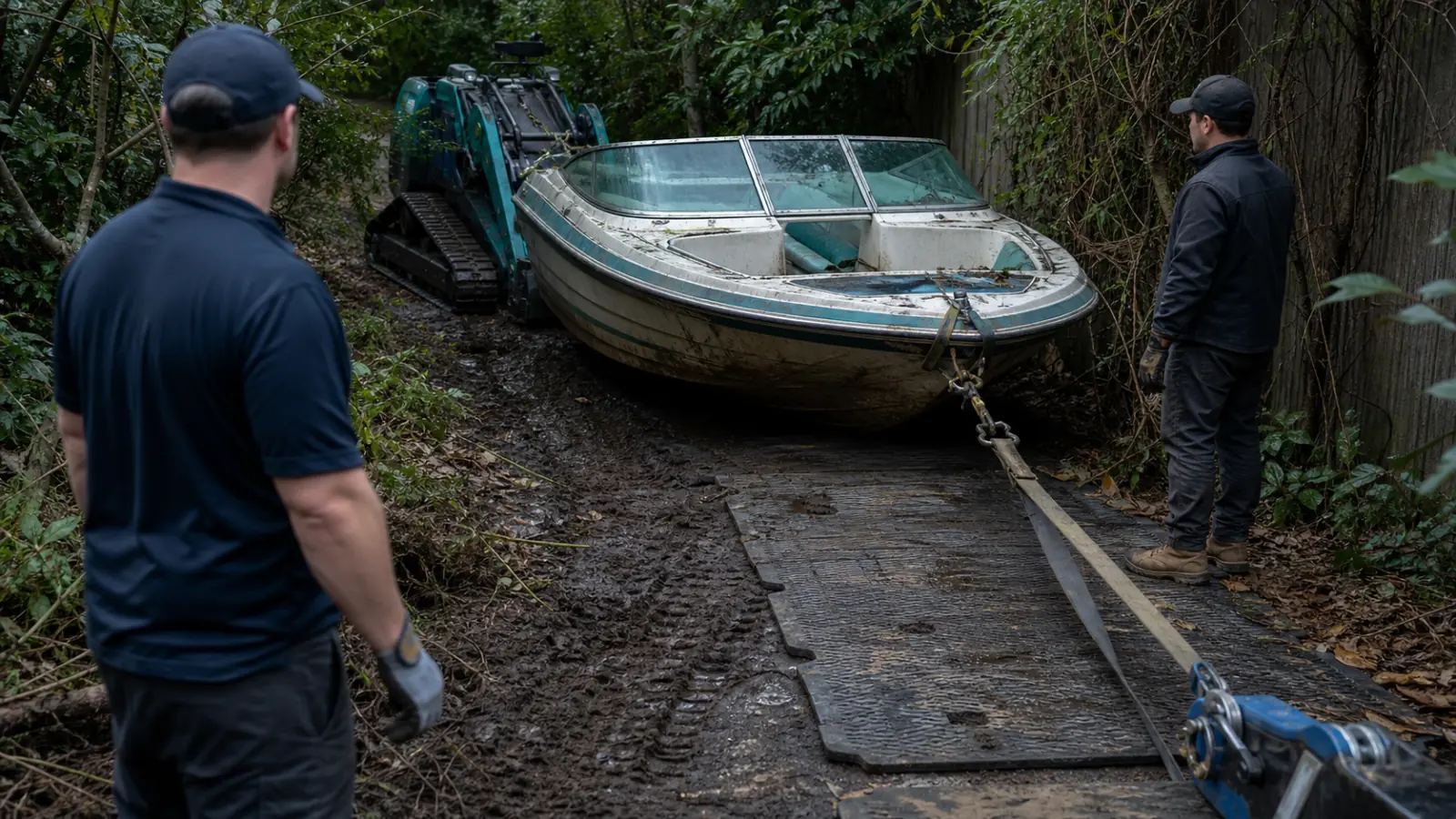
Physical access around a property strongly influences the equipment and labor required for a successful extraction. Crews working in nearby places like Trinity, Palm Harbor, or Keystone frequently encounter narrow residential driveways, low-hanging tree branches, and overhead utility lines that restrict large boom trucks. A heavy pontoon resting on rotted wooden blocks in a backyard requires a completely different strategy than a center-console fishing boat sitting on a roll-off trailer, or a deep-keel sailboat anchored in shallow water. Overgrown vegetation, soft sand, tight gate openings, and proximity to neighboring structures all dictate whether the hull can be rolled out intact or must be systematically dismantled right where it rests.
Every Type of Boat We Handle

Situations We Handle

Need Help? We’re Ready.

Contact boat removers directly or request free quotes. We dispatch crews fast.

Our Step-by-Step Process

Assessment

We evaluate the boat’s size, current location, condition, and any environmental or access challenges before we schedule boat removal.

Planning

A detailed plan is built around your vessel — equipment, logistics, timeline, and safety. Services include drainage of oil and fuel before transport.

Execution

Our experienced crew mobilizes to your current location and we tow, haul, or dismantle the vessel using professional marine equipment.

Completion

The vessel is recovered, recycled, or routed to certified boat junkyards for environmentally responsible disposal. The site is left clean.

Equipment & Capabilities

When a vessel cannot be towed on its own wheels, specialized recovery gear is deployed to manage the load. Heavy winches, hydraulic drop-deck trailers, crane booms, and pneumatic lifting bags allow the crew to move massive hulls safely. Before any vessel is loaded or cut apart, all hazardous materials must be stripped from the craft. Technicians drain remaining fuel tanks, remove engine oil, pull heavy marine batteries, disconnect hydraulic lines, and strip out electronics or air conditioning refrigerants to ensure safe, environmentally responsible handling.

Once hazardous fluids and electrical components are secured, the crew evaluates whether the craft can be transported whole or must be cut down on site. If a hull is too wide for road transit, structurally collapsed, or trapped behind permanent obstacles, workers utilize heavy cutting tools to dismantle the structure into manageable sections. Modern fiberglass destruction requires careful containment to trap dust and debris before transport. Materials are separated, sending metals like aluminum, stainless steel, and brass off for recycling, while non-recyclable fiberglass and rotted wood are hauled to approved regional waste facilities. Whether servicing clients in Oldsmar or Holiday, the crew adapts its equipment and disassembly plan directly to the physical constraints of the site and the exact condition of the vessel.

Our boat removal experience covers everything from start to finish  assessment, planning, execution, dismantling, and final cleanup. Marina operators and property owners across Pinellas County trust us to get rid of your junk boat without damage to surrounding property.

FAQ

Boat Removal Questions - Frequently Asked

Common questions from property owners about our junk removal service, dismantling, and marine recovery.

We handle every type of vessel — sailboat, pontoon, fishing boats, jon boats, yachts, and commercial craft. Whether your boat or sailboat floats (or used to), we’ll remove it from any current location.

Yes. Sunken and partially submerged vessel recovery is a core part of our salvage work in Pinellas County. We use lift bags, salvage pumps, and marine cranes to safely raise vessels from underwater.

We respond to inquiries quickly — usually within hours, with same-day service available. For emergency situations, we mobilize as fast as possible. Call us directly for time-sensitive jobs.

No. Every job is handled in-house by our own team and equipment. No middlemen, no handoffs, no surprises.

Cost depends on the boat’s size, current location, condition, and complexity of the job. We provide free assessments and free quotes for every case — contact us and we’ll give you an honest estimate.

Yes. Our boat removal and disposal services include hazardous materials handling, oil and fuel drainage, hull dismantling, and recycling at certified yards — all in compliance with environmental regulations and environmentally responsible standards.

Absolutely. We regularly work in tight marinas, shallow waterways, private docks, backyards, and remote areas. We bring the right gear to reach any current location.

Yes. We frequently work with insurance adjusters on salvage and recovery claims and provide the documentation needed for your claim.

Browse Our Services - Ready to Get Started?

We handle everything from start to finish. Call us now or request a free quote – we’ll dispatch crews and haul your vessel away fast.