
Professional Boat Removal Services in East Windsor, NJ

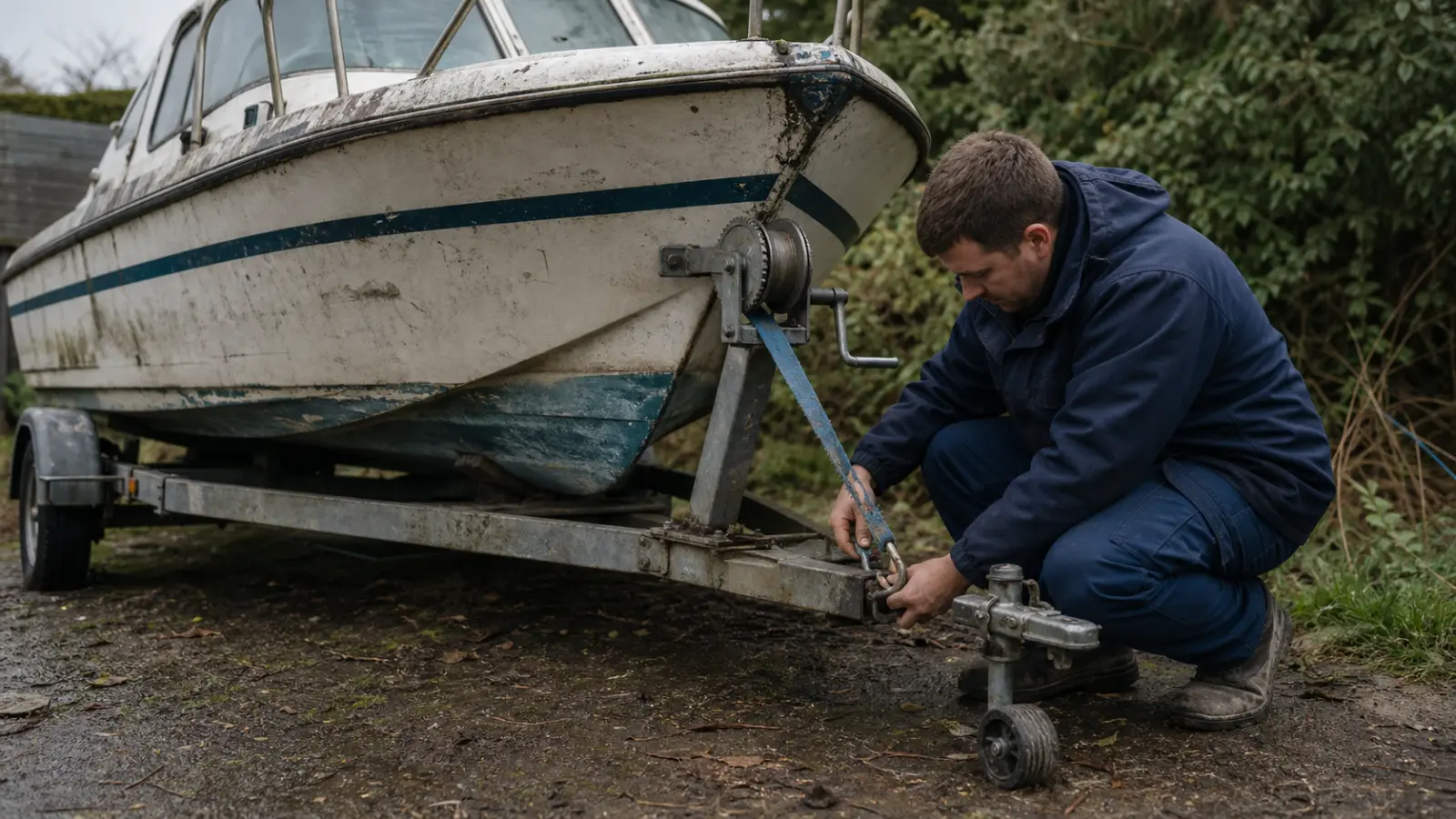
A fiberglass hull sits behind the garage, where it has remained motionless for six straight seasons while the trailer tires slowly flattened into the dirt and weeds grew through the frame. In another driveway, an old boat remains parked after an outboard engine seized, leaving an owner with a repair quote that far exceeds the actual market value of the vessel. Elsewhere, a property transfer stalls because a decades-old cabin cruiser was left behind by a previous occupant, or a marina manager issues a formal notification regarding an unpaid slip. These situations leave property owners stuck with heavy fiberglass, decaying wood, and mechanical components that are impossible to move without specialized heavy equipment.

Is there boat removal near me in East Windsor, NJ? Yes, Boat Removal Experts manages complete extraction, hauling, and structural breakdown for vessels in any state of decay throughout the municipality.

Before any hauling begins, paperwork must be addressed to protect the owner from future liabilities. While our company does not always transfer the vessel title to our name, we always issue a formal release of liability to document that the vessel has left your possession. Some unverified haulers haul a vessel away without issuing any official documentation, which leaves the legal responsibility and future abandonment fines on the original owner if that hull is dumped. It is essential to insist on written documentation before permitting any contractor to haul a vessel off your land.

Vessels present unique handling challenges because their structural weight is unevenly distributed and their physical dimensions often exceed standard clearance zones. A trailer with frozen bearings cannot simply be hitched to a pickup, while a wide beam can block tight residential gates, and a heavy hull resting directly on soft turf can easily immobilize standard transport vehicles.

Call 609-766-2549 to start.

What Is Boat Removal and When You Need It

Professional boat disposal goes far beyond simply hooking a trailer to a hitch and driving away down the road. When a vessel has been sitting for years, structural integrity degrades, tires dry rot, and internal support beams weaken. Complete removal involves evaluating structural stability, securing loose hardware, clearing physical obstacles along the transport path, and managing the total weight distribution during loading. Whether a vessel is fully intact, stripped of its hardware, or broken into pieces, proper service ensures the site is cleared safely without damaging surrounding structures or landscaping.
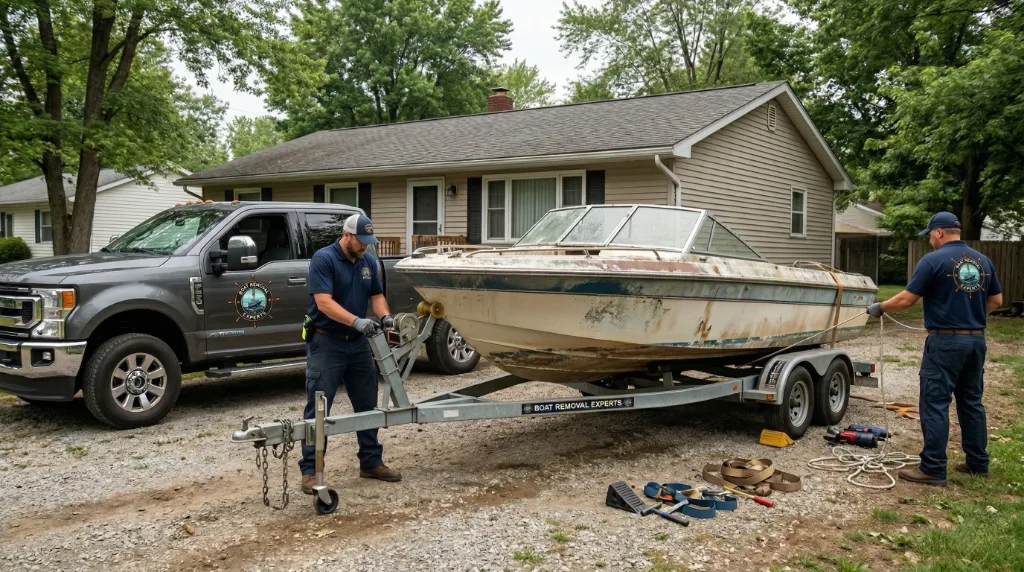
Paperwork dictates how an abandoned boat or unwanted hull can be legally handled and transported. When an owner possesses a clear title, the process moves forward directly. When paperwork is missing, lost over decades, or inherited alongside a newly purchased parcel of land, legal steps must be taken to verify ownership before transport. Vessels left on commercial land or inside non-paying slips involve specific legal processes before a crew can dismantle or haul the structure away.

The overall approach for a derelict hull changes based on physical location and mechanical condition. A vessel resting on an engineered trailer requires different rigging than a hull sitting flat on wooden keel blocks, submerged in mud, or floating inside a marina slip. Access points, ground firmness, overhead clearance, and structural soundess all dictate whether a vessel is loaded whole or dismantled on site.
When East Windsor Residents Call Us

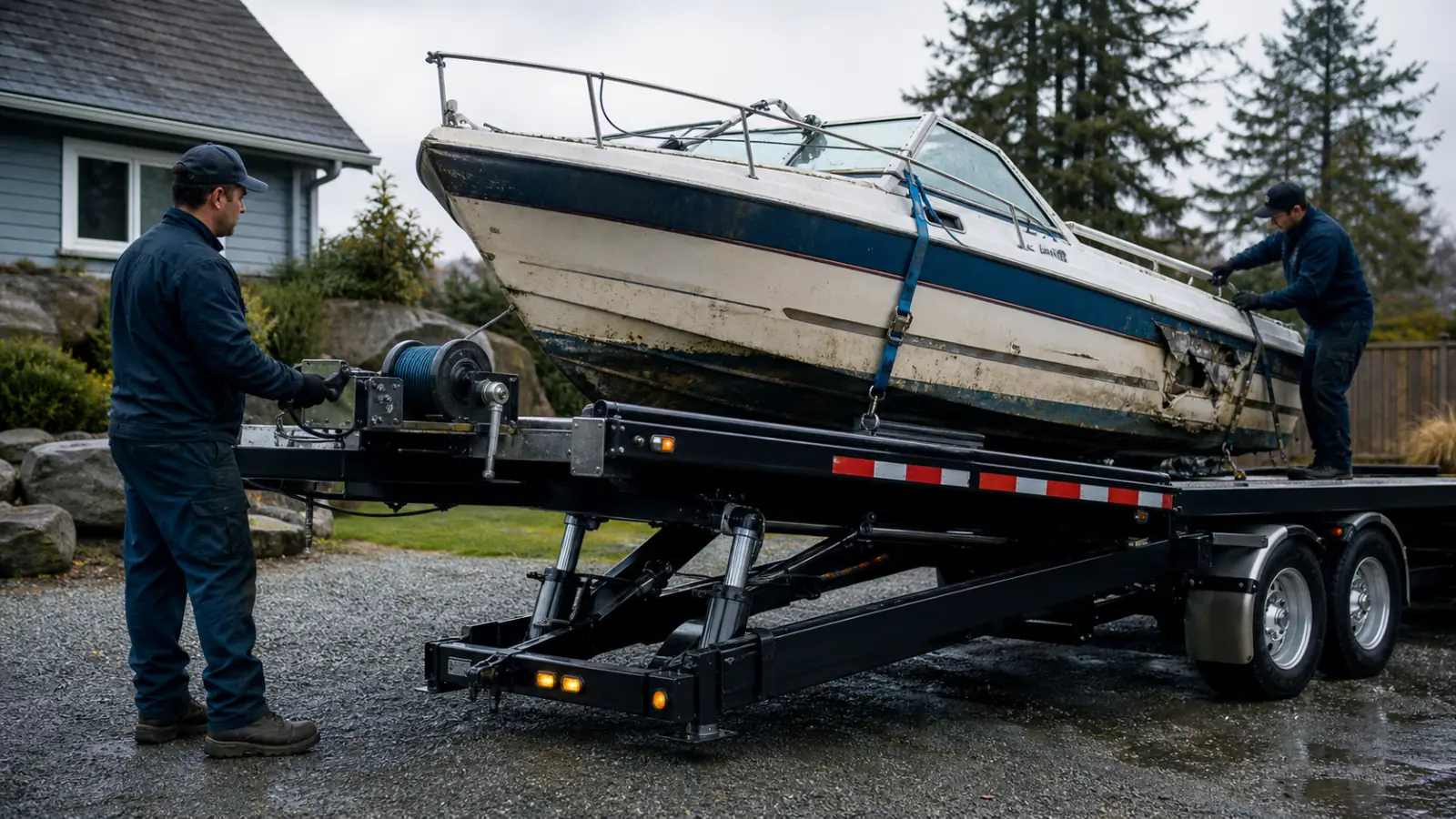
Vehicles and marine vessels left outdoors in East Windsor, NJ face harsh seasonal weather that rapidly degrades structural materials. Winter freeze cycles expand trapped water inside fiberglass layers, causing severe delamination, while summer heat bakes gelcoat finishes and rots synthetic upholstery. Rainwater accumulating inside an open cockpit adds thousands of pounds of extra weight, rots floorboards, and destroys structural floor frames. When a hull absorbs moisture over several seasons, the structural integrity weakens, making standard lifting methods risky and changing how crews must support the boat during loading.
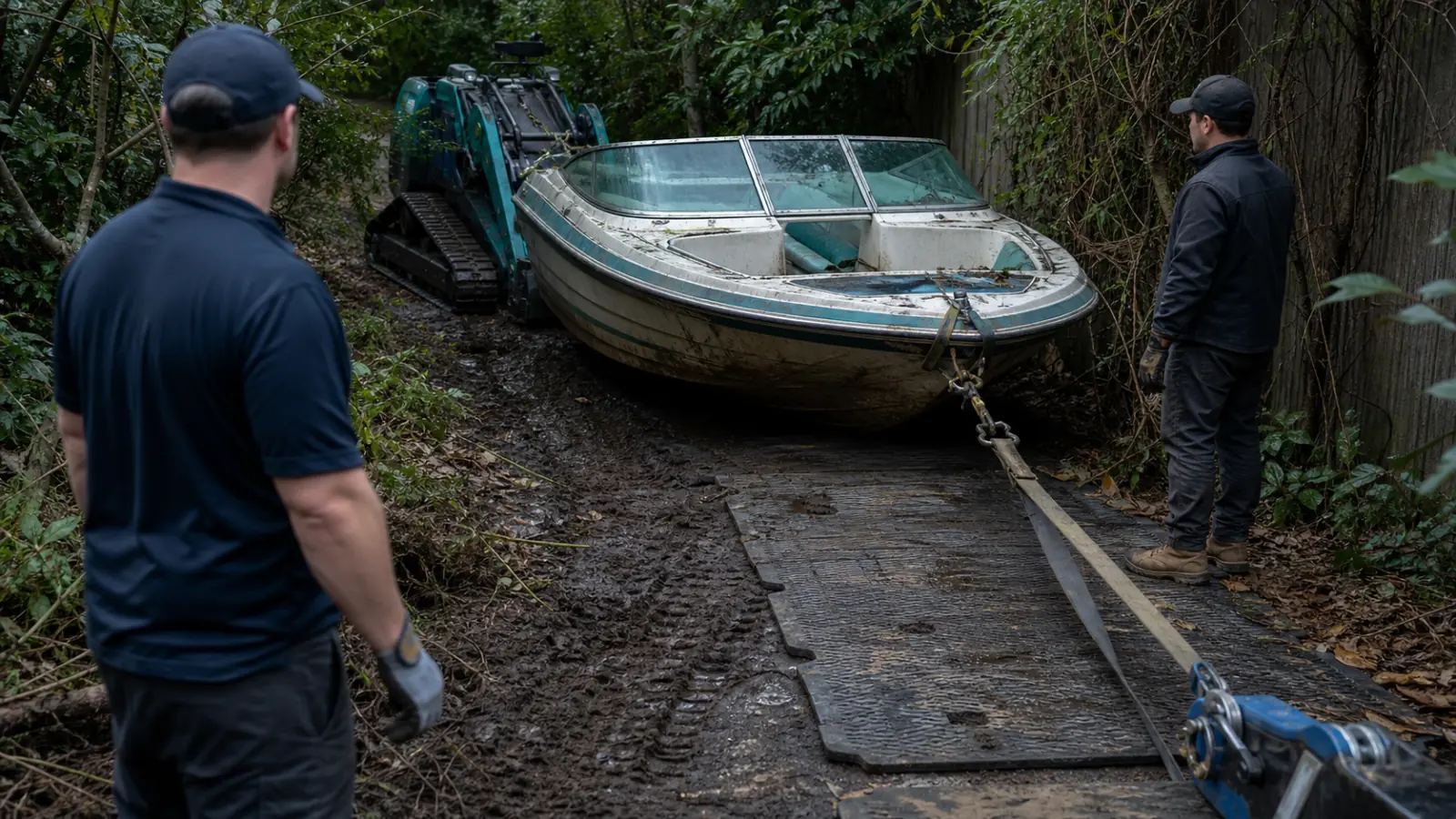
Local site conditions across East Windsor, NJ strongly influence how transport crews access a property. An old pontoon sitting in a back yard may require navigating narrow side yards, low-hanging tree branches, and residential power lines. A heavy sailboat resting on cradles requires crane work or specialized hydraulic trailers, whereas a lightweight aluminum fishing boat resting on dry ground might simply be winched onto a flatbed. If the ground surface consists of soft soil, gravel, or marshy turf, heavy haulers must use ground protection mats to keep transport machinery from sinking during the loading phase.
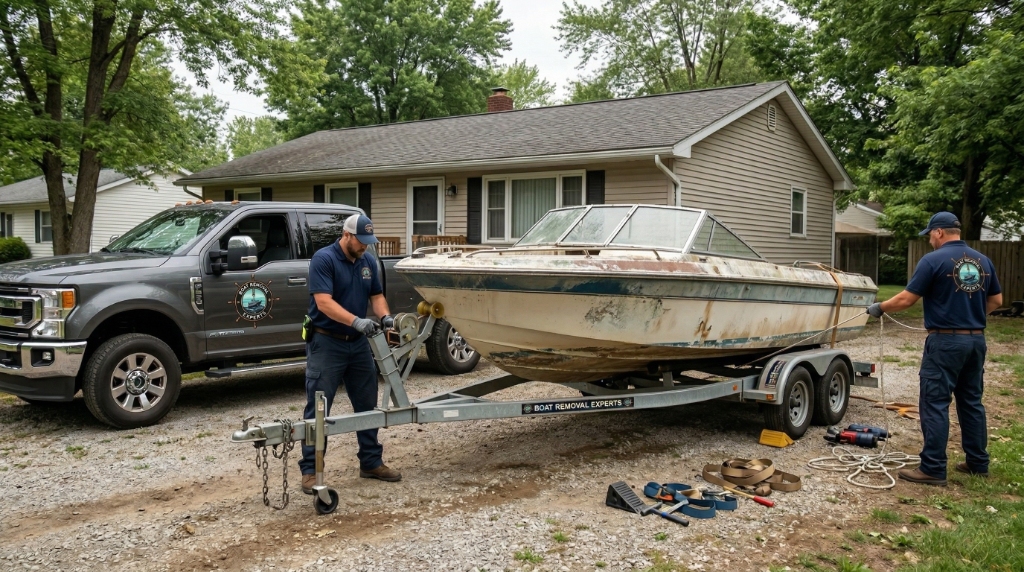
Every Type of Boat We Handle

Situations We Handle

Need Help? We’re Ready.

Contact boat removers directly or request free quotes. We dispatch crews fast.

Our Step-by-Step Process

Assessment

We evaluate the boat’s size, current location, condition, and any environmental or access challenges before we schedule boat removal.

Planning

A detailed plan is built around your vessel — equipment, logistics, timeline, and safety. Services include drainage of oil and fuel before transport.

Execution

Our experienced crew mobilizes to your current location and we tow, haul, or dismantle the vessel using professional marine equipment.

Completion

The vessel is recovered, recycled, or routed to certified boat junkyards for environmentally responsible disposal. The site is left clean.

Equipment & Capabilities

Field crews utilize specialized gear designed to relocate heavy marine hulls regardless of their mechanical condition. When tires are flat, axles are rusted solid, or a trailer is missing entirely, low-profile winches, hydraulic jacks, ground rollers, and heavy-duty tilt-deck trailers are deployed to lift and secure the vessel safely. If a wide hull cannot clear property fences or overhead obstructions, technicians use heavy power tools to dismantle the superstructure into manageable segments directly on site.

Environmental safety steps are executed before any structural cutting or transport takes place. Crew members systematically drain remaining fuel, motor oil, hydraulic fluids, and engine coolants into approved containment vessels. Electronics, onboard batteries, plastic fuel tanks, and lead ballast weights are separated to ensure hazardous materials do not contaminate the surrounding soil or water.

Once fluids are captured and the hull is prepared, decisions regarding material sorting and recycling occur based on the physical makeup of the vessel. Metal components like aluminum hulls, stainless steel rails, lead keels, and bronze propellers are sorted for metal scrap yards. Clean fiberglass, mixed composite plastics, and rotted wooden structural members are processed according to regional environmental regulations and taken to approved disposal facilities.

Our boat removal experience covers everything from start to finish  assessment, planning, execution, dismantling, and final cleanup. Marina operators and property owners across Mercer County trust us to get rid of your junk boat without damage to surrounding property.

FAQ

Boat Removal Questions - Frequently Asked

Common questions from property owners about our junk removal service, dismantling, and marine recovery.

We handle every type of vessel — sailboat, pontoon, fishing boats, jon boats, yachts, and commercial craft. Whether your boat or sailboat floats (or used to), we’ll remove it from any current location.

Yes. Sunken and partially submerged vessel recovery is a core part of our salvage work in Mercer County. We use lift bags, salvage pumps, and marine cranes to safely raise vessels from underwater.

We respond to inquiries quickly — usually within hours, with same-day service available. For emergency situations, we mobilize as fast as possible. Call us directly for time-sensitive jobs.

No. Every job is handled in-house by our own team and equipment. No middlemen, no handoffs, no surprises.

Cost depends on the boat’s size, current location, condition, and complexity of the job. We provide free assessments and free quotes for every case — contact us and we’ll give you an honest estimate.

Yes. Our boat removal and disposal services include hazardous materials handling, oil and fuel drainage, hull dismantling, and recycling at certified yards — all in compliance with environmental regulations and environmentally responsible standards.

Absolutely. We regularly work in tight marinas, shallow waterways, private docks, backyards, and remote areas. We bring the right gear to reach any current location.

Yes. We frequently work with insurance adjusters on salvage and recovery claims and provide the documentation needed for your claim.

Browse Our Services - Ready to Get Started?

We handle everything from start to finish. Call us now or request a free quote – we’ll dispatch crews and haul your vessel away fast.