
Professional Boat Removal Services in Edwardsville, IL

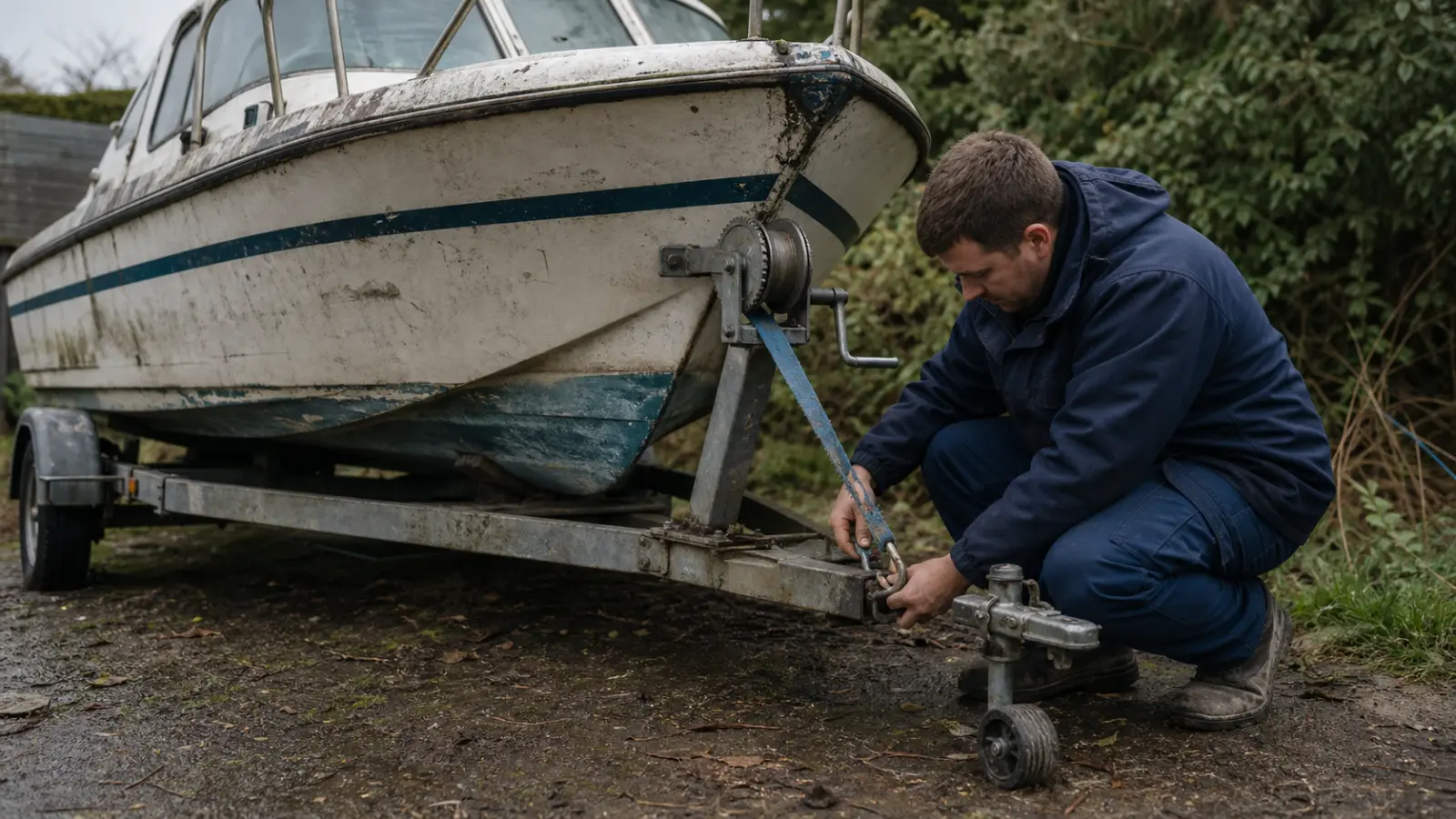
An old boat sitting behind a garage in Edwardsville, IL quickly becomes a permanent fixture once the trailer tires rot into the soil and the frame settles into the mud. In other situations, a property changes hands with a fiberglass hull left parked beside an outbuilding, or a marina issues a notice regarding an unpaid slip that must be cleared immediately. When an outboard engine seizes and the cost of a mechanical rebuild exceeds the total value of the vessel, keeping the hull stored on the lot no longer makes financial sense. What begins as a temporary storage choice turns into a structural burden as weather degrades the hull year after year.

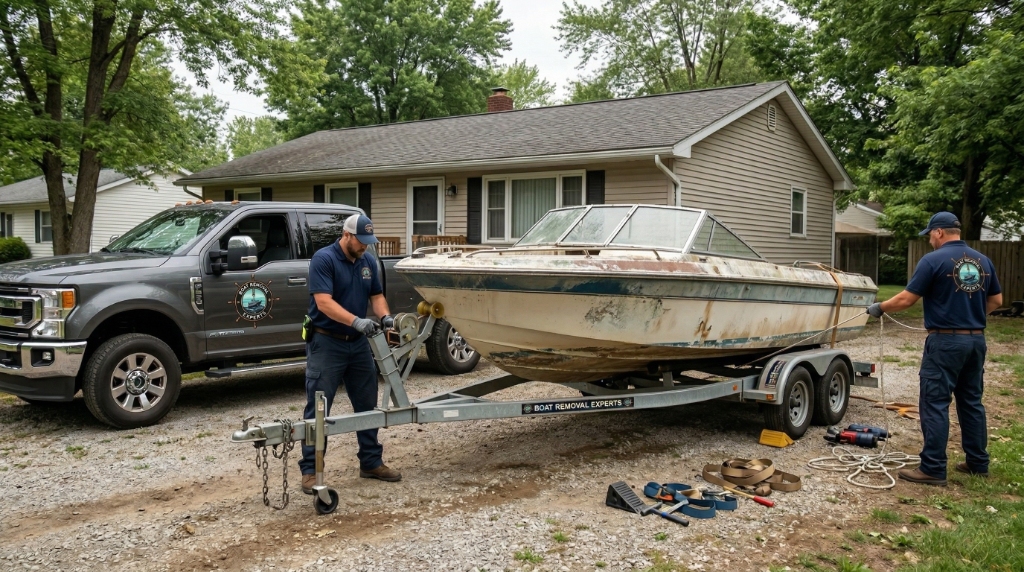
Is there boat removal near me in Edwardsville, IL? Boat Removal Experts provides complete removal services directly from residential properties, private storage lots, and commercial slips throughout the city and surrounding areas like Glen Carbon and Maryville.

Proper paperwork protects the owner long after the hull leaves the driveway. Boat Removal Experts does not always transfer the title, but the company always issues a full release of liability upon taking possession of the vessel. Some outfits simply haul a vessel away without providing any formal documentation, leaving the original owner legally responsible if the hull is dumped illegally later. Requesting a signed release of liability avoids this risk entirely.

Moving a vessel presents unique physical challenges that standard towing equipment cannot handle. A flat trailer tire, frozen wheel bearings, a wide beam that barely clears fence posts, or a heavy keel resting directly on soft lawn soil will prevent a standard truck from pulling the load away safely.

Call 618-602-0568 to start.

Send photos through the contact form.

What Is Boat Removal and When You Need It

Professional boat disposal involves far more than hooking a winch to a trailer and driving down the road. When an abandoned boat or a derelict hull sits neglected on a parcel in Madison County, the extraction process must account for the physical state of the structure, the surrounding ground conditions, and the legal status of the vessel. Boat removal covers site preparation, structural rigging, safe transport, and final processing for vessels resting in dirt, stored on wooden cradles, or tied up at docks in neighboring communities like Roxana and South Roxana.
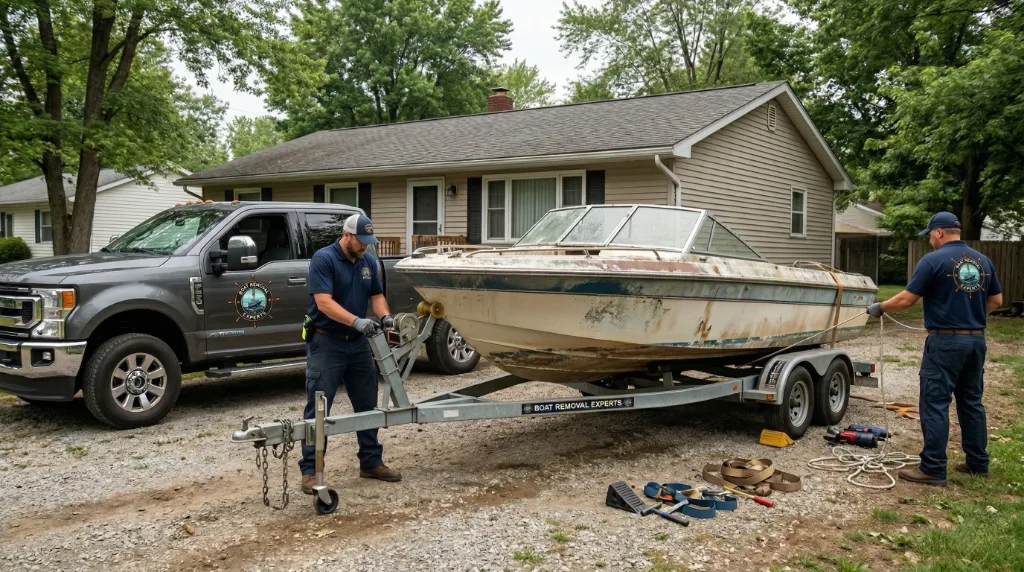
The paperwork status heavily influences how the removal moves forward. Having a clear title in hand simplifies the initial setup, but lost documentation or vessels acquired through real estate purchases require specific release forms to ensure the property owner is legally cleared. When an abandoned vessel remains on private land or within a long-overdue slip, coordinated documentation prevents future disputes while allowing the extraction crew to proceed with transport.

Environmental factors and mechanical damage dictate whether a vessel can travel whole or must be modified for transport. Hulls that have taken on structural water damage or lost integrity in the floor frames require specialized rigging so they do not collapse during lifting. The goal is always to clear the site completely without damaging the surrounding property or leaving debris behind.
When Edwardsville Residents Call Us

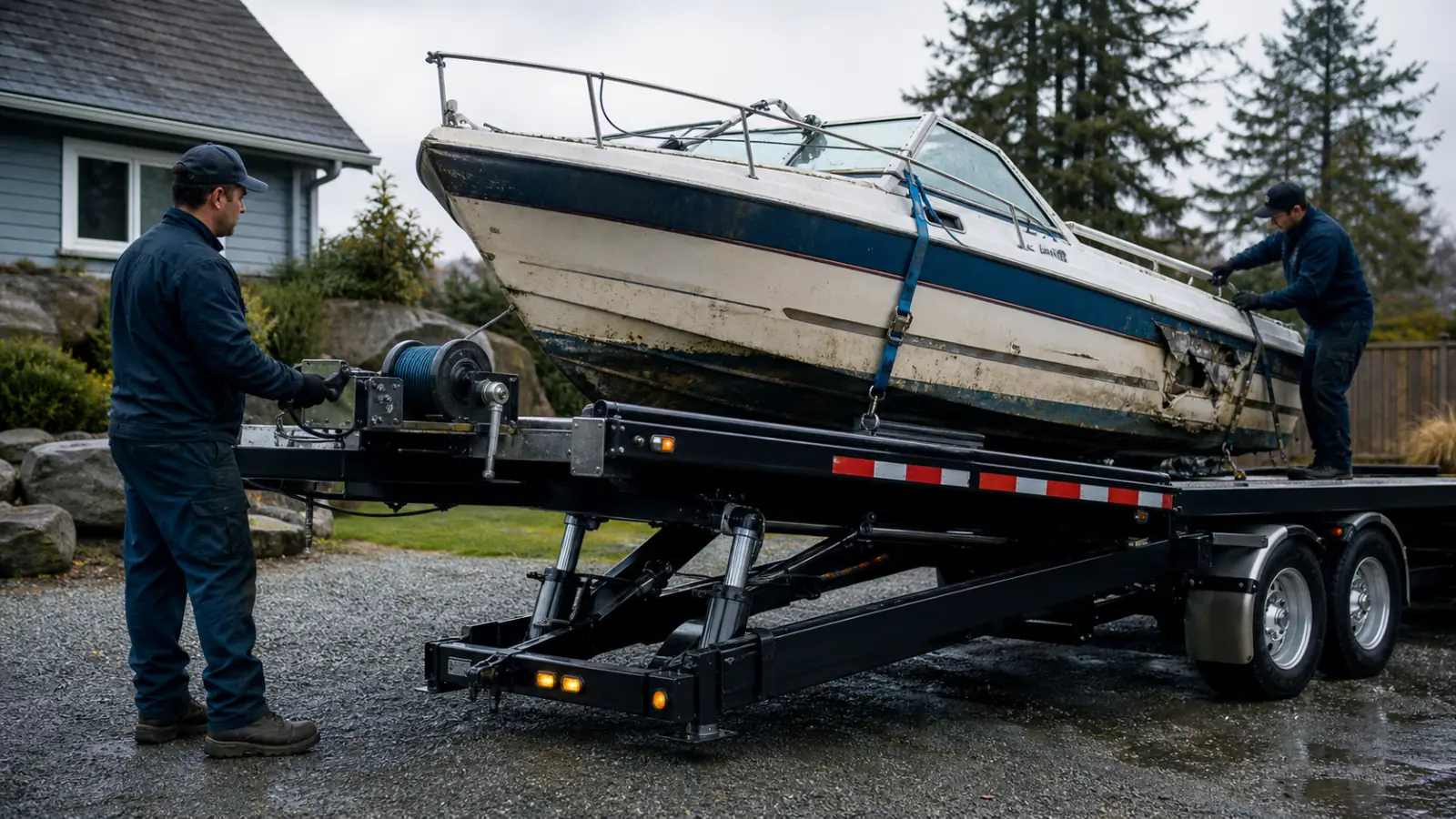
Sitting unused in the seasonal climate of Edwardsville causes rapid deterioration in a vessel left outdoors. Moisture gathers inside the bilge, freeze-thaw cycles crack the outer gelcoat, and rot spreads through wooden transoms, floor frames, and deck flooring. Rainwater pooling in an open cockpit adds thousands of pounds of static weight, weakening structural supports and turning a once-sturdy fishing boat, pontoon, or sailboat into a fragile liability that requires careful handling to extract without splitting the hull open.
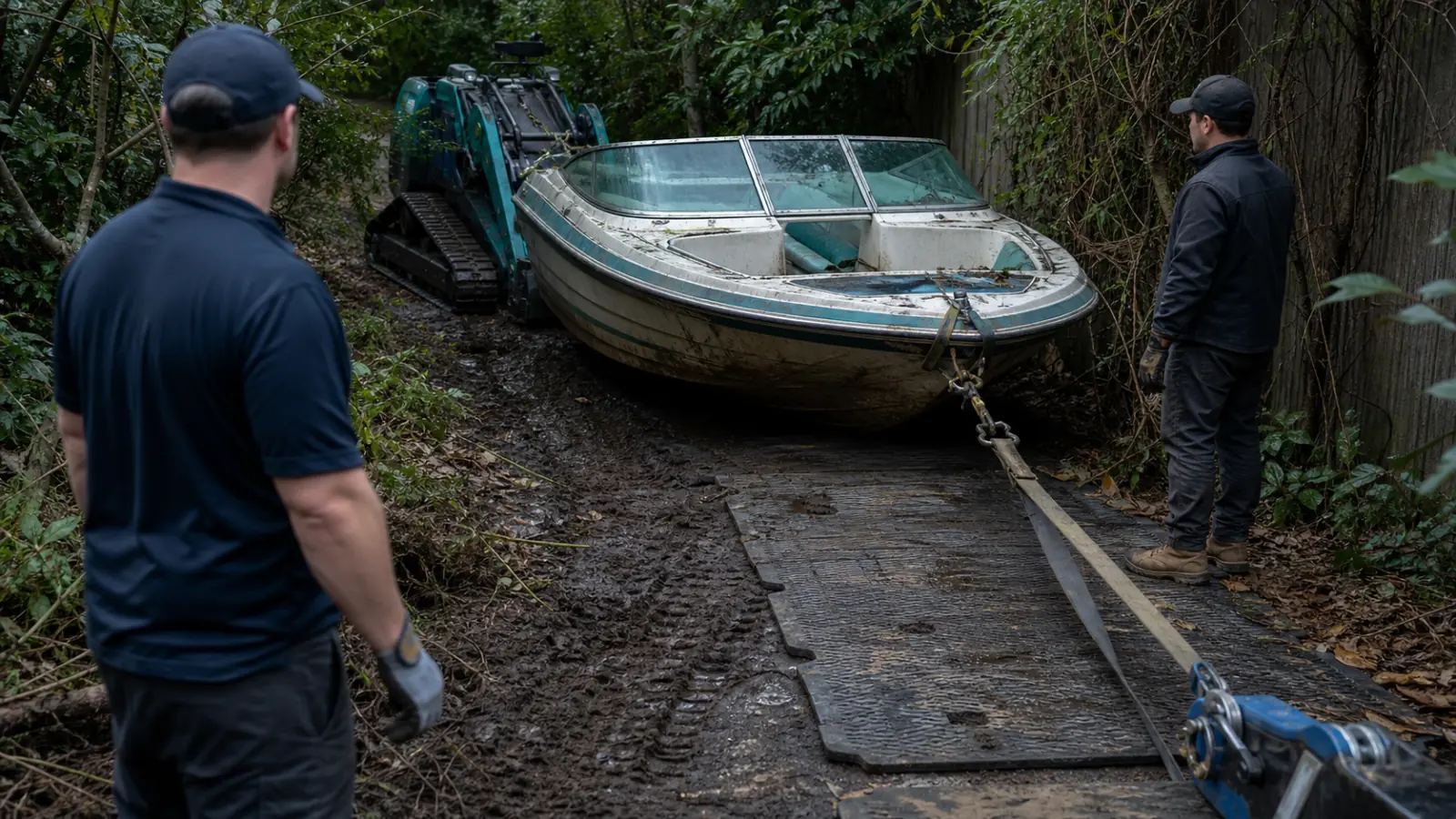
Physical access to the property dictates the methods required to clear the site. Narrow driveways, low-hanging tree branches, overhead utility lines, and soft soil near driveway edges affect how heavy haulers approach the vessel. In tight neighborhood layouts or rural properties out toward Mitchell, a truck cannot simply back up over soft ground without sinking or tearing up the lawn.

The vessel's physical positioning also changes the extraction process. A hull sitting on a functional trailer rolls out easily, while a vessel resting on cinder blocks, half-buried in topsoil, or tied up along the shoreline requires specialized winches, cranes, or secondary transport gear before it can be loaded and removed safely.
Every Type of Boat We Handle

Situations We Handle

Need Help? We’re Ready.

Contact boat removers directly or request free quotes. We dispatch crews fast.

Our Step-by-Step Process

Assessment

We evaluate the boat’s size, current location, condition, and any environmental or access challenges before we schedule boat removal.

Planning

A detailed plan is built around your vessel — equipment, logistics, timeline, and safety. Services include drainage of oil and fuel before transport.

Execution

Our experienced crew mobilizes to your current location and we tow, haul, or dismantle the vessel using professional marine equipment.

Completion

The vessel is recovered, recycled, or routed to certified boat junkyards for environmentally responsible disposal. The site is left clean.

Equipment & Capabilities

Assessing a vessel on site determines whether it can be hauled intact or requires processing on the spot. When trailer axles are rusted solid or a hull is too wide to navigate narrow access roads, crew members dismantle the structure into manageable sections right on the lot. Industrial saws, heavy winches, and portable cutting gear allow the team to break down large hulls safely while preserving the surrounding landscape and structures.

Before any hull is cut, lifted, or loaded, all hazardous materials must be extracted from the vessel. Crew members carefully drain trapped fuel, crankcase oil, hydraulic fluids, and anti-freeze into approved containment tanks. Marine batteries, onboard electronics, and fire extinguishers are removed next to prevent ground contamination or safety hazards during transport.

After fluid recovery and structural teardown, the remaining components are separated by material type. Metal fittings, aluminum frames, and hardware are separated for metal recycling, while glass, treated wood, and degraded fiberglass are directed toward licensed disposal facilities. Every step of the process is tailored to the vessel's condition, ensuring the land is cleared cleanly, efficiently, and responsibly.

Our boat removal experience covers everything from start to finish  assessment, planning, execution, dismantling, and final cleanup. Marina operators and property owners across Madison County trust us to get rid of your junk boat without damage to surrounding property.

FAQ

Boat Removal Questions - Frequently Asked

Common questions from property owners about our junk removal service, dismantling, and marine recovery.

We handle every type of vessel — sailboat, pontoon, fishing boats, jon boats, yachts, and commercial craft. Whether your boat or sailboat floats (or used to), we’ll remove it from any current location.

Yes. Sunken and partially submerged vessel recovery is a core part of our salvage work in Madison County. We use lift bags, salvage pumps, and marine cranes to safely raise vessels from underwater.

We respond to inquiries quickly — usually within hours, with same-day service available. For emergency situations, we mobilize as fast as possible. Call us directly for time-sensitive jobs.

No. Every job is handled in-house by our own team and equipment. No middlemen, no handoffs, no surprises.

Cost depends on the boat’s size, current location, condition, and complexity of the job. We provide free assessments and free quotes for every case — contact us and we’ll give you an honest estimate.

Yes. Our boat removal and disposal services include hazardous materials handling, oil and fuel drainage, hull dismantling, and recycling at certified yards — all in compliance with environmental regulations and environmentally responsible standards.

Absolutely. We regularly work in tight marinas, shallow waterways, private docks, backyards, and remote areas. We bring the right gear to reach any current location.

Yes. We frequently work with insurance adjusters on salvage and recovery claims and provide the documentation needed for your claim.

Browse Our Services - Ready to Get Started?

We handle everything from start to finish. Call us now or request a free quote – we’ll dispatch crews and haul your vessel away fast.