
Professional Boat Removal Services in Foley, AL

A fiberglass hull has spent six consecutive seasons parked behind the garage where the sun bakes the gelcoat and the trailer tires have gradually deflated into the soft turf. A local slip manager issues a stern notice regarding an overdue space balance on a vessel that no longer runs. A real estate transaction closes on a residential parcel with a neglected cabin cruiser abandoned near the property line. An inboard engine suffers a cracked block after a hard freeze, leaving the cost of a mechanical rebuild far higher than the market value of the vessel itself. These situations leave property owners stuck with heavy clutter, municipal code violations, or ongoing storage fees for a craft that will never launch again.

Is there reliable boat removal near me in Foley, AL? Yes, Boat Removal Experts provides specialized extraction and hauling services for all types of unwanted watercraft situated on private lots, commercial properties, or storage facilities throughout the community.

Transferring a vessel title is not always feasible when past ownership paperwork is missing, but our operation always issues a formal release of liability upon taking possession of the craft. Some haulers pull a junk boat away without providing signed documentation, leaving the original owner legally exposed if the hull is dumped illegally later. Securing official paperwork protects you from future ordinance fines or legal claims.

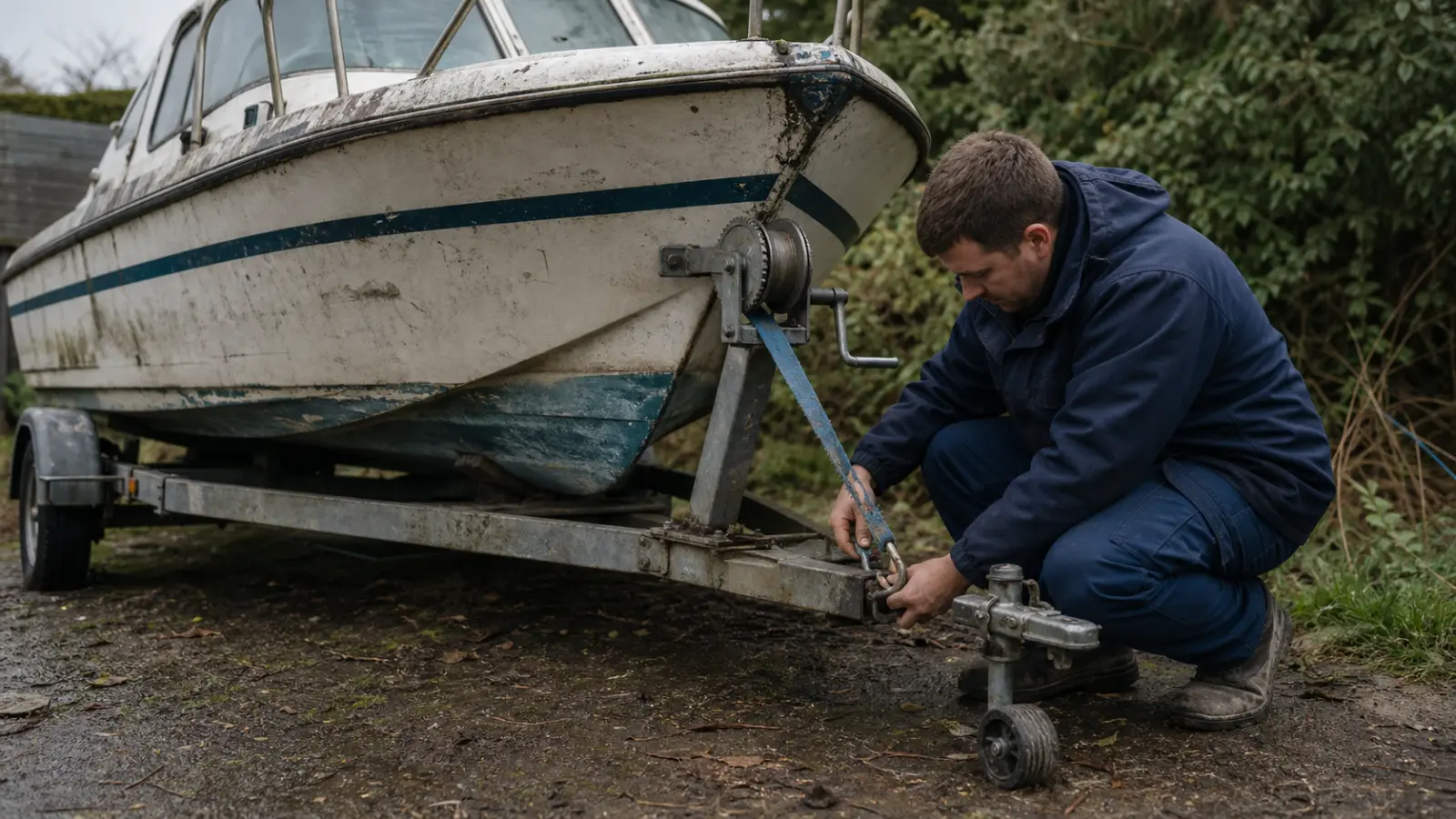
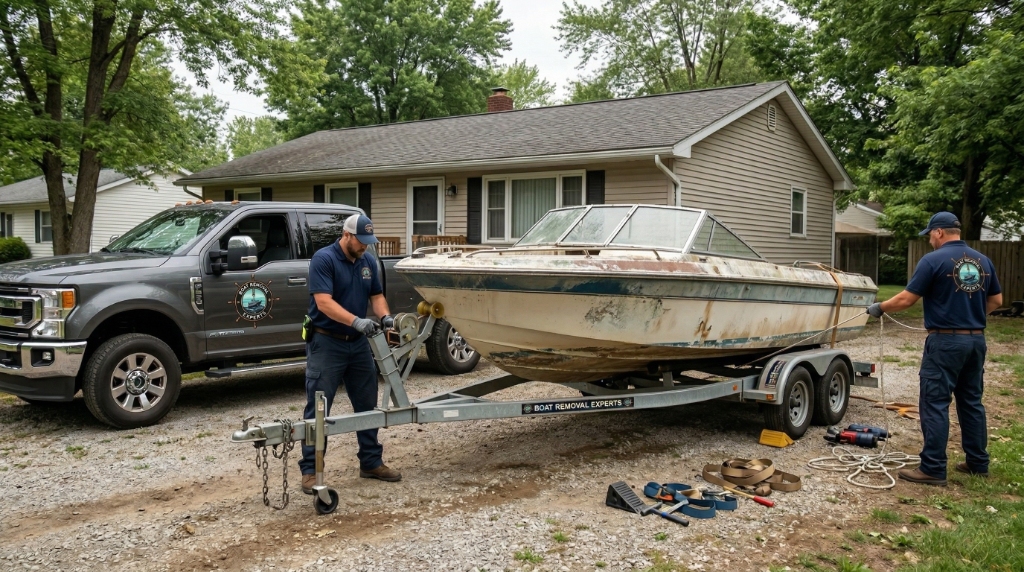
Extracting an old boat requires far more effort than standard towing due to physical obstacles. Trailer wheel bearings routinely seize after years of immobility, making a hull impossible to roll. Broad beams frequently exceed narrow gate clearances, while rotted wooden cradles or soft lawn surfaces prevent heavy transport trucks from getting a direct line to tow the weight safely.

Call 251-866-4611 to start.

Send photos through the contact form.

What Is Boat Removal and When You Need It

Professional boat disposal covers the entire operational sequence required to clear a compromized vessel from a location, going well beyond standard vehicle towing. When an owner possesses a clear title, the transport process moves directly to scheduling, loading, and transfer. When paperwork is missing or the craft was inherited alongside a recent land purchase, specific administrative steps must occur to establish proper authority before moving the property. An abandoned boat left in a rented storage unit, on private land, or alongside a neglected dock slip requires official clear notice processes to ensure all municipal standards are met during the removal.
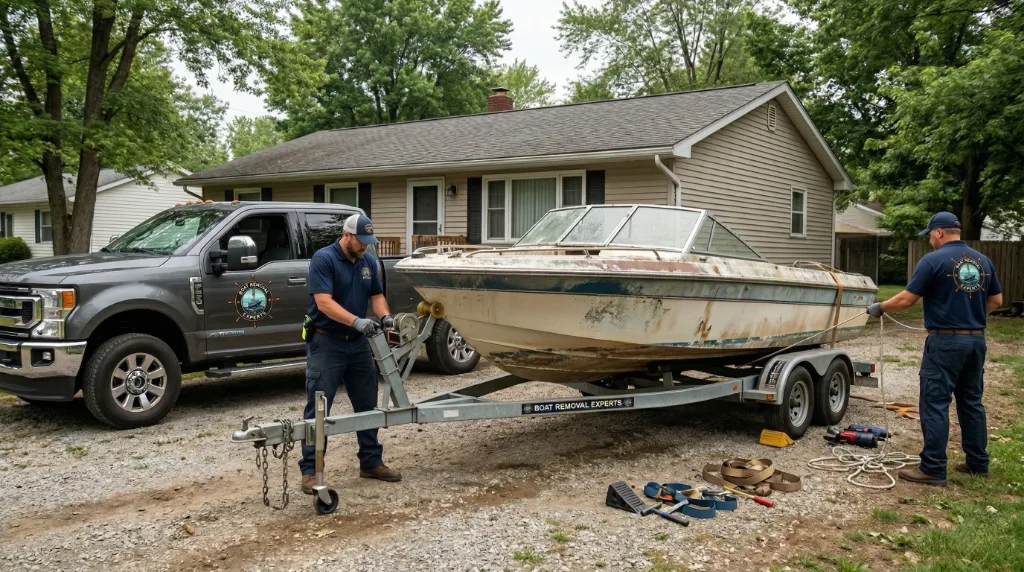
The condition of the craft heavily influences how the team handles the extraction. A derelict hull that has lost its structural integrity cannot simply be pulled onto a winch bed without risking total collapse. Waterlogged floor frames, compromized transoms, and fractured fiberglass alter the physical weight distribution, which dictates whether the vessel requires heavy rigging, flatbed transport, or mechanical breakdown on site. Transporting an abandoned boat from elevated blocks or tight backyard quarters demands distinct equipment compared to hauling a floating vessel from the water. Every factor—from structural decay to legal status—shapes the final handling approach taken by the crew.
When Foley Residents Call Us

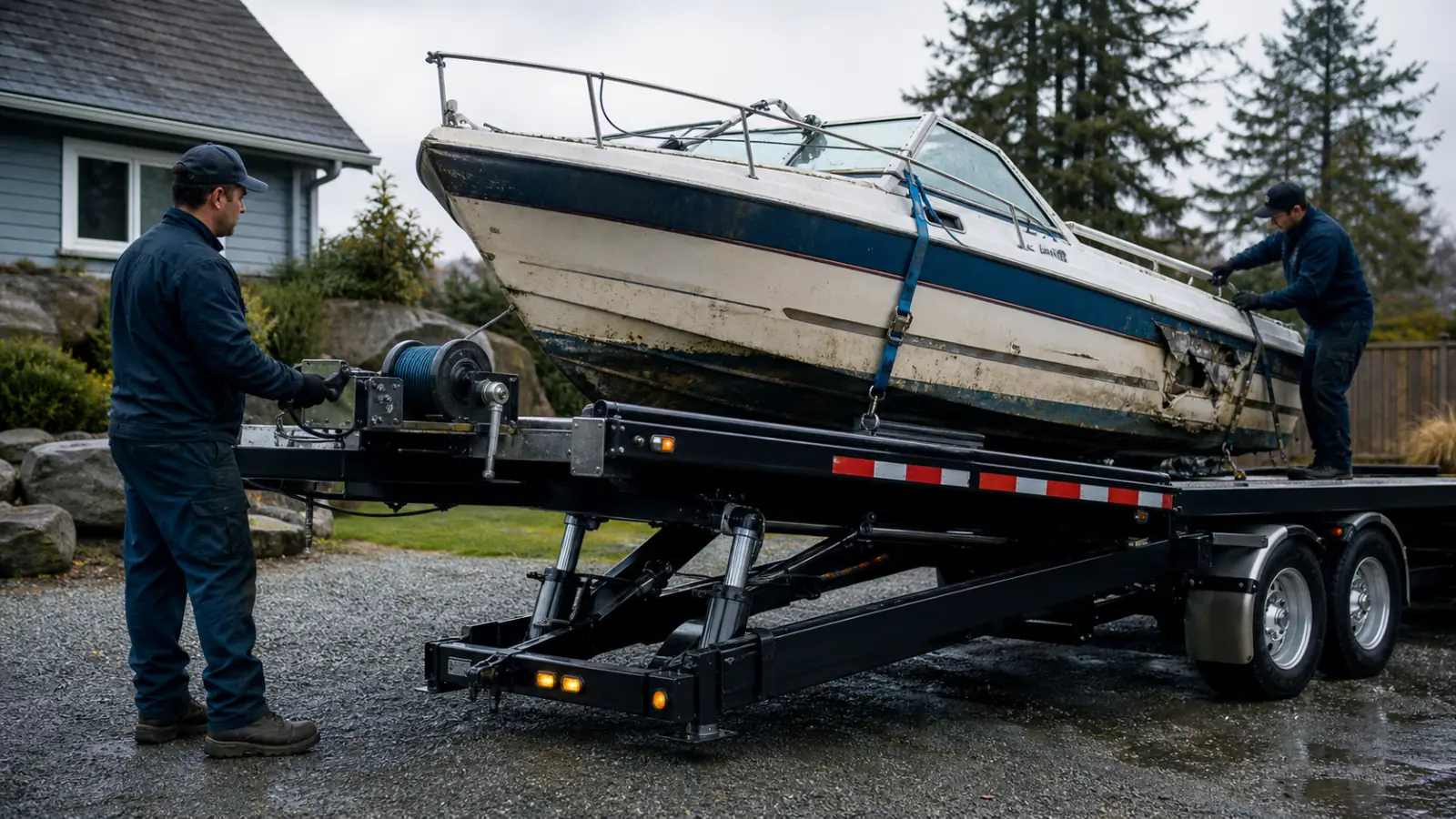
Humid coastal weather in Foley, AL rapidly degrades stationary marine craft. Intense ultraviolet rays break down resin layers, causing fiberglass gelcoats to chalk, crack, and admit moisture deep into the sub-floor core. Heavy rainfall fills uncapped hulls, adding thousands of pounds of dead weight that accelerates structural decay, rots wooden back panel cores, and ruins interior upholstery. Mold expands rapidly inside closed cabins, turning a minor restoration project into an unsanitary burden. When an untreated pontoon, fiberglass fishing boat, or deep-draft sailboat sits exposed to ambient moisture, the structural frame weakens until standard hitch towing becomes unsafe.
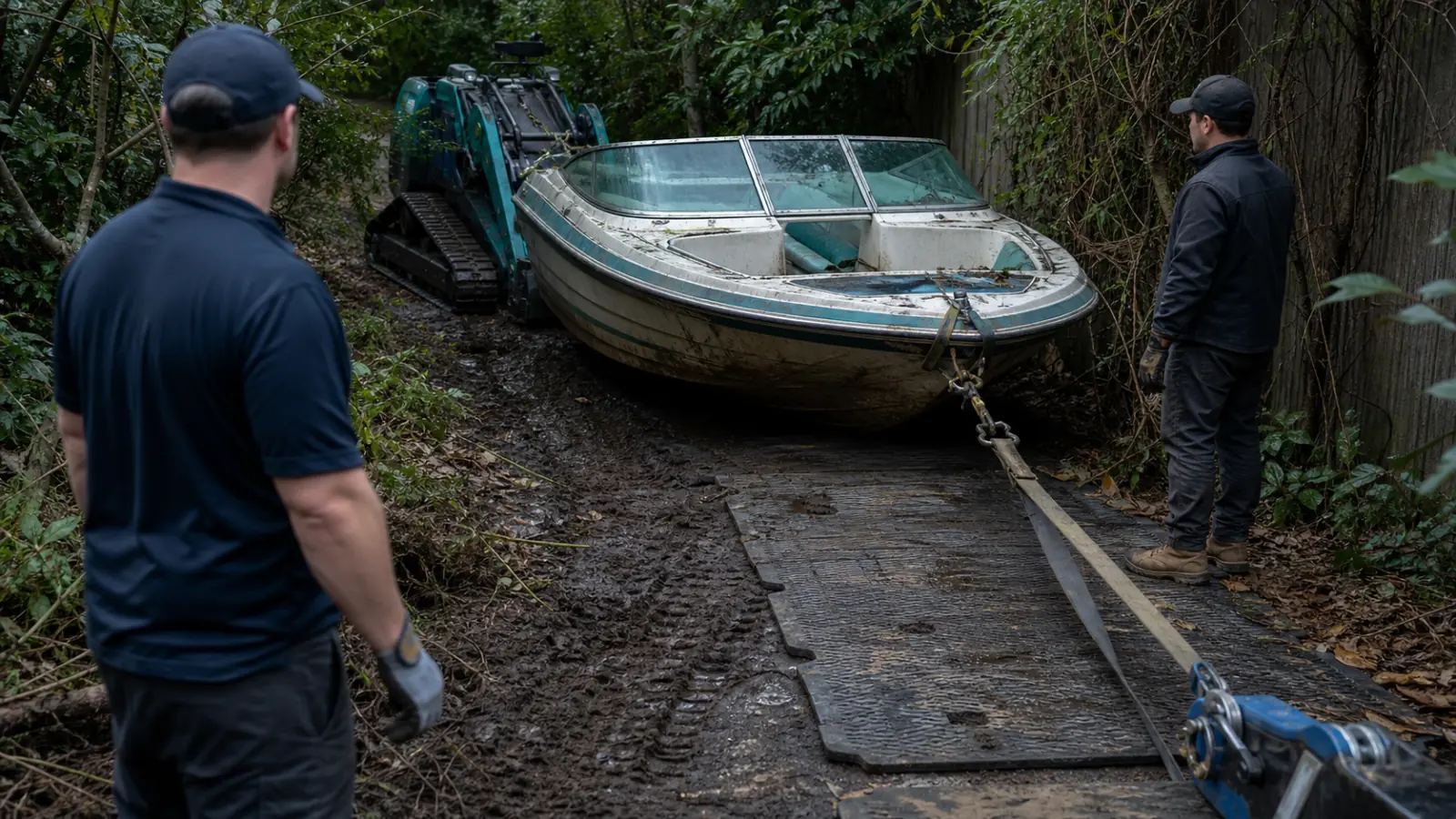
Site conditions in nearby places like Elberta, Summerdale, Bon Secour, and Magnolia Springs dictate the exact strategy needed for extraction. Overhanging oak branches, low utility wires, and narrow residential fence lines often restrict the approach of large transport rigs. Soil composition matters greatly, as heavy trucks easily sink into soft ground when attempting to load a craft resting on timber blocks. A deep-draft sailboat resting on a cradle presents different height obstacles under utility lines compared to a pontoon sitting low on a flat trailer. Whether a craft rests on a firm pad, soft dirt, or alongside a dock, access constraints shape the equipment choice.
Every Type of Boat We Handle

Situations We Handle

Need Help? We’re Ready.

Contact boat removers directly or request free quotes. We dispatch crews fast.

Our Step-by-Step Process

Assessment

We evaluate the boat’s size, current location, condition, and any environmental or access challenges before we schedule boat removal.

Planning

A detailed plan is built around your vessel — equipment, logistics, timeline, and safety. Services include drainage of oil and fuel before transport.

Execution

Our experienced crew mobilizes to your current location and we tow, haul, or dismantle the vessel using professional marine equipment.

Completion

The vessel is recovered, recycled, or routed to certified boat junkyards for environmentally responsible disposal. The site is left clean.

Equipment & Capabilities

Handling a severely compromized vessel requires heavy extraction gear designed for difficult maneuvers. When tires are dry-rotted, axles are rusted through, or a trailer lacks inflated tires, heavy-duty winches, slide axles, and articulated marine cranes pull the load onto transport beds safely. If a wide beam cannot clear residential gate posts or a hull is structurally too weak to survive road travel intact, specialized crews dismantle the superstructure on site using industrial cutting gear.

Before any structural cutting or highway transport occurs, all hazardous materials are systematically removed to meet environmental protocols. The crew drains trapped fuel from tanks, extracts engine oil, disconnects marine batteries, and removes electronic components or mercury switches. Once fluids and hazardous materials are safely contained, salvageable metal components like aluminum rails, stainless hardware, and bronze propellers are sorted for metal recycling. The remaining hull materials are evaluated based on structural composition, steering the final transport destination toward industrial processing sites or a regional landfill equipped for bulk waste handling.

Our boat removal experience covers everything from start to finish  assessment, planning, execution, dismantling, and final cleanup. Marina operators and property owners across Baldwin County trust us to get rid of your junk boat without damage to surrounding property.

FAQ

Boat Removal Questions - Frequently Asked

Common questions from property owners about our junk removal service, dismantling, and marine recovery.

We handle every type of vessel — sailboat, pontoon, fishing boats, jon boats, yachts, and commercial craft. Whether your boat or sailboat floats (or used to), we’ll remove it from any current location.

Yes. Sunken and partially submerged vessel recovery is a core part of our salvage work in Baldwin County. We use lift bags, salvage pumps, and marine cranes to safely raise vessels from underwater.

We respond to inquiries quickly — usually within hours, with same-day service available. For emergency situations, we mobilize as fast as possible. Call us directly for time-sensitive jobs.

No. Every job is handled in-house by our own team and equipment. No middlemen, no handoffs, no surprises.

Cost depends on the boat’s size, current location, condition, and complexity of the job. We provide free assessments and free quotes for every case — contact us and we’ll give you an honest estimate.

Yes. Our boat removal and disposal services include hazardous materials handling, oil and fuel drainage, hull dismantling, and recycling at certified yards — all in compliance with environmental regulations and environmentally responsible standards.

Absolutely. We regularly work in tight marinas, shallow waterways, private docks, backyards, and remote areas. We bring the right gear to reach any current location.

Yes. We frequently work with insurance adjusters on salvage and recovery claims and provide the documentation needed for your claim.

Browse Our Services - Ready to Get Started?

We handle everything from start to finish. Call us now or request a free quote – we’ll dispatch crews and haul your vessel away fast.