
Professional Boat Removal Services in Forest Grove, OR
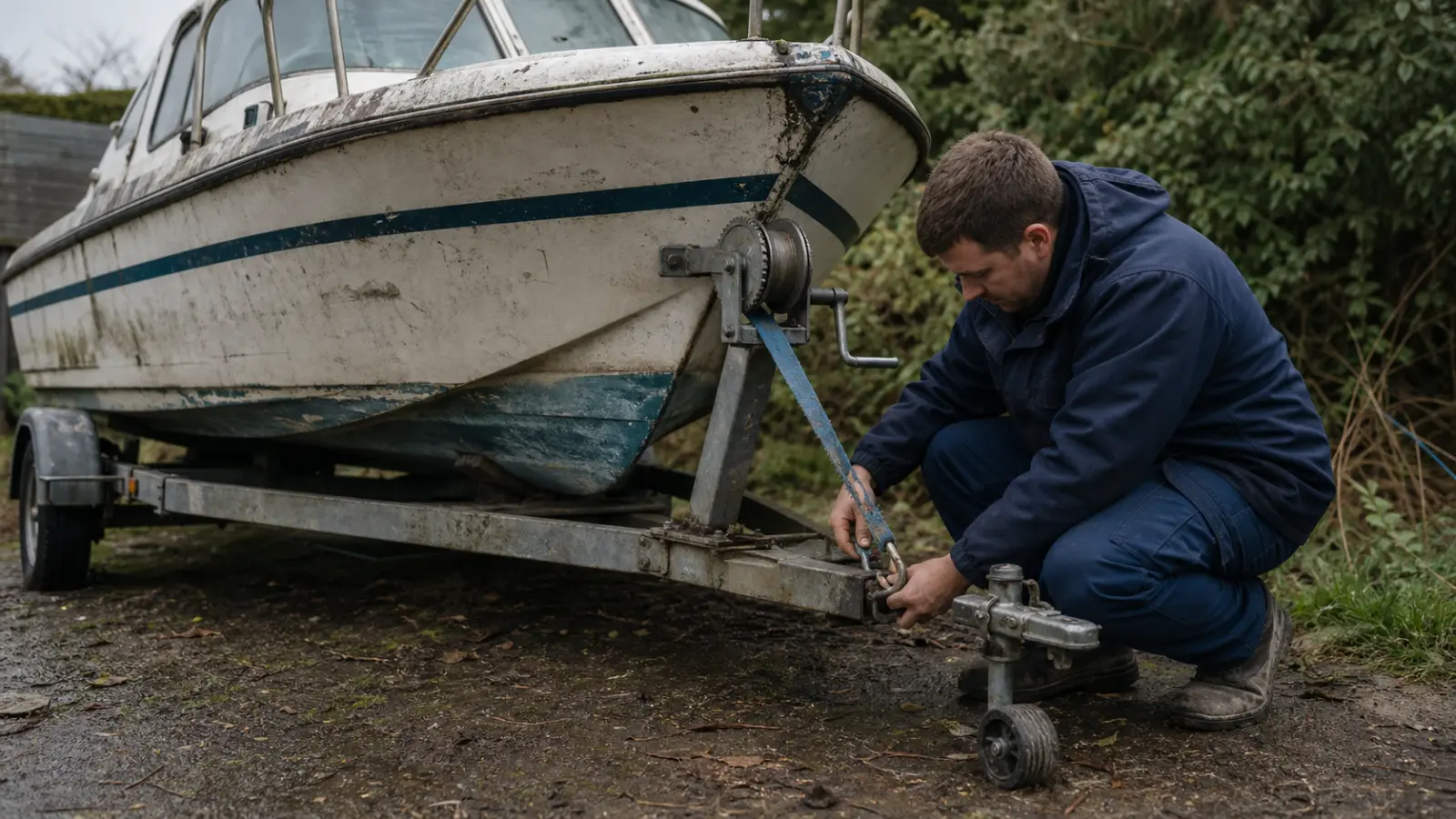
An old boat resting behind a barn on a flat tire often turns into a permanent fixture before an owner realizes how much room it actually consumes. The fiberglass hull sits through endless rain, the wooden decking swells under moss, and an outboard motor that seized years ago turns a former weekend hobby into an awkward eyesore. In other cases, a property sale in Forest Grove, Oregon hits a wall because a cabin cruiser remains parked on the driveway, or a local marina sends a formal notice regarding unpaid slip fees for a vessel whose rebuild costs far exceed its market value. When keeping the craft is no longer practical, continuing to pay storage fees or risking code violations makes fast action necessary.
Is there boat removal near me in Forest Grove, OR?
Yes, Boat Removal Experts provides complete boat removal options right here in the community, handling everything from yard cleanouts to transport arrangements.

Before any junk boat leaves a driveway or backyard, establishing proper documentation is essential. While our service does not always transfer the title of every vessel, Boat Removal Experts always issues an official release of liability to protect the owner. Some haulers take an old vessel away without completing formal paperwork, leaving the original owner legally vulnerable if that hull is later abandoned on public land. Always verify that a liability release is part of the agreement.
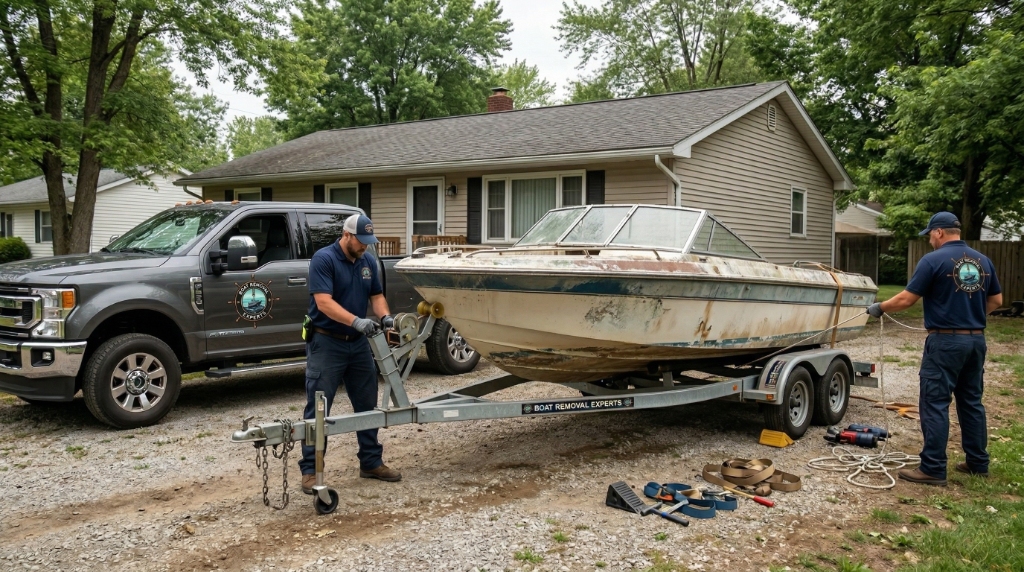
Extracting a vessel involves unique challenges that standard towing services cannot manage. A trailer with rusted axles, flat tires, or frozen brakes will not roll onto a standard bed. Keels, wide beams, and cradles frequently exceed narrow property gates, while heavy hulls sitting on soft lawn surfaces threaten to sink standard equipment without specialized rigging.
Call (855) 765-7931 to start.
Send photos through the contact form.
What Is Boat Removal and When You Need It
Professional boat disposal covers significantly more than hitching a rig to a bumper and driving away down the road. When a derelict vessel sits untouched for seasons, structural integrity weakens, making standard transport hazardous. Complete removal services require evaluating the structural condition of the hull, securing loose components, managing access limitations, and preparing the craft for safe transit or on-site processing. Whether a vessel sits on a broken trailer in Dilley or rests on timber blocks in a backyard in Cornelius, specialized equipment ensures the structure comes out without damaging surrounding structures, fences, or landscapes.
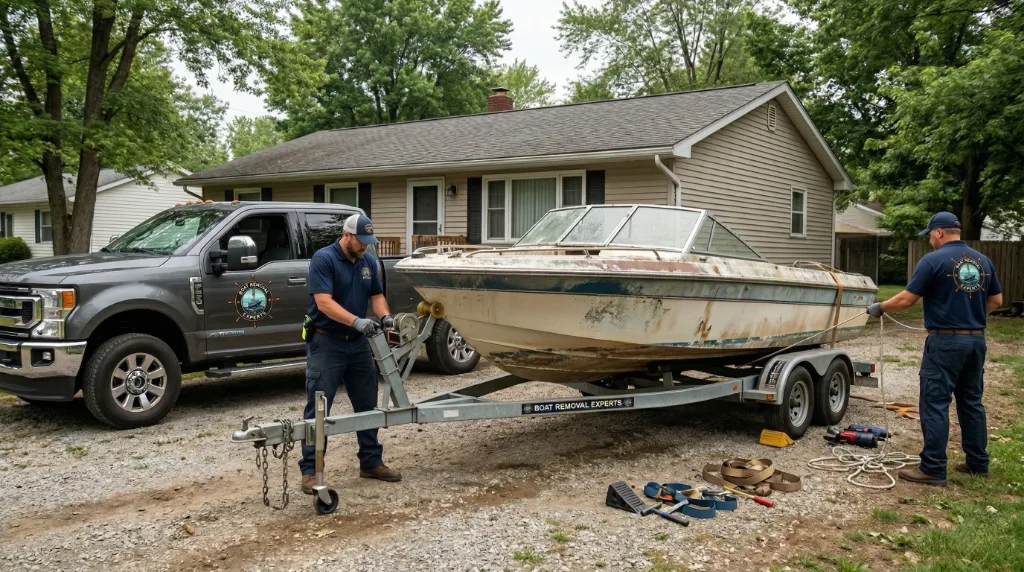
Paperwork dictates the specific path required to get rid of a boat legally. When an owner possesses a clean title and current registration, the process moves forward immediately. However, when property changes hands in Washington County and leaves an abandoned boat behind without documents, or when lost paperwork complicates an old family vessel, additional steps are required. Local regulations mandate specific procedures to clear rights before transport. A vessel left in a neglected slip or dropped on private land without permission requires formal notification procedures to establish legal possession or authorization before any crew can hook up cables or cut down a fiberglass shell.
When Forest Grove Residents Call Us
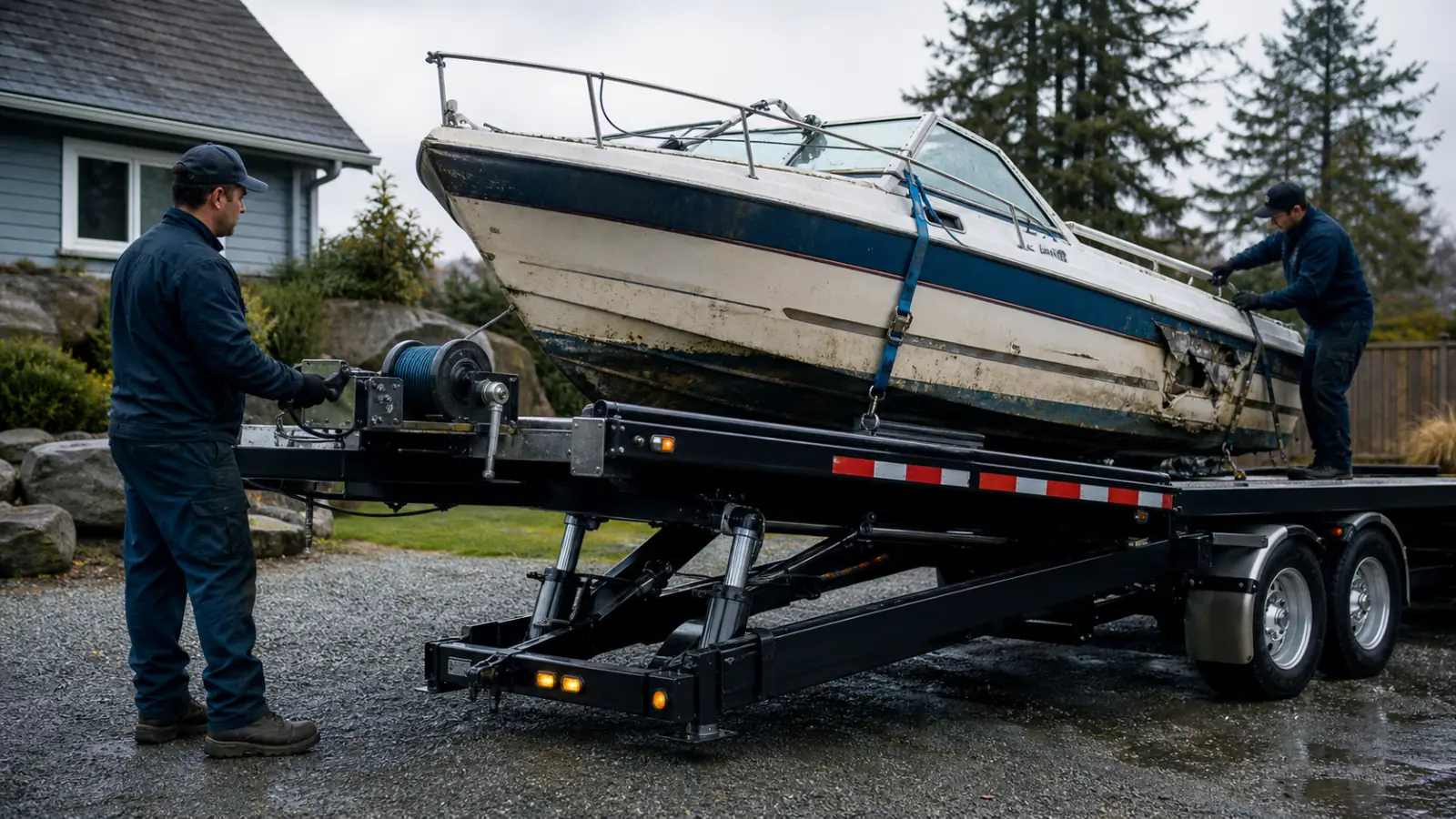
Pacific Northwest weather takes a heavy toll on any unused watercraft stored outdoors. Constant humidity, dark winters, and seasonal downpours allow moisture to pool inside open cockpits, rapidly rotting plywood subfloors and saturating floor frames. Gelcoat cracks under freezing conditions, allowing water to penetrate deep into fiberglass layers, while upholstery turns into a breeding ground for mold. A neglected fishing boat, heavy pontoon, or deep-keel sailboat stored near Banks or Gaston accumulates hundreds of pounds of standing rainwater, drastically increasing its total weight and compromizing structural points. When the hull becomes soft, standard winch points can tear out during extraction, requiring customized rigging techniques to lift the craft safely.
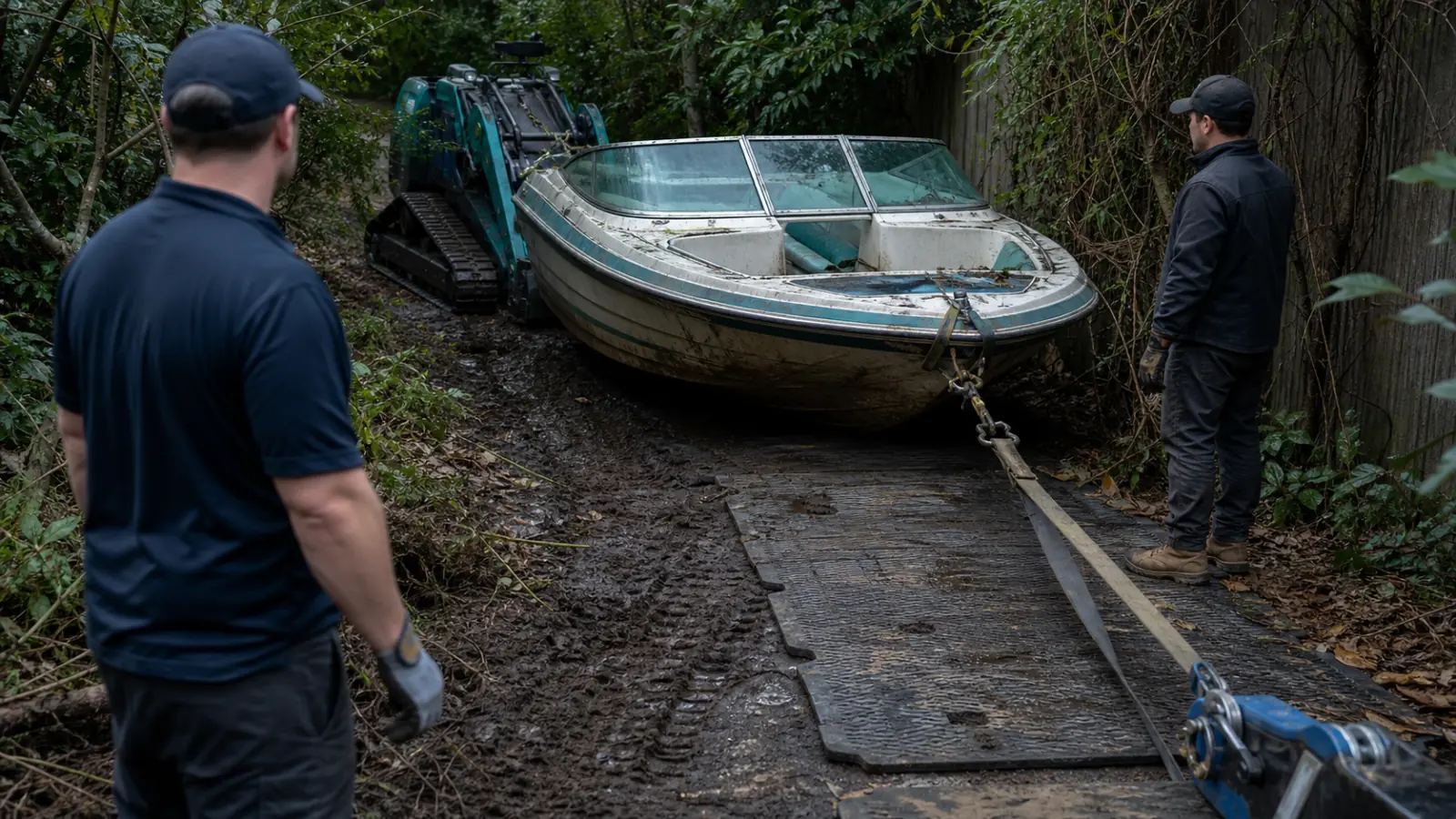
Local site conditions dictate how the crew approaches each job. A craft parked on an asphalt driveway presents a straightforward extraction, but many vessels rest on damp ground behind outbuildings, down narrow gravel lanes, or under low-hanging tree canopy in North Plains. If a vessel rests on blocks rather than a rolling chassis, or if overhead power lines restrict crane access, the recovery approach changes completely. Working on soft soil demands ground mats to support heavy machinery, while submerged or shoreline extractions require floatation support and marine-grade winches to bring the hull to solid ground.
Every Type of Boat We Handle
- Sailboat & catamaran
- Motorboat, powerboat & cabin cruisers
- Fishing boats & bass boats
- Pontoon boats
- Jon boats & aluminum skiffs
- Large yachts
- Personal watercraft (jet skis)
- Houseboats
Situations We Handle
- Abandoned boat at marinas, docks, or boat lifts
- Unwanted boats on private property or in boat storage
- Vessels in backyards, fields, or vacant lots
- Derelict vessels blocking dock access or navigation
- Storm-damaged vessels requiring boat hauling
- Vessels without trailers or with flat tires
- Tight access locations (narrow driveways, wooded areas)
- Government or insurance-ordered cases
Need Help? We’re Ready.
Contact boat removers directly or request free quotes. We dispatch crews fast.
Our Step-by-Step Process

Assessment
We evaluate the boat’s size, current location, condition, and any environmental or access challenges before we schedule boat removal.

Planning
A detailed plan is built around your vessel — equipment, logistics, timeline, and safety. Services include drainage of oil and fuel before transport.

Execution
Our experienced crew mobilizes to your current location and we tow, haul, or dismantle the vessel using professional marine equipment.

Completion
The vessel is recovered, recycled, or routed to certified boat junkyards for environmentally responsible disposal. The site is left clean.
Equipment & Capabilities
Every recovery begins with a careful physical assessment to determine whether a hull can travel intact or must be processed on site. When a vessel rests on a structural frame with frozen hubs or rotted tires, specialized heavy-duty ramps, land rollers, and high-capacity winches haul the complete unit onto a flatbed trailer. If a hull is too wide to clear surrounding structures, or if the structural fiberglass has degraded beyond safe highway transport, the crew must dismantle the craft right where it sits using heavy-duty saws and hydraulic cutting tools.
Before any tearing down or transport occurs, hazardous materials must be stripped from the vessel to protect the surrounding environment. Technicians drain residual fuel tanks, extract crankcase oil, safely disconnect lead-acid batteries, and remove onboard electronics or appliances containing heavy metals. Once all fluids and hazardous items are contained according to strict environmental rules, the remaining elements are separated. Metal fittings, aluminum hulls, cleats, and stainless hardware go directly to recycling processing facilities, while crushed fiberglass, rotted wood decking, and non-recyclable interior materials head to an authorized landfill. The final destination of each material depends entirely on the condition, age, and clean separation of the boat parts upon inspection.
Our boat removal experience covers everything from start to finish assessment, planning, execution, dismantling, and final cleanup. Marina operators and property owners across Washington County trust us to get rid of your junk boat without damage to surrounding property.
FAQ
Boat Removal Questions - Frequently Asked
Common questions from property owners about our junk removal service, dismantling, and marine recovery.
What type of boat do you remove?
We handle every type of vessel — sailboat, pontoon, fishing boats, jon boats, yachts, and commercial craft. Whether your boat or sailboat floats (or used to), we’ll remove it from any current location.
Do you handle sunken or partially submerged vessels?
Yes. Sunken and partially submerged vessel recovery is a core part of our salvage work in Washington County. We use lift bags, salvage pumps, and marine cranes to safely raise vessels from underwater.
How quickly can you respond?
We respond to inquiries quickly — usually within hours, with same-day service available. For emergency situations, we mobilize as fast as possible. Call us directly for time-sensitive jobs.
Do you use subcontractors?
No. Every job is handled in-house by our own team and equipment. No middlemen, no handoffs, no surprises.
How much does cheap boat removal cost?
Cost depends on the boat’s size, current location, condition, and complexity of the job. We provide free assessments and free quotes for every case — contact us and we’ll give you an honest estimate.
Do you handle boat disposal and recycling?
Yes. Our boat removal and disposal services include hazardous materials handling, oil and fuel drainage, hull dismantling, and recycling at certified yards — all in compliance with environmental regulations and environmentally responsible standards.
Can you reach a hard-to-access location?
Absolutely. We regularly work in tight marinas, shallow waterways, private docks, backyards, and remote areas. We bring the right gear to reach any current location.
Do you work with insurance companies?
Yes. We frequently work with insurance adjusters on salvage and recovery claims and provide the documentation needed for your claim.
Other Boat Removal Locations
Browse Our Services - Ready to Get Started?
We handle everything from start to finish. Call us now or request a free quote – we’ll dispatch crews and haul your vessel away fast.