

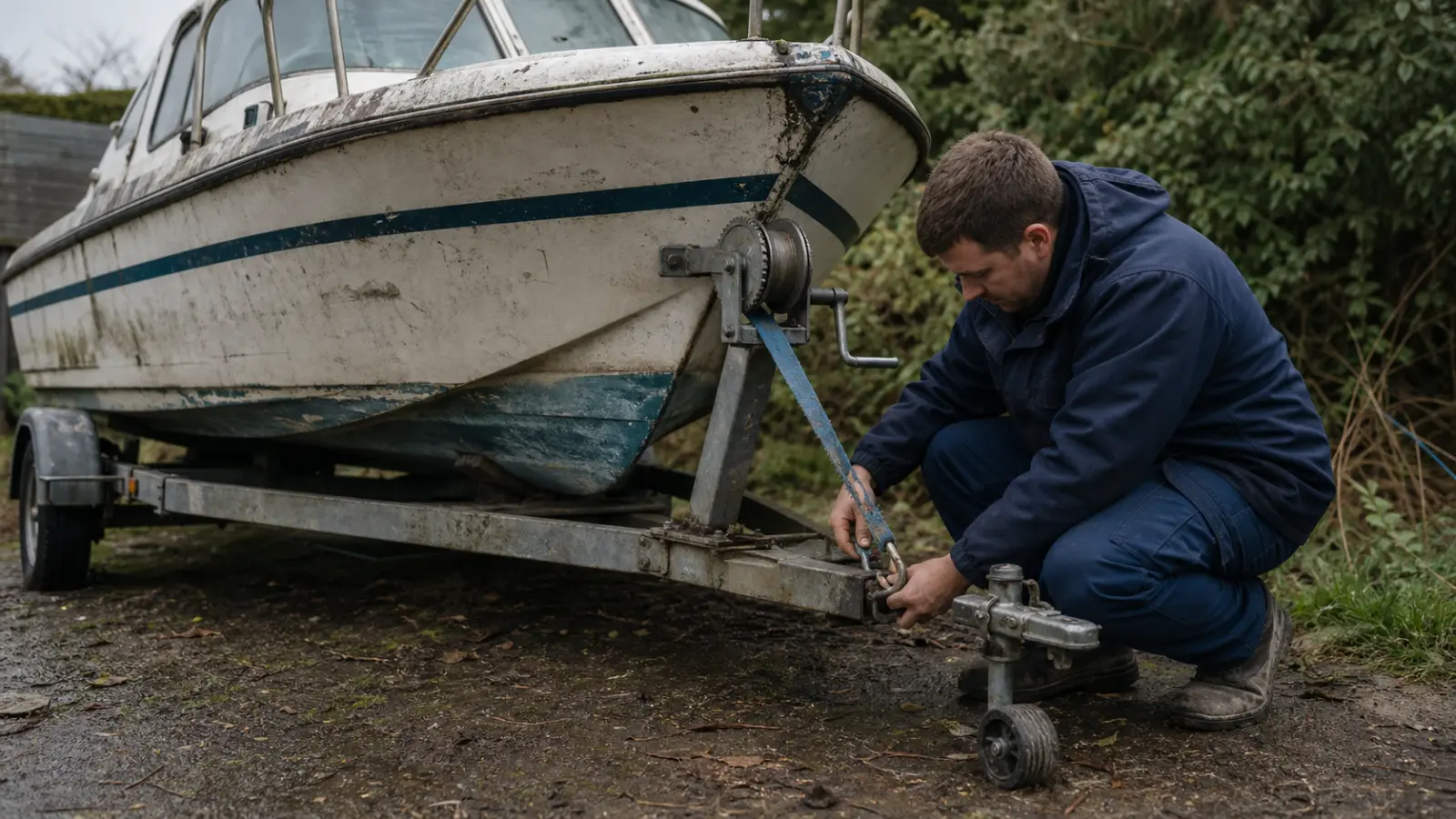
Proper documentation matters just as much as physical transport during junk boat disposal. We do not always transfer the vessel title, but our team always issues a complete release of liability to the owner. Some unvetted outfits haul a vessel away without providing any formal paperwork, leaving the legal liability attached to the original owner if that hull is later dumped illegally. Asking for a signed release of liability protects you from future claims, fines, or municipal penalties after the vessel leaves your hands.
Moving a vessel is significantly harder than moving a standard vehicle. A rotted frame, frozen trailer bearings, or flat tires prevent normal towing down the road. Keels and custom cradles require specialized lifting points, while wide beams frequently exceed the clearance of narrow backyard gates. Heavy hulls resting directly on soft lawns can sink past their draft line, making it impossible for standard tow trucks to gain traction without sinking into the turf.
Call 763-343-7366 to start.
Send photos through the contact form.
Professional boat disposal involves far more than hooking a winch cable to a hitch and driving away down the street. When an owner decides to get rid of a boat, the process requires managing structural structural integrity, transport safety, and legal documentation. A complete boat removal service accounts for vessels that cannot be towed safely, vessels missing their original registration, and hulls resting in locations that standard equipment cannot access. The work addresses the physical vessel along with the legal responsibility associated with its disposal.
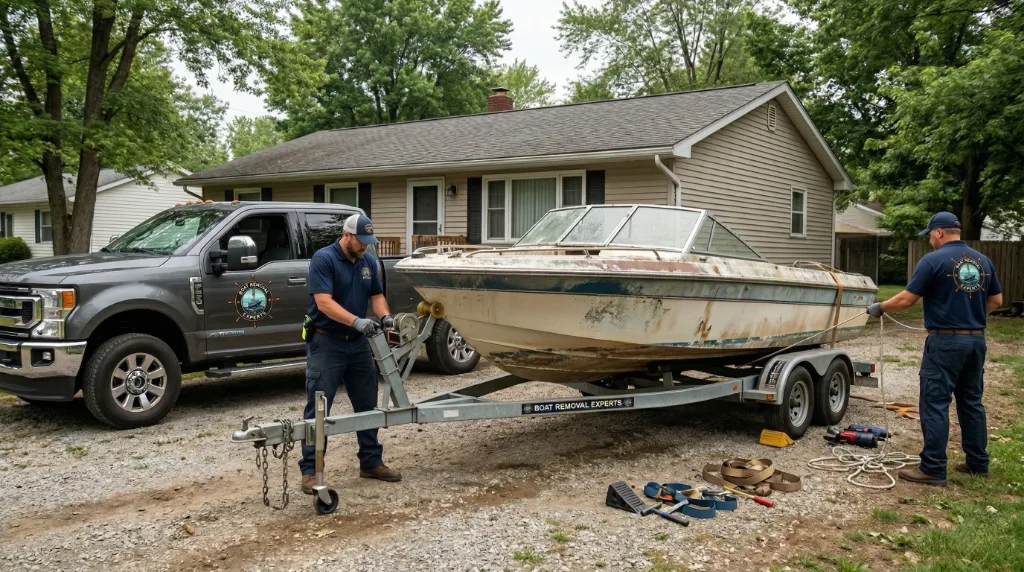
Paperwork dictates how an abandoned boat or private vessel gets processed. Having a clean title in hand streamlines the initial intake, but missing documentation or forgotten registration numbers require different administrative steps. When an old boat comes with a newly purchased property, the current landowner must establish legal right of disposal before transport begins. Vessels left behind on private property or within commercial slips require specific notice periods and documentation to ensure the removal complies with local property laws in Fridley, MN before crew members hook up any equipment.
The location of an abandoned boat heavily impacts the strategy required to retrieve it. Vessels left in long-unpaid marina slips present unique challenges, as waterborne access or specialized marine cranes may be required to clear the dock. Hulls abandoned on private fields or commercial lots often sit directly on soil, allowing weeds and mud to swallow the frame. Each environment dictates whether the crew pulls the hull onto a flatbed deck, employs heavy-duty straps, or prepares the structure for transport right where it sits.
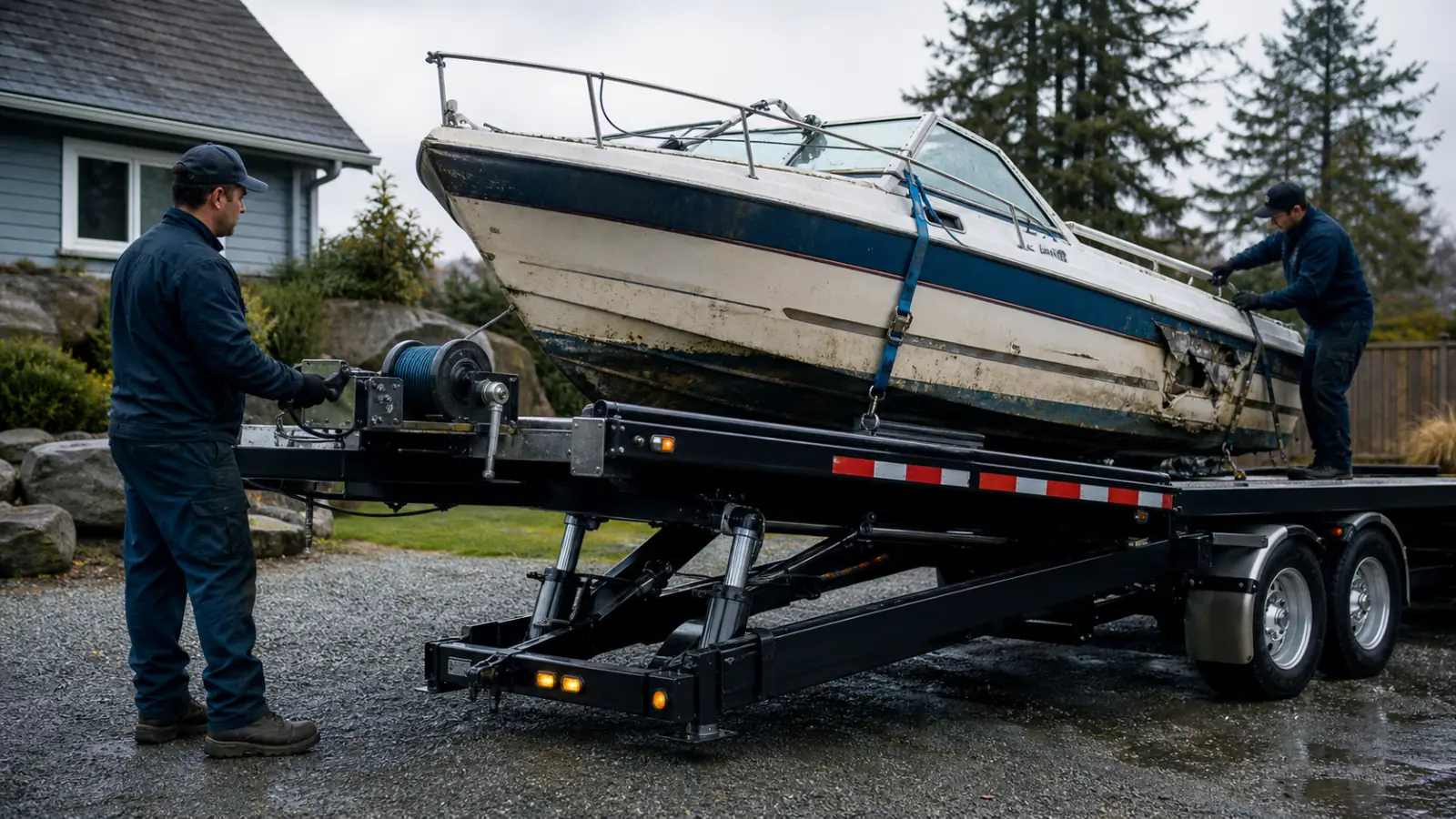
The climate in Fridley, MN takes a heavy toll on marine vessels left exposed to the elements year after year. Harsh winter freeze-and-thaw cycles force water into small fiberglass fractures, expanding those cracks until the gelcoat delaminates completely. Sub-zero temperatures render vinyl seating brittle, while trapped summer moisture rots internal wood transoms, floor frames, and plywood decks from the inside out. A hull filled with stagnant rainwater adds thousands of pounds of unneeded weight, turning a light aluminum fishing boat, heavy pontoon, or deep-draft sailboat into a structural hazard that can collapse under its own stress during a haul.
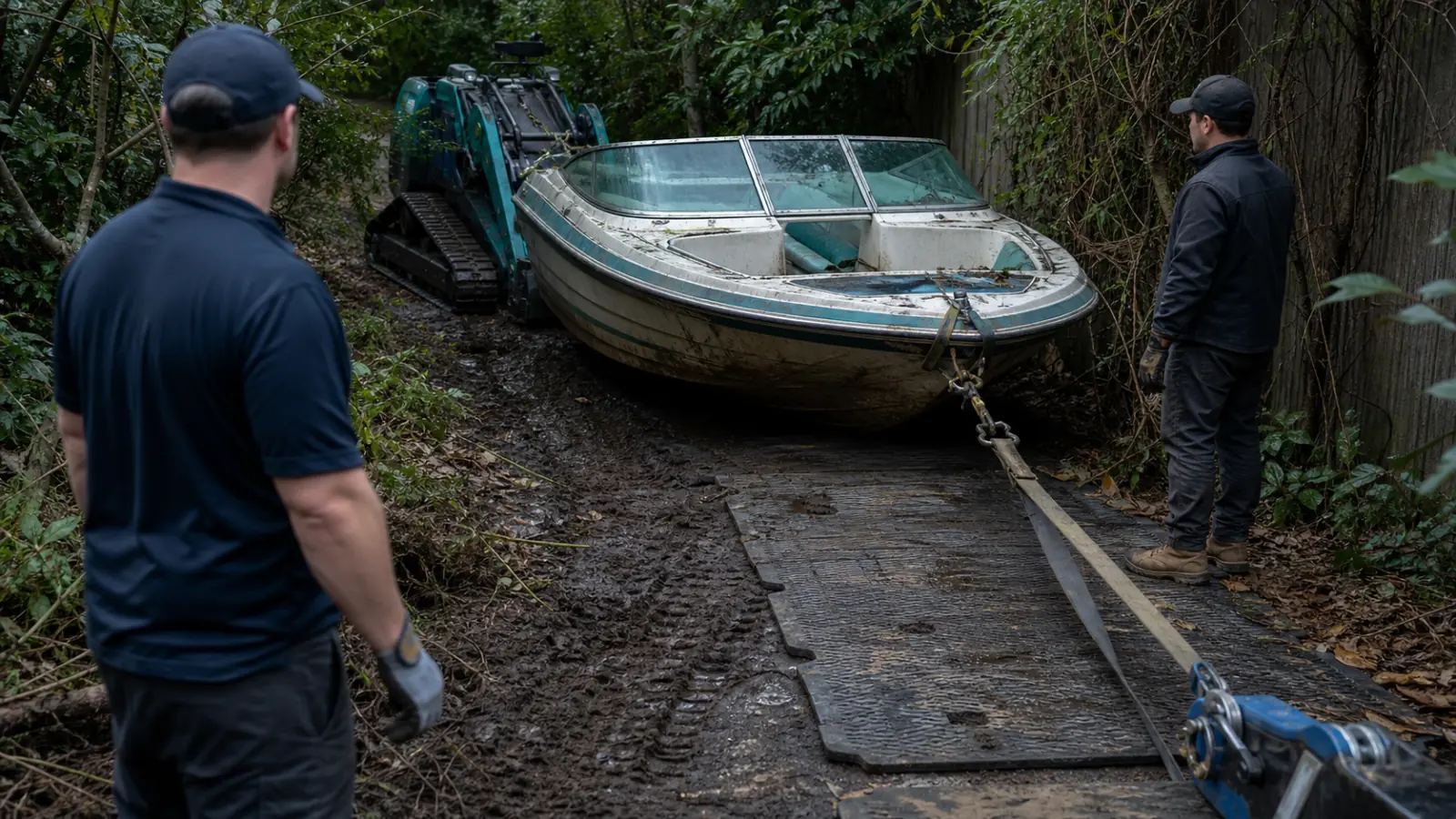
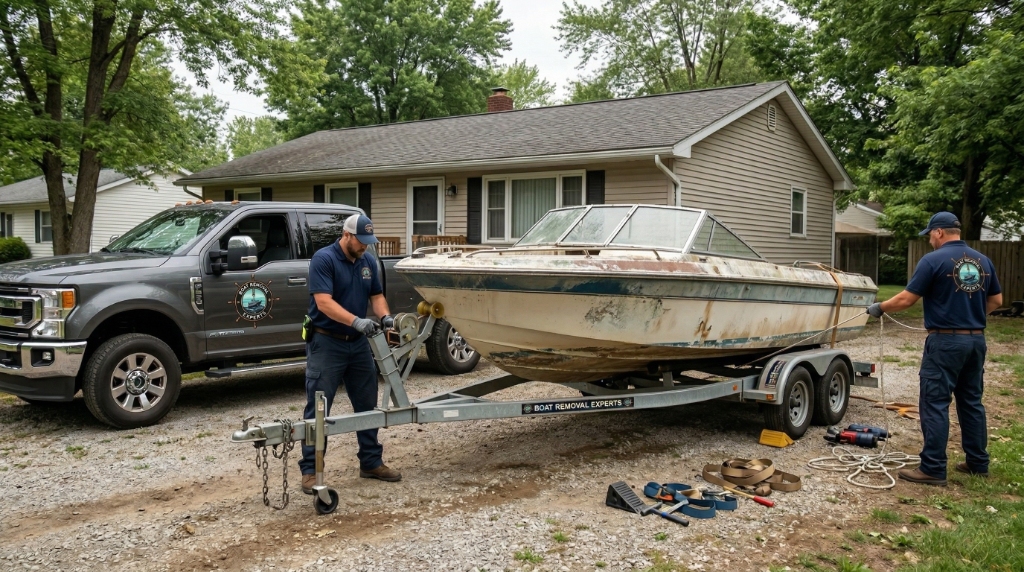
Site conditions dictate every step of the retrieval process long before heavy machinery reaches the site. The path leading from the street to the vessel must be evaluated for soft soil, steep inclines, low-hanging tree branches, and overhead power lines. A heavy pontoon resting on blocks in a tight backyard requires a completely different recovery strategy than a damaged fishing boat sitting on a rotted trailer alongside a narrow driveway. Narrow gates and tight residential property lines often eliminate the option of driving a full-sized rig directly to the hull.
Vessels resting in Anoka County backyards or parked near property borders demand careful equipment positioning to avoid damaging surrounding lawns or structures. Whether a ruined sailboat sits buried in tall brush or an old craft remains moored down near the shoreline, physical access determines the winching angles, track equipment, or manual breakdown methods required to clear the lot safely without disturbing neighboring parcels near Spring Lake Park or Hilltop.

Assessment
We evaluate the boat’s size, current location, condition, and any environmental or access challenges before we schedule boat removal.

Planning
A detailed plan is built around your vessel — equipment, logistics, timeline, and safety. Services include drainage of oil and fuel before transport.

Execution
Our experienced crew mobilizes to your current location and we tow, haul, or dismantle the vessel using professional marine equipment.

Completion
The vessel is recovered, recycled, or routed to certified boat junkyards for environmentally responsible disposal. The site is left clean.