
Professional Boat Removal Services in Glen Ellyn, IL
An old boat resting on flat tires behind a garage for six seasons presents a real headache for any homeowner. You might be dealing with a seized outboard where a rebuild costs far more than the hull is worth, or perhaps a property in Glen Ellyn was purchased with an unwanted cabin cruiser sitting on the lot. Other times, a marina sends a formal notice about an unpaid slip, leaving the owner scrambling to figure out how to haul away a heavy vessel before fines accumulate. In all these situations, turning a neglected hull into open space requires specific experience and heavy equipment to manage a junk boat safely.
Is there boat removal near me in Glen Ellyn, IL? Yes, Boat Removal Experts provides complete boat removal services directly to your residential or commercial property.

When you dispose of a vessel, paper records matter just as much as pulling the hull off your land. Boat Removal Experts does not always transfer the title into its name, but our team always issues a signed release of liability to the owner. Some haulers will pull a vessel away with no documentation whatsoever, leaving the registered owner legally exposed if that hull is later abandoned on public land or sitting in a ditch. Asking about official release documents upfront protects your personal liability.
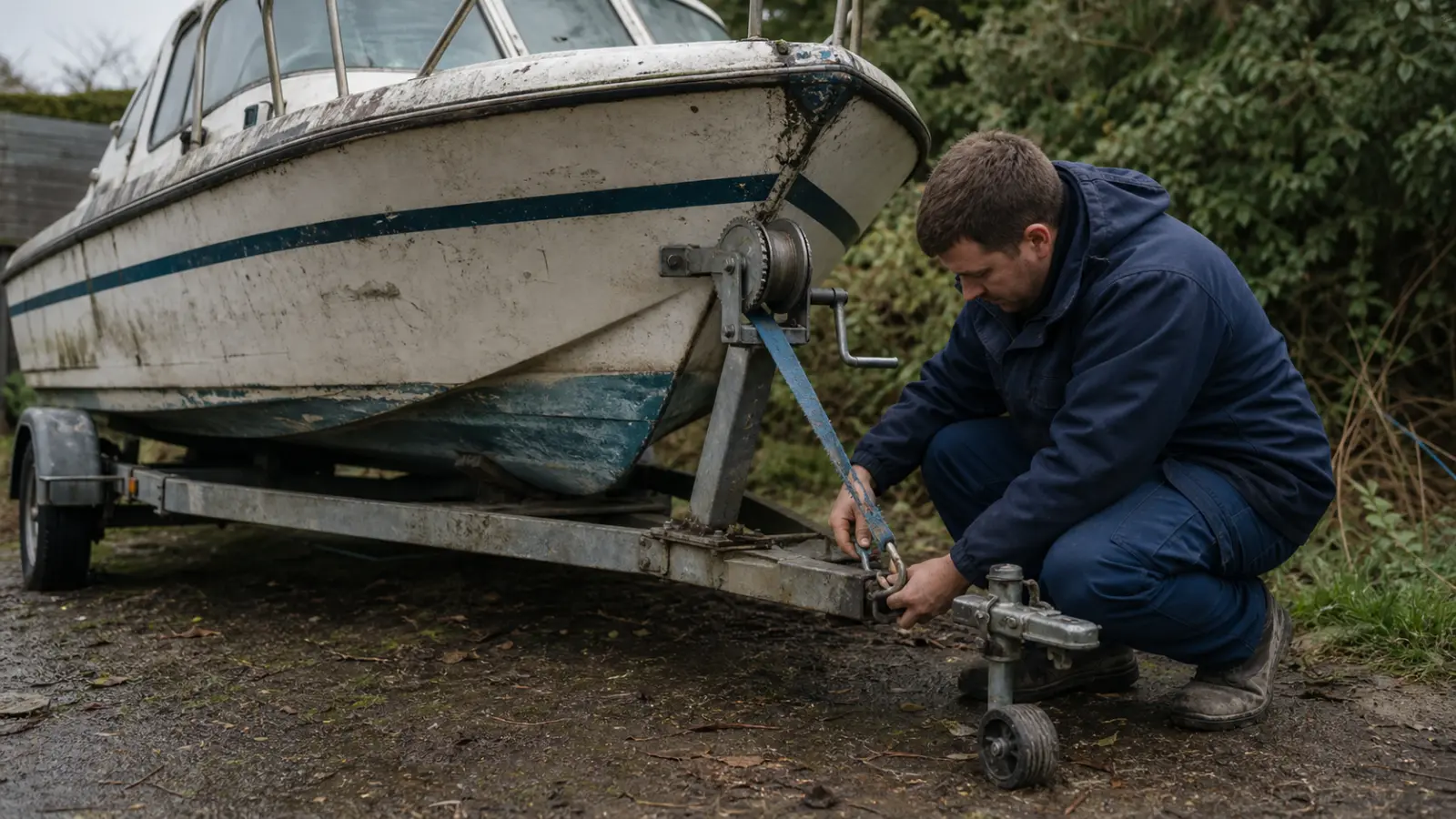
Moving a vessel is rarely as simple as hooking up a bumper hitch. A trailer that will not roll because of rusted axles or dry-rotted tires requires specialized loading techniques. Keels, cradles, narrow side gates, and heavy glass hulls sitting on soft lawn surfaces that a standard truck cannot cross all complicate the job. Professional crews evaluate these physical obstacles to haul the craft without damaging your surrounding property.
Call 630-454-0901 to start.
Send photos through the contact form.
What Is Boat Removal and When You Need It
Professional boat disposal goes well beyond simply towing a vessel down the road. When a hull is classified as a derelict or an abandoned boat, the physical extraction requires dedicated rigging, flatbed transports, and cutting tools. An abandoned boat left in a paid slip or tucked behind a commercial building presents severe liability hazards for property managers and private land owners alike. Getting rid of a boat involves managing structural hazards, securing structural points, and moving the mass without leaving debris behind.
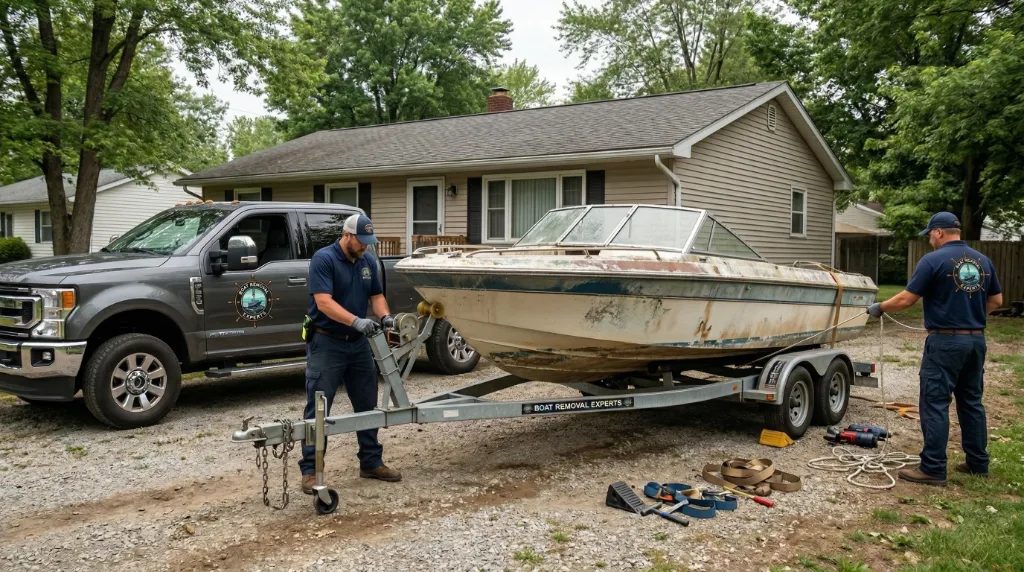
What happens during the extraction depends heavily on the condition of the legal paperwork. Having a clear title makes the transfer straightforward, but lost titles, missing registration documents, or hulls left on newly purchased real estate require alternative handling. When a vessel has been left on someone else's land or inside a long-neglected storage area, legal notification periods and property rights dictate how quickly the hull can be accessed. A missing title does not prevent complete haul-away, but it dictates the specific legal pathways and destruction verifications required.
When Glen Ellyn Residents Call Us
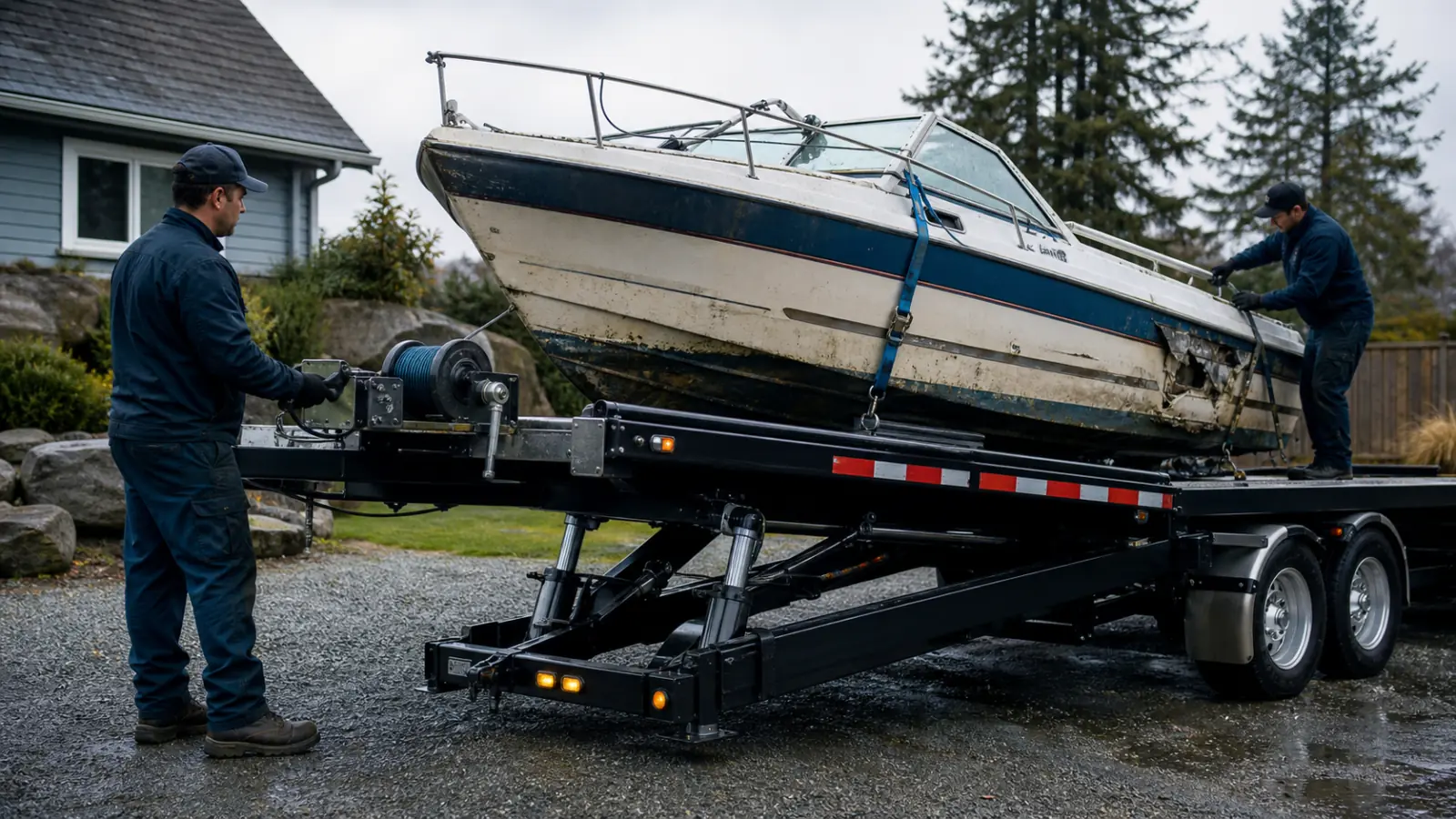
Sitting outside in Glen Ellyn, IL takes a heavy toll on any unused watercraft over time. Severe winter freeze-thaw cycles crack gelcoat surfaces, rot wooden transoms, and turn internal foam insulation into a water-logged sponge. Upholstery splits under intense sun exposure, allowing rain to fill the bilge and double the static weight of a hull. Whether dealing with an old fishing boat, a water-logged pontoon, or an aged sailboat, structural decay changes how the hull must be lifted. Cracks in fiberglass or rotted floorboards mean a vessel can break apart under standard winch tension if not properly supported.
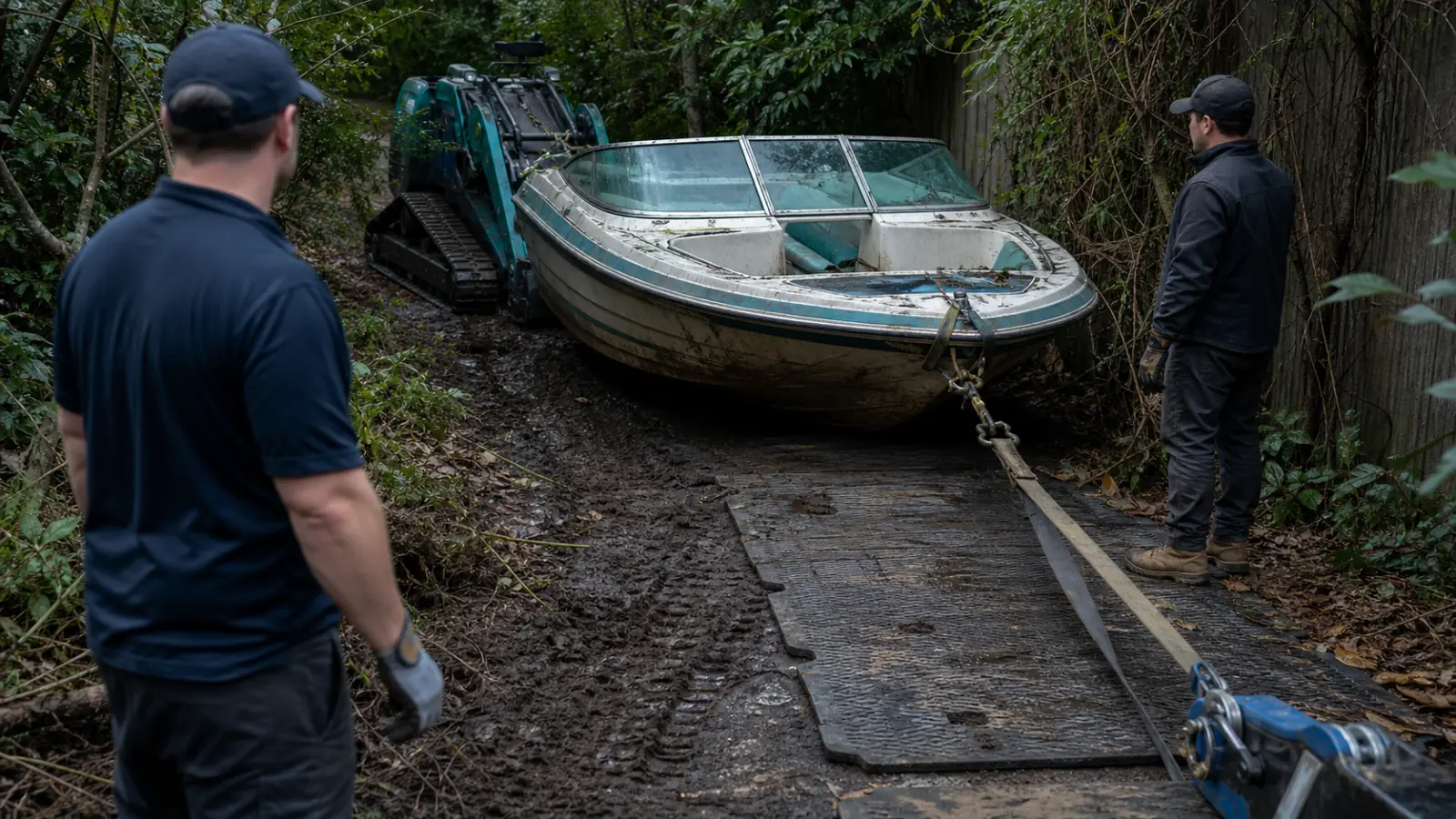
Site conditions heavily influence the approach taken by the extraction crew. A pontoon sitting on blocks in a backyard requires a completely different strategy than a sailboat resting on a cradle or a vessel tied up at a launch down in DuPage County. Access points, ground softness, low-hanging overhead lines, and tight residential alleys affect whether heavy machinery can reach the site. Crews assess whether the vehicle can roll on its own tires or if it must be winched onto a flatbed trailer from its resting spot.
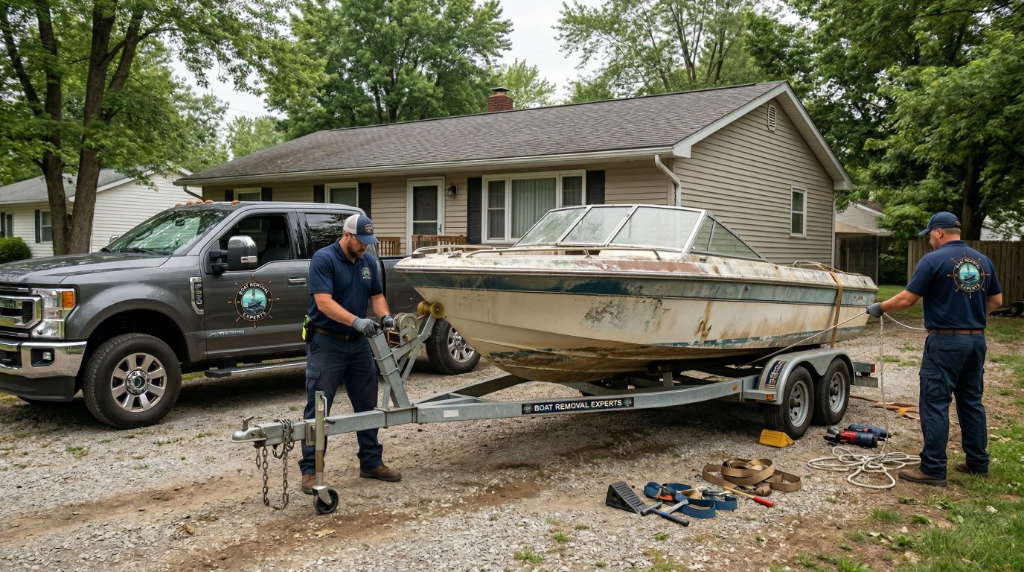
Every Type of Boat We Handle
- Sailboat & catamaran
- Motorboat, powerboat & cabin cruisers
- Fishing boats & bass boats
- Pontoon boats
- Jon boats & aluminum skiffs
- Large yachts
- Personal watercraft (jet skis)
- Houseboats
Situations We Handle
- Abandoned boat at marinas, docks, or boat lifts
- Unwanted boats on private property or in boat storage
- Vessels in backyards, fields, or vacant lots
- Derelict vessels blocking dock access or navigation
- Storm-damaged vessels requiring boat hauling
- Vessels without trailers or with flat tires
- Tight access locations (narrow driveways, wooded areas)
- Government or insurance-ordered cases
Need Help? We’re Ready.
Contact boat removers directly or request free quotes. We dispatch crews fast.
Our Step-by-Step Process

Assessment
We evaluate the boat’s size, current location, condition, and any environmental or access challenges before we schedule boat removal.

Planning
A detailed plan is built around your vessel — equipment, logistics, timeline, and safety. Services include drainage of oil and fuel before transport.

Execution
Our experienced crew mobilizes to your current location and we tow, haul, or dismantle the vessel using professional marine equipment.

Completion
The vessel is recovered, recycled, or routed to certified boat junkyards for environmentally responsible disposal. The site is left clean.
Equipment & Capabilities
Extracting a vessel whose original trailer is rusted solid requires specialized machinery and heavy rigging equipment. When a trailer cannot roll, or when a hull rests directly on the ground, high-capacity winches, crane straps, and slide ramps are used to pull the mass onto transport vehicles. If a hull is structurally compromized or too wide to navigate narrow gates and residential streets, the crew must dismantle the structure on site. Hydraulic shears, metal saws, and heavy cutting tools are used to break down large sections safely.
Before any hull is moved or cut apart, all hazardous materials must be carefully extracted and logged. Crews drain remaining fuel tanks, strip out engine oil, pull heavy lead-acid marine batteries, and remove mercury switches or outdated marine electronics. These fluids and toxic items are separated to meet strict environmental handling protocols before the remaining structure is transported. Once loaded, the structural materials are sorted based on their composition. Metal fittings, aluminum frames, and steel hardware are separated for recycling, while fiberglass, saturated foam, and rotted wood are directed toward appropriate disposal facilities based on crew assessment.
Our boat removal experience covers everything from start to finish assessment, planning, execution, dismantling, and final cleanup. Marina operators and property owners across DuPage County trust us to get rid of your junk boat without damage to surrounding property.
FAQ
Boat Removal Questions - Frequently Asked
Common questions from property owners about our junk removal service, dismantling, and marine recovery.
What type of boat do you remove?
We handle every type of vessel — sailboat, pontoon, fishing boats, jon boats, yachts, and commercial craft. Whether your boat or sailboat floats (or used to), we’ll remove it from any current location.
Do you handle sunken or partially submerged vessels?
Yes. Sunken and partially submerged vessel recovery is a core part of our salvage work in DuPage County. We use lift bags, salvage pumps, and marine cranes to safely raise vessels from underwater.
How quickly can you respond?
We respond to inquiries quickly — usually within hours, with same-day service available. For emergency situations, we mobilize as fast as possible. Call us directly for time-sensitive jobs.
Do you use subcontractors?
No. Every job is handled in-house by our own team and equipment. No middlemen, no handoffs, no surprises.
How much does cheap boat removal cost?
Cost depends on the boat’s size, current location, condition, and complexity of the job. We provide free assessments and free quotes for every case — contact us and we’ll give you an honest estimate.
Do you handle boat disposal and recycling?
Yes. Our boat removal and disposal services include hazardous materials handling, oil and fuel drainage, hull dismantling, and recycling at certified yards — all in compliance with environmental regulations and environmentally responsible standards.
Can you reach a hard-to-access location?
Absolutely. We regularly work in tight marinas, shallow waterways, private docks, backyards, and remote areas. We bring the right gear to reach any current location.
Do you work with insurance companies?
Yes. We frequently work with insurance adjusters on salvage and recovery claims and provide the documentation needed for your claim.
Other Boat Removal Locations
Browse Our Services - Ready to Get Started?
We handle everything from start to finish. Call us now or request a free quote – we’ll dispatch crews and haul your vessel away fast.