
Professional Boat Removal Services in Graham, WA

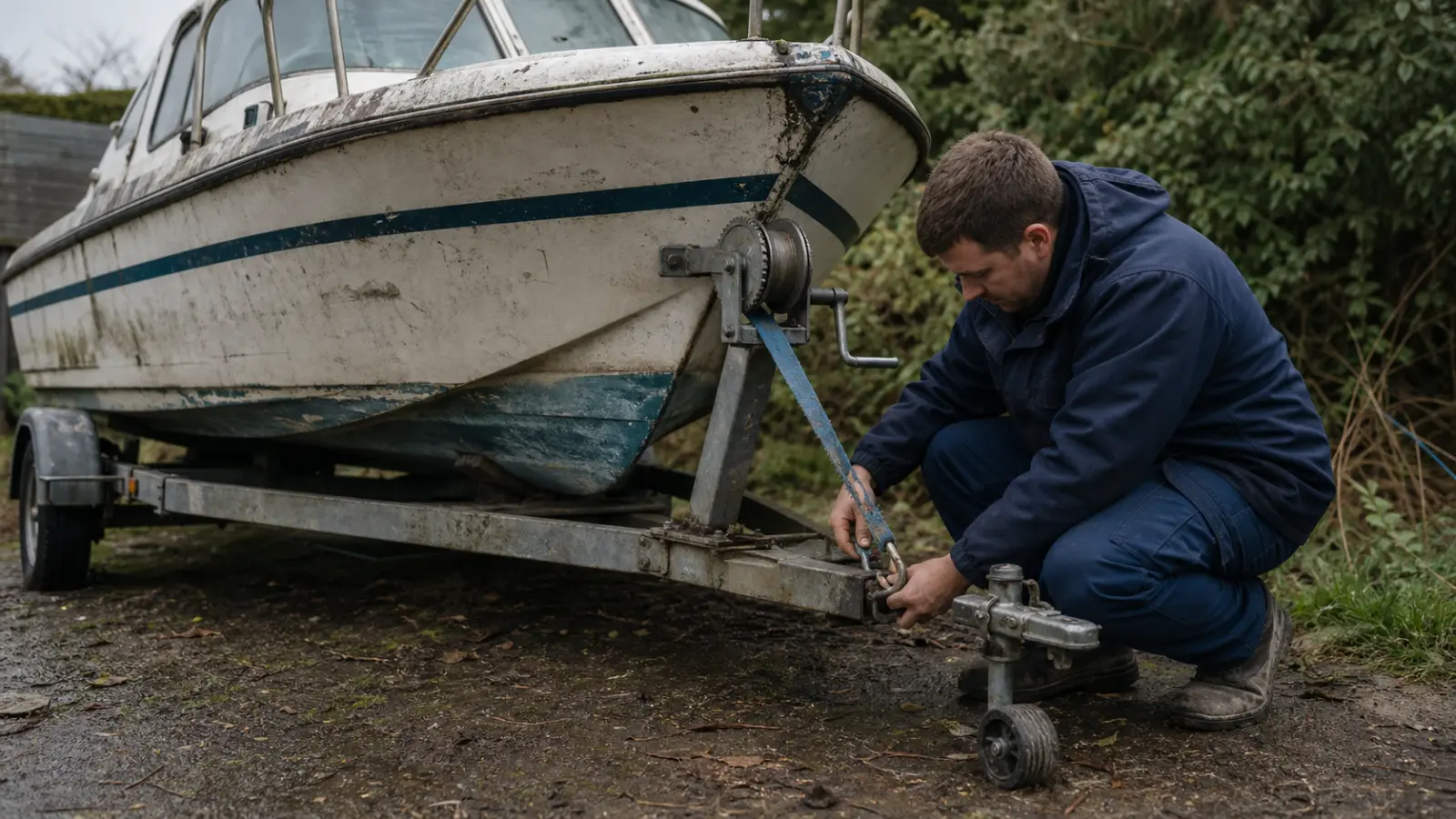
A fiberglass hull has sat on a rusty trailer behind the garage for six seasons, and the tires have flattened completely into the dirt. A local marina sent a formal notice about an unpaid slip fee that keeps compounding every month. A property sold in the region with a weathered cabin cruiser still parked on the lot, leaving the new owner to figure out how to clear the land. An outboard motor seized up after years of sitting, and a complete rebuild costs significantly more than the vessel is worth. These real situations leave owners dealing with an unwanted craft that takes up valuable space, collects debris, and creates an ongoing nuisance.

Is there boat removal near me in Graham, WA? Boat Removal Experts provides professional boat removal for all types of vessels directly from your property, launch site, or storage location in Graham, WA.

Releasing your liability is a critical step when getting rid of any craft. We do not always transfer the title, but we always issue a formal release of liability to protect you. Some outfits simply haul a vessel away with no paper trail, leaving the original liability attached to the owner if the hull is abandoned elsewhere later. Asking how paperwork is handled before choosing a service ensures you are not held responsible for the vessel down the road.

A vessel is far harder to move than standard equipment due to unexpected physical hurdles. A trailer frame might be rusted through with seized axles that will not roll, or the craft may rest on custom wood blocks. The wide beam often exceeds narrow gates, and thousands of pounds resting on wet soil makes it impossible for standard trucks to get enough traction.

Call 253-498-8339 to start.

Send photos through the contact form.

What Is Boat Removal and When You Need It

Professional vessel clearing goes far beyond simply hooking up a hitch and towing a craft down the road. Comprehensive boat disposal involves managing structural challenges, navigating title issues, and executing the complete physical extraction of an abandoned boat or derelict hull from difficult terrain. Whether the craft sits on a dedicated cradle, rests directly on the ground, or floats in a slip, specialized heavy equipment and rigging are required to safely lift, load, haul, and process the bulk materials.
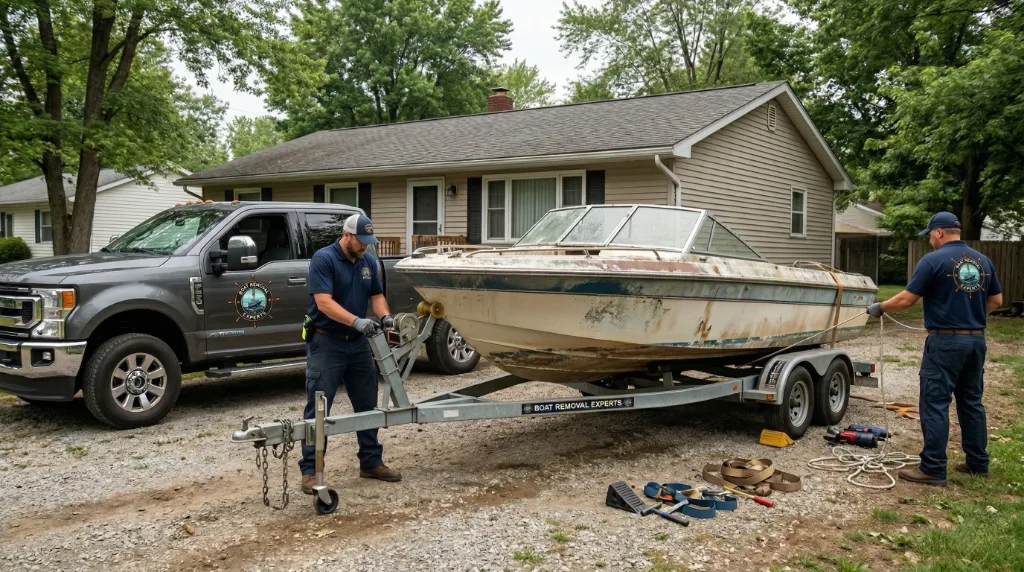
Having clear title documentation simplifies the haul, but missing paperwork is extremely common. When a hull comes with a newly purchased property, or when registration papers have been lost over decades of storage, specific legal steps determine how the property can be handled. When an abandoned boat sits on private land, commercial acreage, or a rented mooring without payment, property owners must clear specific legal requirements before moving the vessel off the site.

Several key factors directly dictate how an abandoned boat removal unfolds. The structural integrity of the back panel and floor frames, overall hull length, total dry weight, accessibility for heavy machinery, and the presence of remaining liquids all dictate the strategy. Vessel condition determines whether a craft can be pulled onto a flatbed trailer whole or requires on-site breakdown before transport.
When Graham Residents Call Us

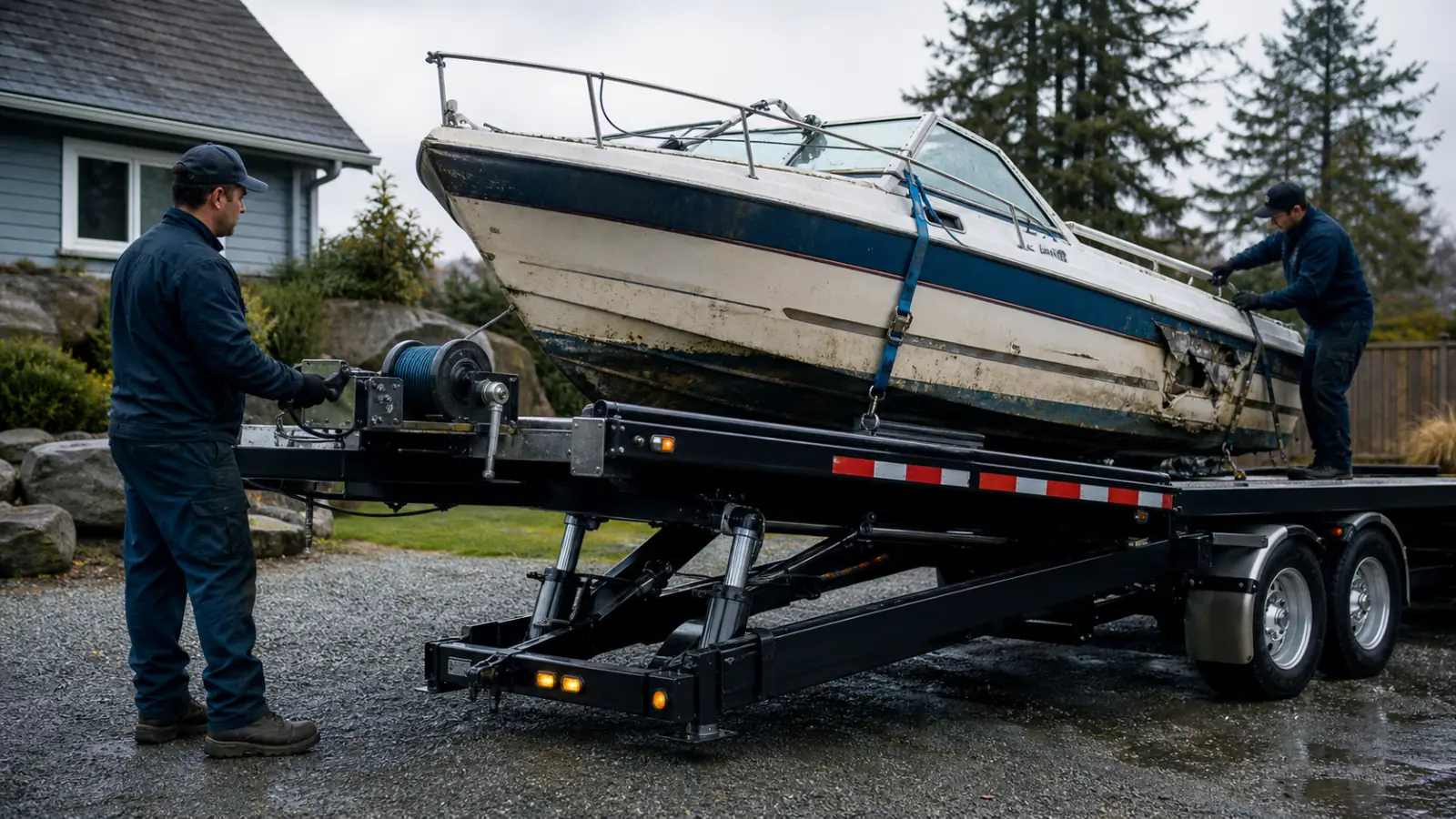
The constant moisture, heavy rainfall, and damp climate in Pierce County take a severe toll on vessels left outdoors without proper covers. Trapped rainwater fills the bilge, rots interior wooden floor frames, causes gelcoat to crack, and turns upholstery into moldy foam. This added water weight weakens structural fiberglass, making an old fishing boat, aging pontoon, or neglected sailboat much heavier and far more dangerous to hoist without specialized support gear.
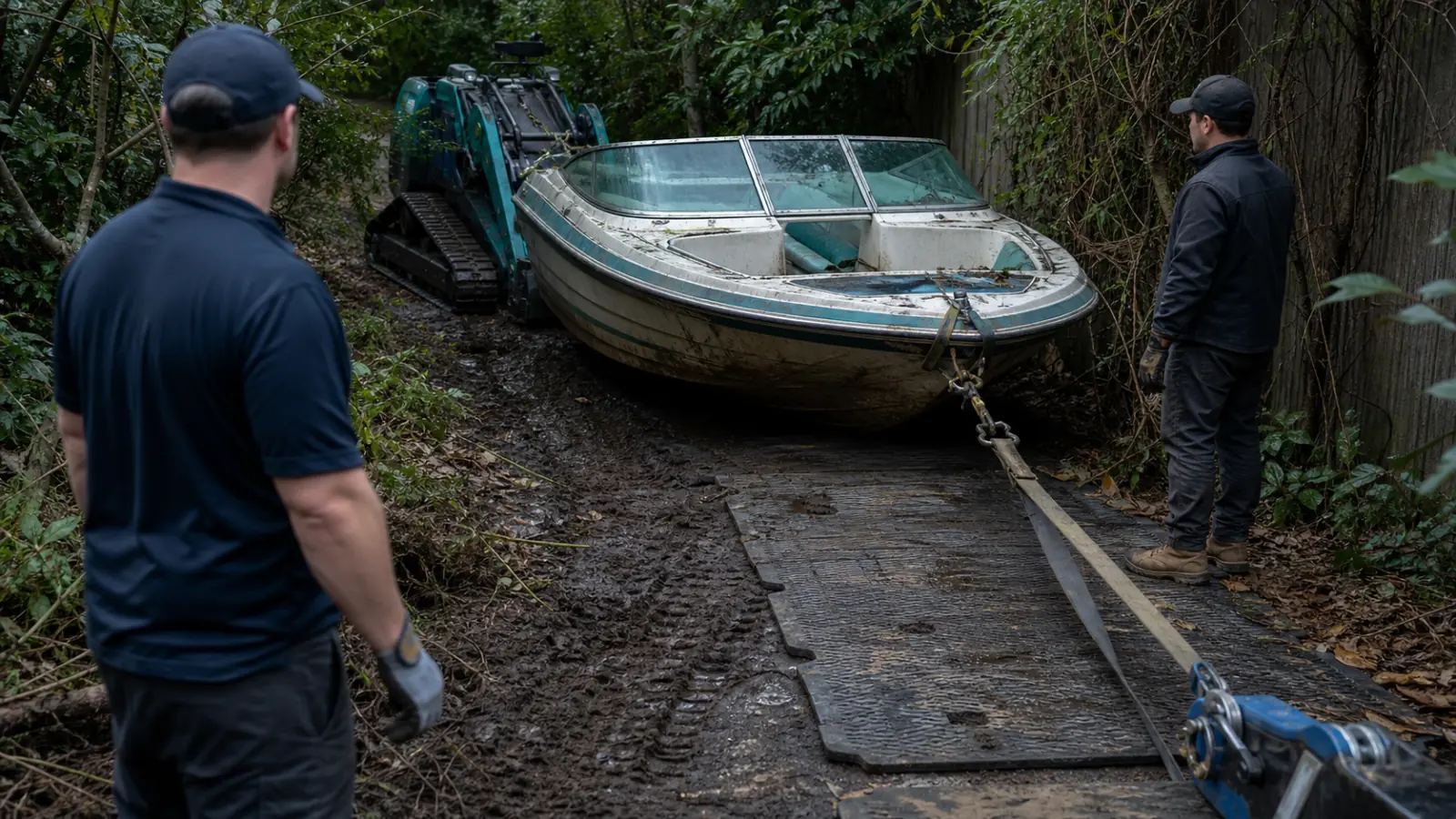
Property layouts in Graham, WA, along with neighboring areas like Elk Plain and Kapowsin, present unique physical obstacles during an extraction. Narrow rural gravel driveways, low-hanging tree branches, overhead power lines, and soft muddy soil frequently prevent standard transport vehicles from backing up directly to the craft. Whether the vessel is parked behind a home, tucked inside a shed, or resting on soft lawn turf, access routes must be carefully evaluated.

The position of the hull heavily changes how our team approaches the job. A pontoon sitting high on wooden blocks requires totally different rigging than a heavy fishing boat sitting on a flat trailer or a deep-keel sailboat resting in the water. Surrounding obstacles, ground firmness, overhead clearance, and proximity to adjacent structures determine whether winches, crane lifts, or trailer transfers are used.
Every Type of Boat We Handle

Situations We Handle

Need Help? We’re Ready.

Contact boat removers directly or request free quotes. We dispatch crews fast.

Our Step-by-Step Process

Assessment

We evaluate the boat’s size, current location, condition, and any environmental or access challenges before we schedule boat removal.

Planning

A detailed plan is built around your vessel — equipment, logistics, timeline, and safety. Services include drainage of oil and fuel before transport.

Execution

Our experienced crew mobilizes to your current location and we tow, haul, or dismantle the vessel using professional marine equipment.

Completion

The vessel is recovered, recycled, or routed to certified boat junkyards for environmentally responsible disposal. The site is left clean.

Equipment & Capabilities

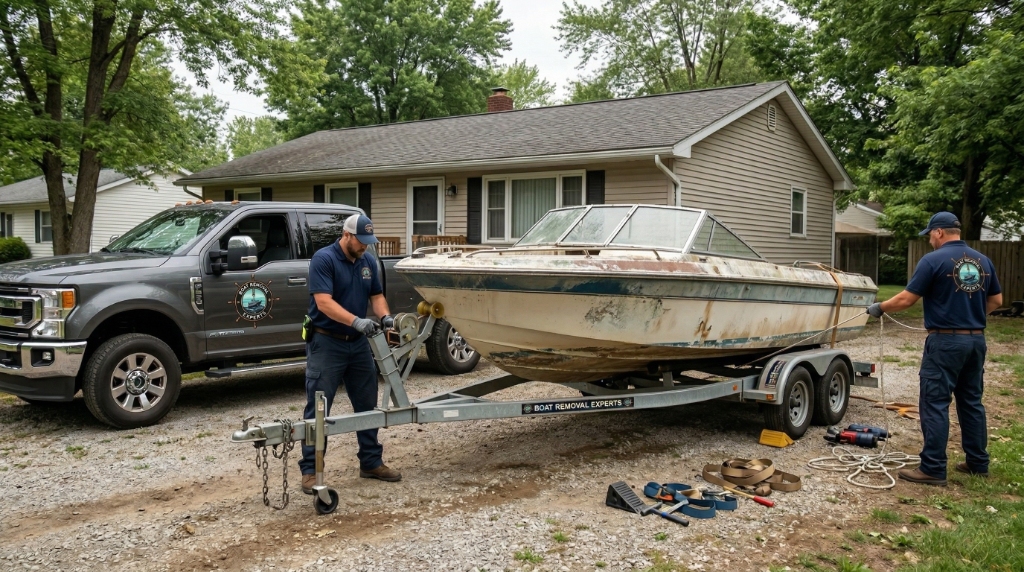
Our field crew arrives with heavy winches, hydraulic jacks, tow straps, and heavy-duty trailers to haul vessels that can no longer roll on their own tires. When a hull is too wide to fit through gates, structurally compromized, or wedged between trees, the crew will dismantle the vessel on site. Saws and cutting equipment break large hulls into manageable sections that can be safely loaded and hauled off the property.

Environmental protection happens before any physical movement or cutting begins. The crew carefully extracts hazardous materials, including residual fuel, engine oil, bilge fluids, lead batteries, and old navigation electronics. Removing these items prevents toxic spills on your land and ensures liquids are managed according to state environmental standards.

Once the vessel is loaded and secured, the materials are sorted for proper processing. Metal fittings, aluminum hulls, lead ballast, and clean trailer frames are separated for metal recycling, while damaged fiberglass, rotten wood, and ruined upholstery are taken to authorized disposal facilities. The crew evaluates the construction materials and physical state of each vessel upon arrival to determine the most responsible waste destination for every component.

Our boat removal experience covers everything from start to finish  assessment, planning, execution, dismantling, and final cleanup. Marina operators and property owners across Pierce County trust us to get rid of your junk boat without damage to surrounding property.

FAQ

Boat Removal Questions - Frequently Asked

Common questions from property owners about our junk removal service, dismantling, and marine recovery.

We handle every type of vessel — sailboat, pontoon, fishing boats, jon boats, yachts, and commercial craft. Whether your boat or sailboat floats (or used to), we’ll remove it from any current location.

Yes. Sunken and partially submerged vessel recovery is a core part of our salvage work in Pierce County. We use lift bags, salvage pumps, and marine cranes to safely raise vessels from underwater.

We respond to inquiries quickly — usually within hours, with same-day service available. For emergency situations, we mobilize as fast as possible. Call us directly for time-sensitive jobs.

No. Every job is handled in-house by our own team and equipment. No middlemen, no handoffs, no surprises.

Cost depends on the boat’s size, current location, condition, and complexity of the job. We provide free assessments and free quotes for every case — contact us and we’ll give you an honest estimate.

Yes. Our boat removal and disposal services include hazardous materials handling, oil and fuel drainage, hull dismantling, and recycling at certified yards — all in compliance with environmental regulations and environmentally responsible standards.

Absolutely. We regularly work in tight marinas, shallow waterways, private docks, backyards, and remote areas. We bring the right gear to reach any current location.

Yes. We frequently work with insurance adjusters on salvage and recovery claims and provide the documentation needed for your claim.

Browse Our Services - Ready to Get Started?

We handle everything from start to finish. Call us now or request a free quote – we’ll dispatch crews and haul your vessel away fast.