
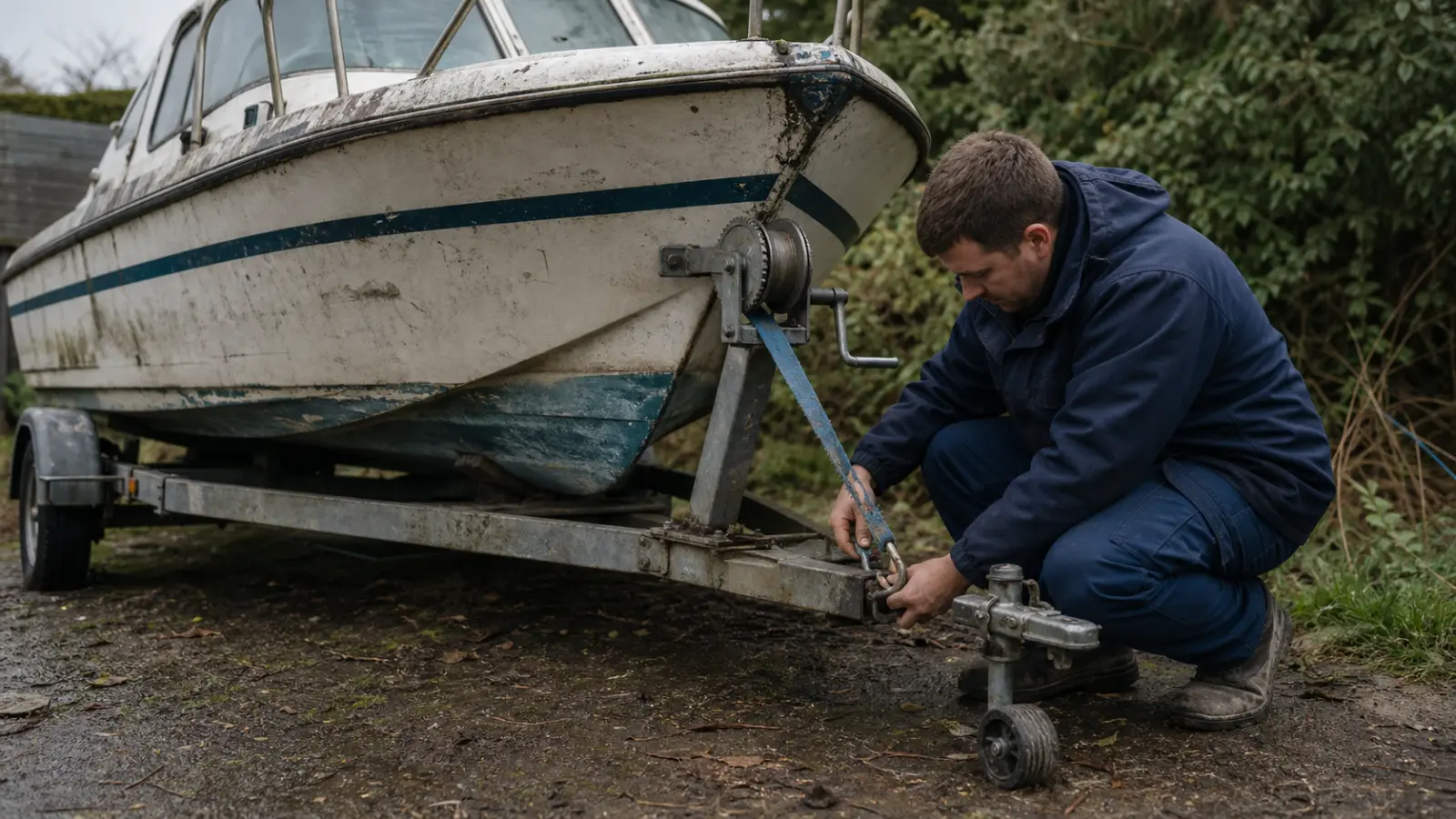
Professional Boat Removal Services in Greensboro, NC

An old fiberglass hull has been resting on a flat-tired trailer behind the garage for six years, collecting stagnant rainwater and leaves while the tires rot into the dirt. In other cases, a property sale in Guilford County leaves a new owner stuck with a non-running cabin cruiser parked directly in the middle of a driveway, or a marina officer issues a short deadline notice regarding an unpaid slip. When an outboard motor seizes up completely and the quote for a full rebuild far exceeds the market value of the vessel, keeping the hull parked on land simply wastes space and draws complaints from neighbors.

Is there boat removal near me in Greensboro, NC? Yes, Boat Removal Experts provides complete vessel extraction, haul-away, and site clearing services for owners and property managers throughout Greensboro, NC.

When getting rid of a junk boat, paperwork matters just as much as pulling the vessel away. Our company position is clear: we do not always transfer the title into our name, but we always issue a formal release of liability to the owner. Some outfits will simply hook up a vessel and drive off without leaving any official documentation, which means any future legal or environmental liability stays tied to the original owner. Requesting a signed release of liability before anyone hauls a boat away is an essential step that protects your financial interests.

Extracting a boat is rarely as simple as hooking a trailer to a hitch. Often the old boat sits on rusted axles that will not roll, or the keel rests on rotted wooden blocks embedded in soft soil. A wide beam might barely clear narrow residential gates, and heavy machinery cannot safely cross a saturated lawn without causing deep ground damage.

Call 336-975-9576 to start.

What Is Boat Removal and When You Need It

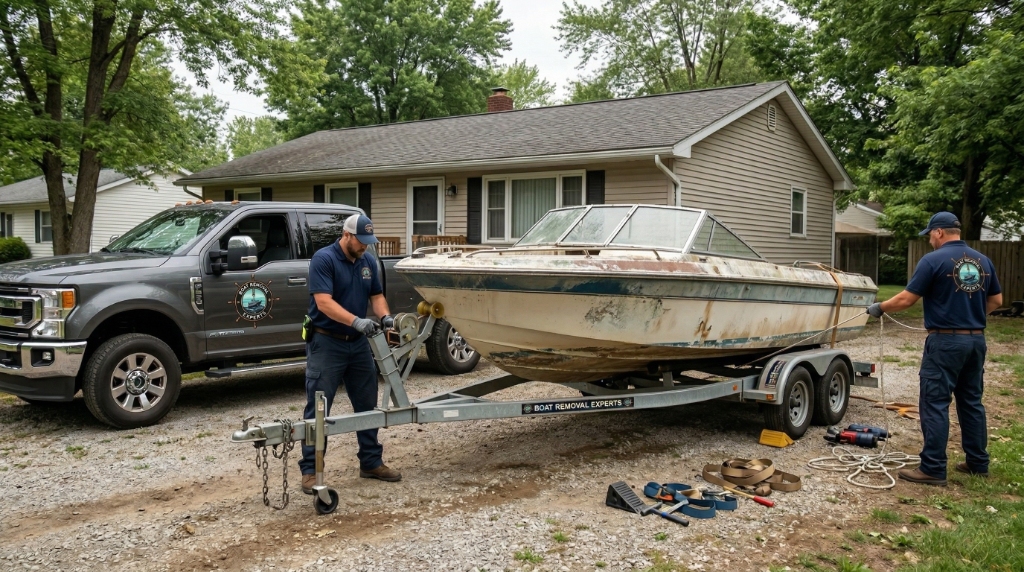
Professional boat removal covers far more than just hitching a rig to a truck and pulling away. When a derelict vessel has sat for years, the extraction involves assessing structural integrity, freeing frozen trailer brakes, clearing heavy vegetation around the hull, and safely transporting the vessel off the premises. Whether dealing with a simple junk boat on a working trailer or a heavy craft stranded in a yard, the process relies on having the right rigged equipment and haulers experienced with awkward loads.
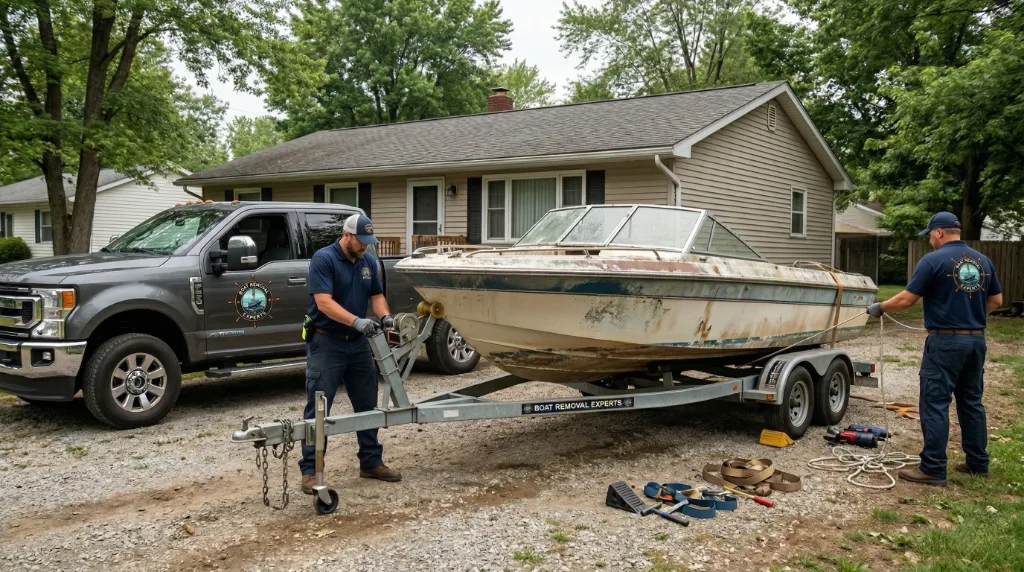
The paperwork trail heavily dictates how an abandoned boat or private vessel gets handled. Having a clear title in hand streamlines the extraction process, but lost documentation or boats left behind after a real estate purchase present different requirements. When a vessel comes with a newly purchased property or is left on private land without permission, specific notification rules and property laws apply before any crew can haul the vessel away for final boat disposal.

When an abandoned boat sits in a paid slip or on private land in places like Summerfield or Jamestown, the party responsible for the ground must clear the space safely. A hull left in water risks sinking, while a vessel stranded on land degrades and creates hazards for surrounding properties. The condition of the vessel, its location, and the status of ownership documents determine the exact legal and physical steps needed to get rid of a boat efficiently.
When Greensboro Residents Call Us

Property owners call for haul-away services across McLeansville, Forest Oaks, and Pleasant Garden due to regional weather exposure and space constraints. The local climate inflicts steady damage on an unused vessel left outdoors. Summer humidity and sun break down outer gelcoat layers, rot wooden floors under carpet, degrade vinyl upholstery, and weaken internal transoms. When a hull collects open rainwater over multiple seasons, the trapped weight increases dramatically, softening the internal support floor frames and making an old boat far heavier and more dangerous to shift than its original dry specs suggest.
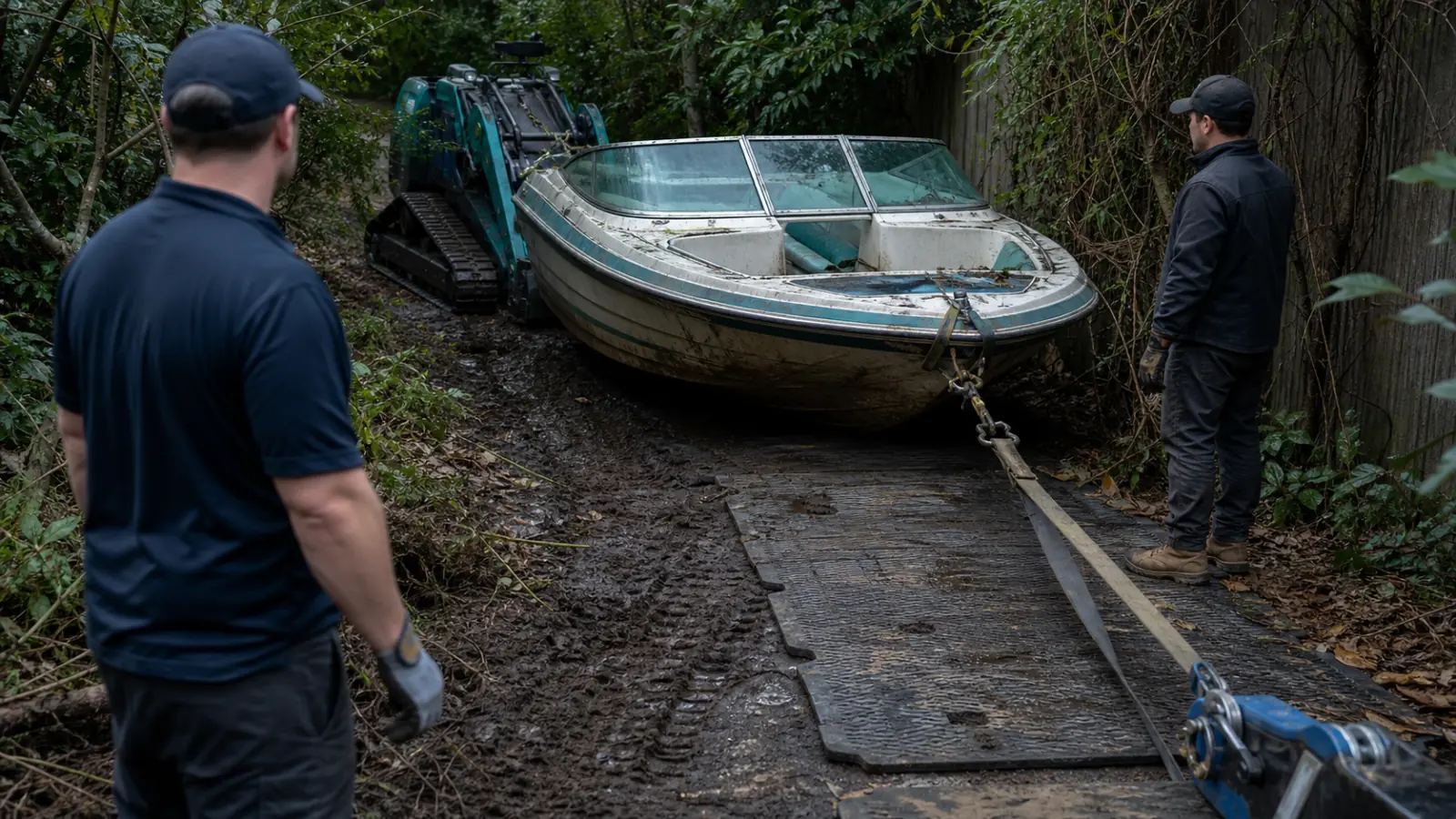
Local terrain and site layouts present distinct extraction challenges. A craft sitting under low-hanging tree branches or tight overhead power lines requires careful rigging to maneuver safely out of a yard. Narrow residential driveways and tight property boundaries restrict access for heavy transport rigs, requiring winches or dollies to move a fishing boat, pontoon, or sailboat to open pavement. Ground surfaces heavily dictate the approach; soft mud or sloped turf will sink heavy tires, meaning crews must lay ground mats or winches before shifting a craft stored on blocks, on a failing trailer, or at the edge of the water.
Every Type of Boat We Handle

Situations We Handle

Need Help? We’re Ready.

Contact boat removers directly or request free quotes. We dispatch crews fast.

Our Step-by-Step Process

Assessment

We evaluate the boat’s size, current location, condition, and any environmental or access challenges before we schedule boat removal.

Planning

A detailed plan is built around your vessel — equipment, logistics, timeline, and safety. Services include drainage of oil and fuel before transport.

Execution

Our experienced crew mobilizes to your current location and we tow, haul, or dismantle the vessel using professional marine equipment.

Completion

The vessel is recovered, recycled, or routed to certified boat junkyards for environmentally responsible disposal. The site is left clean.

Equipment & Capabilities

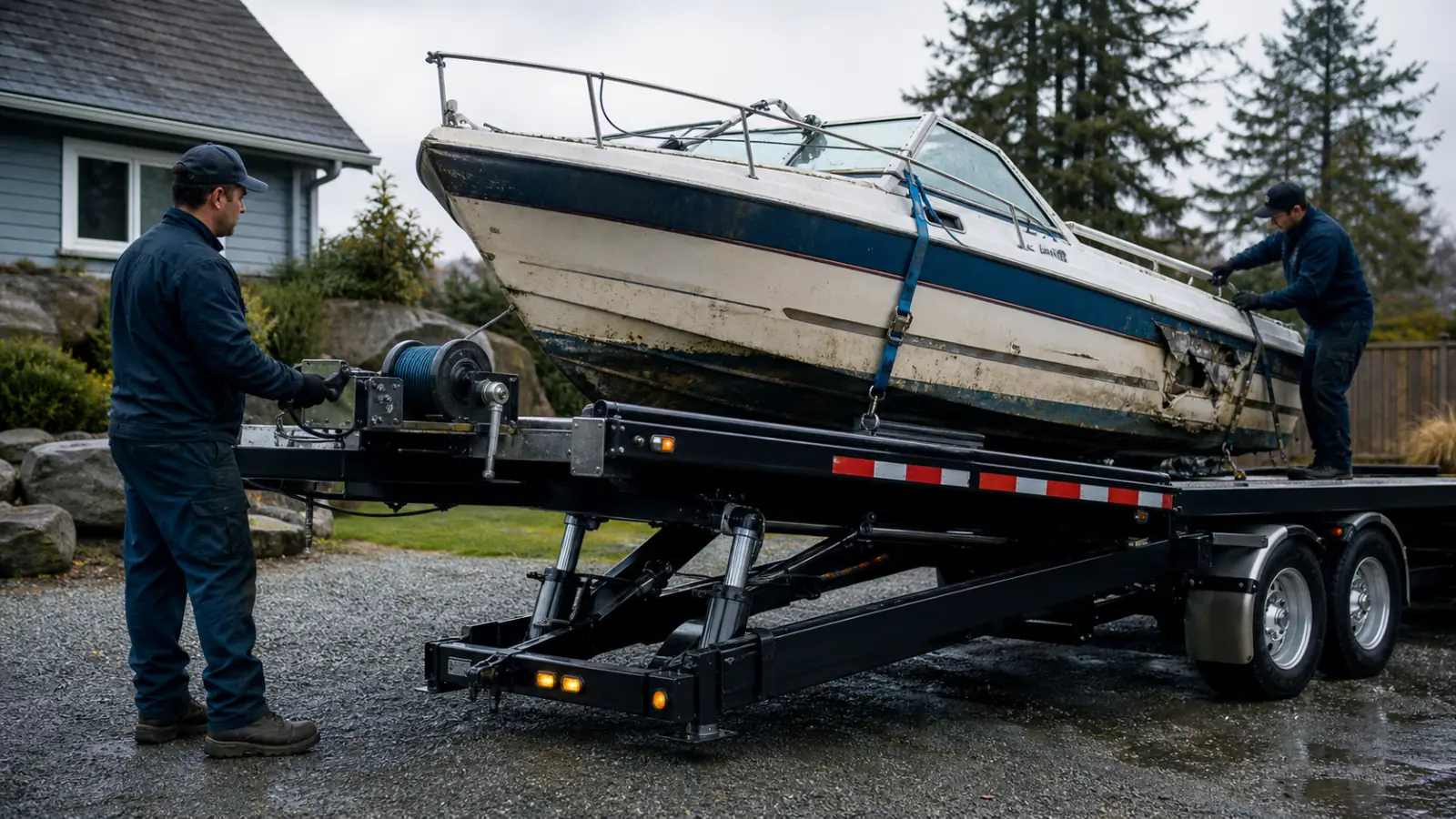
Moving a grounded vessel requires versatile equipment matched to the structural state of the craft. When tires are flat, rims are rusted solid, or the original trailer is completely unroadworthy, crews use specialized winches, hydraulic jacks, move-dollies, or flatbed trailers to hoist and secure the craft. If a hull is too wide to clear gates, structurally collapsed, or completely inaccessible by vehicle, the team may dismantle the structure on site using heavy saws and cutting tools to transport the vessel out in manageable sections.

Environmental safety comes first during any extraction effort. Before a vessel moves, crews extract fluids and hazardous materials, including fuel, residual motor oil, contaminated bilge water, batteries, and old marine electronics. Stripping these fluids prevents toxic leaks onto private lawns or public roadways during transit. Once fluid extraction is complete, the team evaluates the remaining materials, separating metal fittings, lead ballast, and clean wood for recycling, while sending remaining fiberglass materials to designated disposal facilities. The crew inspects the vessel on site to determine whether full structural transport or immediate breakdown is the safest path forward.

Our boat removal experience covers everything from start to finish  assessment, planning, execution, dismantling, and final cleanup. Marina operators and property owners across Guilford County trust us to get rid of your junk boat without damage to surrounding property.

FAQ

Boat Removal Questions - Frequently Asked

Common questions from property owners about our junk removal service, dismantling, and marine recovery.

We handle every type of vessel — sailboat, pontoon, fishing boats, jon boats, yachts, and commercial craft. Whether your boat or sailboat floats (or used to), we’ll remove it from any current location.

Yes. Sunken and partially submerged vessel recovery is a core part of our salvage work in Guilford County. We use lift bags, salvage pumps, and marine cranes to safely raise vessels from underwater.

We respond to inquiries quickly — usually within hours, with same-day service available. For emergency situations, we mobilize as fast as possible. Call us directly for time-sensitive jobs.

No. Every job is handled in-house by our own team and equipment. No middlemen, no handoffs, no surprises.

Cost depends on the boat’s size, current location, condition, and complexity of the job. We provide free assessments and free quotes for every case — contact us and we’ll give you an honest estimate.

Yes. Our boat removal and disposal services include hazardous materials handling, oil and fuel drainage, hull dismantling, and recycling at certified yards — all in compliance with environmental regulations and environmentally responsible standards.

Absolutely. We regularly work in tight marinas, shallow waterways, private docks, backyards, and remote areas. We bring the right gear to reach any current location.

Yes. We frequently work with insurance adjusters on salvage and recovery claims and provide the documentation needed for your claim.

Browse Our Services - Ready to Get Started?

We handle everything from start to finish. Call us now or request a free quote – we’ll dispatch crews and haul your vessel away fast.