
Professional Boat Removal Services in Greenville, MS
An old boat resting on a flat-tired trailer behind a garage often turns from a forgotten weekend project into a persistent property headache after several seasons of neglect. Harboring water under a rotted cover or taking up valuable yard space, that old fiberglass hull slowly becomes an eyesore while its mechanical components seize up completely. In other cases, a property sale in Greenville, MS stalls because a previous owner left an unsellable vessel behind, or a local marina issues a notice regarding a long-overdue slip balance for a neglected craft. When a repair estimate for an outboard motor far exceeds the cash value of the vessel, finding a practical path to boat removal becomes an urgent priority for the property owner.
Is there boat removal near me in Greenville, MS? Yes, local boat removal options are available to handle the logistics of loading, hauling, and clearing out unwanted craft directly from residential yards, commercial sites, or storage facilities without requiring you to move the vessel yourself.

When clearing a craft from your land, establishing a clear release of liability is critical to protecting yourself from future claims. While our team does not always transfer the title of every vessel we handle, we consistently issue a formal release of liability upon taking possession. Some informal operators simply haul a hull away without documenting the transfer, which leaves the registered owner vulnerable to legal and financial risks if the craft is later abandoned on public land or involved in an incident. Verifying proper liability paperwork before allowing any operator to haul away your property ensures complete legal separation from the craft.
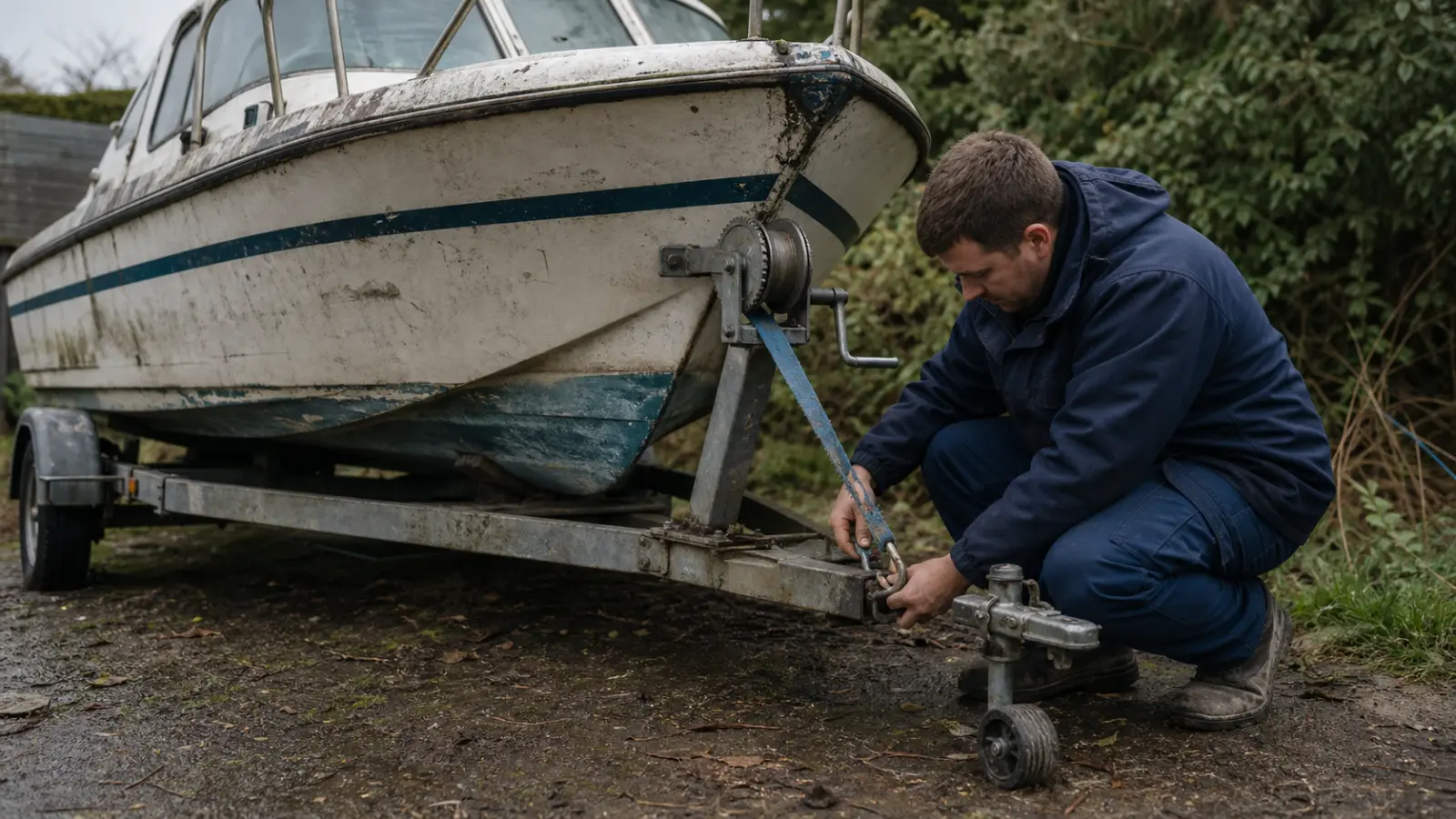
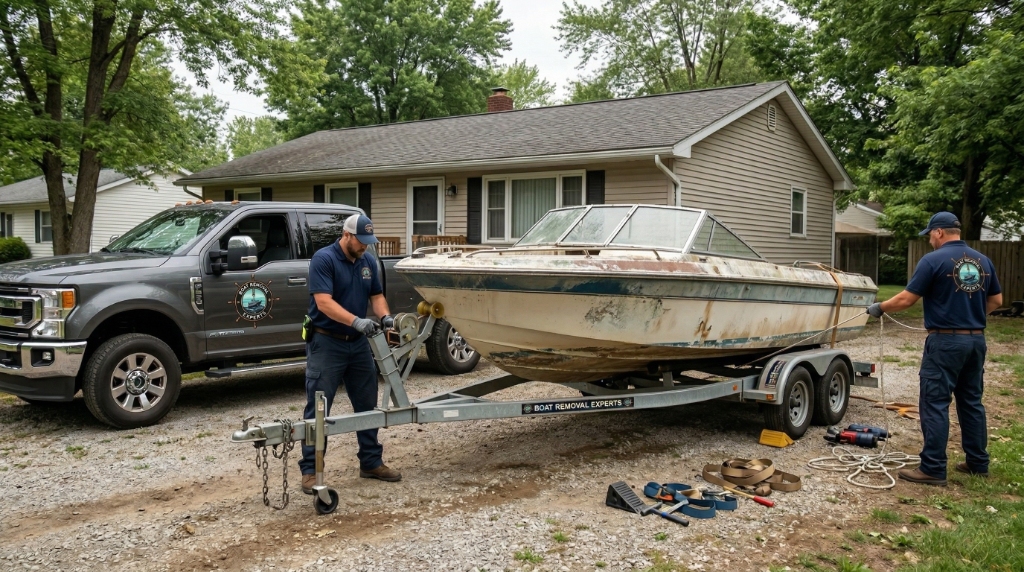
Moving a stationary vessel involves unique structural challenges that simple vehicle towing cannot resolve. A trailer sitting on sunken wheels may suffer from rusted axles, frozen brakes, or dry-rotted tires that prevent standard rolling. Furthermore, craft mounted on wooden blocks or narrow cradles demand specialized rigging to prevent structural collapse during loading. When a hull sits behind a narrow gate or rest on soft lawn soil that heavy trucks cannot safely traverse, careful extraction methods are required to move the vessel without damaging the surrounding property.
Call 662-850-8757 to start.
What Is Boat Removal and When You Need It
Professional vessel clearing services go far beyond simple roadside towing by managing the complete physical extraction, transport, and initial handling of unwanted marine craft. When addressing an abandoned boat or a derelict hull left on private land, the process requires tailored equipment capable of lifting dead weight directly off ground blocks, soft earth, or submerged cradles. Proper boat disposal addresses the entire structure, whether the vessel is resting on a functional trailer, sunk into the mud, or tied off in a forgotten slip. Each situation requires assessing structural integrity before moving the craft to ensure safe transport down public roads.
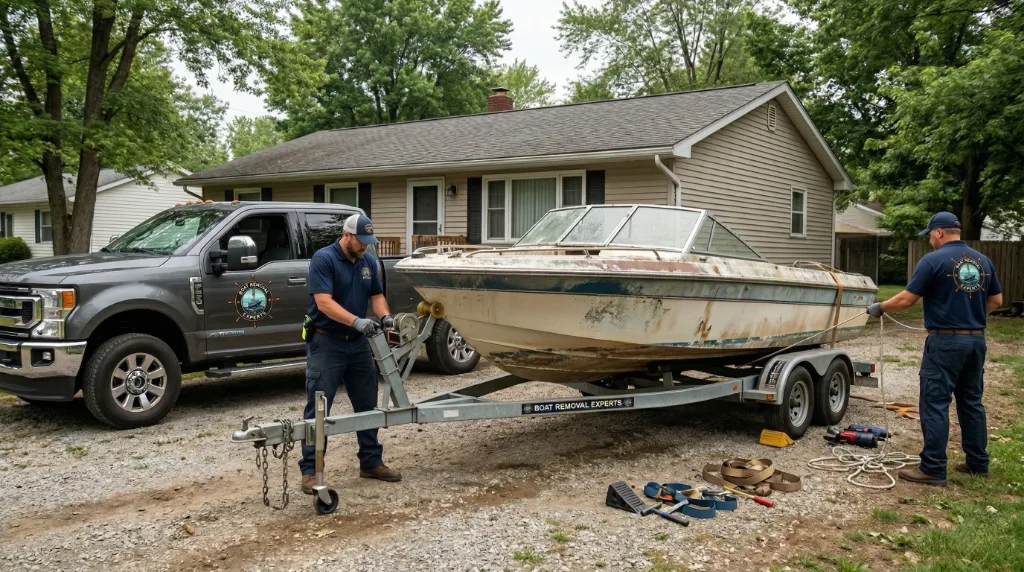
Documenting ownership plays a central role in how a vessel is managed. Having a clear title in hand simplifies the clearing process, but many property owners face scenarios involving lost paperwork, unregistered craft, or vessels inherited through recent real estate acquisitions. When an abandoned boat is left on commercial property or inside a leased facility, specific notice requirements and legal documentation affect how the craft can be removed. The presence or absence of clear registration determines the administrative steps needed before any physical loading begins.
When vessels remain unmanaged in private slips or on non-residential parcels, their presence creates compounding liabilities for the land manager. Over time, structural deterioration increases the risk of hull failure, leading to potential ground contamination or complete sinking along the shoreline. Clearing a derelict hull requires coordinating site access, evaluating physical weight distribution, and selecting the correct loading method based on the physical state of the craft and its immediate surroundings.
When Greenville Residents Call Us
The climate in Washington County presents distinct challenges for marine craft left outdoors without continuous maintenance. High humidity, intense sunlight, and frequent moisture accumulation cause rapid degradation of gelcoat layers, resulting in surface cracking and chalking. When rainwater collects inside an open cockpit, internal wooden floor frames, floorboards, and transoms absorb moisture, causing deep rot and compromizing the structural rigidity of the hull. Upholstery holds dampness, inviting mildew growth that destroys interior cabin spaces. A waterlogged fishing boat or pontoon becomes significantly heavier than its original dry weight, which directly alters the lifting capacity and rigging strategies needed to safely extract the structure.
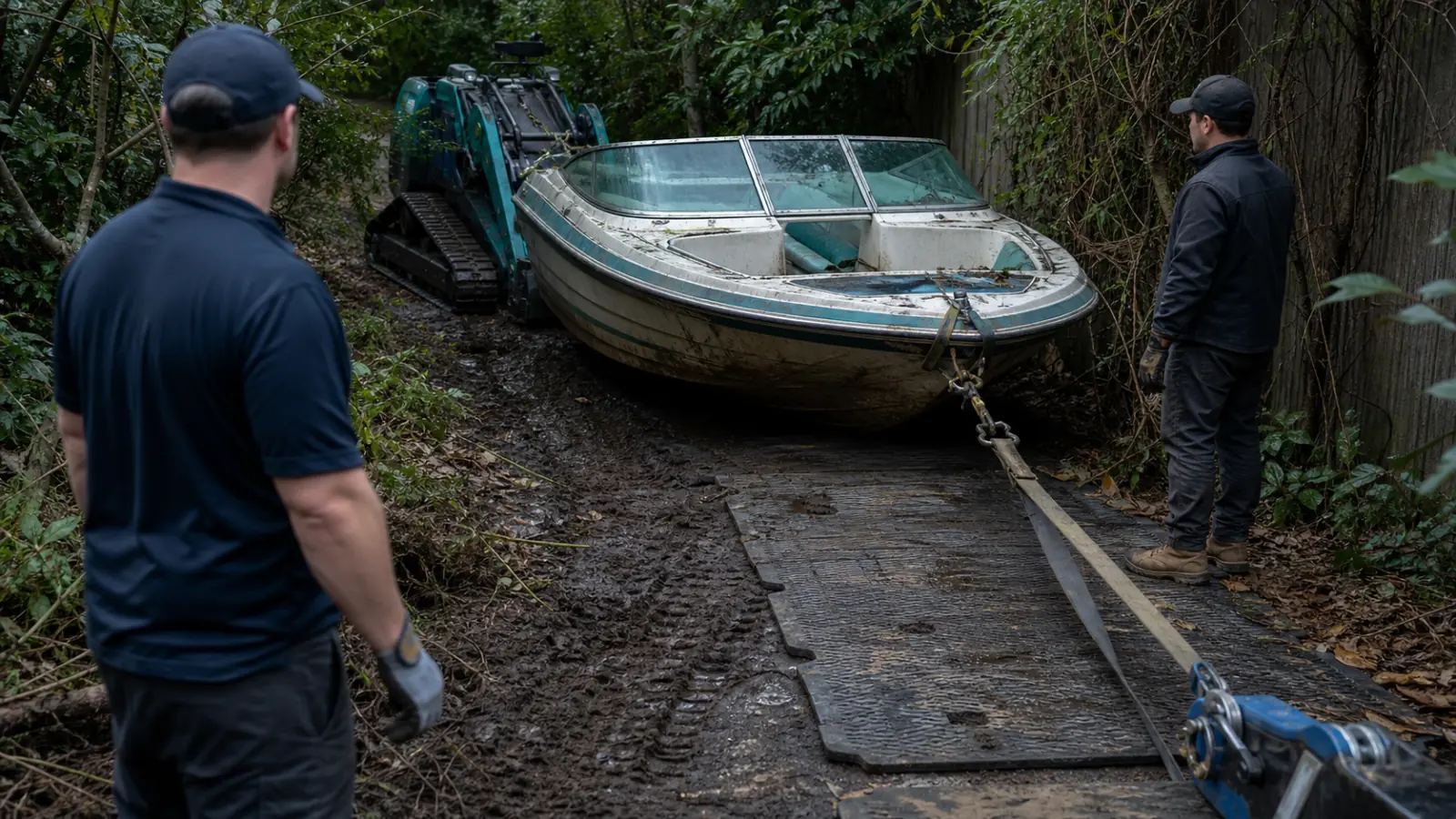
Local geography and yard layouts around Greenville, MS dictate how extraction crews approach each site. Navigating narrow access driveways, maneuvering beneath low-hanging tree branches, or avoiding overhead utility lines requires precise planning before heavy transport equipment enters a property. A sailboat sitting on an adjustable cradle presents different balance requirements than a flat-bottom hull grounded on a mudbank or a pontoon resting on sunken trailer frames. Crew members must evaluate the soil firmness surrounding the craft to determine if heavy trucks can safely pull up to the loading area or if winch lines must be extended across soft turf to pull the vessel out without tearing up the landscape.
Every Type of Boat We Handle
- Sailboat & catamaran
- Motorboat, powerboat & cabin cruisers
- Fishing boats & bass boats
- Pontoon boats
- Jon boats & aluminum skiffs
- Large yachts
- Personal watercraft (jet skis)
- Houseboats
Situations We Handle
- Abandoned boat at marinas, docks, or boat lifts
- Unwanted boats on private property or in boat storage
- Vessels in backyards, fields, or vacant lots
- Derelict vessels blocking dock access or navigation
- Storm-damaged vessels requiring boat hauling
- Vessels without trailers or with flat tires
- Tight access locations (narrow driveways, wooded areas)
- Government or insurance-ordered cases
Need Help? We’re Ready.
Contact boat removers directly or request free quotes. We dispatch crews fast.
Our Step-by-Step Process

Assessment
We evaluate the boat’s size, current location, condition, and any environmental or access challenges before we schedule boat removal.

Planning
A detailed plan is built around your vessel — equipment, logistics, timeline, and safety. Services include drainage of oil and fuel before transport.

Execution
Our experienced crew mobilizes to your current location and we tow, haul, or dismantle the vessel using professional marine equipment.

Completion
The vessel is recovered, recycled, or routed to certified boat junkyards for environmentally responsible disposal. The site is left clean.
Equipment & Capabilities
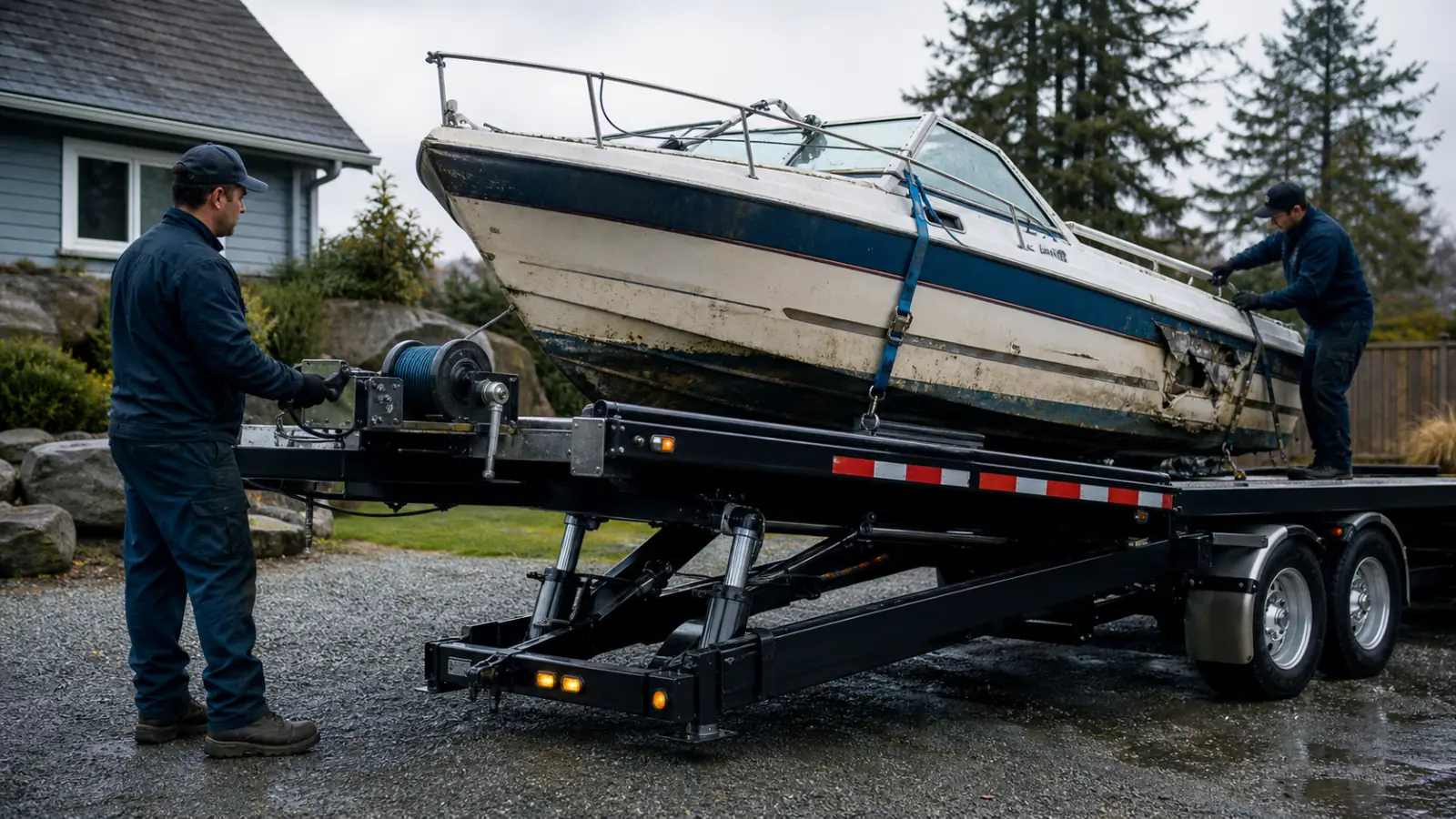
Equipped crews bring specialized heavy-duty machinery to manage complex vessel extractions regardless of the hull condition. When an old trailer suffers from rotted frames or seized hubs, flatbed trailers equipped with high-capacity hydraulic winches and custom positioning blocks are utilized to pull the load securely. If a structural failure prevents the craft from rolling or sliding whole, technicians dismantle the superstructure directly on site, cutting fiberglass, aluminum, or wooden hulls into manageable sections using heavy cutting tools. The crew evaluates the vessel upon arrival to decide whether a full-hull winching operation or on-site reduction offers the safest clearance method.
Before any physical transport or hull reduction takes place, strict protocols govern the management of hazardous materials. Technicians systematically drain trapped fuel, engine fluids, gear oils, and bilge liquids into approved recovery containers to prevent soil contamination. Marine batteries, electronic displays, and steering hydraulics are detached and separated from the main structure prior to moving the primary frame. Once these fluids and components are securely isolated, the remaining structural materials are sorted based on their physical composition. Metals like aluminum pontoon tubes or stainless fittings are prepped for secondary processing, while fiberglass remnants and degraded composite materials are routed to appropriate regional landfill or waste management facilities based on environmental compliance standards.
Our boat removal experience covers everything from start to finish assessment, planning, execution, dismantling, and final cleanup. Marina operators and property owners across Washington County trust us to get rid of your junk boat without damage to surrounding property.
FAQ
Boat Removal Questions - Frequently Asked
Common questions from property owners about our junk removal service, dismantling, and marine recovery.
What type of boat do you remove?
We handle every type of vessel — sailboat, pontoon, fishing boats, jon boats, yachts, and commercial craft. Whether your boat or sailboat floats (or used to), we’ll remove it from any current location.
Do you handle sunken or partially submerged vessels?
Yes. Sunken and partially submerged vessel recovery is a core part of our salvage work in Washington County. We use lift bags, salvage pumps, and marine cranes to safely raise vessels from underwater.
How quickly can you respond?
We respond to inquiries quickly — usually within hours, with same-day service available. For emergency situations, we mobilize as fast as possible. Call us directly for time-sensitive jobs.
Do you use subcontractors?
No. Every job is handled in-house by our own team and equipment. No middlemen, no handoffs, no surprises.
How much does cheap boat removal cost?
Cost depends on the boat’s size, current location, condition, and complexity of the job. We provide free assessments and free quotes for every case — contact us and we’ll give you an honest estimate.
Do you handle boat disposal and recycling?
Yes. Our boat removal and disposal services include hazardous materials handling, oil and fuel drainage, hull dismantling, and recycling at certified yards — all in compliance with environmental regulations and environmentally responsible standards.
Can you reach a hard-to-access location?
Absolutely. We regularly work in tight marinas, shallow waterways, private docks, backyards, and remote areas. We bring the right gear to reach any current location.
Do you work with insurance companies?
Yes. We frequently work with insurance adjusters on salvage and recovery claims and provide the documentation needed for your claim.
Other Boat Removal Locations
Browse Our Services - Ready to Get Started?
We handle everything from start to finish. Call us now or request a free quote – we’ll dispatch crews and haul your vessel away fast.