
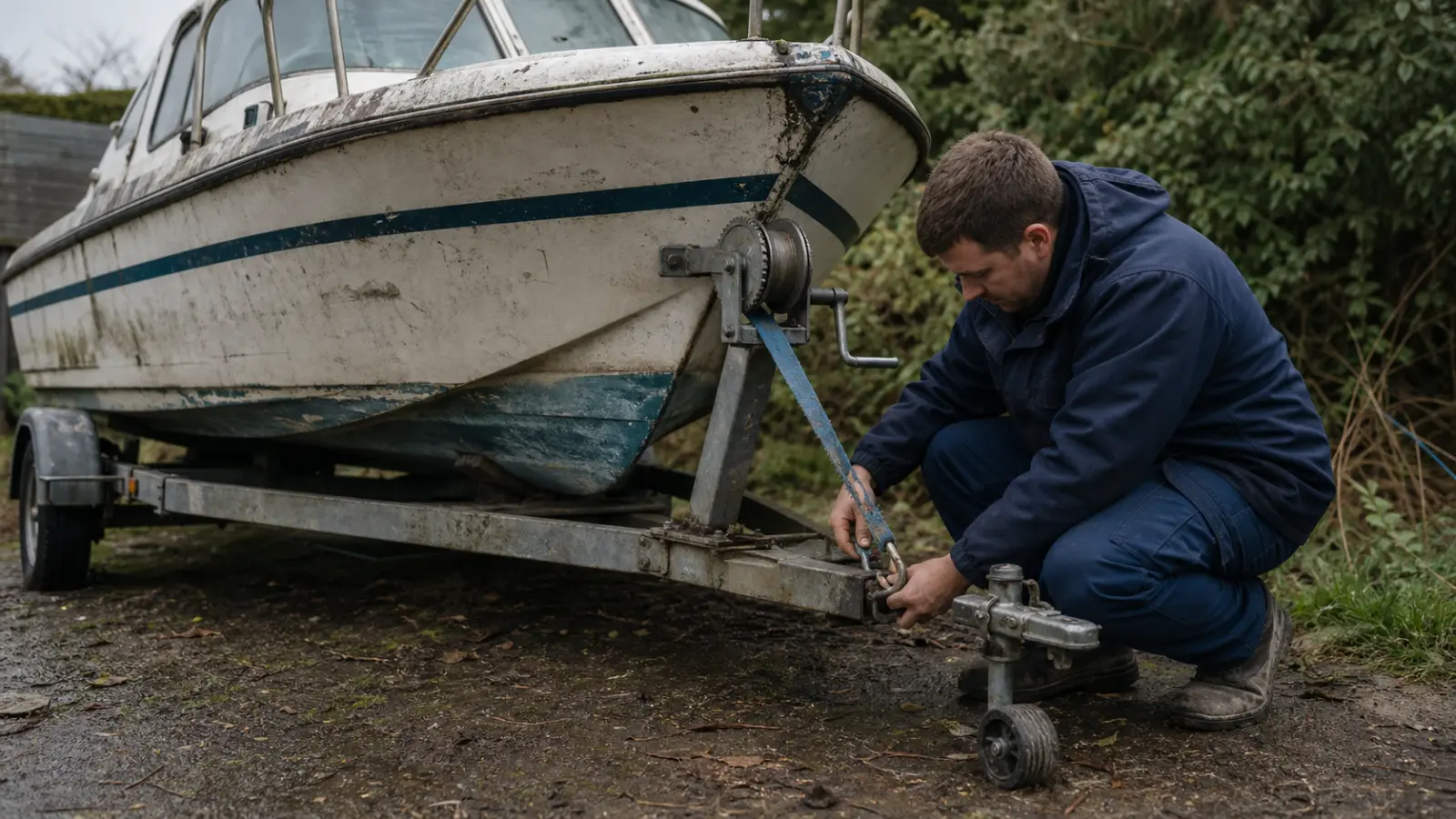
Professional Boat Removal Services in Hayesville, OR

The fiberglass hull has sat motionless on a rusted trailer behind the garage for six seasons, its tires flattened into the dirt and weeds crawling through the frame. A neglected craft left in this state quickly becomes a burden, especially when an unpaid slip notice arrives or a property sale requires clearing a cabin cruiser off the lot. In other instances, an old boat sits immobilized because the outboard engine seized and a complete rebuild costs far more than the vessel is worth. Leaving a junk boat to deteriorate only leads to higher municipal fines and property issues, making professional boat removal necessary to clear the lot safely.

Is there reliable boat removal near me in Hayesville, OR? Boat Removal Experts provides complete hauling solutions throughout the city to remove unwanted vessels directly from private yards, driveways, or storage spaces.

When clearing a vessel, proper paperwork protects the owner from future liabilities. Our position is clear: Boat Removal Experts does not always transfer the title, but we always issue a release of liability. Many haulers tow a craft away without documentation, leaving the original owner legally responsible if the vessel is later abandoned on public land. Securing a signed liability release ensures you are fully protected after the boat leaves your property.

Moving a vessel is rarely simple. A trailer with locked hubs will not roll, narrow gates block wide beams, and heavy hulls resting on bare earth require special rigging to haul without sinking heavy truck tires into soft soil.

Call (855) 765-7931 to start.

Send photos through the contact form.

What Is Boat Removal and When You Need It

Professional boat disposal involves far more than simply hooking a hitch to a truck and driving away. When an abandoned boat sits on private land or remains inside a residential lot in Hayesville, Oregon, physical extrication requires evaluating structural integrity, ground clearance, and transport safety. The process addresses complete physical extraction, site cleanup, and safe transport to designated processing facilities. When an owner possesses a clear title and registration, moving the vessel is straightforward. However, paperwork is frequently misplaced over years of storage, or a derelict craft comes attached to a newly purchased parcel of land. In cases where a vessel has been left on someone else's land or in an unpaid storage space, specific legal notifications and local paperwork must be processed before the physical extraction can begin. Title status, structural condition, and access points directly affect the steps required to complete the removal.
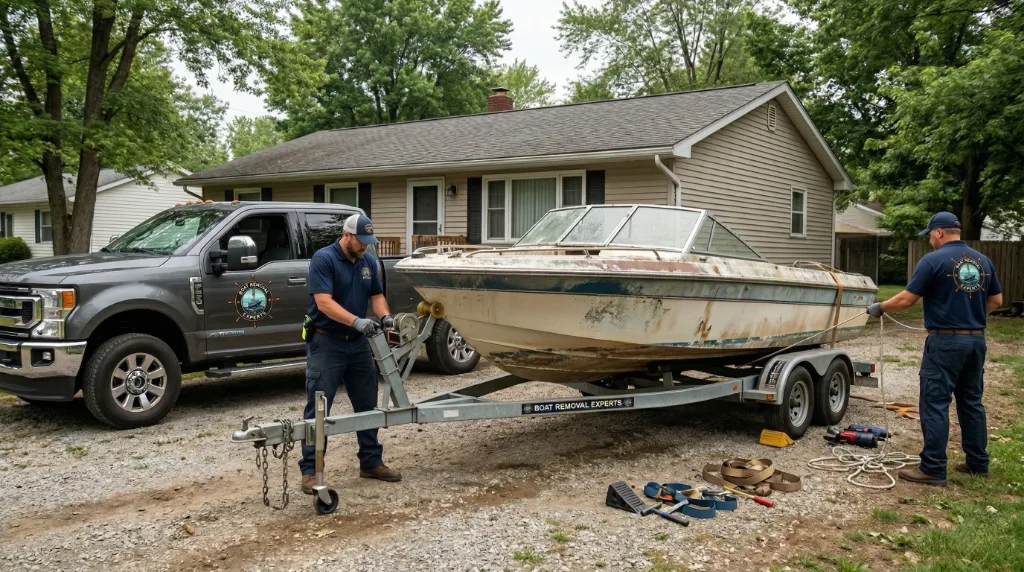
Vessels left to rot create environmental hazards and structural risks. Abandoned boat removal services manage these complex situations by assessing whether the craft can travel on its existing trailer or if heavy lifting equipment is required. Hazardous fluids, rotted transoms, and degraded hulls all change how a vessel is secured and transported. By handling both the logistical challenges and the physical hauling, specialized crews ensure the property is cleared without damaging surrounding structures or leaving behind dangerous debris.
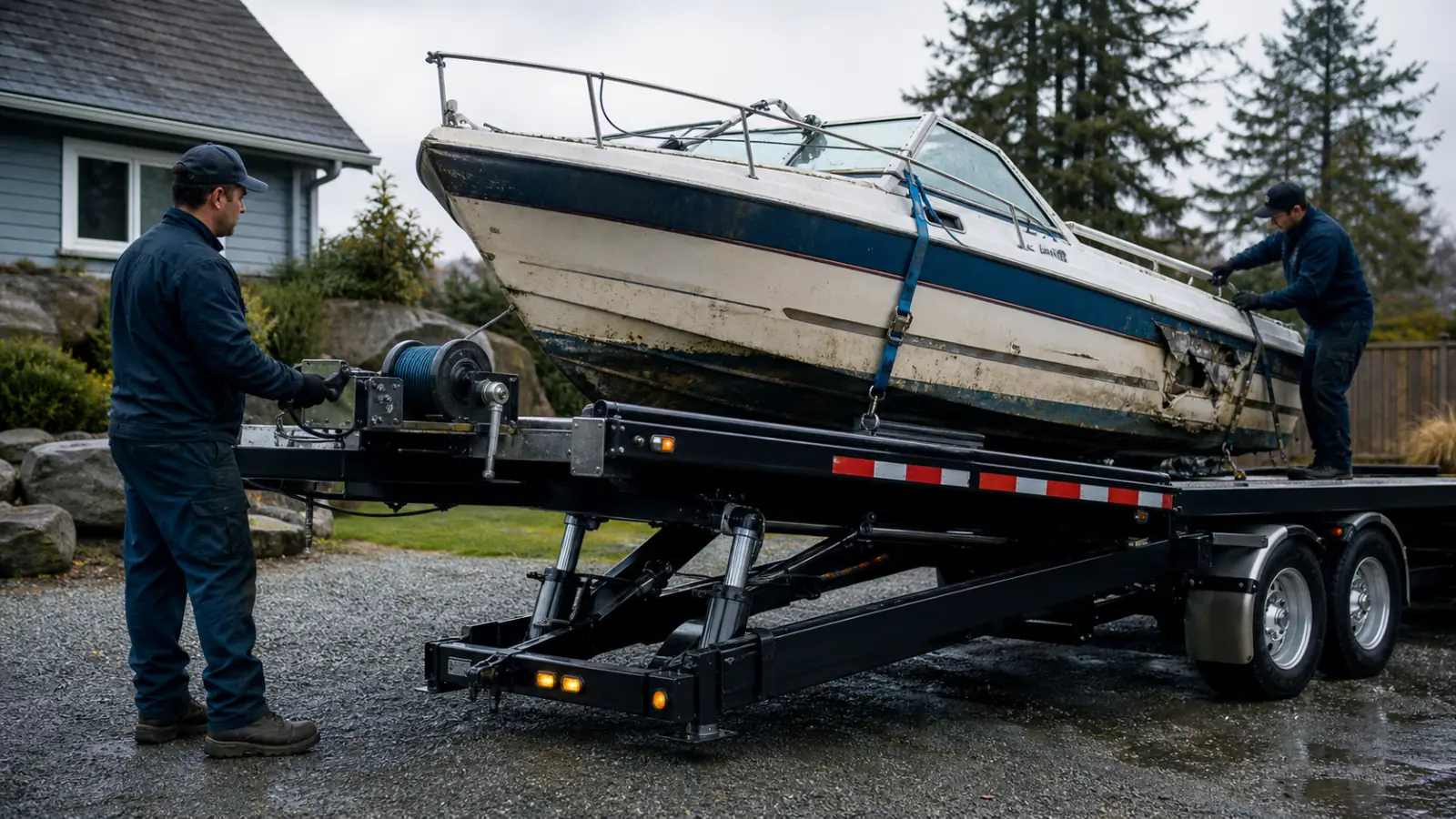
When Hayesville Residents Call Us

In Hayesville, OR, weather conditions severely impact vessels left uncovered outdoors. Steady rainwater collects inside open hulls, soaking interior wood framing, rotting floorboards, and breaking down upholstery. Over time, standing water causes fiberglass gelcoat to crack and blisters structural transoms, turning a simple tow into a delicate salvage operation. A waterlogged fishing boat or heavy pontoon craft absorbing damp Northwest weather grows significantly heavier, making extraction from backyard spaces far more difficult. Sun exposure breaks down plastic fittings, while internal rot weakens the lifting points needed to hoist a sailboat off its cradles safely.
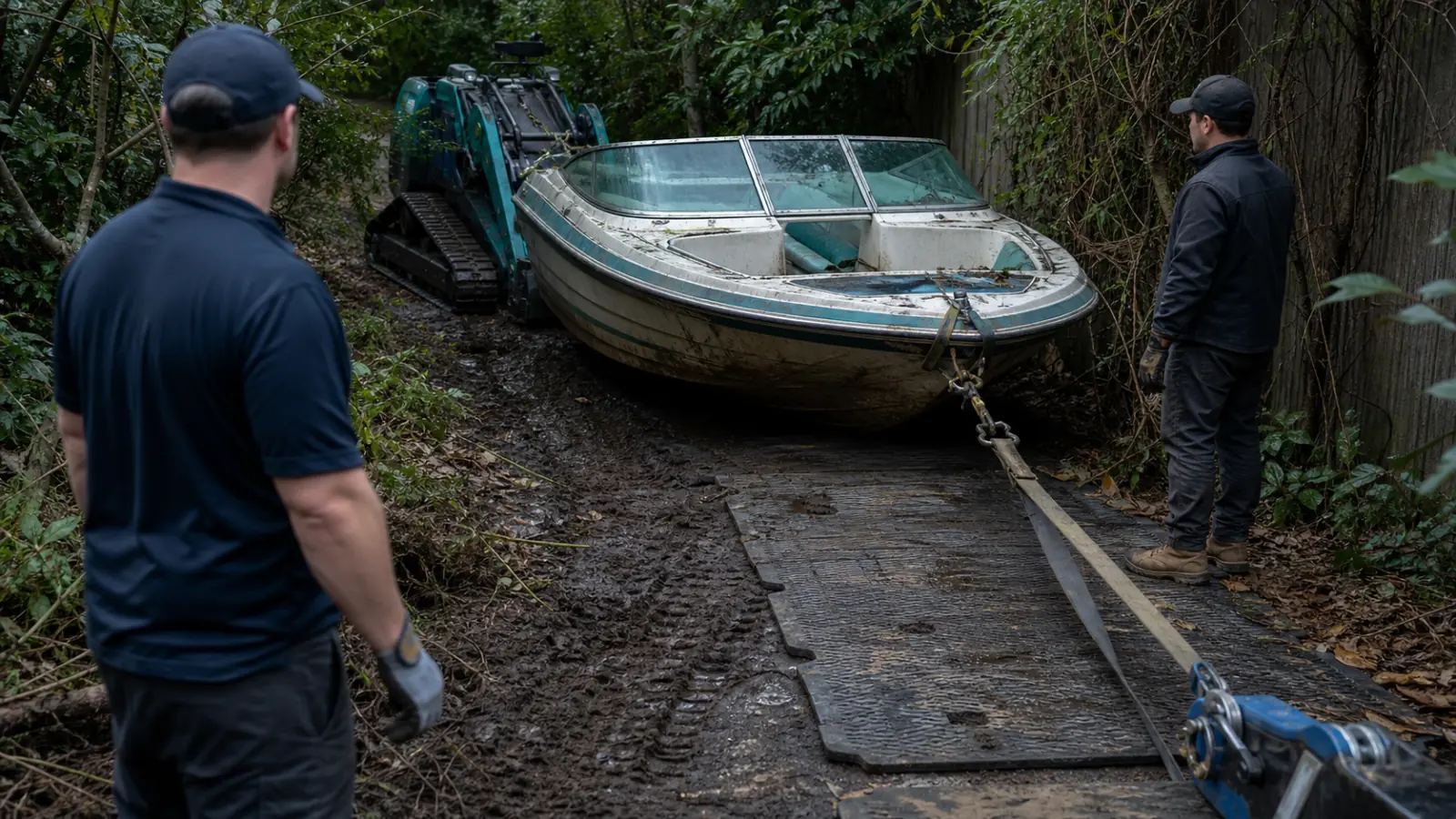
Site conditions in Marion County also dictate how extraction proceeds. A trailer with rotted tires resting on soggy soil cannot be pulled out by a standard vehicle. Property layouts with narrow alleys, overhanging tree branches, and low overhead power lines prevent heavy trucks from backing up to the hull. Crews must evaluate whether the craft sits on a stable road-worthy trailer, rests on wooden blocks, or floats at a mooring in nearby waters such as those around Salem or Keizer. The surface type beneath the craft, gate clearances, and structural decay all influence the equipment chosen to remove the vessel safely.
Every Type of Boat We Handle

Situations We Handle

Need Help? We’re Ready.

Contact boat removers directly or request free quotes. We dispatch crews fast.

Our Step-by-Step Process

Assessment

We evaluate the boat’s size, current location, condition, and any environmental or access challenges before we schedule boat removal.

Planning

A detailed plan is built around your vessel — equipment, logistics, timeline, and safety. Services include drainage of oil and fuel before transport.

Execution

Our experienced crew mobilizes to your current location and we tow, haul, or dismantle the vessel using professional marine equipment.

Completion

The vessel is recovered, recycled, or routed to certified boat junkyards for environmentally responsible disposal. The site is left clean.

Equipment & Capabilities

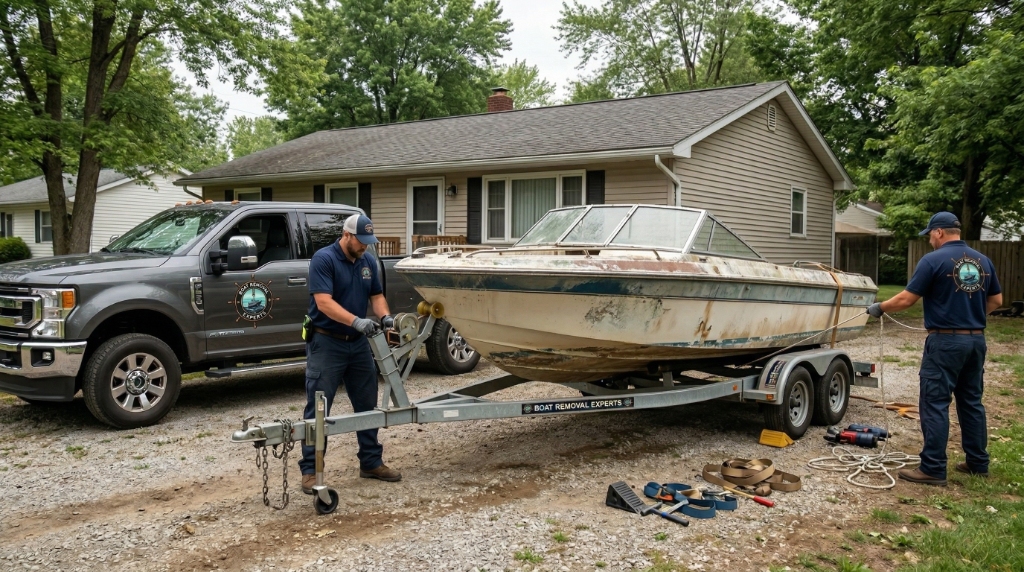
When a vessel cannot be towed on its own wheels, specialized extraction gear is deployed to handle the load. If a trailer frame has rusted through or the axle has collapsed, crews utilize flatbed winches, heavy hydraulic jacks, and transport skids to haul the hull onto a transport bed. When a large craft is jammed behind a permanent structure or its hull is too compromized to transport in one piece, the crew may dismantle the superstructure on site before loading. Every job begins with environmental containment. Before any hull is moved, hazardous materials including residual fuel, engine oil, bilge water, marine batteries, and outdated navigation electronics are carefully drained and sorted to prevent ground contamination.

Once the vessel is extracted and stripped of dangerous fluids, the remaining structural components are transported for proper processing. Metals, clean lead ballast, and reusable hardware are sorted for recycling, while composite fiberglass and rotted timber are transferred to approved waste management facilities. The crew determines the exact teardown sequence after inspecting the hull's condition, weight, and location. Whether servicing locations near Four Corners, Brooks, or Labish Village, crews adapt their equipment to clear the craft cleanly and responsibly.

Our boat removal experience covers everything from start to finish  assessment, planning, execution, dismantling, and final cleanup. Marina operators and property owners across Marion County trust us to get rid of your junk boat without damage to surrounding property.

FAQ

Boat Removal Questions - Frequently Asked

Common questions from property owners about our junk removal service, dismantling, and marine recovery.

We handle every type of vessel — sailboat, pontoon, fishing boats, jon boats, yachts, and commercial craft. Whether your boat or sailboat floats (or used to), we’ll remove it from any current location.

Yes. Sunken and partially submerged vessel recovery is a core part of our salvage work in Marion County. We use lift bags, salvage pumps, and marine cranes to safely raise vessels from underwater.

We respond to inquiries quickly — usually within hours, with same-day service available. For emergency situations, we mobilize as fast as possible. Call us directly for time-sensitive jobs.

No. Every job is handled in-house by our own team and equipment. No middlemen, no handoffs, no surprises.

Cost depends on the boat’s size, current location, condition, and complexity of the job. We provide free assessments and free quotes for every case — contact us and we’ll give you an honest estimate.

Yes. Our boat removal and disposal services include hazardous materials handling, oil and fuel drainage, hull dismantling, and recycling at certified yards — all in compliance with environmental regulations and environmentally responsible standards.

Absolutely. We regularly work in tight marinas, shallow waterways, private docks, backyards, and remote areas. We bring the right gear to reach any current location.

Yes. We frequently work with insurance adjusters on salvage and recovery claims and provide the documentation needed for your claim.

Browse Our Services - Ready to Get Started?

We handle everything from start to finish. Call us now or request a free quote – we’ll dispatch crews and haul your vessel away fast.