
Professional Boat Removal Services in Hyde Park, NY
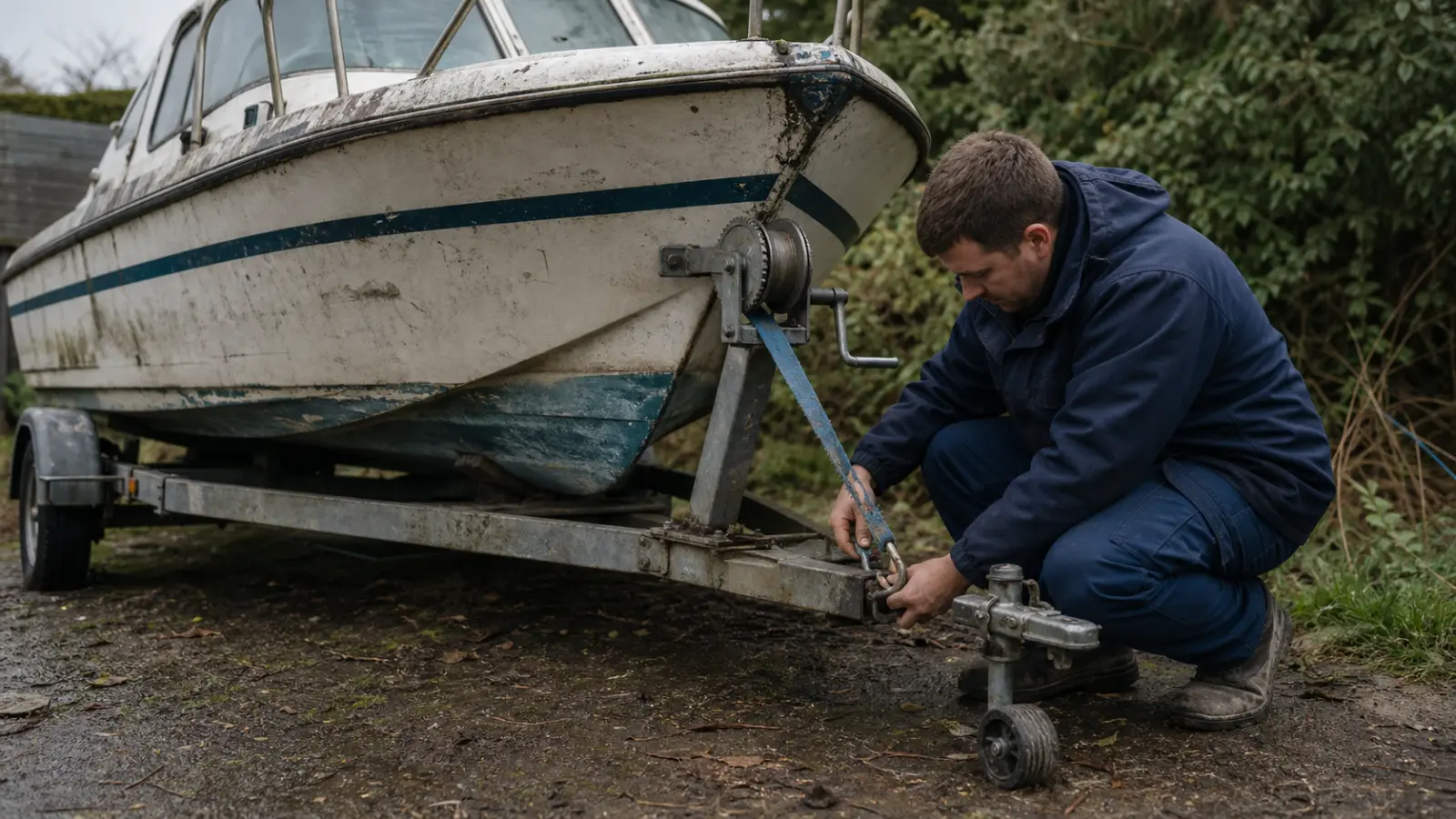
An old boat hull often sits on a flat trailer behind the garage for six straight seasons until the tires sink deep into the dirt and rot out completely. Sometimes a property sells near Haviland with an oversized cabin cruiser stranded on the lot, or a marina sends a formal notice regarding an unpaid slip, or a seized outboard motor makes a complete mechanical rebuild far more expensive than the vessel is worth. Leaving a junk boat to weather outdoors only invites structural decay and ongoing financial obligations for an asset that no longer functions.
Is there professional boat removal near me in Hyde Park, NY? Boat Removal Experts dispatches dedicated specialized crews directly to residential properties, private land, and commercial slips across Hyde Park, NY to extract unwanted vessels, manage all heavy logistics, and clear the space safely without damaging the surrounding ground.

Before handing over any vessel, paperwork requirements must be addressed. We do not always transfer the title into our own name, but we always issue a formal release of liability to protect the owner. Some haulers take a vessel away without completing proper documentation, leaving the original owner fully liable if that vessel is later abandoned on public property or involved in an accident. It is always worth asking how documentation is handled before allowing anyone to tow a vessel away.
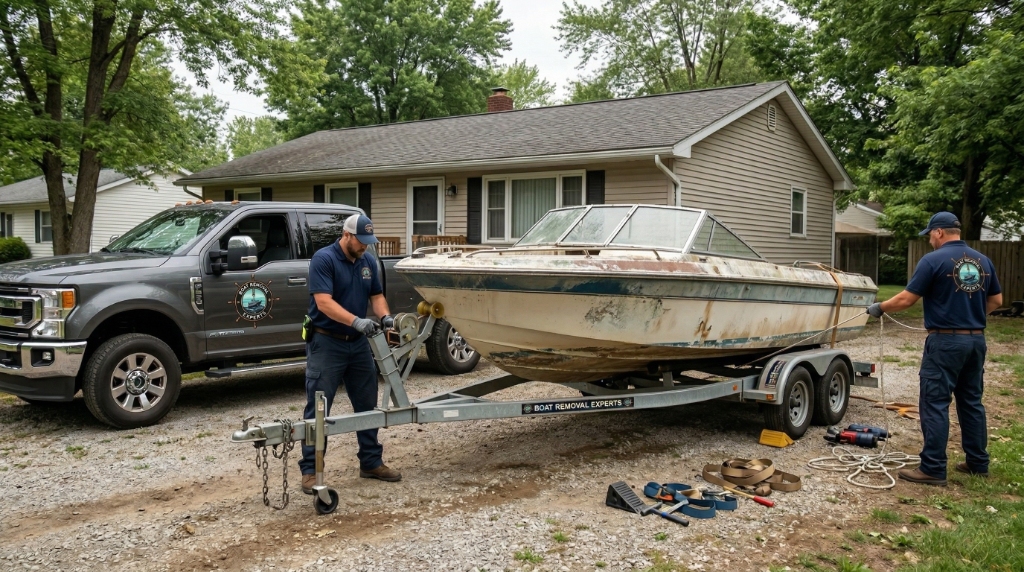
Executing a proper boat removal is far more complex than standard vehicle towing. Keels and custom cradles require precise balance, while wider beams often exceed narrow access gates. Furthermore, flat trailer tires, locked brakes, or heavy structural weight sitting on soft lawns make simple winch pulls dangerous without professional equipment to prevent severe site damage.
Call 845-386-7903 to start.
Send photos through the contact form.
What Is Boat Removal and When You Need It
Professional boat disposal goes far beyond simply hooking a trailer to a hitch and pulling it down the highway. Complete service requires managing heavy structural extraction, navigating tight access routes around Fairview, safely handling environmental hazards inside the hull, and properly processing every component of the vessel. Whether dealing with a simple utility vessel or a massive multi-engine cabin cruiser, dynamic site conditions dictate the precise equipment and handling methods required for safe transport.
Documentation status heavily influences how an abandoned boat or legacy vessel is processed. When clear titles are present, legal transfers proceed rapidly. When paperwork has been lost over decades or a vessel was inherited alongside a recent real estate purchase in Dutchess County, alternate legal verification steps must occur before physical transport begins. Unclear ownership records alter the required administrative sequence, but they do not prevent physical clearance from proceeding once proper legal releases are established.
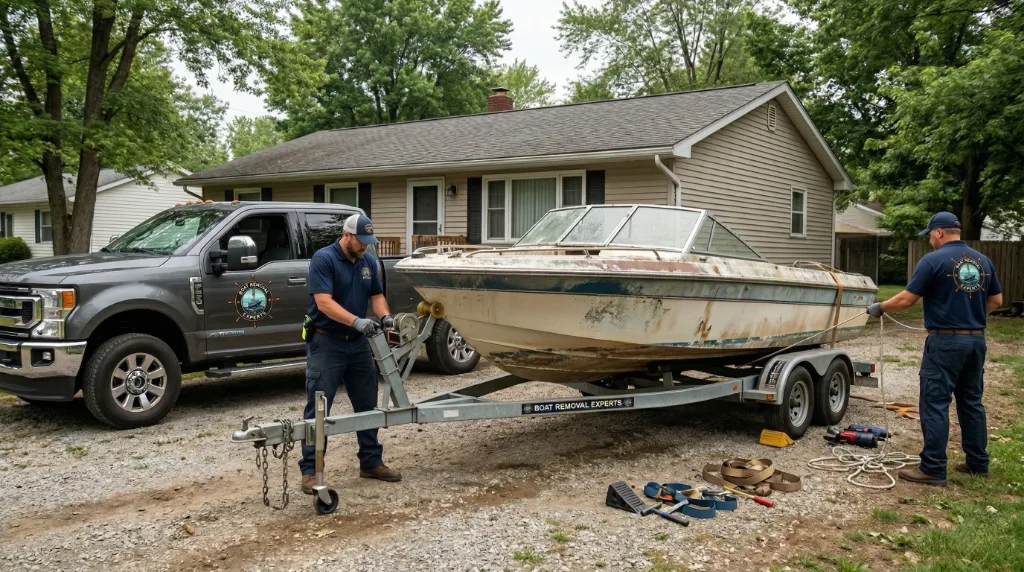
A derelict vessel left sitting on private land or in a non-paying marina slip creates escalating complications. Property owners facing an abandoned boat left by previous tenants must clear the obstruction to avoid code violations or site usage restrictions. Slip operators require immediate removal of non-paying or compromized hulls to clear underwater space for paying clients. The physical location of the hull, structural integrity of the back panel, and status of underlying support cradles ultimately dictate how the vessel is safely cleared from the site.
When Hyde Park Residents Call Us
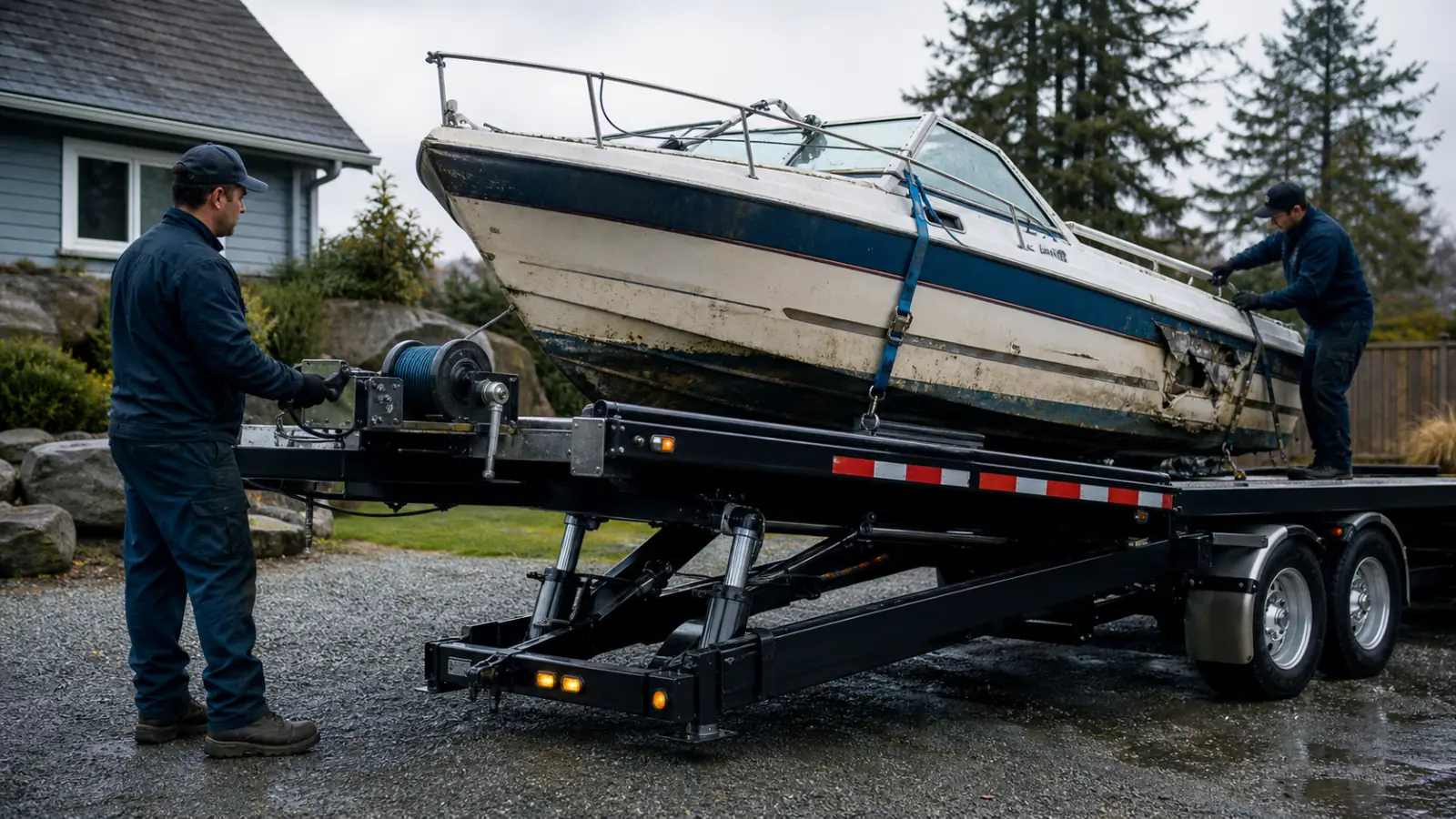
Harsh seasonal climate takes a severe physical toll on any unused boat stored outdoors near Staatsburg or Marist College. Freezing temperatures expand trapped water inside fiberglass layers, cracking the gelcoat and causing severe structural delamination. Rainwater filling an uncovered bilge rapidly rots wooden floor frames, ruins upholstery, and adds thousands of pounds of stagnant water weight to the hull. A rotted floor makes structural lifting dangerous, requiring specialized rigging techniques to extract the compromized fishing boat, pontoon, or sailboat without structural collapse during transport.
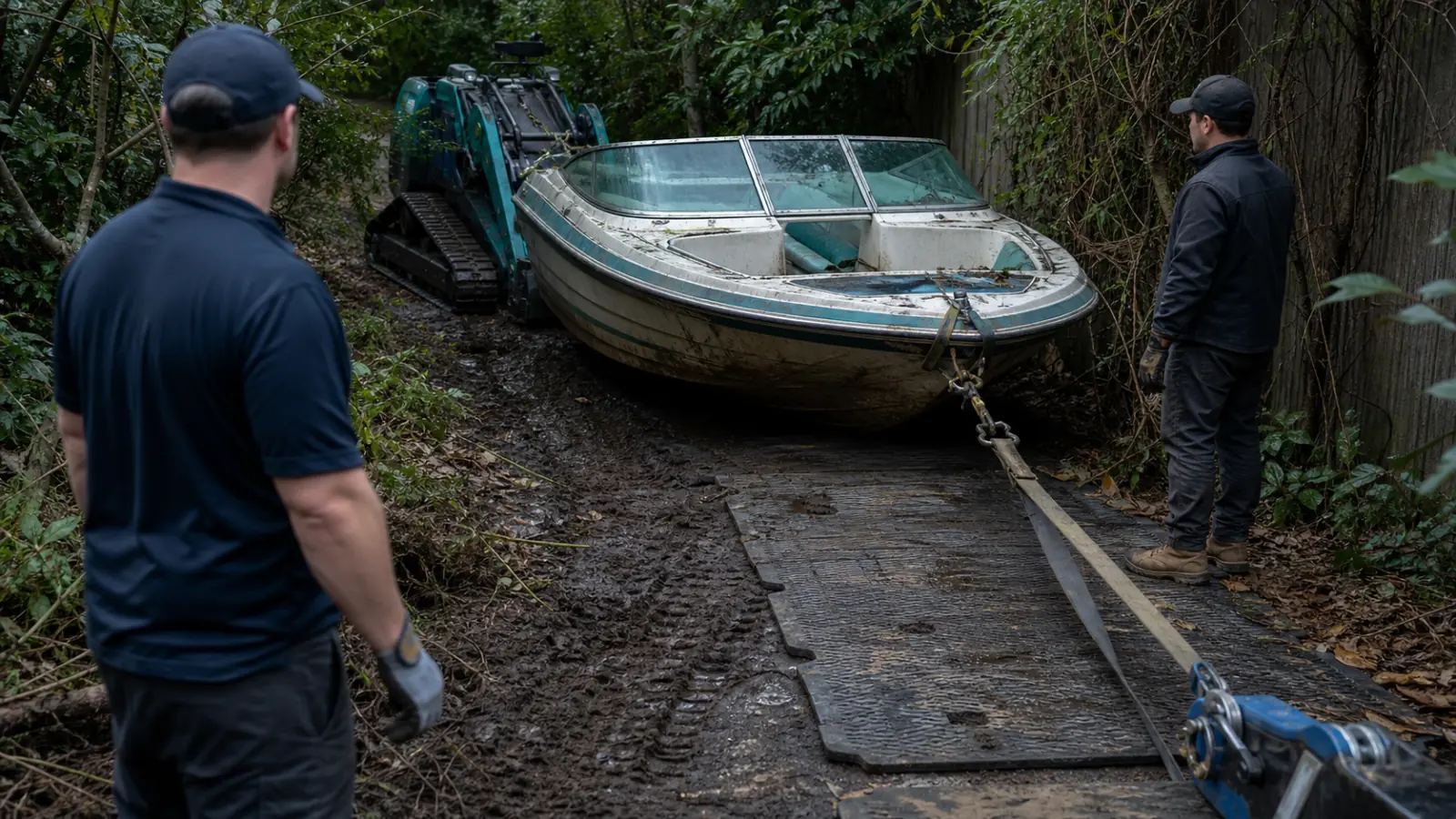
Physical site access heavily influences the clearance strategy long before haulers arrive on scene. Crew members evaluate tight driveways, overhanging tree branches, low power lines, and soft soil conditions that could trap heavy machinery near Highland. Moving a sailboat on a rotted cradle tucked behind a shed requires entirely different tactics than pulling a pontoon off a working trailer parked on asphalt. Whether a fishing boat rests on degraded wooden blocks, sits sunken along the shoreline, or remains moored in open water, physical access routes dictate the machinery, crew size, and extraction methods required to execute the job safely.
Every Type of Boat We Handle
- Sailboat & catamaran
- Motorboat, powerboat & cabin cruisers
- Fishing boats & bass boats
- Pontoon boats
- Jon boats & aluminum skiffs
- Large yachts
- Personal watercraft (jet skis)
- Houseboats
Situations We Handle
- Abandoned boat at marinas, docks, or boat lifts
- Unwanted boats on private property or in boat storage
- Vessels in backyards, fields, or vacant lots
- Derelict vessels blocking dock access or navigation
- Storm-damaged vessels requiring boat hauling
- Vessels without trailers or with flat tires
- Tight access locations (narrow driveways, wooded areas)
- Government or insurance-ordered cases
Need Help? We’re Ready.
Contact boat removers directly or request free quotes. We dispatch crews fast.
Our Step-by-Step Process

Assessment
We evaluate the boat’s size, current location, condition, and any environmental or access challenges before we schedule boat removal.

Planning
A detailed plan is built around your vessel — equipment, logistics, timeline, and safety. Services include drainage of oil and fuel before transport.

Execution
Our experienced crew mobilizes to your current location and we tow, haul, or dismantle the vessel using professional marine equipment.

Completion
The vessel is recovered, recycled, or routed to certified boat junkyards for environmentally responsible disposal. The site is left clean.
Equipment & Capabilities
Rigging crews rely on specialized heavy equipment to extract vessels that can no longer roll on their own wheels. When flat tires, rusted axles, or missing trailers prevent standard towing, heavy cranes, hydraulic drop-deck trailers, and portable winches move the structural weight. If a hull is far too wide to pass through narrow yard gates or lacks the structural strength to be lifted intact, crews dismantle the vessel on site using specialized cut saws and heavy hydraulic tools, reducing the structure into manageable sections for safe loading.
Environmental safety remains the top priority during every project. Before any vessel leaves the property or undergoes physical dismantling, technicians drain and collect all internal hazardous materials. Fuel tanks, engine oil, hydraulic fluids, heavy marine batteries, and electronics are systematically removed and routed to certified handling facilities. Isolating these materials prevents toxic spills on private lawns or local roadways during transit.
Material recycling and processing options are determined once technicians inspect the structural condition of the hull. Metal hardware, aluminum pontoons, lead ballast keels, and stainless steel fittings are separated for scrap processing. Clean fiberglass and unusable structural debris are routed to appropriate waste facilities. Crew evaluations on site dictate whether components are salvaged, recycled, or processed for final landfill disposal, ensuring efficient waste management for every project.
Our boat removal experience covers everything from start to finish assessment, planning, execution, dismantling, and final cleanup. Marina operators and property owners across Dutchess County trust us to get rid of your junk boat without damage to surrounding property.
FAQ
Boat Removal Questions - Frequently Asked
Common questions from property owners about our junk removal service, dismantling, and marine recovery.
What type of boat do you remove?
We handle every type of vessel — sailboat, pontoon, fishing boats, jon boats, yachts, and commercial craft. Whether your boat or sailboat floats (or used to), we’ll remove it from any current location.
Do you handle sunken or partially submerged vessels?
Yes. Sunken and partially submerged vessel recovery is a core part of our salvage work in Dutchess County. We use lift bags, salvage pumps, and marine cranes to safely raise vessels from underwater.
How quickly can you respond?
We respond to inquiries quickly — usually within hours, with same-day service available. For emergency situations, we mobilize as fast as possible. Call us directly for time-sensitive jobs.
Do you use subcontractors?
No. Every job is handled in-house by our own team and equipment. No middlemen, no handoffs, no surprises.
How much does cheap boat removal cost?
Cost depends on the boat’s size, current location, condition, and complexity of the job. We provide free assessments and free quotes for every case — contact us and we’ll give you an honest estimate.
Do you handle boat disposal and recycling?
Yes. Our boat removal and disposal services include hazardous materials handling, oil and fuel drainage, hull dismantling, and recycling at certified yards — all in compliance with environmental regulations and environmentally responsible standards.
Can you reach a hard-to-access location?
Absolutely. We regularly work in tight marinas, shallow waterways, private docks, backyards, and remote areas. We bring the right gear to reach any current location.
Do you work with insurance companies?
Yes. We frequently work with insurance adjusters on salvage and recovery claims and provide the documentation needed for your claim.
Other Boat Removal Locations
Browse Our Services - Ready to Get Started?
We handle everything from start to finish. Call us now or request a free quote – we’ll dispatch crews and haul your vessel away fast.