
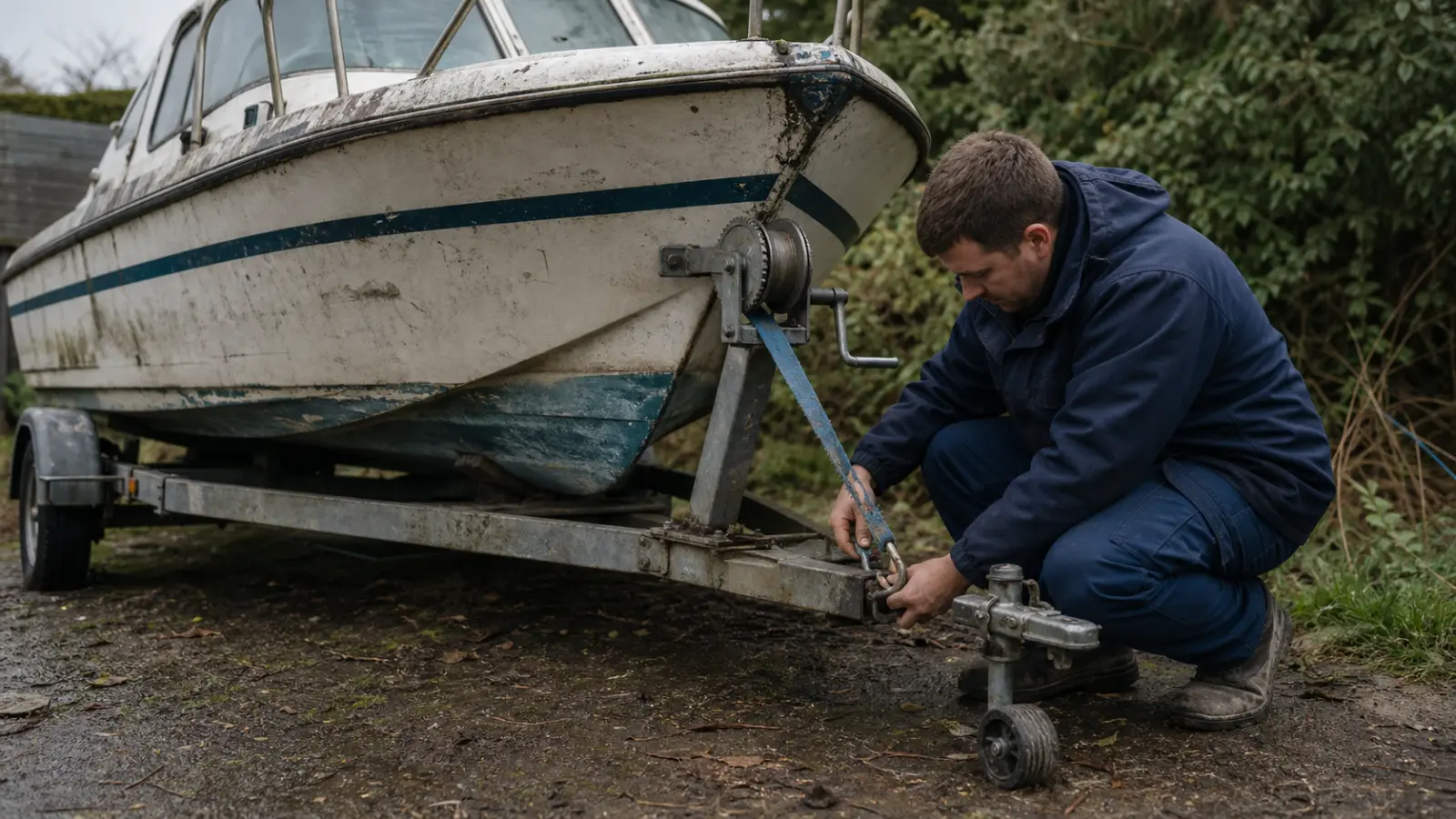
Professional Boat Removal Services in Imperial, CA

An old boat resting on a flat-tired trailer behind a garage can sit untouched for years while the weather quietly takes its toll. The tires rot into the soil, the dry grass grows tall around the frame, and what started as a project boat slowly turns into a heavy obstacle. In other cases, a property sale in Imperial, California leaves a buyer with an unwanted cabin cruiser left behind by a previous owner, or an outboard engine seizes up entirely, turning a weekend vessel into a salvage project where a full rebuild costs far more than the hull itself is worth. Marina slips also generate sudden notice when monthly fees lapse, leaving property managers and owners needing a fast solution to clear the space.

Is there boat removal near me in Imperial, CA? Yes, professional boat removal services assist owners and property managers by handling the heavy lifting, loading, and transport of unwanted hulls directly from private lots, driveways, or storage yards.

Handling paperwork correctly is just as critical as moving the vessel itself. A reputable boat remover does not always transfer the title into their own name, but a complete release of liability is always issued to the owner. Some haulers will simply load a junk boat and drive off without providing formal documentation, which leaves the original owner legally responsible if that vessel is later abandoned on public property. Securing a formal liability release protects you from future fines and legal disputes.

Moving a vessel is rarely as simple as hooking up a trailer and pulling away. Hubs lock up, rotten tires blow out, and custom wooden cradles rot into the ground. Narrow residential gates, low-hanging trees, and soft yard soil make extraction difficult, requiring specialized equipment to move a heavy hull safely without damaging nearby property.

Call 760-820-2648 to start.

Send photos through the contact form.

What Is Boat Removal and When You Need It

Professional boat disposal involves far more than hooking a trailer to a hitch and driving down the road. When a vessel sits idle for years, the structural integrity of both the hull and its support system breaks down. An abandoned boat left in a field, a backyard, or an unpaid slip often requires heavy winch equipment, flatbed transport, or total on-site rigging just to extract it safely. When an owner possesses a clear title, the handoff process remains straightforward. However, when paperwork has been lost over time or a vessel was acquired as part of a real estate transaction, legal steps must be taken to establish authority before hauling can begin.
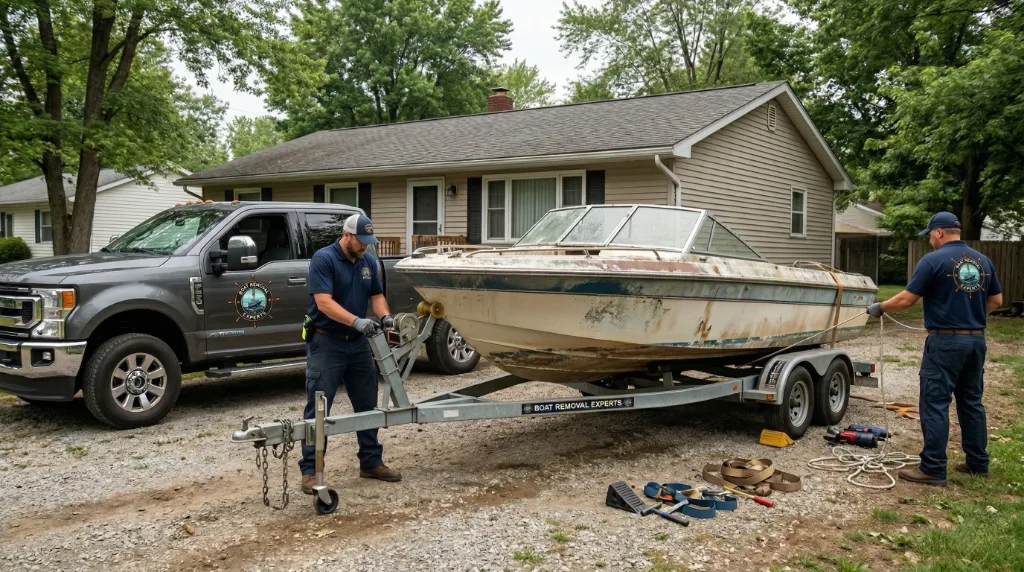
A derelict hull left on private property or inside a commercial yard creates ongoing liability for land managers. Landowners who inherit an abandoned vessel often face code enforcement notices or space constraints that prevent new development. What affects the disposal process is the condition of the hull, whether the craft can still float or roll, and the presence of any structural damage that prevents standard towing. Whether handling a small runabout or a larger cruiser, removing a vessel requires assessing structural stability, securing clear paperwork, and utilizing specialized haulers capable of managing unstable loads safely.
When Imperial Residents Call Us

The harsh climate in Imperial takes a heavy toll on any unused vessel left outdoors. High temperatures and intense sun exposure cause gelcoat to crack, fiberglass to weaken, and wooden transoms to dry rot. Upholstery splits open, allowing moisture from rain or condensation to pool inside the floorboards. Over time, a standing hull holds rainwater, adding thousands of pounds of hidden weight while rotting the internal floor frames until the deck becomes unsafe to stand on. This environmental degradation transforms an old fishing boat or pontoon into a fragile shell that can easily break apart if lifted improperly.
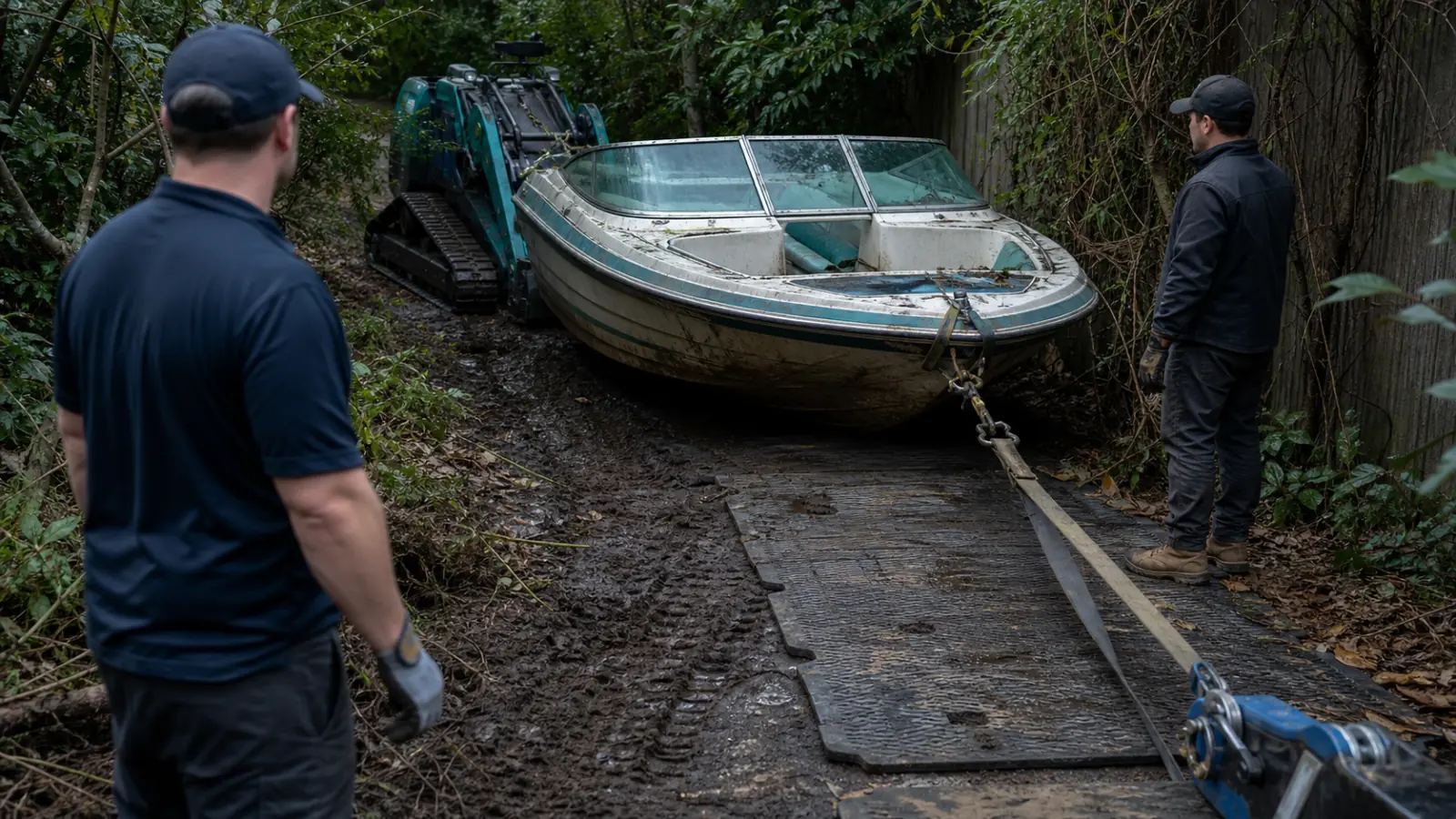
Local ground conditions also dictate how a job is approached. Heavy sun bakes the soil, but seasonal rain can turn dry dirt into deep mud that prevents heavy trucks from backing up to a rig. Access points near Seeley or Heber often involve long private driveways, narrow agricultural gates, or overhead power lines that restrict crane overhead clearance. Whether a sailboat sits on a rotted trailer in Brawley, rests on wooden blocks in El Centro, or sits near El Centro Naval Air Facility, the crew must evaluate the approach surface, gate clearance, and structural soundess of the hull before winching can start.
Every Type of Boat We Handle

Situations We Handle

Need Help? We’re Ready.

Contact boat removers directly or request free quotes. We dispatch crews fast.

Our Step-by-Step Process

Assessment

We evaluate the boat’s size, current location, condition, and any environmental or access challenges before we schedule boat removal.

Planning

A detailed plan is built around your vessel — equipment, logistics, timeline, and safety. Services include drainage of oil and fuel before transport.

Execution

Our experienced crew mobilizes to your current location and we tow, haul, or dismantle the vessel using professional marine equipment.

Completion

The vessel is recovered, recycled, or routed to certified boat junkyards for environmentally responsible disposal. The site is left clean.

Equipment & Capabilities

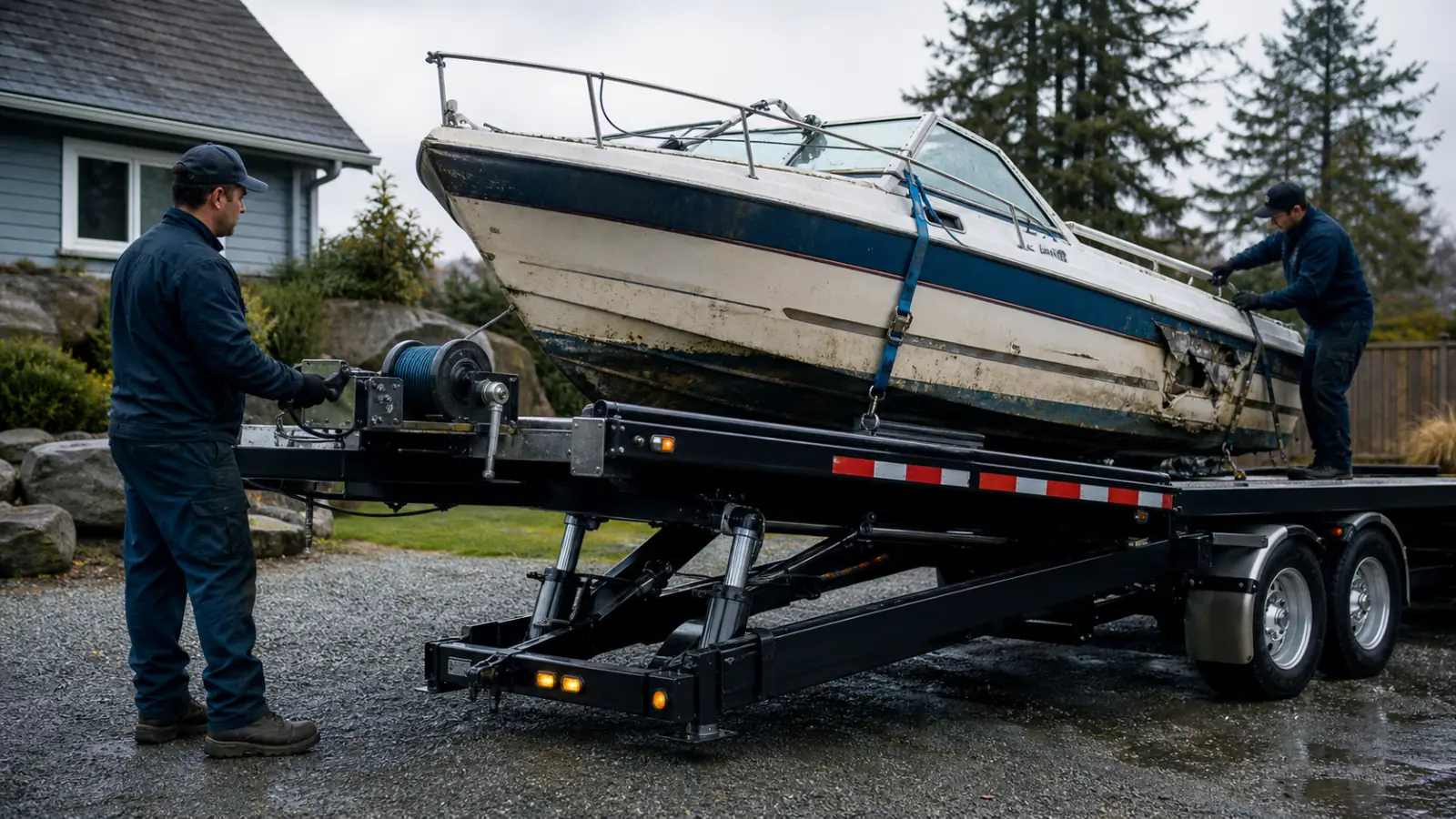
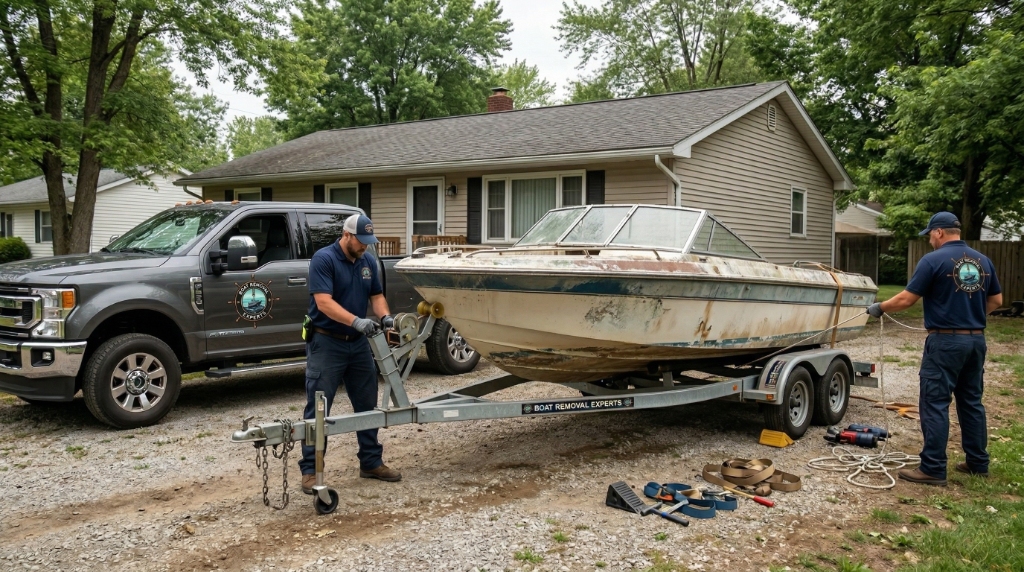
When an unwanted vessel cannot roll on its own tires, specialized recovery equipment is required to perform the removal. If a trailer frame has rusted through or the axle has collapsed, the crew utilizes heavy-duty winches, skids, and flatbed trailers to haul the craft out. In tight quarters where a truck cannot back up to the vessel, workers may dismantle the deck, cabin, or hull on site using reciprocating saws and cutting tools. This breaks the vessel down into manageable sections that can be safely loaded over fence lines or through narrow access corridors without disturbing the surrounding landscape.

Before any hull is moved or broken down, fluid mitigation takes priority. Crews drain remaining fuel, motor oil, gear lube, and hydraulic fluids, while removing onboard batteries and outdated electronics. These hazardous materials are separated and sent to facilities equipped for safe chemical handling. The remaining fiberglass, wood, and metal frame components are then processed based on their material composition. Depending on structural condition and local facility sorting capabilities, metal hardware may go toward scrap recycling while composite hull pieces head to designated solid waste locations for final processing.

Our boat removal experience covers everything from start to finish  assessment, planning, execution, dismantling, and final cleanup. Marina operators and property owners across Imperial County trust us to get rid of your junk boat without damage to surrounding property.

FAQ

Boat Removal Questions - Frequently Asked

Common questions from property owners about our junk removal service, dismantling, and marine recovery.

We handle every type of vessel — sailboat, pontoon, fishing boats, jon boats, yachts, and commercial craft. Whether your boat or sailboat floats (or used to), we’ll remove it from any current location.

Yes. Sunken and partially submerged vessel recovery is a core part of our salvage work in Imperial County. We use lift bags, salvage pumps, and marine cranes to safely raise vessels from underwater.

We respond to inquiries quickly — usually within hours, with same-day service available. For emergency situations, we mobilize as fast as possible. Call us directly for time-sensitive jobs.

No. Every job is handled in-house by our own team and equipment. No middlemen, no handoffs, no surprises.

Cost depends on the boat’s size, current location, condition, and complexity of the job. We provide free assessments and free quotes for every case — contact us and we’ll give you an honest estimate.

Yes. Our boat removal and disposal services include hazardous materials handling, oil and fuel drainage, hull dismantling, and recycling at certified yards — all in compliance with environmental regulations and environmentally responsible standards.

Absolutely. We regularly work in tight marinas, shallow waterways, private docks, backyards, and remote areas. We bring the right gear to reach any current location.

Yes. We frequently work with insurance adjusters on salvage and recovery claims and provide the documentation needed for your claim.

Browse Our Services - Ready to Get Started?

We handle everything from start to finish. Call us now or request a free quote – we’ll dispatch crews and haul your vessel away fast.