
Professional Boat Removal Services in Indian Trail, NC

The fiberglass hull has rested on a rusting trailer behind the garage for six full seasons, and the flat tires have settled deep into the damp dirt beneath the frame. A marina manager might have just issued a final notice regarding an unpaid slip, or perhaps a residential property was recently purchased in Indian Trail, NC with an abandoned cabin cruiser left sitting on the lot. In other situations, the outboard engine has completely seized, and quotes for a full mechanical rebuild exceed what the entire vessel is worth. Regardless of the scenario, an unwanted hull rapidly becomes a major eyesore and a liability on any property.

Is there boat removal near me in Indian Trail, NC? Boat Removal Experts provides complete hauling, site clearance, and vessel transport services throughout the community to solve this exact problem efficiently.

Proper documentation is a critical step when performing any junk boat extraction. Boat Removal Experts does not always transfer the physical title of an old boat, but we always issue a formal release of liability to the legal owner. Some independent haulers simply hook up a vessel and drive away without providing any paperwork, leaving the original owner legally responsible if the vessel is later dumped illegally along a roadway. Asking for clear legal documentation before any boat remover hauls the load away protects you from future fines.

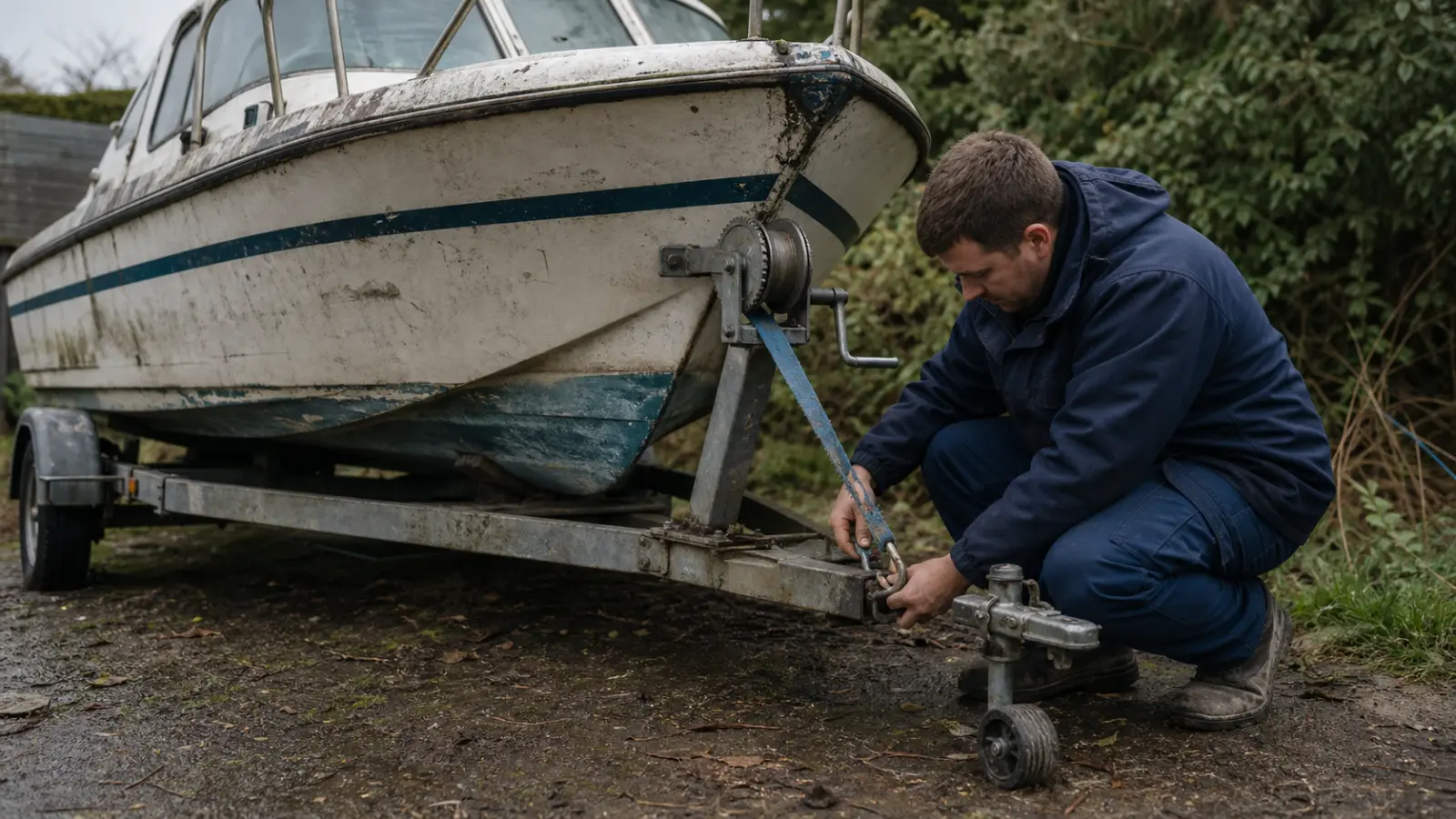
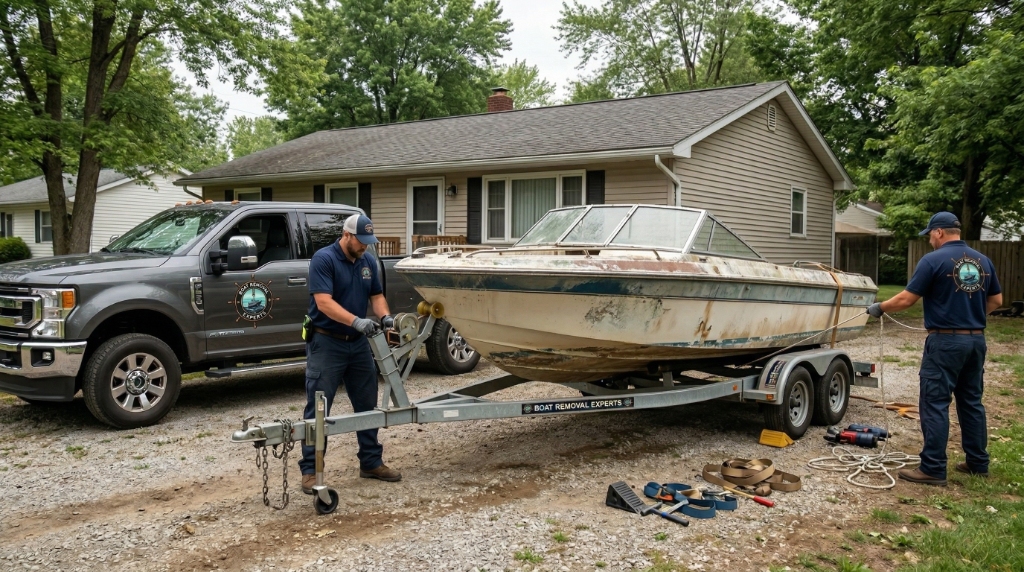
Extracting a vessel is frequently far more complex than simple towing. A trailer with locked hubs will not roll, a bare keel sitting on a custom cradle requires specialized rigging, and the beam of a wide vessel might barely fit through a tight backyard gate. Furthermore, heavy equipment operating on soft grass risks sinking, demanding carefully planned equipment positioning.

Call (855) 765-7931 to start.

Send photos through the contact form.

What Is Boat Removal and When You Need It

Professional boat disposal goes well beyond simply hitching a vessel to a truck and driving down the road. When an abandoned boat sits idle on private land, in a commercial storage facility, or within an unpaid slip, the process involves full site assessment, structural stabilization, and heavy extraction. Every situation presents distinct logistical challenges depending on vessel weight, hull integrity, and surrounding obstacles. An owner dealing with a derelict vessel must consider how physical access and legal status dictate the ultimate recovery strategy.
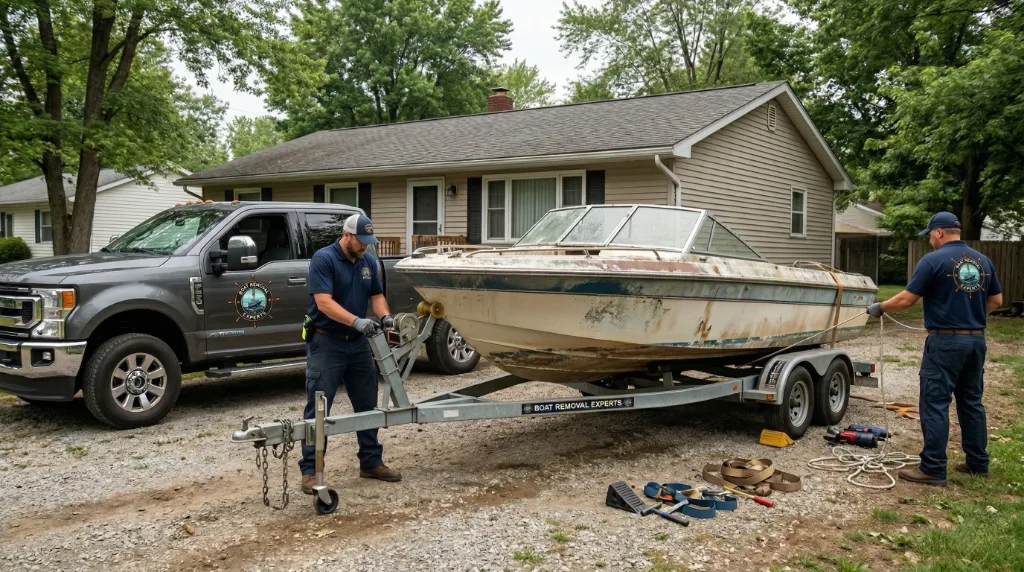
Having a clear title in hand simplifies the initial setup, but lost paperwork or vessels inherited with property acquisitions alter the documentation required before transport can begin. When a derelict craft is left on someone else's land or in a neglected slip, specific steps must be taken to clear claims and secure a lawful release of liability. These administrative factors direct how quickly the crew can load the vessel and move it off the property.

Physical site access heavily influences the overall difficulty of the job. A vessel sitting deep in a backyard behind Stallings or Lake Park may require specialized winches or articulated cranes if a standard tow vehicle cannot reach the site. Broad beams, soft ground surfaces, and tight suburban fencing all dictate whether a vessel can be moved intact or if it must be systematically dismantled directly on site to protect surrounding structures.
When Indian Trail Residents Call Us

The humid climate across Union County takes a harsh toll on any unused watercraft stored outdoors over time. Continuous sun exposure degrades the outer gelcoat, causing severe chalking and structural blistering, while trapped rainwater rots interior wooden transoms, floor frames, and deck floors. Upholstery quickly breaks down, creating ideal nesting conditions for pests and mold. A neglected pontoon, heavy sailboat, or fiberglass fishing boat that sits saturated with water becomes significantly heavier, making simple physical towing impossible without specialized extraction gear.
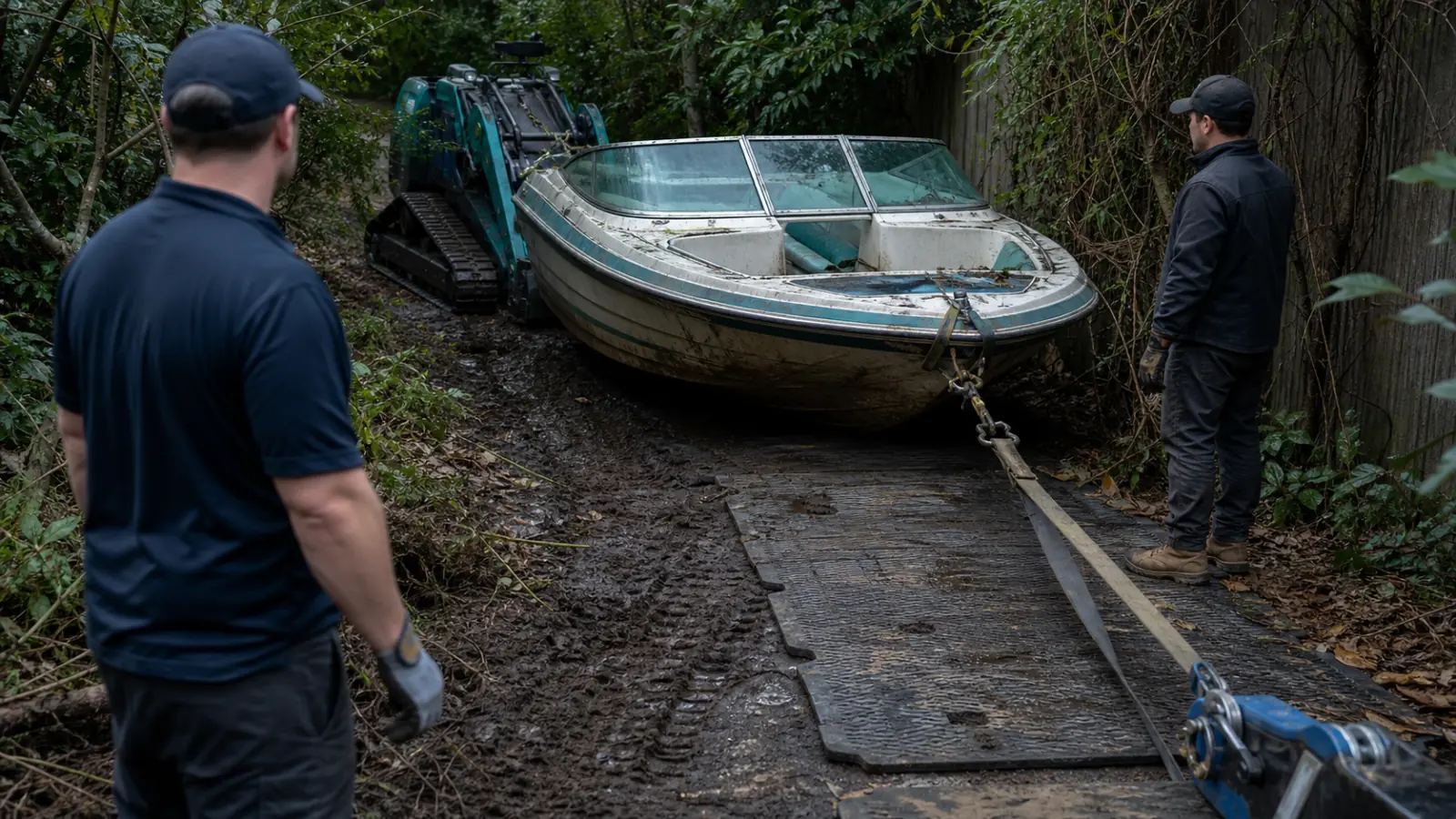
Local terrain and property layouts around Hemby Bridge, Wesley Chapel, and Matthews dictate how extraction crews approach a job site. Soft lawns, clay soil, and long gravel driveways restrict where heavy transport rigs can safely maneuver without sinking or damaging the ground. Low-hanging tree limbs and overhead power lines often complicate overhead lifting when a vessel must be hoisted off custom wooden blocks or out of a tight side yard.

Whether a boat sits on a functional trailer, rests flat on the ground, or sits tethered along the water, the physical position alters the required machinery. A sunken or grounded hull near the shoreline demands water-based towing or heavy winching before land transport can begin, while a dry rot hull demands careful cradling to prevent structural collapse during loading.
Every Type of Boat We Handle

Situations We Handle

Need Help? We’re Ready.

Contact boat removers directly or request free quotes. We dispatch crews fast.

Our Step-by-Step Process

Assessment

We evaluate the boat’s size, current location, condition, and any environmental or access challenges before we schedule boat removal.

Planning

A detailed plan is built around your vessel — equipment, logistics, timeline, and safety. Services include drainage of oil and fuel before transport.

Execution

Our experienced crew mobilizes to your current location and we tow, haul, or dismantle the vessel using professional marine equipment.

Completion

The vessel is recovered, recycled, or routed to certified boat junkyards for environmentally responsible disposal. The site is left clean.

Equipment & Capabilities

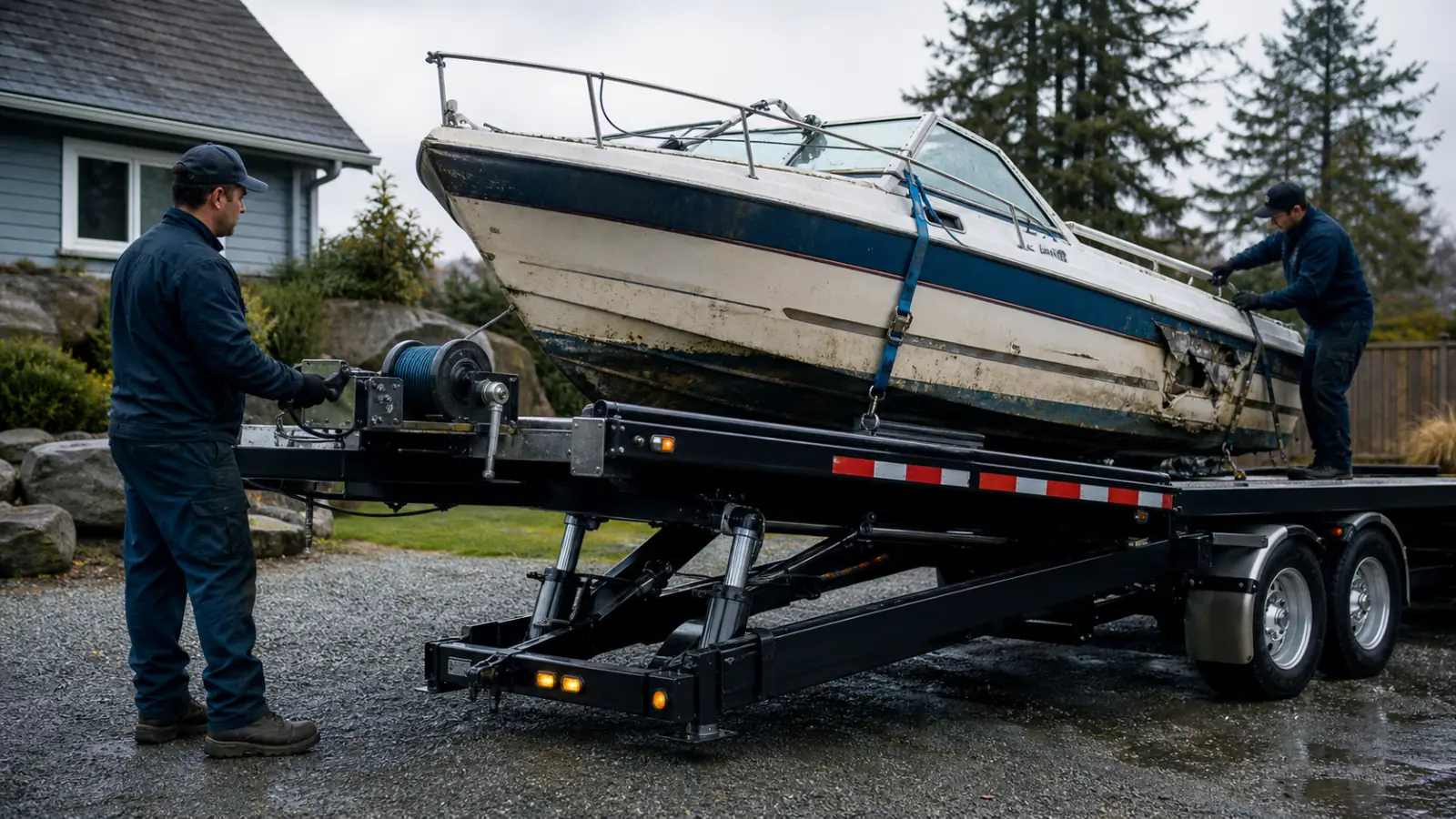
When an old vessel cannot be rolled out on its own tires, specialized hauling equipment is deployed to safely lift and secure the load. Heavy-duty winches, hydraulic tilt-deck trailers, and mobile cranes allow crews to manage deadweight extractions from narrow driveways or soft backyard soil. When a hull is too wide for road clearance or too structurally compromized to survive highway transport, the crew will dismantle the vessel directly on site using commercial cutting equipment and industrial saws.

Before any physical cutting or hauling begins, hazardous materials are carefully identified, drained, and separated from the hull. Residual fuel, motor oil, hydraulic fluids, marine batteries, and electronic components are systematically removed to prevent environmental contamination on the property. Stripping these elements ensures the vessel meets strict environmental safety protocols before moving to the next stage of processing.

Once fluids are cleared and the structure is loaded, the material destination depends on the hull's composition and condition. Fiberglass structures are typically prepped for proper disposal services at designated industrial landfills, while aluminum hulls and steel fixtures are separated for metal recycling facilities. The crew evaluates the vessel's construction, location, and structural integrity on site to determine the safest and most efficient path for final processing.

Our boat removal experience covers everything from start to finish  assessment, planning, execution, dismantling, and final cleanup. Marina operators and property owners across Union County trust us to get rid of your junk boat without damage to surrounding property.

FAQ

Boat Removal Questions - Frequently Asked

Common questions from property owners about our junk removal service, dismantling, and marine recovery.

We handle every type of vessel — sailboat, pontoon, fishing boats, jon boats, yachts, and commercial craft. Whether your boat or sailboat floats (or used to), we’ll remove it from any current location.

Yes. Sunken and partially submerged vessel recovery is a core part of our salvage work in Union County. We use lift bags, salvage pumps, and marine cranes to safely raise vessels from underwater.

We respond to inquiries quickly — usually within hours, with same-day service available. For emergency situations, we mobilize as fast as possible. Call us directly for time-sensitive jobs.

No. Every job is handled in-house by our own team and equipment. No middlemen, no handoffs, no surprises.

Cost depends on the boat’s size, current location, condition, and complexity of the job. We provide free assessments and free quotes for every case — contact us and we’ll give you an honest estimate.

Yes. Our boat removal and disposal services include hazardous materials handling, oil and fuel drainage, hull dismantling, and recycling at certified yards — all in compliance with environmental regulations and environmentally responsible standards.

Absolutely. We regularly work in tight marinas, shallow waterways, private docks, backyards, and remote areas. We bring the right gear to reach any current location.

Yes. We frequently work with insurance adjusters on salvage and recovery claims and provide the documentation needed for your claim.

Browse Our Services - Ready to Get Started?

We handle everything from start to finish. Call us now or request a free quote – we’ll dispatch crews and haul your vessel away fast.