
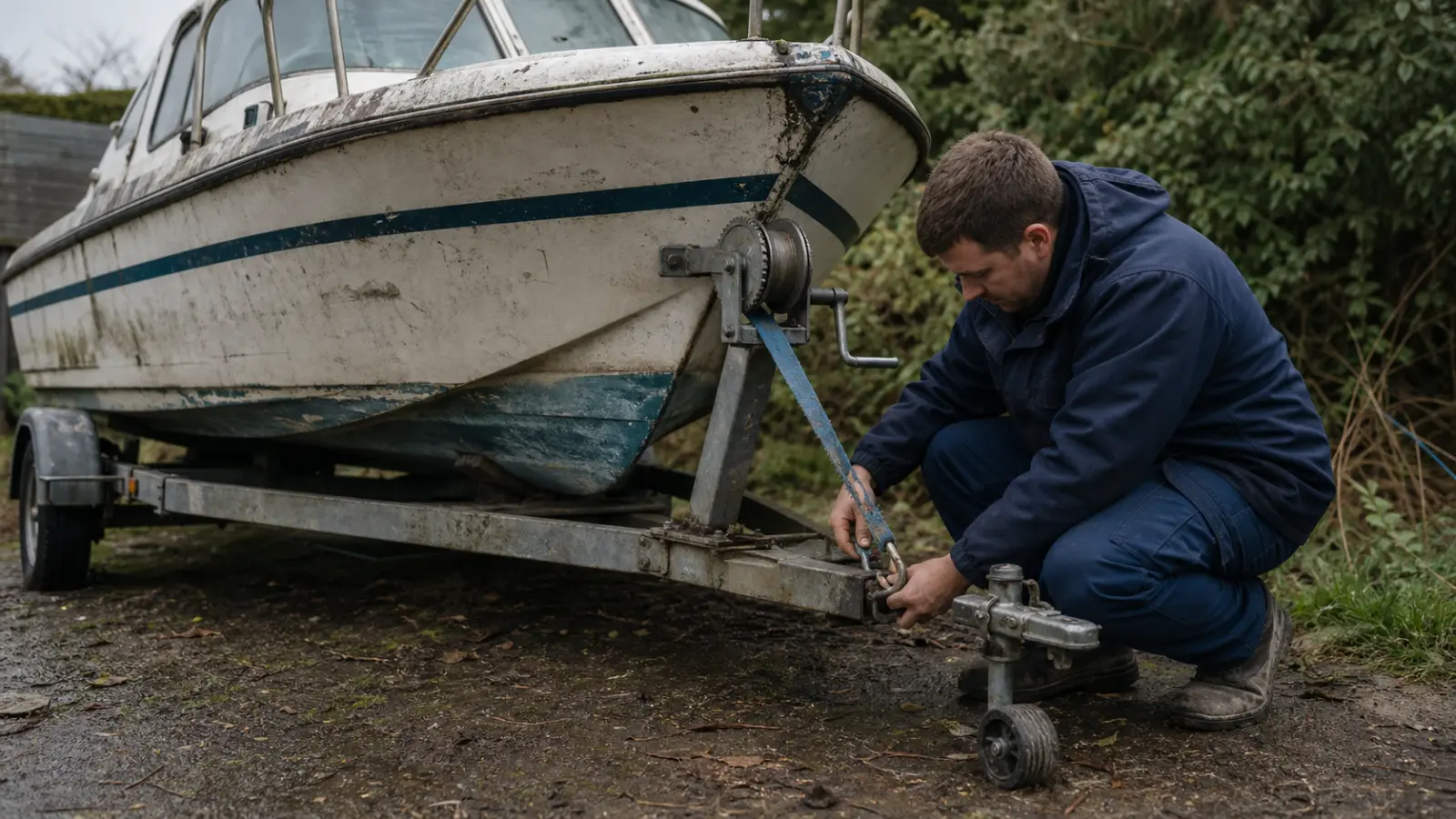
Professional Boat Removal Services in Islip, NY

An old boat resting on a trailer behind a garage often outstays its usefulness long after the tires have flattened into the dirt and the registration has expired. Across property lines, a cabin cruiser might come with a newly purchased lot, leaving the new owner responsible for a hull they never wanted. In other cases, an outboard engine seizes, and the owner discovers that a complete rebuild costs significantly more than the vessel is worth. Marinas also issue formal notices regarding unpaid slips, leaving owners scrambling to handle a boat that no longer runs. Leaving a junk boat to collect debris creates safety hazards and land disputes, making proper boat removal the only practical option.

Is there boat removal near me in Islip, NY? Yes, Boat Removal Experts manages complete vessel extraction and disposal directly from residential yards, commercial sites, and local water slips.

When clearing a vessel, liability management is just as critical as physical transport. Boat Removal Experts does not always transfer the title, but we always issue a release of liability to protect the client. Some haulers take a vessel away without providing any formal documentation, leaving the original owner legally responsible if the vessel is later abandoned or involved in an incident. Asking for clear documentation ensures your legal ties to the craft are fully severed.

Moving a vessel is rarely simple because physical access varies wildly from one property to another. A rusted trailer might have frozen axles that refuse to roll, or a hull may rest on custom wooden blocks rather than wheels. Tight property lines often mean the vessel beam is wider than the side gate, or the overall weight rests on soft ground where a heavy tow vehicle risks sinking without proper planking.

Call 631-353-7364 to start.

Send photos through the contact form.

What Is Boat Removal and When You Need It

Professional boat removal encompasses far more than just hitching a vessel to a truck and driving away. When taking on a haul, crew members must evaluate the structural integrity of the hull, manage transport logistics, and coordinate proper handling of the vessel at every stage of the journey. Whether dealing with a derelict hull resting on a residential lawn or an abandoned boat tied to a neglected dock, the service addresses the physical clearance of the entire craft alongside the necessary documentation.
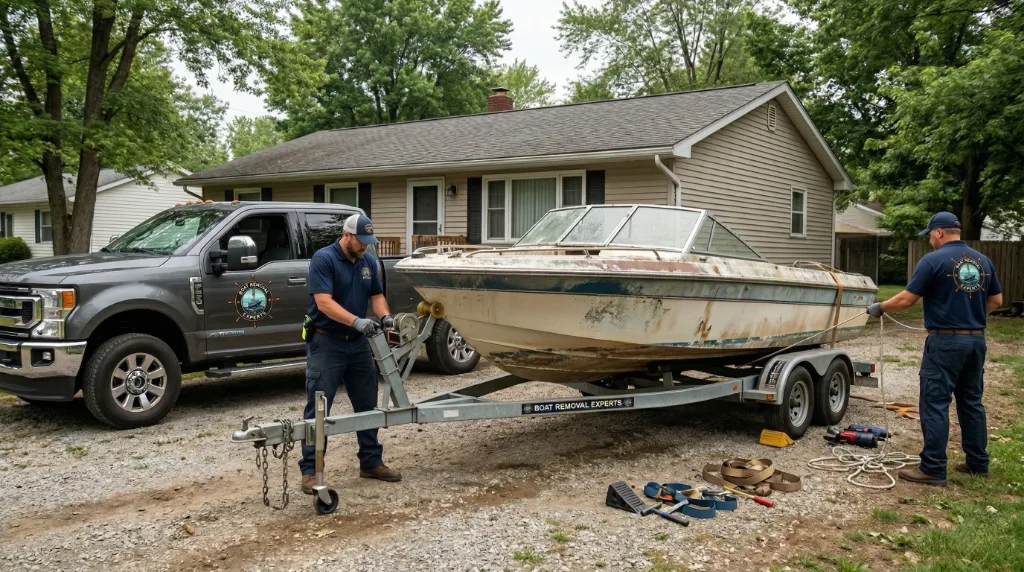
The status of the paperwork directly shapes how a disposal project proceeds. When an owner possesses a clear title, clearing the craft involves standard verification and transport scheduling. However, when paperwork is lost, missing, or the vessel was inherited alongside a recent real estate purchase, alternative clearance procedures are required. Missing documentation requires specific verification steps to ensure the craft can be legally transported and processed for boat disposal without creating future administrative complications.

Vessels left unattended on private land or within unpaid marina slips present unique challenges. When an abandoned boat sits on property owned by someone else, legal access and authorization must be established before moving the structure. Physical access, hull soundess, and the presence of standing water or marine growth all dictate whether the craft can be loaded directly onto a flatbed or requires specialized rigging to extract safely from its location in Islip, NY.
When Islip Residents Call Us

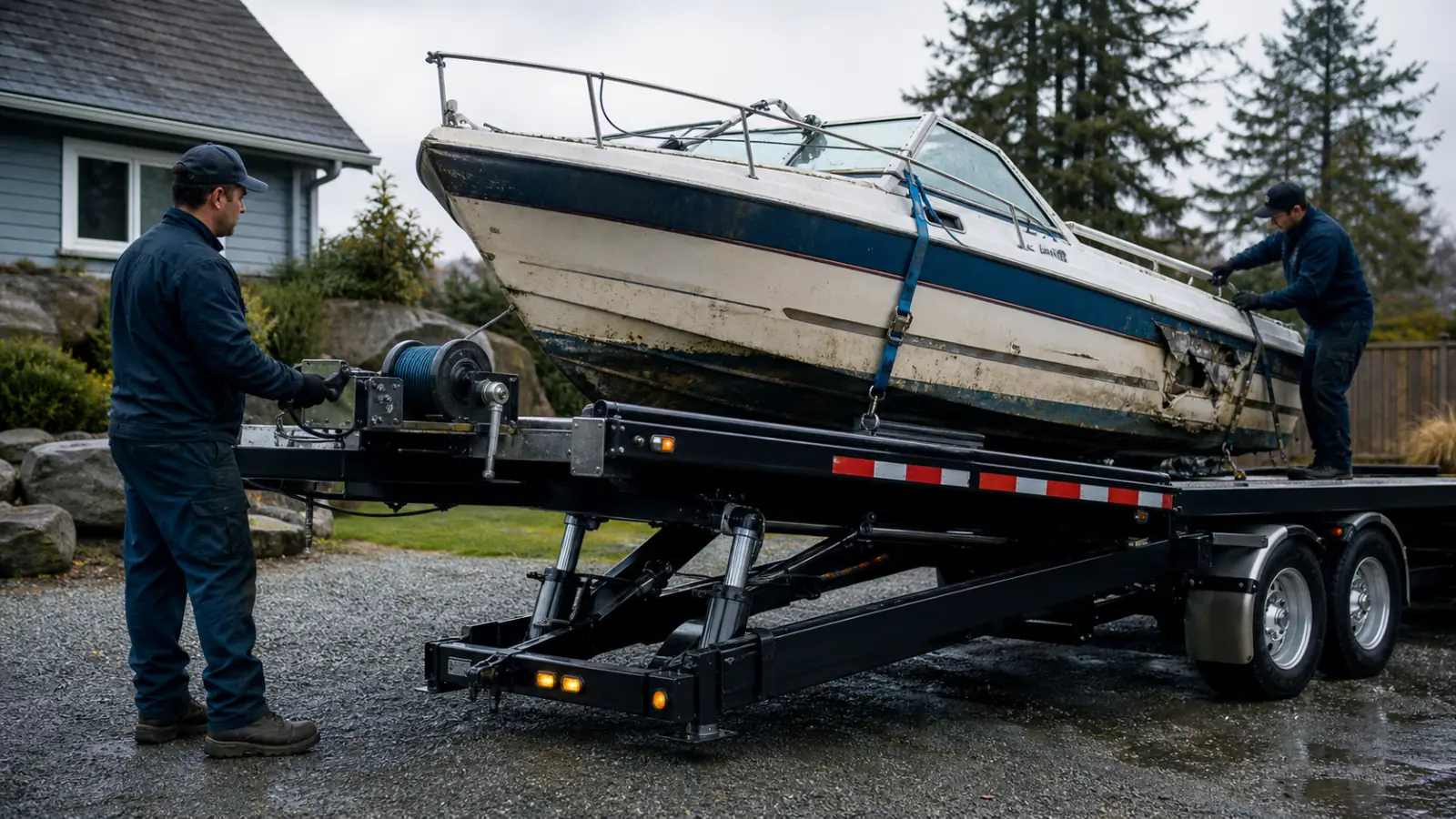
Property owners call for professional extraction when environmental exposure renders a vessel unsalvageable. The climate in Islip, NY subjects idle craft to harsh seasonal cycles, where trapped rainwater expands during freezing temperatures, fracturing fiberglass gelcoat and weakening internal floor frames. Constant dampness rots wooden transoms, ruins upholstery, and encourages mold growth throughout the cabin. As structural components degrade, moving a waterlogged sailboat or a decaying fiberglass hull becomes increasingly complex, requiring specialized support to prevent the structure from collapsing during transport.
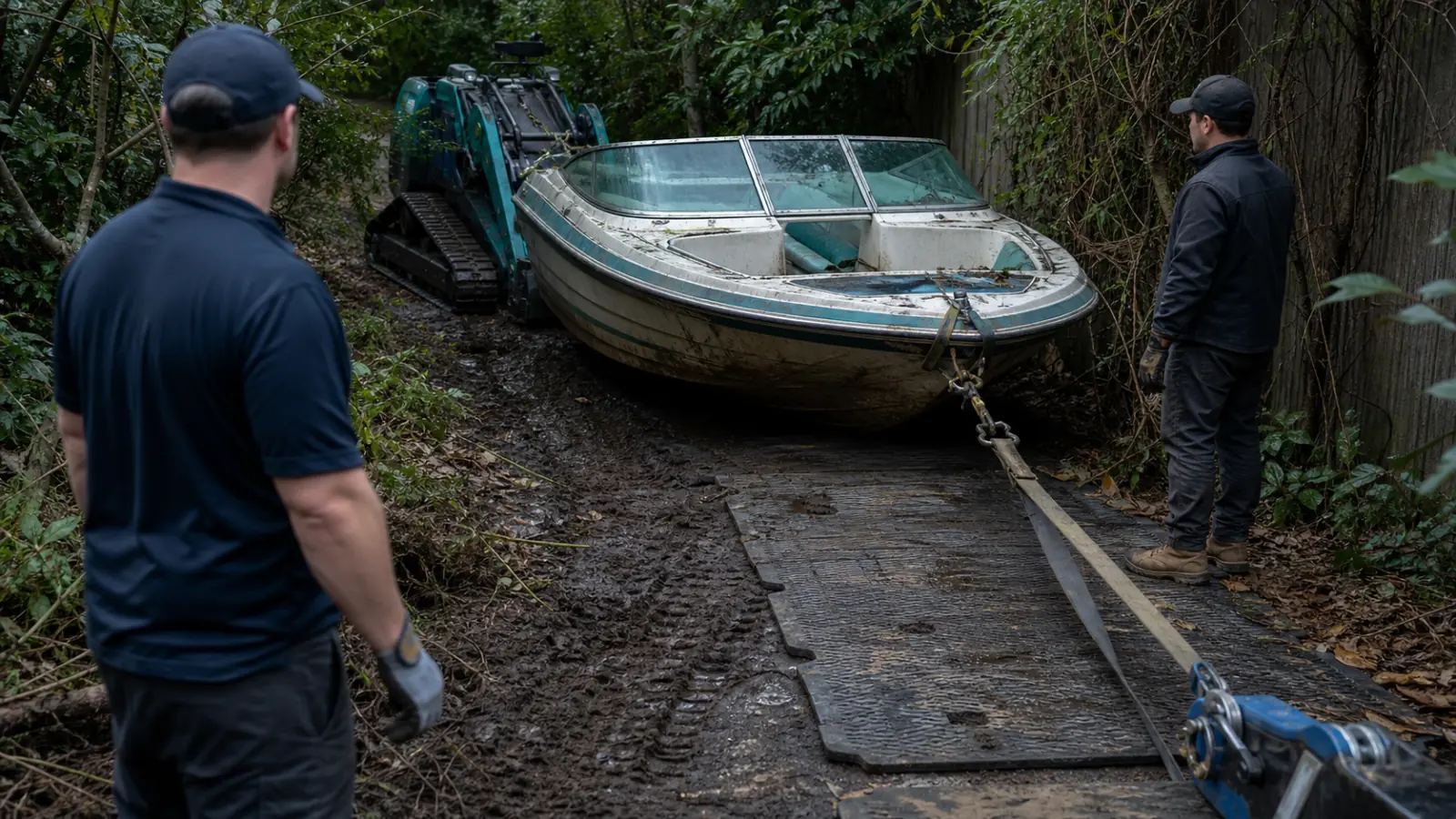
Local conditions and site layouts dictate the specific equipment required for each job. A pontoon sitting on high ground presents different maneuvering challenges than a deep-draft vessel resting in soft mud near the shoreline. Crew members must evaluate the approach route, looking for low-hanging tree branches, overhead utility lines, and narrow driveways that restrict heavy machinery. Surrounding terrain, such as sandy soil or soft grass, affects how equipment is positioned to avoid damaging the ground.

The physical positioning of the craft determines the extraction strategy. A fishing boat already resting on a functional trailer can be prepared for roadway travel relatively quickly. Conversely, a hull sitting on rotted storage blocks, sunk in shallow water, or wedged behind a structure requires rigging straps, mobile cranes, or heavy winches to move the vessel safely onto transport trailers without damaging nearby structures in Suffolk County.
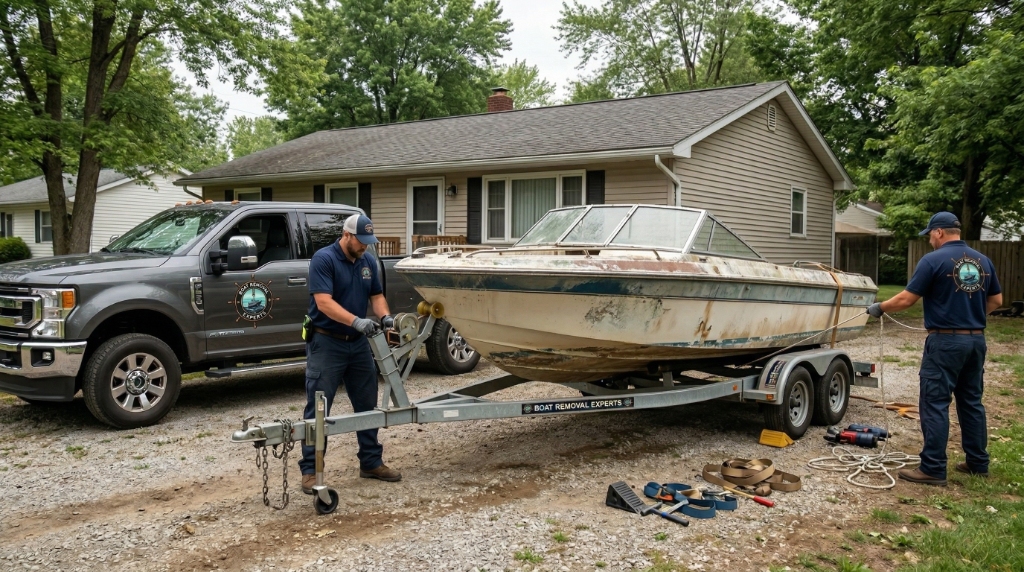
Every Type of Boat We Handle

Situations We Handle

Need Help? We’re Ready.

Contact boat removers directly or request free quotes. We dispatch crews fast.

Our Step-by-Step Process

Assessment

We evaluate the boat’s size, current location, condition, and any environmental or access challenges before we schedule boat removal.

Planning

A detailed plan is built around your vessel — equipment, logistics, timeline, and safety. Services include drainage of oil and fuel before transport.

Execution

Our experienced crew mobilizes to your current location and we tow, haul, or dismantle the vessel using professional marine equipment.

Completion

The vessel is recovered, recycled, or routed to certified boat junkyards for environmentally responsible disposal. The site is left clean.

Equipment & Capabilities

When a vessel cannot be towed on its own wheels, specialized winches, hydraulic trailers, and heavy-duty cranes are brought in to lift the structure onto a transport bed. If a trailer has rusted through or the tires are completely dry-rotted, crews install temporary skids or use heavy machinery to hoist the craft safely. Each situation demands specific rigging techniques to ensure the vessel remains stable throughout the loading process, regardless of its weight or physical condition.

In cases where a vessel is too large to pass through narrow alleyways, or when the hull is too weak to be lifted intact, crews must dismantle the structure on site. Using heavy saws and specialized cutting tools, workers carefully section the hull into manageable pieces. This step allows the team to clear large vessels from tight backyards or restricted enclosures without causing damage to adjacent buildings, fences, or landscaping.

Before any transport or cutting begins, workers focus on environmental safety by removing all hazardous materials. Crew members systematically drain fuel tanks, extract engine oil, remove lead-acid batteries, and disconnect lingering electronics. Fluids are contained and routed to approved fluid management centers to prevent soil or water contamination during the extraction process.

Once the vessel is loaded or sectioned, materials are sorted based on their composition and condition. Fiberglass, scrap metal, treated wood, and usable hardware are categorized for processing. Depending on structural integrity and material composition, pieces are directed toward scrap metal recovery, material recycling centers, or designated waste facilities following local regulations in Islip, NY.

Our boat removal experience covers everything from start to finish  assessment, planning, execution, dismantling, and final cleanup. Marina operators and property owners across Suffolk County trust us to get rid of your junk boat without damage to surrounding property.

FAQ

Boat Removal Questions - Frequently Asked

Common questions from property owners about our junk removal service, dismantling, and marine recovery.

We handle every type of vessel — sailboat, pontoon, fishing boats, jon boats, yachts, and commercial craft. Whether your boat or sailboat floats (or used to), we’ll remove it from any current location.

Yes. Sunken and partially submerged vessel recovery is a core part of our salvage work in Suffolk County. We use lift bags, salvage pumps, and marine cranes to safely raise vessels from underwater.

We respond to inquiries quickly — usually within hours, with same-day service available. For emergency situations, we mobilize as fast as possible. Call us directly for time-sensitive jobs.

No. Every job is handled in-house by our own team and equipment. No middlemen, no handoffs, no surprises.

Cost depends on the boat’s size, current location, condition, and complexity of the job. We provide free assessments and free quotes for every case — contact us and we’ll give you an honest estimate.

Yes. Our boat removal and disposal services include hazardous materials handling, oil and fuel drainage, hull dismantling, and recycling at certified yards — all in compliance with environmental regulations and environmentally responsible standards.

Absolutely. We regularly work in tight marinas, shallow waterways, private docks, backyards, and remote areas. We bring the right gear to reach any current location.

Yes. We frequently work with insurance adjusters on salvage and recovery claims and provide the documentation needed for your claim.

Browse Our Services - Ready to Get Started?

We handle everything from start to finish. Call us now or request a free quote – we’ll dispatch crews and haul your vessel away fast.