
Professional Boat Removal Services in Jacksonville Beach, FL
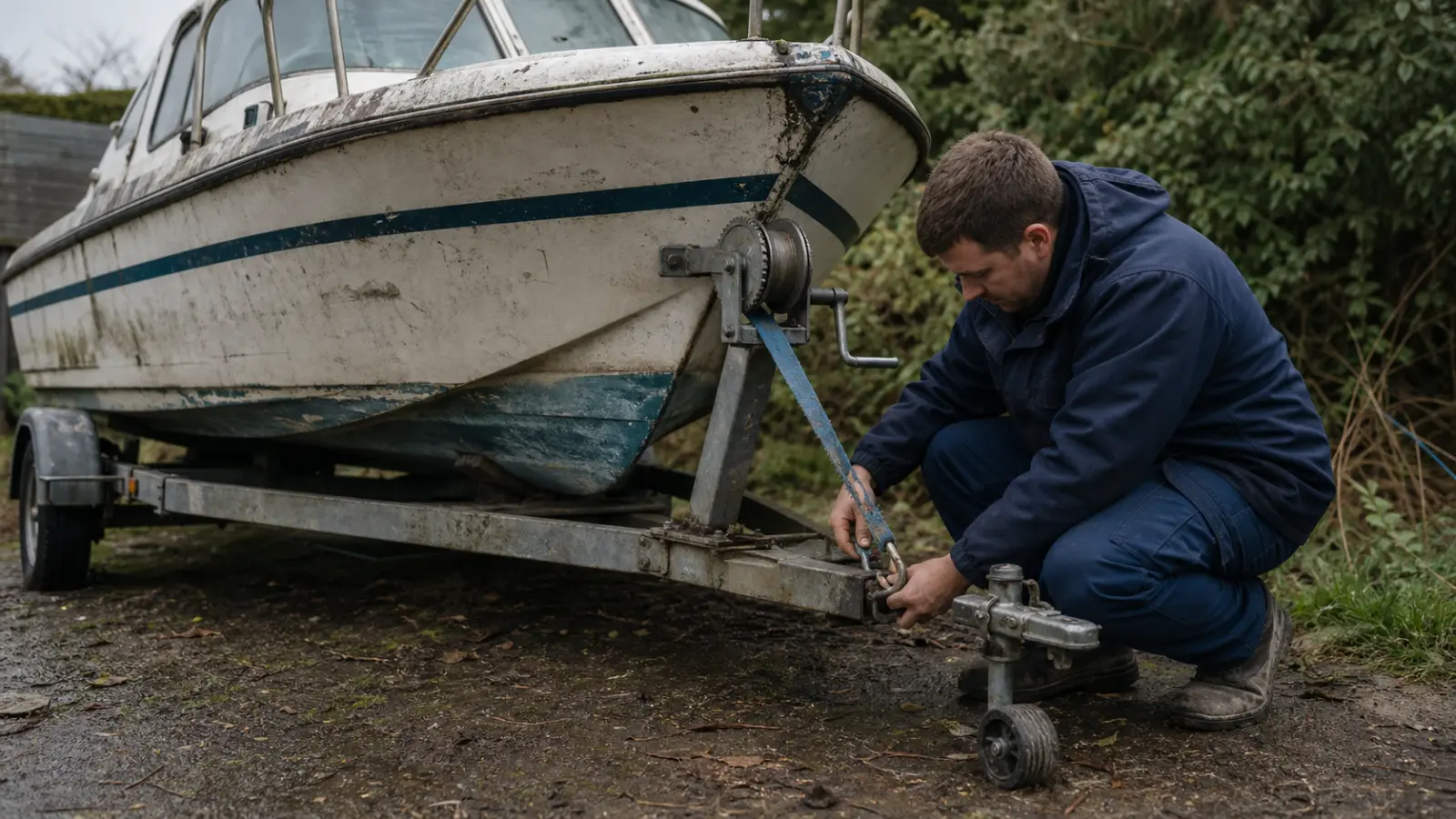
An old boat hull has been sitting on a rusty trailer behind the garage in Jacksonville Beach, Florida for six seasons, and the tires have flattened completely into the dirt. A marina manager just sent a formal notice about an unpaid slip fee, or a newly purchased residential lot came with a rotting cabin cruiser left behind by the prior owner. Sometimes an outboard engine seizes beyond repair, and paying for a complete mechanical rebuild costs far more than the total market value of the vessel itself. Whatever the situation, keeping an unused junk boat on your land or paying ongoing storage fees for a hull that no longer runs is a burden that needs a permanent solution.
Is there professional boat removal near me in Jacksonville Beach, FL? Boat Removal Experts provides complete vessel extraction, handling everything from landlocked hulls to immobile trailers across Duval County.

When getting rid of a vessel, paper documentation is just as important as the physical haul. We do not always transfer the title into our name, but we always issue a formal release of liability to the owner. Some haulers will simply load a vessel onto a flatbed with zero official paperwork, leaving the registered owner completely vulnerable if the legal liability stays attached to their name down the road. It is always worth asking how any prospective hauler handles legal liability before letting them move a hull.
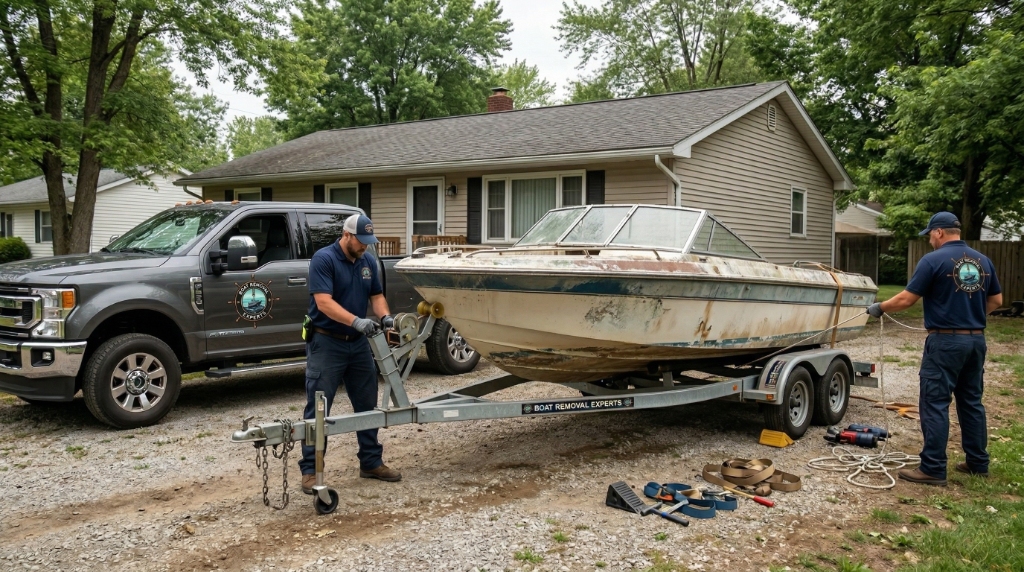
Removing a craft is rarely as simple as hooking up a hitch. A rusted trailer frame might snap during movement, a heavy keel may require specialized support cradles, or a wide beam might be completely blocked by a tight backyard fence. If the vessel sits on a soft lawn where heavy trucks sink instantly, moving it demands specialized rigging and heavy equipment.
Call 904-706-3694 to start.
Send photos through the contact form.
What Is Boat Removal and When You Need It
Professional boat disposal involves far more than merely towing a hull down the highway. A proper boat removal service requires evaluating structural integrity, managing environmental hazards, and selecting the correct heavy equipment to haul away a vessel safely. Whether dealing with an abandoned boat on a commercial site, a derelict hull sunk in shallow water, or an unwanted vessel blocking a drive, every job requires a tailored approach based on the condition of the craft and its surrounding environment.
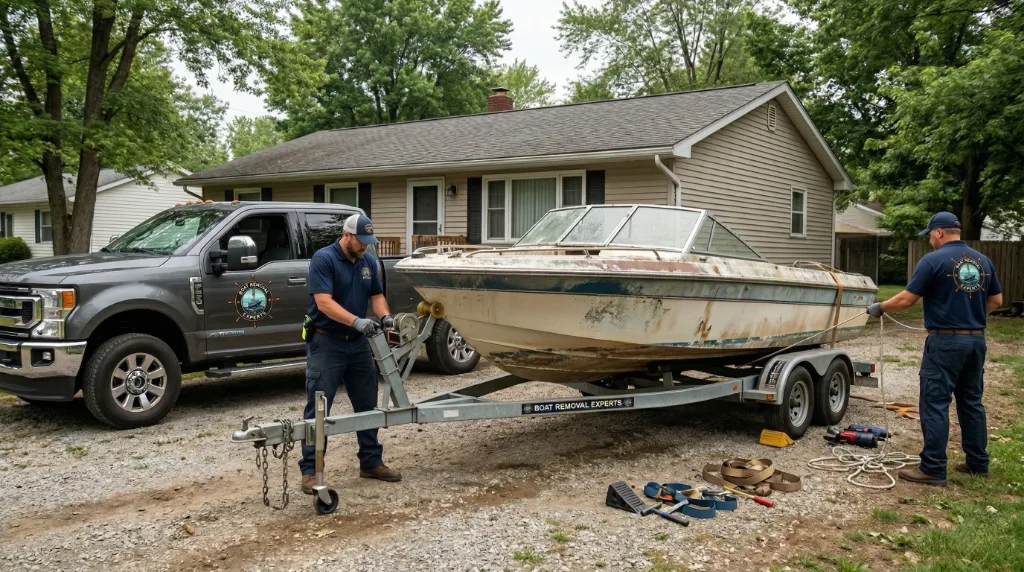
Legal documentation heavily dictates how the removal process unfolds. When an owner possesses a clean title, clearing the vessel is straightforward. However, when paperwork is lost, missing, or the vessel was inherited along with a real estate purchase, alternative steps must be taken to clear the legal record. When a vessel has been left unattended on private land or remains in a marina slip with unpaid fees, specific notices and legal clearances are required before any crew can haul the craft away.
Physical access, structural decay, and local environmental factors dictate how a hull is handled. A craft that has settled into soft ground requires different equipment than a vessel floating at a dock. The presence of hazardous substances, structural rot, or compromized fiberglass will change whether a hull can be loaded whole or must be processed differently on site.
When Jacksonville Beach Residents Call Us
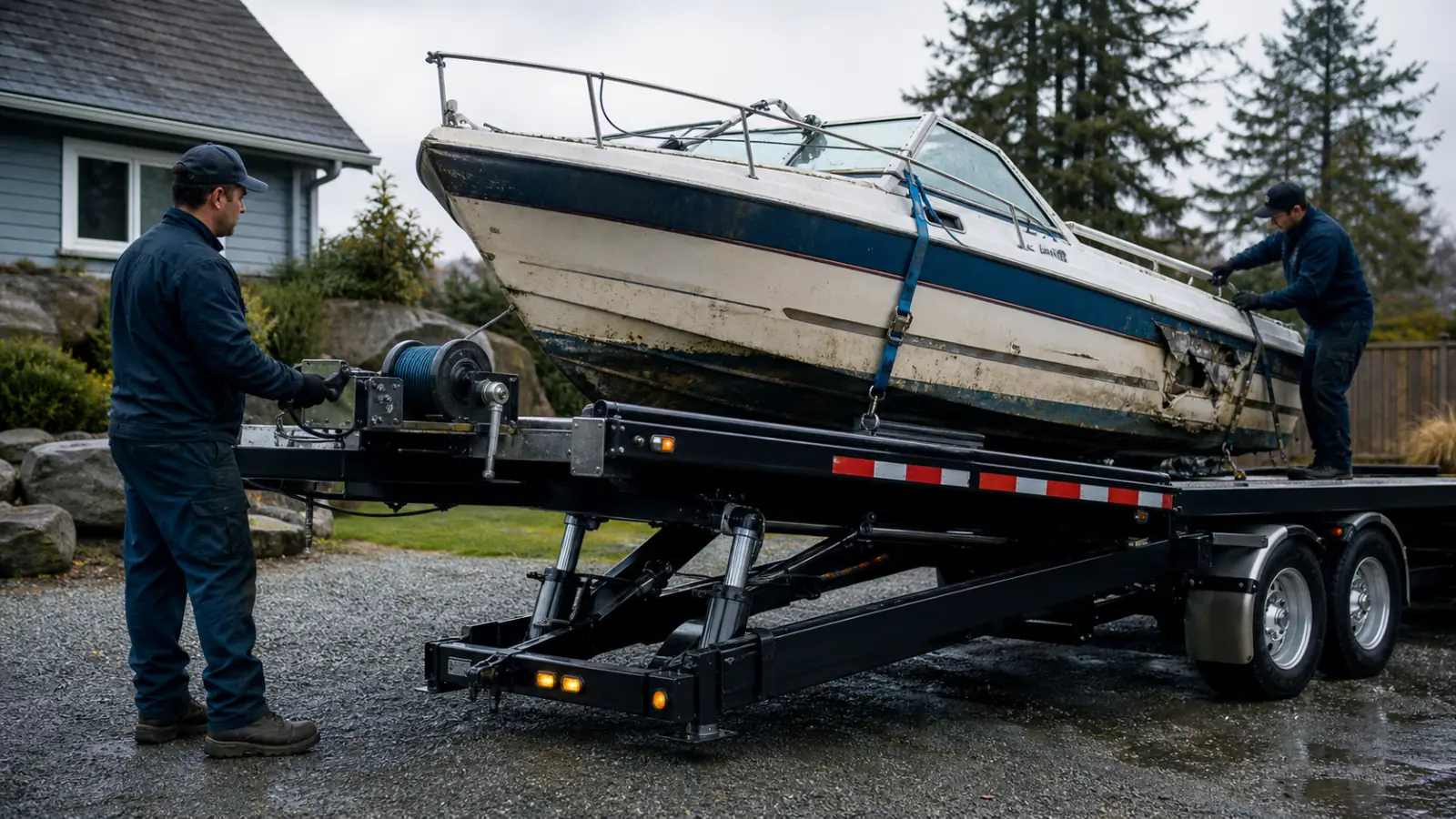
Salt air, high humidity, and intense sun in Jacksonville Beach take a heavy toll on exposed marine vessels. Sunlight quickly breaks down gelcoat finishes, causing fiberglass to become brittle and chalky over time. Constant moisture rots wooden floor frames, floorboards, and transoms, while seating upholstery splits open and traps standing rainwater inside the bilges. A neglected sailboat, heavy pontoon, or small fishing boat that collects water gradually gains hundreds of pounds of hidden weight, making structural collapse a real danger during any haul out.
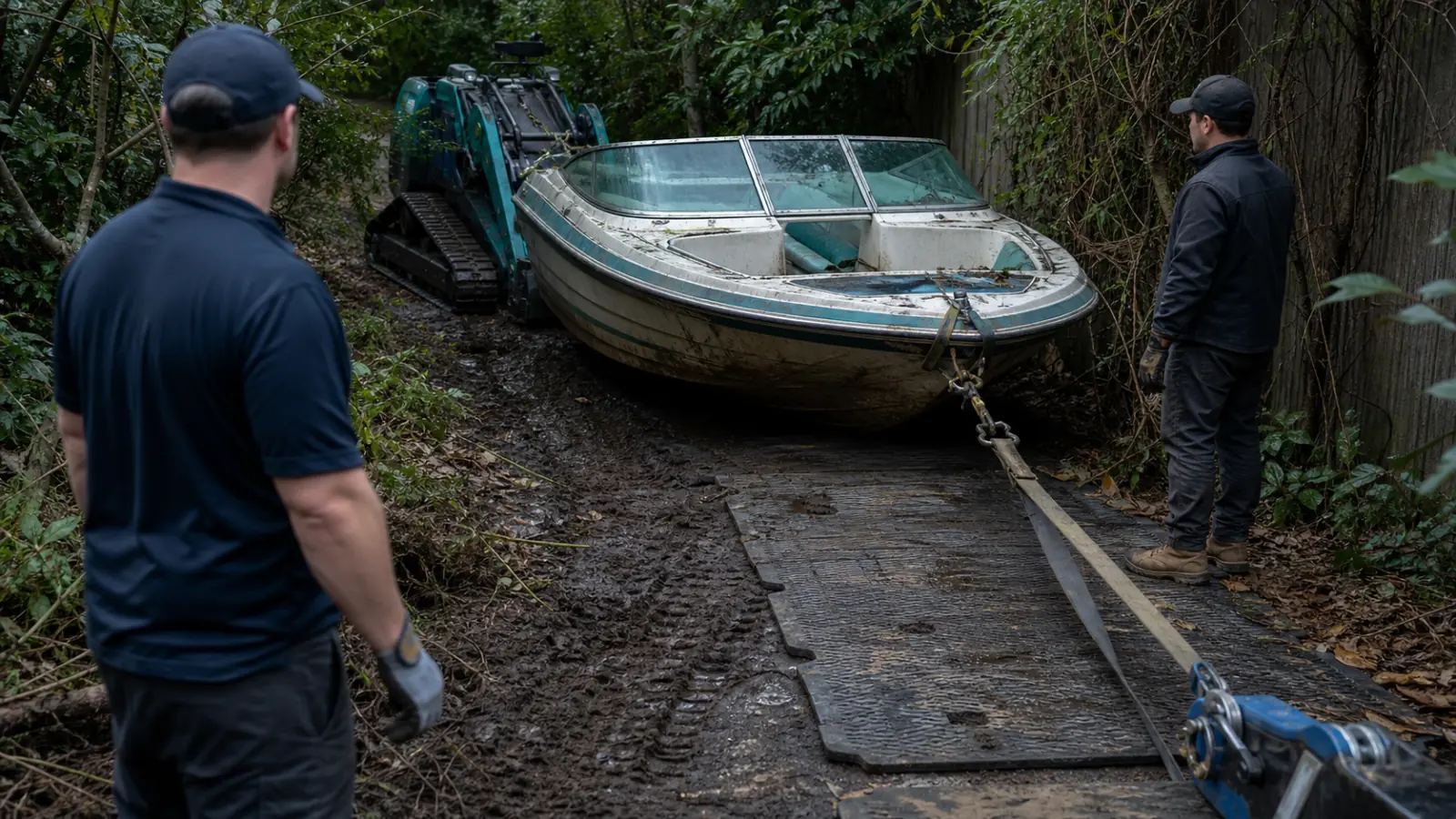
Property layout and local terrain dictate the exact equipment needed to extract a hull. Crew members must evaluate narrow residential driveways, tight side gates, low-hanging tree branches, and overhead utility lines before moving heavy machinery into position. Navigating soft sand or mud near Neptune Beach, Atlantic Beach, or Palm Valley requires specialized support so heavy equipment does not sink into the turf.
How the vessel rests also determines the plan of attack. A hull sitting on a functional trailer can be pulled out relatively easily, while a vessel stranded on wooden blocks, resting directly on the ground, or floating near Sawgrass or Nocatee requires specialized cranes, hydraulic jacks, or heavy winches to lift and secure it properly without causing further structural failure.
Every Type of Boat We Handle
- Sailboat & catamaran
- Motorboat, powerboat & cabin cruisers
- Fishing boats & bass boats
- Pontoon boats
- Jon boats & aluminum skiffs
- Large yachts
- Personal watercraft (jet skis)
- Houseboats
Situations We Handle
- Abandoned boat at marinas, docks, or boat lifts
- Unwanted boats on private property or in boat storage
- Vessels in backyards, fields, or vacant lots
- Derelict vessels blocking dock access or navigation
- Storm-damaged vessels requiring boat hauling
- Vessels without trailers or with flat tires
- Tight access locations (narrow driveways, wooded areas)
- Government or insurance-ordered cases
Need Help? We’re Ready.
Contact boat removers directly or request free quotes. We dispatch crews fast.
Our Step-by-Step Process

Assessment
We evaluate the boat’s size, current location, condition, and any environmental or access challenges before we schedule boat removal.

Planning
A detailed plan is built around your vessel — equipment, logistics, timeline, and safety. Services include drainage of oil and fuel before transport.

Execution
Our experienced crew mobilizes to your current location and we tow, haul, or dismantle the vessel using professional marine equipment.

Completion
The vessel is recovered, recycled, or routed to certified boat junkyards for environmentally responsible disposal. The site is left clean.
Equipment & Capabilities
When an existing trailer is too rusted to roll or missing its axle entirely, the extraction crew relies on heavy winches, hydraulic drop-deck trailers, and portable skids to load the hull safely. If a vessel is too wide to fit through property access gates or too structurally compromized to survive transit, crews dismantle the structure directly on site. Heavy cutting tools split the fiberglass into manageable sections, allowing the team to clear large vessels out of restricted backyard spaces without damaging surrounding structures.
Before any hull leaves the property or undergoes breaking, all hazardous materials are systematically stripped and isolated. Fuel tanks are drained, motor oil is collected, and lead-acid batteries, flare kits, and obsolete navigation electronics are safely removed to prevent environmental contamination. Managing these fluids and electrical components protects the ground surface and ensures full compliance with environmental handling requirements during transport.
Once a vessel is loaded and secured, the crew determines the destination for every component based on its material makeup. Metal fittings, aluminum T-tops, stainless steel rails, and lead ballast are sorted for bulk recycling facilities. The remaining fiberglass hull materials and compromized internal wood framing are transported directly to designated industrial disposal locations equipped to handle heavy marine debris.
Our boat removal experience covers everything from start to finish assessment, planning, execution, dismantling, and final cleanup. Marina operators and property owners across Duval County trust us to get rid of your junk boat without damage to surrounding property.
FAQ
Boat Removal Questions - Frequently Asked
Common questions from property owners about our junk removal service, dismantling, and marine recovery.
What type of boat do you remove?
We handle every type of vessel — sailboat, pontoon, fishing boats, jon boats, yachts, and commercial craft. Whether your boat or sailboat floats (or used to), we’ll remove it from any current location.
Do you handle sunken or partially submerged vessels?
Yes. Sunken and partially submerged vessel recovery is a core part of our salvage work in Duval County. We use lift bags, salvage pumps, and marine cranes to safely raise vessels from underwater.
How quickly can you respond?
We respond to inquiries quickly — usually within hours, with same-day service available. For emergency situations, we mobilize as fast as possible. Call us directly for time-sensitive jobs.
Do you use subcontractors?
No. Every job is handled in-house by our own team and equipment. No middlemen, no handoffs, no surprises.
How much does cheap boat removal cost?
Cost depends on the boat’s size, current location, condition, and complexity of the job. We provide free assessments and free quotes for every case — contact us and we’ll give you an honest estimate.
Do you handle boat disposal and recycling?
Yes. Our boat removal and disposal services include hazardous materials handling, oil and fuel drainage, hull dismantling, and recycling at certified yards — all in compliance with environmental regulations and environmentally responsible standards.
Can you reach a hard-to-access location?
Absolutely. We regularly work in tight marinas, shallow waterways, private docks, backyards, and remote areas. We bring the right gear to reach any current location.
Do you work with insurance companies?
Yes. We frequently work with insurance adjusters on salvage and recovery claims and provide the documentation needed for your claim.
Other Boat Removal Locations
Browse Our Services - Ready to Get Started?
We handle everything from start to finish. Call us now or request a free quote – we’ll dispatch crews and haul your vessel away fast.