
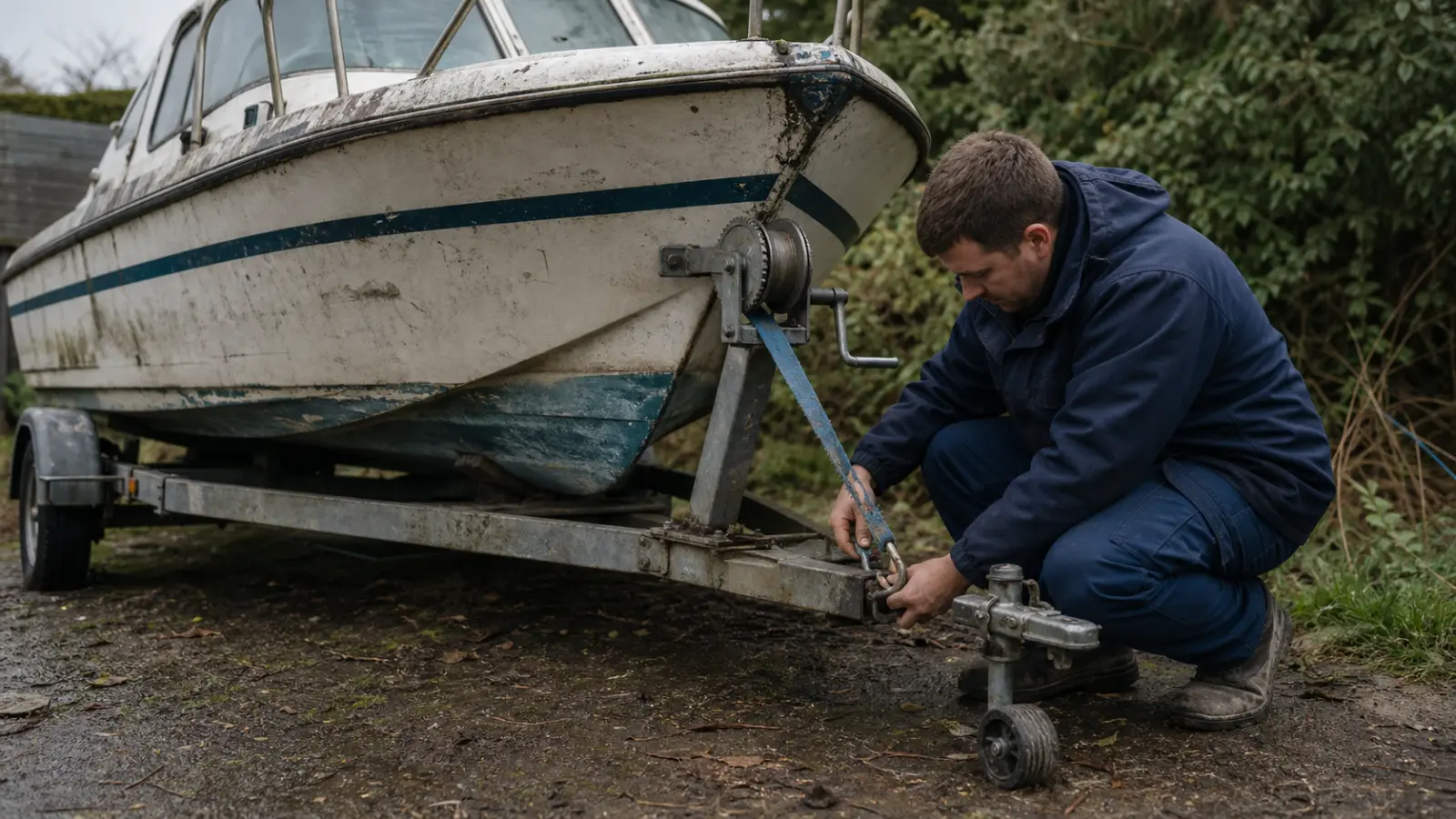
Professional Boat Removal Services in Joplin, MO

An old boat sits behind a garage on property near Dennis Acres, its hull accumulating debris through years of neglected seasons while the trailer tires sink deep into soft soil. In another scenario, a cabin cruiser remains anchored to a lot after a property transaction closes, leaving the new owner with an unexpected vessel. A marina may issue a formal notice regarding unpaid slip fees, or a mechanical assessment might reveal an outboard engine with a seized block that would cost thousands more to rebuild than the craft is worth. These situations leave property owners responsible for massive structures that no longer serve a purpose.

Is there boat removal near me in Joplin, MO? Boat Removal Experts provides professional boat removal across Joplin, MO, handling the complete extraction, transport, and processing of unwanted vessels regardless of their location on your land.

When our team handles a junk boat, we do not always execute a formal title transfer, but Boat Removal Experts always issues a complete release of liability to the owner. Some haulers will tow a vessel away without providing official documentation, leaving the original owner legal responsibility if the hull is dumped elsewhere. Establishing a clear release of liability protects you from future civil or environmental claims tied to the craft.

Moving a vessel is uniquely challenging because a rusted trailer may have seized axles that refuse to roll, or the craft might sit on a specialized cradle. The beam width often exceeds narrow gates, and the sheer weight of an old boat can sink transport equipment into soft lawn surfaces.

Call 417-386-3618 to start.

Send photos through the contact form.

What Is Boat Removal and When You Need It

Professional boat removal encompasses far more than simply hooking a hitch to a bumper and towing a vessel down the road. When an abandoned boat sits on residential land or within a commercial facility, the removal process requires specialized rigged equipment, physical labor, and proper waste management techniques. The structural state of a derelict vessel determines how crews approach the job, especially when the deck has softened or the fiberglass has begun to delaminate under prolonged exposure to weather elements.
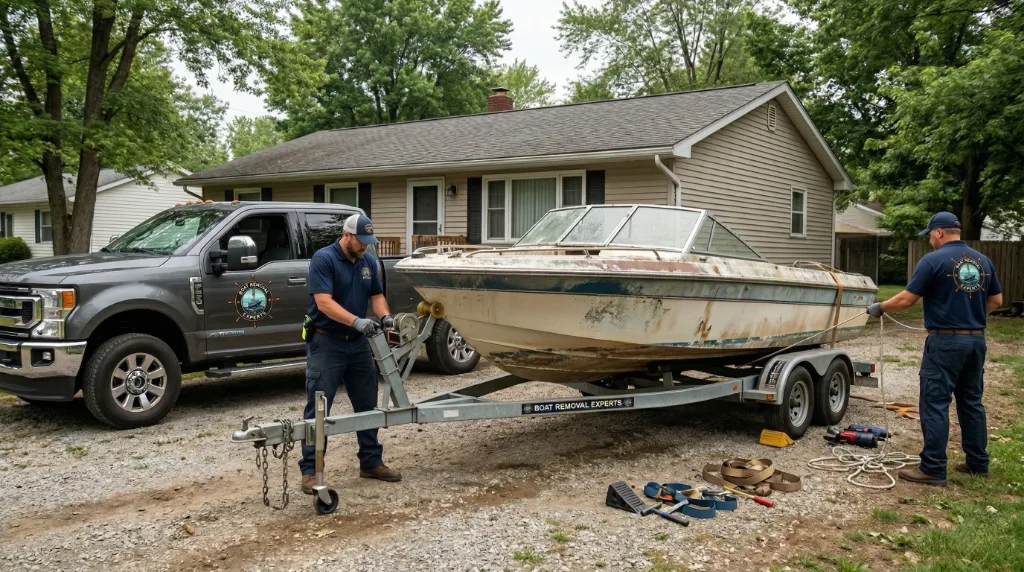
The status of the paperwork directly impacts how boat disposal proceeds. Having a clear title, a current registration, or a visible HIN makes processing straightforward, but lost paperwork requires specific administrative steps before transport can begin. When an abandoned boat removal involves a vessel left behind by a previous tenant or an inherited property in Duquesne, crew members verify ownership documentation or establish legal authority through landowner affidavits prior to moving the structure.

Vessels left in unpaid slips or abandoned on private acreage create ongoing legal liabilities for property managers. A derelict craft sitting in a slip risks sinking, which creates severe environmental hazards from trapped fluids. Clearing an abandoned boat from private land eliminates safety hazards, structural collapse risks, and potential municipal code violations while restoring usable space to the parcel.
When Joplin Residents Call Us

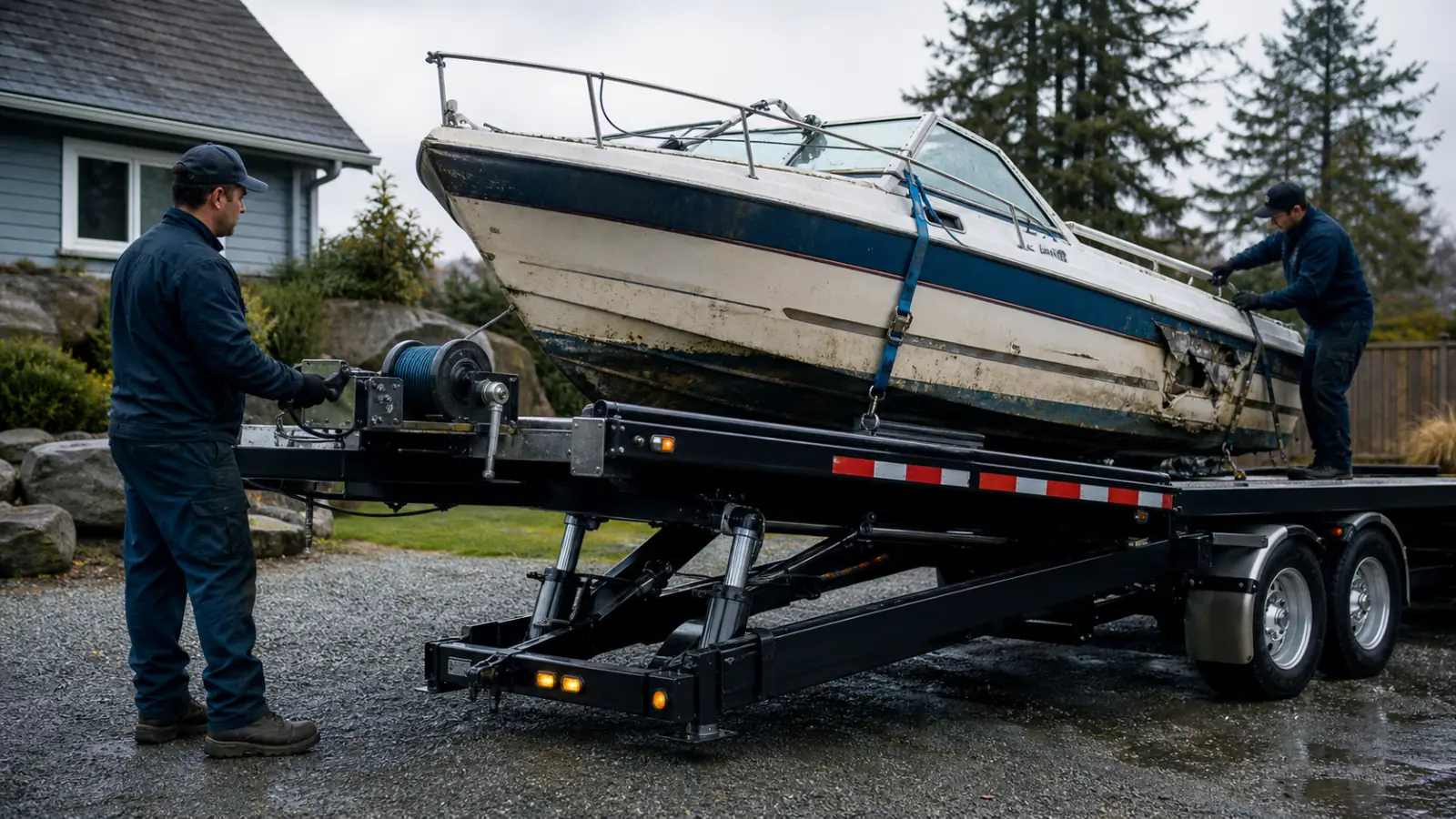
Property owners in Joplin call for assistance when outdoor exposure renders a vessel completely unusable. The extreme weather shifts in Missouri cause severe temperature swings that force water into microscopic cracks in the gelcoat. When trapped moisture freezes during winter, it expands, causing widespread fiberglass delamination. Rainwater pooling inside an uncovered fishing boat or pontoon accelerates wood rot in floorboards, ruins upholstery, and adds thousands of pounds of dead weight that threatens the structural stability of the entire hull.
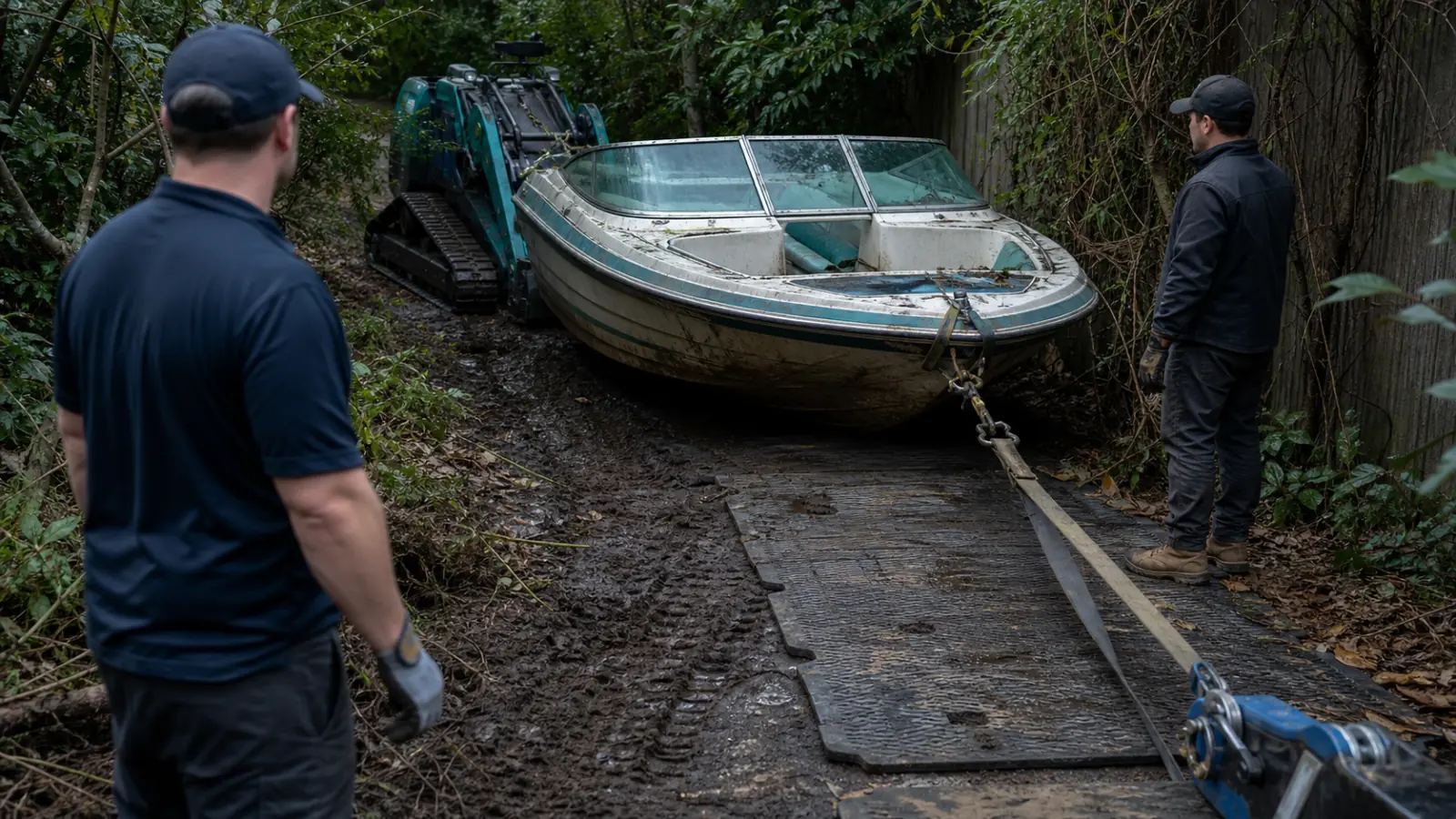
Local site conditions heavily influence how a sailboat or powerboat is extracted. A vessel positioned near Shoal Creek Drive or Leawood may sit down a narrow dirt lane, under low-hanging tree canopies, or behind tight residential gates. Crews must evaluate the surface supporting the load, as soft soil or mud will prevent heavy haulers from reaching the vessel without specialized ground protection.

Site access dictates whether a vessel can be loaded directly onto a flatbed or if it must be winched out from a backyard corner. Whether a vessel rests on blocks, rests flat on the ground near Grand Falls Plaza, or floats in a private dock slip, crews adapt their approach to the specific physical constraints of the property.
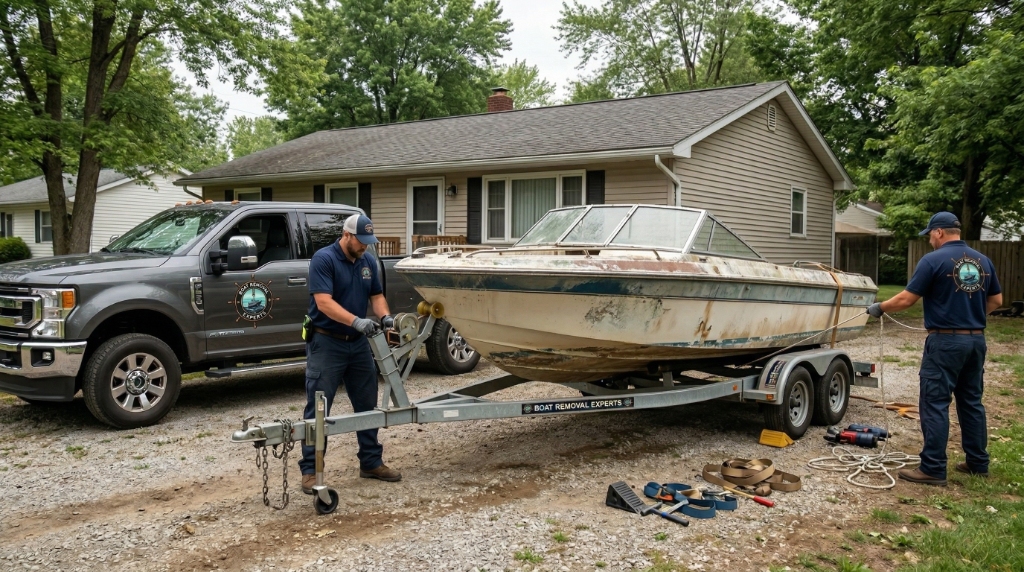
Every Type of Boat We Handle

Situations We Handle

Need Help? We’re Ready.

Contact boat removers directly or request free quotes. We dispatch crews fast.

Our Step-by-Step Process

Assessment

We evaluate the boat’s size, current location, condition, and any environmental or access challenges before we schedule boat removal.

Planning

A detailed plan is built around your vessel — equipment, logistics, timeline, and safety. Services include drainage of oil and fuel before transport.

Execution

Our experienced crew mobilizes to your current location and we tow, haul, or dismantle the vessel using professional marine equipment.

Completion

The vessel is recovered, recycled, or routed to certified boat junkyards for environmentally responsible disposal. The site is left clean.

Equipment & Capabilities

When an old vessel cannot be towed because the trailer is completely rusted or missing entirely, specialized extraction tools are brought to the site. Hydraulic jacks, heavy-duty winches, spreaders, and crane hoists lift the hull safely onto transport beds. If a broad beam prevents a craft from passing through tight residential structures, or if the hull has structural damage that prevents transport as a single unit, crews dismantle the vessel directly on site using industrial cutting equipment.

Before any hull cutting or transport occurs, hazardous materials are carefully removed to prevent soil contamination. Crews drain remaining fuel tanks, extract engine oil, disconnect heavy marine batteries, and strip out old electronics and refrigeration units. Containing fluid hazards protects the immediate site and ensures compliance with environmental handling standards.

Once hazardous materials are secured, the remaining metals, plastics, and fiberglass are sorted. Metal components including aluminum pontoons, stainless steel railings, cleats, and copper wiring are separated for material recycling. The remaining structural fiberglass and non-recyclable composite materials are transported to appropriate regional waste facilities for final processing. The crew determines the exact sequence of dismantle work, fluid extraction, and material disposal services only after conducting a complete physical inspection of the vessel and its surroundings.

Our boat removal experience covers everything from start to finish  assessment, planning, execution, dismantling, and final cleanup. Marina operators and property owners across Jasper County trust us to get rid of your junk boat without damage to surrounding property.

FAQ

Boat Removal Questions - Frequently Asked

Common questions from property owners about our junk removal service, dismantling, and marine recovery.

We handle every type of vessel — sailboat, pontoon, fishing boats, jon boats, yachts, and commercial craft. Whether your boat or sailboat floats (or used to), we’ll remove it from any current location.

Yes. Sunken and partially submerged vessel recovery is a core part of our salvage work in Jasper County. We use lift bags, salvage pumps, and marine cranes to safely raise vessels from underwater.

We respond to inquiries quickly — usually within hours, with same-day service available. For emergency situations, we mobilize as fast as possible. Call us directly for time-sensitive jobs.

No. Every job is handled in-house by our own team and equipment. No middlemen, no handoffs, no surprises.

Cost depends on the boat’s size, current location, condition, and complexity of the job. We provide free assessments and free quotes for every case — contact us and we’ll give you an honest estimate.

Yes. Our boat removal and disposal services include hazardous materials handling, oil and fuel drainage, hull dismantling, and recycling at certified yards — all in compliance with environmental regulations and environmentally responsible standards.

Absolutely. We regularly work in tight marinas, shallow waterways, private docks, backyards, and remote areas. We bring the right gear to reach any current location.

Yes. We frequently work with insurance adjusters on salvage and recovery claims and provide the documentation needed for your claim.

Browse Our Services - Ready to Get Started?

We handle everything from start to finish. Call us now or request a free quote – we’ll dispatch crews and haul your vessel away fast.