
Professional Boat Removal Services in Kearney, NE

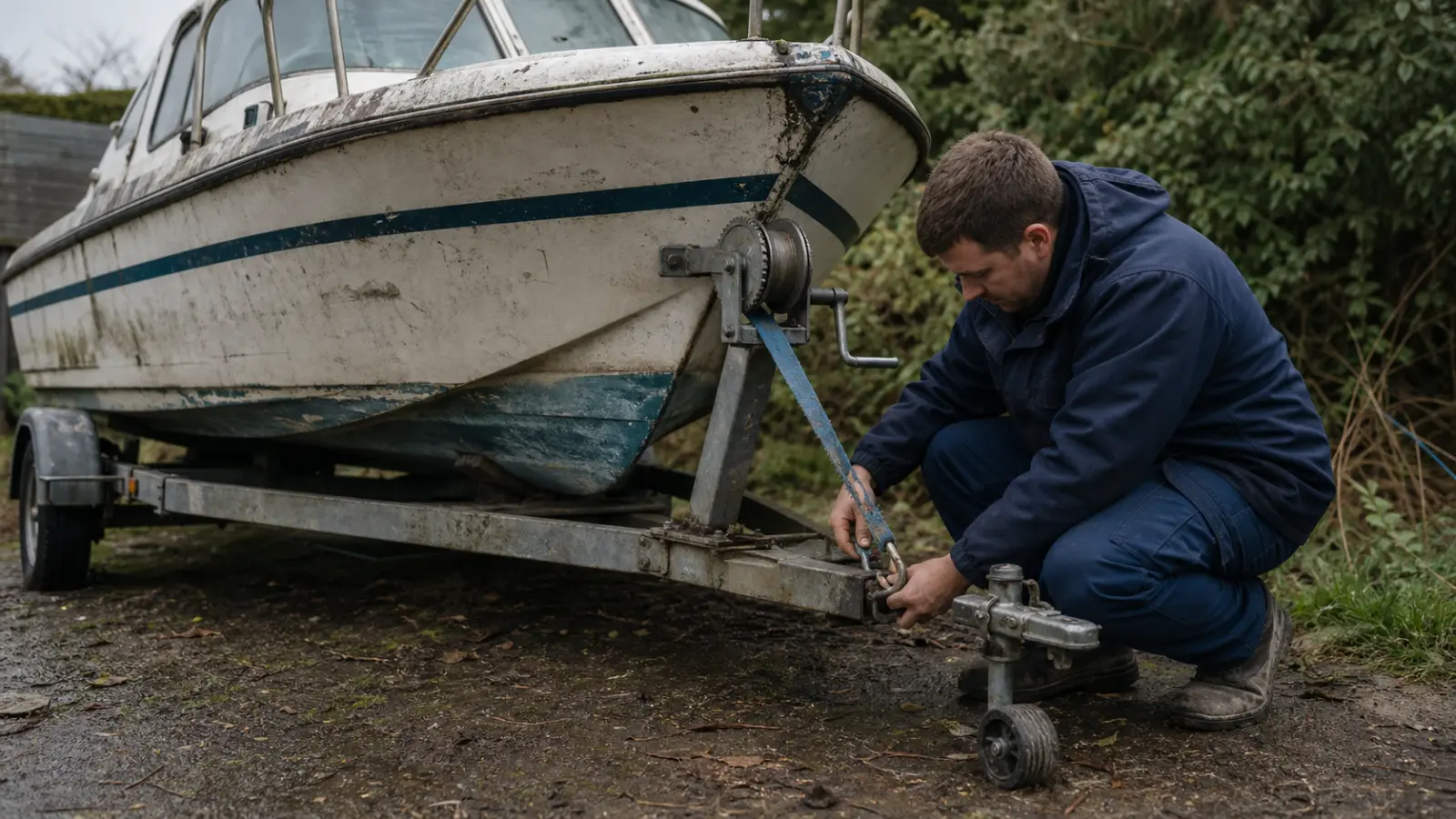
An old boat resting on a flat-tired trailer behind a garage often turns into a permanent fixture after a few seasons of neglect. The fiberglass hull collects debris, while the outboard motor suffers from frozen steering and internal seized components that cost significantly more to repair than the vessel itself is worth. In other cases, property transfers leave buyers with an unwanted cruiser sitting on a cradle in the backyard, or a marina issues a stern notice regarding back dues on an unmaintained slip. When these situations arise, getting rid of a junk boat requires specialized equipment and proper planning rather than a standard tow truck.

Is there boat removal near me in Kearney, NE? Boat Removal Experts provides complete hauling and site clearing for residential yards, commercial lots, and storage facilities in the immediate area.

A major concern when arranging for vessel disposal is long-term legal exposure. Some unauthorized operators simply haul a hull away without filing official paperwork, leaving the registered owner named on state databases if the vessel is later abandoned on public land. Our company position is clear: while we do not always transfer the title into our own name, we always issue a formal release of liability to document that the vessel has officially left your possession.

Moving a vessel is rarely as simple as hooking up a hitch. A rusted trailer frame can snap during transit, deep keels complicate flatbed loading, and broad beams often exceed narrow access gates. Furthermore, heavy hulls resting on soft soil present significant traction risks for heavy transport vehicles attempting a pick.

Call 308-248-2692 to start.

Send photos through the contact form.

What Is Boat Removal and When You Need It

Professional boat disposal involves far more than hooking a winch to a bow eye and pulling a vessel onto a ramp. When an abandoned boat sits on private ground or within a commercial yard, the physical retrieval requires evaluating structural integrity, axle strength, and clearance path. An abandoned boat removal project may involve extracting a vessel resting on rotted timber blocks, pulling a vessel from a soft marsh line, or clearing out a vessel that has sat submerged in a slip. Every job demands tailored rigging to prevent the craft from breaking apart during extraction.
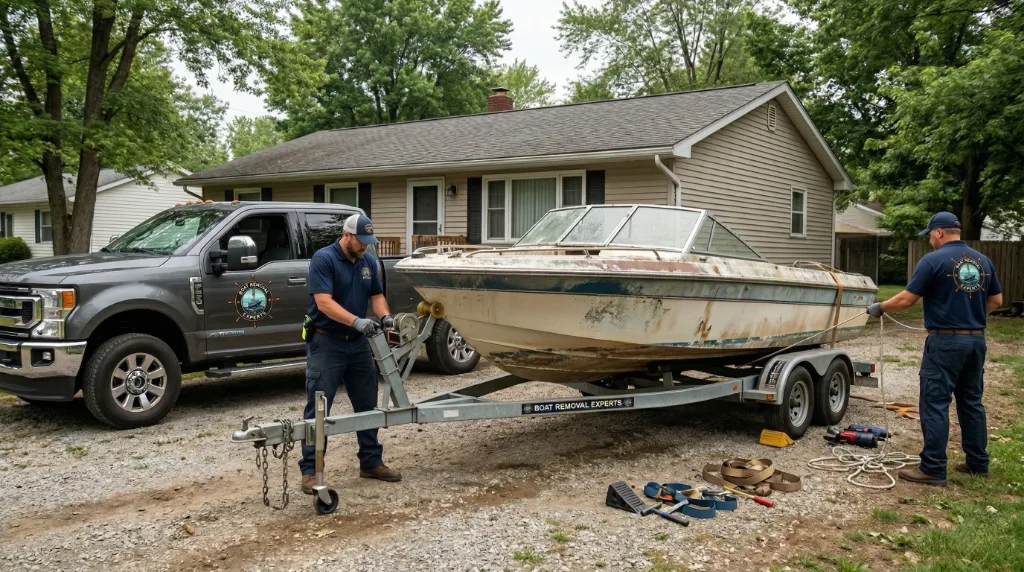
Paperwork dictates how the process moves forward. Having a clear title in hand streamlines the process, allowing immediate haul-away and transfer options. However, when an old vessel comes with a newly purchased property, or when original registration papers have been lost over decades of non-use, alternative paperwork procedures are required. Missing titles require specific documentation to prove the vessel was lawfully acquired or declared a derelict on private land before transport can take place.

When a vessel is left in a storage facility without payment, or remains on property in Buffalo County after a tenant departs, land owners must address both the physical structure and legal liability. Whether handling a small runabout or a severe derelict craft, proper handling ensures the property is cleared without leaving debris or environmental hazards behind.
When Kearney Residents Call Us

Vessels left exposed to the changing weather conditions in Kearney experience rapid physical decline. Strong summer sun degrades gelcoat finishes, causing severe crazing and shell weakness, while winter freeze-and-thaw cycles trap rainwater inside fiberglass floor frames and floorboards. This absorbed moisture expands when frozen, delaminating the core structure and making the entire floor unsafe. Upholstery splits quickly, allowing moisture deep into foam seating, which adds hundreds of pounds of dead weight to a pontoon or fishing boat left in open yards. Over time, an idle sailboat or runabout transforms from a usable craft into a fragile, heavy liability.
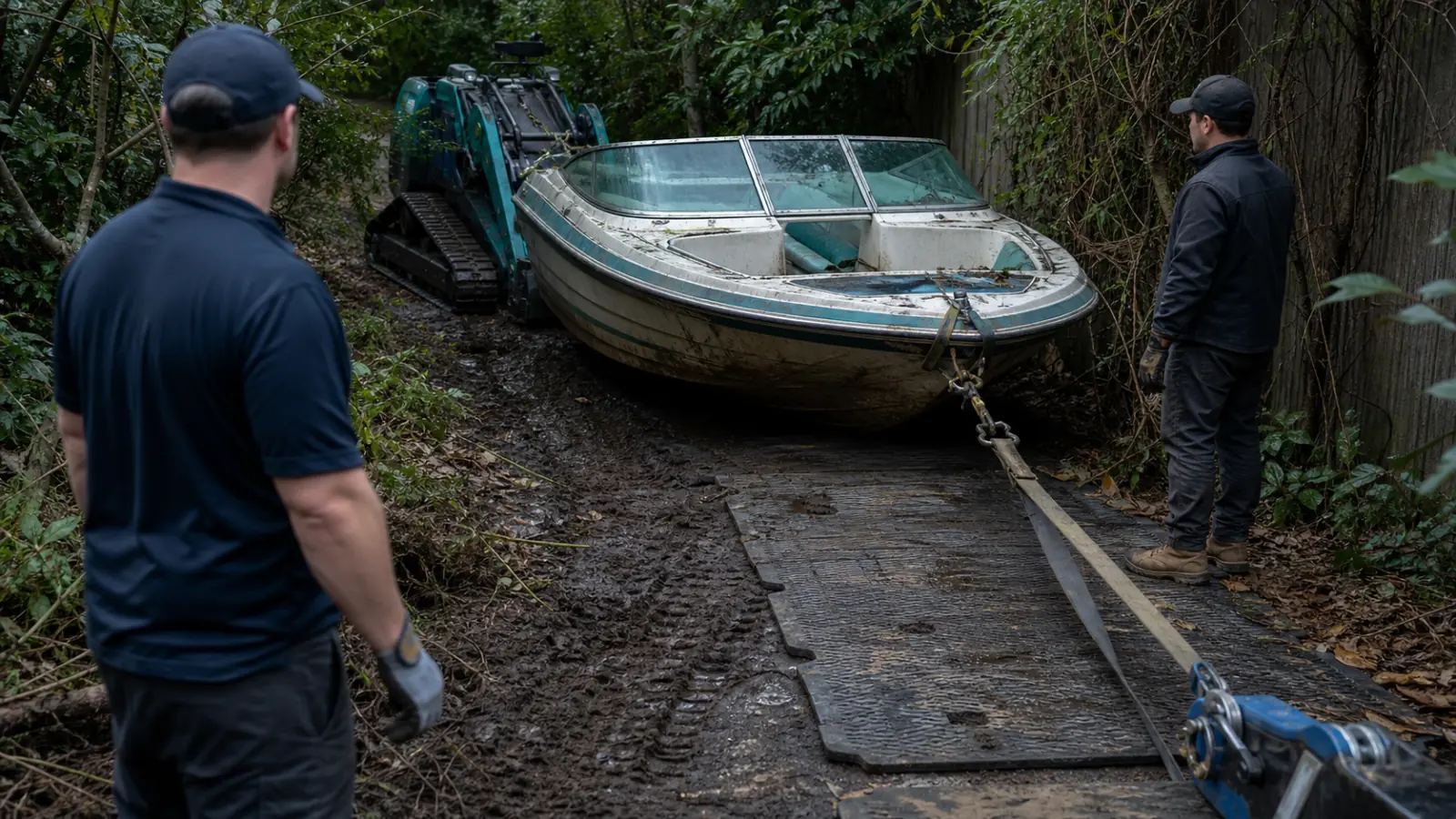
Site logistics heavily dictate how a recovery crew approaches a job. Neighborhoods near Glenwood and Riverdale often present tight residential driveways bordered by low overhead tree branches or utility lines, forcing tight maneuvering. Properties out toward Odessa, Gibbon, or Amherst may have broader acreage, but the path to the vessel often crosses soft dirt, unpaved lanes, or mud that cannot support standard transport trucks. Whether a craft sits on a rotten trailer, rests on wooden blocks, or floats in a shallow slip, the ground firmness and overhead clearances determine what pull equipment must be deployed.
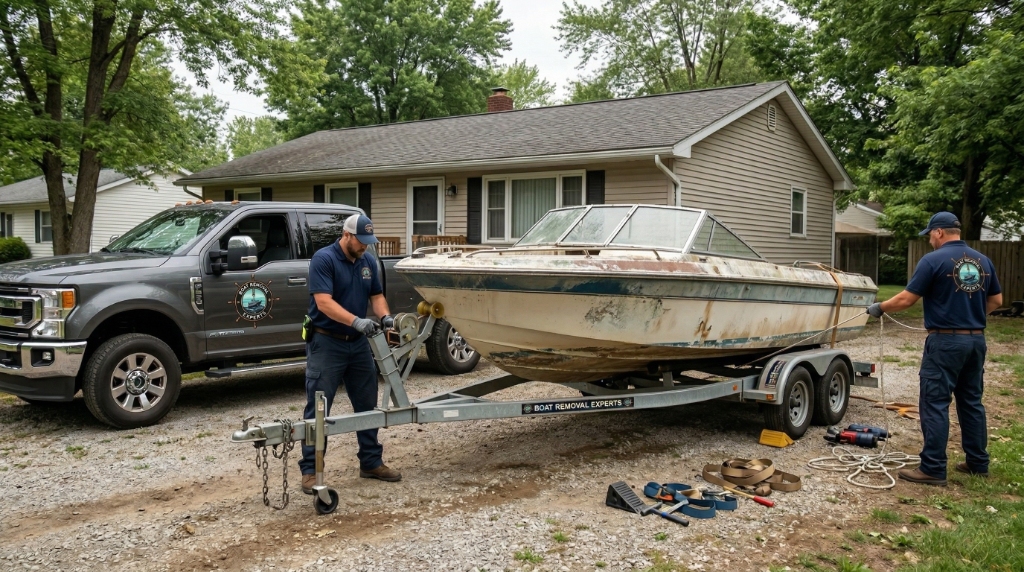
Every Type of Boat We Handle

Situations We Handle

Need Help? We’re Ready.

Contact boat removers directly or request free quotes. We dispatch crews fast.

Our Step-by-Step Process

Assessment

We evaluate the boat’s size, current location, condition, and any environmental or access challenges before we schedule boat removal.

Planning

A detailed plan is built around your vessel — equipment, logistics, timeline, and safety. Services include drainage of oil and fuel before transport.

Execution

Our experienced crew mobilizes to your current location and we tow, haul, or dismantle the vessel using professional marine equipment.

Completion

The vessel is recovered, recycled, or routed to certified boat junkyards for environmentally responsible disposal. The site is left clean.

Equipment & Capabilities

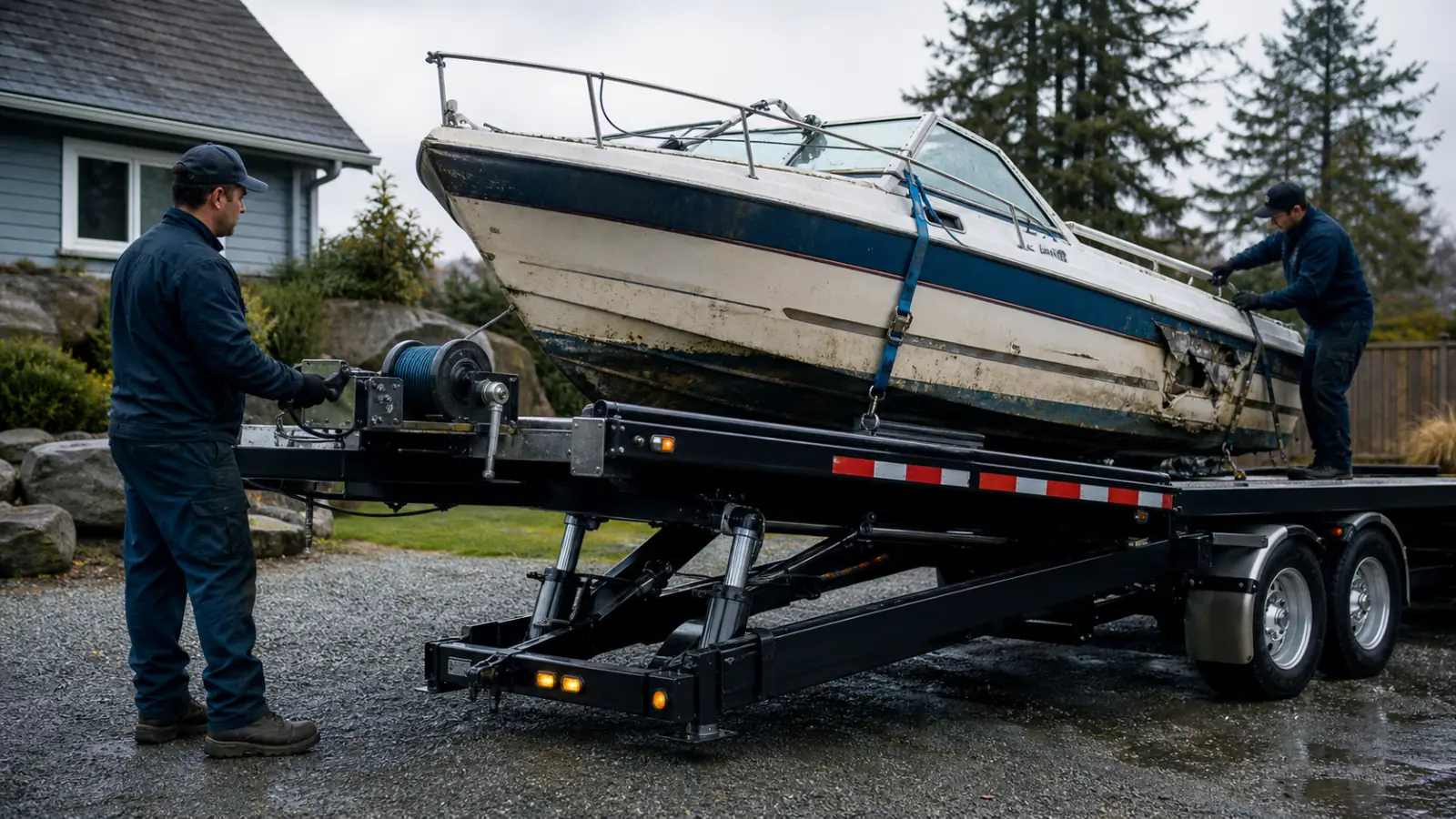
When a vessel cannot roll out on its own tires, specialized load equipment must be utilized to complete the extraction. If a trailer frame is snapped or axles are locked solid, crews deploy heavy-duty winches, skid plates, and hydraulic machinery to load the craft safely. In tight spaces where narrow gates or permanent structures block path access, workers must dismantle the vessel on site. Using specialized cutting tools, the hull is carefully sectioned into manageable pieces that fit through narrow spaces without damaging surrounding structures.

Before any vessel moves or undergoes structural cutting, environmental safety precautions are enacted. Crews systematically drain fuel tanks, siphon crankcase oil, capture residual fluids, and remove heavy lead-acid batteries and hazardous electronics to prevent toxic spills onto the soil or water. This careful fluid recovery ensures compliance with environmental safety standards before transit.

Where the materials end up depends entirely on what the crew finds during initial inspection. Metals like aluminum hulls, stainless fittings, and bronze hardware are directed toward metal recycling facilities. Clean fiberglass, saturated wood cores, and degraded cabin materials are transported to licensed landfill locations equipped for bulk solid waste processing. The vessel condition dictates the exact disposal pathway.

Our boat removal experience covers everything from start to finish  assessment, planning, execution, dismantling, and final cleanup. Marina operators and property owners across Buffalo County trust us to get rid of your junk boat without damage to surrounding property.

FAQ

Boat Removal Questions - Frequently Asked

Common questions from property owners about our junk removal service, dismantling, and marine recovery.

We handle every type of vessel — sailboat, pontoon, fishing boats, jon boats, yachts, and commercial craft. Whether your boat or sailboat floats (or used to), we’ll remove it from any current location.

Yes. Sunken and partially submerged vessel recovery is a core part of our salvage work in Buffalo County. We use lift bags, salvage pumps, and marine cranes to safely raise vessels from underwater.

We respond to inquiries quickly — usually within hours, with same-day service available. For emergency situations, we mobilize as fast as possible. Call us directly for time-sensitive jobs.

No. Every job is handled in-house by our own team and equipment. No middlemen, no handoffs, no surprises.

Cost depends on the boat’s size, current location, condition, and complexity of the job. We provide free assessments and free quotes for every case — contact us and we’ll give you an honest estimate.

Yes. Our boat removal and disposal services include hazardous materials handling, oil and fuel drainage, hull dismantling, and recycling at certified yards — all in compliance with environmental regulations and environmentally responsible standards.

Absolutely. We regularly work in tight marinas, shallow waterways, private docks, backyards, and remote areas. We bring the right gear to reach any current location.

Yes. We frequently work with insurance adjusters on salvage and recovery claims and provide the documentation needed for your claim.

Browse Our Services - Ready to Get Started?

We handle everything from start to finish. Call us now or request a free quote – we’ll dispatch crews and haul your vessel away fast.