

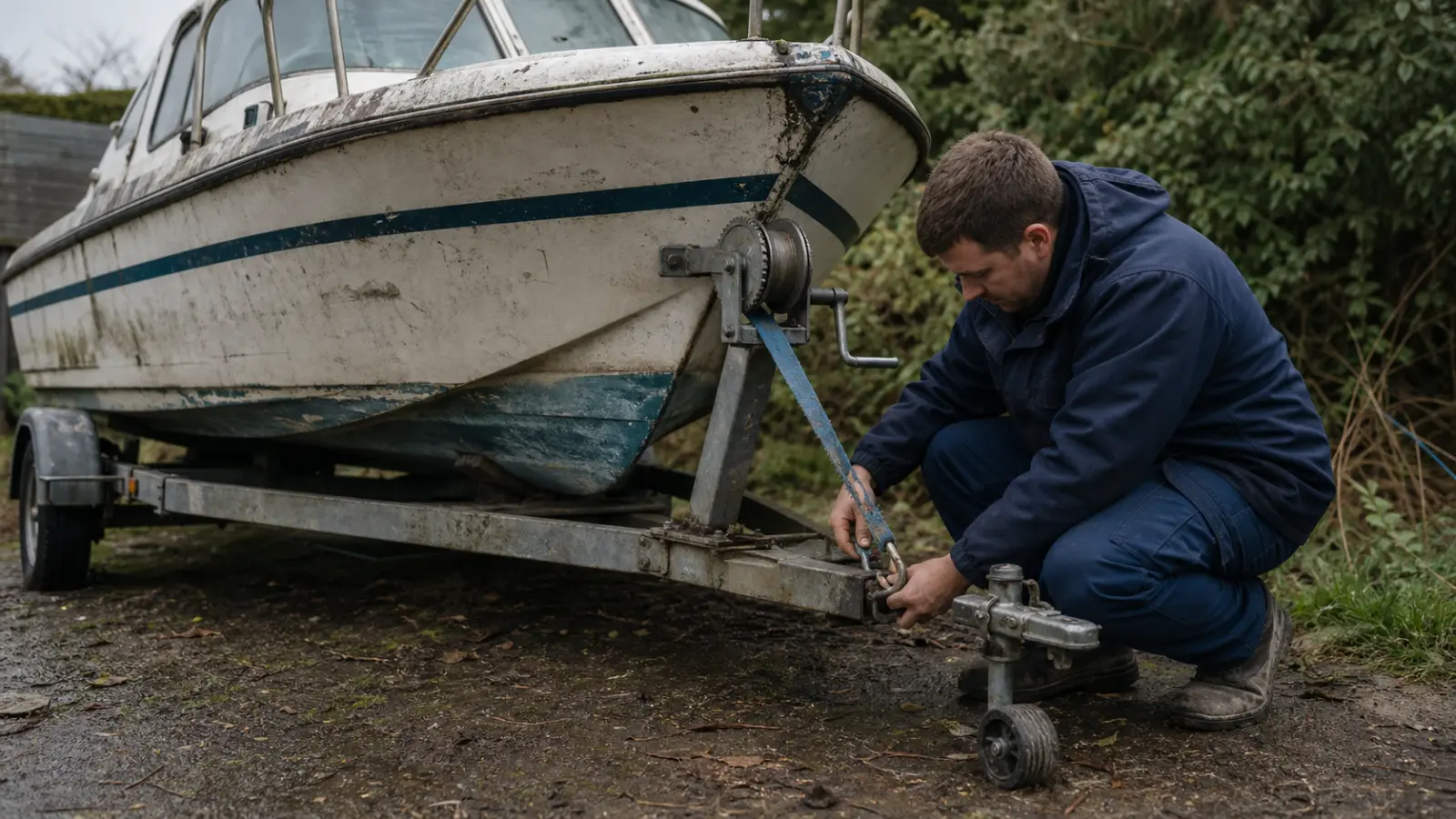
When you hire a crew to haul away a junk boat, paperwork matters just as much as heavy machinery. We do not always transfer the title into our name, but we always issue a formal release of liability to the original owner. Certain fly-by-night haulers will pull a hull off your driveway without signing any documentation, which means you remain legally responsible if that vessel is later dropped on a public road or abandoned in a marsh. Demanding a signed release ensures your legal liability ends the moment our trailer pulls away from your curb.
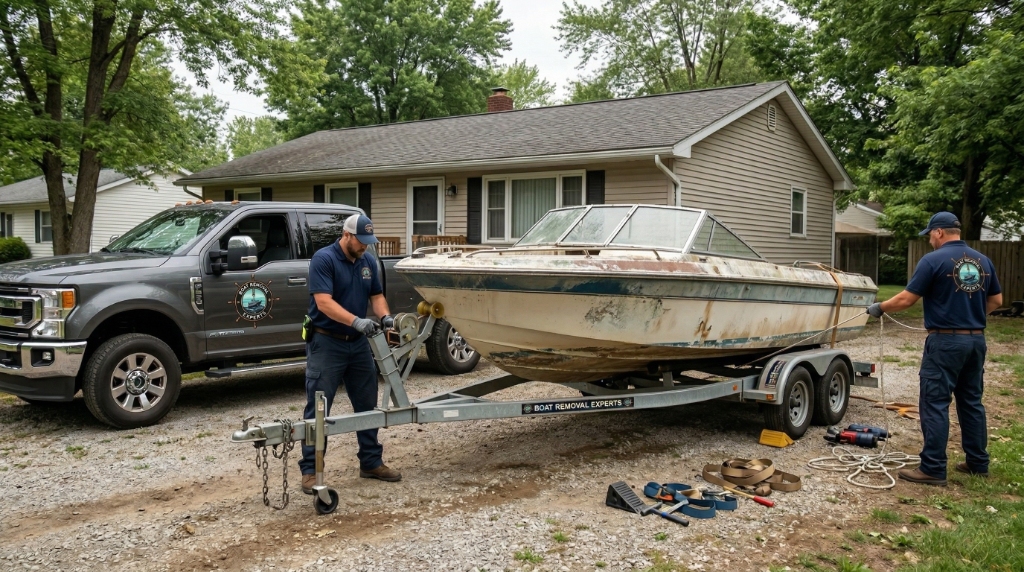
Moving a vessel is far more complicated than hitching up a standard utility trailer. Flat tires, rusted axles, or a rotten keel require specialized rigging equipment to prevent the structural frame from collapsing during transport. Narrow residential gates, low-hanging tree branches, and soft ground surfaces can also prevent heavy towing vehicles from getting a clear line to the load.
Call (855) 765-7931 to start.
Send photos through the contact form.
Professional boat disposal covers far more than simply hooking a hitch to a truck and driving down the highway. A derelict vessel often lacks a roadworthy trailer, meaning a specialized crew must bring hydraulic flatbeds, drop-deck trailers, or heavy crane machinery to lift the structure safely. The process involves securing the hull, clearing all loose debris, managing transport permits, and transferring the physical remains to an authorized processing facility. Whether a vessel sits resting on wooden blocks, submerged in water, or stuck on a broken trailer, complete boat removal handles the entire physical logistics chain from start to finish.
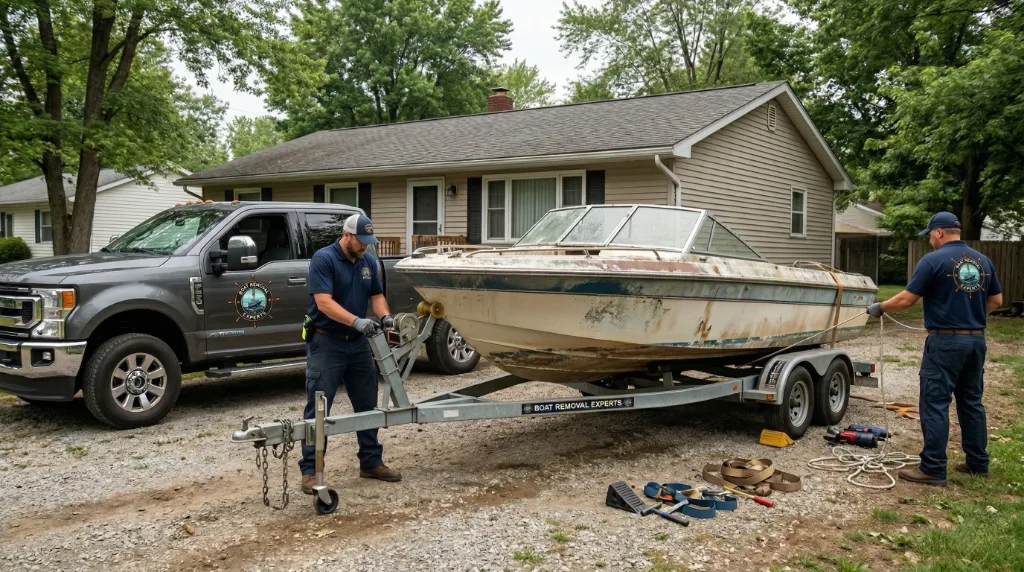
The status of the paperwork directly shapes how a junk boat must be handled. When an owner possesses a clear title, the dispatch process moves forward quickly. However, when an abandoned boat is inherited along with a real estate purchase, or when the vessel registration was lost decades ago, alternative verification steps become necessary. Documenting the Hull Identification Number, obtaining permission from land managers, or filing abandoned property notices with state agencies ensures that the transport crew operates within legal boundaries before any heavy lifting begins.
A vessel left in an unpaid marina slip or sitting on private land without consent creates immediate legal and financial pressure. Landowners and marina operators cannot simply push an abandoned boat into a public waterway. Engaging a professional disposal service resolves unauthorized storage issues, protects property owners from municipal fines, and eliminates the environmental hazards associated with deteriorating hulls and leaking internal tanks.
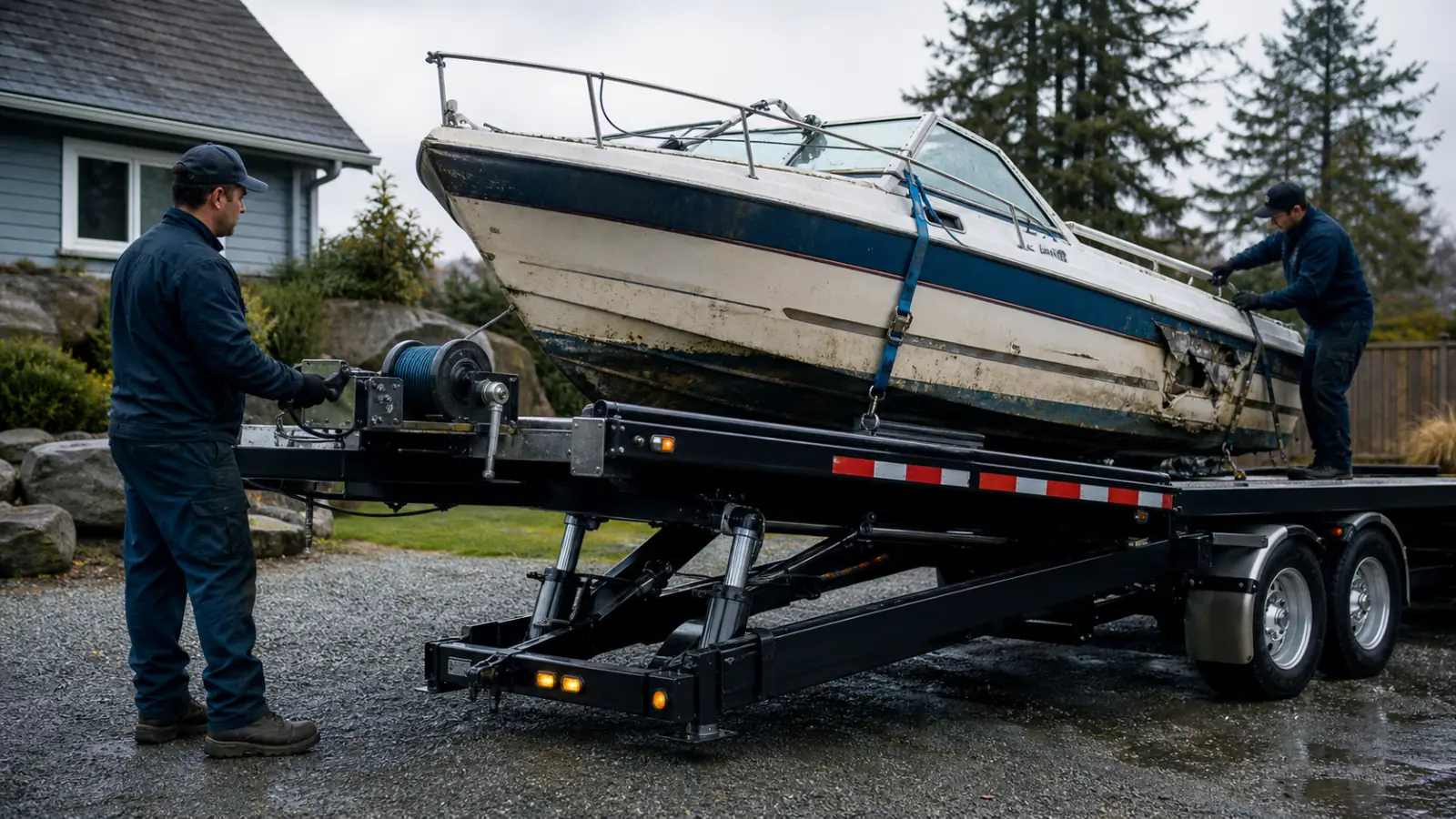
Property owners in Kearny call for removal services when aging vessels become public nuisances or safety hazards. The regional climate takes a heavy toll on watercraft left exposed to the elements year after year. Seasonal freezing and thawing cycles cause water trapped inside fiberglass crevices to expand, cracking the gelcoat and weakening structural bulkheads. Rainwater pooling in an open cockpit rots plywood decking, ruins interior upholstery, and turns stagnant water into a breeding ground for pests. Over time, a hull that sits saturated with water becomes significantly heavier, making late-stage removal far more complex than dealing with a dry structure.
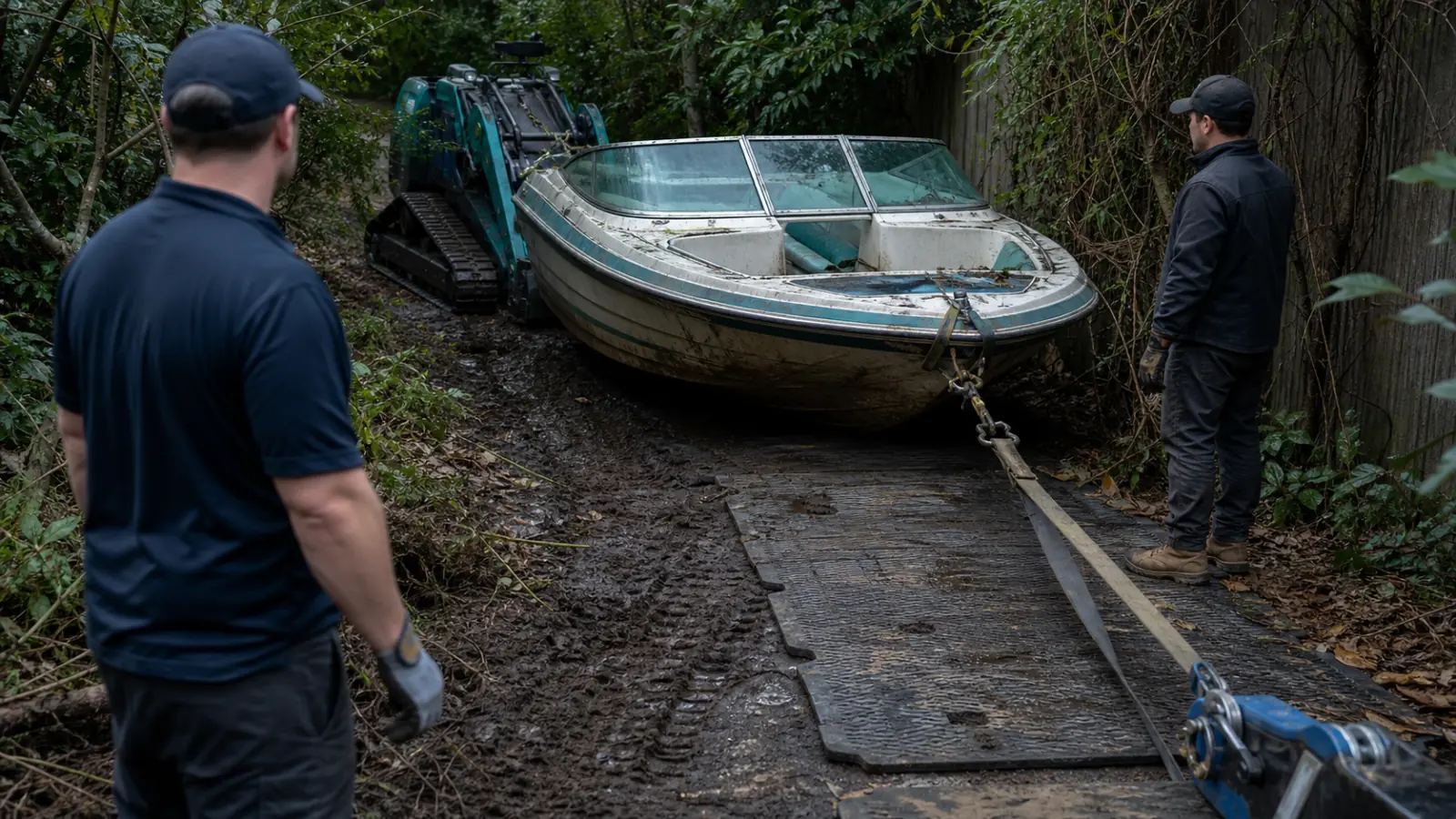
Local site conditions heavily dictate how a recovery crew approaches the job. Tight suburban driveways, narrow alleys, and soft unpaved lawns present unique access challenges for heavy recovery rigs. A sailboat with a deep keel requires a specialized transport cradle, while an oversized pontoon boat may demand extra clearance under low overhead utility lines or narrow roadway bridges. A light aluminum fishing boat resting on a functional trailer requires very different gear than a sunken fiberglass hull sitting in deep water or resting on rotted timber blocks.
Accessing properties near Newark, Harrison, East Newark, Secaucus, or North Arlington requires careful route planning to navigate crowded street parking and restricted overhead access. Crews evaluate the physical approach path before dispatching heavy machinery to prevent property damage.

Assessment
We evaluate the boat’s size, current location, condition, and any environmental or access challenges before we schedule boat removal.

Planning
A detailed plan is built around your vessel — equipment, logistics, timeline, and safety. Services include drainage of oil and fuel before transport.

Execution
Our experienced crew mobilizes to your current location and we tow, haul, or dismantle the vessel using professional marine equipment.

Completion
The vessel is recovered, recycled, or routed to certified boat junkyards for environmentally responsible disposal. The site is left clean.