
Professional Boat Removal Services in Laurel, MD
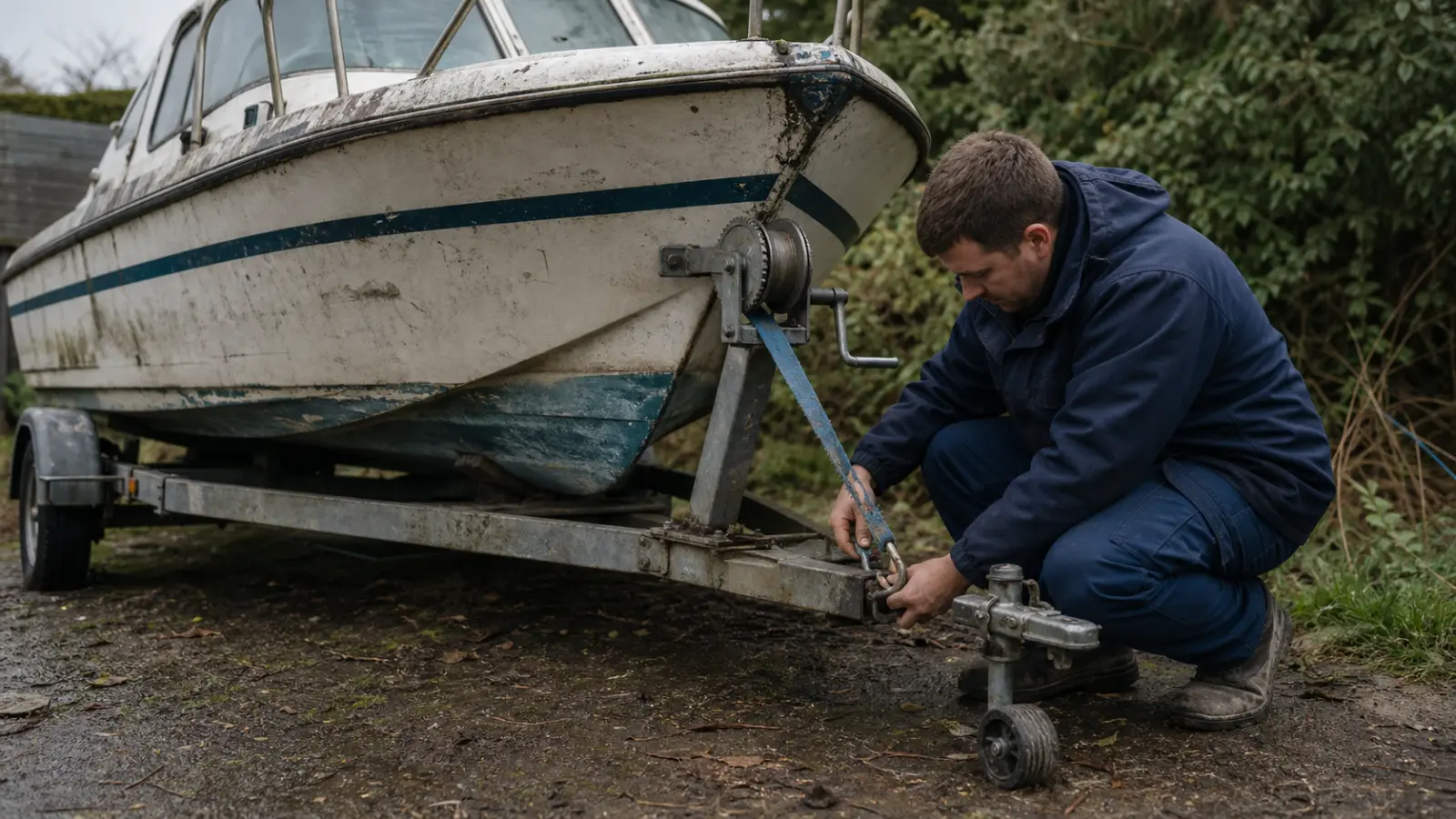
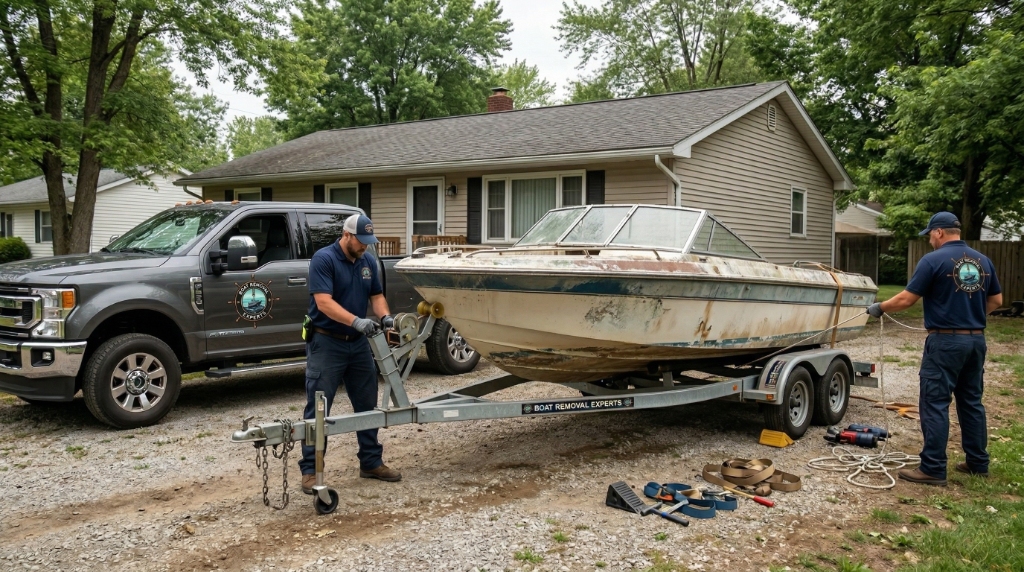
A fiberglass hull has sat behind a garage in Laurel, Maryland for six seasons while the trailer tires flattened into the soil and the leaf litter turned to muck inside the cockpit. A marina sent a notice about an unpaid slip where a cruiser sits low in the water. A property changed hands with an unwanted cabin cruiser taking up space on the lot, or an outboard motor seized and replacing it costs more than the craft will ever be worth. An old boat sitting idle quickly turns from a recreational vehicle into a heavy burden that consumes space, draws complaints, and costs money every month it remains in place.
Is there boat removal near me in Laurel, MD? Yes, Boat Removal Experts clears away unwanted vessels from private yards, storage units, commercial lots, and waterfront slips throughout the city.

When you clear a hull off your land, receiving a written release of liability is essential. Boat Removal Experts does not always transfer the title of every craft, but we always issue a formal release of liability to the owner. Some haulers take a junk boat away without providing any paperwork, leaving the legal liability and potential abandoned vessel fees tied directly to you if the hull is dropped elsewhere. Asking how a company handles liability before they haul your vessel protects you down the road.
Moving an old boat is rarely as simple as hooking up a trailer and driving away. Tires rot, wheel bearings freeze up, and structural wood rots out under the deck. Keels rest deep on wooden cradles, beams sit wider than narrow gate openings, and thousands of pounds of dead weight settle into soft lawn soil that a standard tow truck cannot cross without sinking.
Call 240-847-3425 to start.
Send photos through the contact form.
What Is Boat Removal and When You Need It
Professional boat disposal involves far more than hooking a winch line to a bow eye and pulling a craft down the road. Complete boat removal includes evaluating structural integrity, clearing out standing water, managing heavy cradles, securing loose superstructures, and safely extracting a hull from awkward spaces. Every project presents distinct challenges based on the vessel type, location, and physical condition of the vessel.
Paperwork dictates how an abandoned boat or private vessel is processed. Owning a clean title in hand makes the handover quick and straightforward. When paperwork has been misplaced over decades, or when a derelict vessel was inherited along with a newly purchased parcel of land in Prince George's County, alternative documentation options must be handled. The presence or absence of a clear HIN, valid state registration, or proof of land ownership directly affects how the crew prepares the transport permits and clearing documentation.
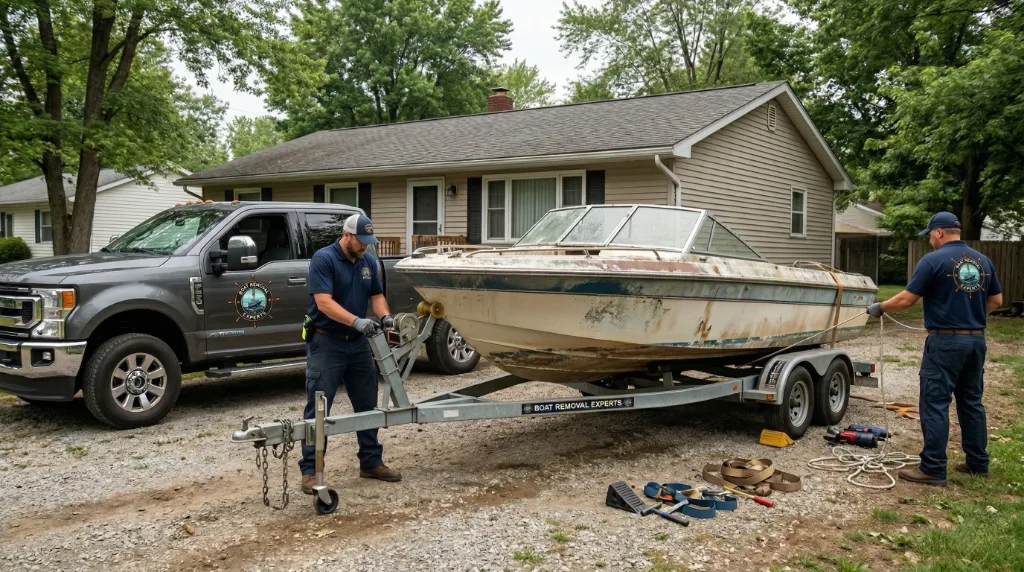
Vessels left on private commercial properties, residential lots, or inside unpaid slips require specific steps before haulers can intervene. When a tenant leaves a vessel behind or a slip contract expires, property owners must navigate legal notice requirements before requesting an abandoned boat removal. Once the authorization criteria are satisfied, crew equipment can be dispatched to extract the hull from the property or pull it directly from a dock berth.
When Laurel Residents Call Us
Sitting unused in the Laurel climate takes a heavy toll on marine structures. Rainwater gathers inside open cockpits, soaking into floor frames, transoms, and deck cores until the underlying wood rots completely. Freezing and thawing cycles split gelcoat, open up seams, and weaken structural integrity. Sun exposure bakes upholstery, degrades fiberglass resins, and causes heavy craft to warp or crack under their own weight. A vessel that held its shape years ago might structural collapse or snap if lifted incorrectly, which changes how the recovery team must support the hull during transport.
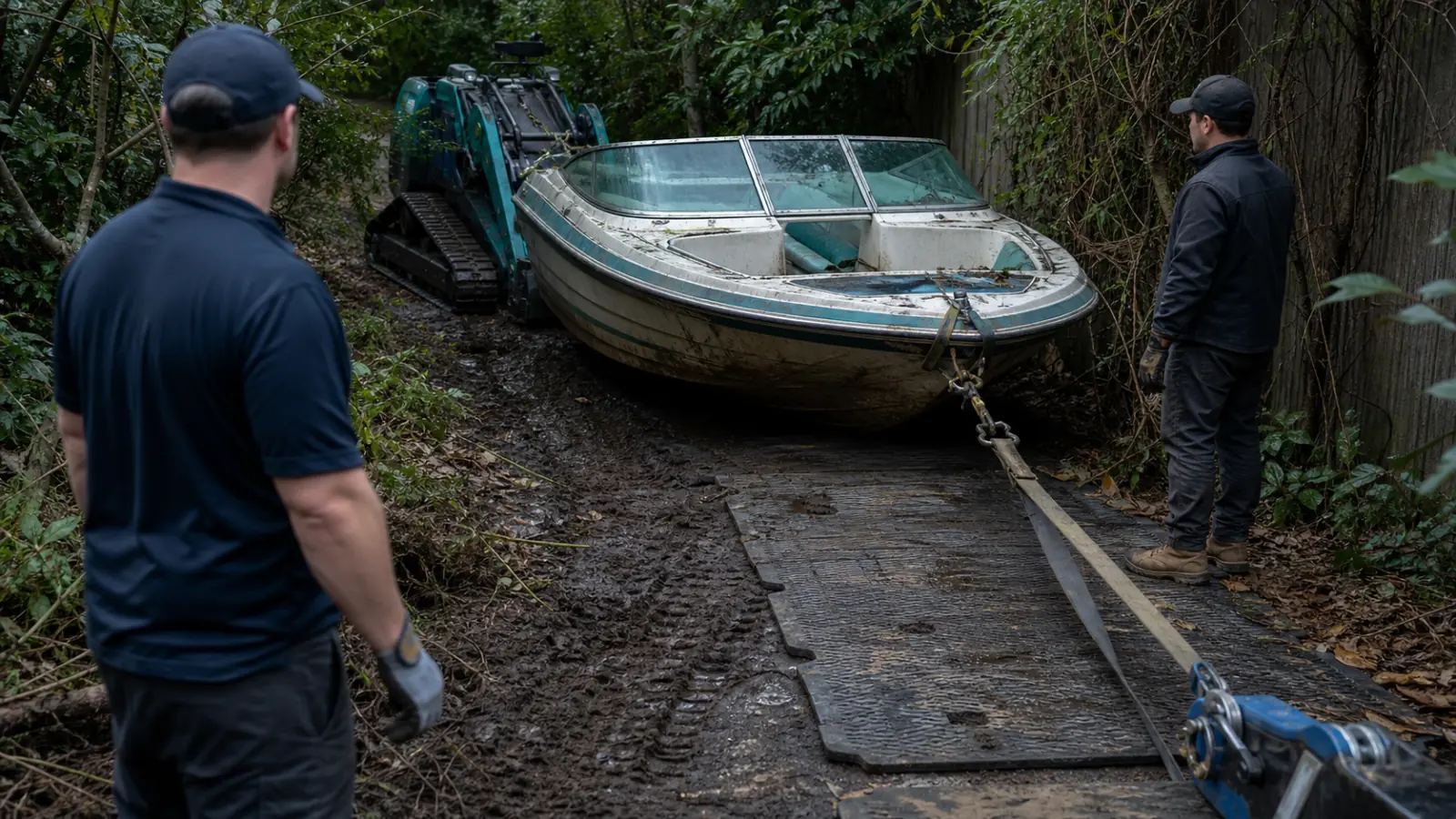
Local site access dictates the machinery and strategy needed for each job. In tight residential neighborhoods around West Laurel, Konterra, South Laurel, North Laurel, and Maryland City, crews encounter narrow driveways, soft grass lawns, low hanging tree branches, and overhead utility lines. A fishing boat on a rolling trailer demands a different recovery plan than a wide pontoon sitting flat on wooden blocks or a deep draft sailboat resting in mud along the water. The surface supporting the weight, the clearance around side gates, and whether the vessel rests on dry land or in a wet slip determine the exact winch gear, blocking, and transport rig used for the job.
Every Type of Boat We Handle
- Sailboat & catamaran
- Motorboat, powerboat & cabin cruisers
- Fishing boats & bass boats
- Pontoon boats
- Jon boats & aluminum skiffs
- Large yachts
- Personal watercraft (jet skis)
- Houseboats
Situations We Handle
- Abandoned boat at marinas, docks, or boat lifts
- Unwanted boats on private property or in boat storage
- Vessels in backyards, fields, or vacant lots
- Derelict vessels blocking dock access or navigation
- Storm-damaged vessels requiring boat hauling
- Vessels without trailers or with flat tires
- Tight access locations (narrow driveways, wooded areas)
- Government or insurance-ordered cases
Need Help? We’re Ready.
Contact boat removers directly or request free quotes. We dispatch crews fast.
Our Step-by-Step Process

Assessment
We evaluate the boat’s size, current location, condition, and any environmental or access challenges before we schedule boat removal.

Planning
A detailed plan is built around your vessel — equipment, logistics, timeline, and safety. Services include drainage of oil and fuel before transport.

Execution
Our experienced crew mobilizes to your current location and we tow, haul, or dismantle the vessel using professional marine equipment.

Completion
The vessel is recovered, recycled, or routed to certified boat junkyards for environmentally responsible disposal. The site is left clean.
Equipment & Capabilities
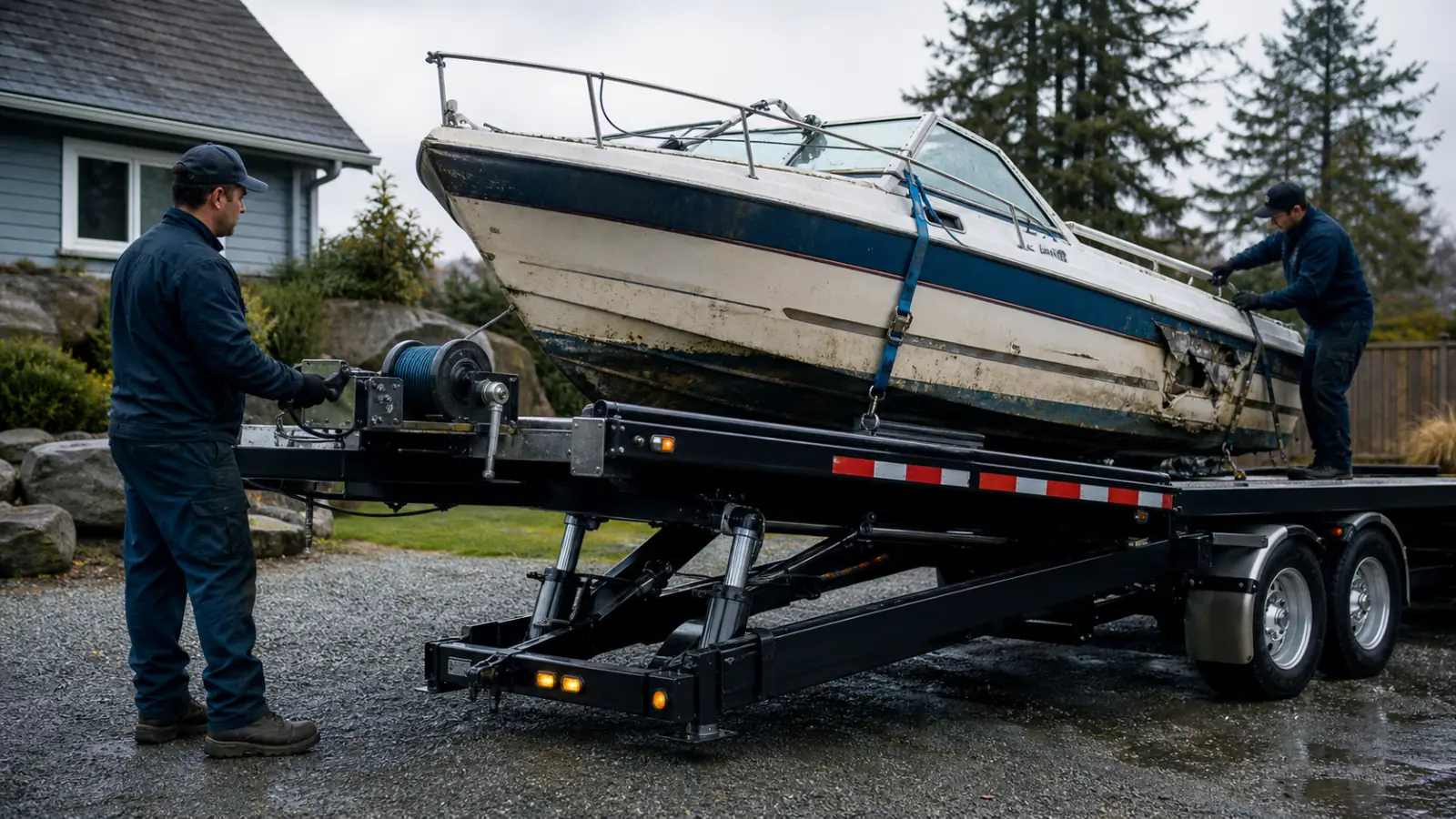
The crew evaluates the condition of the hull, trailer, and surrounding clearance upon arrival to determine the safest extraction plan. When flat tires, rusted axles, or missing wheels prevent a craft from rolling, heavy duty winches, skid plates, lowboy trailers, or hydraulic cranes are deployed to load the craft intact. If a vessel is too wide to clear structural barriers or too degraded to survive transport over road, the crew will dismantle the hull on site using specialized cutting equipment to load it safely into containers.
Before any vessel moves or undergoes breaking, all hazardous materials are systematically identified and drained. The crew removes fuel from tanks, extracts engine oil, disconnects marine batteries, drains hydraulic steering lines, and safely uninstalls mercury switches and old navigation electronics. Preventing environmental contamination on your property or in local waterways is the priority before heavy lifting begins.
After the hull leaves the property, material sorting determines where each component goes. Clean metal fittings, aluminum hulls, stainless rails, and lead ballast move toward metal recycling facilities. Fiberglass sections, sound wood, and mixed interior materials are sorted based on structural composition, local transfer facility rules, and environmental processing standards. Each vessel is evaluated individually to route its materials responsibly.
Our boat removal experience covers everything from start to finish assessment, planning, execution, dismantling, and final cleanup. Marina operators and property owners across Prince George’s County trust us to get rid of your junk boat without damage to surrounding property.
FAQ
Boat Removal Questions - Frequently Asked
Common questions from property owners about our junk removal service, dismantling, and marine recovery.
What type of boat do you remove?
We handle every type of vessel — sailboat, pontoon, fishing boats, jon boats, yachts, and commercial craft. Whether your boat or sailboat floats (or used to), we’ll remove it from any current location.
Do you handle sunken or partially submerged vessels?
Yes. Sunken and partially submerged vessel recovery is a core part of our salvage work in Prince George’s County. We use lift bags, salvage pumps, and marine cranes to safely raise vessels from underwater.
How quickly can you respond?
We respond to inquiries quickly — usually within hours, with same-day service available. For emergency situations, we mobilize as fast as possible. Call us directly for time-sensitive jobs.
Do you use subcontractors?
No. Every job is handled in-house by our own team and equipment. No middlemen, no handoffs, no surprises.
How much does cheap boat removal cost?
Cost depends on the boat’s size, current location, condition, and complexity of the job. We provide free assessments and free quotes for every case — contact us and we’ll give you an honest estimate.
Do you handle boat disposal and recycling?
Yes. Our boat removal and disposal services include hazardous materials handling, oil and fuel drainage, hull dismantling, and recycling at certified yards — all in compliance with environmental regulations and environmentally responsible standards.
Can you reach a hard-to-access location?
Absolutely. We regularly work in tight marinas, shallow waterways, private docks, backyards, and remote areas. We bring the right gear to reach any current location.
Do you work with insurance companies?
Yes. We frequently work with insurance adjusters on salvage and recovery claims and provide the documentation needed for your claim.
Other Boat Removal Locations
Browse Our Services - Ready to Get Started?
We handle everything from start to finish. Call us now or request a free quote – we’ll dispatch crews and haul your vessel away fast.