
Professional Boat Removal Services in Le Ray, NY

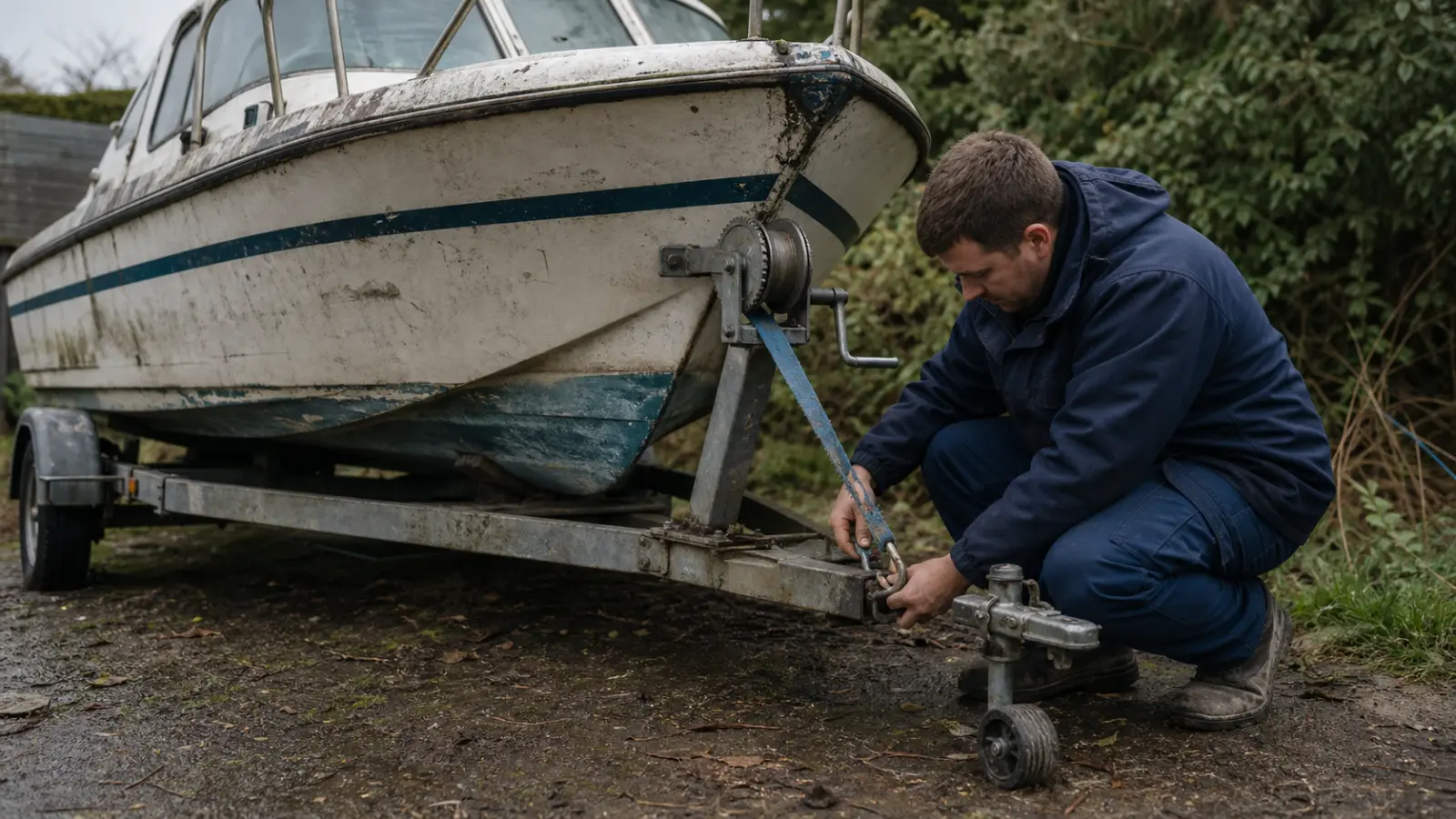
An old boat resting behind a garage for six seasons usually sits on tires that have flattened into the dirt, leaving the trailer frame resting directly on the ground. A marina notice concerning an unpaid slip requires prompt action before extra fees accumulate. Property sales frequently stall when an abandoned cabin cruiser remains parked on the lot, leaving new owners responsible for clearing the space. A dead outboard engine can quickly turn a quick project into an expensive burden when a complete mechanical rebuild costs significantly more than the vessel is worth. Leaving a rotting hull exposed to the elements allows structural decay to spread into the floorboards, making eventual handling far more dangerous. These situations require practical solutions for clearing space and eliminating long-standing headaches from your land.

Is there boat removal near me in Le Ray, NY? Yes, professional boat removal services are available in Le Ray, NY to haul away neglected hulls, damaged trailers, and unwanted watercraft directly from your property.

Protecting yourself from future liability is a vital part of discarding any vessel. While our crew does not always transfer the title into our name, we always issue a formal release of liability to the property owner upon pickup. Some unverified outfits simply haul a vessel away with no documentation, leaving the original owner legally responsible if that hull is dumped unlawfully. Verifying proper paperwork protects you long after the haul is complete.

Moving a vessel is rarely as simple as hooking up a hitch. Keels settle deep into mud, cradles rot from moisture, and a wide beam can easily jam against narrow gate posts. When a trailer lacks inflated tires or solid structural steel, towing it down a standard driveway becomes impossible without specialized loading equipment and carefully managed weight distribution techniques.

Call 315-659-1920 to start.

Send photos through the contact form.

What Is Boat Removal and When You Need It

Professional boat disposal handles the entire extraction process long before a haul vehicle enters the road. Dealing with an abandoned boat or a neglected derelict involves evaluating the site, managing heavy structural loads, and securing the vessel for transit. When the original title is available, the handoff proceeds smoothly through basic ownership records. However, when paperwork is lost, missing, or attached to real estate purchased with a forgotten vessel left on the lot, alternative verification steps are taken to confirm authorization. A derelict vessel left sitting on private land or within a neglected slip creates ongoing friction for property owners, property managers, and facility supervisors trying to recover usable space.
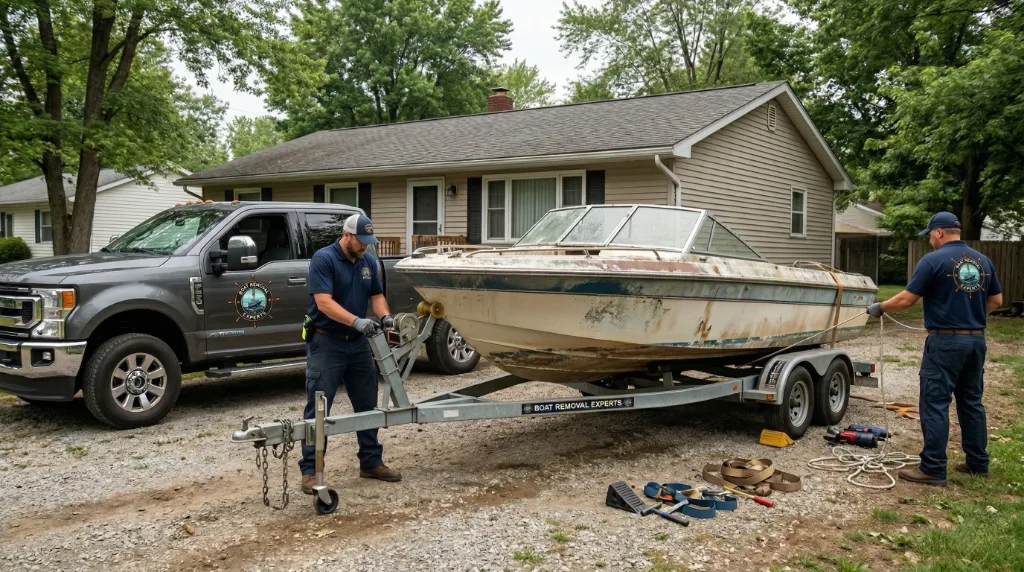
The condition of the vessel dictates the tools required to complete the haul. A rotten deck or a saturated fiberglass floor changes how lifting straps distribute weight during winching. Whether a boat rests on a functional trailer, sits directly on wooden blocks, or rests half-filled with stagnant water directly on turf, specific steps are required to lift it safely without damaging surrounding structures. Addressing fluids, detached fittings, and loose hardware keeps the workspace clean and prevents debris from scattering across the driveway or loading lane. Every site presents unique obstacles that alter how the vessel is secured, loaded, and managed throughout the extraction process.
When Le Ray Residents Call Us

Unattended watercraft left out in the weather face severe degradation over time. Sun exposure cracks gelcoat finishes, rots synthetic upholstery, and weakens internal timber bracing. When rain collects inside an open hull, the trapped weight breaks internal floor frames and causes floor panels to buckle. In cold weather, trapped water freezes and expands, tearing apart fiberglass seams and cracking engine blocks. A neglected fishing boat, an open pontoon, or a heavy sailboat subjected to seasonal weather becomes progressively heavier and structural integrity weakens, complicating physical handling during extraction.
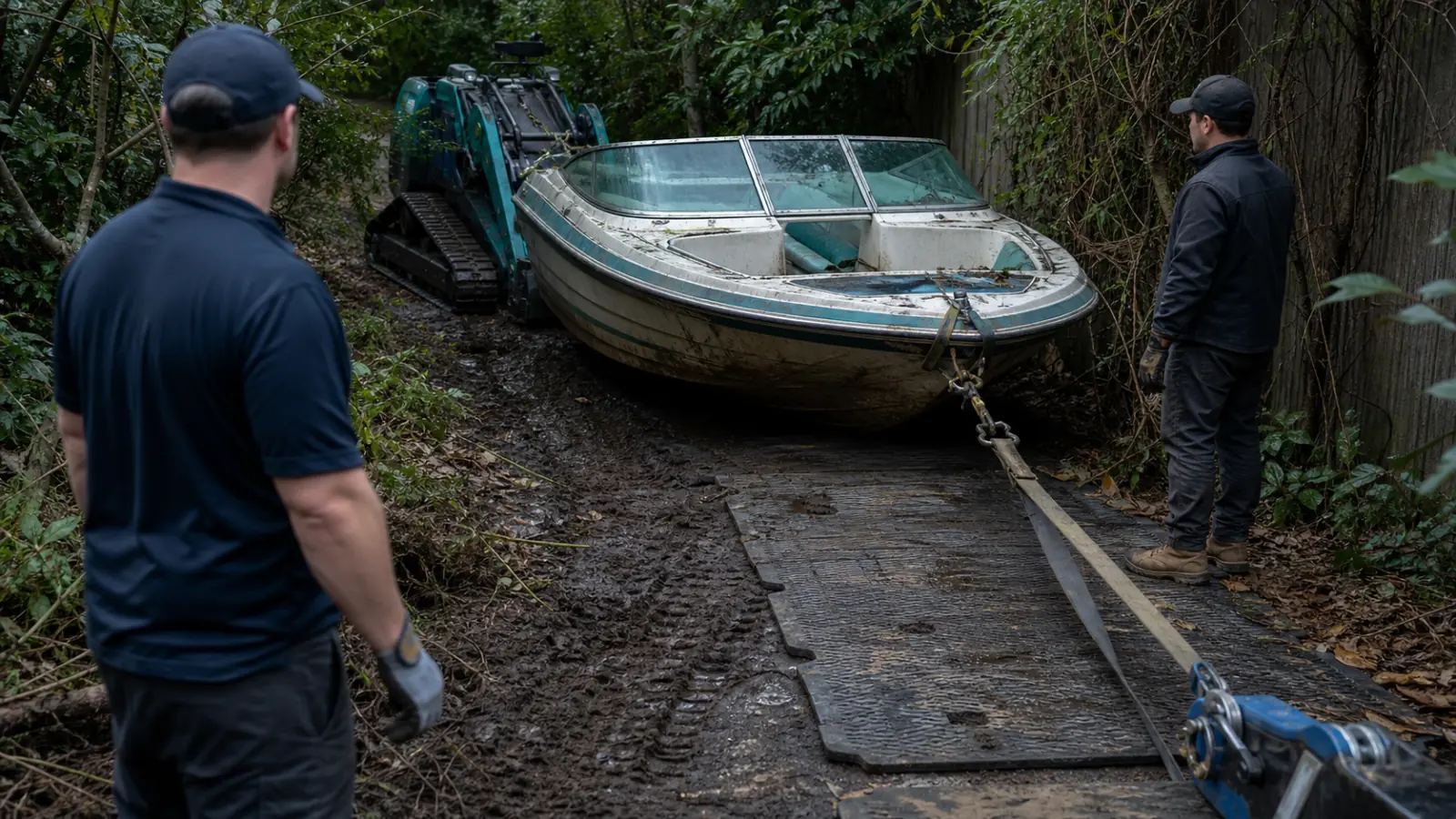
Local terrain and property layouts in Le Ray dictate how recovery equipment reaches the vessel. A truck pulling heavy machinery must navigate narrow farm lanes, unpaved backyards, or tight residential driveways without sinking into soft soil. Low-hanging tree branches, overhead utility lines, and narrow gates restrict access for wide rigs. Whether a vessel sits on a functional trailer, rests flat on rotted blocks in the weeds, or sits along a muddy bank, the surrounding ground surface determines how the crew approaches the rig to extract the hull cleanly.
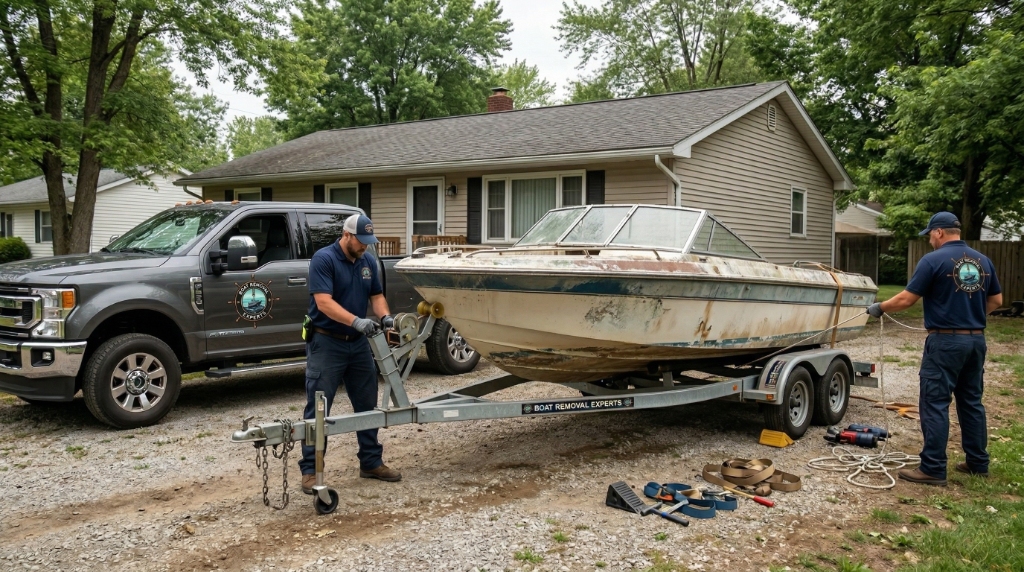
Every Type of Boat We Handle

Situations We Handle

Need Help? We’re Ready.

Contact boat removers directly or request free quotes. We dispatch crews fast.

Our Step-by-Step Process

Assessment

We evaluate the boat’s size, current location, condition, and any environmental or access challenges before we schedule boat removal.

Planning

A detailed plan is built around your vessel — equipment, logistics, timeline, and safety. Services include drainage of oil and fuel before transport.

Execution

Our experienced crew mobilizes to your current location and we tow, haul, or dismantle the vessel using professional marine equipment.

Completion

The vessel is recovered, recycled, or routed to certified boat junkyards for environmentally responsible disposal. The site is left clean.

Equipment & Capabilities

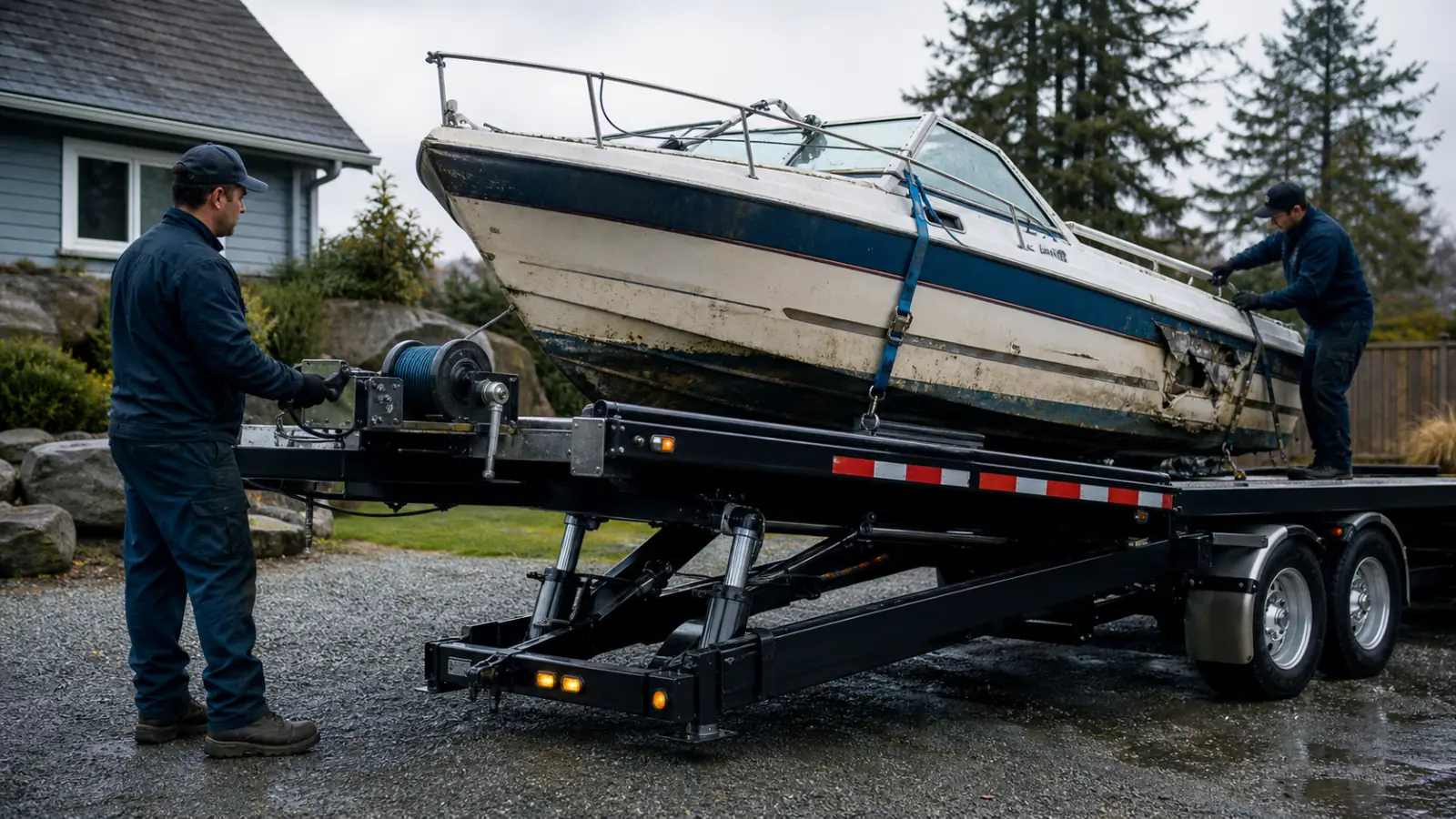
When a vessel cannot roll on its own wheels, specialized extraction equipment is brought in to complete the job. Winches, heavy-duty skids, and articulating cranes load immobilized hulls onto flatbed trailers even when wheels are missing or axles have rusted through. If a vessel is too wide to clear narrow driveways or too structurally compromized to survive a highway haul, the crew will dismantle the hull directly on site using hydraulic shears and cutting tools. This breaks large assemblies down into manageable sections suitable for highway transport.

Before any hull moves, all hazardous materials are systematically identified and removed. Fuel tanks are drained, crankcase oil is safely captured, and lead-acid batteries are extracted along with lingering marine electronics. Removing these fluids prevents dangerous spills on your property during handling. Once stripped of fluids and loose fittings, the materials are sorted. Clean metals go toward metal recycling programs, usable hardware is separated, and remaining fiberglass shell sections are routed toward certified disposal services based on the condition of the materials reclaimed during the job.

Our boat removal experience covers everything from start to finish  assessment, planning, execution, dismantling, and final cleanup. Marina operators and property owners across Jefferson County trust us to get rid of your junk boat without damage to surrounding property.

FAQ

Boat Removal Questions - Frequently Asked

Common questions from property owners about our junk removal service, dismantling, and marine recovery.

We handle every type of vessel — sailboat, pontoon, fishing boats, jon boats, yachts, and commercial craft. Whether your boat or sailboat floats (or used to), we’ll remove it from any current location.

Yes. Sunken and partially submerged vessel recovery is a core part of our salvage work in Jefferson County. We use lift bags, salvage pumps, and marine cranes to safely raise vessels from underwater.

We respond to inquiries quickly — usually within hours, with same-day service available. For emergency situations, we mobilize as fast as possible. Call us directly for time-sensitive jobs.

No. Every job is handled in-house by our own team and equipment. No middlemen, no handoffs, no surprises.

Cost depends on the boat’s size, current location, condition, and complexity of the job. We provide free assessments and free quotes for every case — contact us and we’ll give you an honest estimate.

Yes. Our boat removal and disposal services include hazardous materials handling, oil and fuel drainage, hull dismantling, and recycling at certified yards — all in compliance with environmental regulations and environmentally responsible standards.

Absolutely. We regularly work in tight marinas, shallow waterways, private docks, backyards, and remote areas. We bring the right gear to reach any current location.

Yes. We frequently work with insurance adjusters on salvage and recovery claims and provide the documentation needed for your claim.

Browse Our Services - Ready to Get Started?

We handle everything from start to finish. Call us now or request a free quote – we’ll dispatch crews and haul your vessel away fast.