
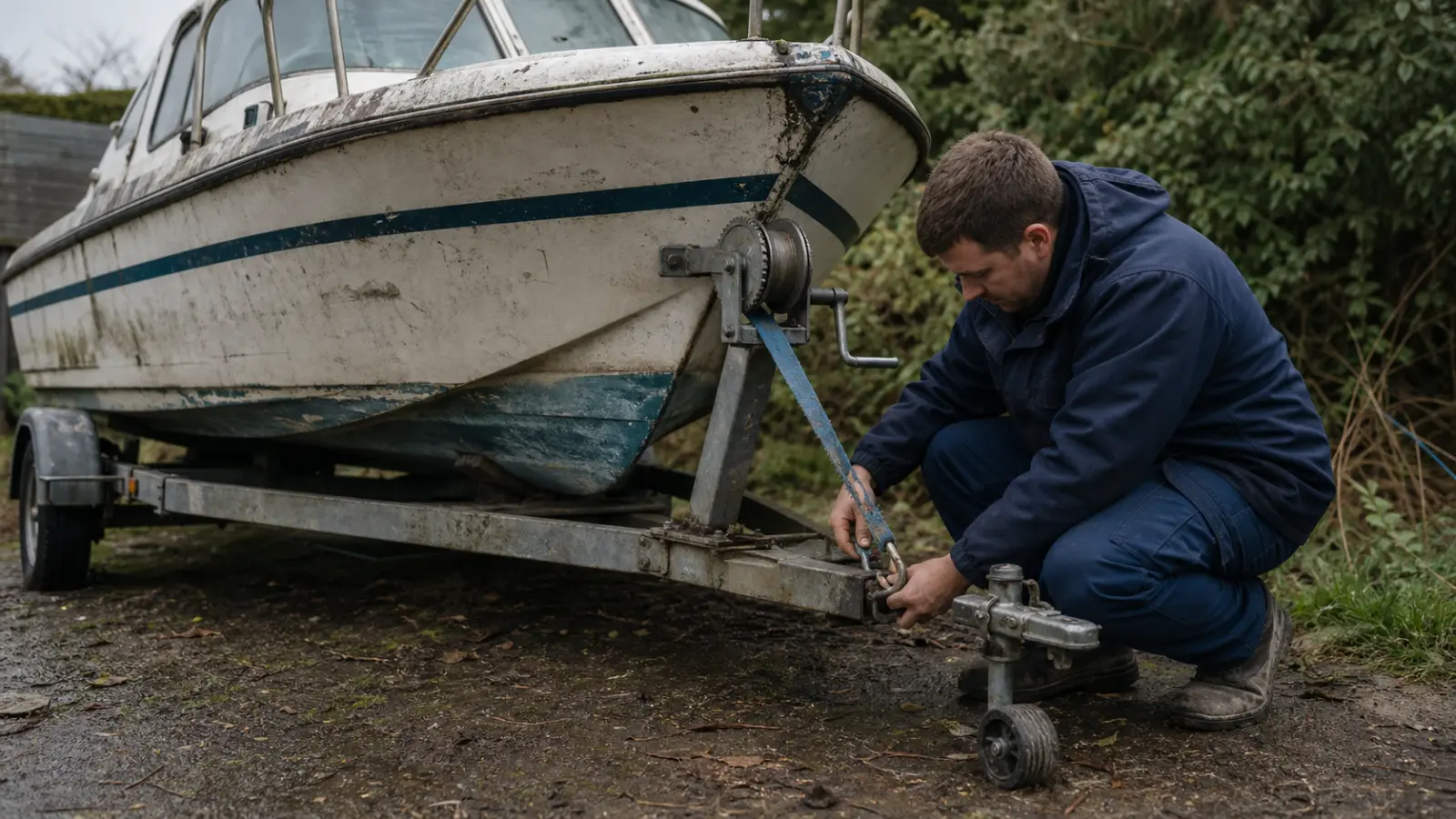
Professional Boat Removal Services in Little Rock, AR

An old boat resting on a flat-tired trailer behind the garage often turns into a permanent fixture after just a few seasons of neglect. The tires settle deep into the dirt, the registration lapses, and the outboard motor seizes up until a mechanical rebuild costs vastly more than the vessel is worth. In other cases, a property owner purchases a parcel in Little Rock, Arkansas only to find a rotted cabin cruiser left behind on the lot, or a local marina sends a formal notice regarding months of unpaid slip fees for an idle hull. When the craft no longer floats or rolls, figuring out how to handle a junk boat becomes an urgent priority before code enforcement or property managers step in with steep daily fines.

Is there boat removal near me in Little Rock, AR? Yes, Boat Removal Experts provides complete hauling and extraction services for unwanted vessels throughout the city, managing every step of the extraction process regardless of where the hull is located on your property.

When you hire our team for boat removal, we do not always transfer the title into our name, but we always issue a formal release of liability to the legal owner. Some informal haulers haul a vessel away without providing any signed documentation, which leaves the original owner fully responsible if the craft is later abandoned on public land or along a highway. Securing a proper release protects you from future legal issues.

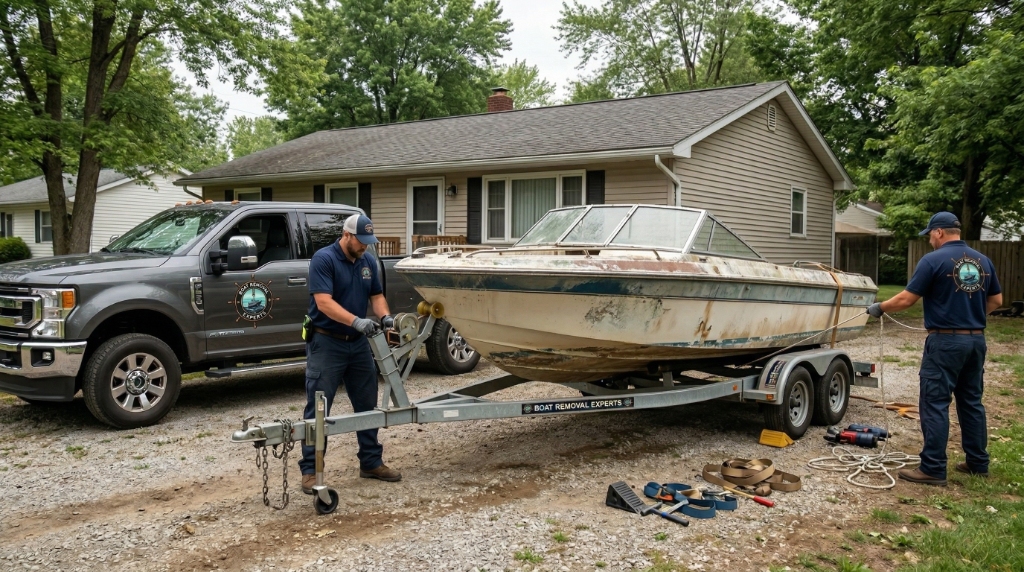
Moving a neglected craft is rarely as simple as hooking up a hitch. Tires rot into the mud, wheel bearings freeze solid, and a widest-point beam can easily exceed the clearance of a back gate. The immense weight of a waterlogged hull will sink a standard tow truck into soft lawn soil, requiring specialized rigging and recovery tools to extract the hull safely without damaging nearby structures.

Call 501-330-5389 to start.

Send photos through the contact form.

What Is Boat Removal and When You Need It

Professional boat disposal involves far more than simply hitching a trailer to a truck and driving away. When a craft sits abandoned in a yard, a driveway, or a storage facility, specialized extraction procedures are required to pull the vessel out without destroying the surrounding terrain. An abandoned boat often lacks functional rolling gear, meaning the hull must be lifted, skidded, or broken down right where it rests. This work encompasses full site clearance, structural securing, and transport logistics tailored to non-running watercraft.
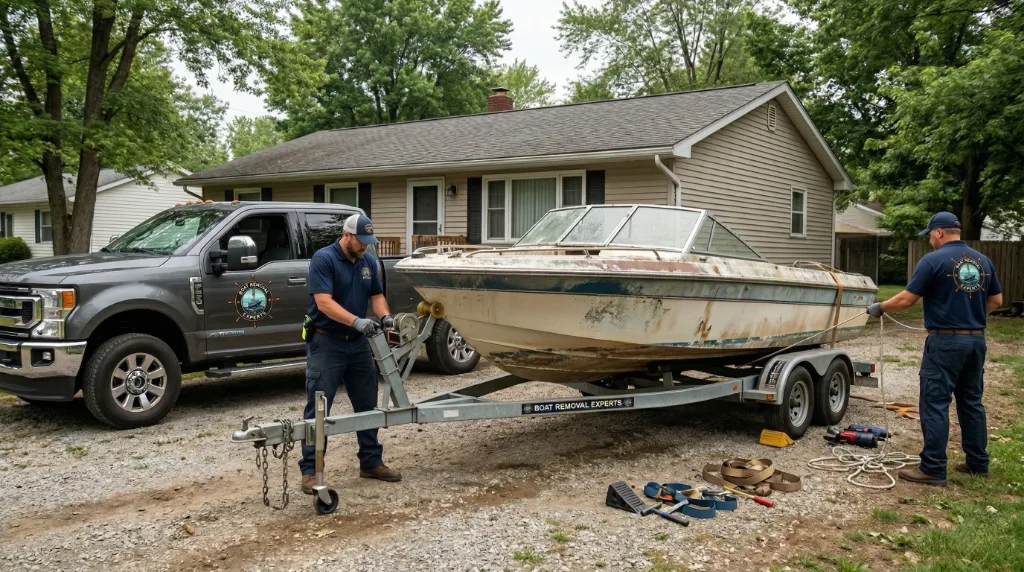
The paperwork status of a derelict vessel heavily dictates the required process for haul-out. When an owner possesses a clean title or registered hull identification number, transport approval is immediate. However, when paperwork is lost or when a vessel comes with a newly purchased real estate lot, specific local documentation procedures come into play before transport can occur. In instances where a craft sits stranded on private property or in an unpaid slip, proper authorization must be verified so the property owner is fully cleared of legal entanglements once the vessel leaves the site.

Clearance operations in Pulaski County depend on whether the vessel sits on solid pavement, mud, or in the water. A boat that has settled into soft ground demands heavy winch lines and protective mats to prevent towing vehicles from getting stuck. The overall structural integrity of the back panel, floor frames, and deck determines whether the craft can be pulled intact or if specialized containment methods must be implemented to manage falling debris during extraction.
When Little Rock Residents Call Us

Humid summers and seasonal weather patterns take a heavy toll on vessels left outdoors in Little Rock. Constant exposure to rain and high humidity causes gelcoat surfaces to crack, allowing water to infiltrate underlying fiberglass layers. Wood floor frames, decking, and transoms absorb trapped rainwater and rot from the inside out, while upholstery degrades into saturated mold beds. Saturated structural foam can add thousands of pounds of dead weight to a pontoon or fishing boat, making the vessel far heavier and vastly more complex to move than its original manufacturer specifications indicate.
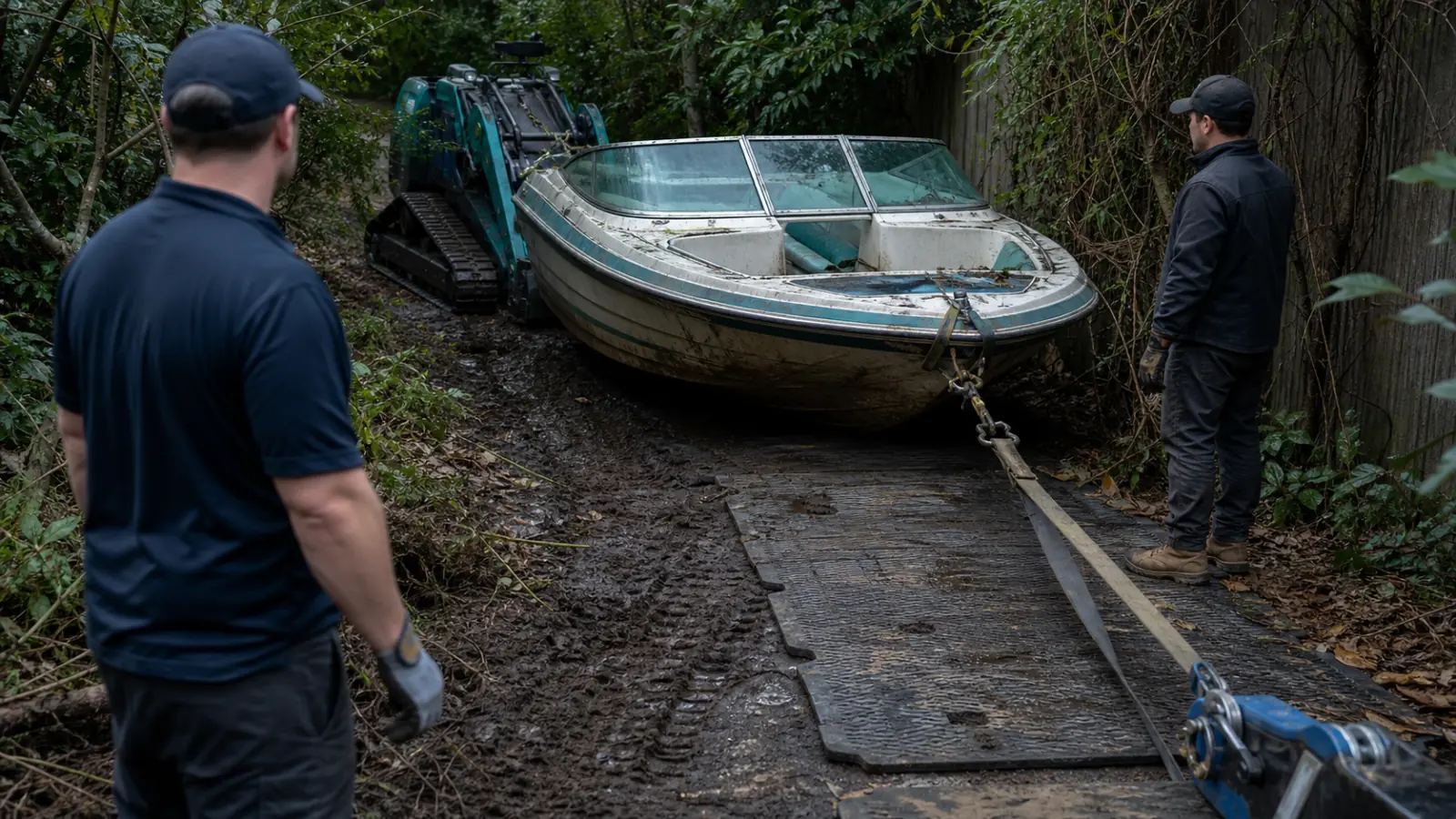
Property features across nearby communities like Cammack Village and Sweet Home directly dictate how a recovery crew approaches a project. Overhanging tree branches, narrow residential driveways, low overhead utility lines, and tight property gates frequently prevent standard transport vehicles from reaching a backyard site. A large sailboat resting on fixed jack stands or a long pontoon buried in brush requires precise rigging strategies to navigate around fences and outbuildings without causing structural harm to the surrounding premises.

Site conditions in places like North Little Rock, Shannon Hills, and Sweet Home also vary based on ground firmness and gradient. Moving a vessel off soft dirt or a sloping bank demands temporary ground mats to support heavy equipment. Whether the craft sits in a driveway, elevated on wooden blocks, or tied to a quiet shore dock, crew access, vehicle positioning, and hull balance dictate the specific extraction techniques required.
Every Type of Boat We Handle

Situations We Handle

Need Help? We’re Ready.

Contact boat removers directly or request free quotes. We dispatch crews fast.

Our Step-by-Step Process

Assessment

We evaluate the boat’s size, current location, condition, and any environmental or access challenges before we schedule boat removal.

Planning

A detailed plan is built around your vessel — equipment, logistics, timeline, and safety. Services include drainage of oil and fuel before transport.

Execution

Our experienced crew mobilizes to your current location and we tow, haul, or dismantle the vessel using professional marine equipment.

Completion

The vessel is recovered, recycled, or routed to certified boat junkyards for environmentally responsible disposal. The site is left clean.

Equipment & Capabilities

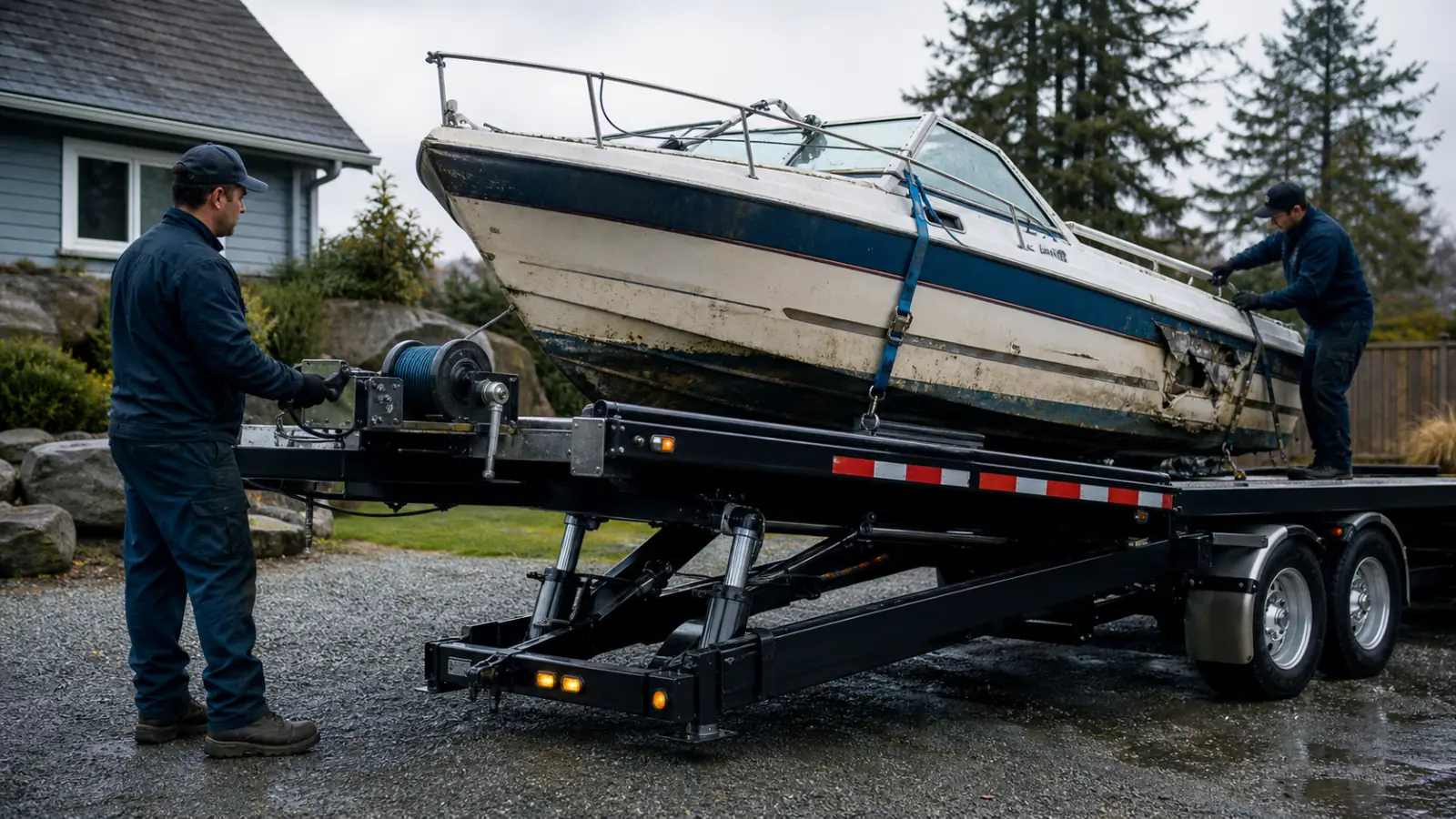
When a vessel's original trailer is structural dust, frozen solid, or completely missing, specialized loading equipment must be deployed to haul the vessel off the property. The recovery team evaluates the structural condition of the hull to determine whether to use heavy hydraulic winches, crane lifts, low-boy trailers, or slide beds. If a craft sits in an enclosed space or has rotted beyond the point of being moved intact, crew members must carefully dismantle the superstructure on site using heavy saws and mechanical cutters while containing loose fiberglass and structural debris.

Before any transport or dismantling occurs, all hazardous materials must be systematically cleared from the vessel. Crew members drain remaining fuel tanks, strip out old crankcase oil, remove heavy marine batteries, and detach electronic components containing heavy metals or toxic fluids. Fluids are pumped into approved containment drums to prevent spills on the owner's driveway or lawn, ensuring environmental compliance before the physical hull breakdown proceeds.

Once fluids and hazards are cleared, the salvageable materials are separated based on hull composition. Aluminum hulls from a fishing boat or pontoon are set aside for metal recycling processing facilities, while rotted fiberglass hulls, saturated cabin cushions, and composite plastics are managed through designated bulk disposal services or landfill facilities. The crew inspects the vessel on location and selects the most efficient breakdown method based on hull material, structural decay, and overall site accessibility.

Our boat removal experience covers everything from start to finish  assessment, planning, execution, dismantling, and final cleanup. Marina operators and property owners across Pulaski County trust us to get rid of your junk boat without damage to surrounding property.

FAQ

Boat Removal Questions - Frequently Asked

Common questions from property owners about our junk removal service, dismantling, and marine recovery.

We handle every type of vessel — sailboat, pontoon, fishing boats, jon boats, yachts, and commercial craft. Whether your boat or sailboat floats (or used to), we’ll remove it from any current location.

Yes. Sunken and partially submerged vessel recovery is a core part of our salvage work in Pulaski County. We use lift bags, salvage pumps, and marine cranes to safely raise vessels from underwater.

We respond to inquiries quickly — usually within hours, with same-day service available. For emergency situations, we mobilize as fast as possible. Call us directly for time-sensitive jobs.

No. Every job is handled in-house by our own team and equipment. No middlemen, no handoffs, no surprises.

Cost depends on the boat’s size, current location, condition, and complexity of the job. We provide free assessments and free quotes for every case — contact us and we’ll give you an honest estimate.

Yes. Our boat removal and disposal services include hazardous materials handling, oil and fuel drainage, hull dismantling, and recycling at certified yards — all in compliance with environmental regulations and environmentally responsible standards.

Absolutely. We regularly work in tight marinas, shallow waterways, private docks, backyards, and remote areas. We bring the right gear to reach any current location.

Yes. We frequently work with insurance adjusters on salvage and recovery claims and provide the documentation needed for your claim.

Browse Our Services - Ready to Get Started?

We handle everything from start to finish. Call us now or request a free quote – we’ll dispatch crews and haul your vessel away fast.