
Professional Boat Removal Services in Mehlville, MO

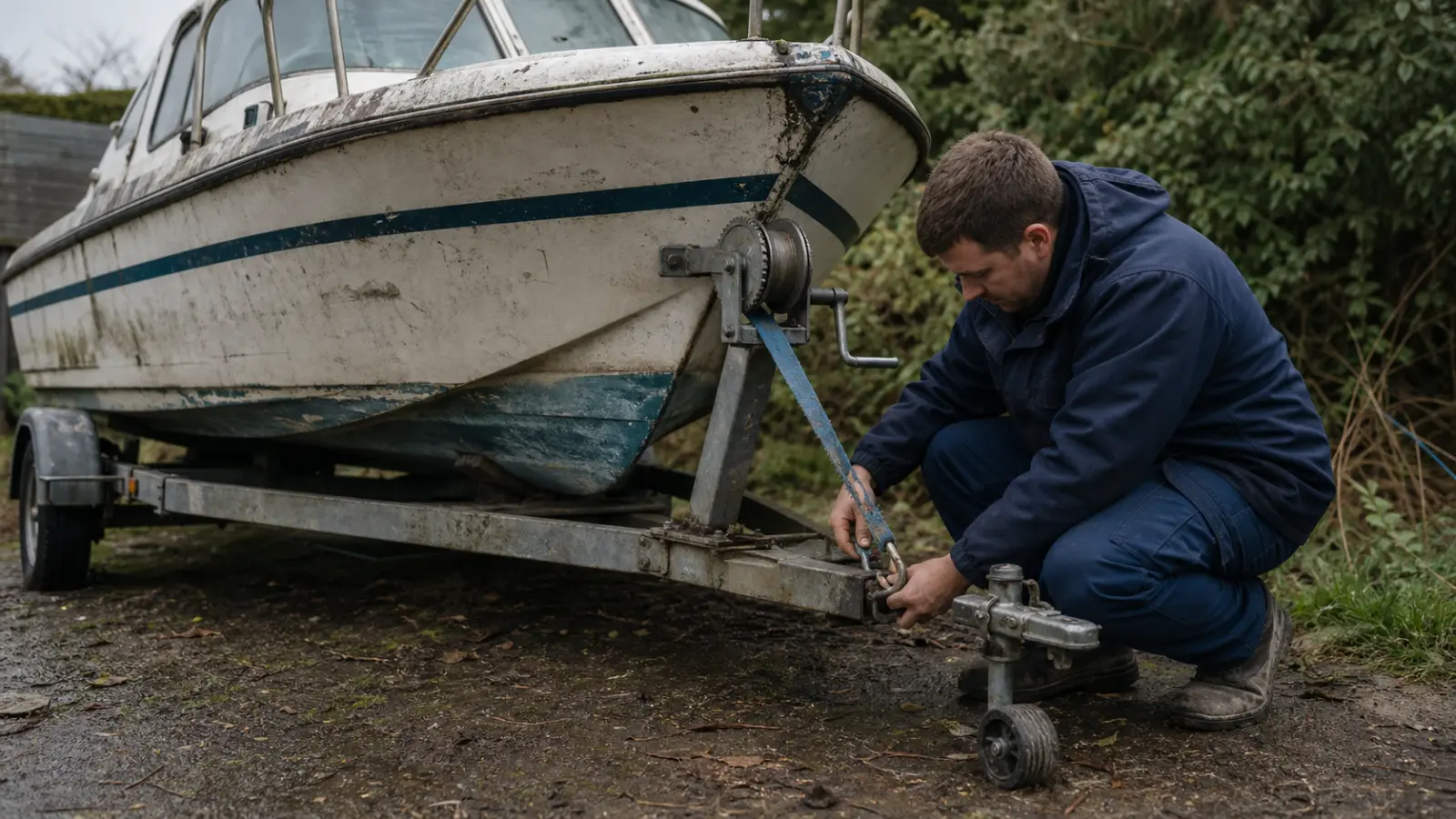
An old boat hull has been sitting on a rusty trailer behind the garage for six seasons, and the tires have flattened completely into the damp soil. A marina sends a formal notice regarding an unpaid slip, or a newly purchased residential property comes with a rotting cabin cruiser left sitting on the lot. Sometimes an outboard motor seizes up and a total engine rebuild costs significantly more than the vessel itself is worth. When an owner realizes the project will never be completed, finding a path to haul the junk boat away becomes the immediate priority.

Is there professional boat removal near me in Mehlville, MO? Yes, Boat Removal Experts provides complete hauling and site clearing for unwanted vessels located across the entire municipality.

Transferring an official title is not always necessary for complete vessel extraction, but issuing a formal release of liability is mandatory for every single job handled by our team. Some uninsured operators haul a vessel off your property with zero documentation, leaving the original owner legally exposed if that hull is later abandoned on a public road. A verified release ensures the seller or property owner is no longer legally responsible for the craft. Asking any contractor for this documented protection before work begins prevents future municipal fines.

Moving a vessel is far more complex than towing a standard utility trailer. A dead trailer with rusted axles will not roll, or a heavy fiberglass keel sits on a custom wooden cradle that cannot be moved by ordinary trucks. Narrow side yards, tight residential gates, overhead power lines, and soft ground that sinks beneath heavy machinery frequently prevent standard vehicles from reaching the stern.

Call 314-228-0704 to start.

Send photos through the contact form.

What Is Boat Removal and When You Need It

Complete boat disposal covers far more than just hitching a trailer to a pickup and driving down the highway. Professional boat removal involves evaluating the integrity of the fiberglass or aluminum hull, managing structural collapse risks during winch operations, clearing physical obstacles, and transporting the vessel to appropriate salvage or processing facilities. When property owners need to get rid of a boat, the condition of the trailer, access clearance around the vessel, and current site hazards dictate the exact machinery required for a safe haul.
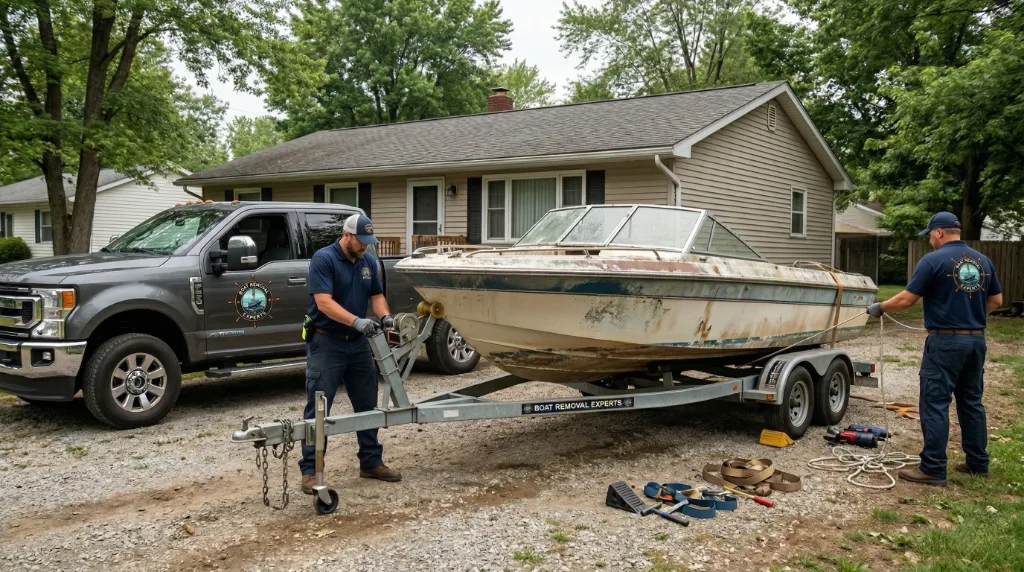
Paperwork dictates how an abandoned boat or derelict vessel is processed. Having a clean title in hand allows for an immediate transfer of responsibility and straightforward transport. When paperwork is lost or an abandoned boat removal is required on a foreclosed property, specific legal steps must be completed before the craft can be pulled onto a flatbed. Landowners who discover a neglected vessel left on their acreage or property managers dealing with an unpaid dock space must establish proper legal authority before transport crews can clear the site.

Several factors affect the outcome of each project. The physical state of the deck, the structural strength of the back panel, and whether the hull holds trapped rainwater dictate whether a vessel can be loaded intact or must be broken down on site. Surrounding terrain, soil moisture, and tree canopy clearances also dictate the loading strategy.
When Mehlville Residents Call Us

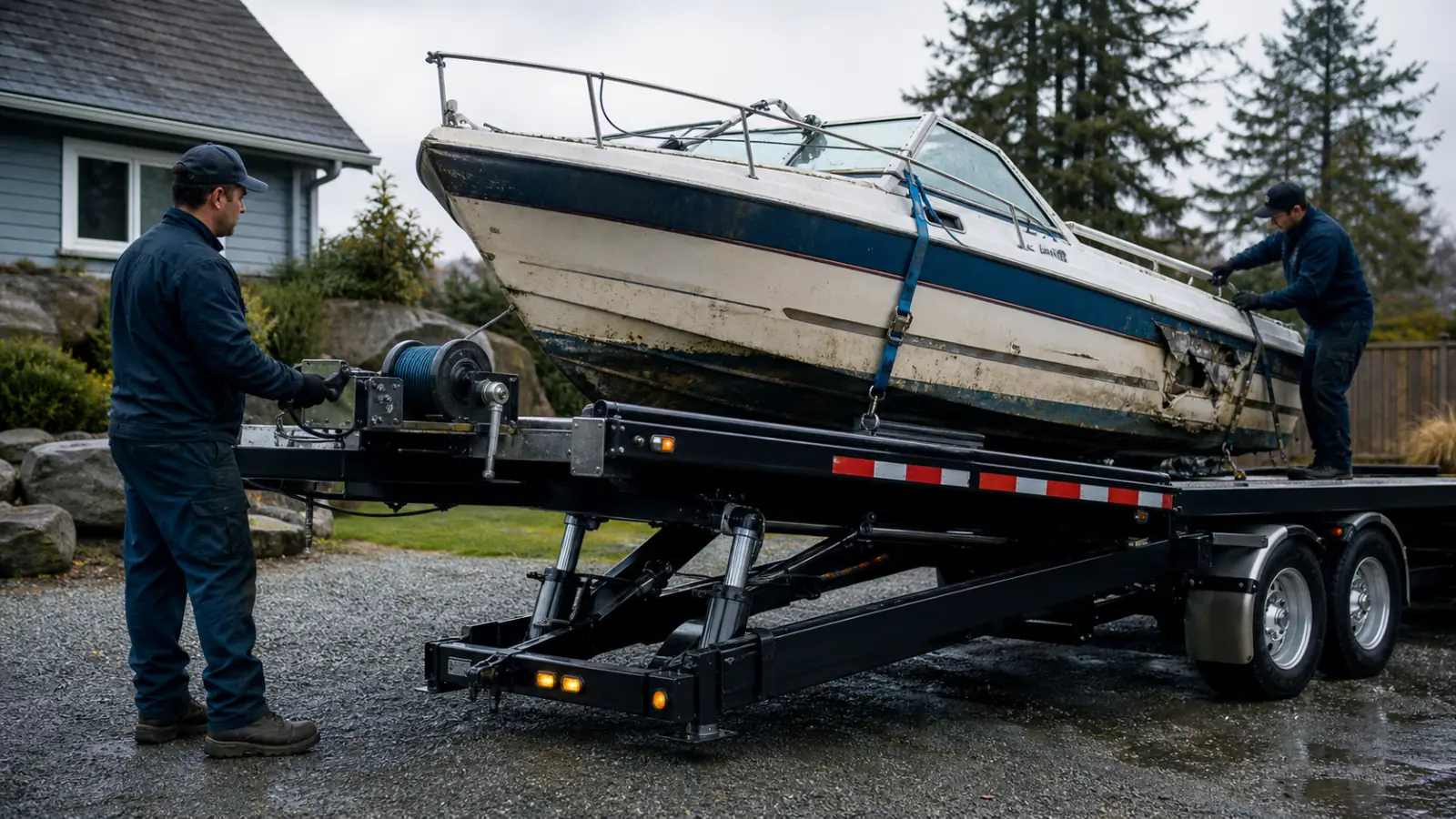
Property owners in Mehlville, MO frequently deal with long-term backyard storage issues. A fishing boat left uncovered under trees quickly collects leaves, dirt, and standing water. Missouri weather causes extreme freeze-thaw cycles that crack gelcoat surfaces, rot wooden transoms, and destroy upholstery. Rainwater trapped inside a fiberglass hull adds thousands of pounds of extra weight, turning a light runabout into a dangerous haul that can crush an aged trailer frame under the stress of movement. Sun exposure weakens structural plastic, while moisture creates internal floor rot that makes stepping onto the deck unsafe.
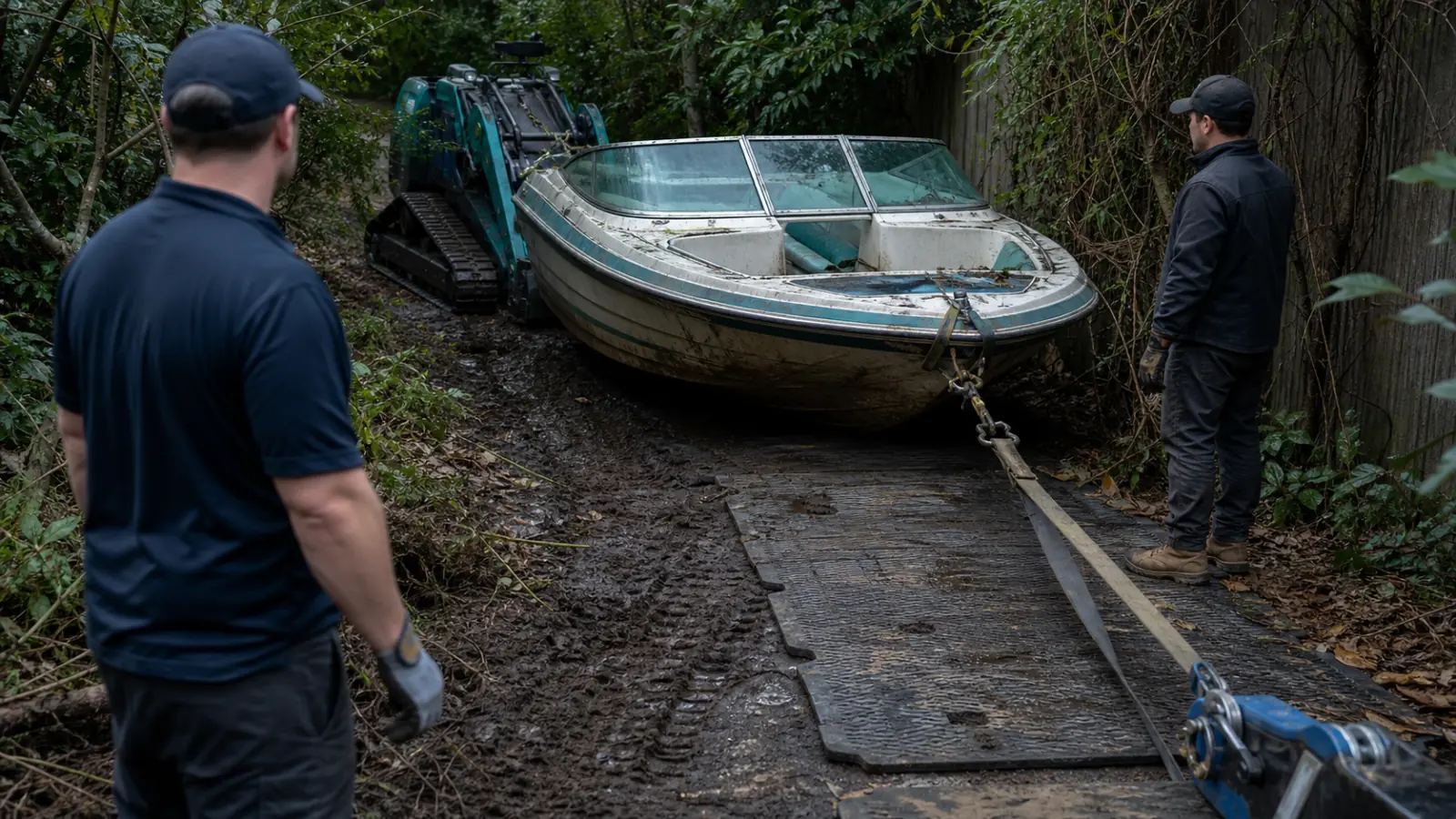
Local property layouts change how a crew approaches an extraction. A pontoon or a deep-draft sailboat parked behind a driveway often requires navigating tight residential alleyways, narrow side gates, or low-hanging branches in suburban neighborhoods near Green Park, Concord, or St. George. Soft lawns in St. Louis County present major access challenges for heavy trucks, requiring specialized ground mats to prevent tires from sinking into the turf. Access conditions vary wildly whether the vessel rests on a structural trailer, sits on rotted wooden blocks, or floats along the shoreline near Lemay or Lakeshire. Crew members inspect the terrain, overhead wires, and ground stability before bringing heavy winches into position.
Every Type of Boat We Handle

Situations We Handle

Need Help? We’re Ready.

Contact boat removers directly or request free quotes. We dispatch crews fast.

Our Step-by-Step Process

Assessment

We evaluate the boat’s size, current location, condition, and any environmental or access challenges before we schedule boat removal.

Planning

A detailed plan is built around your vessel — equipment, logistics, timeline, and safety. Services include drainage of oil and fuel before transport.

Execution

Our experienced crew mobilizes to your current location and we tow, haul, or dismantle the vessel using professional marine equipment.

Completion

The vessel is recovered, recycled, or routed to certified boat junkyards for environmentally responsible disposal. The site is left clean.

Equipment & Capabilities

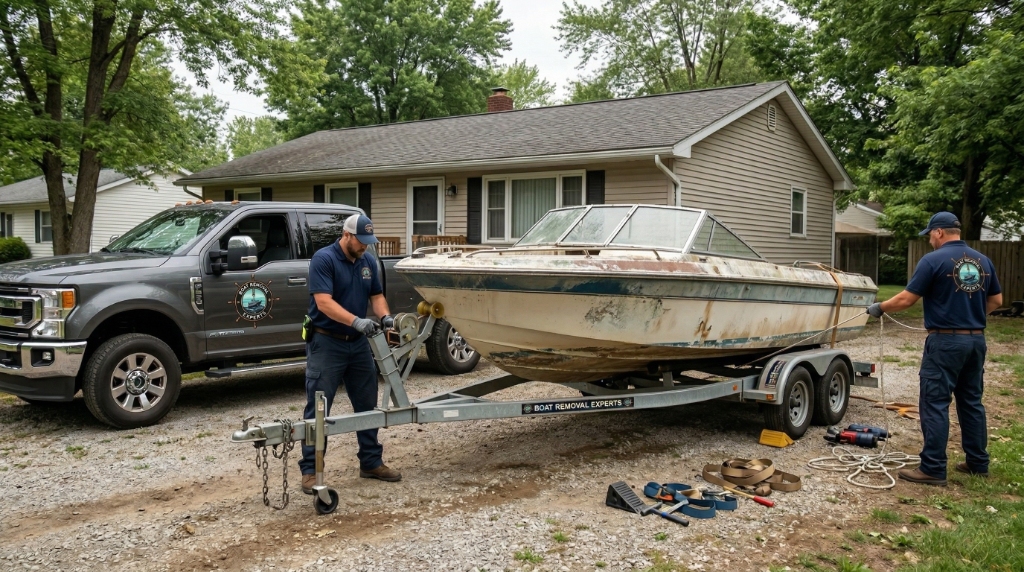
Extracting a vessel whose trailer tires are dry-rotted or missing requires heavy hydraulic winches, skid plates, and specialized flatbed transport trailers. When a craft sits in a tight side yard where trucks cannot enter, crews use portable winch systems, heavy rollers, and ground protection plates to slide the weight safely to the street. If a massive hull exceeds legal highway dimensions or is structurally too weak to move as a single piece, workers dismantle the structure on site using commercial cutting gear and heavy saws.

Before any physical hauling or cutting begins, all hazardous materials must be carefully drained and separated from the vessel. Crew members systematically remove remaining fuel, crankcase oil, hydraulic fluids, marine batteries, and electronic components to ensure environmental safety and prevent hazardous spills on the property. Every fluid is contained in approved vessels for proper handling, while lead-acid batteries and electronics are separated for dangerous waste processing.

Once hazardous materials are cleared and the hull is loaded, final destination decisions are made based on the materials involved. Clean aluminum hulls from a fishing boat or pontoon are routed toward metal recycling facilities. Fiberglass structures, rotten wood decking, and contaminated foam are processed for industrial shredding or managed landfill disposal services. The team determines the most effective processing pathway after examining the actual vessel construction and site constraints.

Our boat removal experience covers everything from start to finish  assessment, planning, execution, dismantling, and final cleanup. Marina operators and property owners across St. Louis County trust us to get rid of your junk boat without damage to surrounding property.

FAQ

Boat Removal Questions - Frequently Asked

Common questions from property owners about our junk removal service, dismantling, and marine recovery.

We handle every type of vessel — sailboat, pontoon, fishing boats, jon boats, yachts, and commercial craft. Whether your boat or sailboat floats (or used to), we’ll remove it from any current location.

Yes. Sunken and partially submerged vessel recovery is a core part of our salvage work in St. Louis County. We use lift bags, salvage pumps, and marine cranes to safely raise vessels from underwater.

We respond to inquiries quickly — usually within hours, with same-day service available. For emergency situations, we mobilize as fast as possible. Call us directly for time-sensitive jobs.

No. Every job is handled in-house by our own team and equipment. No middlemen, no handoffs, no surprises.

Cost depends on the boat’s size, current location, condition, and complexity of the job. We provide free assessments and free quotes for every case — contact us and we’ll give you an honest estimate.

Yes. Our boat removal and disposal services include hazardous materials handling, oil and fuel drainage, hull dismantling, and recycling at certified yards — all in compliance with environmental regulations and environmentally responsible standards.

Absolutely. We regularly work in tight marinas, shallow waterways, private docks, backyards, and remote areas. We bring the right gear to reach any current location.

Yes. We frequently work with insurance adjusters on salvage and recovery claims and provide the documentation needed for your claim.

Browse Our Services - Ready to Get Started?

We handle everything from start to finish. Call us now or request a free quote – we’ll dispatch crews and haul your vessel away fast.