
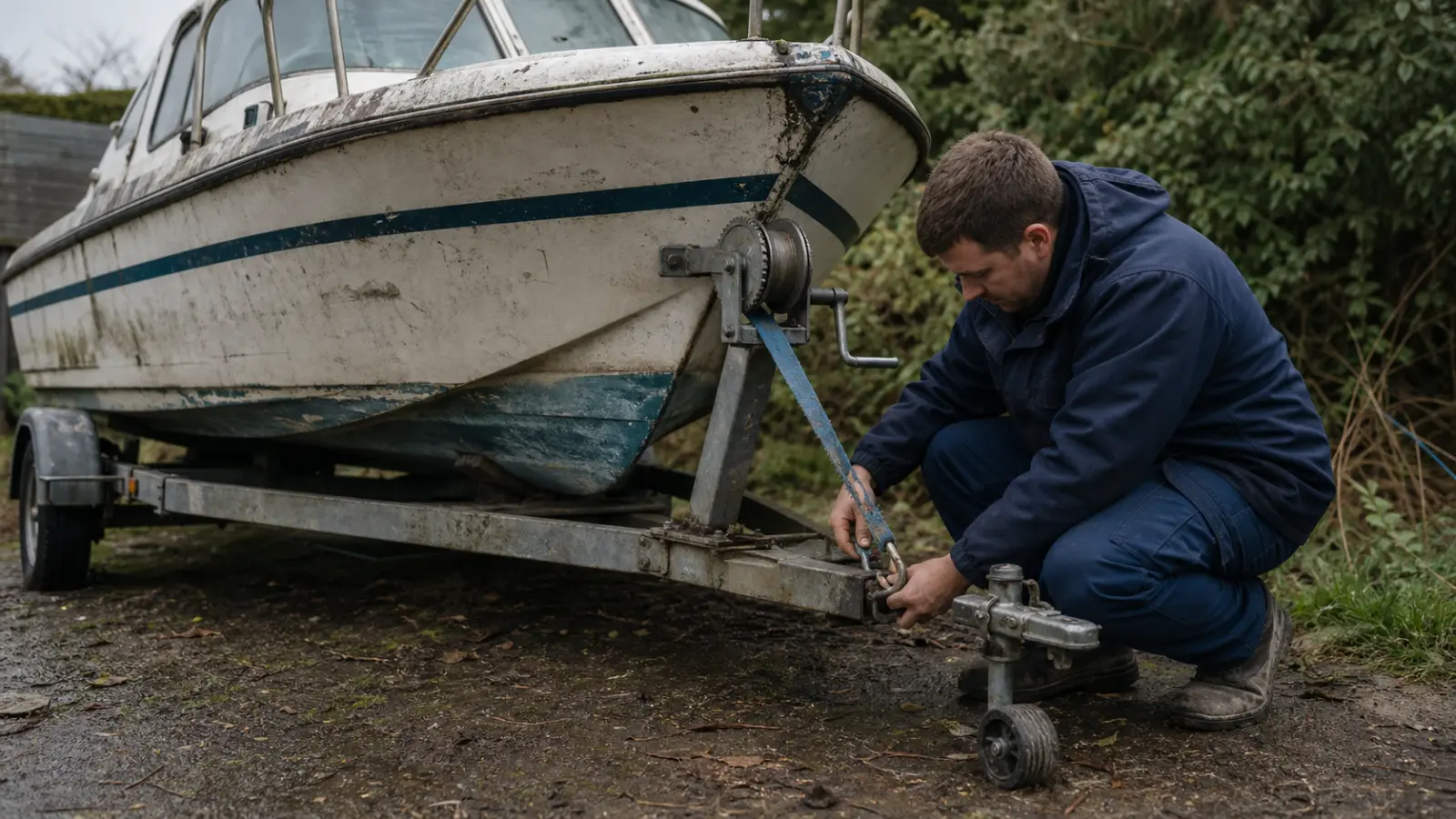
Professional Boat Removal Services in Memphis, TN

A fiberglass hull has spent six seasons sitting on a flat-tired trailer behind a garage while the tires sank directly into the soil. In other cases, a property owner purchases land that came with an abandoned cabin cruiser tucked behind a barn, or a boat owner receives a formal notice from a marina regarding unpaid slip fees. Sometimes an old boat simply sits unused because the outboard motor seized up, leaving a rebuild cost that exceeds the total value of the craft. These situations leave owners with heavy, immobile property that occupies valuable space and presents a growing liability.

Is there boat removal near me in Memphis, TN? Yes, Boat Removal Experts handles complete vessel extraction, hauling, and structural clearing directly from residential yards, commercial lots, and local storage facilities.

Our position on documentation is clear: Boat Removal Experts does not always transfer the title, but we always issue a formal release of liability to the owner. Some haulers take a vessel away without providing any physical paperwork, which means legal liability stays with the original owner if that hull is later dumped illegally. Asking for written documentation protects you completely before any vessel leaves your driveway.

Moving a junk boat presents mechanical challenges that standard towing rigs cannot manage alone. Keels collapse into soft ground, rotten wood cradles break apart under strain, and wide beams frequently exceed narrow gate clearances. When tires are dry-rotted or sunken into deep mud, getting a heavy hull across a soft lawn without damaging the surrounding property requires specialized handling equipment.

Call 901-446-1295 to start.

Send photos through the contact form.

What Is Boat Removal and When You Need It

Professional boat removal covers far more than hooking a trailer to a standard truck bumper and driving away. When an abandoned boat or a long-neglected vessel must be cleared, the extraction process changes depending on physical condition, location, and legal standing. Having a clean title in hand simplifies the initial setup, but services are frequently needed when paperwork has been lost over time or when a derelict hull comes with a newly purchased piece of land. In cases where a vessel sits on someone else's private property or inside a slip with delinquent account fees, proper authorization and property releases must be established before moving equipment onto the site.
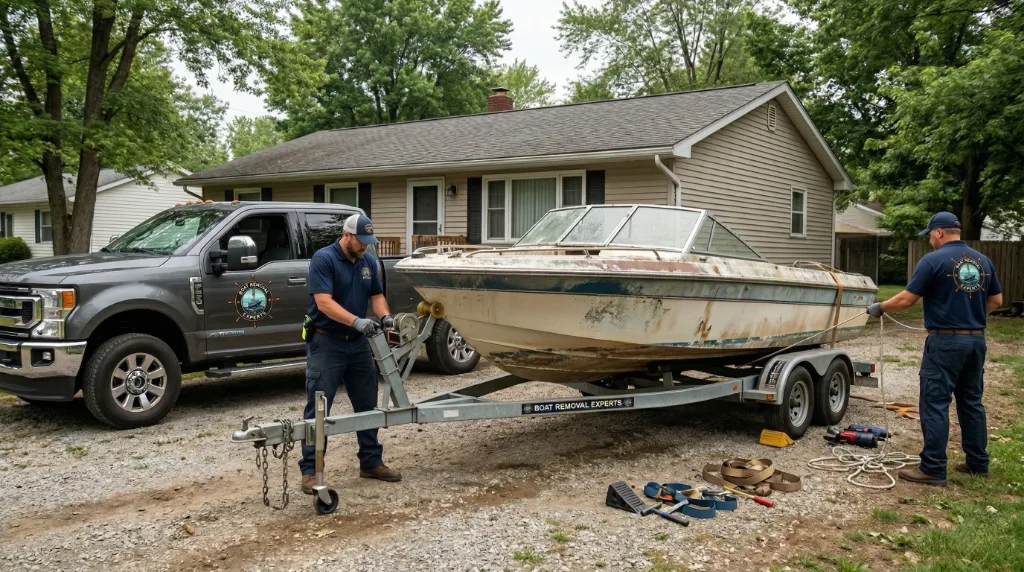
The exact physical state of the craft affects how the team approaches the vessel. An abandoned boat left in an open field may have structural integrity issues, requiring cradles or specialized rigging to prevent the hull from snapping during transfer. Boat disposal choices are determined by hull material, overall structural soundness, and whether the vessel rests on a roadworthy trailer, sunken timber blocks, or directly on the ground. When working in Shelby County, legal disposal standards require proper processing of the airframe, deck hardware, and cabin structures before final transport, ensuring that every project meets all regulatory guidelines while completely clearing the land.
When Memphis Residents Call Us

Property owners throughout Memphis call for professional equipment because the regional climate accelerates physical decay on idle watercraft. High humidity, intense heat, and heavy rainfall combine to trap water inside exposed cockpits. Rainwater collecting in an un-drained fiberglass hull creates standing weight that can double the overall burden of a fishing boat or pontoon. Over time, moisture causes fiberglass gelcoat to craze, structural plywood decks to rot, and interior upholstery to break down into hazardous mold. A waterlogged sailboat sitting under pine trees rapidly accumulates weight, making manual moving impossible and causing wooden support cradles to collapse into the soil.
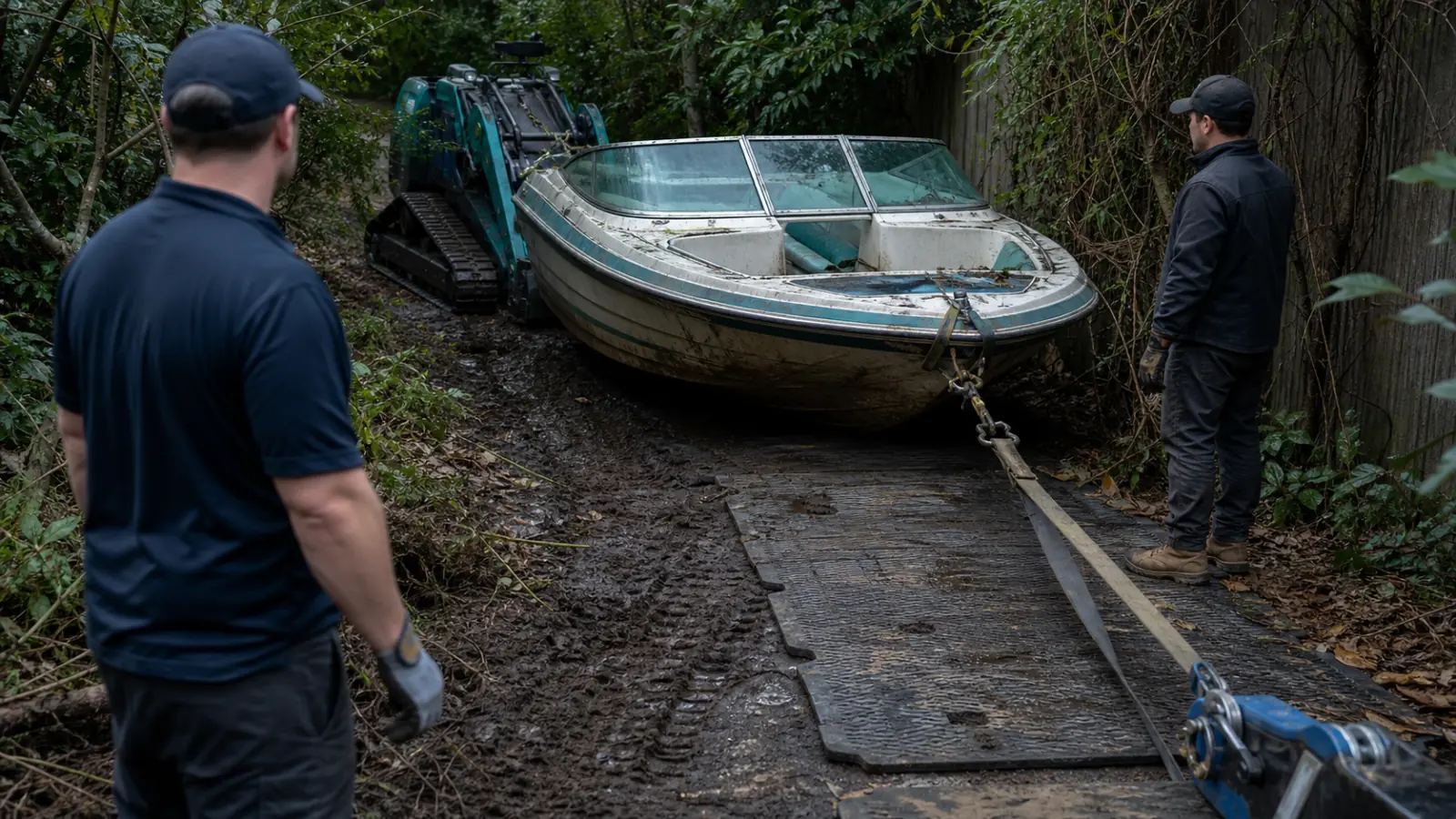
Site conditions drastically alter how the extraction crew operates on location. Narrow suburban driveways, low-hanging overhead lines, and soft ground conditions dictate what machinery can safely reach the vessel. Whether the craft rests on a sunken trailer in Bartlett, on concrete blocks in Germantown, or along a muddy shore in Millington, access pathways must be evaluated prior to hookup. Crews must navigate around ornamental fences in Lakeland or tight side yards in Collierville without causing damage to the surrounding turf. A heavy boat resting on saturated soil requires ground protection mats and winch rigs to move the load safely to asphalt without sinking the haul vehicle.
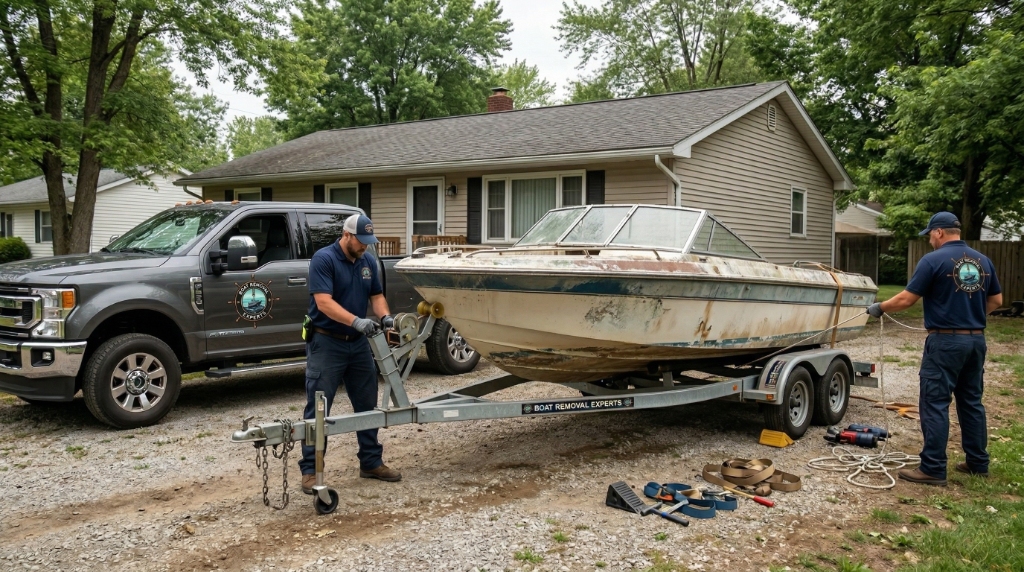
Every Type of Boat We Handle

Situations We Handle

Need Help? We’re Ready.

Contact boat removers directly or request free quotes. We dispatch crews fast.

Our Step-by-Step Process

Assessment

We evaluate the boat’s size, current location, condition, and any environmental or access challenges before we schedule boat removal.

Planning

A detailed plan is built around your vessel — equipment, logistics, timeline, and safety. Services include drainage of oil and fuel before transport.

Execution

Our experienced crew mobilizes to your current location and we tow, haul, or dismantle the vessel using professional marine equipment.

Completion

The vessel is recovered, recycled, or routed to certified boat junkyards for environmentally responsible disposal. The site is left clean.

Equipment & Capabilities

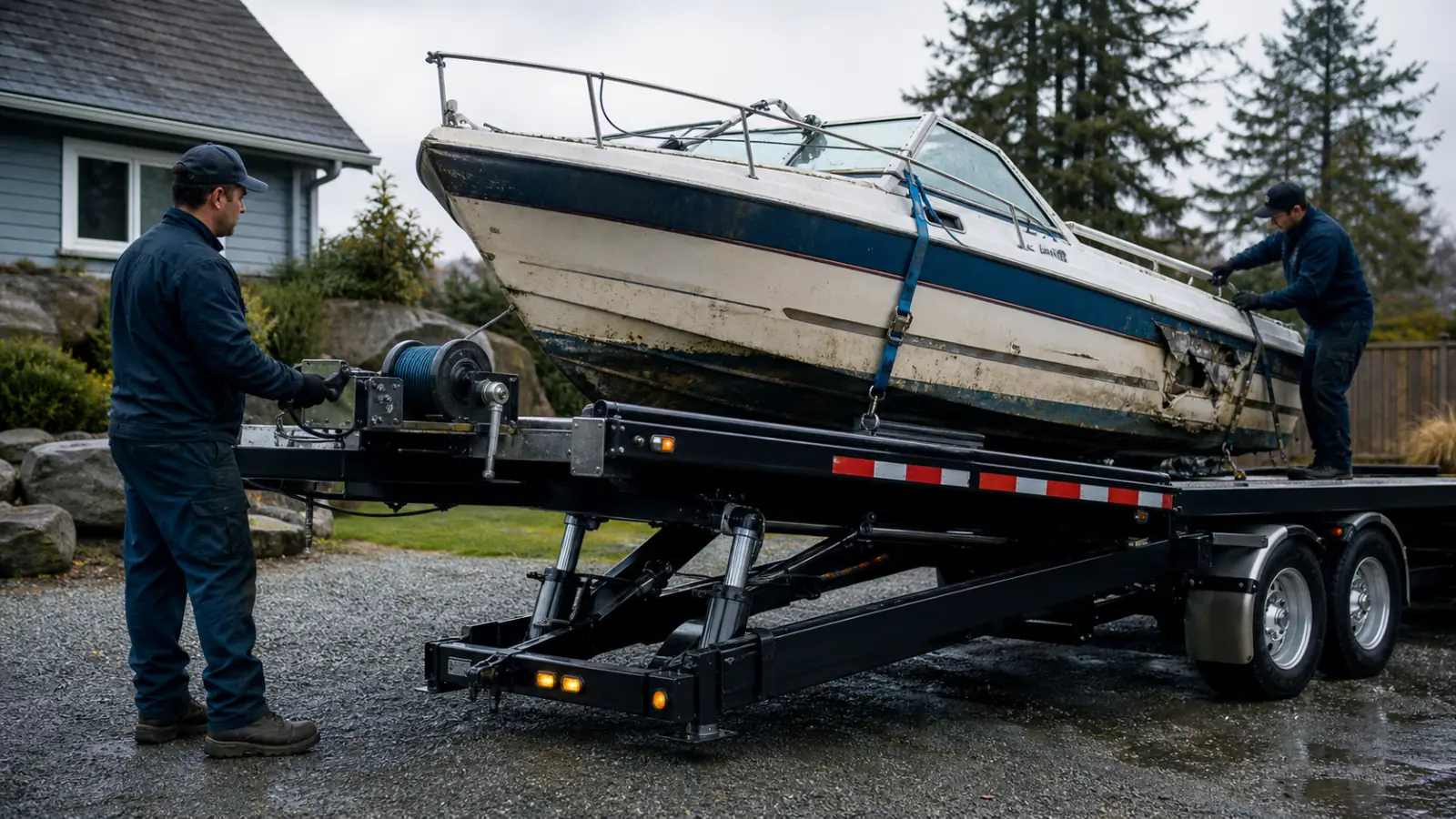
When an extraction crew arrives on site, they bring heavy-duty winches, hydraulic drop-deck trailers, mobile cutting equipment, and environmental containment supplies. The crew evaluates the vessel to determine whether it can be loaded intact or if workers must dismantle the structure right where it rests. If a trailer has rusted through or lost its axle integrity, the crew uses industrial rigging to lift the hull onto a flatbed platform safely.

Before any heavy moving begins, workers strictly handle all hazardous materials on board. Crews drain residual fuel, motor oil, hydraulic fluids, and bilge fluids into sealed recovery tanks, while removing heavy marine batteries and mercury-containing electronics for proper environmental processing. These steps prevent fluid spills on your drive or lawn during extraction.

Once fluid recovery is complete, the physical vessel is processed based on its material breakdown. Clean metals like aluminum hulls, stainless fittings, and lead keels are sorted for metal recycling. Unsalvageable fiberglass components, rotted floor frames, and degraded foam insulation are shredded or cut into manageable sections before being transported to an approved municipal landfill. The crew determines the exact teardown sequence based on hull size, access restrictions, and local material acceptance rules.

Our boat removal experience covers everything from start to finish  assessment, planning, execution, dismantling, and final cleanup. Marina operators and property owners across Shelby County trust us to get rid of your junk boat without damage to surrounding property.

FAQ

Boat Removal Questions - Frequently Asked

Common questions from property owners about our junk removal service, dismantling, and marine recovery.

We handle every type of vessel — sailboat, pontoon, fishing boats, jon boats, yachts, and commercial craft. Whether your boat or sailboat floats (or used to), we’ll remove it from any current location.

Yes. Sunken and partially submerged vessel recovery is a core part of our salvage work in Shelby County. We use lift bags, salvage pumps, and marine cranes to safely raise vessels from underwater.

We respond to inquiries quickly — usually within hours, with same-day service available. For emergency situations, we mobilize as fast as possible. Call us directly for time-sensitive jobs.

No. Every job is handled in-house by our own team and equipment. No middlemen, no handoffs, no surprises.

Cost depends on the boat’s size, current location, condition, and complexity of the job. We provide free assessments and free quotes for every case — contact us and we’ll give you an honest estimate.

Yes. Our boat removal and disposal services include hazardous materials handling, oil and fuel drainage, hull dismantling, and recycling at certified yards — all in compliance with environmental regulations and environmentally responsible standards.

Absolutely. We regularly work in tight marinas, shallow waterways, private docks, backyards, and remote areas. We bring the right gear to reach any current location.

Yes. We frequently work with insurance adjusters on salvage and recovery claims and provide the documentation needed for your claim.

Browse Our Services - Ready to Get Started?

We handle everything from start to finish. Call us now or request a free quote – we’ll dispatch crews and haul your vessel away fast.