
Professional Boat Removal Services in Meriden, CT

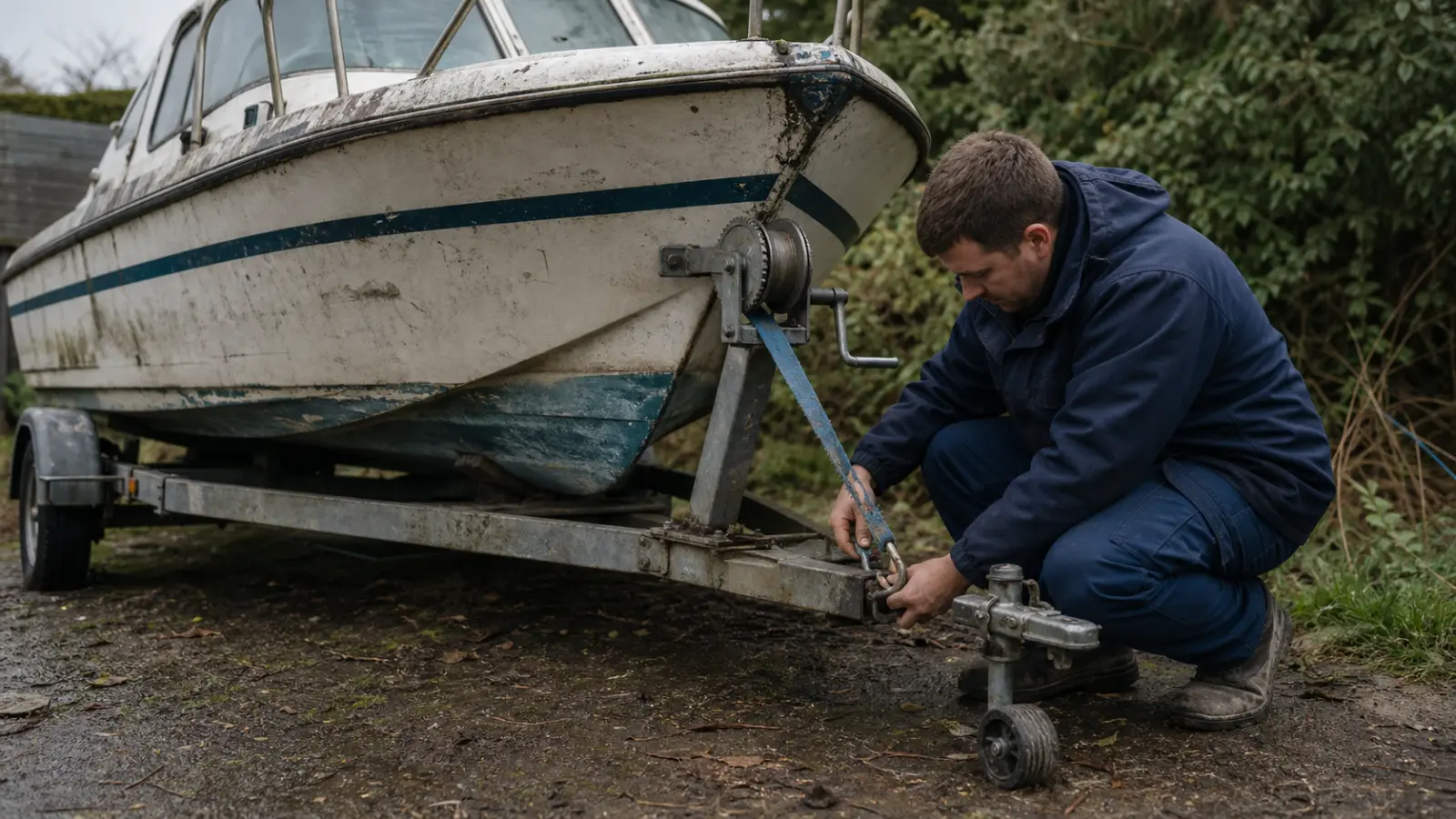
An old boat resting on a flat-tired trailer behind a garage often stays untouched for years while the elements slowly ruin the structure. Owners frequently face sudden administrative stress when a marina issues a notice regarding unpaid slip fees, or when a house sale requires a clear lot and an abandoned cabin cruiser remains parked in the yard. In other cases, a mechanical failure turns an outing into an expensive burden, as a seized outboard engine makes repair costs far higher than the market value of the vessel itself. Handling these neglected watercraft requires practical planning, specific machinery, and a solid understanding of how to safely clear residential property.

How do I find professional boat removal near me in Meriden, CT? Homeowners and property managers can contact Boat Removal Experts to coordinate the complete extraction and haulage of unwanted watercraft directly from their location.

Proper documentation is essential when taking away any vessel. While our process does not always involve a complete title transfer into our name, our team always issues an official release of liability to protect you. Some hauling operators simply drag a hull away without providing formal paperwork, leaving the original owner legally responsible if that vessel is later abandoned on public land or along a highway. Verifying liability releases beforehand prevents future legal complications.

Transporting a vessel involves complex physical challenges that go beyond simple towing. A rusted trailer frame with seized axle bearings will not roll, while keels and heavy support cradles require specialized loading equipment. Tight residential gates, low overhead tree branches, and soft soil surfaces in New Haven County can also prevent standard transport trucks from reaching the resting site safely.

Call (855) 765-7931 to start.

Send photos through the contact form.

What Is Boat Removal and When You Need It

Complete boat disposal covers far more than simply hitching a vessel to a truck and pulling it down the road. When an abandoned boat sits on private land or within a commercial storage space, removing it requires evaluating its structural strength, weight distribution, and transport security. A derelict craft that has suffered long-term exposure may lack the structural integrity needed for standard winching, demanding custom rigging or on-site breakdown before transport can safely occur.
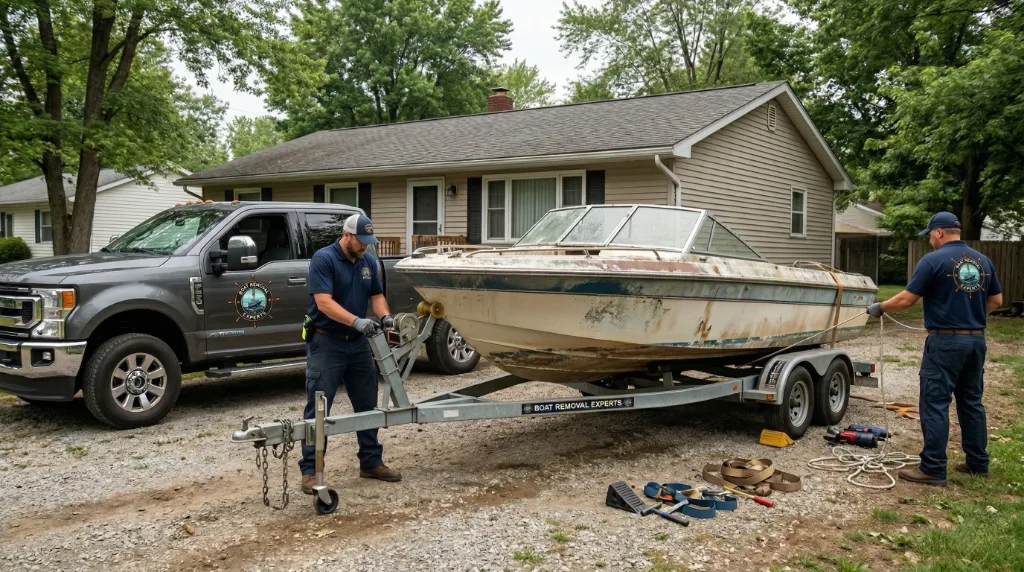
Paperwork dictates the specific path required to get rid of a boat legal and efficiently. When an owner possesses a clear title or matching HIN documentation, the extraction process moves forward immediately. However, when paperwork is lost, missing, or attached to a real estate purchase where an old vessel was left behind by previous occupants, alternative verification steps must be satisfied. Unpaid slip agreements and uncollected property claims also introduce specific requirements that dictate how quickly a transport crew can legally haul the vessel away.

Physical condition directly affects how a transport crew handles a project. A vessel sitting on soft ground requires different winching systems than one resting on concrete blocks or submerged at the water edge. Access pathways, ground firmness, overhead power lines, and structural decay all influence the equipment selection, ensuring the extraction finishes without damaging surrounding property or structures.
When Meriden Residents Call Us

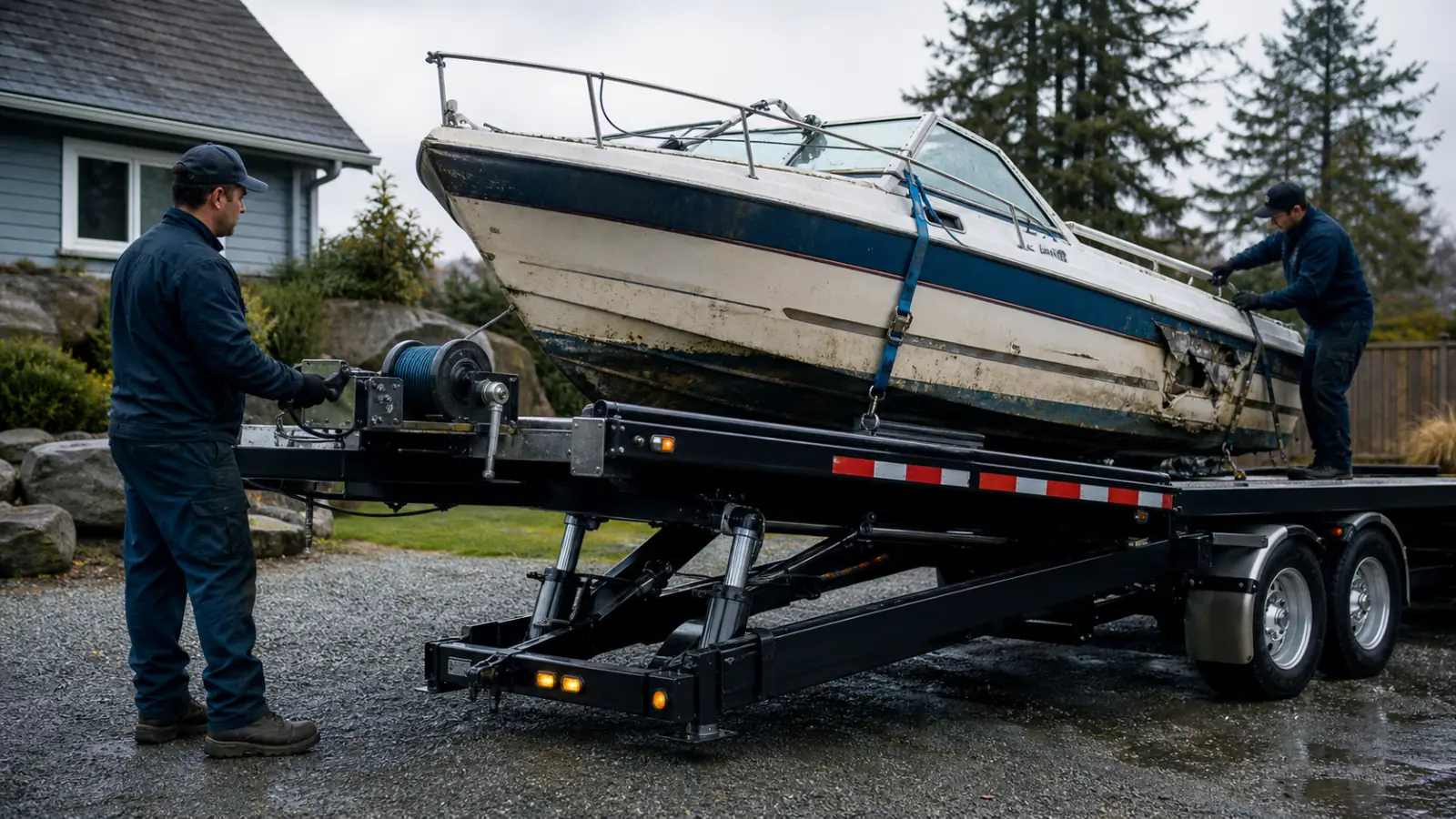
Seasonal weather patterns in Meriden, CT take a heavy toll on watercraft left exposed to open air. Constant freeze and thaw cycles cause standing rainwater inside a hull to expand, cracking gelcoat surfaces, rotting internal wood floor frames, and saturating upholstery. Over time, saturated foam insulation adds hundreds of pounds of hidden weight to a fiberglass or wooden hull, while a neglected pontoon, heavy sailboat, or aluminum fishing boat can quickly become a structural hazard if water collects internally without draining.
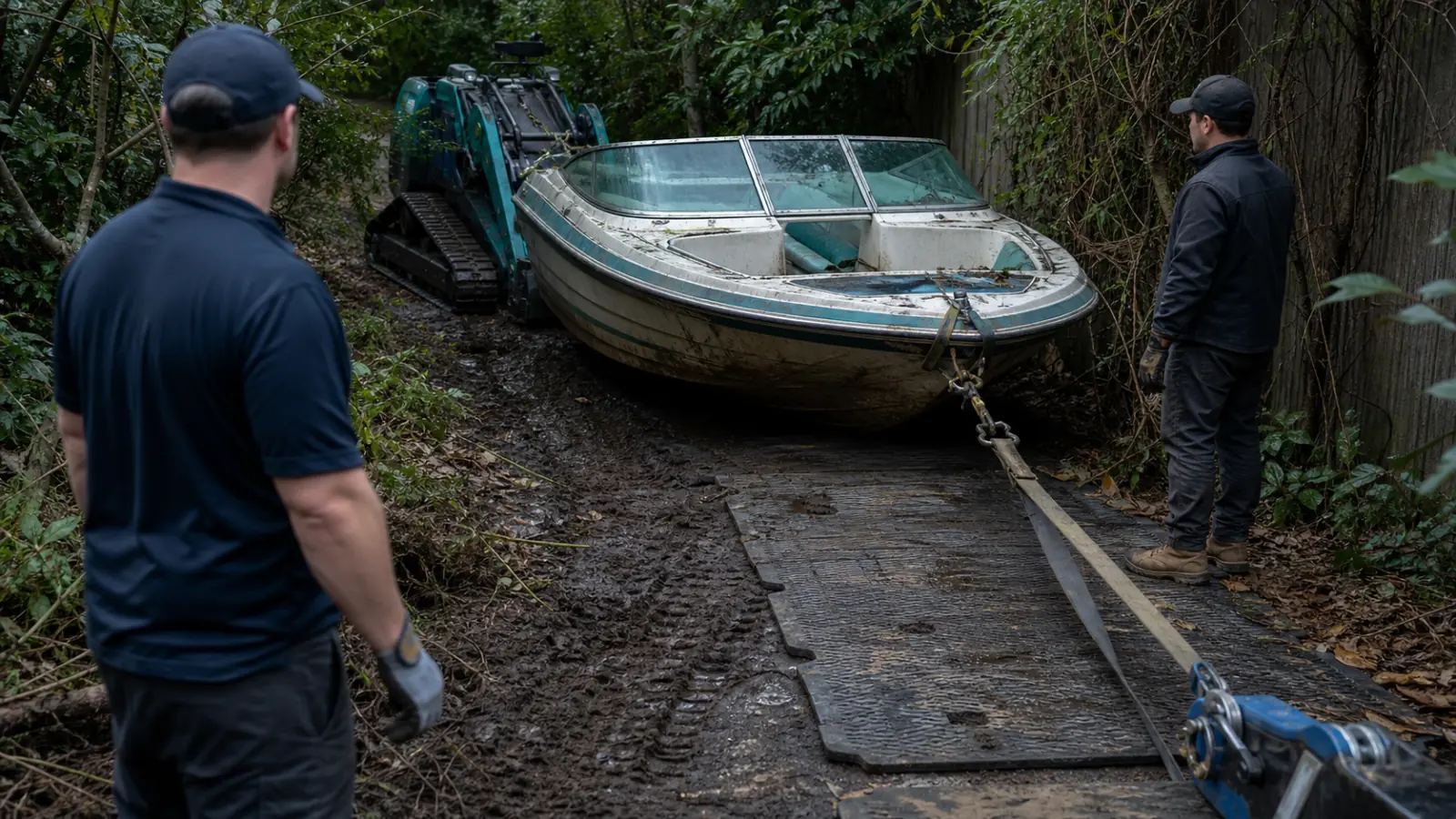
Ground conditions and neighborhood access dictate how heavy transport machinery approaches the site. Property layouts in nearby places like Plantsville and Cheshire Village often feature narrow driveways, soft lawn space, or tight side yards that complicate access to an old cradle or trailer. The physical location of the craft—whether resting on wooden blocks, sunk into mud, or settled along a muddy bank—determines how support cables, cranes, or flatbed trailers must be positioned.

Before moving any vessel, the overall weight, beam width, and structural stability must be thoroughly assessed. Deteriorated hulls require extra bracing during extraction to prevent structural failure, while overhead wires and tight fence lines require precise maneuvering during the winching and loading process.
Every Type of Boat We Handle

Situations We Handle

Need Help? We’re Ready.

Contact boat removers directly or request free quotes. We dispatch crews fast.

Our Step-by-Step Process

Assessment

We evaluate the boat’s size, current location, condition, and any environmental or access challenges before we schedule boat removal.

Planning

A detailed plan is built around your vessel — equipment, logistics, timeline, and safety. Services include drainage of oil and fuel before transport.

Execution

Our experienced crew mobilizes to your current location and we tow, haul, or dismantle the vessel using professional marine equipment.

Completion

The vessel is recovered, recycled, or routed to certified boat junkyards for environmentally responsible disposal. The site is left clean.

Equipment & Capabilities

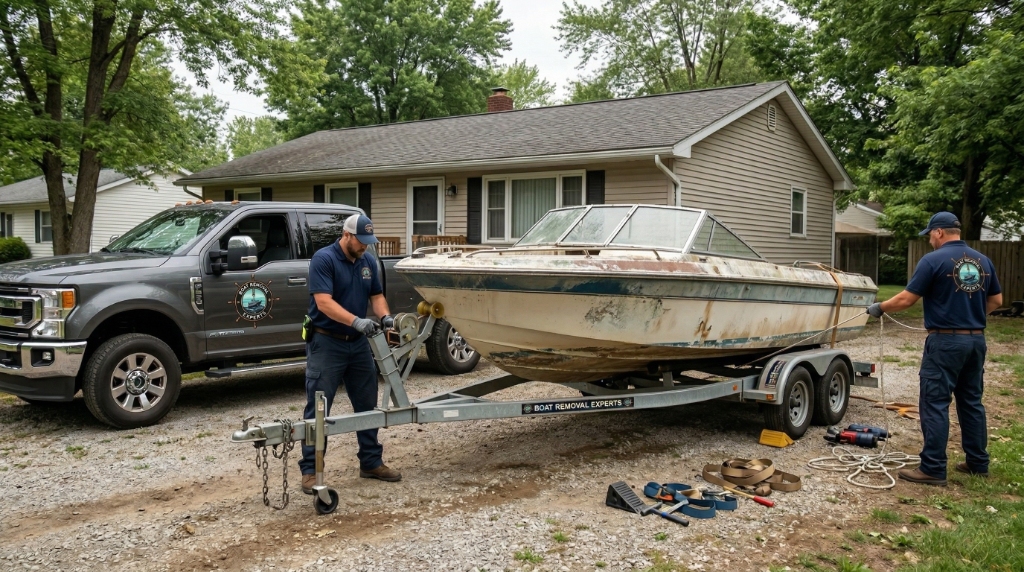
Extracting a heavy hull with a damaged frame requires heavy winches, hydraulic lift systems, and specialized transport decks. When a trailer is too rusted to roll safely on public roads, crews use heavy ramps and slide plates to load the entire assembly intact. If a large cabin cruiser or wide beam vessel sits behind tight alleyways in areas near Wallingford Center, Middletown, or Kensington, crews may carefully dismantle the upper deck and hull sections on site using industrial cutting tools to permit safe passage through narrow gates.

Environmental safety steps occur before any structural cutting or loading begins. Crews carefully drain all hazardous materials, including residual gasoline, diesel fuel, engine oil, bilge water, and hydraulic fluids. Heavy marine batteries, lead ballast, and electronic equipment are removed systematically to ensure safe handling and full compliance with environmental management standards.

Final destination decisions depend entirely on material composition and physical condition upon inspection. Clean aluminum hulls and metallic hardware are sorted for recycling facilities, while unsalvageable fiberglass, rotted wood components, and contaminated insulation material are routed toward approved regional waste transfer sites. The crew evaluates each vessel upon arrival to choose the safest, most efficient extraction method for that specific site.

Our boat removal experience covers everything from start to finish  assessment, planning, execution, dismantling, and final cleanup. Marina operators and property owners across South Central Connecticut Planning Region trust us to get rid of your junk boat without damage to surrounding property.

FAQ

Boat Removal Questions - Frequently Asked

Common questions from property owners about our junk removal service, dismantling, and marine recovery.

We handle every type of vessel — sailboat, pontoon, fishing boats, jon boats, yachts, and commercial craft. Whether your boat or sailboat floats (or used to), we’ll remove it from any current location.

Yes. Sunken and partially submerged vessel recovery is a core part of our salvage work in South Central Connecticut Planning Region. We use lift bags, salvage pumps, and marine cranes to safely raise vessels from underwater.

We respond to inquiries quickly — usually within hours, with same-day service available. For emergency situations, we mobilize as fast as possible. Call us directly for time-sensitive jobs.

No. Every job is handled in-house by our own team and equipment. No middlemen, no handoffs, no surprises.

Cost depends on the boat’s size, current location, condition, and complexity of the job. We provide free assessments and free quotes for every case — contact us and we’ll give you an honest estimate.

Yes. Our boat removal and disposal services include hazardous materials handling, oil and fuel drainage, hull dismantling, and recycling at certified yards — all in compliance with environmental regulations and environmentally responsible standards.

Absolutely. We regularly work in tight marinas, shallow waterways, private docks, backyards, and remote areas. We bring the right gear to reach any current location.

Yes. We frequently work with insurance adjusters on salvage and recovery claims and provide the documentation needed for your claim.

Browse Our Services - Ready to Get Started?

We handle everything from start to finish. Call us now or request a free quote – we’ll dispatch crews and haul your vessel away fast.