
Professional Boat Removal Services in Moline, IL

The fiberglass hull has rested on its bunk trailer behind the garage for six seasons now, the dry-rotted tires sunk four inches into the dirt while the gelcoat chalks under the sun. Across town, a property transaction stalls because a forgotten cabin cruiser sits on the back lot, or an outboard motor seizes up and the quote for a mechanical rebuild far exceeds the market value of the vessel. In other cases, a private marina sends an urgent notice regarding an unpaid slip, leaving the owner scrambling for a practical solution before fines accumulate further. These situations leave property owners stuck with an unwanted craft that rapidly deteriorates into a costly liability.

Where can an owner find reliable boat removal near me in Moline, IL? Boat Removal Experts provides complete physical extraction, transport, and final processing for unwanted vessels situated anywhere in Moline, IL.

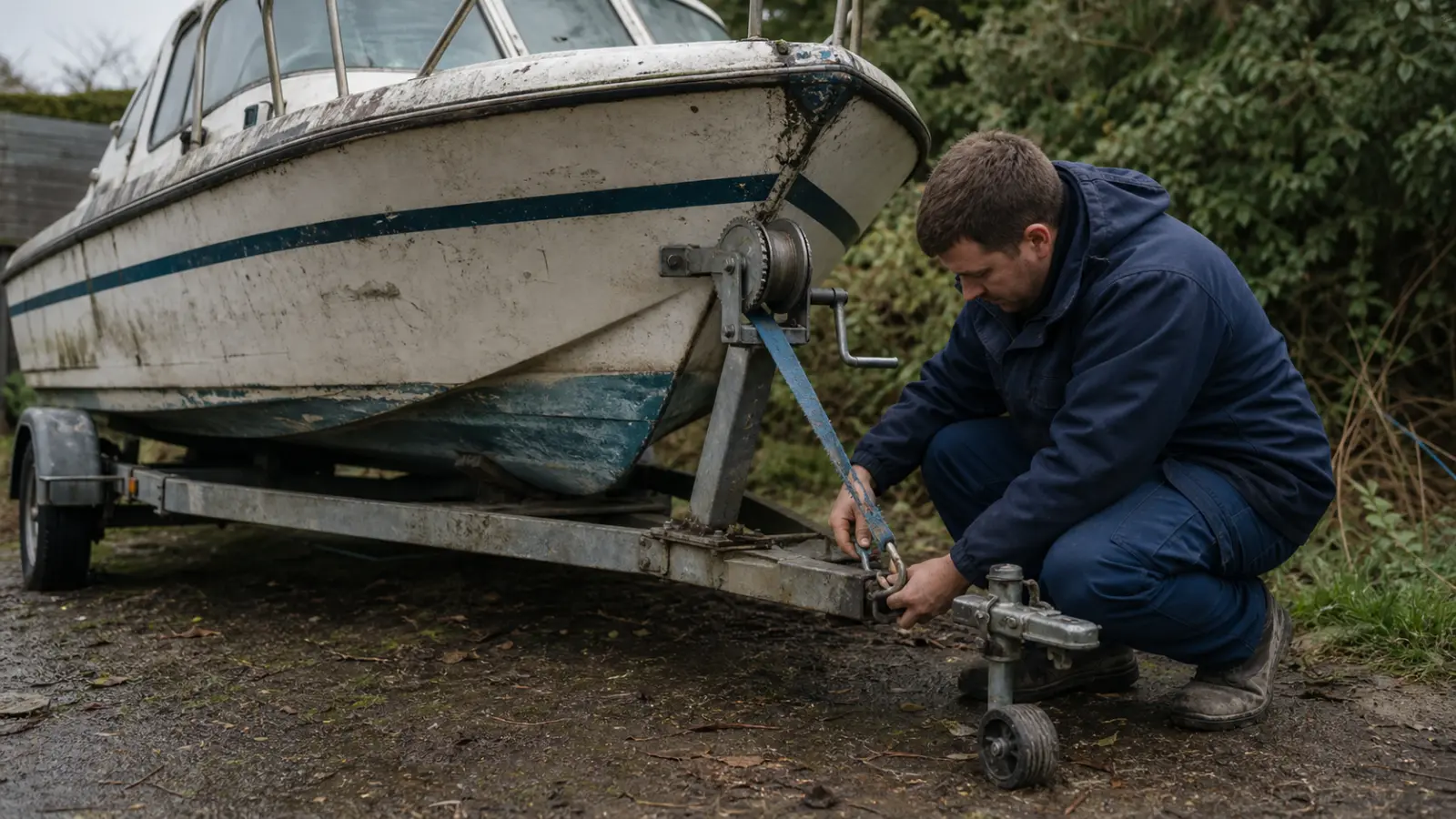
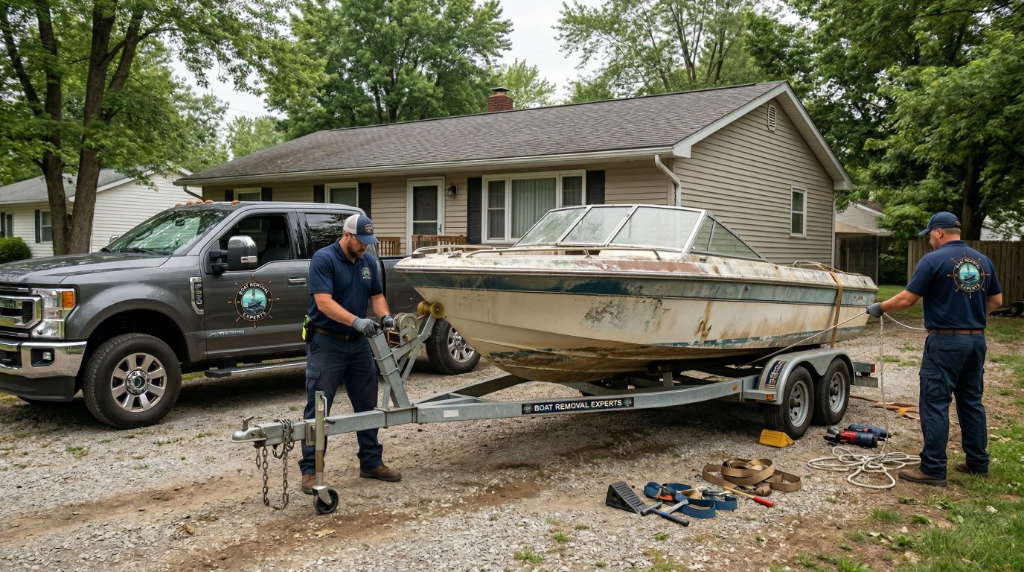
Worker checking the trailer winch before hauling an old boat

When clearing a junk boat from a property, formal paperwork matters just as much as pulling the hull off the yard. Boat Removal Experts does not always transfer the title to its own name, but Boat Removal Experts always issues a documented release of liability directly to the client. Some unverified outfits offer to haul an old boat away with zero formal record, leaving the registered owner legally accountable if that vessel is later abandoned on public land or along a shoreline. Securing a clear release protects you from future municipal fines or environmental recovery costs.

Moving a stubborn hull involves far more than simply hooking a hitch to a truck bumper. A rotten trailer frame can snap in half under tension, narrow side yards severely limit clearance around gates, and heavy keels sink deep into sod that standard tow vehicles cannot cross without bogging down.

Call 309-504-0586 to start.

What Is Boat Removal and When You Need It

Professional boat disposal involves much more than towing a craft away on a highway. A complete boat removal project requires assessing structural integrity, freeing frozen trailer brakes, clearing secure anchor lines, and managing the total weight of a waterlogged vessel. What changes during the process depends heavily on the legal status of the vessel. When an owner possesses a clean title, the documentation flows smoothly. If the paperwork was lost decades ago, or if an abandoned boat came attached to a newly purchased commercial property, specific state documentation must be filed before a crew can legally haul the craft away.
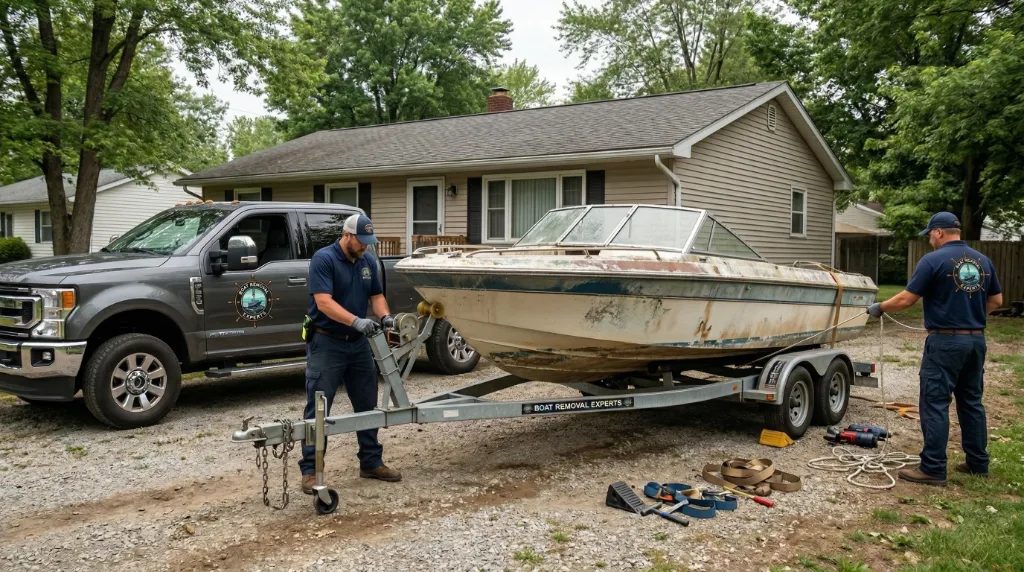
Crew securing an old boat on a trailer for removal

When a derelict vessel is left sitting in a slip that is no longer paid for, or abandoned on private land in Rock Island County, municipal code enforcement eventually steps in. Removing an abandoned boat under these conditions requires coordinating site access with land managers or marina directors while verifying that all property rights are respected. The physical condition of the back panel, the presence of structural rot, and the state of the underlying cradle directly dictate whether a crew can load the hull intact or if specialized equipment must be staged on site to support the vessel during transport.
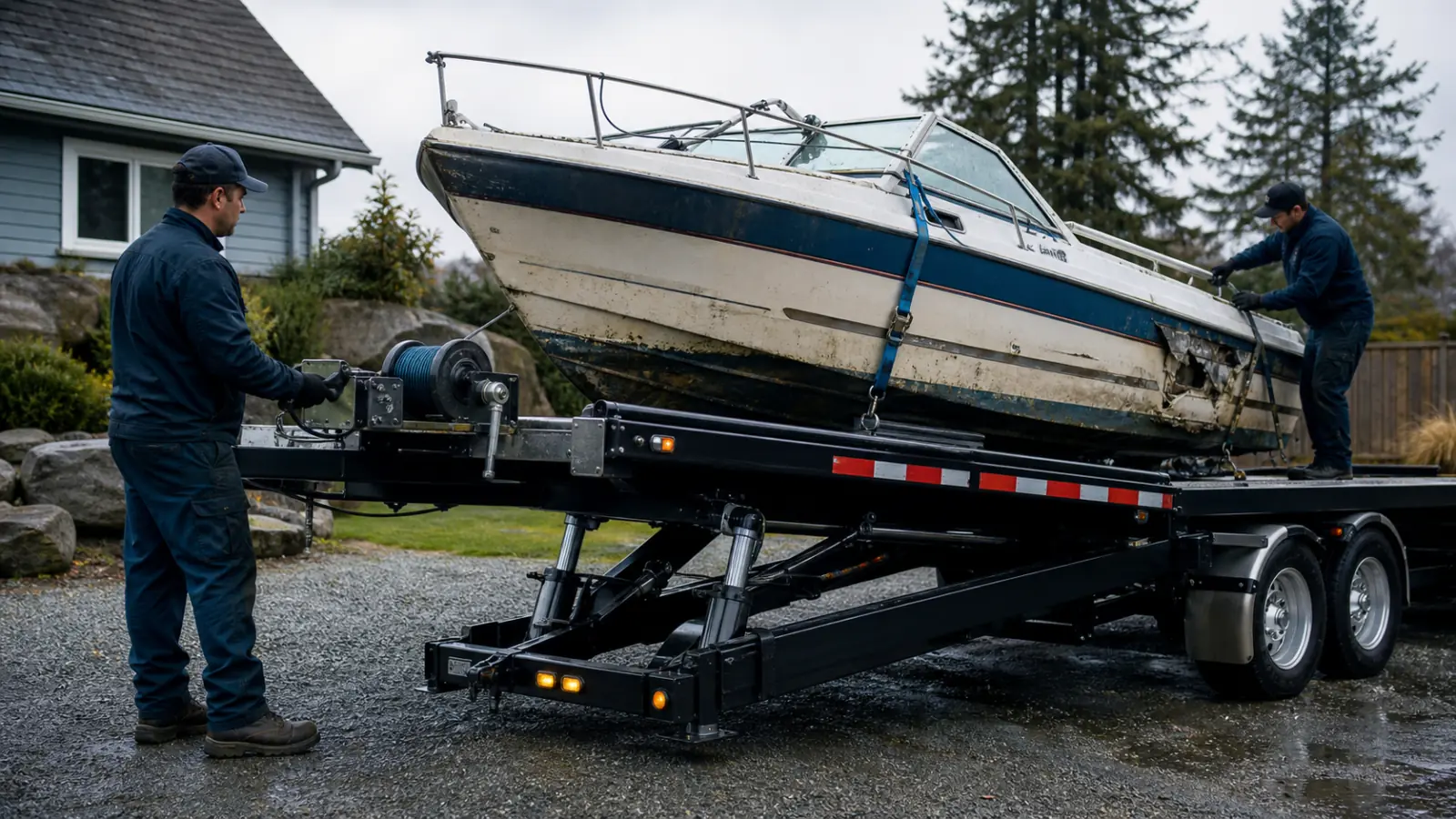
Crew winching an old boat onto a flatbed trailer

When Moline Residents Call Us

Property owners call for help because seasonal weather takes a heavy toll on exposed vessels left parked outdoors. Mid-western winters freeze trapped bilge water inside a fiberglass or aluminum hull, expanding cracks along the floor frames and delaminating the gelcoat. Summer rain saturates internal foam, rots plywood decks, and turns custom upholstery into heavy mold. Whether managing a sleek sailboat, a wide pontoon, or an aluminum fishing boat, neglect rapidly transforms a floating craft into a waterlogged weight that threatens to collapse fragile trailer frames or block driveways.
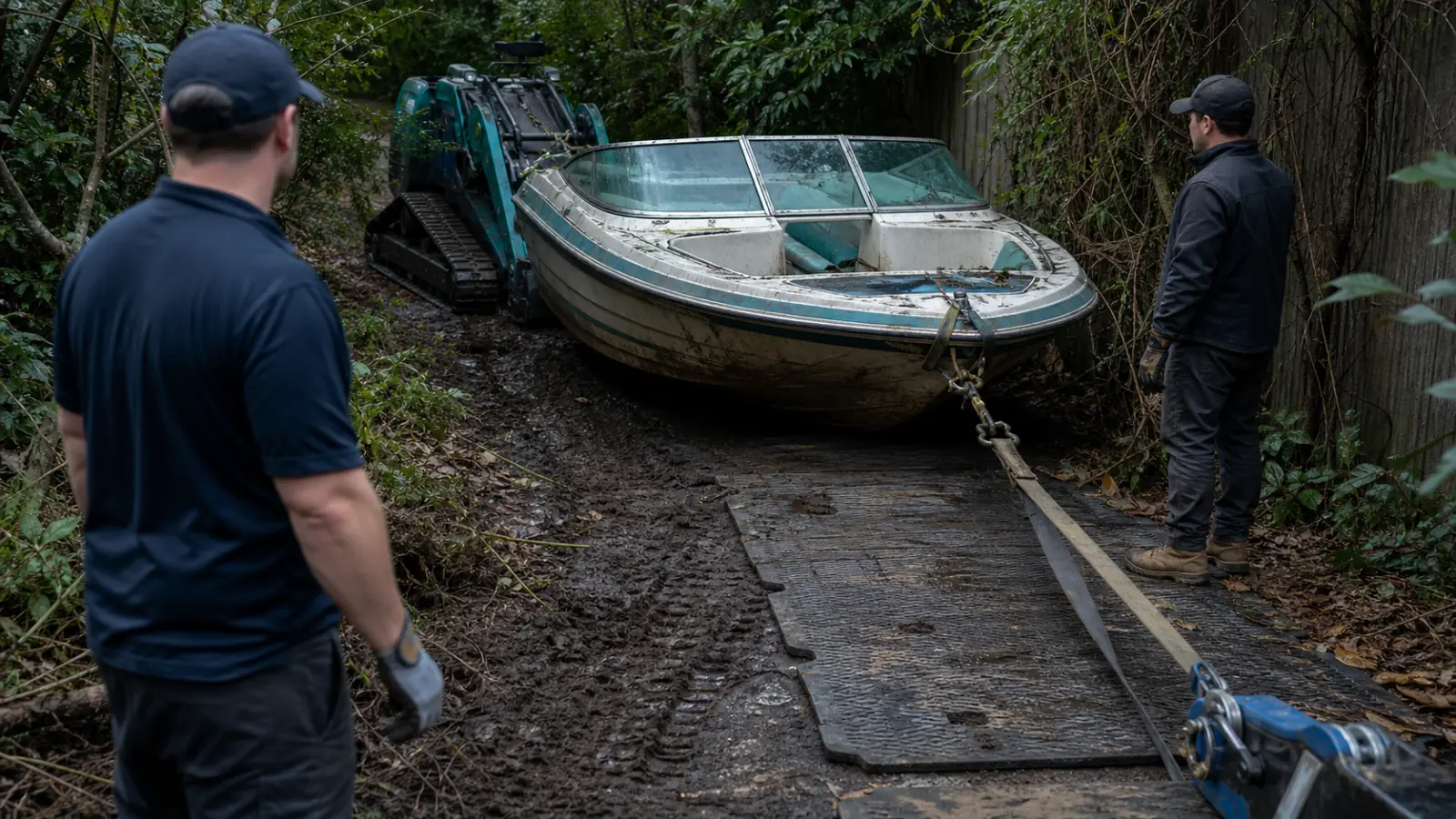
Crew recovering a boat from an overgrown yard using ground mats

Local terrain directly changes how a crew approaches each job site. Access paths vary widely across Moline, IL, from tight residential side yards near Coal Valley or Silvis to steep riverbank slopes near Rock Island Arsenal, Milan, or Rock Island. Moving a boat sitting on custom timber blocks or resting directly in the water requires different rigging than pulling a rolling trailer off a paved driveway. Low-hanging tree limbs, narrow gate posts, and soft soil dictate whether a crew can back a heavy rig directly up to the hull or if manual winches and ground pads are required to safely reach the street.
Crew securing an old boat on a trailer for removal

Every Type of Boat We Handle

Situations We Handle

Need Help? We’re Ready.

Contact boat removers directly or request free quotes. We dispatch crews fast.

Our Step-by-Step Process

Assessment

We evaluate the boat’s size, current location, condition, and any environmental or access challenges before we schedule boat removal.

Planning

A detailed plan is built around your vessel — equipment, logistics, timeline, and safety. Services include drainage of oil and fuel before transport.

Execution

Our experienced crew mobilizes to your current location and we tow, haul, or dismantle the vessel using professional marine equipment.

Completion

The vessel is recovered, recycled, or routed to certified boat junkyards for environmentally responsible disposal. The site is left clean.

Equipment & Capabilities

Handling a complex extraction requires specialized equipment tailored to the condition of the vessel. If a trailer frame is snapped or missing its wheels, heavy-duty hydraulic jacks, industrial skates, and winches pull the weight up onto a flatbed truck without damaging surrounding structures. When a large craft is too wide for residential gates or severely compromized structurally, the crew may dismantle the hull directly on site using heavy cutting tools. Before any cut is made or any transport begins, hazardous materials must be stripped from the vessel. Fuel tanks are drained, motor oil is siphoned, lead-acid batteries are disconnected, and marine electronics are carefully removed to prevent ground contamination.

Where the materials end up after transport depends entirely on what the crew discovers during the initial inspection. Structural fiberglass, scrap steel, aluminum hulls, and lead keels are sorted for metal recycling facilities whenever viable, while contaminated insulation, rotten wood, and ruined carpets are taken to designated solid waste locations. The crew evaluates the vessel on site to determine whether full processing, scrap recovery, or bulk salvage is the safest path forward.

Our boat removal experience covers everything from start to finish  assessment, planning, execution, dismantling, and final cleanup. Marina operators and property owners across Rock Island County trust us to get rid of your junk boat without damage to surrounding property.

FAQ

Boat Removal Questions - Frequently Asked

Common questions from property owners about our junk removal service, dismantling, and marine recovery.

We handle every type of vessel — sailboat, pontoon, fishing boats, jon boats, yachts, and commercial craft. Whether your boat or sailboat floats (or used to), we’ll remove it from any current location.

Yes. Sunken and partially submerged vessel recovery is a core part of our salvage work in Rock Island County. We use lift bags, salvage pumps, and marine cranes to safely raise vessels from underwater.

We respond to inquiries quickly — usually within hours, with same-day service available. For emergency situations, we mobilize as fast as possible. Call us directly for time-sensitive jobs.

No. Every job is handled in-house by our own team and equipment. No middlemen, no handoffs, no surprises.

Cost depends on the boat’s size, current location, condition, and complexity of the job. We provide free assessments and free quotes for every case — contact us and we’ll give you an honest estimate.

Yes. Our boat removal and disposal services include hazardous materials handling, oil and fuel drainage, hull dismantling, and recycling at certified yards — all in compliance with environmental regulations and environmentally responsible standards.

Absolutely. We regularly work in tight marinas, shallow waterways, private docks, backyards, and remote areas. We bring the right gear to reach any current location.

Yes. We frequently work with insurance adjusters on salvage and recovery claims and provide the documentation needed for your claim.

Browse Our Services - Ready to Get Started?

We handle everything from start to finish. Call us now or request a free quote – we’ll dispatch crews and haul your vessel away fast.