
Professional Boat Removal Services in North Bergen, NJ

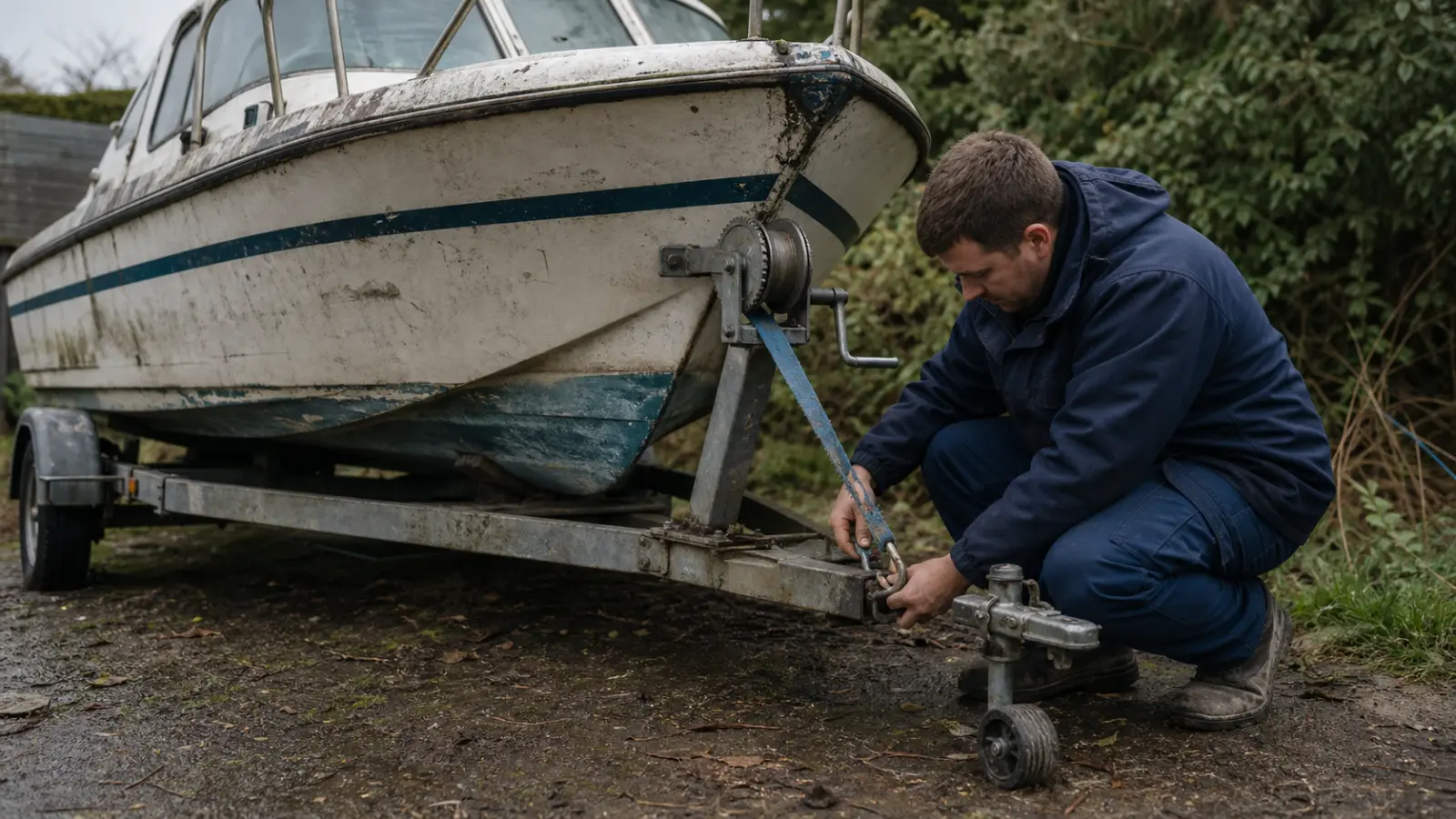
A fiberglass hull has rested on a rusty trailer behind the garage for six seasons in North Bergen, NJ, until the tires have flattened completely into the soft dirt. A local marina sent a final notice about an unpaid monthly slip fee for a vessel that no longer runs. A residential property sold with an old cabin cruiser left stranded on the lot, or an outboard motor seized where a complete mechanical rebuild costs far more than the boat is worth. These real situations leave owners with heavy, deteriorating vessels that cannot simply be towed away by a standard roadside service truck.

Is there boat removal near me in North Bergen, NJ? Yes, Boat Removal Experts manages complete extraction, hauling, and site clearing for unwanted vessels throughout North Bergen, NJ, handling every step of the physical transport and release paperwork regardless of the vessel size or current location.

When booking a boat removal, understanding legal accountability is essential. We do not always transfer the title into our name, but we always issue an official release of liability. Some unauthorized outfits haul a vessel away with zero signed paperwork, which means future legal liability and abandoned property fines stay directly with the original owner. It is always worth asking how documentation is handled before allowing any hauler to hook onto a junk boat.

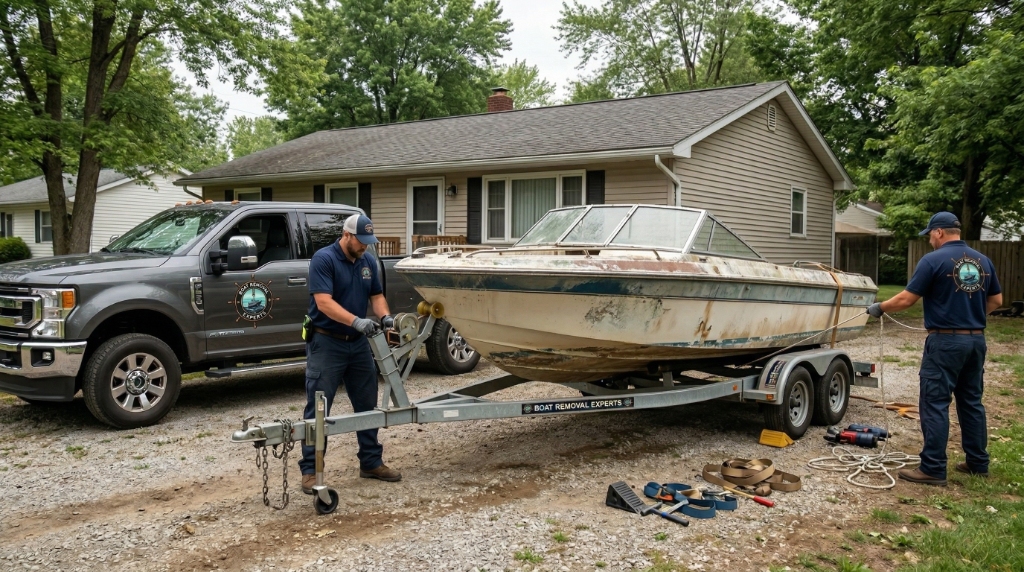
Removing an old boat is rarely a simple task. A trailer often has locked brakes or rotten frame rails that will not roll, while larger craft sit resting on custom cradles or wooden blocks. Tight access paths, narrow yard gates, low branches, and soft ground where heavy recovery trucks sink make moving a vessel far more complicated than it appears.

Call (855) 765-7931 to start.

Send photos through the contact form.

What Is Boat Removal and When You Need It

Professional boat disposal covers much more than hooking up a trailer and driving down the road. When a vessel sits idle for years, structural components degrade, making standard transport unsafe. A complete service involves assessing structural integrity, securing loose cabins, stabilizing the hull, and selecting appropriate heavy lifting equipment to clear the property completely without leaving debris behind.

Paperwork dictates how an abandoned boat or derelict craft must be handled legally. When an owner holds a clear title, the transport process moves forward immediately. When legal paperwork is lost, missing, or inherited alongside a newly purchased piece of real estate, additional documentation steps are required. The age of the vessel, the state of historical registration records, and whether the hull identification number remains legible all affect how the vessel is cleared for legal transport and final processing.
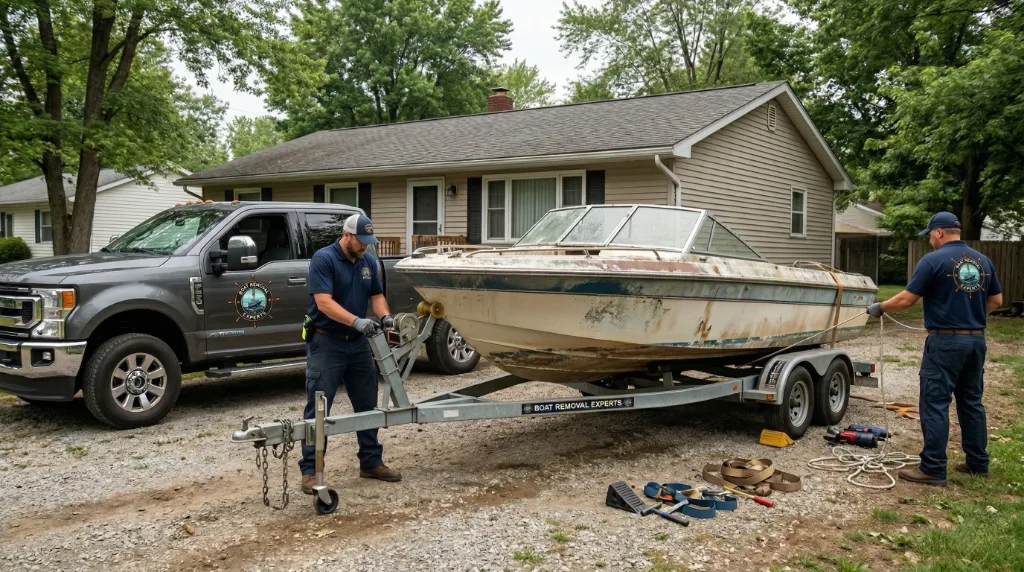
Vessels left stranded on private property, commercial lots, or stored in non-paying marina slips present unique challenges. Landowners and property managers face strict property codes and potential liability if a deteriorating hull spills fluids or collapses. Resolving a derelict vessel situation requires balancing legal releases, physical extraction, and safe transport off the property to prevent ongoing fines or storage fees from accumulating.
When North Bergen Residents Call Us

Harsh winter frost, persistent damp air, and heavy summer rainfall constantly attack exposed materials in North Bergen, NJ. When a fishing boat, pontoon, or sailboat sits unprotected, standing rainwater collects inside the hull, rotting wooden floor frames, floorboards, and transoms. Gelcoat cracks open under freezing temperatures, while upholstery traps moisture, creating severe mold growth. This moisture accumulation adds hundreds of pounds of hidden water weight, weakening the structural integrity of the hull and complicating extraction.
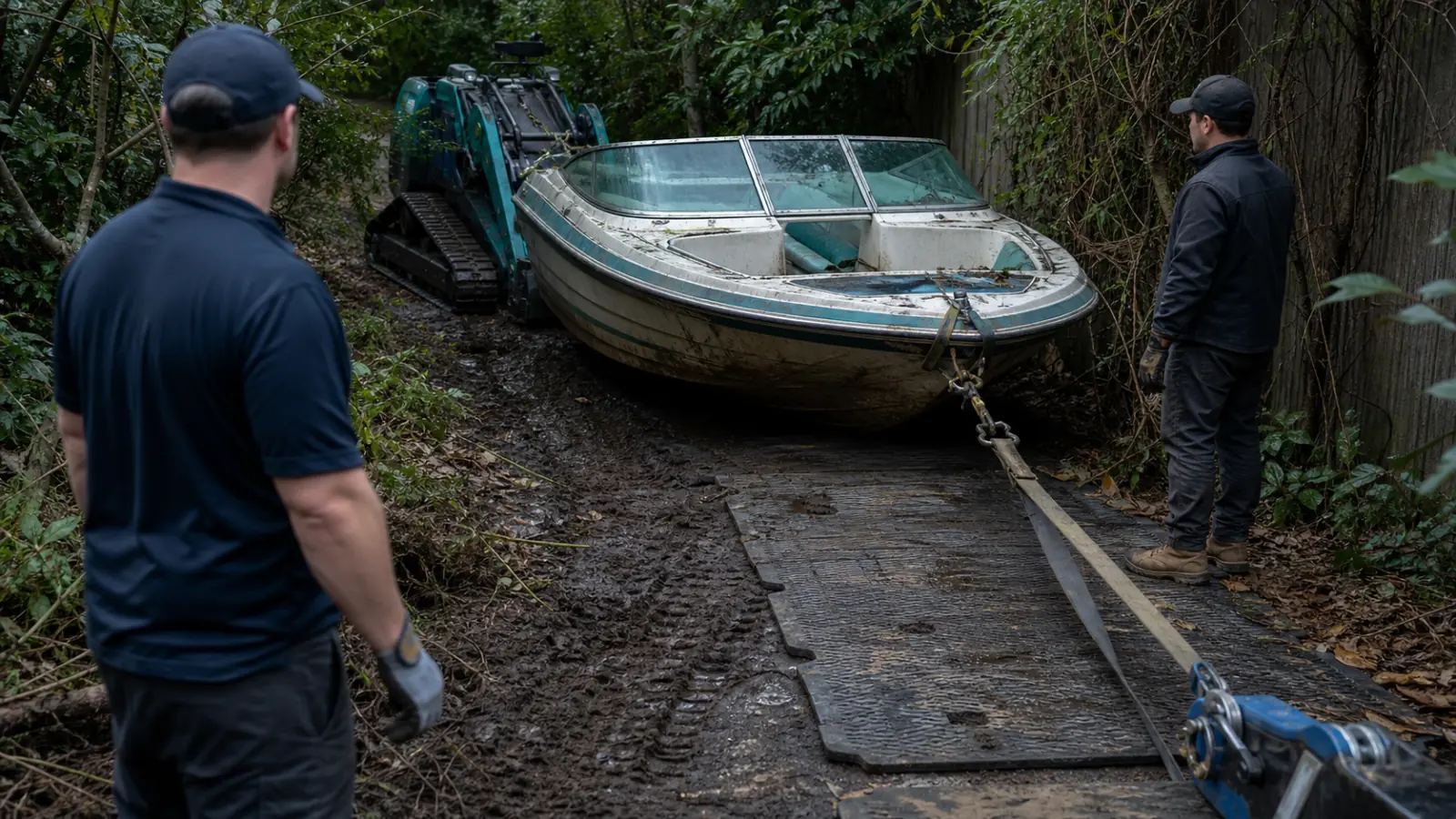
Local property layouts directly impact how boat salvage and removal operations are executed. Tight driveways, narrow residential alleys, overhead utility lines, and low-hanging tree branches restrict heavy equipment access. Soil conditions also dictate the approach; a heavy truck cannot back onto wet turf without sinking, requiring winch lines, ground mats, or specialized cranes to pull a vessel out onto pavement.

The physical posture of the vessel determines the machinery required. A vessel sitting on a road-worthy trailer takes far less effort to haul than a sailboat resting deep in mud, a heavy pontoon sitting on rotting wooden blocks, or a partially sunken hull trapped along the shoreline. Each scenario demands specific gear to extract the structure safely.
Every Type of Boat We Handle

Situations We Handle

Need Help? We’re Ready.

Contact boat removers directly or request free quotes. We dispatch crews fast.

Our Step-by-Step Process

Assessment

We evaluate the boat’s size, current location, condition, and any environmental or access challenges before we schedule boat removal.

Planning

A detailed plan is built around your vessel — equipment, logistics, timeline, and safety. Services include drainage of oil and fuel before transport.

Execution

Our experienced crew mobilizes to your current location and we tow, haul, or dismantle the vessel using professional marine equipment.

Completion

The vessel is recovered, recycled, or routed to certified boat junkyards for environmentally responsible disposal. The site is left clean.

Equipment & Capabilities

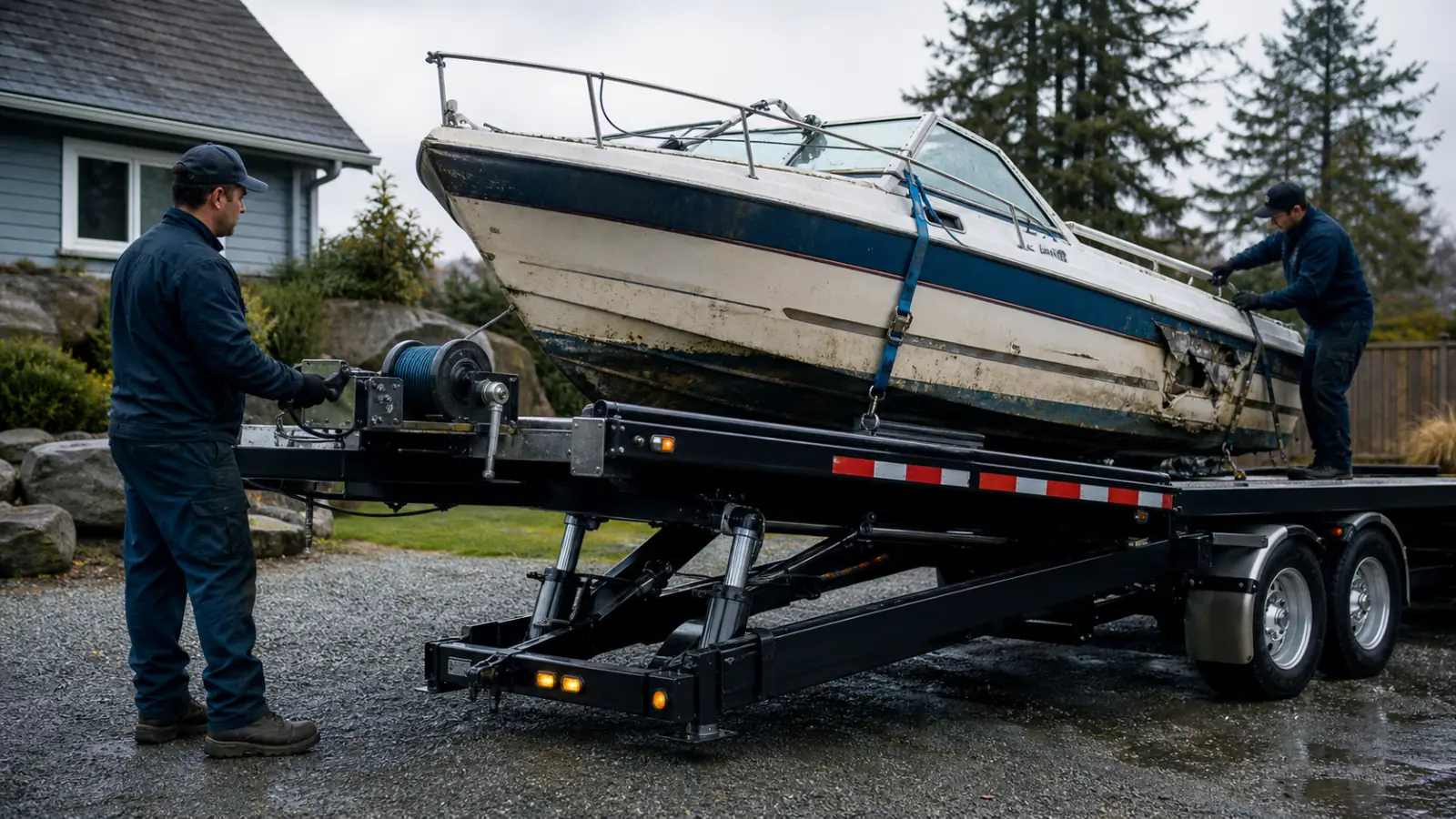
Specialized recovery trucks, hydraulic trailers, winches, and mobile cranes allow a crew to extract vessels even when the underlying trailer is completely rotted or missing entirely. If a craft is structurally sound, heavy-duty straps and rigging hoist it directly onto a flatbed trailer. When a hull is too wide for narrow roads, severely damaged, or trapped behind permanent structures, the crew must dismantle the fiberglass and wooden framework right on site using industrial cutting tools.

Environmental protection happens before any physical moving begins. Crews must drain remaining fuel tanks, strip out crankcase oil, remove marine batteries, and disconnect onboard electronics to isolate potential hazardous materials. Soft interior cushions, rotted canvas covers, and loose trash inside the cabin are pulled out and sorted separately to prevent environmental contamination during transport.

Once the vessel is loaded and secured, the destination depends entirely on the condition and material composition of the craft. Fiber reinforced plastic, metal hardware, lead ballast, and clean wood are evaluated at the staging area. Materials are sorted so clean metals go toward scrap recycling processing, while non-recyclable composite materials and degraded fiberglass hulls are transported to designated regional processing locations following all environmental guidelines.

Our boat removal experience covers everything from start to finish  assessment, planning, execution, dismantling, and final cleanup. Marina operators and property owners across Hudson County trust us to get rid of your junk boat without damage to surrounding property.

FAQ

Boat Removal Questions - Frequently Asked

Common questions from property owners about our junk removal service, dismantling, and marine recovery.

We handle every type of vessel — sailboat, pontoon, fishing boats, jon boats, yachts, and commercial craft. Whether your boat or sailboat floats (or used to), we’ll remove it from any current location.

Yes. Sunken and partially submerged vessel recovery is a core part of our salvage work in Hudson County. We use lift bags, salvage pumps, and marine cranes to safely raise vessels from underwater.

We respond to inquiries quickly — usually within hours, with same-day service available. For emergency situations, we mobilize as fast as possible. Call us directly for time-sensitive jobs.

No. Every job is handled in-house by our own team and equipment. No middlemen, no handoffs, no surprises.

Cost depends on the boat’s size, current location, condition, and complexity of the job. We provide free assessments and free quotes for every case — contact us and we’ll give you an honest estimate.

Yes. Our boat removal and disposal services include hazardous materials handling, oil and fuel drainage, hull dismantling, and recycling at certified yards — all in compliance with environmental regulations and environmentally responsible standards.

Absolutely. We regularly work in tight marinas, shallow waterways, private docks, backyards, and remote areas. We bring the right gear to reach any current location.

Yes. We frequently work with insurance adjusters on salvage and recovery claims and provide the documentation needed for your claim.

Browse Our Services - Ready to Get Started?

We handle everything from start to finish. Call us now or request a free quote – we’ll dispatch crews and haul your vessel away fast.