
Professional Boat Removal Services in Norwalk, CT

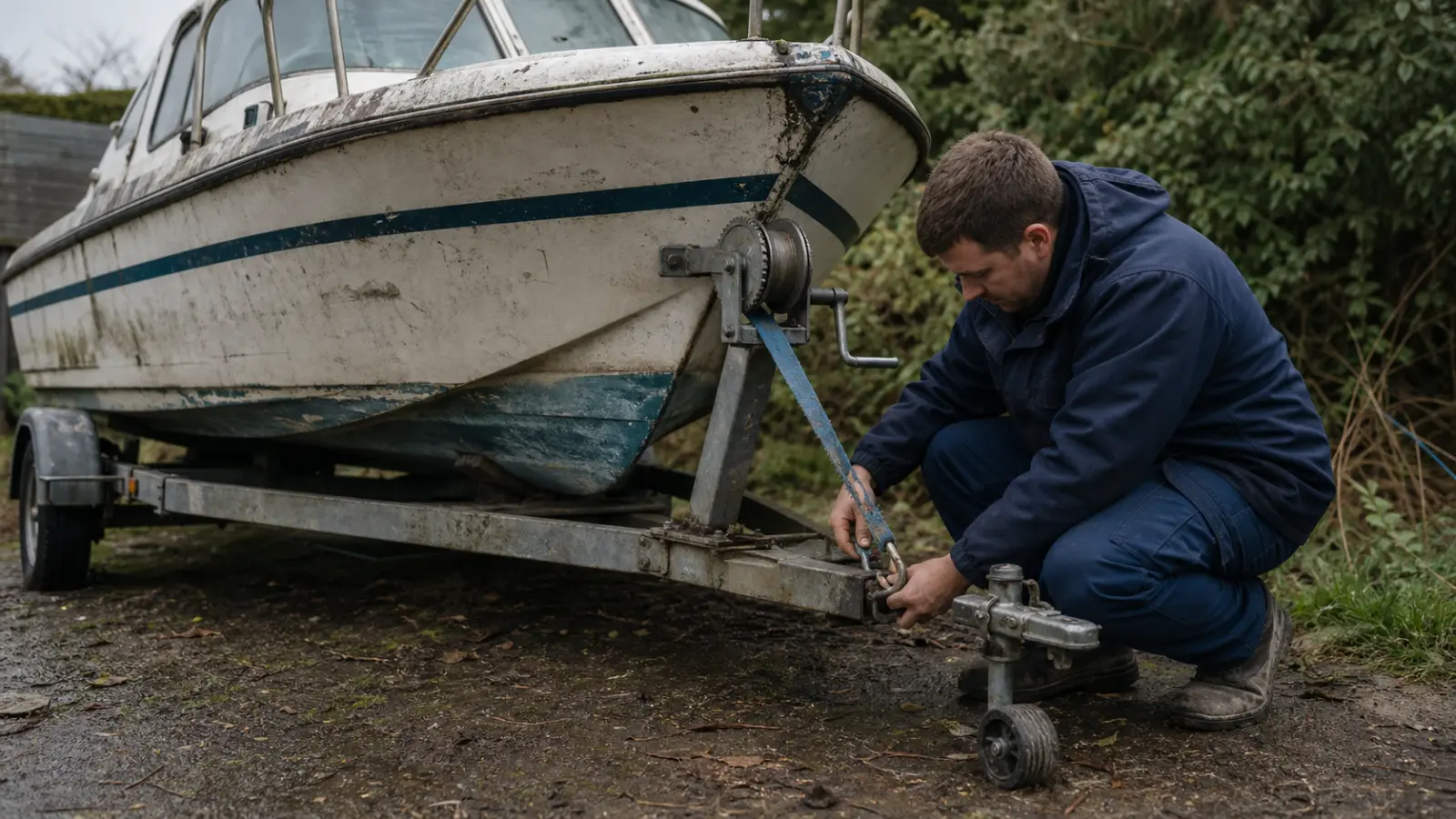
An old fiberglass boat sits behind the garage on tires that have gone flat and pressed deep into the dirt after six consecutive seasons of neglect. A marina management team reaches out regarding an unpaid slip where a cabin cruiser remains berthed long after its owner moved away. A home purchase closes in Norwalk, CT, leaving the buyer with an unwanted vessel sitting in the back yard, or a stubborn outboard motor seizes up and a full rebuild quote vastly exceeds what the entire craft is worth. An old boat sitting forgotten on a property gradually turns into an unwanted burden, collecting debris and taking up valuable space that could be used for other purposes.

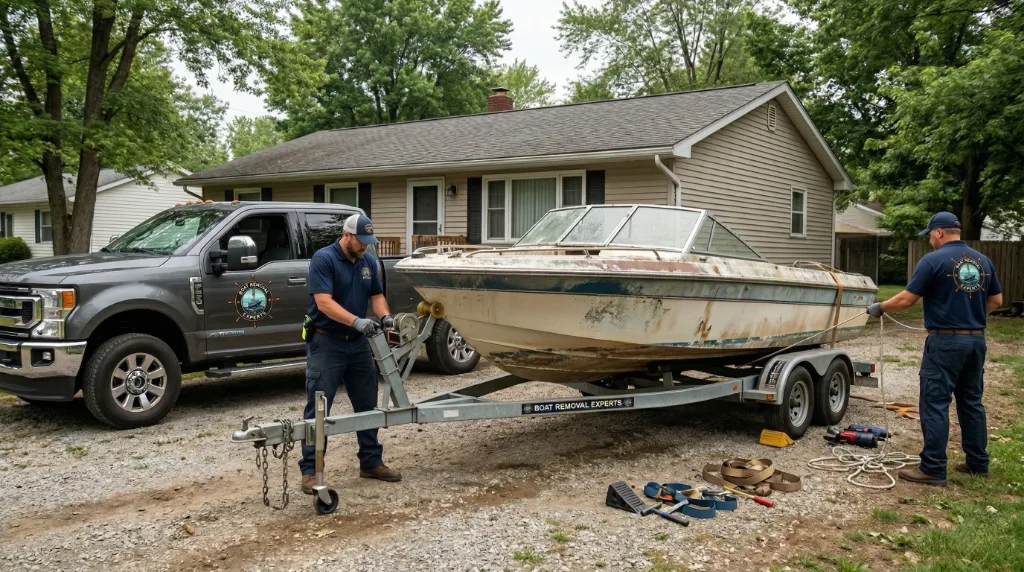
Is there boat removal near me in Norwalk, CT? Yes, Boat Removal Experts delivers complete boat removal solutions directly to your location, bringing the heavy trucks, specialized machinery, and trained crew needed to winch, load, and transport any unwanted vessel off your property safely.

When you arrange for a junk boat to be hauled away, title transfer is not always possible, but our company always issues a formal release of liability for your records. Some outfits simply tow a vessel away with zero official paperwork, which means legal responsibility and potential fines remain tied to you if the hull is later abandoned. Asking for written release documentation before any crew steps onto your land is the best way to safeguard yourself.

Moving a vessel is far more complicated than simply hitching up a trailer. Tires rot into the mud, keel cradles freeze in place, and a wide beam might not clear a narrow residential side gate. When the total weight rests on soft ground where heavy vehicles sink, specialized winching methods are required to extract the craft safely without ruining the lawn.

Call (855) 765-7931 to start.

What Is Boat Removal and When You Need It

Professional boat disposal goes well beyond the basic service of hitching a trailer to a bumper and towing a craft down the road. When a vessel sits idle for years, the structural integrity of the frame, the rolling condition of the axle, and the state of the hitch itself determine whether standard transit is even possible. Service providers evaluate the exact location of the craft, assessing whether it rests on a trailer, sits flat on wooden blocks, or floats in a quiet slip. Every job requires a tailored approach that accounts for access obstacles, path clearances, and the physical weight of the structure before any recovery equipment is deployed.
Paperwork dictates how an abandoned boat or a long-forgotten derelict is handled legally. Having a clear title in hand simplifies the process, but missing documentation or a hull acquired alongside a real estate purchase alters the necessary steps. When a vessel has been left unattended on private property or within a commercial facility, legal notices and specific ownership verifications affect how the craft is cleared. Missing paperwork does not prevent physical extraction, but it changes the verification process required before loading begins.

Whether you need to get rid of a boat that came with a new house or address an abandoned boat removal situation on commercial land, structural condition and site access are the main factors that shape the operation. The overall length, beam width, and hull composition dictate the machinery required to secure the vessel for safe transport.
When Norwalk Residents Call Us

Living along the coast line exposes recreational craft to harsh moisture, heavy rain, salt fog, and severe freezing cycles. In Norwalk, CT, an unused vessel rapidly accumulates rainwater inside the bilge when drains get plugged with falling leaves. That standing freshwater freezes solid during cold winters, expanding inside the fiberglass layers and cracking the outer gelcoat. Internal wooden floor frames and transoms absorb moisture, turning structural support members soft and dangerous. Upholstery grows thick mold, wiring corrodes within the dash, and a hull that once floated easily becomes a fragile, waterlogged shell that requires careful structural support during extraction.
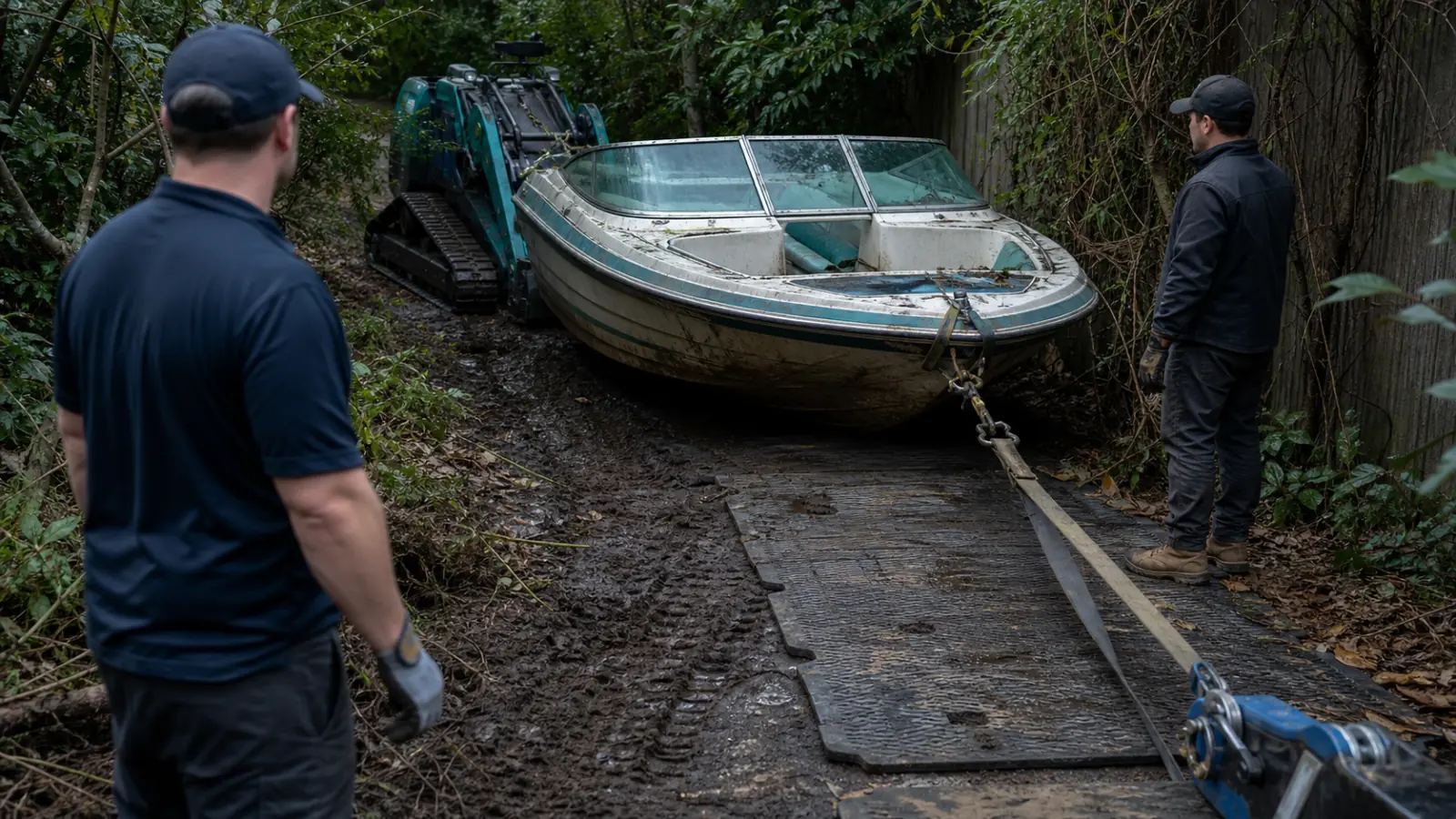
Property layouts across Darien Downtown, Saugatuck, and Tokeneke present distinct challenges when moving a heavy vessel. Crew members must evaluate the approach route, checking for narrow driveways, soft dirt lawns, low-hanging tree branches, and overhead power lines. A heavy fishing boat sitting on rusted blocks demands a completely different approach than a wide pontoon stranded behind a garage or a deep-keel sailboat resting in a boatyard. Soft ground prevents heavy transport rigs from backing up close, requiring long-reach winches or specialized crane setups to pull the craft onto solid pavement without sinking into the turf.

Access conditions directly govern how a crew handles a project in Compo or Noroton Heights. Whether a vessel floats in the water, rests on a rotted trailer, or sits directly on the earth dictates the specific rig, rigging hardware, and crew manpower brought to the site.
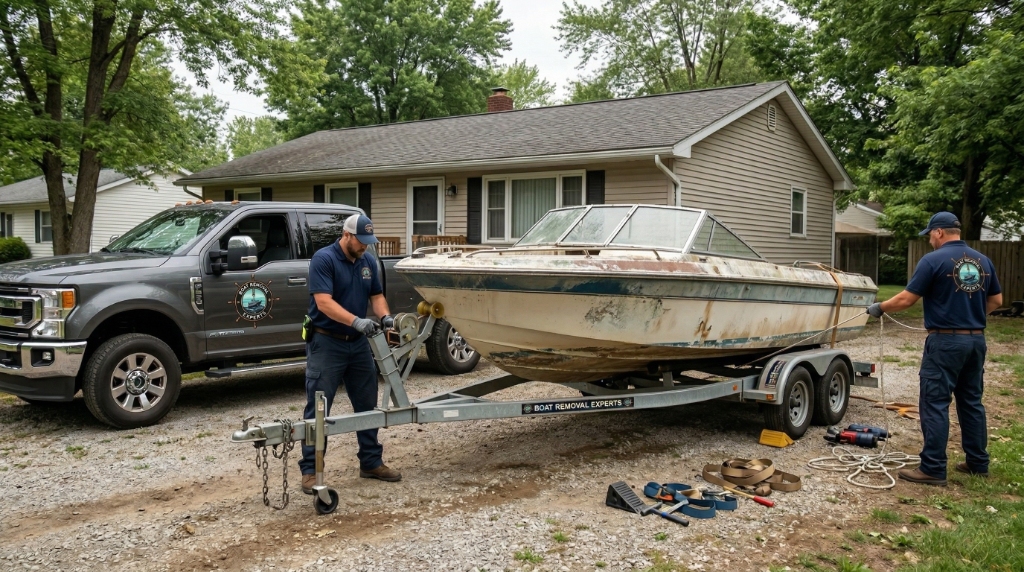
Every Type of Boat We Handle

Situations We Handle

Need Help? We’re Ready.

Contact boat removers directly or request free quotes. We dispatch crews fast.

Our Step-by-Step Process

Assessment

We evaluate the boat’s size, current location, condition, and any environmental or access challenges before we schedule boat removal.

Planning

A detailed plan is built around your vessel — equipment, logistics, timeline, and safety. Services include drainage of oil and fuel before transport.

Execution

Our experienced crew mobilizes to your current location and we tow, haul, or dismantle the vessel using professional marine equipment.

Completion

The vessel is recovered, recycled, or routed to certified boat junkyards for environmentally responsible disposal. The site is left clean.

Equipment & Capabilities

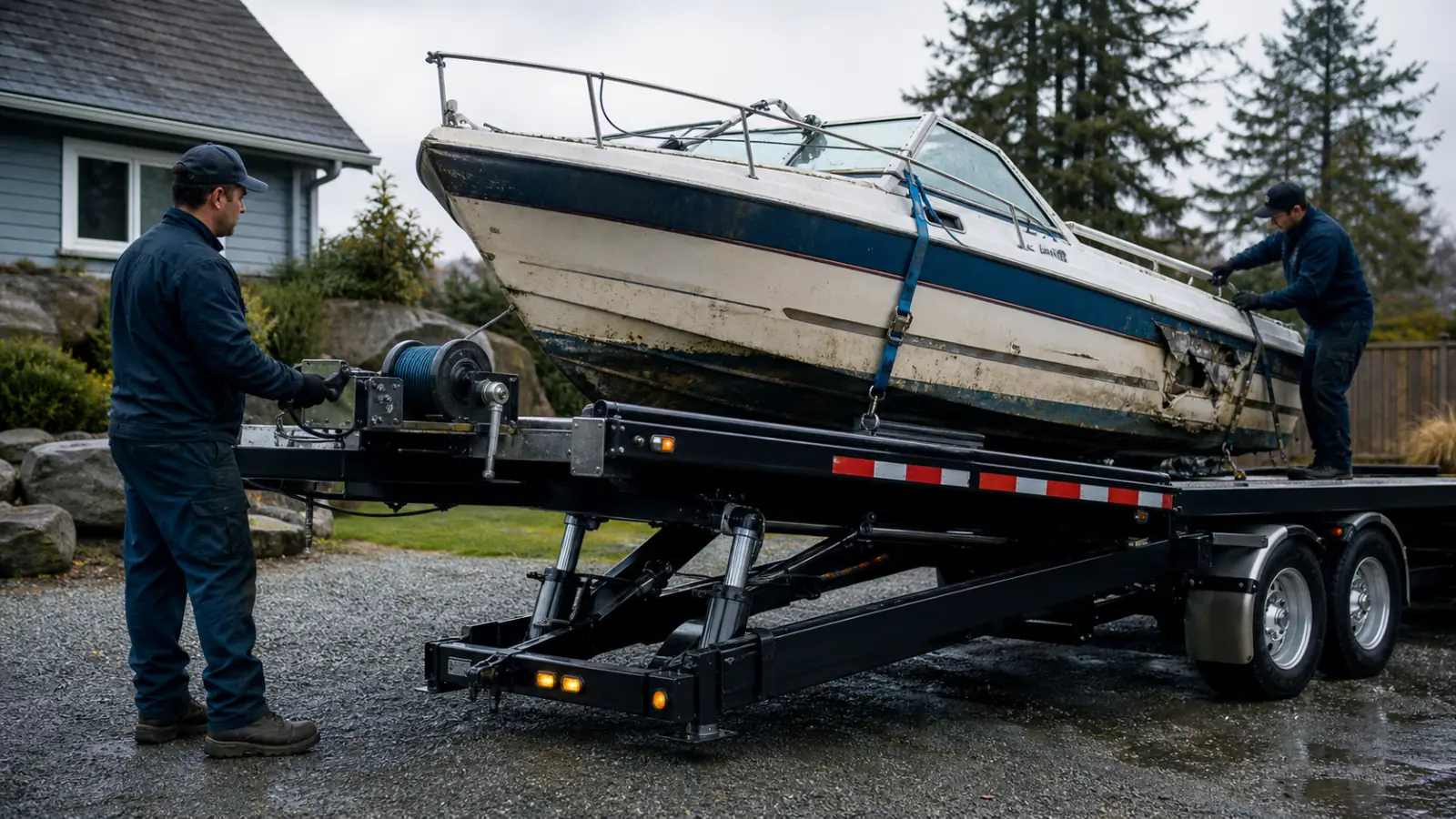
When a trailer has flat tires, frozen wheel bearings, or a rusted tongue that cannot safely travel on public roads, specialized equipment must be brought in to haul the vessel. Heavy winches, hydraulic flatbeds, and custom rigging straps allow crews to load a craft safely regardless of trailer condition. If an oversized vessel cannot clear a narrow exit path, a low bridge, or tight residential gates, technicians may dismantle the upper deck, center console, or cabin superstructure right on site to reduce its overall dimensions. The crew evaluates the physical situation upon arrival to determine whether whole transport or on-site reduction is required.

Before any hull is moved or cut, crew members carefully drain and extract all hazardous materials to prevent environmental contamination. Residual gasoline, diesel fuel, engine oil, hydraulic fluid, lead-acid batteries, and electronic components are systematically removed and set aside for regulated handling. Stripping these materials first ensures safety throughout the loading process and prevents spills on your driveway or lawn.

Once the vessel is safely loaded and removed from the site, the remaining materials are processed based on their composition. Metal fittings, aluminum hulls, lead ballast, and stainless steel hardware are separated for metal recycling facilities, while fiberglass hulls and degraded composite materials are transported to licensed disposal facilities equipped to handle large debris. Our team handles every phase of the process, ensuring the vessel is cleared responsibly from start to finish.

Our boat removal experience covers everything from start to finish  assessment, planning, execution, dismantling, and final cleanup. Marina operators and property owners across Western Connecticut Planning Region trust us to get rid of your junk boat without damage to surrounding property.

FAQ

Boat Removal Questions - Frequently Asked

Common questions from property owners about our junk removal service, dismantling, and marine recovery.

We handle every type of vessel — sailboat, pontoon, fishing boats, jon boats, yachts, and commercial craft. Whether your boat or sailboat floats (or used to), we’ll remove it from any current location.

Yes. Sunken and partially submerged vessel recovery is a core part of our salvage work in Western Connecticut Planning Region. We use lift bags, salvage pumps, and marine cranes to safely raise vessels from underwater.

We respond to inquiries quickly — usually within hours, with same-day service available. For emergency situations, we mobilize as fast as possible. Call us directly for time-sensitive jobs.

No. Every job is handled in-house by our own team and equipment. No middlemen, no handoffs, no surprises.

Cost depends on the boat’s size, current location, condition, and complexity of the job. We provide free assessments and free quotes for every case — contact us and we’ll give you an honest estimate.

Yes. Our boat removal and disposal services include hazardous materials handling, oil and fuel drainage, hull dismantling, and recycling at certified yards — all in compliance with environmental regulations and environmentally responsible standards.

Absolutely. We regularly work in tight marinas, shallow waterways, private docks, backyards, and remote areas. We bring the right gear to reach any current location.

Yes. We frequently work with insurance adjusters on salvage and recovery claims and provide the documentation needed for your claim.

Browse Our Services - Ready to Get Started?

We handle everything from start to finish. Call us now or request a free quote – we’ll dispatch crews and haul your vessel away fast.