
Professional Boat Removal Services in Otsego, MN

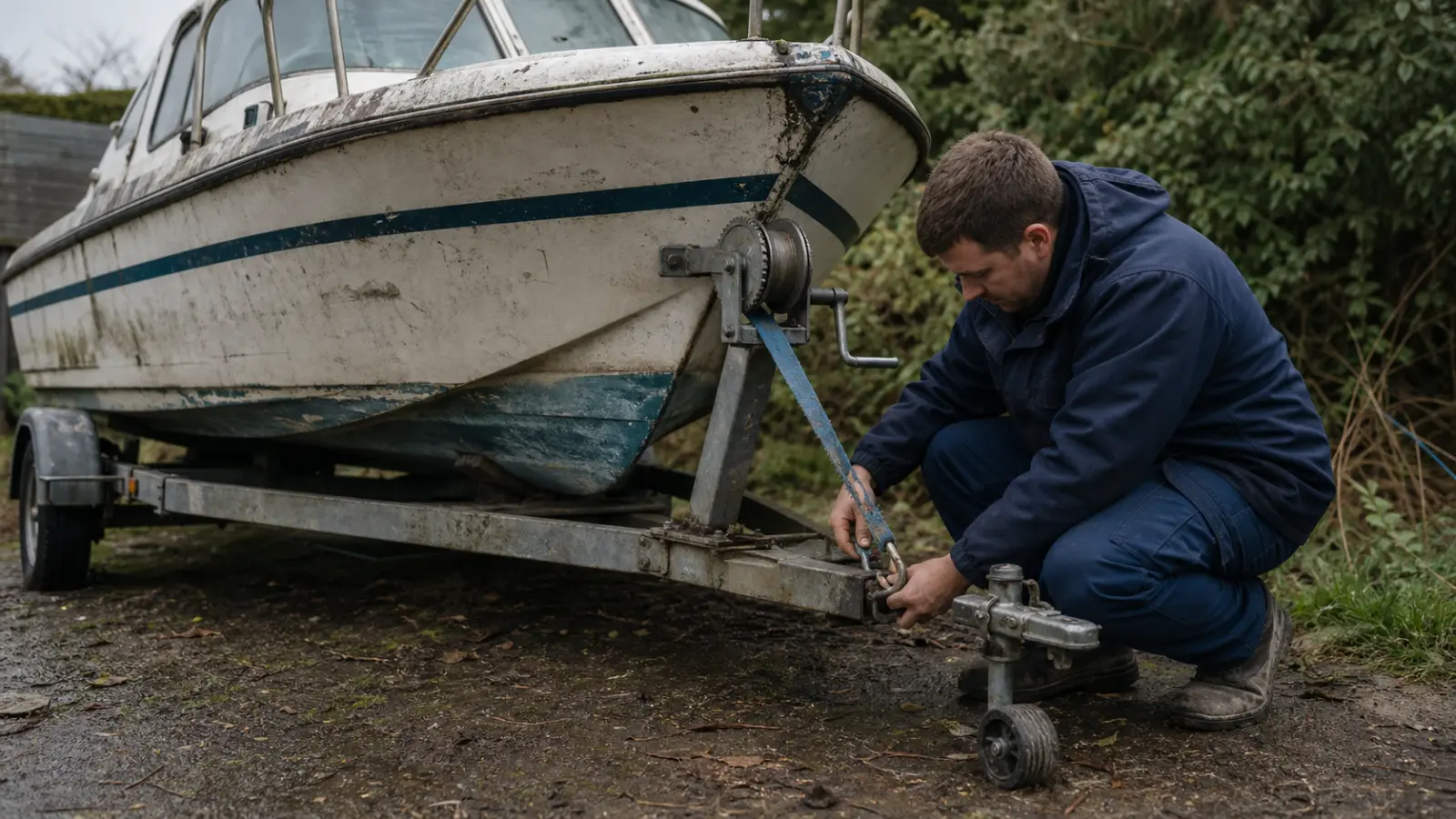
The fiberglass hull has sat behind the garage on a rotting trailer for six seasons, its tires flattened into the dirt while water pools in the stern. In other cases, a property sale in Otsego, MN is stalled because a cabin cruiser remains on the lot, or an old boat has a seized outboard motor that would cost twice the vessel's value to rebuild. Sometimes a yard space needs clearing, but the vessel sits far off the driveway with flat tires and a rusted axle that will not roll.

Is there boat removal near me in Otsego, MN? Yes, Boat Removal Experts provides complete hauling, transport, and vessel disposal throughout the entire community and surrounding locations.

When an old boat is hauled away, liability remains a primary concern for the property owner. Some operations simply hook up a trailer and pull the vessel off the lot without providing formal paperwork, leaving the previous owner responsible if the vessel is later abandoned on public land. We issue a formal release of liability for every job, ensuring you are no longer accountable for the vessel even when title transfers are not applicable.

Hauling a vessel is rarely as simple as backing up a truck. A wide beam might not clear a narrow backyard gate, a deep keel requires specialized support, or a heavy fiberglass hull may sit trapped on soft turf that a standard tow vehicle cannot safely cross without causing damage.

Call 763-343-7366 to start.

Send photos through the contact form.

What Is Boat Removal and When You Need It

Professional boat disposal covers far more than hooking a trailer to a hitch and driving away. When a junk boat sits forgotten on a private lot or a derelict vessel is left on commercial property, getting rid of a boat requires managing physical extraction, transport logistics, and environmental safety. Every project brings unique challenges depending on where the craft sits, whether it remains afloat in a slip, rests on blocks in a backyard, or sits on a structural cradle that cannot be moved by standard means.
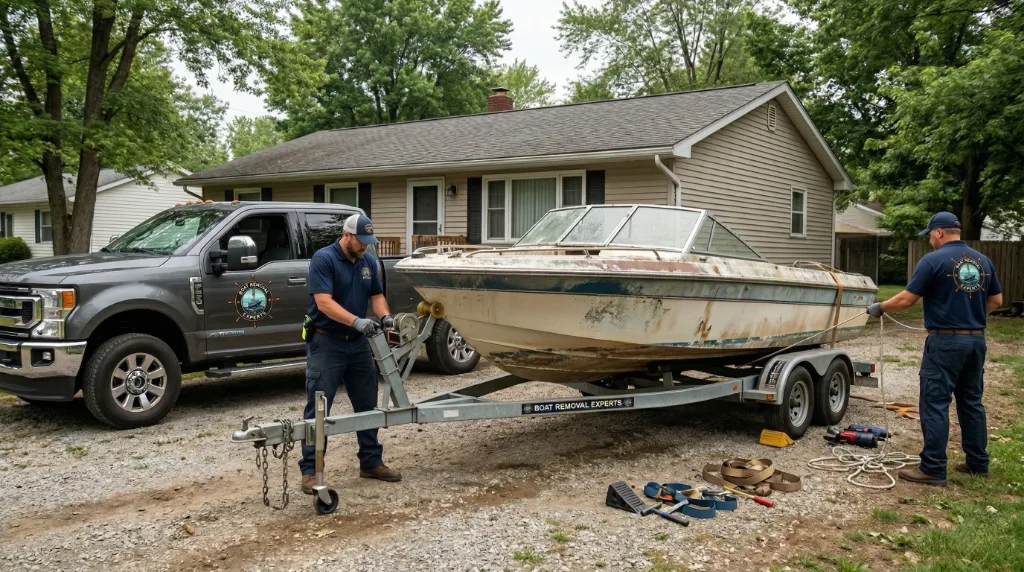
The legal status and paperwork of an abandoned boat strongly impact how the extraction proceeds. Having a clean title in hand streamlines the process, but boat removal services frequently deal with missing documentation, unregistered craft, or vessels left behind after a real estate purchase. When an abandoned boat removal involves property clearouts or unpaid storage spaces, specific steps must be taken to ensure the vessel is cleared for transport and final handling.

What happens to a derelict craft depends on its overall structural integrity, structural material, and component condition. A hull with compromized fiberglass or severe rot may require full dismantling, while an intact aluminum or wood frame might be transported intact for material separation. The final destination of every vessel relies on local facility capabilities, material contamination levels, and physical size limits rather than a one-size-fits-all process.
When Otsego Residents Call Us

In Otsego, MN, severe seasonal climate changes take a heavy toll on watercraft left exposed to the elements. Winter freeze cycles cause trapped rainwater to expand inside structural cavities, cracking gelcoat, delaminating fiberglass, and rotting internal wood floor frames. Over several seasons, an ignored pontoon or aluminum fishing boat develops floorboard decay, saturated foam flotation, and ruined upholstery, while a neglected sailboat accumulates severe hull damage that makes traditional towing dangerous.
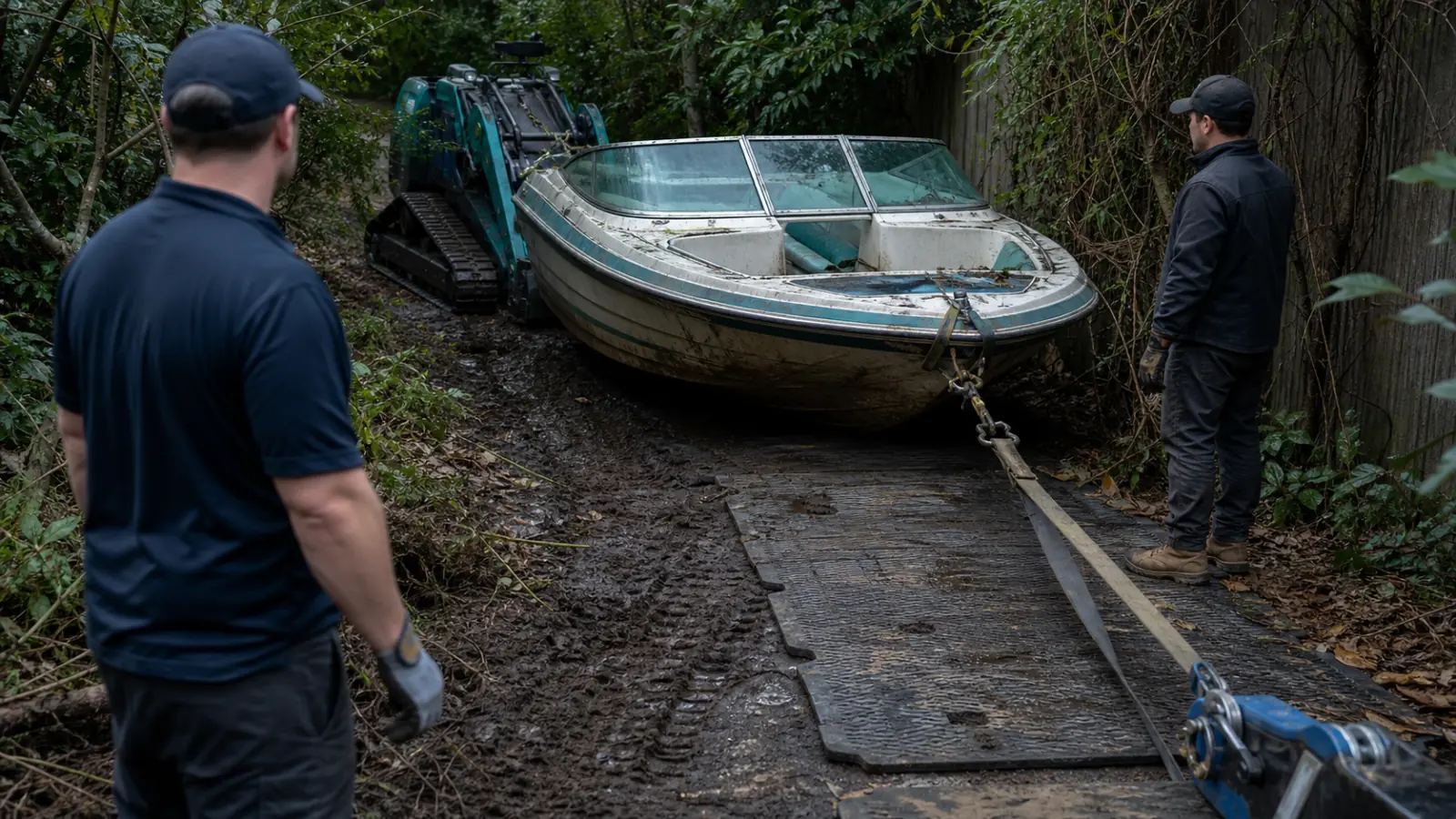
When owners in Wright County need a vessel cleared, physical site access determines the approach required. Properties in nearby areas like Elk River, Rogers, Hanover, Albertville, and St. Michael feature diverse layouts, from tight residential yards to expansive acreage. A crew must evaluate the ground surface between the vessel and the street, looking for soft dirt, steep slopes, low overhead tree branches, and narrow fence openings. Whether the craft rests on a sunken trailer, sits flat on wooden blocks, or resides at the water's edge, access routes dictate what haul equipment must be deployed.

Vessel size and structural weight also alter the retrieval strategy. A light aluminum fishing boat requires far less rig clearance than a heavy deep-draft sailboat or wide pontoon. Evaluating these physical factors beforehand prevents ground rutting, property damage, and highway hazards during transit.
Every Type of Boat We Handle

Situations We Handle

Need Help? We’re Ready.

Contact boat removers directly or request free quotes. We dispatch crews fast.

Our Step-by-Step Process

Assessment

We evaluate the boat’s size, current location, condition, and any environmental or access challenges before we schedule boat removal.

Planning

A detailed plan is built around your vessel — equipment, logistics, timeline, and safety. Services include drainage of oil and fuel before transport.

Execution

Our experienced crew mobilizes to your current location and we tow, haul, or dismantle the vessel using professional marine equipment.

Completion

The vessel is recovered, recycled, or routed to certified boat junkyards for environmentally responsible disposal. The site is left clean.

Equipment & Capabilities

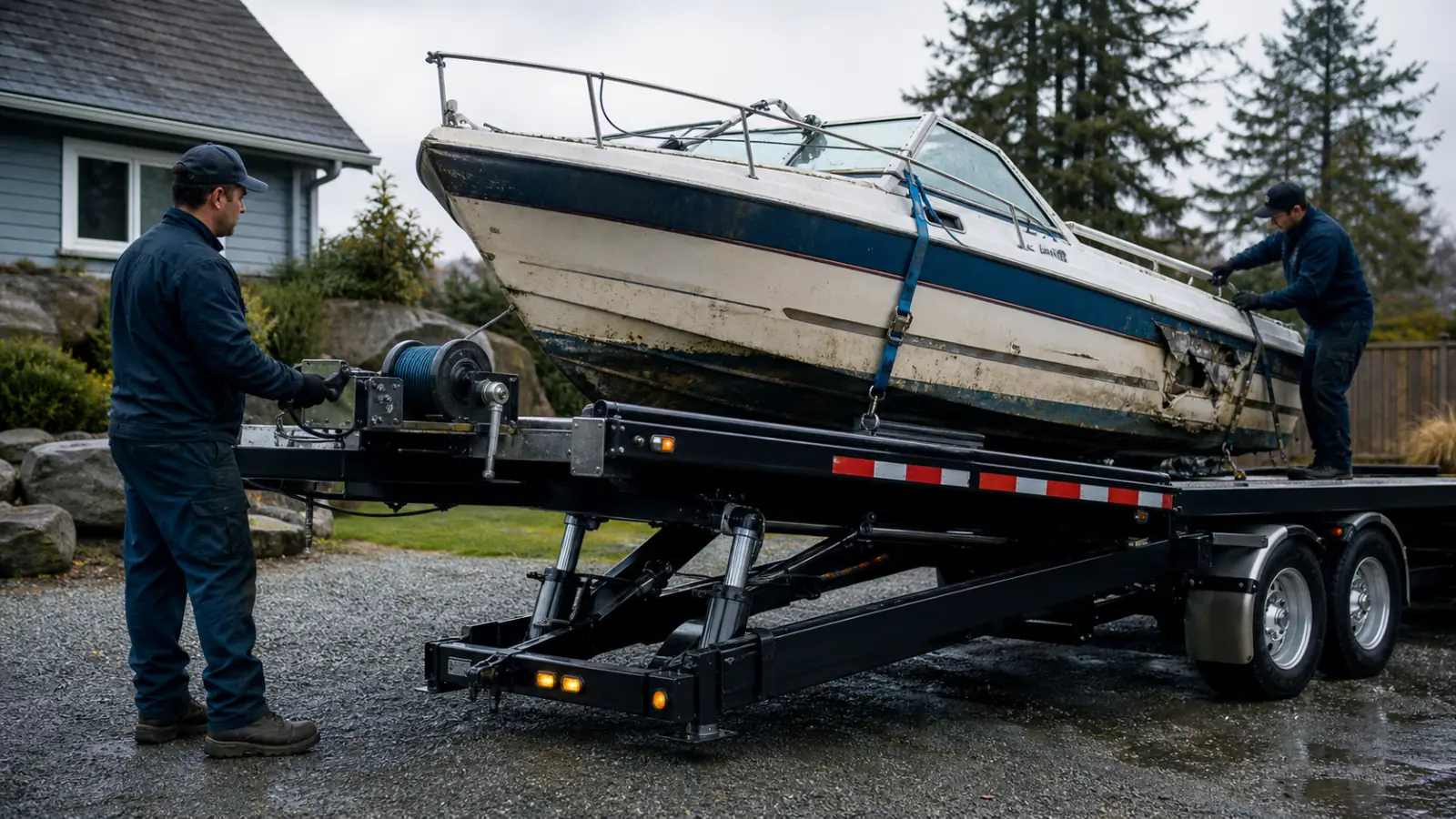
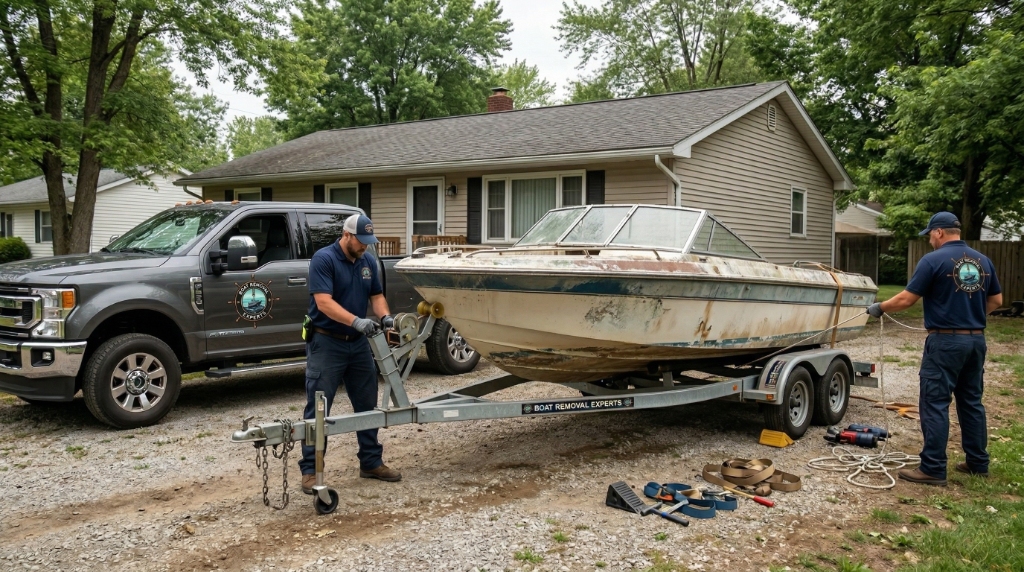
When a vessel's own trailer is completely rusted, lacking wheels, or structurally unsafe for road travel, specialized loading equipment must be used. Heavy-duty winches, hydraulic drop-deck trailers, mobile cranes, and flatbed haulers allow the crew to lift and secure a craft directly from the ground. If an oversized vessel cannot safely navigate narrow access gates or local roads, operators must dismantle the hull on site using specialized cutting tools to break it down into manageable transport sections.

Before any vessel leaves the property or undergoes destruction, all hazardous materials must be carefully identified and removed. Crew members drain remaining fuel tanks, extract crankcase oil, remove heavy marine batteries, and strip out mercury switches and electronic displays. These steps prevent chemical spills on the owner's land and satisfy strict environmental haul guidelines. Fluids are processed through regulated waste channels, while batteries undergo proper secondary handling.

After fluids and dangerous items are stripped, the crew sorts the remaining structural components. Metals such as aluminum hulls, stainless steel hardware, and bronze fittings are sorted for high-value metal recycling facilities. Unusable fiberglass, rotted wood decking, and degraded foam insulation are prepped for appropriate landfill disposal services. The final balance between material recycling and landfill clearance is determined by hull composition, structural contamination, and regional processing facilities.

Our boat removal experience covers everything from start to finish  assessment, planning, execution, dismantling, and final cleanup. Marina operators and property owners across Wright County trust us to get rid of your junk boat without damage to surrounding property.

FAQ

Boat Removal Questions - Frequently Asked

Common questions from property owners about our junk removal service, dismantling, and marine recovery.

We handle every type of vessel — sailboat, pontoon, fishing boats, jon boats, yachts, and commercial craft. Whether your boat or sailboat floats (or used to), we’ll remove it from any current location.

Yes. Sunken and partially submerged vessel recovery is a core part of our salvage work in Wright County. We use lift bags, salvage pumps, and marine cranes to safely raise vessels from underwater.

We respond to inquiries quickly — usually within hours, with same-day service available. For emergency situations, we mobilize as fast as possible. Call us directly for time-sensitive jobs.

No. Every job is handled in-house by our own team and equipment. No middlemen, no handoffs, no surprises.

Cost depends on the boat’s size, current location, condition, and complexity of the job. We provide free assessments and free quotes for every case — contact us and we’ll give you an honest estimate.

Yes. Our boat removal and disposal services include hazardous materials handling, oil and fuel drainage, hull dismantling, and recycling at certified yards — all in compliance with environmental regulations and environmentally responsible standards.

Absolutely. We regularly work in tight marinas, shallow waterways, private docks, backyards, and remote areas. We bring the right gear to reach any current location.

Yes. We frequently work with insurance adjusters on salvage and recovery claims and provide the documentation needed for your claim.

Browse Our Services - Ready to Get Started?

We handle everything from start to finish. Call us now or request a free quote – we’ll dispatch crews and haul your vessel away fast.