
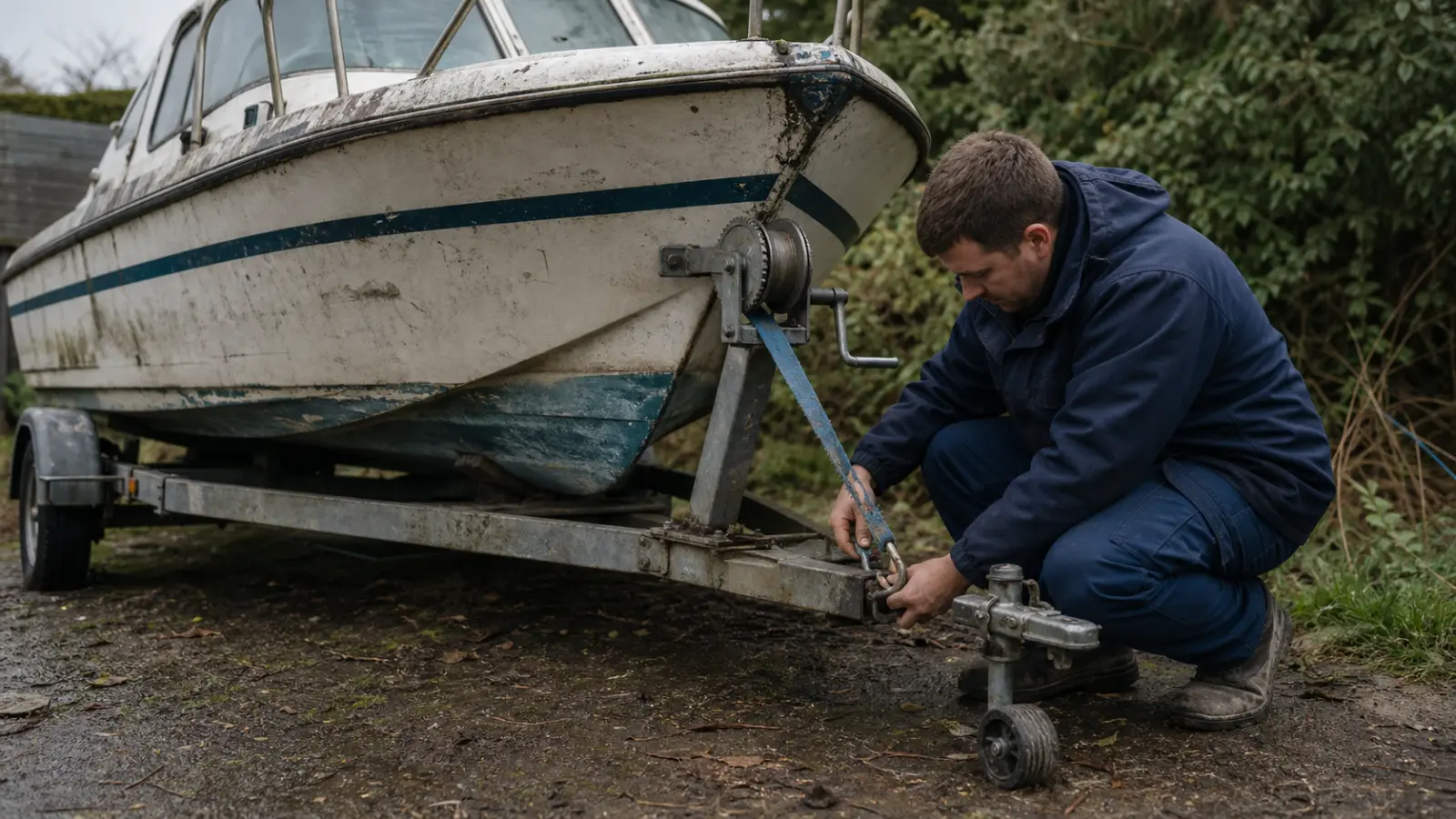
Professional Boat Removal Services in Palm Springs, CA

An old boat hull has been resting on a flat-tired trailer behind the garage for six seasons, slowly settling into the dirt until weeds grow right up through the frame. In other situations, a property was recently purchased with an unwanted cabin cruiser taking up valuable yard space, or an outboard motor finally seized up and a full rebuild costs far more than the vessel is worth. Landlords and homeowners often find themselves stuck with an abandoned vessel after a tenant moves out, leaving behind a bulky fiberglass shell that cannot easily be pulled away.

Is there boat removal near me in Palm Springs, CA? Boat Removal Experts provides complete vessel hauling and clearing throughout the city, managing everything from quiet residential yards to tight storage lots.

Our official position on vessel documentation is clear: we do not always transfer the title into our name, but we always issue a formal release of liability to the property owner. Some unregulated operators will simply haul a vessel away without giving you any legal documentation, leaving the original owner fully liable if that junk boat is later dumped illegally on public land. It is always worth asking any hauler how liability is handled before letting them hook up to the load.

Getting a boat out of a backyard is rarely as simple as hooking a truck to a hitch. Often the trailer tires are dry-rotted, the brakes are seized, or the keel sits on custom wooden blocks without wheels. Narrow side gates, overhead utility lines, and soft desert dirt can prevent standard tow vehicles from ever getting close enough to pull a heavy hull straight out.

Call 760-820-2648 to start.

Send photos through the contact form.

What Is Boat Removal and When You Need It

Professional boat removal covers far more than just hitching a trailer to a bumper and driving down the street. When a derelict vessel sits motionless for years, the structural components deteriorate, making standard towing impossible. A complete service involves assessing hull integrity, clearing surrounding obstacles, securing loose cabin fixtures, and arranging heavy transport that can handle compromized loads without spilling debris.

What happens during the process depends heavily on the state of the paperwork. If you possess a clear title and registration, transferring or disposing of the hull proceeds smoothly. When documents are missing, destroyed, or left behind by a previous property owner, additional verification steps are required. An abandoned boat on private land requires specific legal notifications before transport can happen, ensuring the landowner is protected from future ownership disputes.
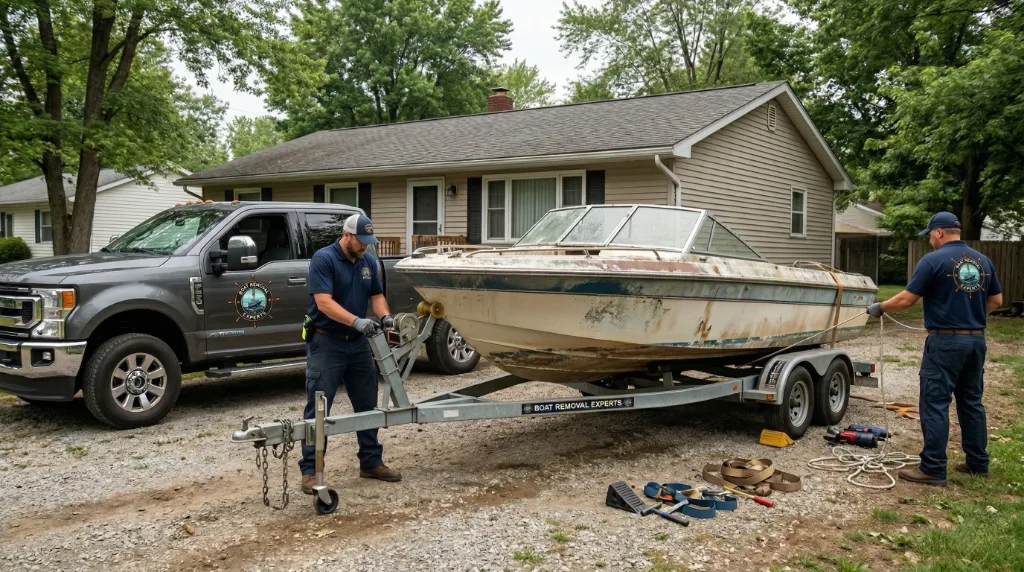
Vessels left in unpaid storage spaces or on rented land present unique challenges for boat disposal. What affects the ultimate disposition of an abandoned vessel is the physical condition of the floor frames, the presence of hazardous fluids, and whether the hull can withstand being winched onto a flatbed trailer. When a vessel is too weak to roll, specialized rigging or systematic dismantling on site becomes necessary to clear the property safely without leaving fiberglass dust or wreckage behind.
When Palm Springs Residents Call Us

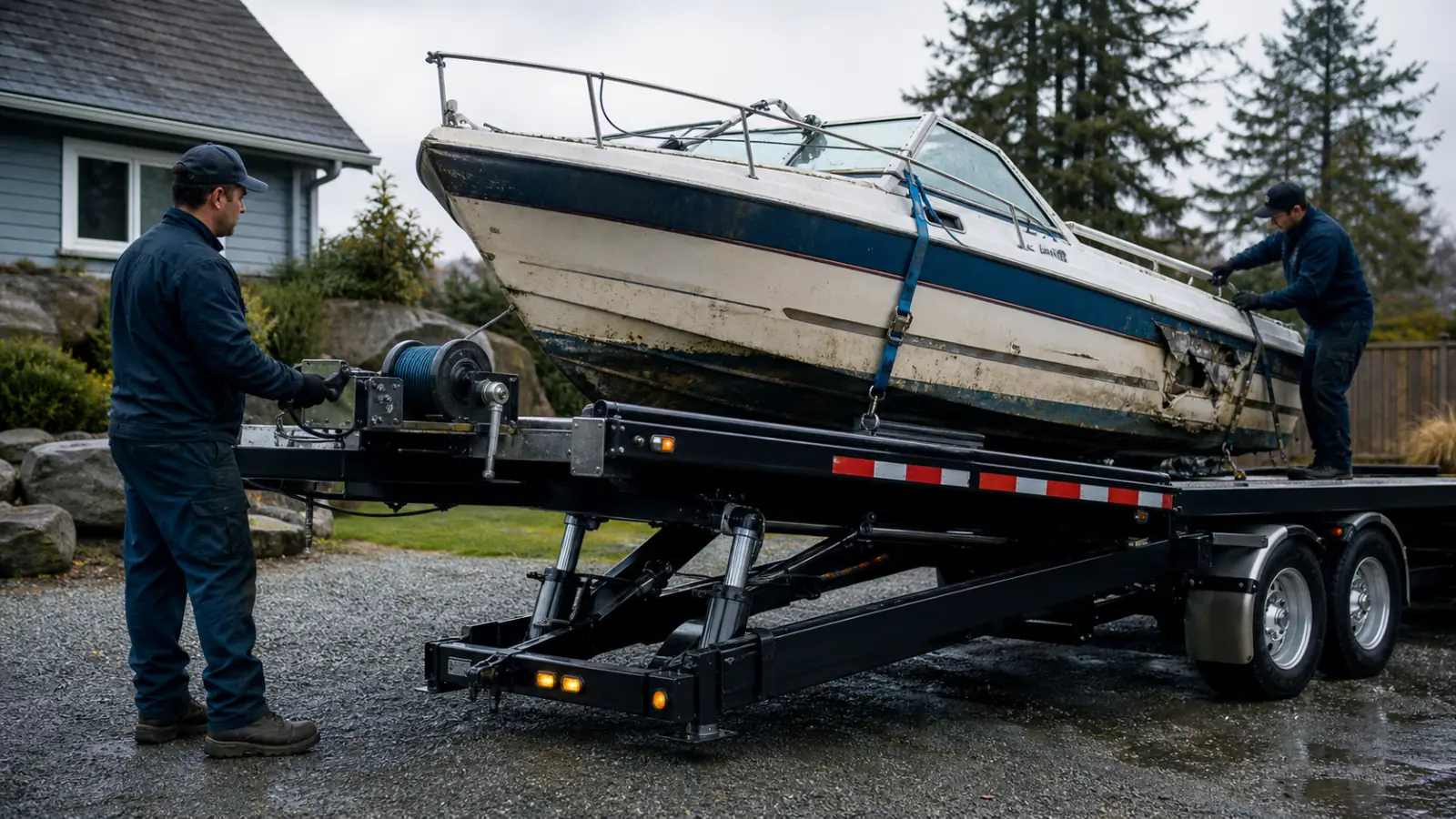
In Palm Springs, CA, extreme desert heat and severe sun exposure act rapidly on any vessel parked outdoors. Intense sun bakes the exterior gelcoat until it cracks, dries out interior upholstery until it splits, and rots hidden wooden back panel cores. When an old boat holds sudden rainwater from winter storms, the trapped moisture bakes inside the hull under intense temperatures, accelerating internal rot and turning a simple fiberglass shell into a brittle, heavy hazard that crumbles during transport.
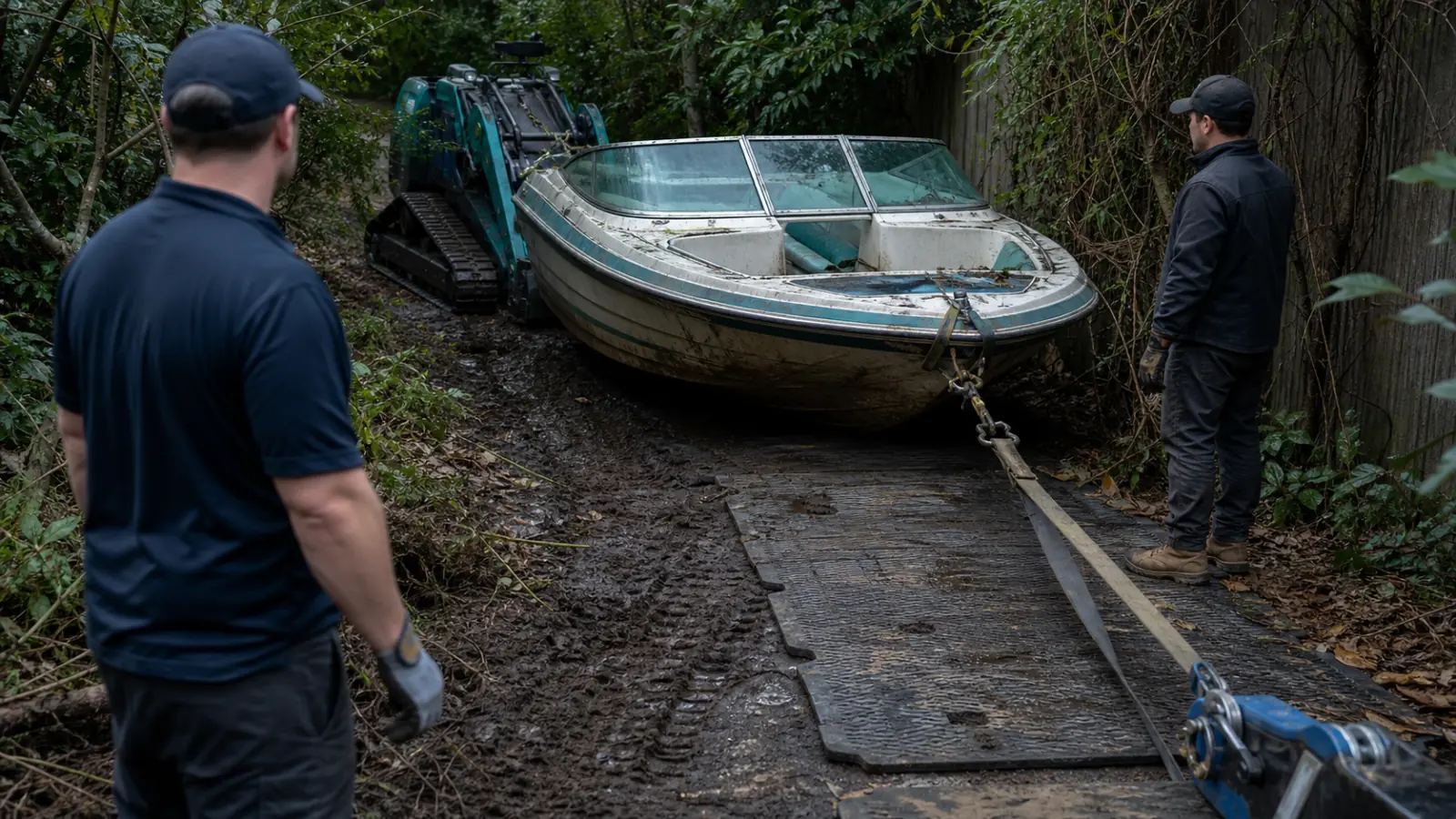
Local property layouts also dictate how a pontoon, heavy fishing boat, or tall sailboat must be extracted. Narrow residential alleys, decorative wall gates, and overhanging palm fronds frequently restrict overhead and side clearance. The ground surface introduces another challenge, as heavy trucks can easily sink into soft sand or crack expensive decorative concrete driveways. Whether a vessel sits on flat ground, raised wooden blocks, or an unroadworthy trailer in nearby places like Cathedral City or Rancho Mirage, crews must evaluate the approach terrain before moving the load.

Whether dealing with a lightweight aluminum fishing boat or a larger deep-draft vessel, heat-damaged hulls require careful weight distribution during loading to prevent total structural failure on the road.
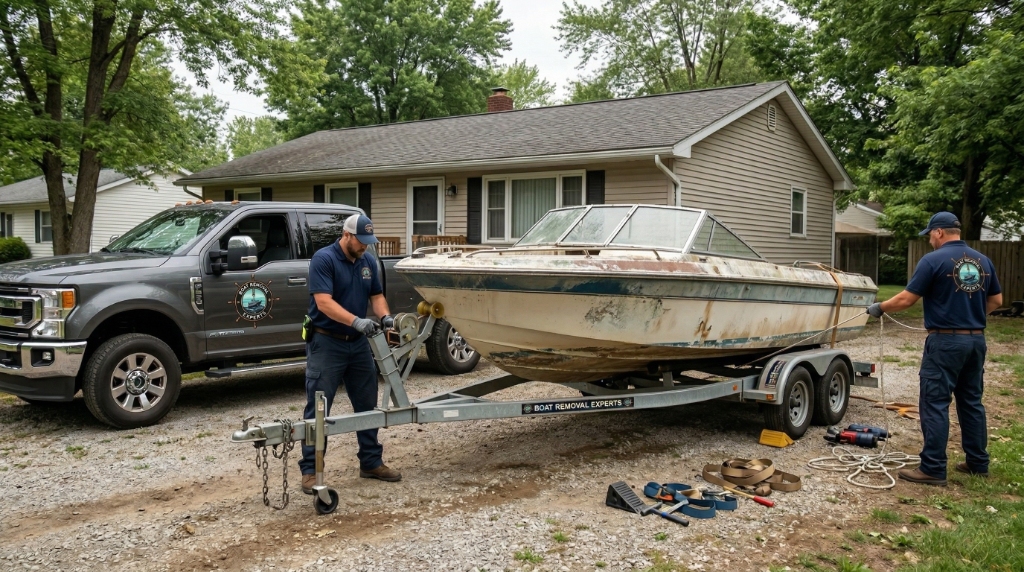
Every Type of Boat We Handle

Situations We Handle

Need Help? We’re Ready.

Contact boat removers directly or request free quotes. We dispatch crews fast.

Our Step-by-Step Process

Assessment

We evaluate the boat’s size, current location, condition, and any environmental or access challenges before we schedule boat removal.

Planning

A detailed plan is built around your vessel — equipment, logistics, timeline, and safety. Services include drainage of oil and fuel before transport.

Execution

Our experienced crew mobilizes to your current location and we tow, haul, or dismantle the vessel using professional marine equipment.

Completion

The vessel is recovered, recycled, or routed to certified boat junkyards for environmentally responsible disposal. The site is left clean.

Equipment & Capabilities

When a vessel cannot roll on its own wheels, specialized recovery gear is brought in to complete the haul. Crews utilize heavy-duty hydraulic winches, drop-deck trailers, articulated crane arms, and spreader bars to lift dead weight safely. If a trailer frame has rusted through or the beam exceeds gate openings, workers dismantle the structure on site using reciprocating saws, hydraulic shears, and heavy cutting tools to break the hull into manageable sections.

Before any hull moves or undergoes cutting, all hazardous materials must be carefully drained and removed. Crews systematically strip fuel tanks, engine oil, hydraulic fluid, mercury switches, marine batteries, and old navigation electronics. Removing these fluids and electronics prevents environmental contamination on the property and ensures full compliance with regional transport regulations.

Where the material goes depends entirely on what the crew finds during the initial physical inspection. Hulls with intact structural integrity may be routed toward specialized scrap processors, while clean metals like aluminum and stainless steel hardware are separated for metal recycling. Composite hulls that are severely rotted or crushed are directed toward approved regional landfill facilities for final bulk processing. The crew determines the correct pathway based on hull material, fluid contamination, and physical stability.

Our boat removal experience covers everything from start to finish  assessment, planning, execution, dismantling, and final cleanup. Marina operators and property owners across Riverside County trust us to get rid of your junk boat without damage to surrounding property.

FAQ

Boat Removal Questions - Frequently Asked

Common questions from property owners about our junk removal service, dismantling, and marine recovery.

We handle every type of vessel — sailboat, pontoon, fishing boats, jon boats, yachts, and commercial craft. Whether your boat or sailboat floats (or used to), we’ll remove it from any current location.

Yes. Sunken and partially submerged vessel recovery is a core part of our salvage work in Riverside County. We use lift bags, salvage pumps, and marine cranes to safely raise vessels from underwater.

We respond to inquiries quickly — usually within hours, with same-day service available. For emergency situations, we mobilize as fast as possible. Call us directly for time-sensitive jobs.

No. Every job is handled in-house by our own team and equipment. No middlemen, no handoffs, no surprises.

Cost depends on the boat’s size, current location, condition, and complexity of the job. We provide free assessments and free quotes for every case — contact us and we’ll give you an honest estimate.

Yes. Our boat removal and disposal services include hazardous materials handling, oil and fuel drainage, hull dismantling, and recycling at certified yards — all in compliance with environmental regulations and environmentally responsible standards.

Absolutely. We regularly work in tight marinas, shallow waterways, private docks, backyards, and remote areas. We bring the right gear to reach any current location.

Yes. We frequently work with insurance adjusters on salvage and recovery claims and provide the documentation needed for your claim.

Browse Our Services - Ready to Get Started?

We handle everything from start to finish. Call us now or request a free quote – we’ll dispatch crews and haul your vessel away fast.