
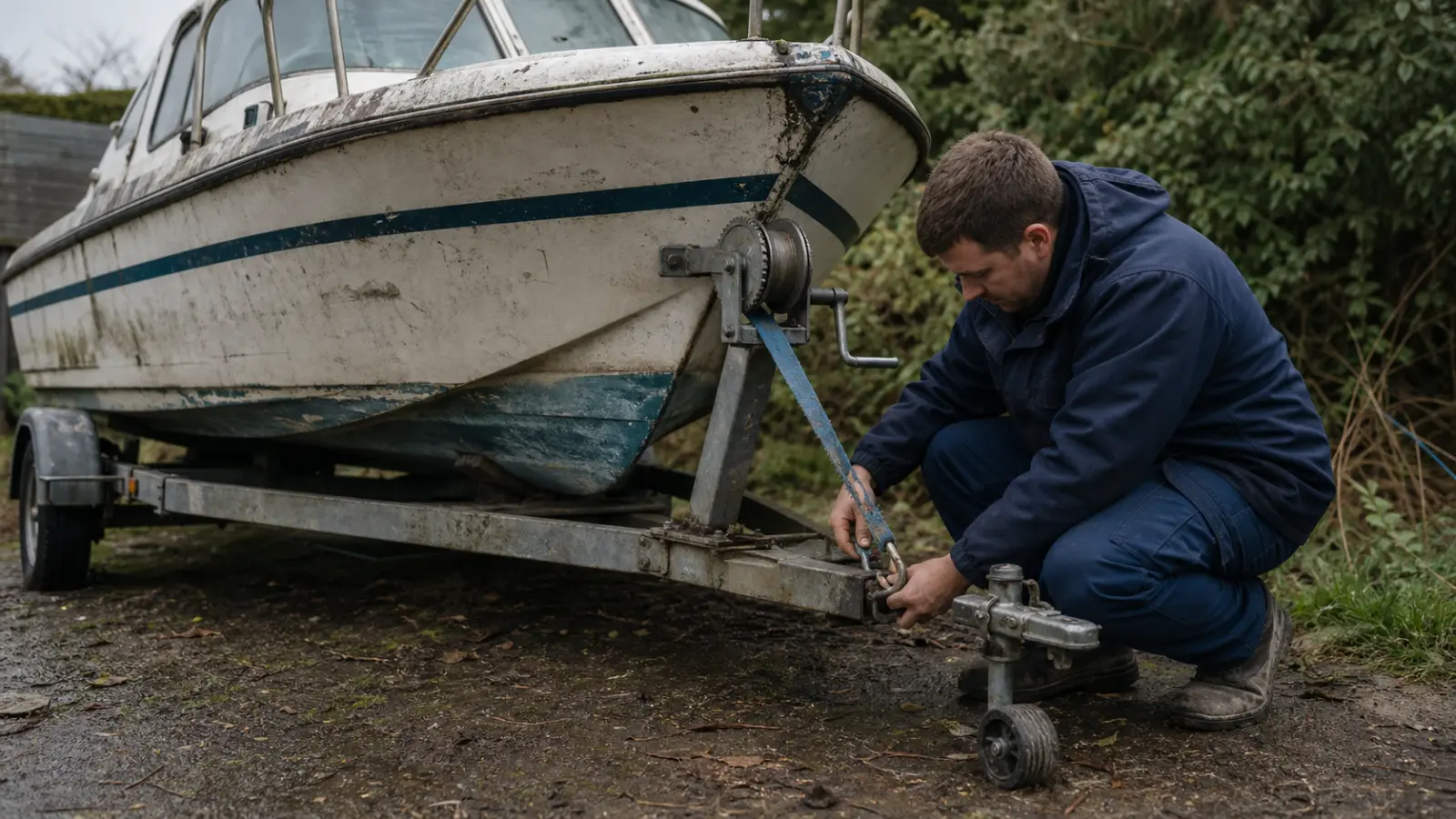
Professional Boat Removal Services in Pasco, WA

An old boat hull has sat on a rusty trailer behind the garage for six seasons until the tires flattened into the dirt and weeds grew through the frame. A marina sends a formal notice regarding an unpaid slip that must be cleared immediately. A commercial property sold with an unfinished cabin cruiser still resting on blocks in the back lot. An outboard engine seized completely, and completing a full mechanical rebuild costs significantly more than the vessel is worth on the open market. These situations leave property owners stuck with heavy fiberglass and metal that cannot simply be pulled away without planning.

Is there reliable boat removal near me in Pasco, WA? Yes, Boat Removal Experts clears abandoned hulls, sunken vessels, and unwanted trailers directly from residential yards, commercial lots, and local slips throughout the city.

Handling paperwork correctly protects you after the haul is complete. Boat Removal Experts does not always transfer the title, but we always issue a release of liability. Some outfits haul a vessel away with no paperwork, leaving the liability with the owner if the hull ends up abandoned on public land. Asking how paper documentation is handled before work begins saves you from future legal issues.

Moving a vessel is rarely as simple as hooking up a truck. A trailer tongue might be snapped, a keel could be buried deep in soil, or the total beam may be wider than the side gate. When weight rests on soft ground, standard trucks sink quickly, requiring specialized pulling rigs to extract the vessel safely.

Call 509-712-3024 to start.

Send photos through the contact form.

What Is Boat Removal and When You Need It

Professional boat disposal involves far more than hooking a winch cable to a bumper and towing a vessel down the road. Comprehensive removal addresses structural hull stability, unsafe weight distribution, stuck running gear, and the logistical challenge of moving heavy fiberglass through tight residential quarters. A complete service handles the loading, transport, and site cleanup so that property owners do not have to clear debris themselves.

Having clear title documentation makes the process straightforward, but missing paperwork is common when property changes hands. When an abandoned boat comes with a newly purchased lot or sits on commercial land after a tenant departs, specific reporting steps allow the vessel to be removed legally. Property owners dealing with a derelict hull left on their land or an unpaid slip must clear the space to avoid accumulating fines and administrative fees. Missing registration tags or lost titles alter the required documentation, but they do not prevent physical removal from moving forward once identity checks are finished.
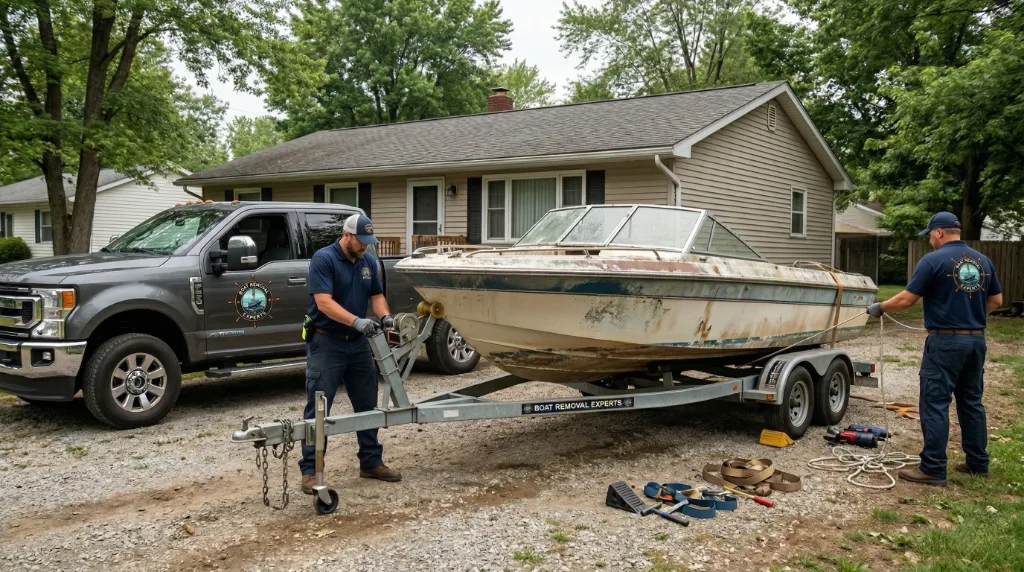
Whether a vessel can be loaded intact depends heavily on its physical condition, structural integrity, and location. Vessels sitting on flat pavement present simple recovery steps, while hulls resting on rotting timber or sinking into dirt demand specialized rigging. Landlords clearing empty lots, homeowners recovering lost driveway space, and yard managers eliminating safety hazards rely on targeted vessel recovery to restore their real estate for active use.
When Pasco Residents Call Us

Unused vessels left outdoors in Pasco weather rapidly under intense sun and winter frost. Blistering summer heat degrades exposed gelcoat and bakes wooden decks until the timber warps, splits, and loses structural strength. Rainwater pooling in an open cockpit saturates interior foam, rots floor frames, and creates a dense, heavy floor that can collapse under pressure. When freezing temperatures hit, trapped water expands inside hull seams and fiberglass layers, widening cracks and turning an old pontoon, fishing boat, or sailboat into a fragile structural liability that requires cautious handling during extraction.
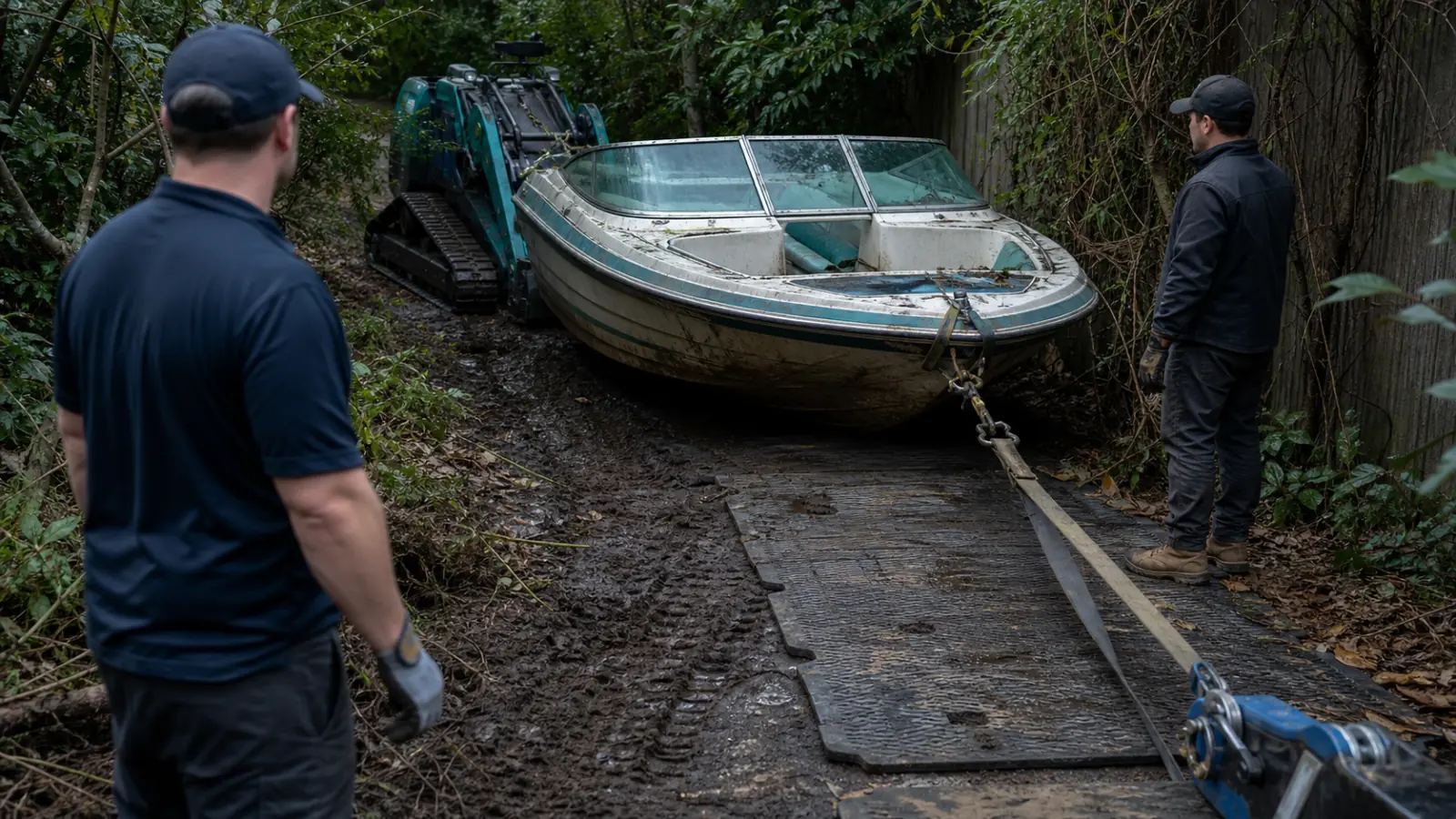
Site access heavily influences how recovery crews move equipment onto a property. Narrow residential driveways, tight alley turnarounds, and overhead utility lines restrict where high-clearance hydraulic machinery can operate safely. A vessel sitting deep in a backyard behind a narrow side gate requires different pulling lines than a hull parked on asphalt near Richland or Burbank. Soil condition dictates whether heavy haulers can drive directly to the stern or must remain on solid pavement while using extended winch cables.

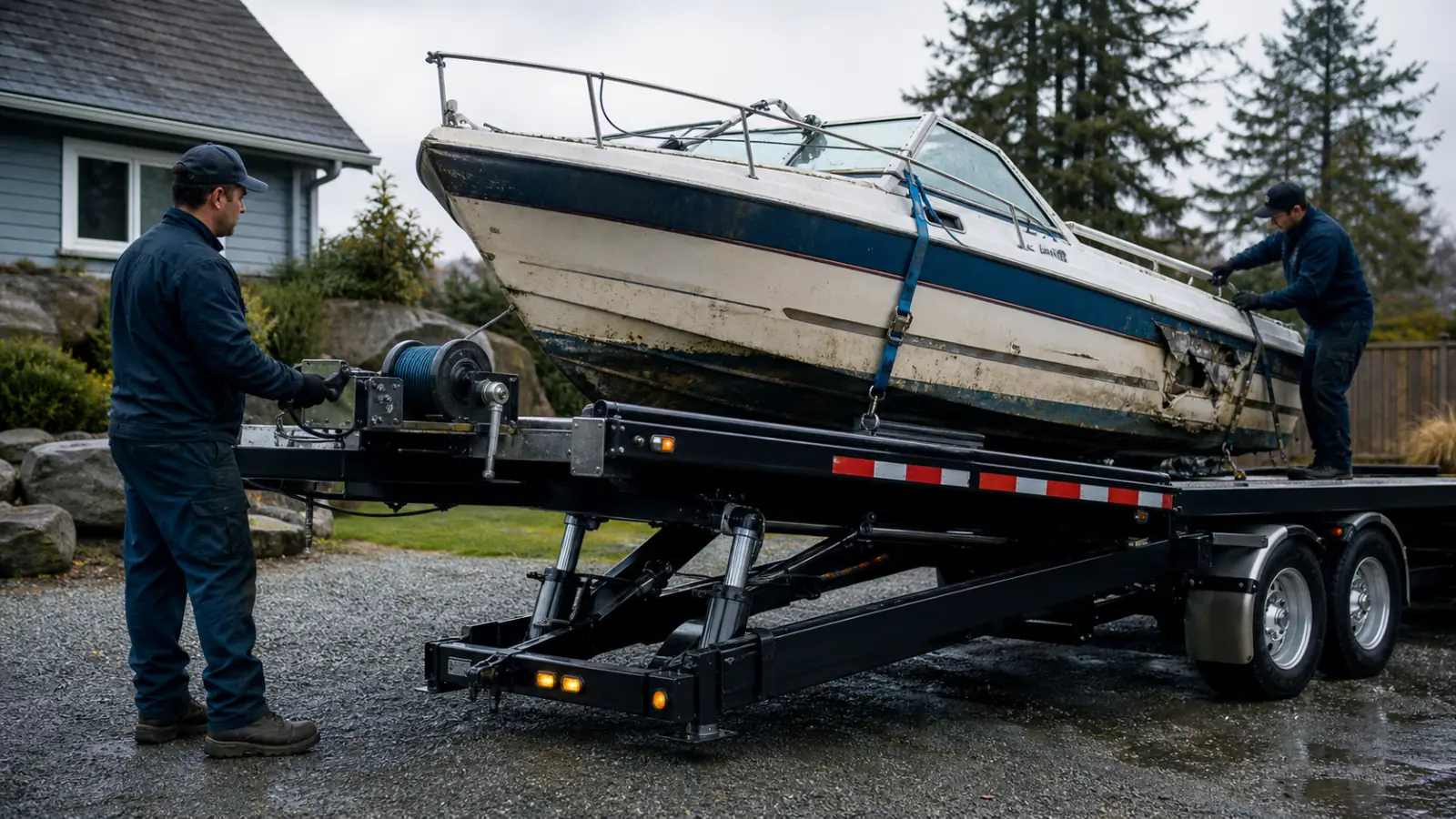
The foundation underneath the vessel changes the operational approach entirely. Hulls resting on flat trailers with functional axles roll out smoothly, while vessels sitting directly on dirt, concrete blocks, or custom wood cradles require hydraulic jacks and specialized lifting skids. Floating hulls positioned at water level near Kennewick, West Pasco, or Finley demand careful staging to prevent water intake during transfer onto transport rigs.
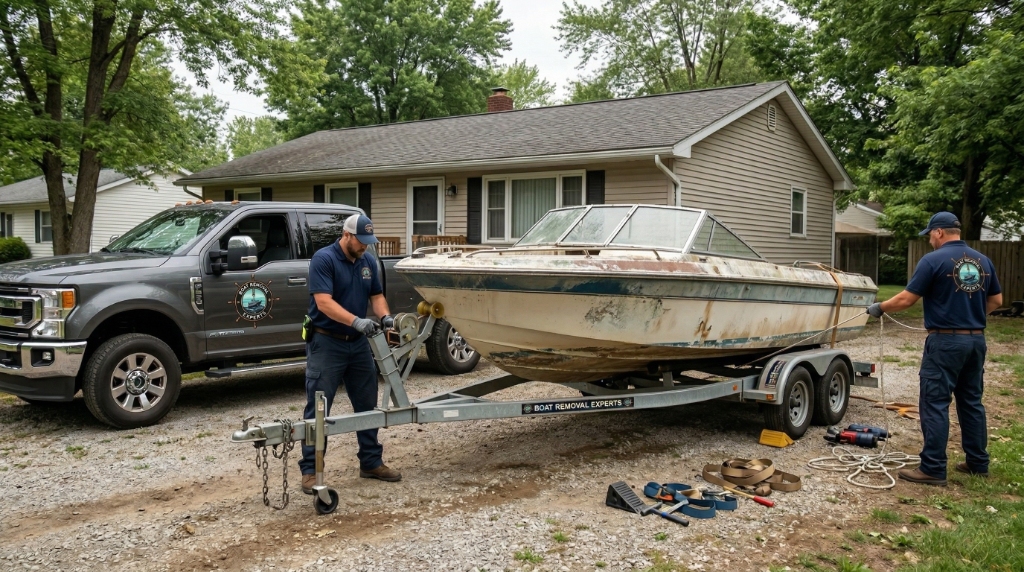
Every Type of Boat We Handle

Situations We Handle

Need Help? We’re Ready.

Contact boat removers directly or request free quotes. We dispatch crews fast.

Our Step-by-Step Process

Assessment

We evaluate the boat’s size, current location, condition, and any environmental or access challenges before we schedule boat removal.

Planning

A detailed plan is built around your vessel — equipment, logistics, timeline, and safety. Services include drainage of oil and fuel before transport.

Execution

Our experienced crew mobilizes to your current location and we tow, haul, or dismantle the vessel using professional marine equipment.

Completion

The vessel is recovered, recycled, or routed to certified boat junkyards for environmentally responsible disposal. The site is left clean.

Equipment & Capabilities

Clearance crews assess the physical state of the hull, weight distribution, and surrounding obstacles to select the proper extraction gear. When a vessel sits on flat ground with a damaged frame or flat tires, heavy winch cables, hydraulic jacks, and wheeled dollies allow the crew to slide the structure safely onto a flatbed trailer without causing damage to nearby structures or pavement.

If a large hull is structurally compromized or blocked by physical barriers like concrete walls and mature trees, technicians dismantle the deck and superstructure on site. Cutting the hull into manageable sections reduces total weight and allows crew members to navigate narrow passages where heavy towing vehicles cannot fit. Before any cutting or loading begins, workers inspect the interior to drain and isolate all hazardous materials. Crew members remove remaining fuel, crankcase oil, engine batteries, and electronic components so fluid spills do not contaminate the ground during transport.

Once loaded and secured, materials move to appropriate sorting facilities based on their composition. Metal fittings, aluminum rails, and clean structural parts head toward scrap recycling processors, while damaged fiberglass, rotted wood, and non-recyclable interior materials go to licensed waste facilities. Transporting components to specialized processing sites in Franklin County ensures that hazardous fluids and bulk structural waste are handled in full compliance with local environmental standards.

Our boat removal experience covers everything from start to finish  assessment, planning, execution, dismantling, and final cleanup. Marina operators and property owners across Franklin County trust us to get rid of your junk boat without damage to surrounding property.

FAQ

Boat Removal Questions - Frequently Asked

Common questions from property owners about our junk removal service, dismantling, and marine recovery.

We handle every type of vessel — sailboat, pontoon, fishing boats, jon boats, yachts, and commercial craft. Whether your boat or sailboat floats (or used to), we’ll remove it from any current location.

Yes. Sunken and partially submerged vessel recovery is a core part of our salvage work in Franklin County. We use lift bags, salvage pumps, and marine cranes to safely raise vessels from underwater.

We respond to inquiries quickly — usually within hours, with same-day service available. For emergency situations, we mobilize as fast as possible. Call us directly for time-sensitive jobs.

No. Every job is handled in-house by our own team and equipment. No middlemen, no handoffs, no surprises.

Cost depends on the boat’s size, current location, condition, and complexity of the job. We provide free assessments and free quotes for every case — contact us and we’ll give you an honest estimate.

Yes. Our boat removal and disposal services include hazardous materials handling, oil and fuel drainage, hull dismantling, and recycling at certified yards — all in compliance with environmental regulations and environmentally responsible standards.

Absolutely. We regularly work in tight marinas, shallow waterways, private docks, backyards, and remote areas. We bring the right gear to reach any current location.

Yes. We frequently work with insurance adjusters on salvage and recovery claims and provide the documentation needed for your claim.

Browse Our Services - Ready to Get Started?

We handle everything from start to finish. Call us now or request a free quote – we’ll dispatch crews and haul your vessel away fast.