
Professional Boat Removal Services in Port St. John, FL

An old boat resting on a trailer behind a garage often turns into a permanent fixture once the tires dry rot into the soil. Years pass, the canvas tears, and rainwater fills the bilges until the structure weighs twice what it did on the water. Other times, a slip operator sends an urgent notice about an unpaid space, a property sale closes with a heavy fiberglass vessel left on the lot, or a main outboard engine seizes where a complete mechanical rebuild costs thousands more than the hull is actually worth. In every case, moving an immovable marine vessel requires heavy equipment and clear legal steps.

Is there boat removal near me in Port St. John, FL? Boat Removal Experts handles the extraction and transport of unseaworthy vessels directly from residential properties, private storage lots, and local waters, managing the heavy haul out so property owners do not have to clear the lot themselves.

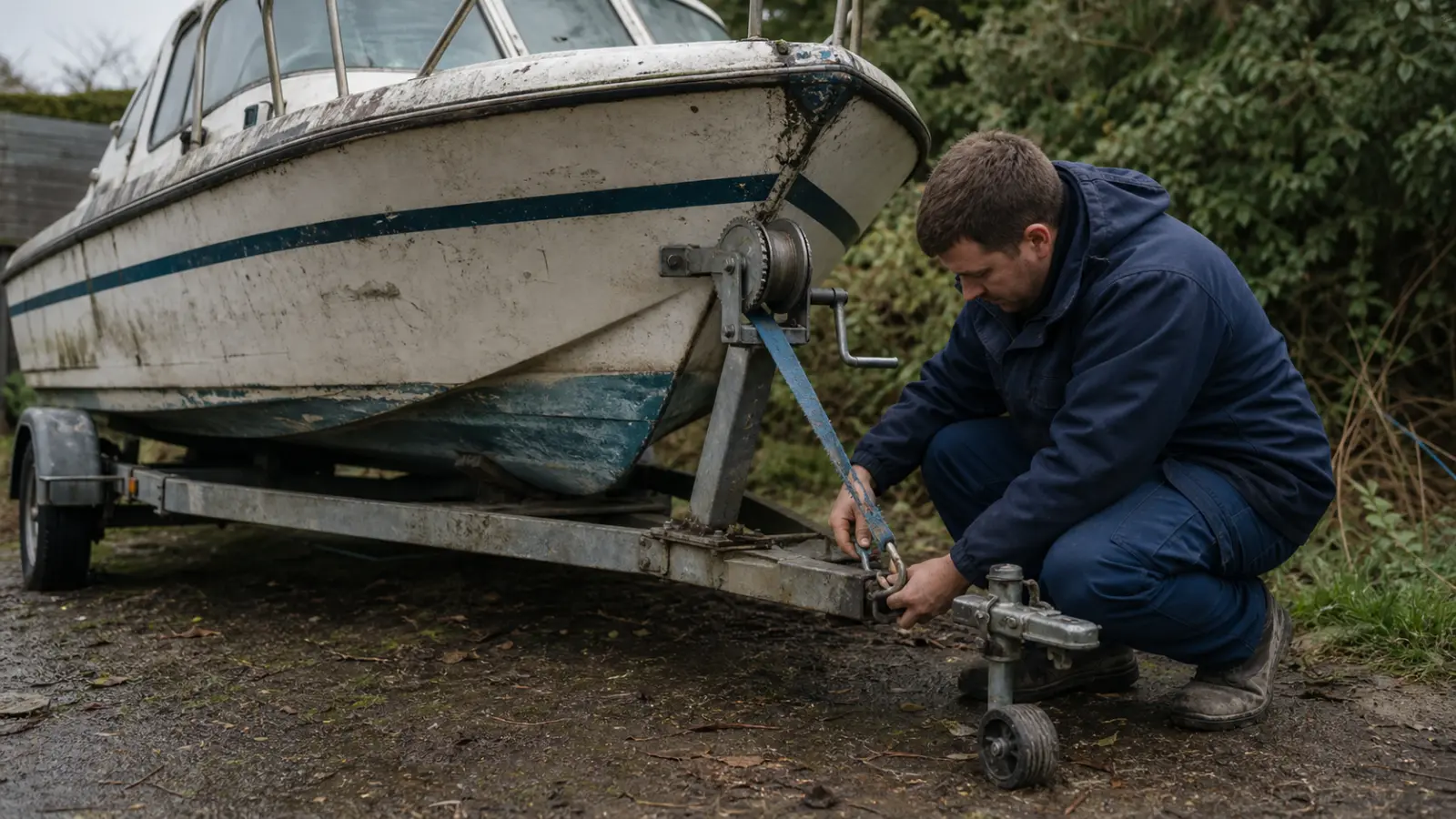
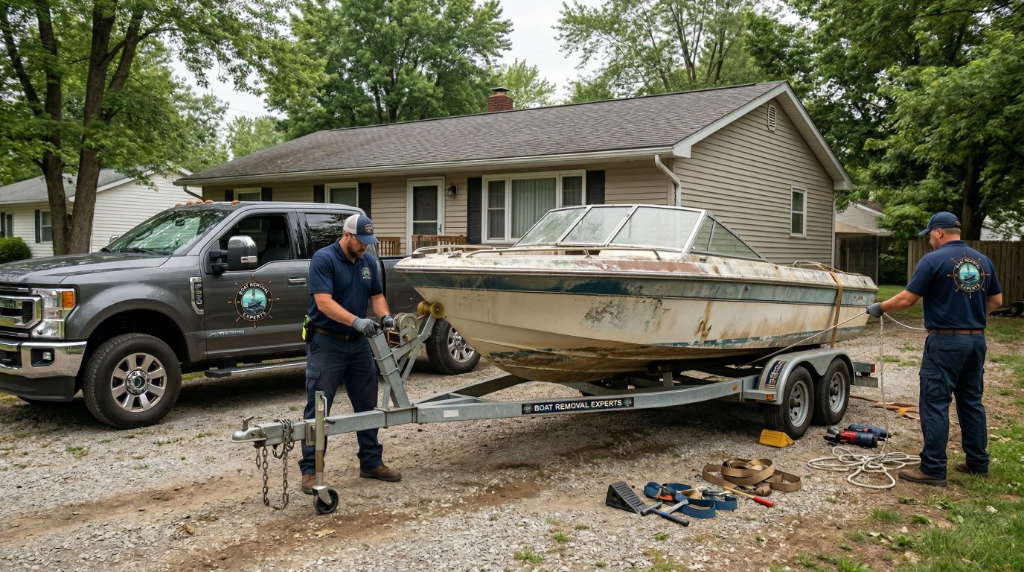
Worker checking the trailer winch before hauling an old boat

Every complete boat removal requires a definitive release of liability to protect the owner of record. While some outfits haul a vessel away without completing formal paperwork, leaving the legal liability and future abandonments tied directly to the previous owner, our crew issues a clear liability release. We do not always transfer the title, but securing official liability documentation prevents future citations if the vessel is processed, dismantled, or moved across state lines.

Extracting a vessel is rarely as simple as hooking up a hitch. Flat trailer tires, frozen wheel bearings, bent cradles, and wide beams that exceed gate clearances complicate the extraction. When a heavy hull sits on soft lawn soil, heavy transport trucks cannot cross without risking ground damage, requiring specialized winch rigging to pull the vessel safely to paved ground.

Call 321-220-8482 to start.

Send photos through the contact form.

What Is Boat Removal and When You Need It

Professional boat disposal covers far more than pulling a vessel down the road on a standard tow hitch. When an owner calls to get rid of a boat, the process encompasses structural evaluation, route planning, site extraction, and legal clearing. A derelict vessel sitting on wooden blocks or sunken into marshy ground requires crane lifts or flatbed winch systems before road transport is even possible. Whether dealing with an abandoned boat on a commercial lot or clearing space on private land, complete removal accounts for every phase of dismantling and transport.
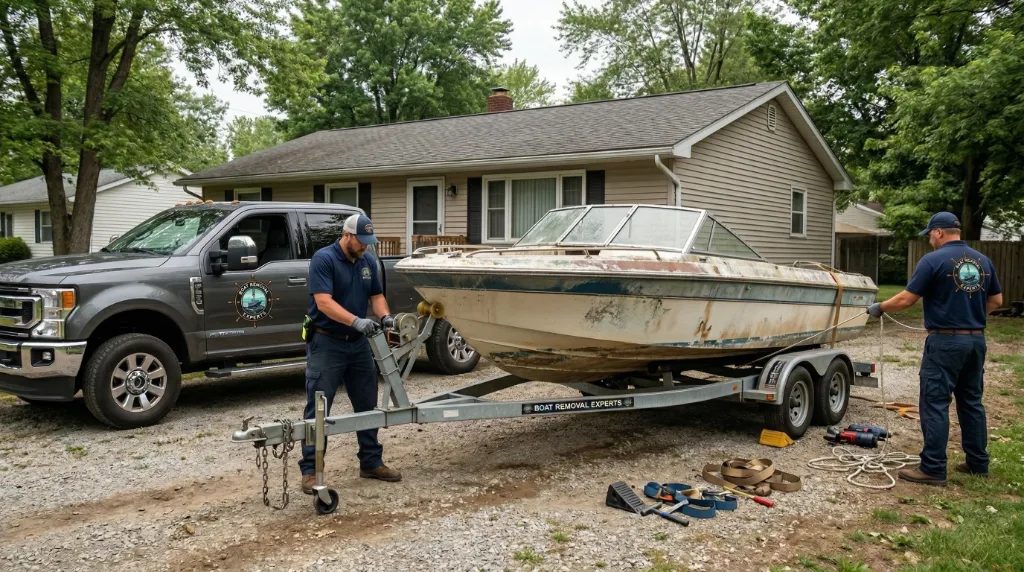
Crew securing an old boat on a trailer for removal

Paperwork dictates the initial approach to any job. When an owner possesses a clear title or HIN registration, the authorization process moves quickly. However, when an old vessel comes with a newly purchased property, or when decades of storage have resulted in lost paperwork, alternative legal steps are taken. State rules regarding an abandoned boat removal dictate how notice must be served to past owners before the hull can be cut up or hauled away. Vessels left without payment in private slips or stored on commercial lots without authorization require specific legal clearances before our crew touches the rigging.
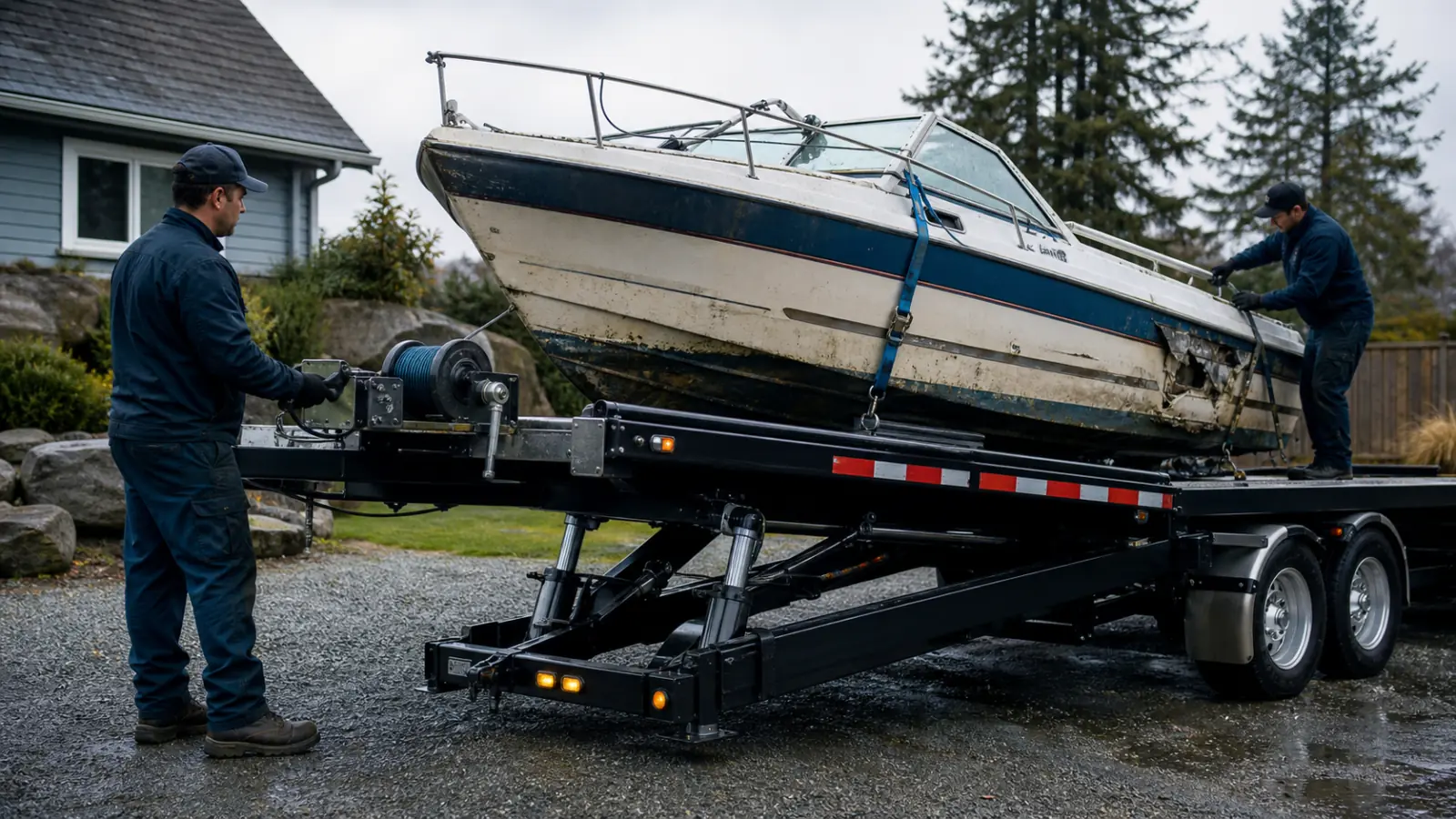
Crew winching an old boat onto a flatbed trailer

When Port St. John Residents Call Us

The coastal climate in Port St. John takes a heavy toll on unused marine hulls. Intense sunlight bakes the gelcoat until it chalks and cracks, allowing moisture to seep into structural floor frames and plywood decks. Continuous rainfall fills open hulls, rotting interior wood, ruining upholstery, and creating standing water that destabilizes the vessel. As wooden cores absorb water, the overall weight increases significantly, turning a simple fiberglass hull into an exceptionally heavy object that requires heavy-duty rigging to extract without snapping the hull in half.
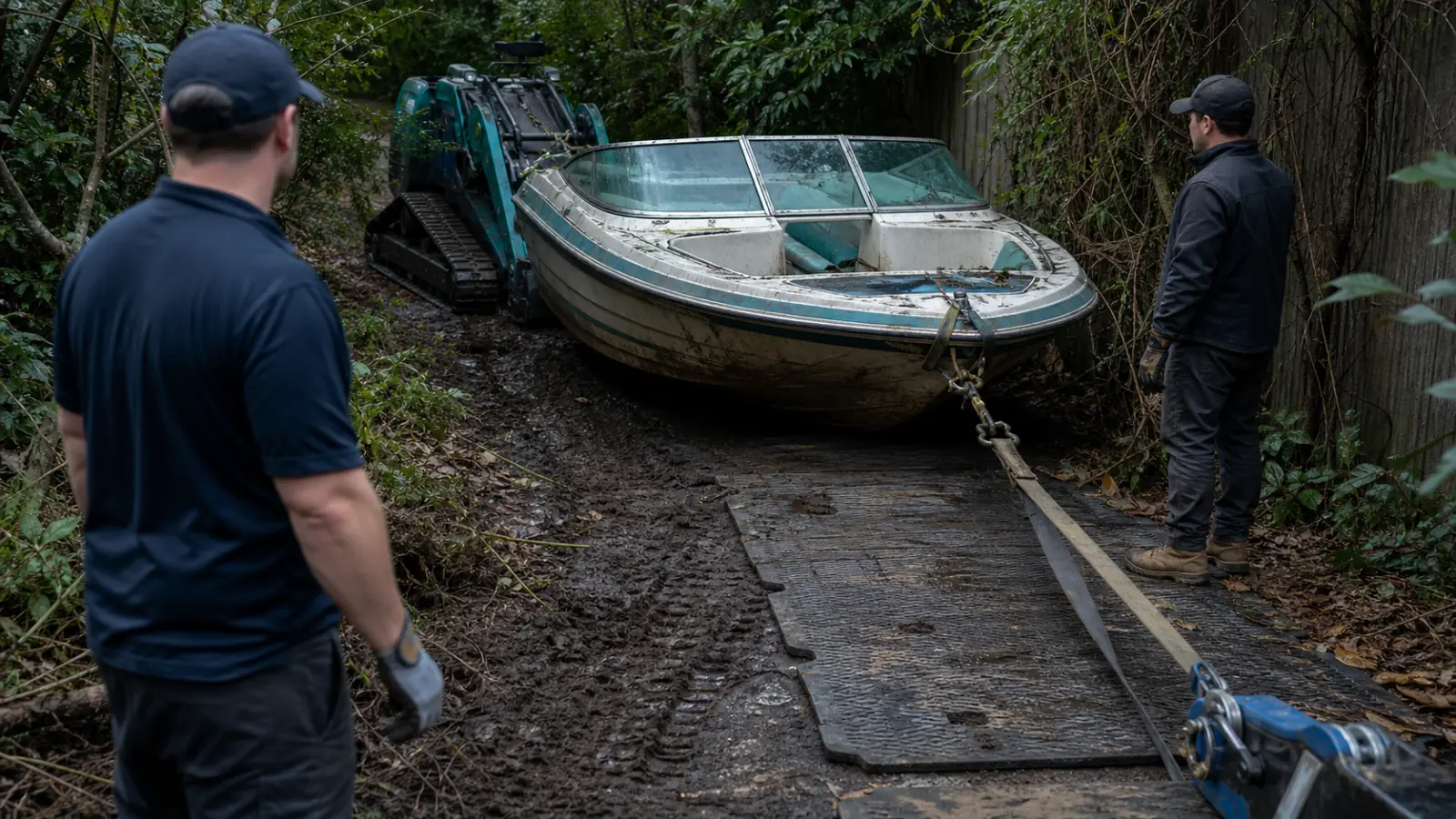
Crew recovering a boat from an overgrown yard using ground mats

Local property layouts in Port St. John, FL create unique access challenges for heavy equipment. Narrow side yards, low-hanging overhead utility lines, and soft sand driveways dictate how transport rigs approach the vessel. A fishing boat nestled behind a residence may require a long winch cable pull across the lawn, while a heavy pontoon or a fixed-keel sailboat resting on rotted timber supports might need custom blocking or crane positioning before it can be moved. Whether the craft sits on a flat trailer, rests directly on the dirt, or floats in a private slip, crew access and ground conditions determine the equipment required for safe removal.
Crew securing an old boat on a trailer for removal

Every Type of Boat We Handle

Situations We Handle

Need Help? We’re Ready.

Contact boat removers directly or request free quotes. We dispatch crews fast.

Our Step-by-Step Process

Assessment

We evaluate the boat’s size, current location, condition, and any environmental or access challenges before we schedule boat removal.

Planning

A detailed plan is built around your vessel — equipment, logistics, timeline, and safety. Services include drainage of oil and fuel before transport.

Execution

Our experienced crew mobilizes to your current location and we tow, haul, or dismantle the vessel using professional marine equipment.

Completion

The vessel is recovered, recycled, or routed to certified boat junkyards for environmentally responsible disposal. The site is left clean.

Equipment & Capabilities

When a vessel sits on a trailer with frozen axles or flat tires, the crew uses heavy winch systems, hydraulic skids, and roll-off transport beds to load the rig without relying on the boat trailer. If a hull is too wide to fit through private access gates or too structurally compromized to haul in one piece, workers dismantle the vessel on site using specialized cutting equipment. The crew cuts the deck and hull into manageable sections, containing debris and loading the fiberglass pieces directly onto transport containers.

Before any hull is cut or hauled, all hazardous materials are systematically removed from the vessel. Workers drain remaining fuel tanks, extract engine oil, remove lead-acid batteries, and detach legacy electronics or air conditioning refrigerants. These fluids and components are isolated for safe handling according to environmental guidelines. Once the boat is cleared of contaminants, the remaining materials are evaluated. Structural metal fittings, aluminum T-tops, stainless steel rails, and bronze hardware are separated for metal recycling, while compromized fiberglass sections are prepared for final disposal services based on local facility capabilities and material composition.

Our boat removal experience covers everything from start to finish  assessment, planning, execution, dismantling, and final cleanup. Marina operators and property owners across Brevard County trust us to get rid of your junk boat without damage to surrounding property.

FAQ

Boat Removal Questions - Frequently Asked

Common questions from property owners about our junk removal service, dismantling, and marine recovery.

We handle every type of vessel — sailboat, pontoon, fishing boats, jon boats, yachts, and commercial craft. Whether your boat or sailboat floats (or used to), we’ll remove it from any current location.

Yes. Sunken and partially submerged vessel recovery is a core part of our salvage work in Brevard County. We use lift bags, salvage pumps, and marine cranes to safely raise vessels from underwater.

We respond to inquiries quickly — usually within hours, with same-day service available. For emergency situations, we mobilize as fast as possible. Call us directly for time-sensitive jobs.

No. Every job is handled in-house by our own team and equipment. No middlemen, no handoffs, no surprises.

Cost depends on the boat’s size, current location, condition, and complexity of the job. We provide free assessments and free quotes for every case — contact us and we’ll give you an honest estimate.

Yes. Our boat removal and disposal services include hazardous materials handling, oil and fuel drainage, hull dismantling, and recycling at certified yards — all in compliance with environmental regulations and environmentally responsible standards.

Absolutely. We regularly work in tight marinas, shallow waterways, private docks, backyards, and remote areas. We bring the right gear to reach any current location.

Yes. We frequently work with insurance adjusters on salvage and recovery claims and provide the documentation needed for your claim.

Browse Our Services - Ready to Get Started?

We handle everything from start to finish. Call us now or request a free quote – we’ll dispatch crews and haul your vessel away fast.