
Professional Boat Removal Services in Post Falls, ID

An old boat often becomes a permanent fixture long after its last trip out on the water. A fiberglass hull might sit on a flat-tired trailer behind a garage for six seasons, slowly collecting pine needles and rainwater while the tires settle deep into the dirt. In other cases, a sudden marina notice about an unpaid slip forces a quick decision, or a property purchase leaves a buyer with a heavy cabin cruiser left sitting in the yard. When an outboard engine seizes up completely and a mechanical rebuild costs vastly more than the vessel is worth, finding a reliable boat removal service becomes the only practical way forward.

Is there boat removal near me in Post Falls, ID? Yes, Boat Removal Experts brings the necessary heavy equipment, flatbed trucks, and trained crews directly to your location to manage every stage of vessel transport and disposal.

Proper documentation is a critical part of every job we handle. While our service does not always transfer the vessel title, we always issue a formal release of liability to the legal owner. Some informal operators will haul a hull away without any written record, leaving the legal liability and potential abandoned vessel fines attached to you. Asking for explicit proof of liability release protects you long after the vessel leaves your driveway.

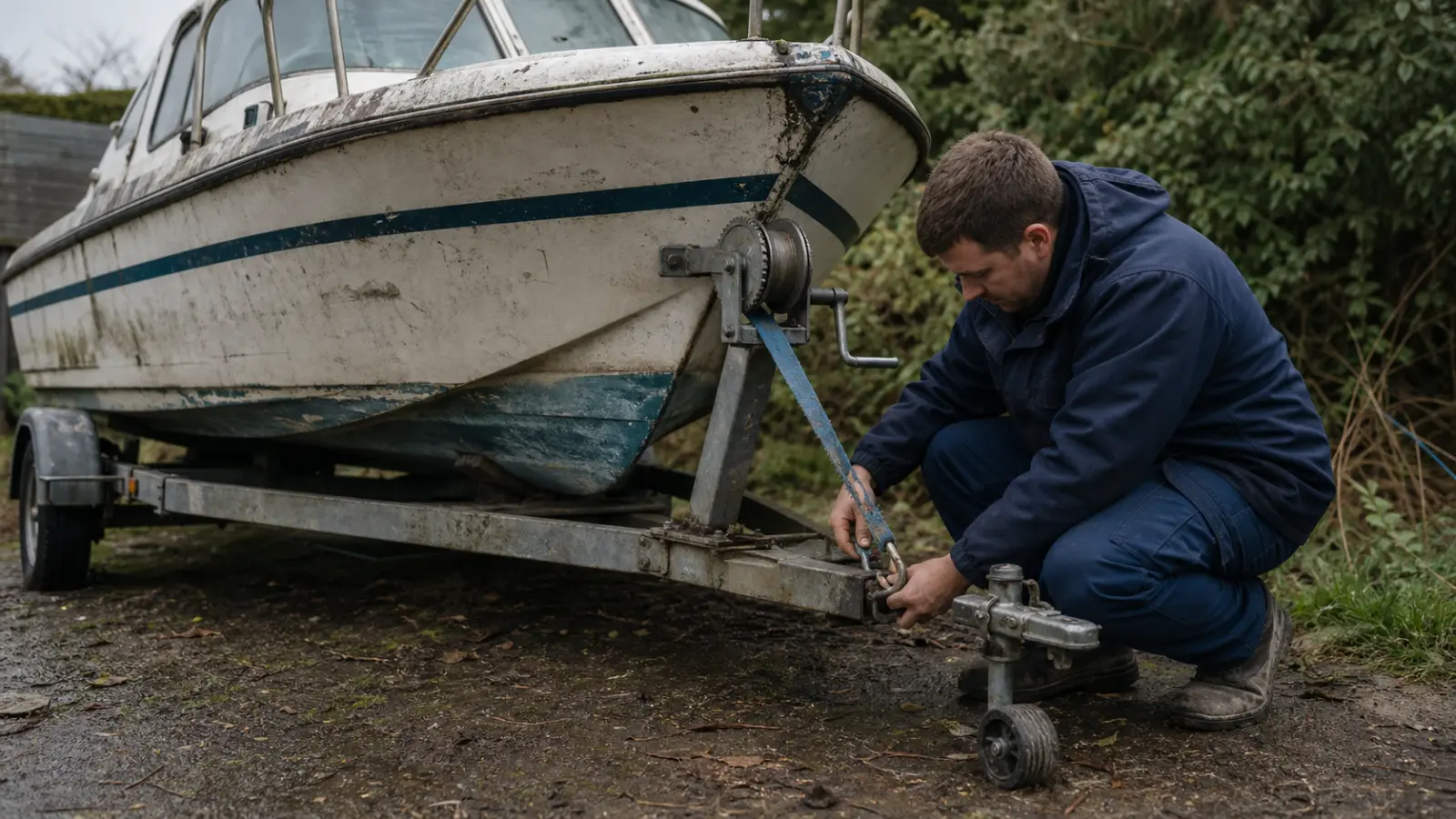
Moving a discarded vessel is rarely as simple as hooking up a trailer coupler. Stuck brakes, rusted axles, or missing wheels make towing impossible without specialized winches. Hull cradles, wide beams that exceed standard garden gates, and soft soil that prevents heavy tow vehicles from getting traction all require careful planning and specialized rigging.

Call 208-907-3626 to start.

Send photos through the contact form.

What Is Boat Removal and When You Need It

Professional boat disposal goes far beyond simply hooking a winch line to a trailer and towing a vessel down the road. Complete service includes assessing structural integrity, preparing the vessel for safe transit, clearing physical access paths, and managing proper site cleanup after the hull is loaded. Every vessel presents distinct challenges depending on its age, construction material, and mechanical state.

Paperwork status heavily influences how an abandoned boat or derelict craft is processed. When an owner possesses a clear title or registered registration, transport logistics can move forward immediately. When titles are missing, lost over time, or tied to a newly acquired piece of real estate, additional verification steps become necessary before hauling can occur. A derelict vessel left on private property or sitting in an unpaid slip requires clear proof of legal authorization before any crew can hook up tow equipment.
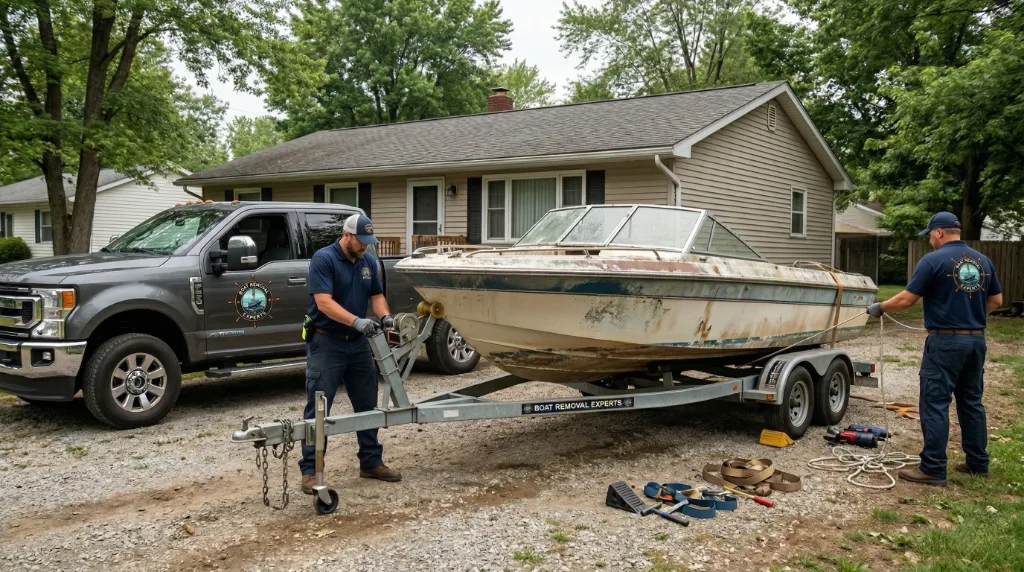
Physical condition determines the handling methods required for safe transport. Vessels that are structurally sound can often be loaded onto hydraulic equipment whole. In contrast, compromized hulls that have taken on water, suffered severe rot, or fractured under stress require specialized rigging or on-site reduction. Whether an owner needs to get rid of a boat stored indoors or haul away an abandoned boat from an open field, physical site constraints dictate the equipment needed for the job.
When Post Falls Residents Call Us

Property owners in Post Falls call for assistance when seasonal weather conditions take a heavy toll on exposed vessels. Winter snow loads and wet spring conditions accelerate wear on unattended hulls, causing gelcoat cracks, rotting wooden decks, and moldy upholstery. When a hull holds standing rainwater over multiple freeze cycles, the structural laminate weakens, making eventual handling much more complex.

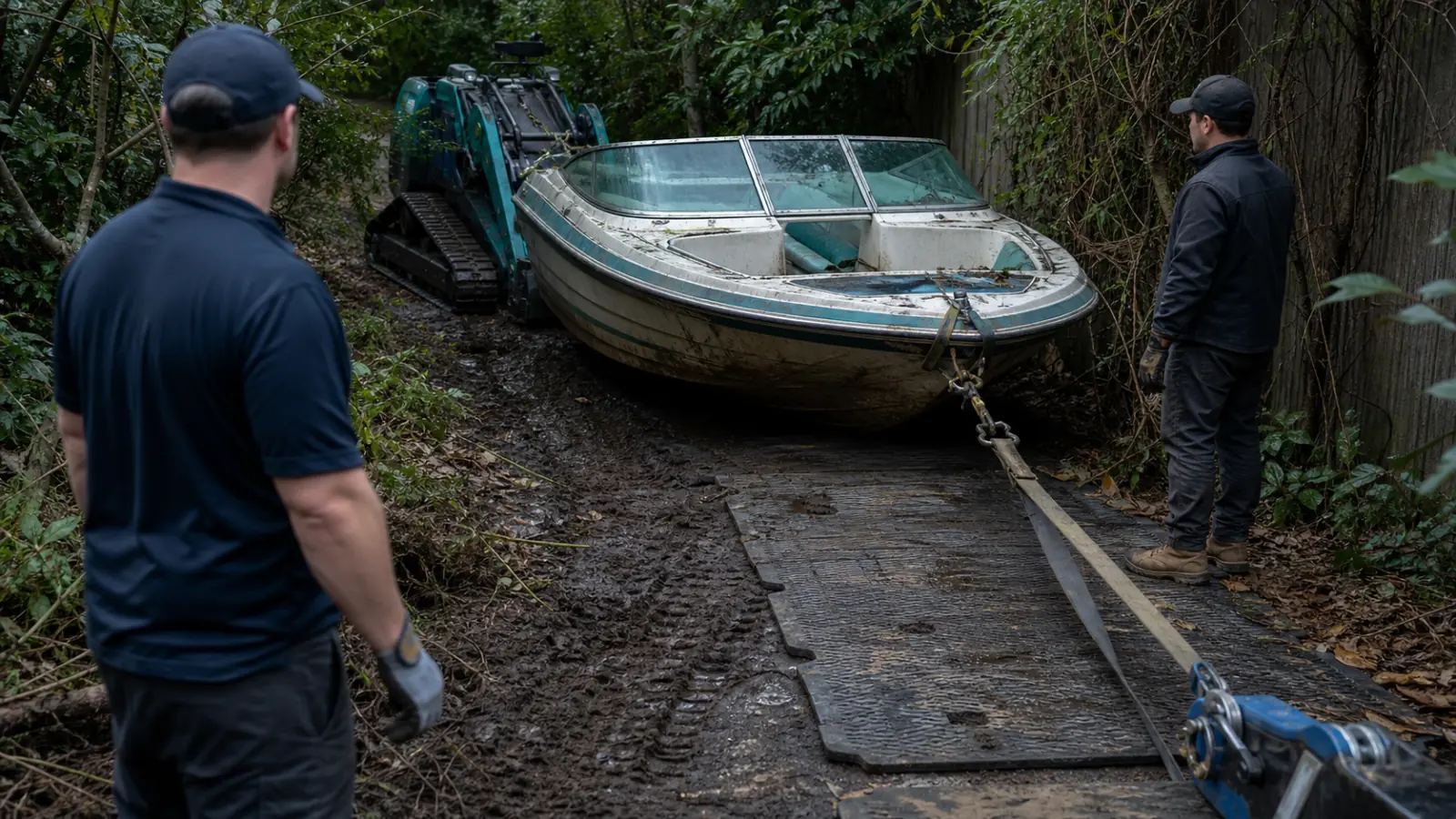
Local terrain and site conditions dictate how our crew approaches each project. A long yard approach, soft dirt, or sloping driveways change how tow vehicles navigate the space. Overhead utility lines, low tree branches, and narrow property gates limit clearance for tall cabin structures or wide beams. Vessels resting directly on wooden blocks, sunken into mud, or parked deep behind outbuildings require winches and secondary rigging to reach hard pavement safely.
Different vessel types create specific transport requirements. A light aluminum fishing boat might roll easily onto a tilt-deck trailer, while a heavy pontoon requires specialized support to prevent frame twisting. A tall sailboat with its mast removed presents high center-of-gravity challenges during loading. Crew members evaluate structural strength, beam width, and total weight before selecting the appropriate recovery rigging for the job.
Every Type of Boat We Handle

Situations We Handle

Need Help? We’re Ready.

Contact boat removers directly or request free quotes. We dispatch crews fast.

Our Step-by-Step Process

Assessment

We evaluate the boat’s size, current location, condition, and any environmental or access challenges before we schedule boat removal.

Planning

A detailed plan is built around your vessel — equipment, logistics, timeline, and safety. Services include drainage of oil and fuel before transport.

Execution

Our experienced crew mobilizes to your current location and we tow, haul, or dismantle the vessel using professional marine equipment.

Completion

The vessel is recovered, recycled, or routed to certified boat junkyards for environmentally responsible disposal. The site is left clean.

Equipment & Capabilities

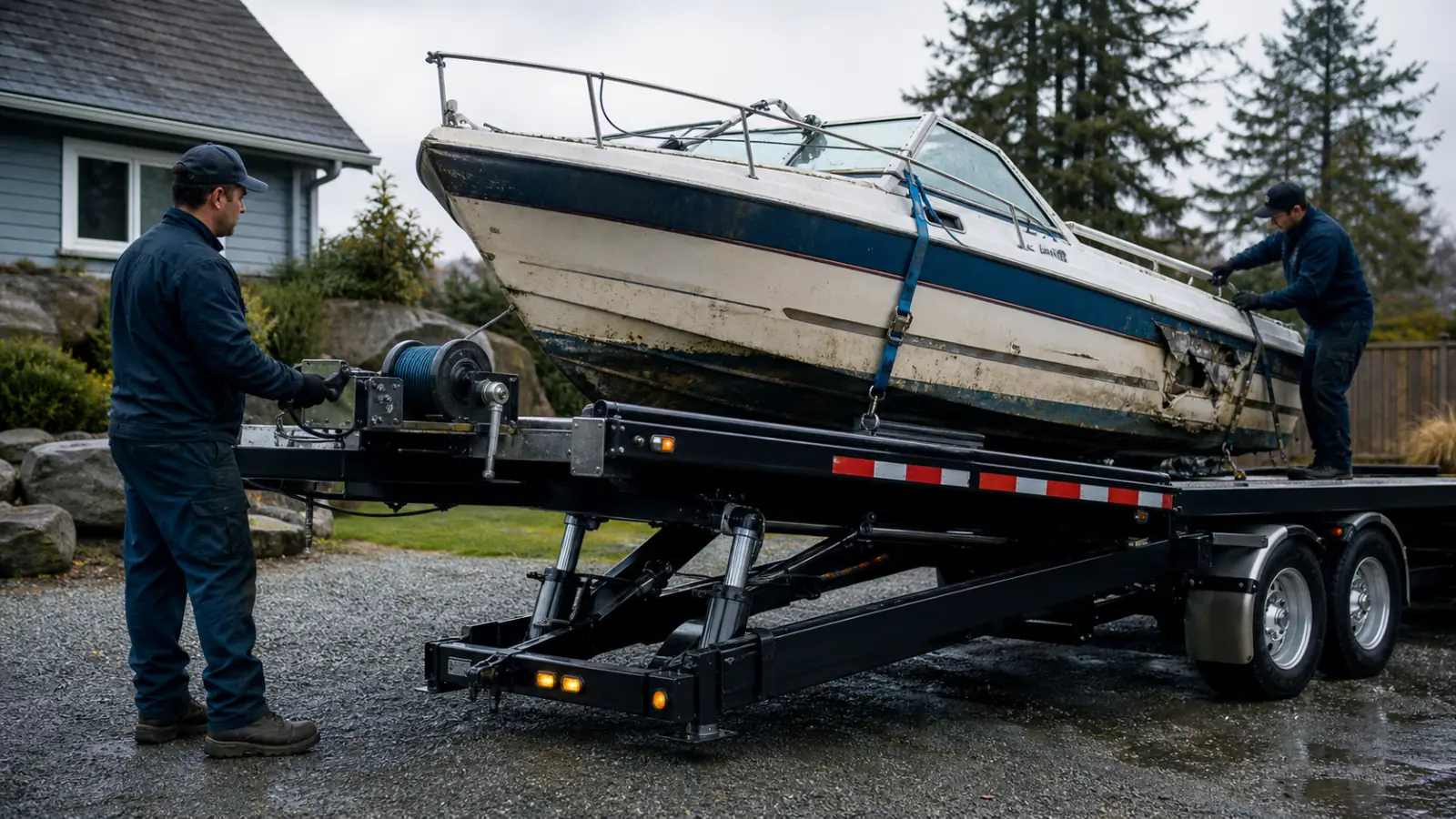
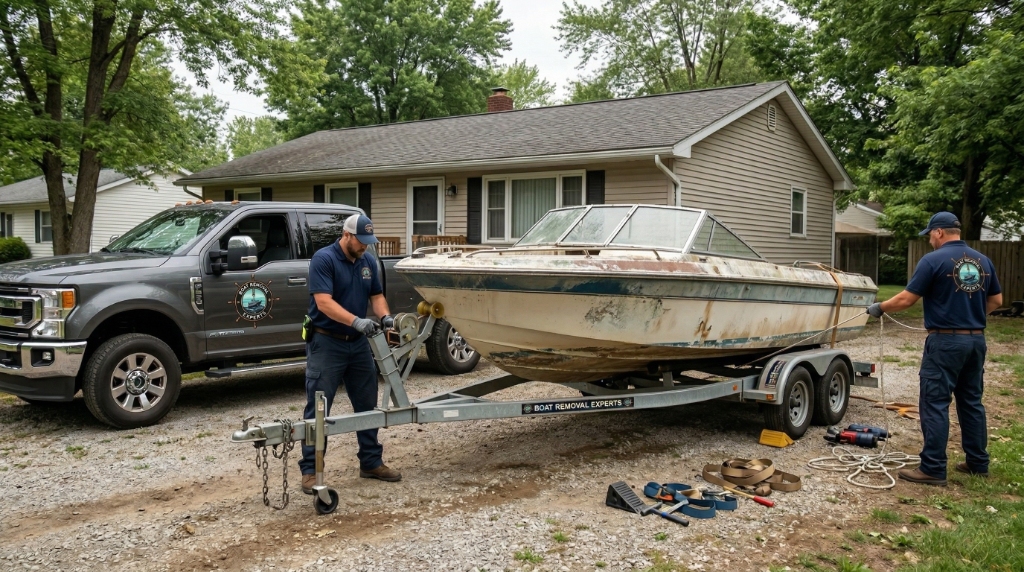
When crew members arrive on site, they inspect the vessel to determine the safest transport method. If a trailer has seized hubs, rotted tires, or a rusted frame that cannot safely travel on public roads, heavy winches and hydraulic decks elevate the entire setup directly onto a transport rig. The physical environment dictates whether the hull moves whole or requires preliminary work.

If narrow access lanes, oversized hulls, or severe structural rot prevent loading a vessel in one piece, crews dismantle the structure on site. Using specialized cutting tools, workers break down fiberglass, aluminum, or wooden superstructures into manageable sections for safe transport. Prior to cutting or loading, workers strictly isolate all hazardous materials. Fuel tanks are drained, crankcase oil is recovered, marine batteries are removed, and electronic components are separated to prevent environmental contamination.

After leaving the site, components are sorted based on material composition. Metals undergo processing for recycling facilities, usable hardware is recovered where practical, and remaining non-recyclable structural debris goes to designated waste transfer stations. This systematic evaluation ensures that every part of the vessel is handled responsibly according to regional material guidelines.

Our boat removal experience covers everything from start to finish  assessment, planning, execution, dismantling, and final cleanup. Marina operators and property owners across Kootenai County trust us to get rid of your junk boat without damage to surrounding property.

FAQ

Boat Removal Questions - Frequently Asked

Common questions from property owners about our junk removal service, dismantling, and marine recovery.

We handle every type of vessel — sailboat, pontoon, fishing boats, jon boats, yachts, and commercial craft. Whether your boat or sailboat floats (or used to), we’ll remove it from any current location.

Yes. Sunken and partially submerged vessel recovery is a core part of our salvage work in Kootenai County. We use lift bags, salvage pumps, and marine cranes to safely raise vessels from underwater.

We respond to inquiries quickly — usually within hours, with same-day service available. For emergency situations, we mobilize as fast as possible. Call us directly for time-sensitive jobs.

No. Every job is handled in-house by our own team and equipment. No middlemen, no handoffs, no surprises.

Cost depends on the boat’s size, current location, condition, and complexity of the job. We provide free assessments and free quotes for every case — contact us and we’ll give you an honest estimate.

Yes. Our boat removal and disposal services include hazardous materials handling, oil and fuel drainage, hull dismantling, and recycling at certified yards — all in compliance with environmental regulations and environmentally responsible standards.

Absolutely. We regularly work in tight marinas, shallow waterways, private docks, backyards, and remote areas. We bring the right gear to reach any current location.

Yes. We frequently work with insurance adjusters on salvage and recovery claims and provide the documentation needed for your claim.

Browse Our Services - Ready to Get Started?

We handle everything from start to finish. Call us now or request a free quote – we’ll dispatch crews and haul your vessel away fast.