
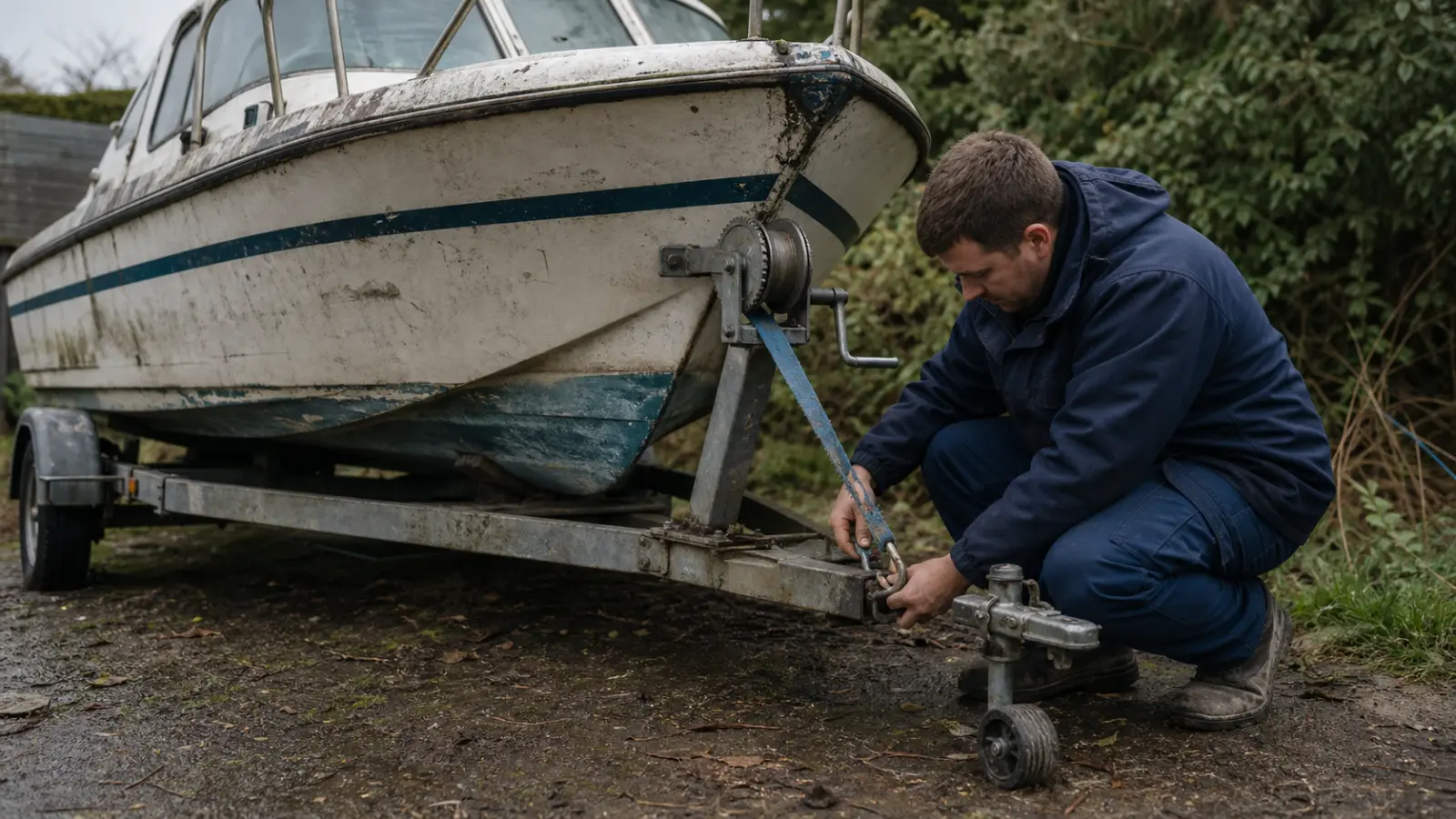
Professional Boat Removal Services in Rio Rancho, NM

Sunbaked fiberglass often sits ignored for years behind a driveway in Rio Rancho, New Mexico, where a project hull has slowly flat-spotted its trailer tires into the dry dirt behind the garage. In other cases, a property sale in Corrales or Edith Enclave leaves a previous owner's old boat parked directly in the way of the closing, or an outboard motor seizes up completely and a total powerhead rebuild costs far more than the vessel is worth. Landlords also find themselves left with an unpaid slip or a neglected yard craft after a tenant moves out, leaving a heavy fiberglass shell behind.

Is there boat removal near me in Rio Rancho, NM? Yes, Boat Removal Experts provides complete vessel extraction, hauling, and site clearing across the entire community.

When our team handles a project, Boat Removal Experts issues a formal release of liability to the owner rather than always promizing a complete title transfer. Many informal haulers simply hook up a rig and pull a junk boat away without executing any official paperwork, which leaves the registered owner fully responsible if that vessel is later dumped on public land. Ensuring you receive a signed liability release prevents future legal or financial surprises.

Transporting a neglected vessel involves distinct physical obstacles that standard towing services cannot handle. A rusted trailer frame may snap during loading, a wide beam can easily block a narrow residential gate, and flat tires or missing wheels make rolling impossible. Furthermore, extra heavy hulls resting on raw earth can quickly sink a standard tow truck into soft ground if improper equipment is used.

Call 505-663-6777 to start.

Send photos through the contact form.

What Is Boat Removal and When You Need It

Professional boat disposal goes far beyond simply hooking a trailer to a hitch and driving off down the road. Complete boat removal requires assessing structural integrity, freeing frozen axles, clearing away surrounding debris, and ensuring the craft is safely secured for transport regardless of its current state. When an owner possesses a clear title and registration, the extraction process moves forward smoothly. However, when paperwork is lost, missing, or attached to a recently purchased piece of real estate in Paradise Hills or Pueblo of Sandia Village, specific documentation steps are necessary before hauling can begin.
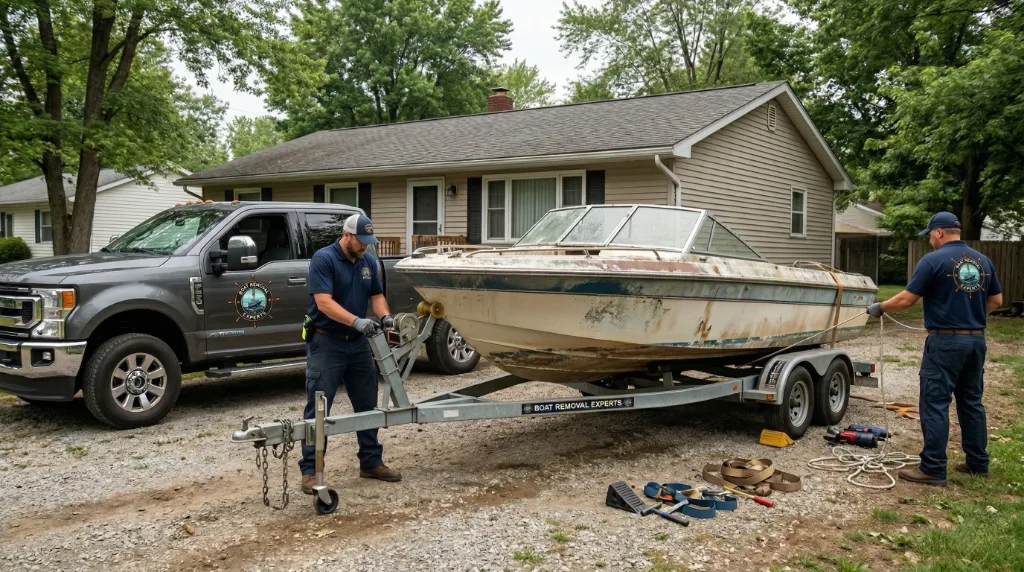
Dealing with an abandoned boat on private land or a neglected vessel taking up space in a yard involves legal considerations regarding property rights and abandoned property notifications. What changes the extraction approach is whether the hull can still float or roll, how long the vessel has been neglected, and whether hazardous fluids remain sealed inside the engine tanks. An abandoned boat left in an unpaid storage space or on a back lot often requires specialized winching gear to extract without causing property damage. A crew must evaluate the hull material, overall weight, and structural soundness to determine whether it can be safely trailered or if it needs to be broken down directly on site. Every unique situation dictates the exact path to clear the land safely.
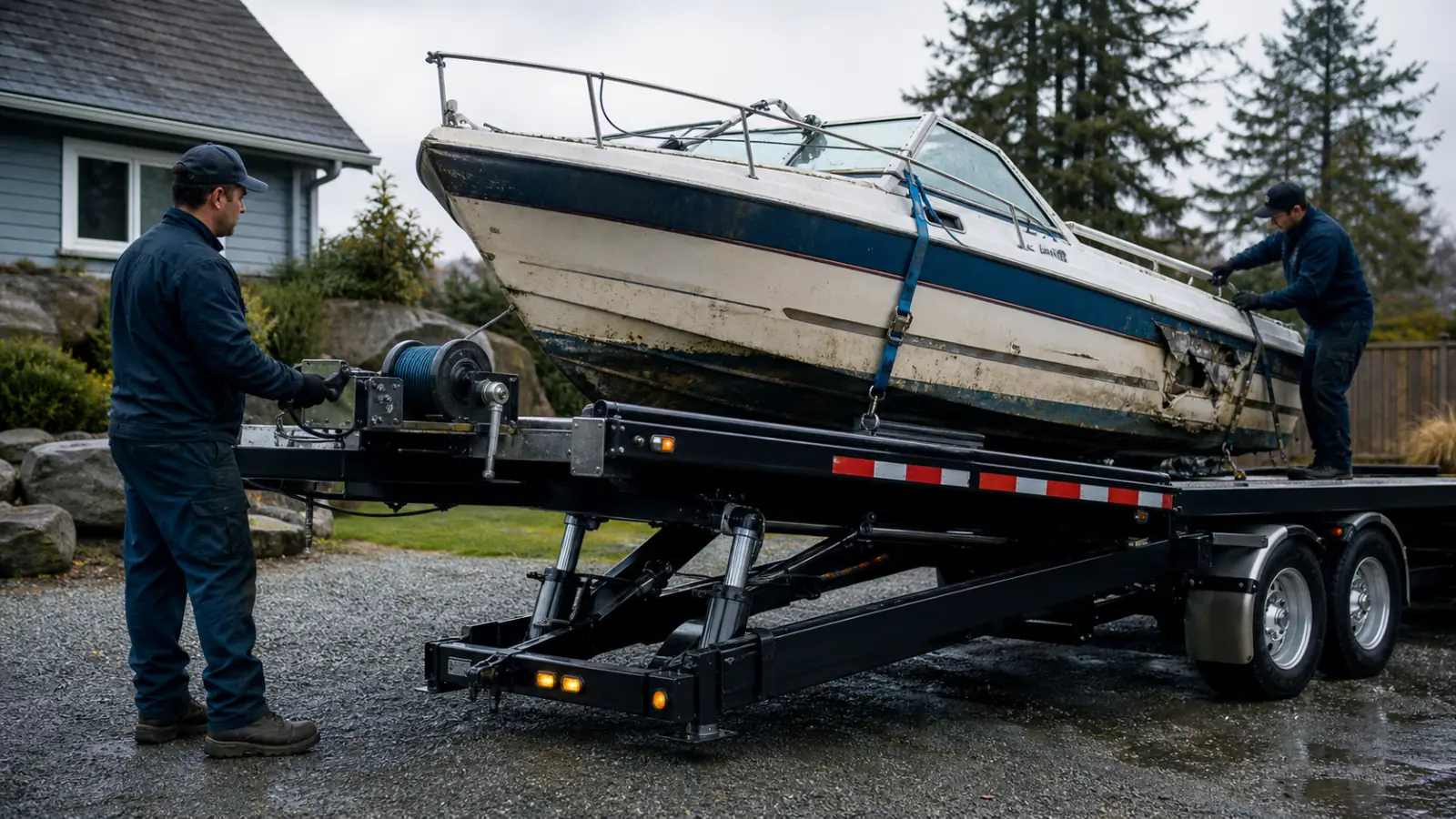
When Rio Rancho Residents Call Us

Property owners call for help because intensely dry weather, hot sun, and sudden desert storms severely degrade idle watercraft left out in the open. Exposure to high desert sunlight bakes the gelcoat until it cracks, dries out wooden decking until it rots, and causes interior upholstery to split and crumble into dust. Rainwater that collects inside an untarped hull adds hundreds of pounds of unnecessary weight, rotting the back panel and creating a stagnant pool that accelerates interior decay. Whether dealing with a sun-bleached pontoon, a heavy glass fishing boat, or a deep-keel sailboat, desert weather rapidly turns an unused vessel into an eyesore.
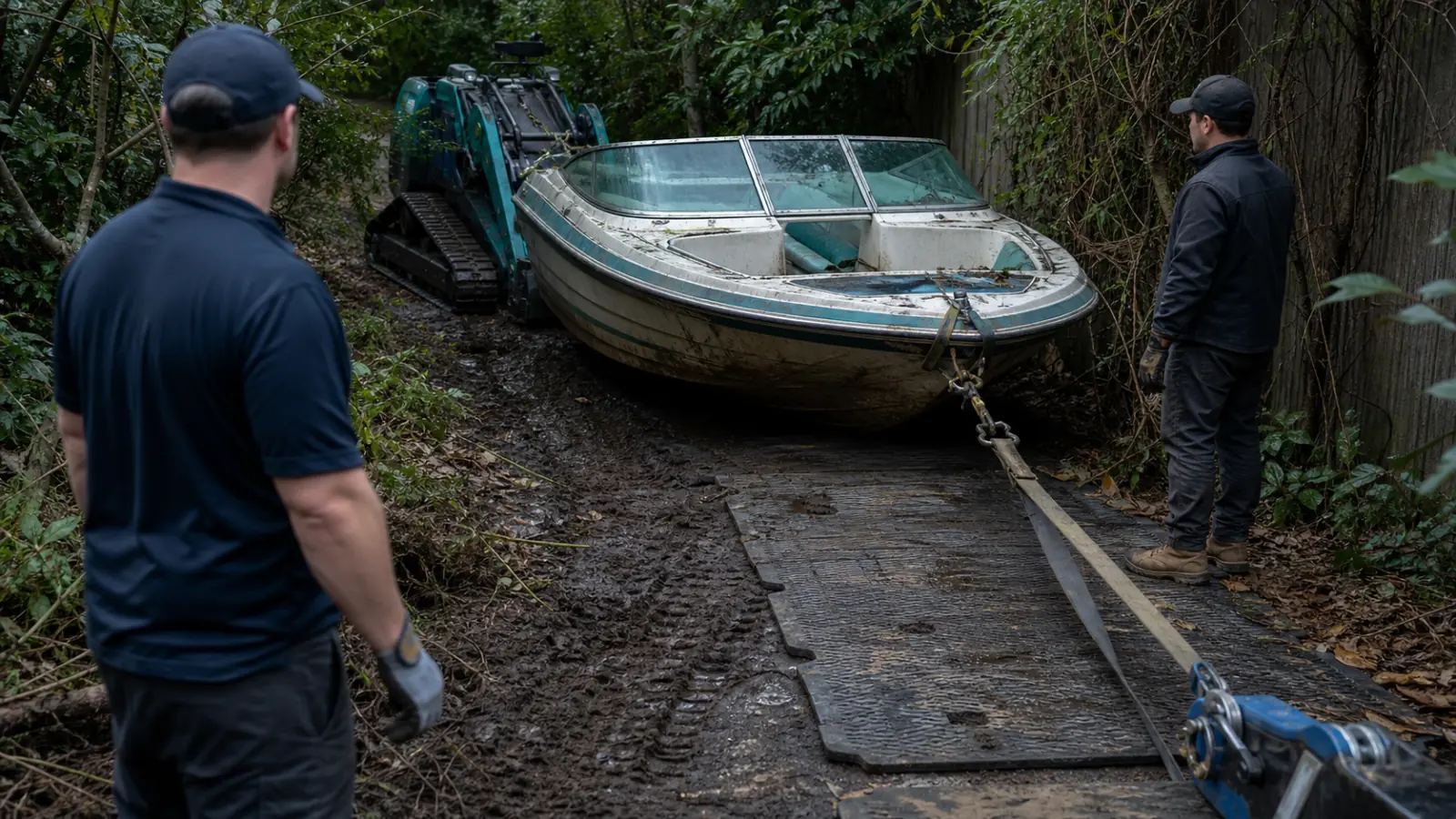
Local site access heavily influences how a recovery team approaches the job. Narrow side yards in Rio Rancho Estates, low-hanging overhead utility lines, and tight residential corners dictate what size vehicle can reach the craft. A crew must examine the surface beneath the vessel, checking if a heavy recovery rig must drive across loose sand, soft dirt, gravel, or cracked concrete. How the vessel sits also alters the job entirely; a craft resting on a rusted, immobile trailer presents very different challenges than a hull propped up on wooden blocks, sunken into mud, or resting along the edge of the water.
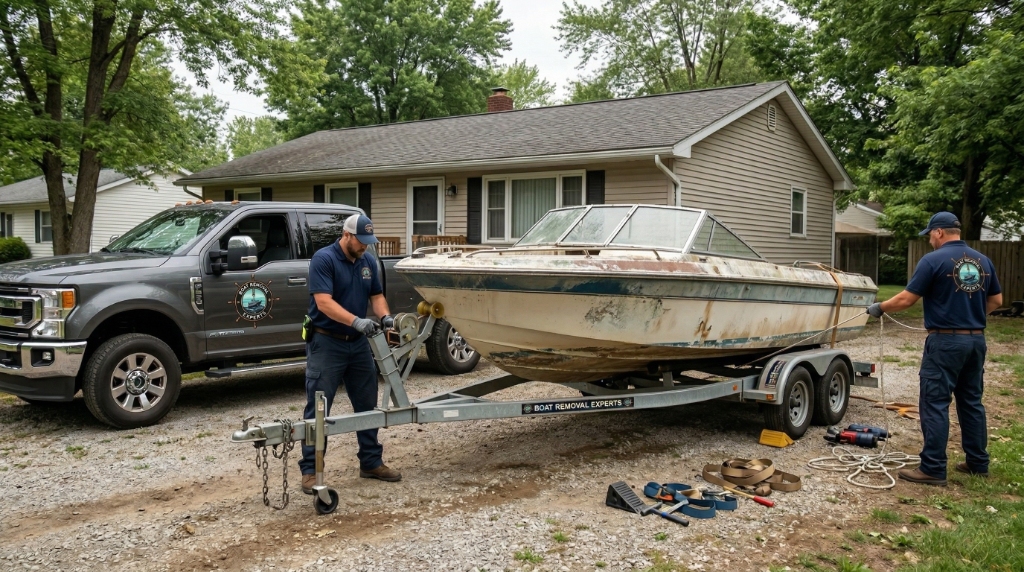
Every Type of Boat We Handle

Situations We Handle

Need Help? We’re Ready.

Contact boat removers directly or request free quotes. We dispatch crews fast.

Our Step-by-Step Process

Assessment

We evaluate the boat’s size, current location, condition, and any environmental or access challenges before we schedule boat removal.

Planning

A detailed plan is built around your vessel — equipment, logistics, timeline, and safety. Services include drainage of oil and fuel before transport.

Execution

Our experienced crew mobilizes to your current location and we tow, haul, or dismantle the vessel using professional marine equipment.

Completion

The vessel is recovered, recycled, or routed to certified boat junkyards for environmentally responsible disposal. The site is left clean.

Equipment & Capabilities

Moving a grounded vessel requires specialized field gear and flexible crew strategies. When a trailer has frozen bearings, flat tires, or a rotted frame that cannot support weight, the team utilizes heavy-duty winches, drop-deck trailers, articulated cranes, or custom skids to drag and hoist the structure cleanly off the ground. If a massive hull exceeds standard road dimensions or sits tightly trapped behind permanent walls, workers dismantle the structure on site using reciprocating saws, hydraulic shears, and heavy cutting tools to break the fiberglass or aluminum into manageable sections.

Before any cutting or hauling takes place, the crew carefully mitigates all environmental risks. Hazardous materials, including leftover gasoline, engine oil, bilge fluids, lead-acid batteries, and old marine electronics, are drained, disconnected, and separated from the main superstructure. Once the site is clear, the salvage materials travel to specialized processing facilities where metal sorting occurs and usable components are sorted for recycling, while non-recyclable fiberglass hull pieces go to an approved regional landfill. The crew assesses the vessel's construction, location, and structural strength on site to decide whether full transport or immediate breakdown is the safest path forward.

Our boat removal experience covers everything from start to finish  assessment, planning, execution, dismantling, and final cleanup. Marina operators and property owners across Bernalillo County trust us to get rid of your junk boat without damage to surrounding property.

FAQ

Boat Removal Questions - Frequently Asked

Common questions from property owners about our junk removal service, dismantling, and marine recovery.

We handle every type of vessel — sailboat, pontoon, fishing boats, jon boats, yachts, and commercial craft. Whether your boat or sailboat floats (or used to), we’ll remove it from any current location.

Yes. Sunken and partially submerged vessel recovery is a core part of our salvage work in Bernalillo County. We use lift bags, salvage pumps, and marine cranes to safely raise vessels from underwater.

We respond to inquiries quickly — usually within hours, with same-day service available. For emergency situations, we mobilize as fast as possible. Call us directly for time-sensitive jobs.

No. Every job is handled in-house by our own team and equipment. No middlemen, no handoffs, no surprises.

Cost depends on the boat’s size, current location, condition, and complexity of the job. We provide free assessments and free quotes for every case — contact us and we’ll give you an honest estimate.

Yes. Our boat removal and disposal services include hazardous materials handling, oil and fuel drainage, hull dismantling, and recycling at certified yards — all in compliance with environmental regulations and environmentally responsible standards.

Absolutely. We regularly work in tight marinas, shallow waterways, private docks, backyards, and remote areas. We bring the right gear to reach any current location.

Yes. We frequently work with insurance adjusters on salvage and recovery claims and provide the documentation needed for your claim.

Browse Our Services - Ready to Get Started?

We handle everything from start to finish. Call us now or request a free quote – we’ll dispatch crews and haul your vessel away fast.