
Professional Boat Removal Services in Salem, NH

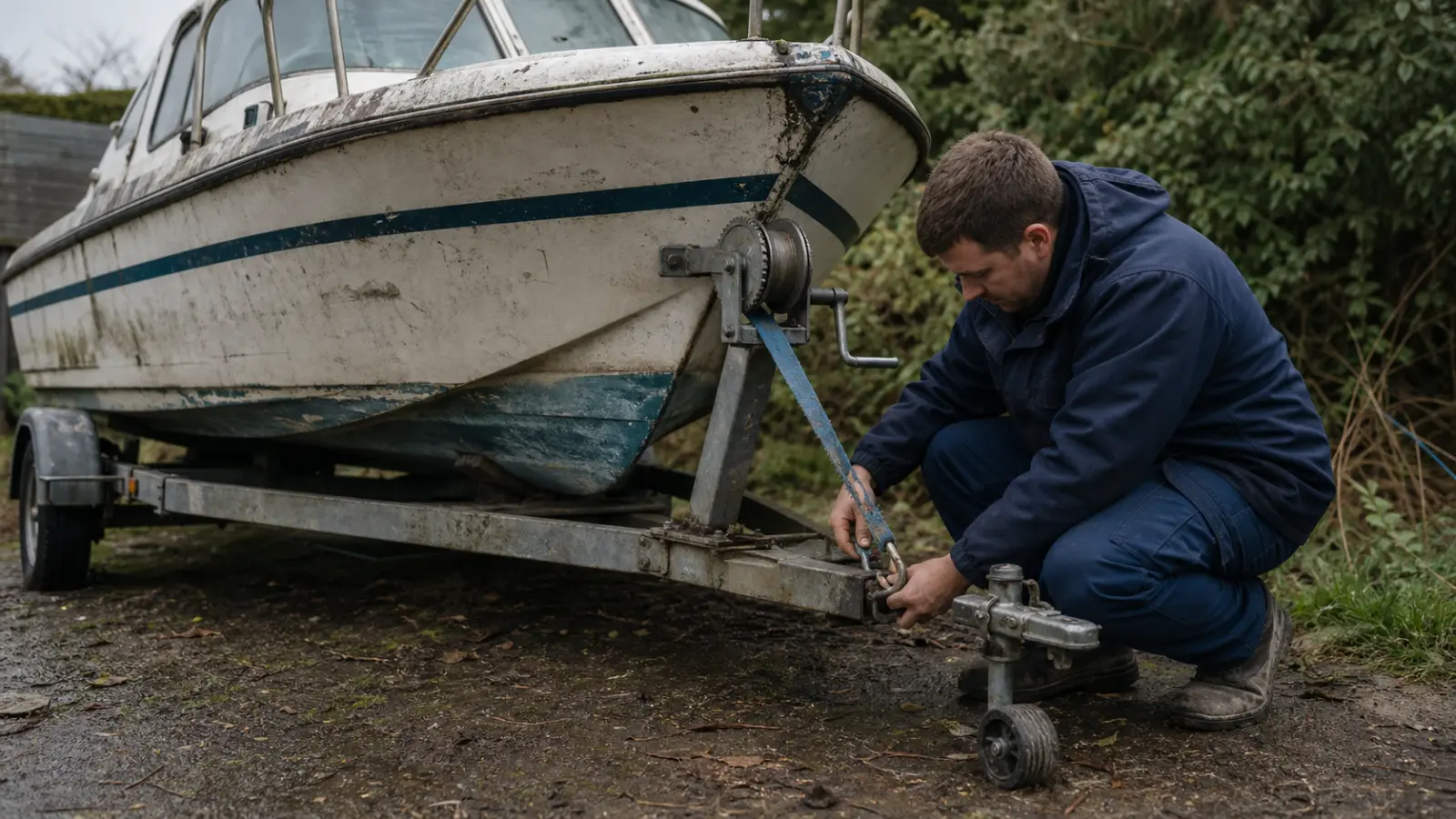
The fiberglass hull has rested on a wooden cradle beside the driveway for six consecutive seasons, and the trailer underneath it now sits with flattened tires half-buried in the dirt. A marina manager sends an urgent notice regarding an unpaid slip that must be cleared before the season opens, or a residential property sale stalls because a buyer demands the old cabin cruiser in the yard be gone before closing. Sometimes an outboard engine suffers a total mechanical failure where replacing the powerhead costs far more than the vessel itself is worth. In these situations, an old boat transforms from a recreational asset into an urgent physical obstacle taking up valuable space on your property.

Is there professional boat removal near me in Salem, NH? Yes, Boat Removal Experts coordinates full-service extraction, transport, and final processing for unwanted vessels across the community.

When our team clears a vessel, Boat Removal Experts always provides a formal release of liability to the owner. We do not always transfer the title into our name, but this documented release protects you legally. Some private haulers take an unwanted vessel away without generating any paper trail, which leaves the original owner fully liable if that hull is later abandoned on public land or along a waterway. Asking for clear liability paperwork before anyone hooks up to your trailer is critical.

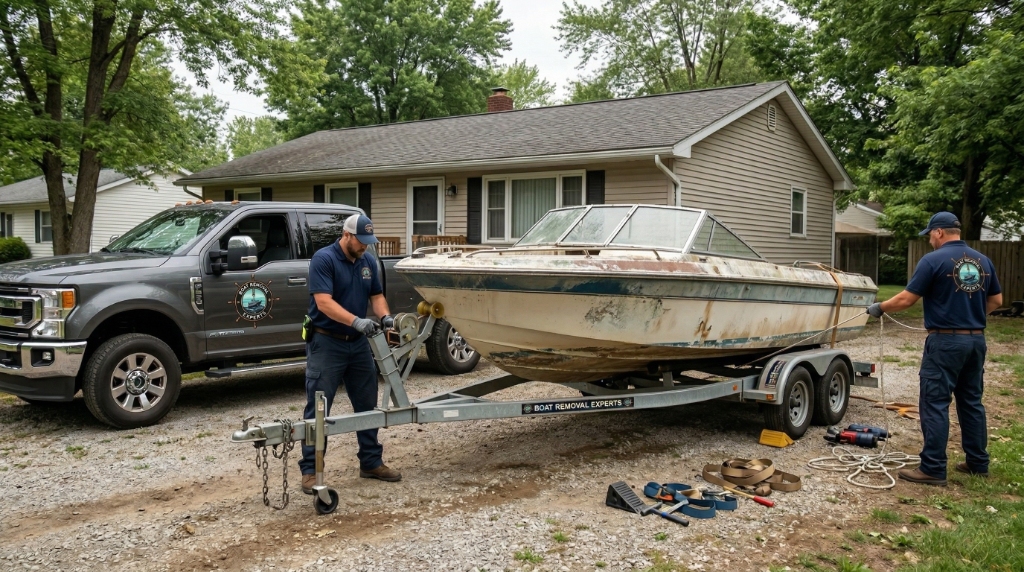
Moving a vessel is rarely as simple as hooking up a trailer and driving away. Tires rot into the soil, wheel bearings freeze solid, keels sit low on wooden blocks, and wider hulls struggle to clear narrow driveway gates. When a heavy hull sits on soft ground, standard tow vehicles cannot cross the lawn without risking severe damage.

Call (855) 765-7931 to start.

Send photos through the contact form.

What Is Boat Removal and When You Need It

A complete boat removal service handles far more than simply towing an old trailer down the road. When a vessel is no longer seaworthy, the work encompasses full site clearance, dangerous fluid extraction, heavy transport logistics, and responsible boat disposal. The exact pathway for clearing a hull depends heavily on document status and physical location. Having a clear title and matching HIN simplifies the transfer process, but vessels acquired through property purchases or left behind by previous tenants often lack standard documentation. In these cases, specific legal steps or site authorizations are required before a haul can begin.
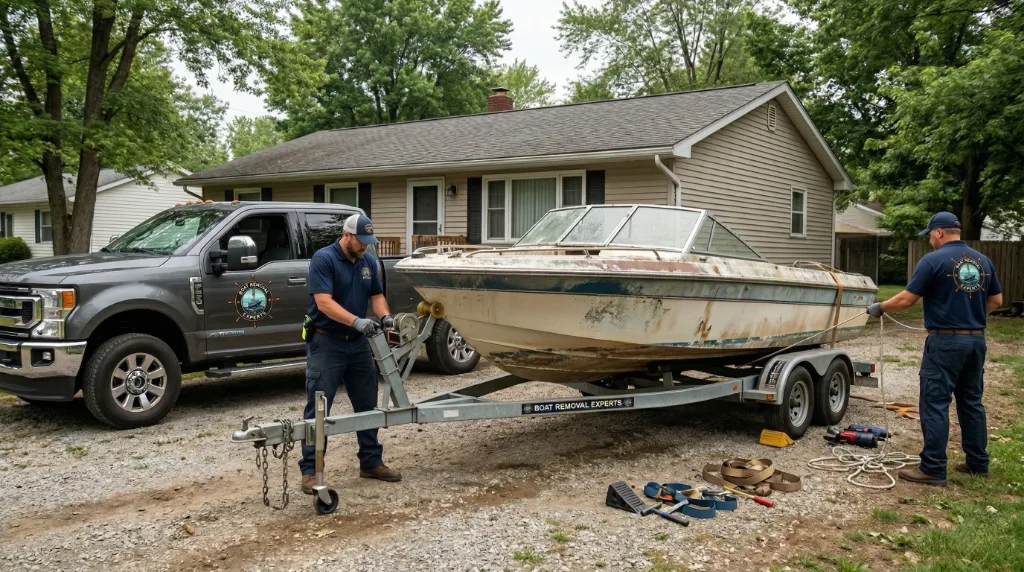
When an abandoned boat sits on commercial property or remains in a slip where fees have gone unpaid, the landowner or facility manager must address the physical footprint. A derelict hull occupying space creates financial liabilities and safety hazards. The physical condition of the vessel, whether the hull is structural or broken, and whether it sits on a trailer, blocks, or directly on the ground directly affects what gear is required to winch, lift, or break down the structure safely.

If you need to get rid of a boat that has lost its structural integrity or has been stripped of valuable components, standard hauling methods will not work. A customized approach evaluates the access pathways around the property, overhead clearance, and ground stability to determine whether the vessel can be loaded intact or must be processed directly on site in Salem, NH.
When Salem Residents Call Us

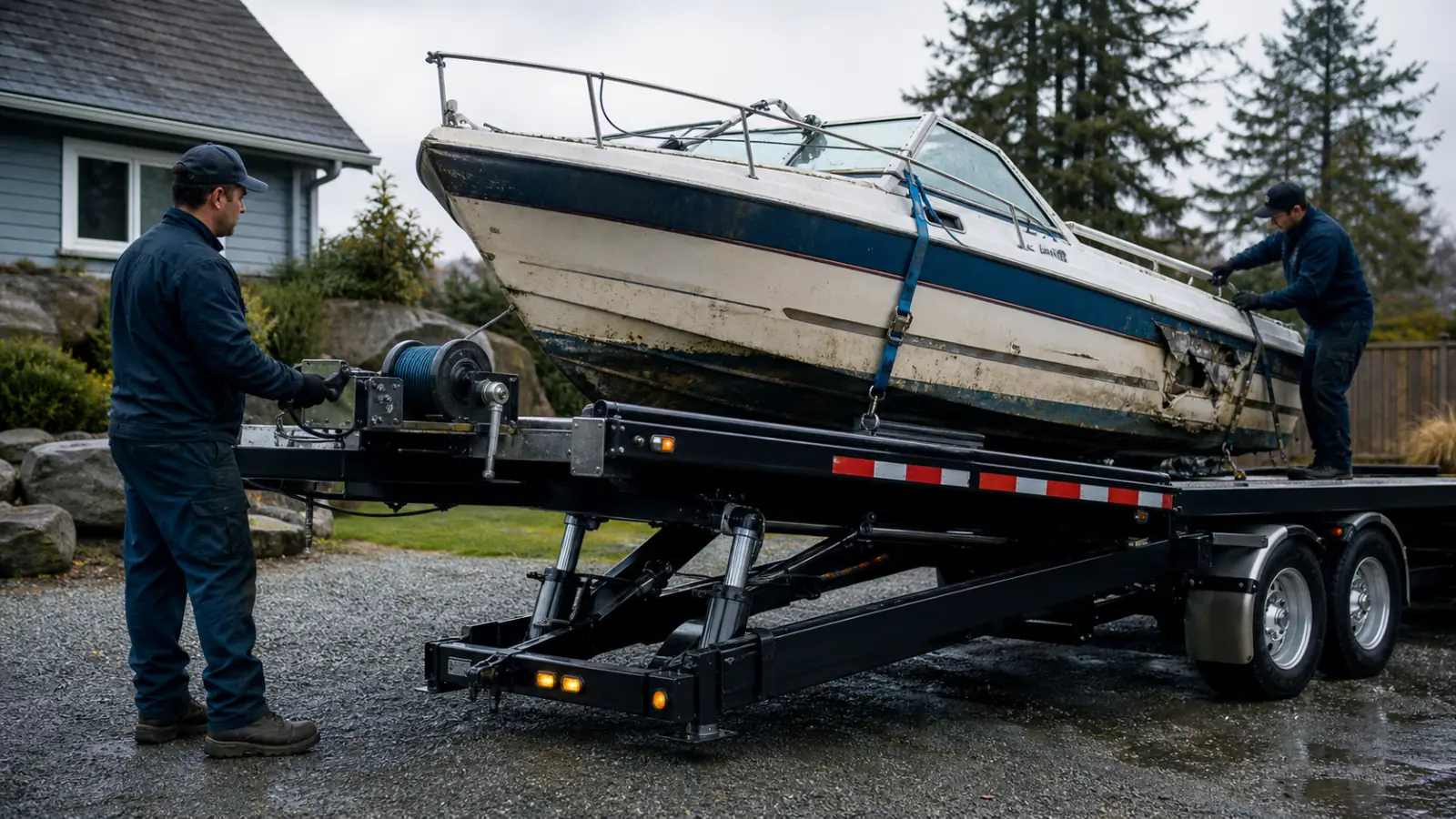
Harsh seasonal climate takes a severe toll on any fiberglass or wooden hull left outdoors without continuous maintenance. Snow accumulation, freeze-thaw cycles, and summer rains cause water to pool inside open cockpits, saturation penetrating deep into internal floor frames, back panel wood, and floor core materials. Over time, gelcoat cracks, upholstery rots, and standing water inside a hull adds thousands of pounds of unexpected weight. A rain-soaked pontoon or heavy fiberglass fishing boat becomes far more difficult to move after years of exposure, requiring specialized winching or support structures to haul safely without collapsing.
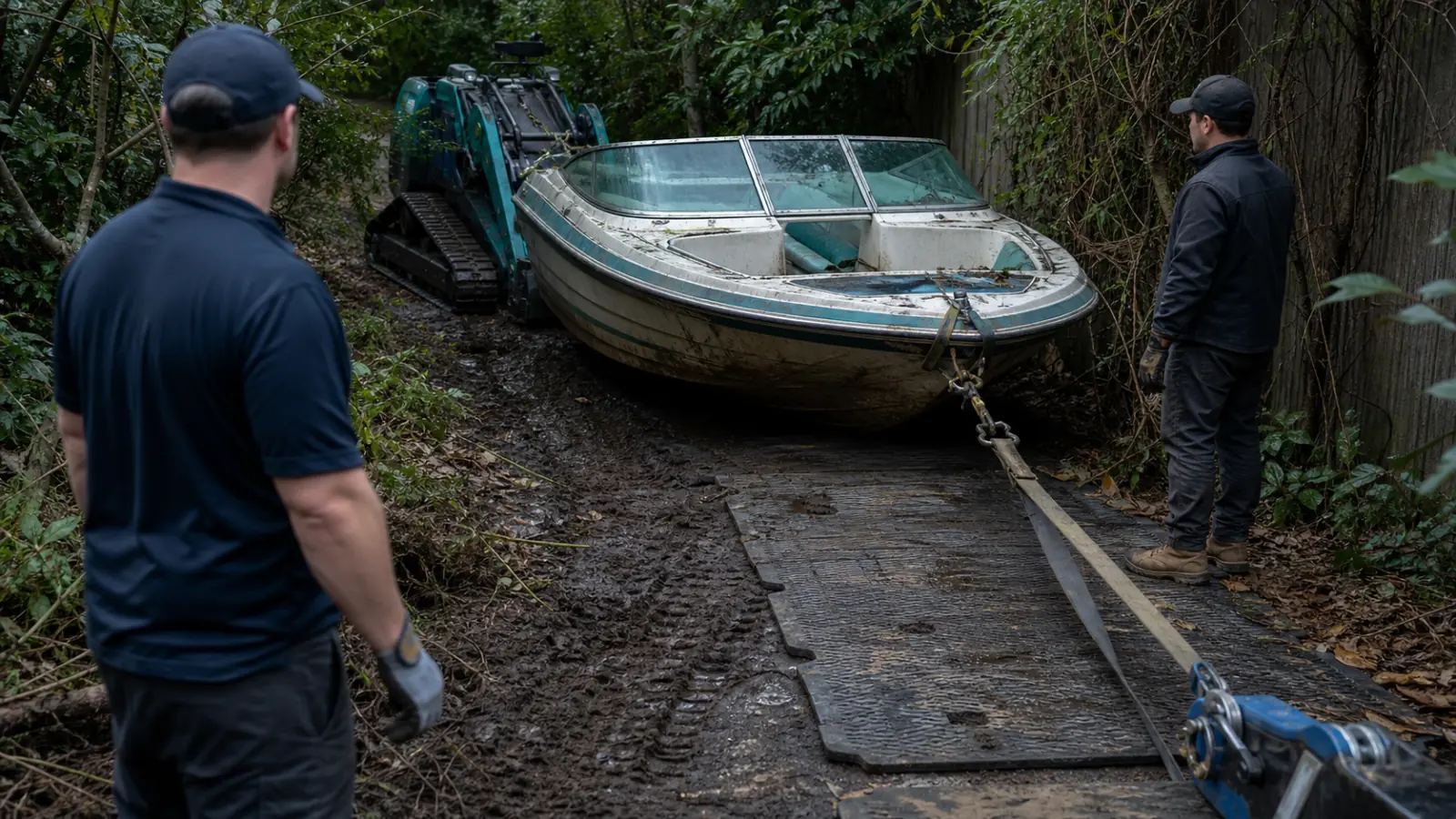
Site access heavily influences how our crew handles every extraction job in Salem, NH. A lightweight aluminum fishing boat resting on an inflated trailer in an open driveway requires very basic equipment. Conversely, a large sailboat resting on heavy cradle blocks behind a barn, or a twin-engine cruiser sitting on soft lawn, creates distinct recovery challenges. Narrow residential access roads, low-hanging tree branches, power lines, and tight property line fences directly affect whether a transport truck can reach the vessel or if alternative extraction rigging must be deployed. Whether the vessel is stored in the water at a dock or buried behind a garage on land dictates the overall recovery strategy.
Every Type of Boat We Handle

Situations We Handle

Need Help? We’re Ready.

Contact boat removers directly or request free quotes. We dispatch crews fast.

Our Step-by-Step Process

Assessment

We evaluate the boat’s size, current location, condition, and any environmental or access challenges before we schedule boat removal.

Planning

A detailed plan is built around your vessel — equipment, logistics, timeline, and safety. Services include drainage of oil and fuel before transport.

Execution

Our experienced crew mobilizes to your current location and we tow, haul, or dismantle the vessel using professional marine equipment.

Completion

The vessel is recovered, recycled, or routed to certified boat junkyards for environmentally responsible disposal. The site is left clean.

Equipment & Capabilities

The crew evaluates every vessel on site to determine the safest method for extraction and transport. If a trailer has rusted through or the tires cannot hold air, heavy winches, specialized roller skids, or crane lifts are used to raise the hull onto a flatbed trailer without relying on the vessel's original running gear. When a hull is too wide for road transport, structurally compromized, or wedged into a tight space behind structures, the team will dismantle the vessel on site using controlled cutting tools to break it into manageable sections.

Before any hull is cut, moved, or transported, all hazardous materials are systematically identified and safely removed. Fuel tanks are drained, motor oil and hydraulic fluids are pumped out, marine batteries are disconnected, and old electronics are removed to prevent environmental contamination. These fluids and materials are diverted to specialized facilities designed to process hazardous waste safely.

Once the vessel is safely loaded or broken down, the materials are sorted based on composition. Usable metal fittings, aluminum hulls, and lead keel weights are separated for recycling. Non-recyclable composite materials, rotten wood, and degraded fiberglass are prepped for final disposal services at approved processing facilities. The physical state of the hull, ease of access, and local regulations determine whether a vessel goes to a recycling yard, scrap facility, or regional landfill.

Our boat removal experience covers everything from start to finish  assessment, planning, execution, dismantling, and final cleanup. Marina operators and property owners across Rockingham County trust us to get rid of your junk boat without damage to surrounding property.

FAQ

Boat Removal Questions - Frequently Asked

Common questions from property owners about our junk removal service, dismantling, and marine recovery.

We handle every type of vessel — sailboat, pontoon, fishing boats, jon boats, yachts, and commercial craft. Whether your boat or sailboat floats (or used to), we’ll remove it from any current location.

Yes. Sunken and partially submerged vessel recovery is a core part of our salvage work in Rockingham County. We use lift bags, salvage pumps, and marine cranes to safely raise vessels from underwater.

We respond to inquiries quickly — usually within hours, with same-day service available. For emergency situations, we mobilize as fast as possible. Call us directly for time-sensitive jobs.

No. Every job is handled in-house by our own team and equipment. No middlemen, no handoffs, no surprises.

Cost depends on the boat’s size, current location, condition, and complexity of the job. We provide free assessments and free quotes for every case — contact us and we’ll give you an honest estimate.

Yes. Our boat removal and disposal services include hazardous materials handling, oil and fuel drainage, hull dismantling, and recycling at certified yards — all in compliance with environmental regulations and environmentally responsible standards.

Absolutely. We regularly work in tight marinas, shallow waterways, private docks, backyards, and remote areas. We bring the right gear to reach any current location.

Yes. We frequently work with insurance adjusters on salvage and recovery claims and provide the documentation needed for your claim.

Browse Our Services - Ready to Get Started?

We handle everything from start to finish. Call us now or request a free quote – we’ll dispatch crews and haul your vessel away fast.