
Professional Boat Removal Services in Severna Park, MD

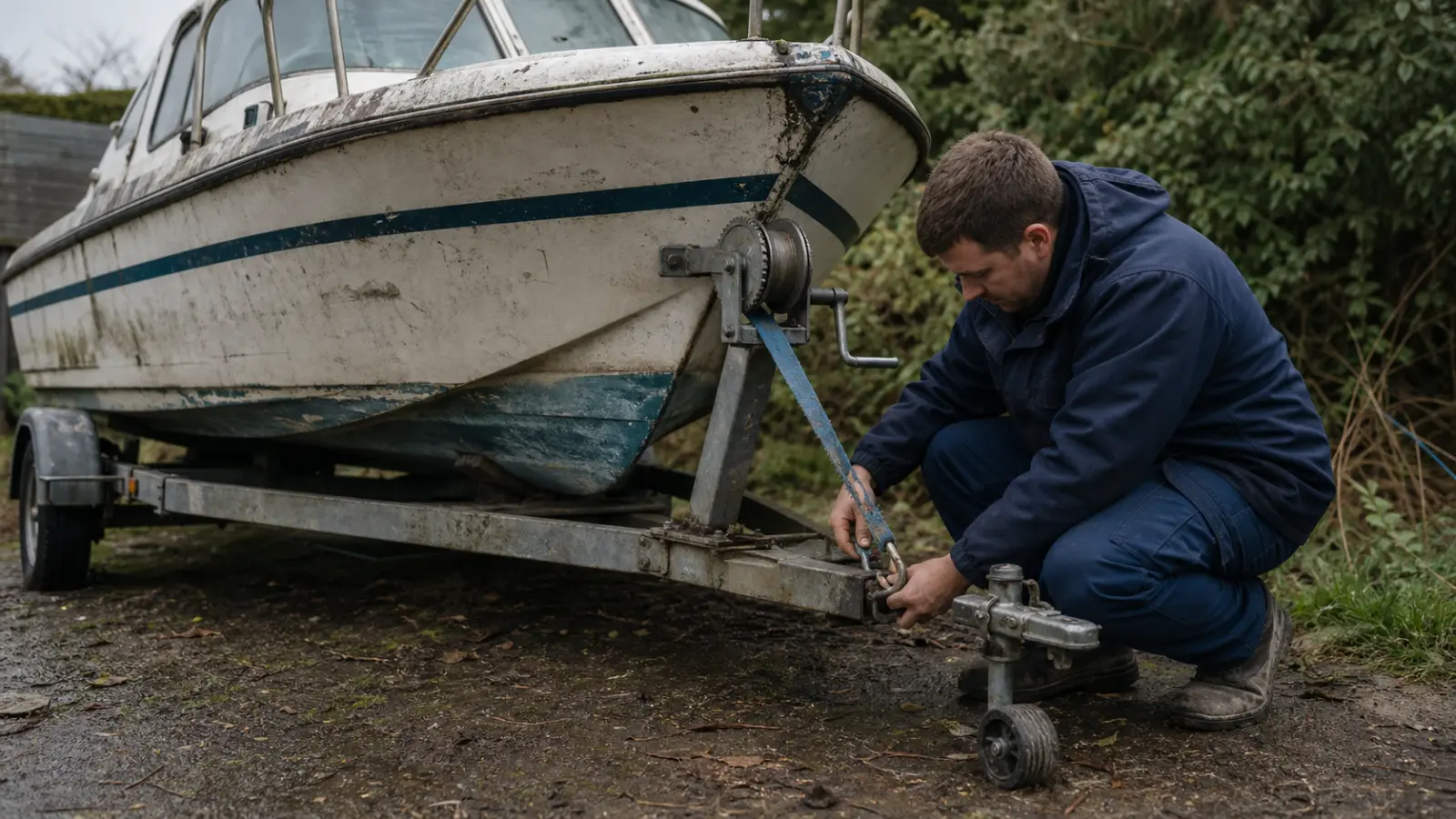
A fiberglass hull has rested on a rusty trailer behind the garage for six seasons, its tires slowly flattening into the soft dirt while weeds climb the frame. A residential property might sell with an old cabin cruiser sitting forgotten on the lot, or an outboard engine seizes completely when a mechanical rebuild costs vastly more than the vessel is worth. Elsewhere, a marina manager sends a final notice regarding an unpaid slip, demanding immediate action for an old boat that hasn't seen open water in years. These lingering vessels consume valuable yard space, draw complaints from neighbors, and create constant stress for property owners who simply want the space cleared back out.

Is there boat removal near me in Severna Park, MD? Yes, Boat Removal Experts clears away unwanted vessels directly from private yards, driveways, storage yards, and slips across Severna Park, MD, managing the heavy lifting and transportation from start to finish.

When clearing an unwanted vessel, legal protection matters just as much as physical hauling. While our service does not always transfer the vessel's title to a new owner, Boat Removal Experts always issues an official release of liability upon taking possession. Some uninsured haulers drag a vessel away without completing any formal paperwork, leaving the original owner legally responsible if that hull is later abandoned on public land or damaged down the road. Verifying that a complete release of liability is provided before work begins remains an essential step for every owner.

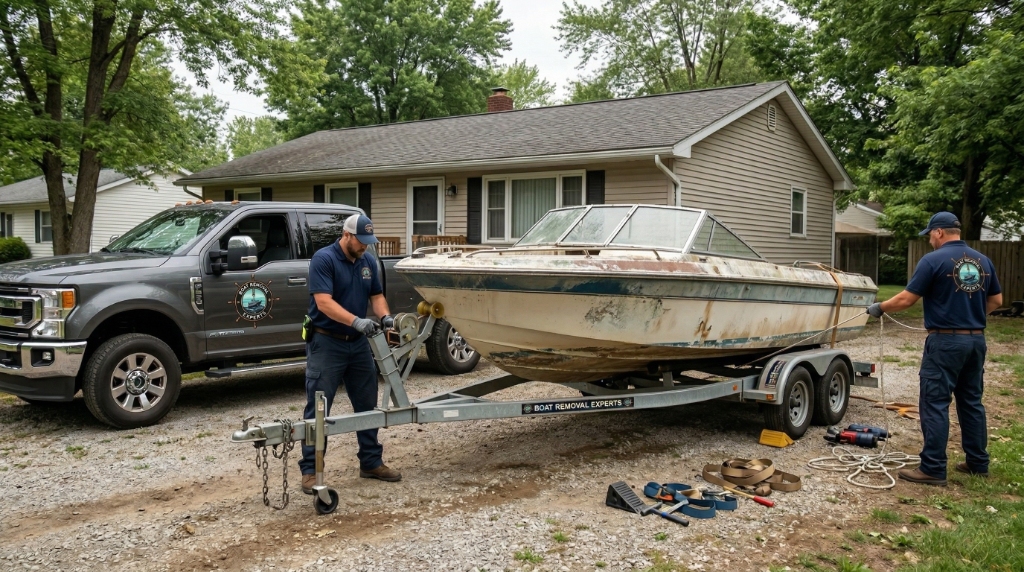
Moving a vessel is far more complicated than simply hitching up a light utility trailer. Flat tires, rusted axles, and frozen wheel bearings can prevent a trailer from rolling at all. A wide beam might barely fit between fence posts, while a heavy hull sitting on a soft lawn can prevent standard tow vehicles from gaining traction. Maneuvering around tight building corners, low trees, and elevated cradles requires specialized gear and strategic planning before any transit starts.

Call (855) 765-7931 to start.

Send photos through the contact form.

What Is Boat Removal and When You Need It

Professional boat disposal involves far more than merely dragging a vessel off a driveway and towing it down the road. Complete boat removal requires evaluating the structural integrity of the hull, securing loose components, managing weight distribution, and coordinating safe transport to an appropriate processing facility. Whether dealing with a degraded hull in Herald Harbor or an abandoned boat on a residential property in Arnold, proper handling prevents environmental contamination and ensures the site is left entirely clean.
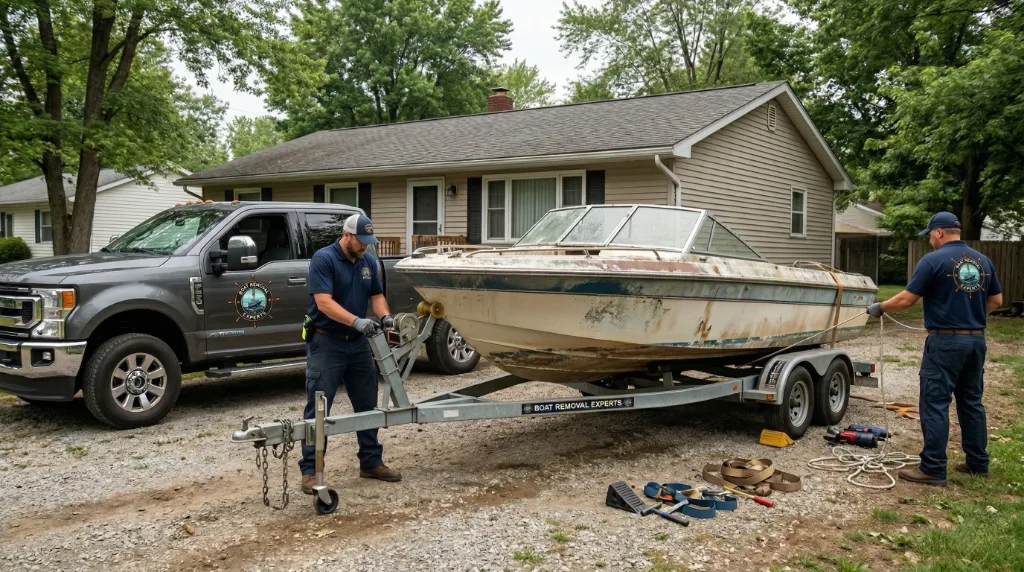
The overall approach to getting rid of a boat changes significantly depending on documentation. When an owner possesses a clear title, processing the release proceeds seamlessly. However, when paperwork is lost, missing, or the vessel came along with a newly purchased parcel of land, specific documentation steps are required to establish legal authority to haul it away. A derelict vessel left in a neglected slip or dropped on private property without permission requires careful coordination to verify ownership status and obtain proper authorization before any crew begins moving the structure.

Several physical factors affect how abandoned boat removal is conducted on a given site. Vessels that have taken on water grow exceptionally heavy, requiring specialized pumping equipment before transport. Hulls lacking a roadworthy trailer must be winched onto flatbed trucks or lifted via crane. The condition of the underlying ground, clearance through access gates, overhead power lines, and structural soundess of the fiberglass or aluminum determine whether a boat can be removed in one piece or must be processed on site.
When Severna Park Residents Call Us

Living near the water in communities like Arden on the Severn and Lake Shore means many properties end up hosting vessels that eventually fall out of use. The local climate takes a severe toll on vessels left outdoors through changing seasons. Constant exposure to rain, snow, and summer humidity causes gelcoat to crack and chalk, while wooden transoms, decks, and floor frames rot from trapped moisture. Upholstery splits, inviting mold and pest infestations, while standing rainwater inside an open hull adds thousands of pounds of unstable weight that can compromise the structural integrity of the vessel during transit.
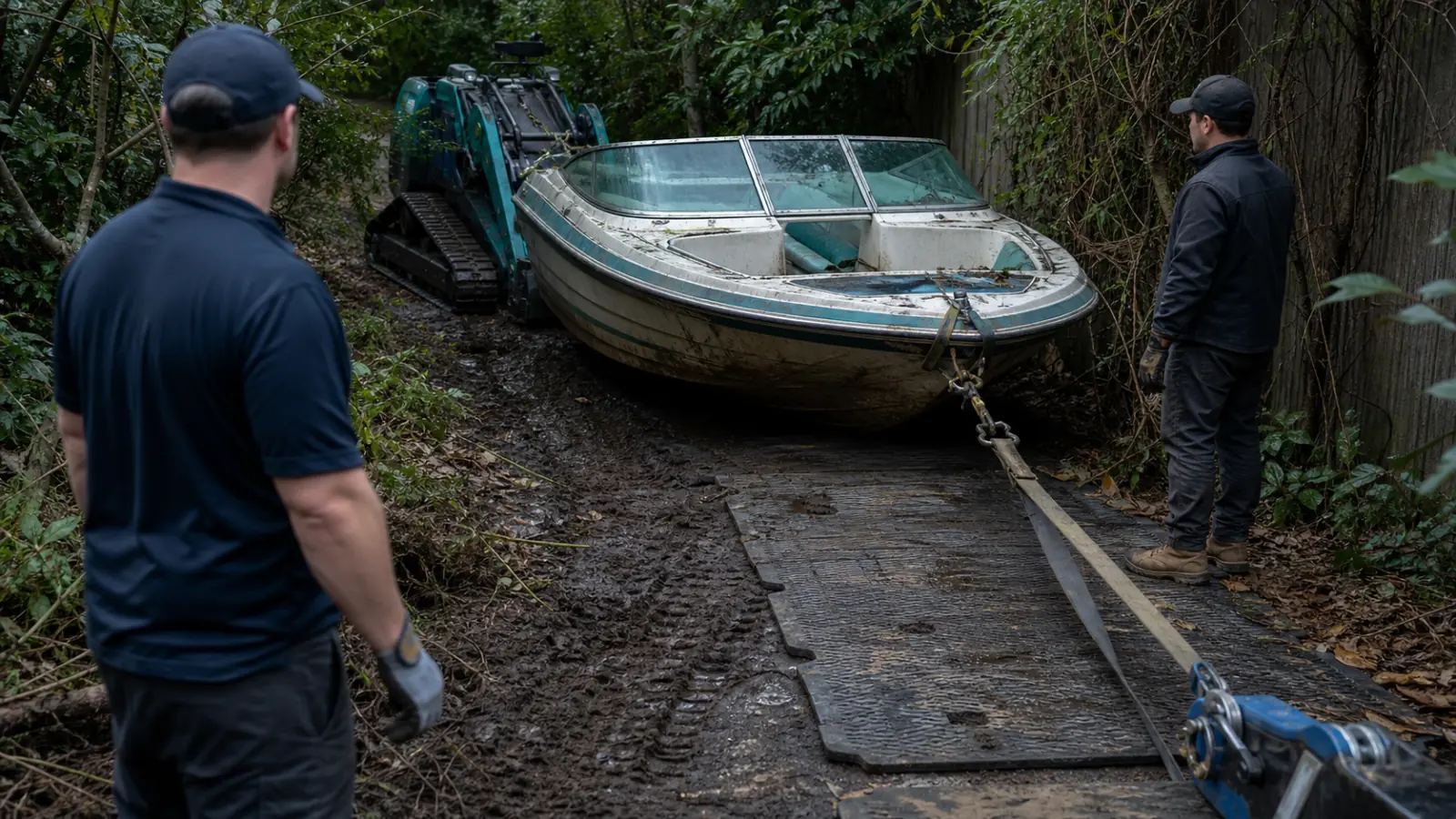
When property owners call for assistance, physical access to the site dictates how the work must be handled. A small fishing boat or aluminum runabout sitting on a functional trailer in a clear paved driveway presents a straightforward loading scenario. Conversely, a pontoon stranded on rotted blocks behind a shed or a heavy sailboat tucked deep into a backyard behind tall gates requires careful maneuvering. Crews must evaluate ground firmness, overhead tree branches, and narrow property lines to select the right equipment without damaging surrounding lawns or structures.

Vessels resting in water at private docks or commercial slips present distinct challenges compared to land-based jobs. A hull that has been sitting unattended in Gambrills or nearby waterfront spots may have slow leaks or marine growth that complicates winching. Determining whether the hull can float safely during extractions or requires auxiliary flotation gear is a critical part of planning the operation before towing or hoisting begins.
Every Type of Boat We Handle

Situations We Handle

Need Help? We’re Ready.

Contact boat removers directly or request free quotes. We dispatch crews fast.

Our Step-by-Step Process

Assessment

We evaluate the boat’s size, current location, condition, and any environmental or access challenges before we schedule boat removal.

Planning

A detailed plan is built around your vessel — equipment, logistics, timeline, and safety. Services include drainage of oil and fuel before transport.

Execution

Our experienced crew mobilizes to your current location and we tow, haul, or dismantle the vessel using professional marine equipment.

Completion

The vessel is recovered, recycled, or routed to certified boat junkyards for environmentally responsible disposal. The site is left clean.

Equipment & Capabilities

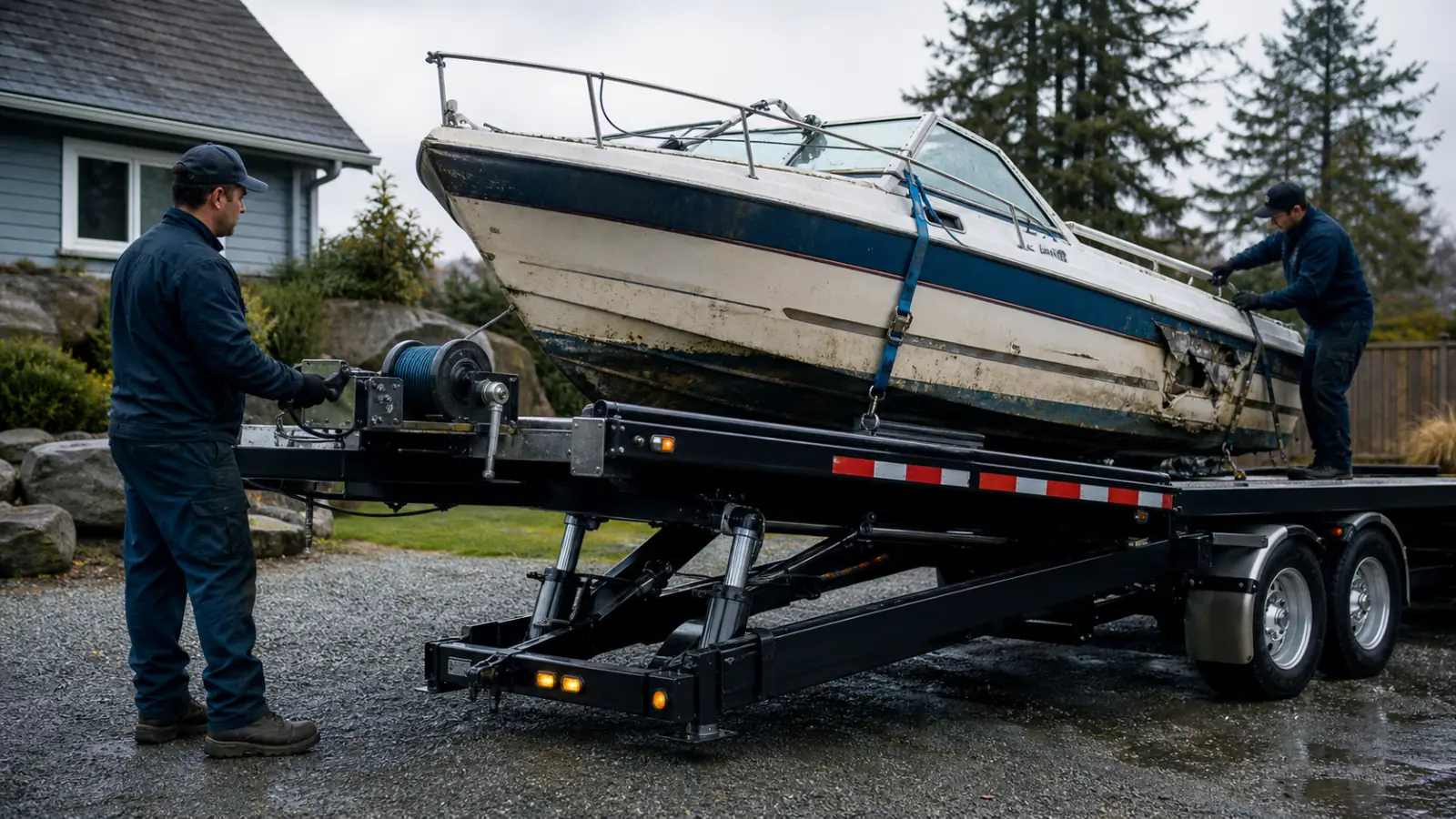
Extracting a vessel whose trailer is completely immobile requires specialized equipment and technical problem-solving. When tires are dry-rotted, rims are rusted solid, or the original trailer has collapsed entirely under the hull, crews use heavy-duty hydraulic jacks, spreaders, and high-capacity winches to lift and transition the vessel onto a heavy equipment trailer or flatbed truck safely. Soft ground or tight clearances around structures may require portable rigging systems to guide the vessel out to an accessible loading zone.

In situations where tight property bounds, structural collapse, or extreme vessel size prevent hauling a hull in one piece, crews must dismantle the structure directly on site. Using specialized cutting tools, the deck, cabin, and hull are systematically broken down into manageable sections. Before any cutting begins or before a hull leaves the property, all hazardous materials are systematically removed and contained. Crews drain remaining fuel, motor oil, hydraulic fluids, and anti-freeze, while disconnecting lead-acid batteries and salvaging usable electronics to prevent soil contamination.

Once loaded or sectioned, the materials are sorted for proper processing. Metal components, including aluminum hulls, stainless steel hardware, copper wiring, and brass fittings, are separated for recycling. Non-recyclable composite materials, rotted wood, and degraded fiberglass are transported to authorized facilities following environmental compliance protocols. The specific method of removal and disposal services chosen depends entirely on the vessel's physical condition, site access, and material composition assessed by the crew upon arrival.

Our boat removal experience covers everything from start to finish  assessment, planning, execution, dismantling, and final cleanup. Marina operators and property owners across Anne Arundel County trust us to get rid of your junk boat without damage to surrounding property.

FAQ

Boat Removal Questions - Frequently Asked

Common questions from property owners about our junk removal service, dismantling, and marine recovery.

We handle every type of vessel — sailboat, pontoon, fishing boats, jon boats, yachts, and commercial craft. Whether your boat or sailboat floats (or used to), we’ll remove it from any current location.

Yes. Sunken and partially submerged vessel recovery is a core part of our salvage work in Anne Arundel County. We use lift bags, salvage pumps, and marine cranes to safely raise vessels from underwater.

We respond to inquiries quickly — usually within hours, with same-day service available. For emergency situations, we mobilize as fast as possible. Call us directly for time-sensitive jobs.

No. Every job is handled in-house by our own team and equipment. No middlemen, no handoffs, no surprises.

Cost depends on the boat’s size, current location, condition, and complexity of the job. We provide free assessments and free quotes for every case — contact us and we’ll give you an honest estimate.

Yes. Our boat removal and disposal services include hazardous materials handling, oil and fuel drainage, hull dismantling, and recycling at certified yards — all in compliance with environmental regulations and environmentally responsible standards.

Absolutely. We regularly work in tight marinas, shallow waterways, private docks, backyards, and remote areas. We bring the right gear to reach any current location.

Yes. We frequently work with insurance adjusters on salvage and recovery claims and provide the documentation needed for your claim.

Browse Our Services - Ready to Get Started?

We handle everything from start to finish. Call us now or request a free quote – we’ll dispatch crews and haul your vessel away fast.