
Professional Boat Removal Services in Shields, IL

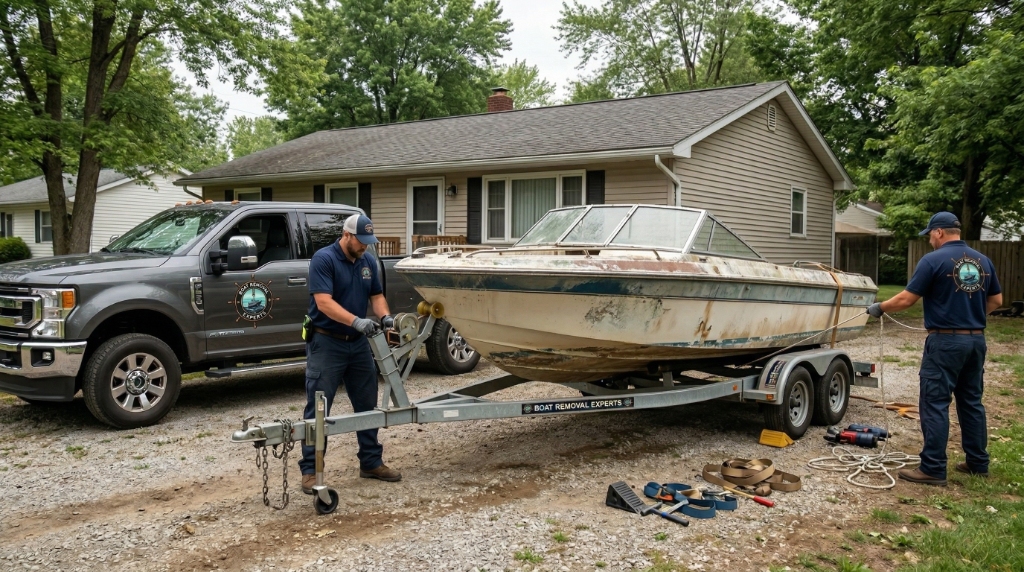
An old boat resting on a trailer behind a garage often turns into a permanent fixture once the tires sink into the dirt and flatten over several seasons. In other cases, a property owner purchases a lot only to find a rotted fiberglass hull left behind by the previous resident, or a marina issues a stern notice regarding unpaid slip fees for an abandoned vessel. When an outboard engine seizes up and the quote for a complete mechanical rebuild exceeds the total resale value of the craft, keeping the vessel quickly becomes a financial burden. These situations make professional boat removal a necessity for owners looking to clear space and eliminate ongoing storage expenses.

Is there reliable boat removal near me in Shields, IL? Boat Removal Experts provides complete hull extraction, trailer transport, and proper vessel handling directly from residential yards, commercial properties, and waterfront sites throughout Shields, IL.

Handling legal paperwork properly is a critical step when getting rid of any vessel. Our company position is clear: we do not always transfer the vessel title into our name, but we always issue a formal release of liability to the owner. Some haulers will load a junk boat and drive away without providing any documentation, which leaves the registered owner legally responsible if the hull is later abandoned on public property. Working with a service that provides written proof of transfer protects you from unexpected fines.

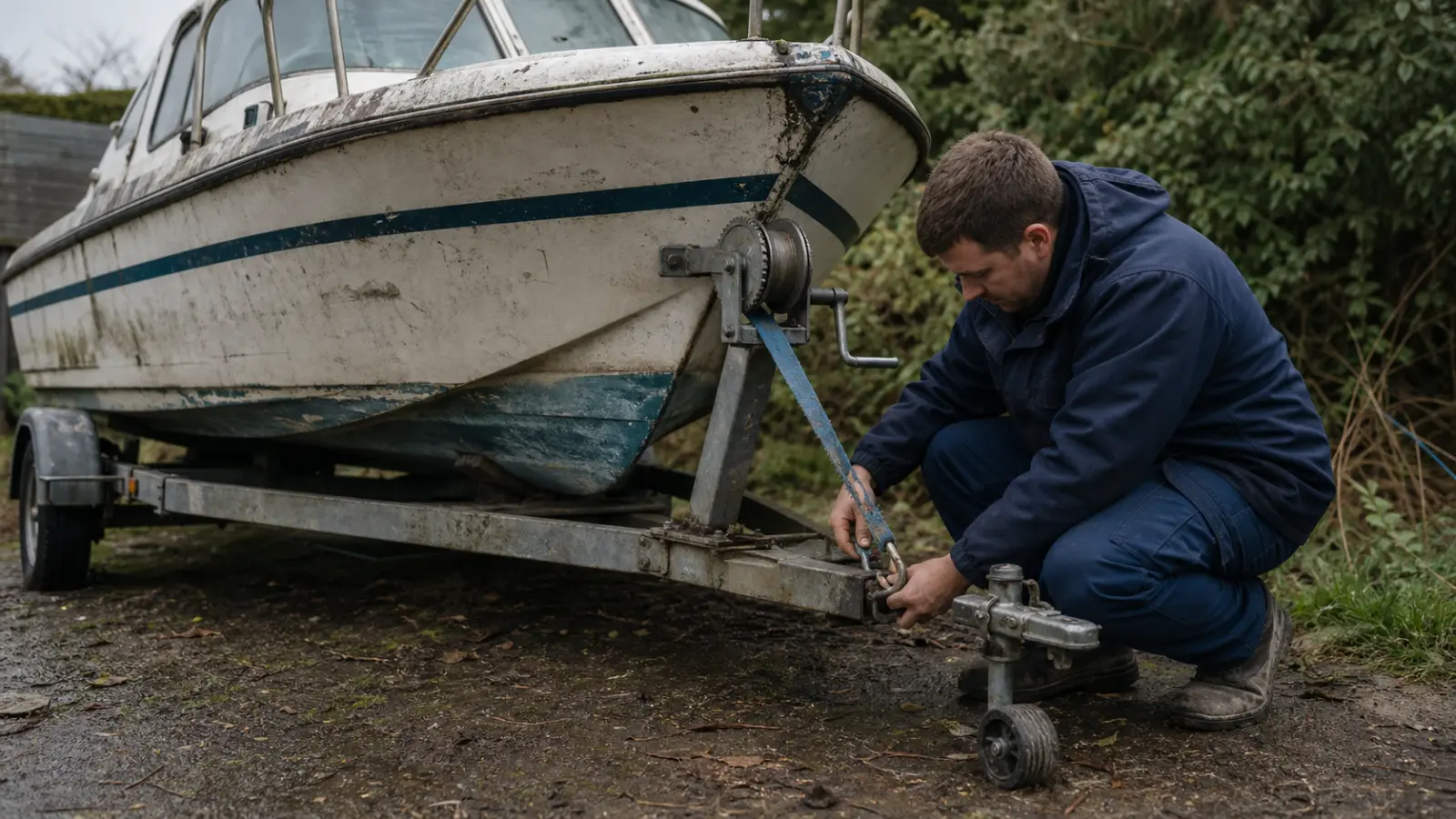
Extracting a vessel is rarely as simple as hooking up a hitch. Flat trailer tires, frozen wheel bearings, wide beams that exceed gate clearances, and soft lawns that trap heavy haul vehicles all complicate the recovery process.

Call 847-961-2354 to start.

What Is Boat Removal and When You Need It

Professional boat removal encompasses far more than simply pulling a hull down the highway. When an abandoned boat sits on private property or occupies a commercial slip without payment, clearing the site requires physical labor, heavy rigging equipment, and careful logistical planning. A derelict vessel left exposed to the elements slowly degrades, filling with rainwater and creating safety hazards. Comprehensive removal handling takes care of the extraction, transport, and final boat disposal process so property owners do not have to manage the physical burden themselves.
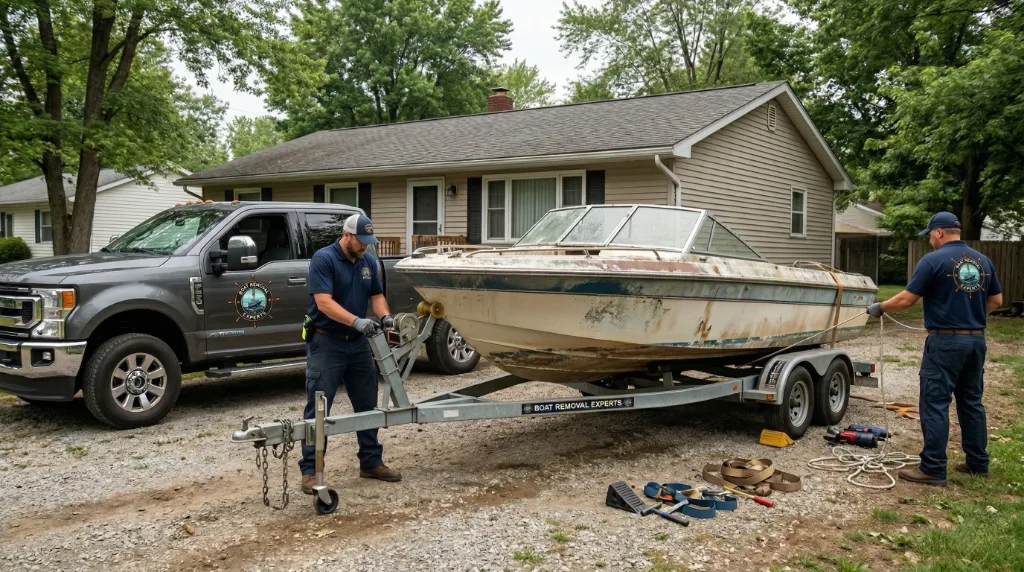
The paperwork status of the vessel directly dictates how the recovery process moves forward. Having a clear title in hand streamlines the administrative portion of the job, allowing for straightforward handling. When paperwork is lost, missing, or attached to a property acquired through a real estate purchase, alternative documentation protocols must be established before the vessel is moved. Local regulations, property rights, and vessel registration records all influence what documentation is required to clear a derelict craft legally.

Physical condition and location also dictate the methods used during extraction. A hull stranded in a yard requires different rigging than a vessel sitting in a wet slip or resting on elevated storage blocks. The overall weight, structural integrity of the fiberglass or aluminum, and access path for heavy equipment ultimately determine how the vessel is secured and removed.
When Shields Residents Call Us

Vehicles and marine craft left outdoors in Shields, IL face harsh seasonal weather that rapidly accelerates structural decay. Continuous exposure to rain, snow, and freezing temperatures breaks down gelcoat finishes, rots wooden transoms, and ruins interior upholstery. When a neglected fishing boat, pontoon, or sailboat collects water over the winter, the trapped liquid freezes and expands, cracking internal floor frames and weakening the entire hull. This environmental damage makes older vessels unstable and much more difficult to haul away without specialized support equipment.
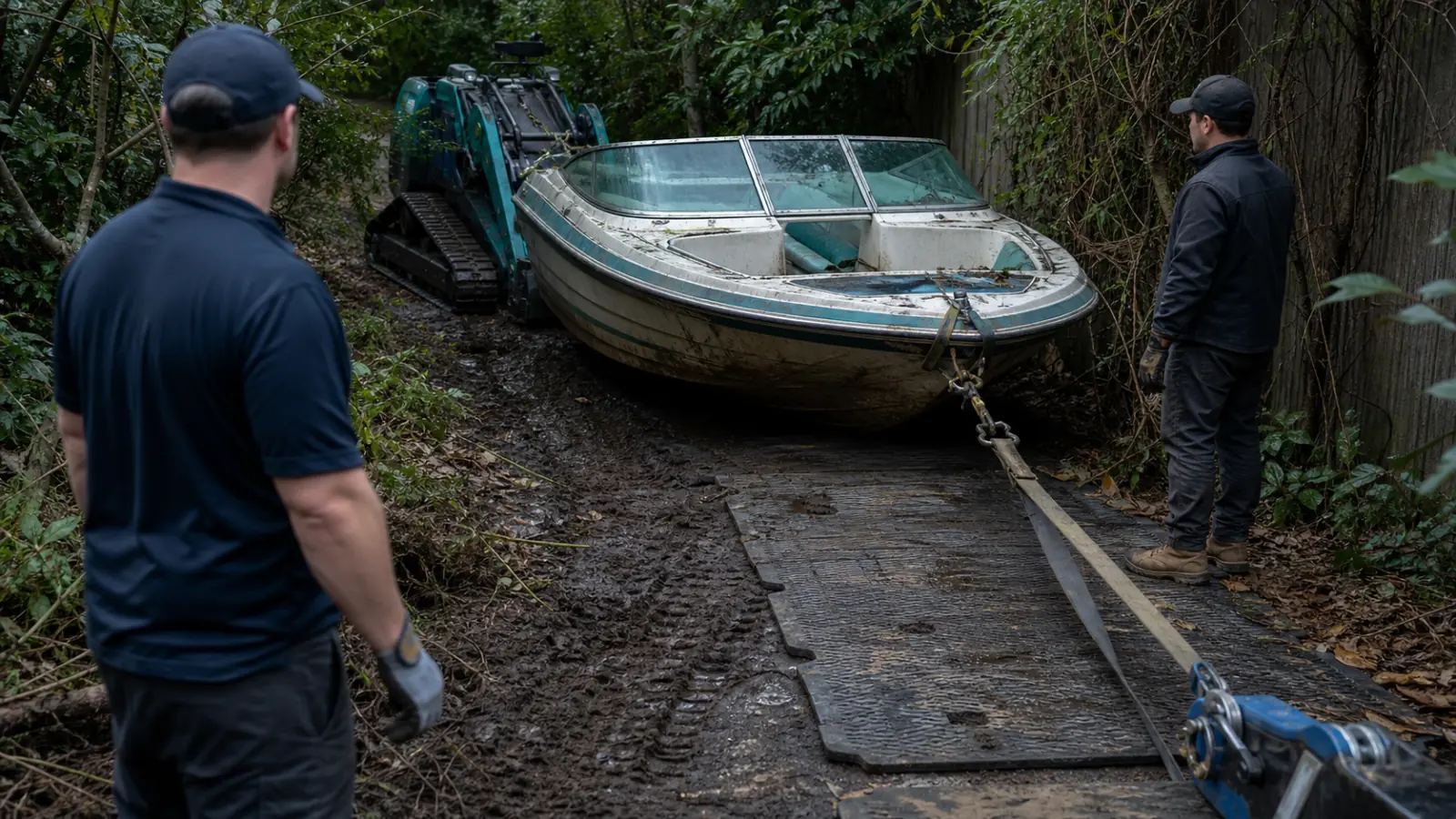
Local terrain and site access heavily influence the strategy required for every extraction in Shields, IL. A crew must evaluate the approach road, check for soft soil that could sink heavy trucks, and look out for low-hanging tree branches or overhead utility lines. A pontoon resting on a sturdy trailer sitting on paved asphalt can be hitched and towed relatively quickly. Conversely, a deep-draft sailboat sitting on wooden cradles in a tight backyard or a degraded fishing boat sunk in mud demands heavy winches, crane straps, or custom blocking to maneuver the vessel safely toward the transport rig.
Every Type of Boat We Handle

Situations We Handle

Need Help? We’re Ready.

Contact boat removers directly or request free quotes. We dispatch crews fast.

Our Step-by-Step Process

Assessment

We evaluate the boat’s size, current location, condition, and any environmental or access challenges before we schedule boat removal.

Planning

A detailed plan is built around your vessel — equipment, logistics, timeline, and safety. Services include drainage of oil and fuel before transport.

Execution

Our experienced crew mobilizes to your current location and we tow, haul, or dismantle the vessel using professional marine equipment.

Completion

The vessel is recovered, recycled, or routed to certified boat junkyards for environmentally responsible disposal. The site is left clean.

Equipment & Capabilities

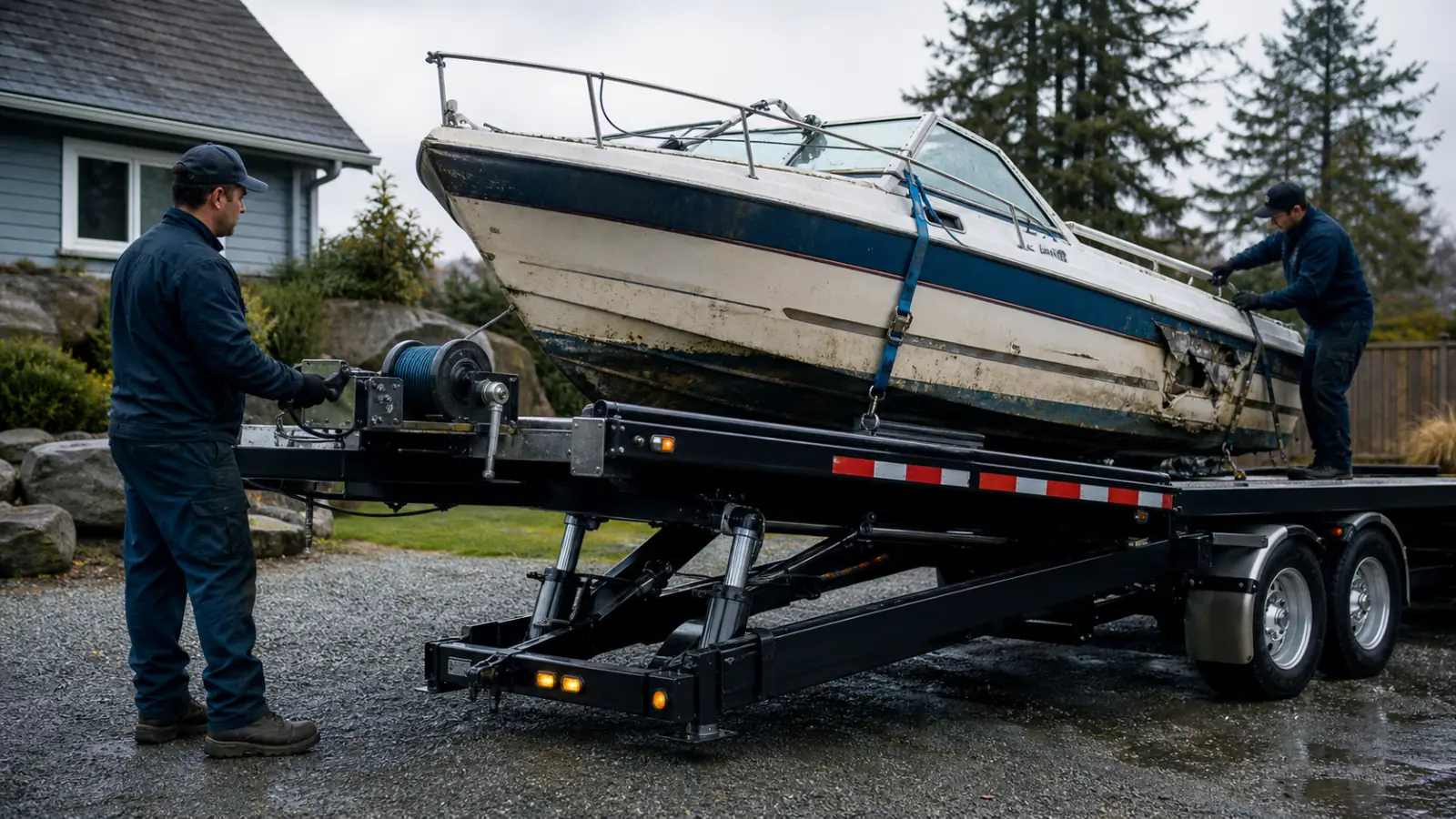
When a vessel cannot roll on its own wheels, specialized recovery gear is brought in to complete the job. Heavy-duty winches, hydraulic drop-deck trailers, and articulated cranes allow the crew to hoist or slide a stubborn hull out of tight spaces. If a structure is too wide to clear surrounding fences or has completely lost its structural integrity, the team may dismantle the craft directly on site. Cutting a hull into manageable sections requires heavy-duty reciprocating saws and cutting tools, allowing the debris to be safely loaded into containers even when access corridors are narrow.

Before any hull is transported or cut, all hazardous materials must be stripped from the vessel. Crews carefully drain remaining fuel tanks, extract engine oil, disconnect marine batteries, and salvage onboard electronics to prevent environmental contamination. Once fluids and toxic components are secured, the remaining structural materials are sorted. Metal fittings, aluminum hulls, and lead keel weights are separated for recycling, while rotted fiberglass, saturated foam, and ruined upholstery are directed toward targeted disposal services or a regulated landfill. The crew assesses the vessel upon arrival to choose the safest, most efficient sequence for dismantling and disposal.

Our boat removal experience covers everything from start to finish  assessment, planning, execution, dismantling, and final cleanup. Marina operators and property owners across Lake County trust us to get rid of your junk boat without damage to surrounding property.

FAQ

Boat Removal Questions - Frequently Asked

Common questions from property owners about our junk removal service, dismantling, and marine recovery.

We handle every type of vessel — sailboat, pontoon, fishing boats, jon boats, yachts, and commercial craft. Whether your boat or sailboat floats (or used to), we’ll remove it from any current location.

Yes. Sunken and partially submerged vessel recovery is a core part of our salvage work in Lake County. We use lift bags, salvage pumps, and marine cranes to safely raise vessels from underwater.

We respond to inquiries quickly — usually within hours, with same-day service available. For emergency situations, we mobilize as fast as possible. Call us directly for time-sensitive jobs.

No. Every job is handled in-house by our own team and equipment. No middlemen, no handoffs, no surprises.

Cost depends on the boat’s size, current location, condition, and complexity of the job. We provide free assessments and free quotes for every case — contact us and we’ll give you an honest estimate.

Yes. Our boat removal and disposal services include hazardous materials handling, oil and fuel drainage, hull dismantling, and recycling at certified yards — all in compliance with environmental regulations and environmentally responsible standards.

Absolutely. We regularly work in tight marinas, shallow waterways, private docks, backyards, and remote areas. We bring the right gear to reach any current location.

Yes. We frequently work with insurance adjusters on salvage and recovery claims and provide the documentation needed for your claim.

Browse Our Services - Ready to Get Started?

We handle everything from start to finish. Call us now or request a free quote – we’ll dispatch crews and haul your vessel away fast.