
Professional Boat Removal Services in St. Cloud, FL

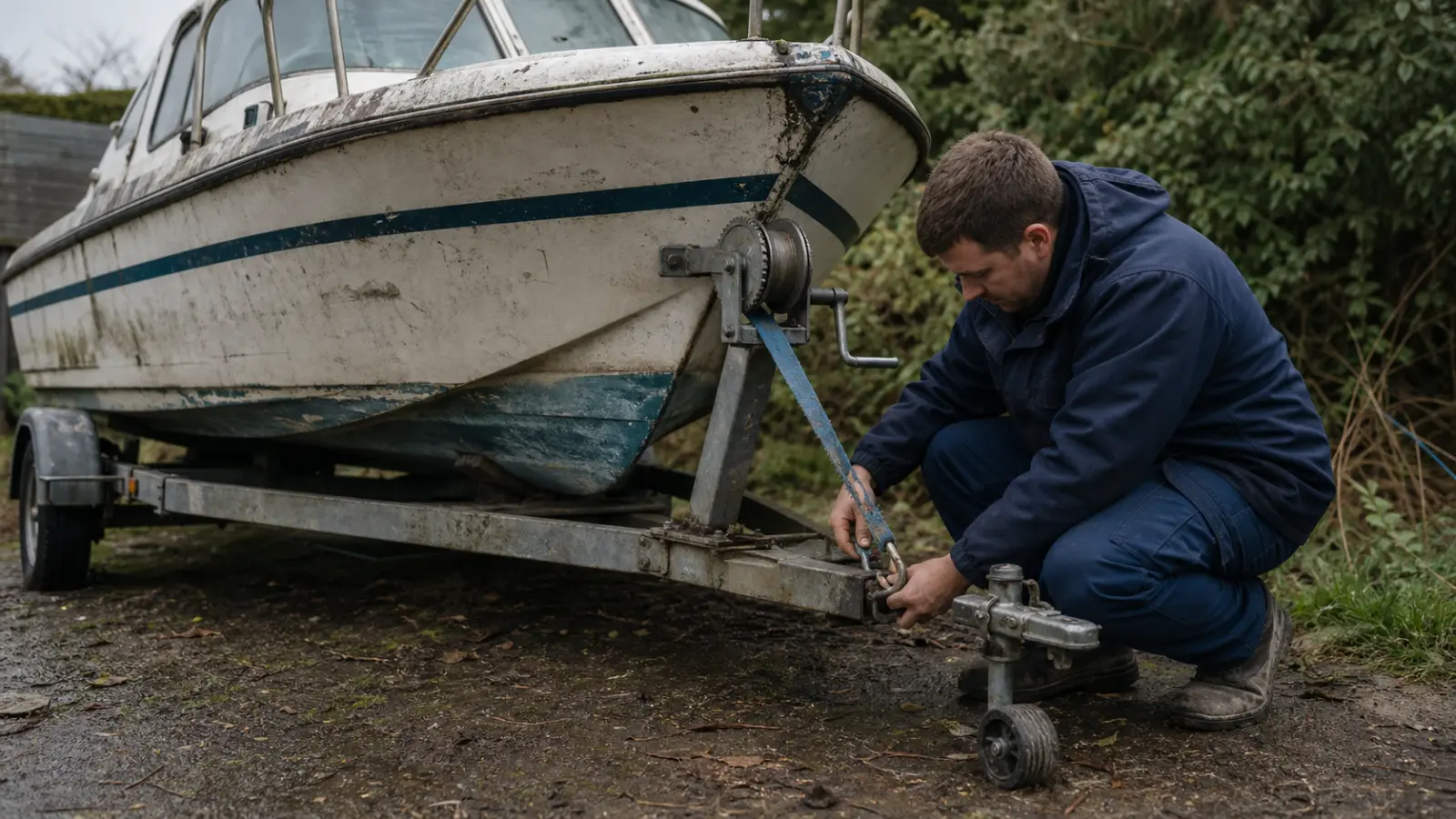
An old boat resting behind a garage eventually turns into an eyesore that takes up prime real estate. The hull has sat on a trailer behind the garage for six seasons and the tires have flattened into the dirt. In other cases, a marina sends a notice about an unpaid slip, or a commercial property sold with a cabin cruiser still sitting in the back lot. When an outboard engine seizes and a complete rebuild costs far more than the vessel is worth, keeping the craft around becomes impractical. Professional boat removal solves these problems by clearing out damaged, unwanted hulls from residential yards and commercial properties.

Is there boat removal near me in St. Cloud, FL? Yes, Boat Removal Experts offers dedicated hauling services throughout St. Cloud, FL to haul away compromized vessels directly from your property.

When parting with a junk boat, legal liability is a top concern for property owners. We do not always transfer the title, but we always issue a formal release of liability to protect you. Some hauling outfits simply tow a vessel away with no paperwork, leaving the legal liability on the registered owner if the vessel is later abandoned. It is always worth asking how documentation is handled before signing over a vessel.

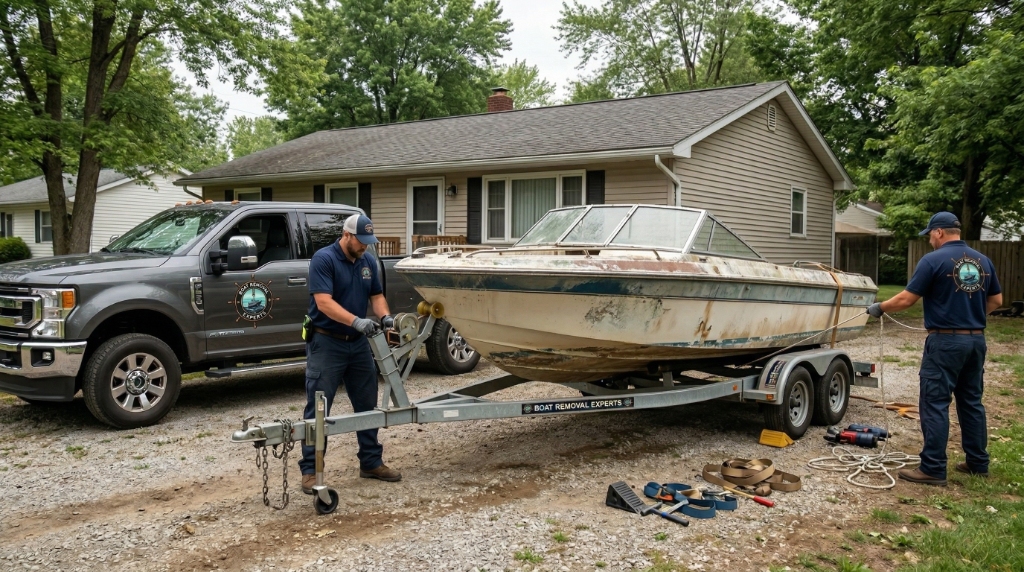
Extracting a vessel is rarely simple because aging gear fails over time. A trailer that will not roll requires specialized winches, while a deep keel or custom storage cradle demands extra ground support. If the beam is wider than the fence gate, or the overall weight rests on soft lawn soil that a tow truck cannot safely cross, standard towing approaches will not work.

Call (855) 765-7931 to start.

Send photos through the contact form.

What Is Boat Removal and When You Need It

Professional boat disposal involves far more than simply hooking a haul vehicle to a trailer and driving down the road. Complete boat removal requires careful rigging, heavy winches, site preparation, and proper transportation to handle structural decay safely. When an abandoned boat sits on private property or inside a commercial storage yard, getting rid of a boat requires managing physical access challenges alongside strict environmental handling standards to protect surrounding land.

Document status significantly alters how abandoned boat removal proceeds. When a property owner possesses a clear title, the path to transport and processing remains direct. However, when paperwork is lost, missing, or attached to a vessel that came with a newly purchased parcel of land, specific legal notices must be filed before crew members can winch the load. A derelict vessel left in a paid slip or deposited on someone else's property requires verification to ensure the property owner holds the proper legal authority to order its final extraction.
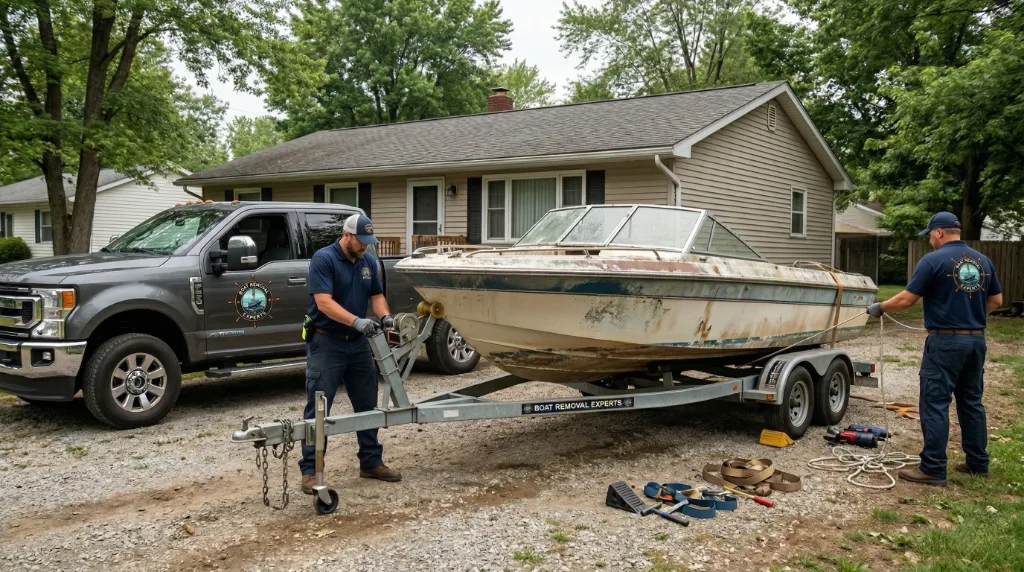
Physical factors on site control how crew members handle each haul. Hulls filled with stagnant rainwater weigh significantly more than dry vessels, putting extreme strain on aged support frames. Fiber degradation, soft floorboards, and collapsed transoms dictate whether a hull can be winched onto a flatbed whole or if it must be secured with specialized straps. Nearby communities like Buenaventura Lakes and Kissimmee feature distinct lot setups that dictate whether heavy machinery can reach a yard without sinking into soft soil.
When St. Cloud Residents Call Us

Subtropical weather patterns heavily affect idle watercraft stored outdoors throughout St. Cloud, FL. The local climate degrades gelcoat layers, rots interior plywood, and breeds mildew within upholstery. A fiberglass hull that captures tropical rainwater transforms into a heavy reservoir, putting immense downward pressure on wood beams and rusted trailer axles. A neglected pontoon, heavy aluminum fishing boat, or long fiberglass sailboat quickly becomes structurally unsound when water pools within the bilge and rots the internal support floor frames.
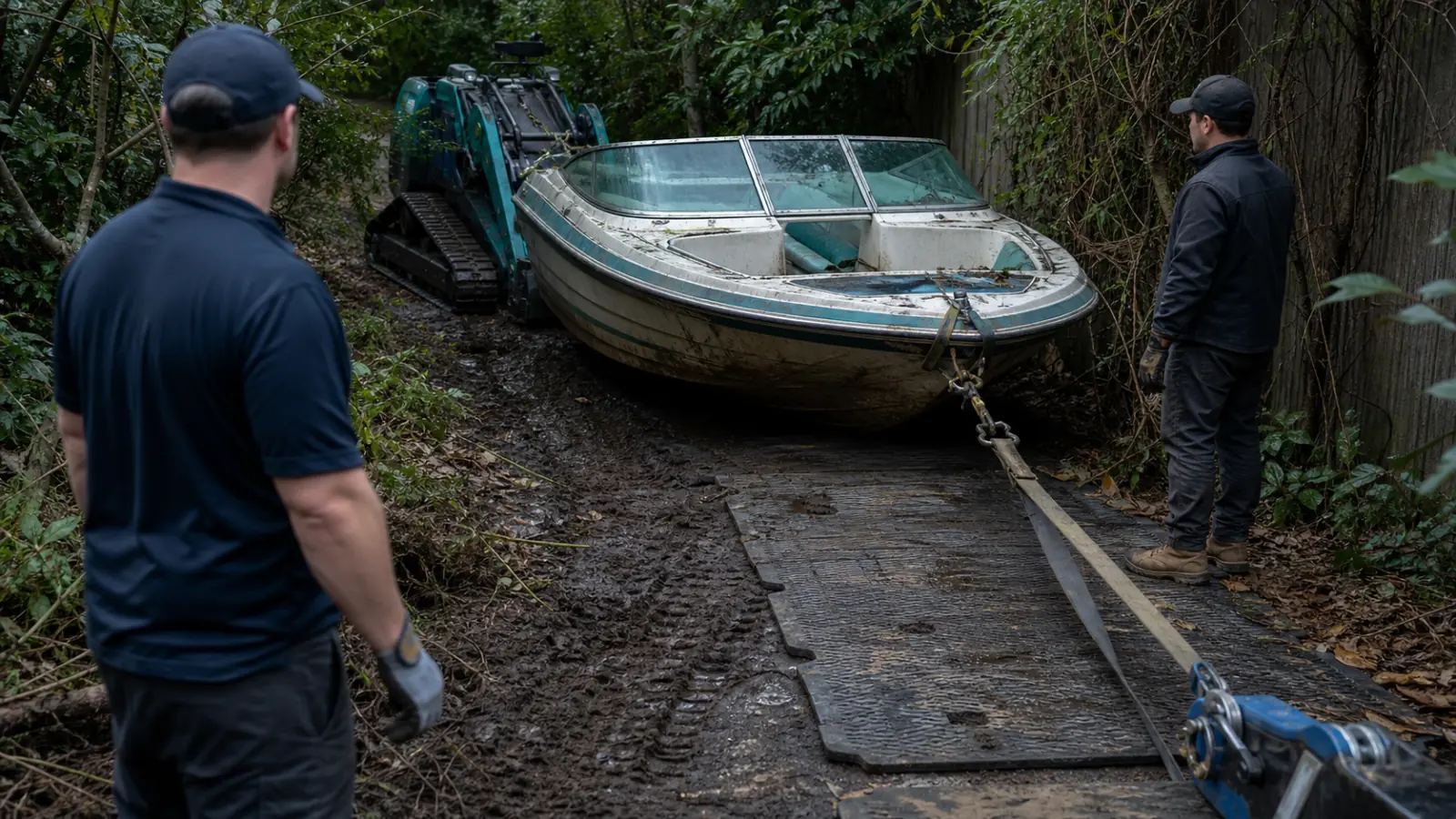
The physical approach to the property dictates the exact equipment required for a successful extraction. Crews working across Osceola County evaluate the ground surface a truck must cross before backing into position. Soft sand, muddy turf, low-hanging tree canopy, and tight security gates all restrict standard transport rigs. Whether a vessel sits resting on flat blocks, supported on a dry trailer, or resting along the shoreline water line determines how winches and lifting slings are deployed to clear the lot.

Regional access considerations expand to neighboring settlements such as Meadow Woods, Campbell, and Lake Hart. Navigating narrow suburban driveways or unpaved back lots demands flexible recovery strategies. When structural integrity is lost to sun rot, alternative lifting points must be established to keep the craft from breaking apart during loading, preventing dangerous debris from spreading across the driveway or yard.
Every Type of Boat We Handle

Situations We Handle

Need Help? We’re Ready.

Contact boat removers directly or request free quotes. We dispatch crews fast.

Our Step-by-Step Process

Assessment

We evaluate the boat’s size, current location, condition, and any environmental or access challenges before we schedule boat removal.

Planning

A detailed plan is built around your vessel — equipment, logistics, timeline, and safety. Services include drainage of oil and fuel before transport.

Execution

Our experienced crew mobilizes to your current location and we tow, haul, or dismantle the vessel using professional marine equipment.

Completion

The vessel is recovered, recycled, or routed to certified boat junkyards for environmentally responsible disposal. The site is left clean.

Equipment & Capabilities

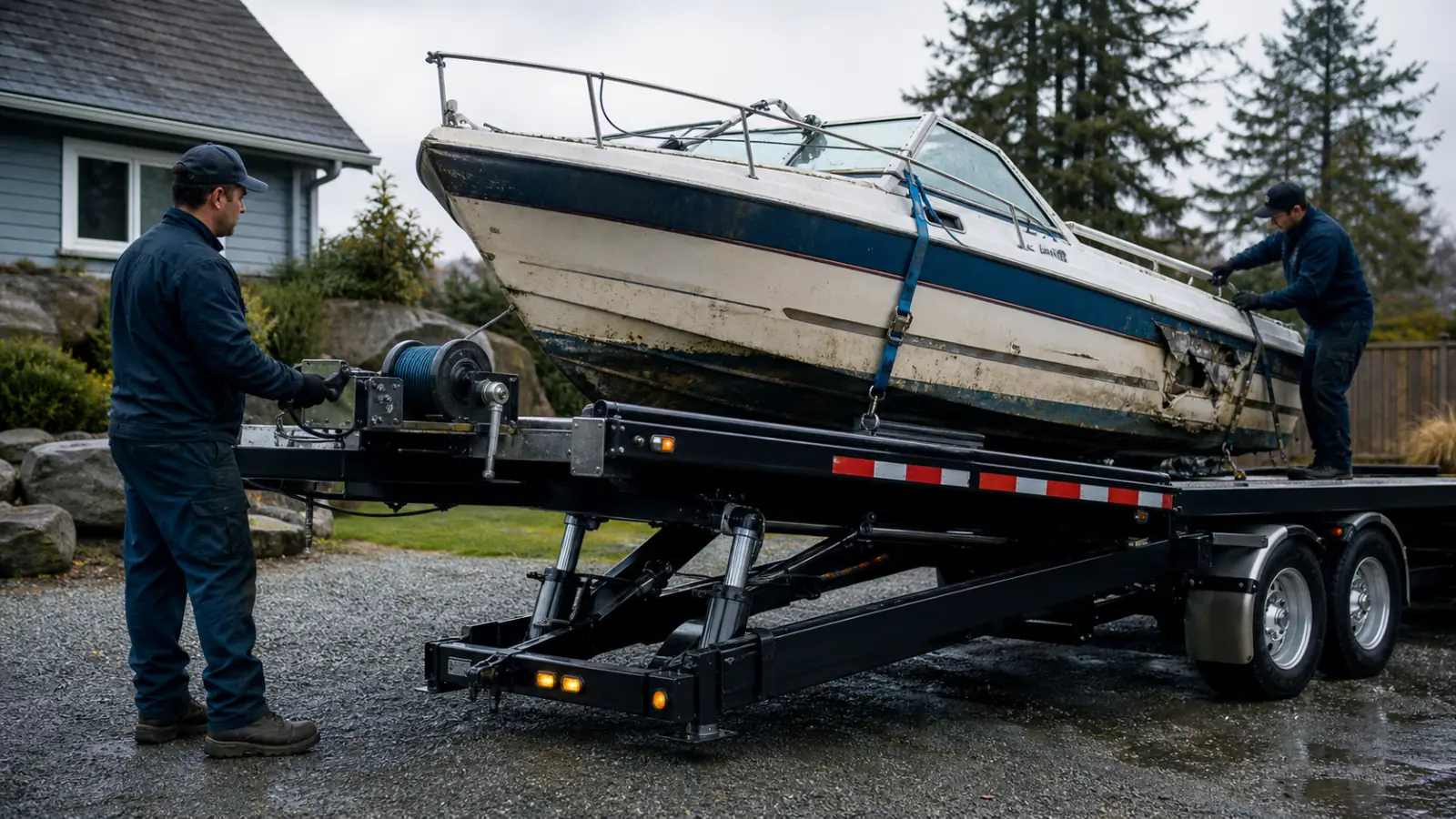
Transporting a compromized vessel requires specialized recovery tools capable of handling severe structural damage. When a trailer will not move due to flat tires, rusted hubs, or snapped axles, heavy-duty winches, slide axles, and articulated flatbeds pull the load safely off the ground. The crew evaluates the structural soundness of the hull upon arrival to select the correct extraction method, adapting their plan based on space restrictions, ground conditions, and frame stability.

When a vessel is too wide to clear property gates, trapped behind permanent structures, or far too decayed to haul in one piece, workers dismantle the structure directly on site. Cutting down a fiberglass or aluminum hull requires specialized power tools, containment tarps, and heavy cutting gear. Before any cutting or loading begins, crew members carefully drain and extract all hazardous materials, removing remaining fuel, motor oil, bilge fluids, marine batteries, and electronic components to ensure safe handling.

Once the vessel is loaded and secured, the salvaged materials are transported to appropriate regional facilities. Metal hulls and aluminum fittings move toward metal recycling processors, while stripped fiberglass shell pieces head to designated landfill sites certified for bulky waste handling. Environmental standards guide the entire process, ensuring every component is sorted and processed according to strict municipal requirements.

Our boat removal experience covers everything from start to finish  assessment, planning, execution, dismantling, and final cleanup. Marina operators and property owners across Osceola County trust us to get rid of your junk boat without damage to surrounding property.

FAQ

Boat Removal Questions - Frequently Asked

Common questions from property owners about our junk removal service, dismantling, and marine recovery.

We handle every type of vessel — sailboat, pontoon, fishing boats, jon boats, yachts, and commercial craft. Whether your boat or sailboat floats (or used to), we’ll remove it from any current location.

Yes. Sunken and partially submerged vessel recovery is a core part of our salvage work in Osceola County. We use lift bags, salvage pumps, and marine cranes to safely raise vessels from underwater.

We respond to inquiries quickly — usually within hours, with same-day service available. For emergency situations, we mobilize as fast as possible. Call us directly for time-sensitive jobs.

No. Every job is handled in-house by our own team and equipment. No middlemen, no handoffs, no surprises.

Cost depends on the boat’s size, current location, condition, and complexity of the job. We provide free assessments and free quotes for every case — contact us and we’ll give you an honest estimate.

Yes. Our boat removal and disposal services include hazardous materials handling, oil and fuel drainage, hull dismantling, and recycling at certified yards — all in compliance with environmental regulations and environmentally responsible standards.

Absolutely. We regularly work in tight marinas, shallow waterways, private docks, backyards, and remote areas. We bring the right gear to reach any current location.

Yes. We frequently work with insurance adjusters on salvage and recovery claims and provide the documentation needed for your claim.

Browse Our Services - Ready to Get Started?

We handle everything from start to finish. Call us now or request a free quote – we’ll dispatch crews and haul your vessel away fast.